The solstice passed & each day is just a little brighter than the last. With optimism I step outside searching for signs of the new year…
JOY !! Snowdrops in bloom 🙂
If these little bulbs can thrive during the cold, cloudy winter, then so can we.
Happy New Year!
P.S. Ok, to be honest: these blooms are not from my yard. I searched & searched but found no signs of them yet. BUT – – Just 6 houses down the street, there they are! Talk about micro-climates. 🙂 All the more reason to go for a walk, eh?
Yes, this title is cheeky, but it’s true. It’s no secret I like Naked Ladies. Last fall, I admitted it. At the time, I was referring to Colchicum. The common name made sense to me because the flowers & stems appeared so naked without the leaves as to clothe them.
photo by SVSeekins
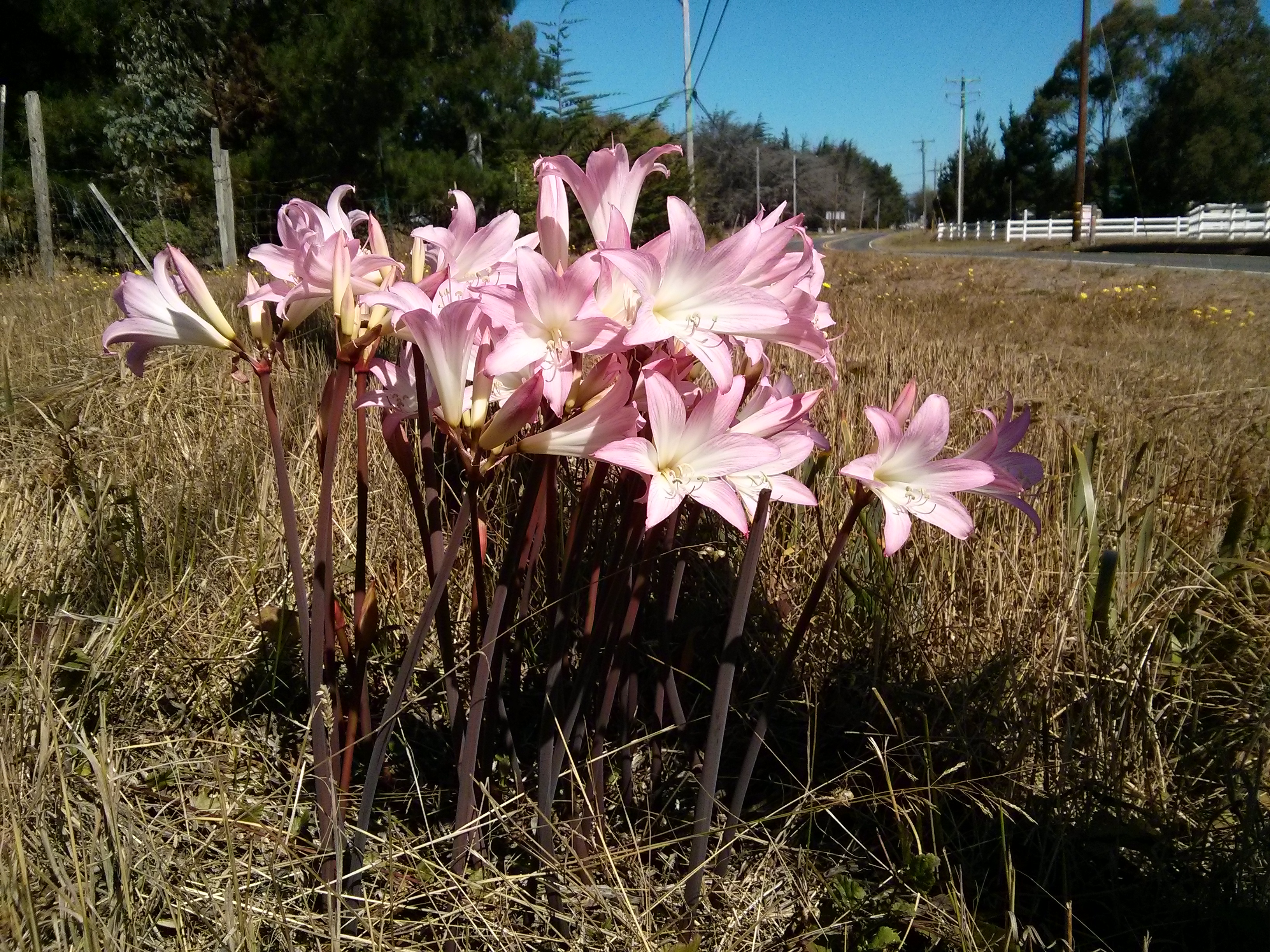
Recently, while travelling in northern California, I learned that the common name Naked Ladies can also refer to Amaryllis belladonna. Through the countryside, even in ditches & deserted farmyards, these Naked Ladies danced happily. Everything else seemed to have died back from dehydration. Wow. I figure they’re very sun & drought-tolerant to thrive in those places.
photo by SVSeekins
There’s a very similar pink flower that also blooms in the fall: Nerine Lily. Apparently, it’s also part of the Amaryllis family, but the flowers aren’t naked; the leaves show up along with the blooms. I thought I’d identified some Nerine Lilies in our neighbourhood last year, but now I’m not so sure. Some leaves are showing, but not many. Nerine? Not So Naked Ladies? It’s tricky.
This lovely patch of pink blossoms is in a yard along Mayfair Drive on Mt. Tolmie. What’s especially impressive is how well they’ve stood up through the torrential rains of the past week! Wow! Sun & drought-tolerant… deer-resistant… and downpour-durable!
Just imagine: Naked Ladies– dancing in the rain. Woo hoo !!
🙂
PS – Last night chatting with a couple of Garden Club ladies, a couple other fall-blooming, pink flowers were mentioned.
SK recommended Schizostylis (Kaffir Lily) from the Iris family. (aka Hesperantha)
JJ recommended Crinum from the Amaryllis family.
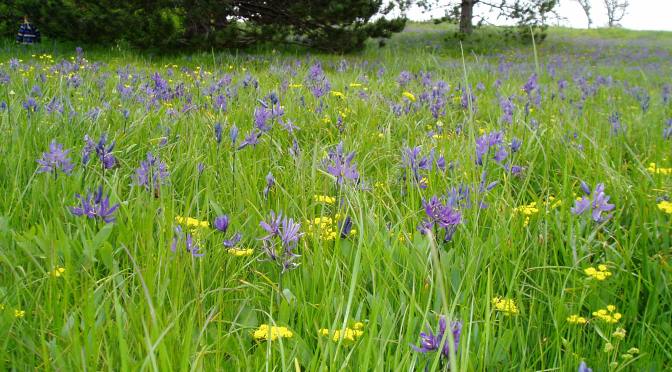
The camas meadow swaying in the spring breeze is like no other. Suddenly I’m walking in a fairytale instead of strolling in a Victoria park. Has my mind gone wild? Could I ever have come up with a dream so lovely? No. It must be real.
Camas meadows have flourished on South Vancouver Island longer than memory reaches into the past. The southern slope of Beacon Hill has been a camas meadow for centuries. It’s probably one of the key reasons it’s preserved as a park today. The same goes for the Garry oak meadows of Mt. Tolmie Park. At this time of year, they’re magical places.
Early peoples saw more than beauty in the camas; they saw food. I wonder who it was to first realize the bulbs are delicious?
photo by SVSeekins
Perhaps she had gardening tendencies like mine; seeing a lovely flower automatically triggers an urge to have that flower in my own garden. (I’m known to dig up plants from roadsides.)
Before we moved from the Cedar Hill property to the Richmond house, I dug up as many camas as possible. The Garry oak meadow in the backyard was a great natural source for them, but the digging wasn’t so easy.
When I was able to dig deep enough, I often found the bulb tucked securely in a tight rocky crevice. Un-obtainable! I did manage to get a good number of bulbs (perhaps 2 dozen), but there was no risk of over-harvesting that hillside.
photo by SVSeekins
There was certainly more risk of starvation if camas had been my only sustenance. A good deal of effort for a very small reward. That gardener from long ago must’ve had more ingenuity than I have.
Apparently, she figured out a method that includes burning the meadow first. (?!?!…) Perhaps that was a way of cooking the camas in the process? By the time she got one out of the ground, it was already transformed into a sweet treat? I just can’t figure it….
Happily, after all my sweat equity, I now enjoy blooming borders.
It times out nicely. When the foliage of the spring bulb dies back, the daylily takes over for the summer. And from all that bounty, it’s only the latter that the deer like to feast on. 🙂







 Garden Variety Life