Category Archives: bulbs

Cyclamen Coum Naturalizing

My favourite Cyclamen is the winter-blooming Cyclamen Coum.  Its bright flowers stand out in the drizzling winter gloom of southern Vancouver Island.

hardy cyclamen coum, persian violet, eastern sowbread, round-leaf cyclamen,C. coum garden Victoria, Vancouver Island, BC, Pacific Northwest
photo by SVSeekins

The decorative leaf appears in September once the summer temperatures begin to drop.  It’s a promise of blooms to come.  By late December, tiny buds show themselves.  When it’s even colder & I’m more desperate for flowers, c.coum begins to bloom.  By February & March its in full celebration in Victoria.

hardy cyclamen coum, persian violet, eastern sowbread, round-leaf cyclamen,C. coum garden Victoria, Vancouver Island, BC, Pacific Northwest
photo by SVSeekins

Hardy cyclamen are known to naturalize well where they’re native (Turkey).  Here, in the Pacific Northwest, they’re just as happy. The climate is similar enough.

hardy cyclamen coum, persian violet, eastern sowbread, round-leaf cyclamen,C. coum garden Victoria, Vancouver Island, BC, Pacific Northwest
photo by SVSeekins

I planted 3 C. coum around the base of our Gravenstein apple tree in 2009.  Ten years later, I’m rewarded with several naturalizing in the grass.  The furthest is about 6 feet away!

My fingers are crossed for blooms in the lawn this February!  I reckon they’ll be reasonably safe, as C is less likely to mow that early.  When he brings the lawnmower out in March, I’ll ask him to cut at its highest setting.
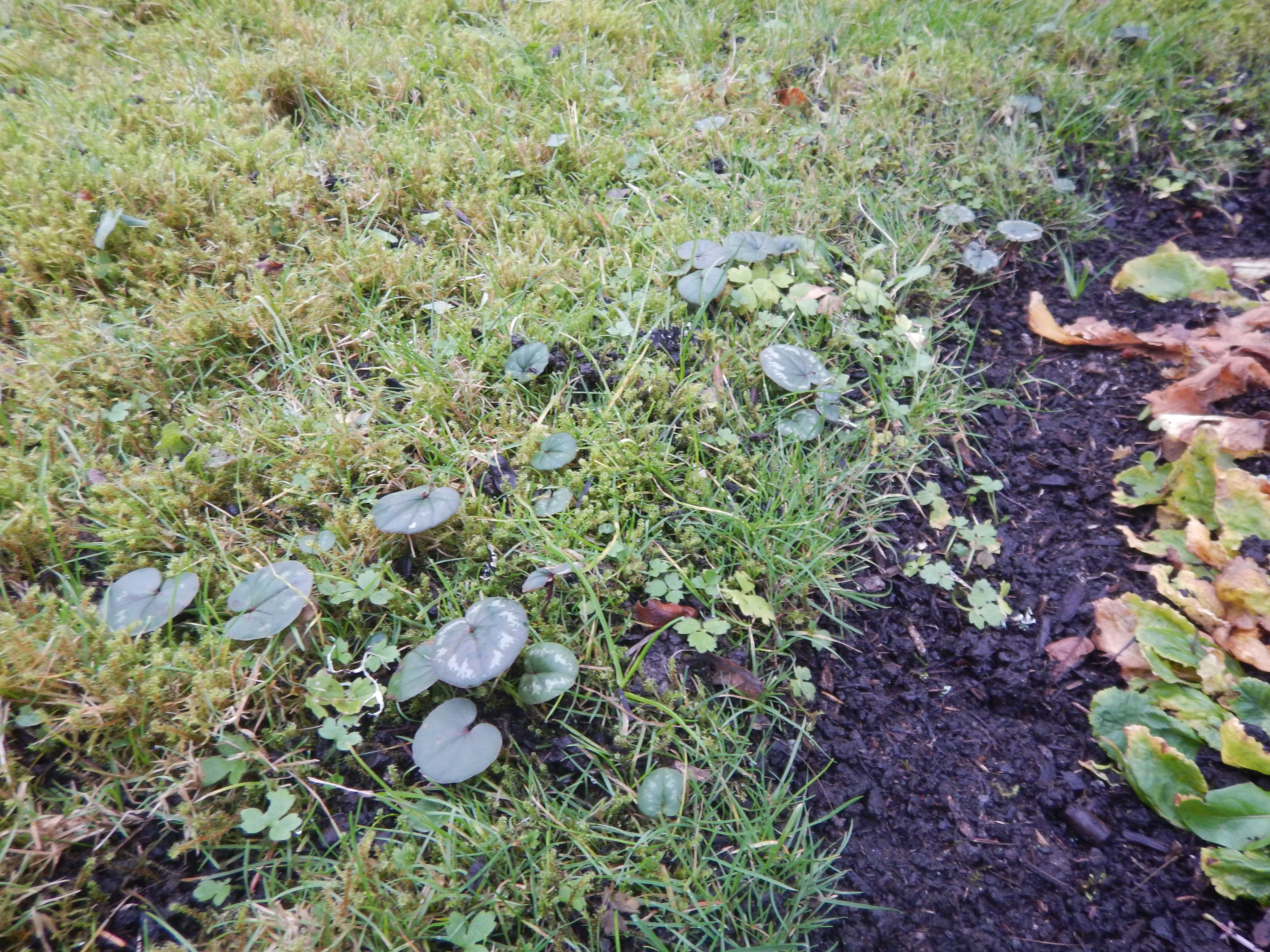
hardy cyclamen coum, persian violet, eastern sowbread, round-leaf cyclamen,C. coum garden Victoria, Vancouver Island, BC, Pacific Northwest
photo by SVSeekins

Cyclamen coum is a mild-mannered plant.  It can easily be out-competed by the autumn-blooming Cyclamen hederifolium.  I am careful to keep the dominating C. hederifolium far away from our treasured C. coum.

-30-

Back From the Dead

We were away camping for most of August + early September. The garden had to survive through the dry heat all by itself.

Amaryllis belladonna , Madonna Lily, Jersey Lily, Amaryllis rosea, Brunsvigia rosea,, garden Victoria, Vancouver Island, BC, Pacific Northwest
photo by SVSeekins

Imagine my delight returning to a cloud of pink blooms hovering above the parched bed beside the front gate…

Granted, it’s only one stalk – – but what a cluster of flowers!  AND the deer hadn’t feasted on it as they had the surrounding daylily & crocosmia blooms–Bonus 🙂

To be honest, I’m shocked to see this resurrection.  For the past 10 years, I’ve resigned myself to being a Crinum killer.

Amaryllis belladonna , Madonna Lily, Jersey Lily, Amaryllis rosea, Brunsvigia rosea,, garden Victoria, Vancouver Island, BC, Pacific Northwest
photo by SVSeekins

The original bulb, a giant, came to me via a garden club plant sale.  It was labelled Crinum × powellii (aka Swamp Lily or Cape Lily).
Now I’m thinking it might be Amaryllis belladonna (aka Madonna Lily or Jersey Lily).

I planted it, thrilled at the first year’s blossom, then searched for signs of life the following year…
None…
Nothing the next year either…
After that, I just stopped searching.

Perhaps a hard winter froze the bulb…  (Crinum is zone 7: A.belladonna is zone 4.)
Perhaps too much drought shrivelled the bulb … (Crinum likes moist summers; A.belladonna prefers dry.)
Perhaps it had been crowded out by the crocosmia…  (Both Crinum & A. belladonna, like nerine lilies, prefer their necks exposed to sunshine… last winter I’d removed excess crocosmia)

Amaryllis belladonna , Madonna Lily, Jersey Lily, Amaryllis rosea, Brunsvigia rosea,, garden Victoria, Vancouver Island, BC, Pacific Northwest
photo by SVSeekins

There are so many ways to fail in the garden.  I resigned myself to losing another gem.

Now I’m thinking, it might have simply been a miscommunication in labelling.  Both Crinum & A. belladonna have similar tendencies (pink clusters of bloom… bloom time… toxicity… origins in South Africa… ),
But there are some significant differences, too (A.belladonna leaves die off before it blooms).

Either way, I’m grateful for whichever bulb I have.  It’s one tough cookie.  It patiently waited years until the conditions were just right!!

-30-

Here are some other pink autumn bloomers:


Welcoming More Nodding Onion

The warm July browns the moss on our rocky outcropping.  The licorice ferns have disappeared into their summer dormancy.  It’s the Nodding Onions that brave the drought.

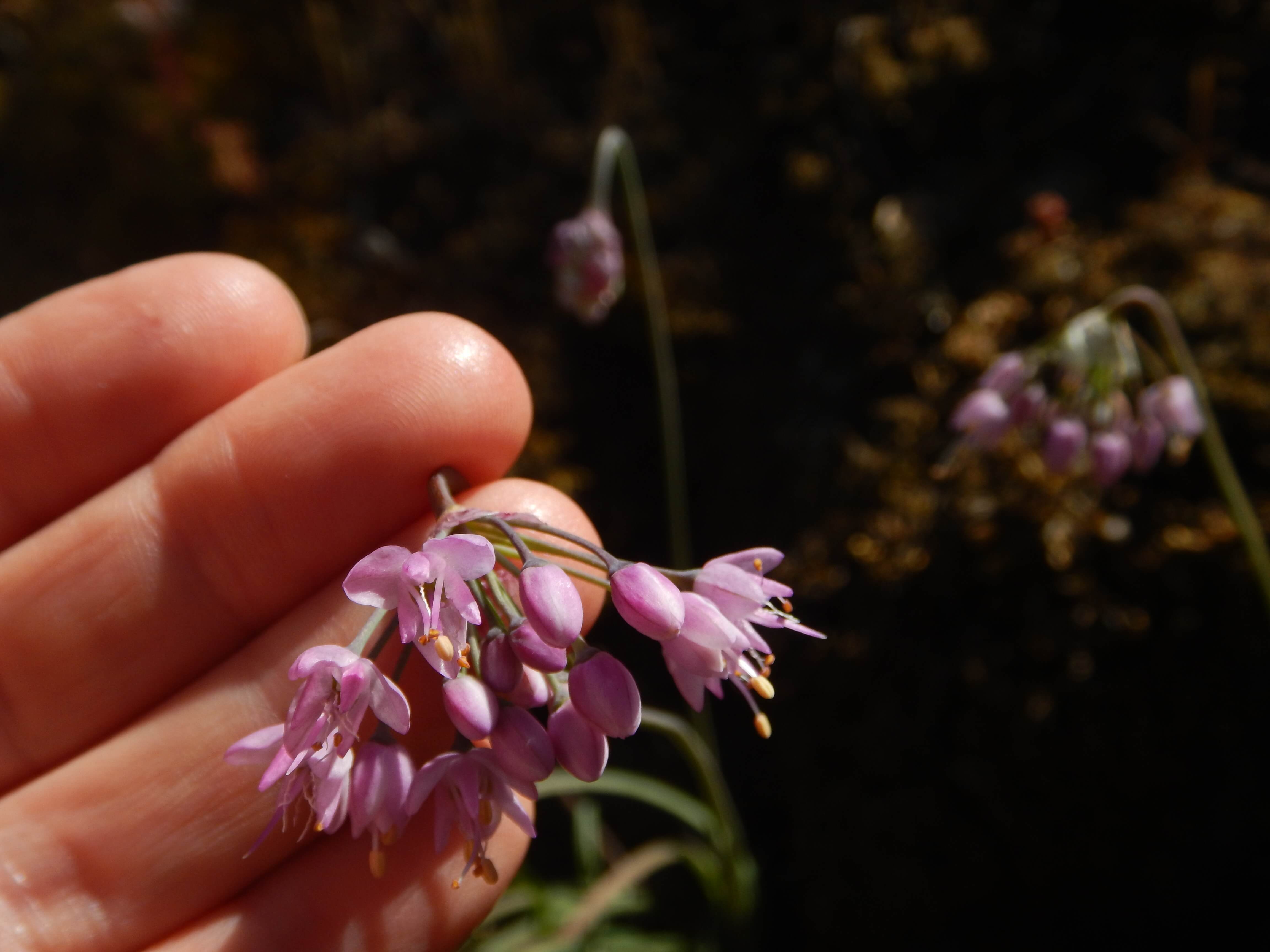
sweet onion, barbecuing onion, nodding wild onion, lady's leek, garden Victoria, Vancouver Island, BC, Pacific Northwest
photo by SVSeekins

The delicate pink flowers of Allium cernuum look too fragile to survive the heat – but here they are.  🙂

Last year the deer grazed this patch of wild bulbs. That surprised me because deer tend to leave smelly plants alone.  But this year? It seems this onion is not on their menu. Who knows why?

sweet onion, barbecuing onion, nodding wild onion, lady's leek, garden Victoria, Vancouver Island, BC, Pacific Northwest
photo by SVSeekins

Nodding onion is a native wildflower throughout the Pacific Northwest, liking the winter rain & summer dry of Southern Vancouver Island.  It’s a perfect low-maintenance garden plant.  Instead of primping & coddling exotic plants – I welcome more of these natives into our ornamental garden.

So, I’m letting this little clump just do its thing.
No deadheading,
therefore
Self-seeding.
I’m imagining a haze of summer pink on this hillside in a few years.  Can’t you picture it?

-30-