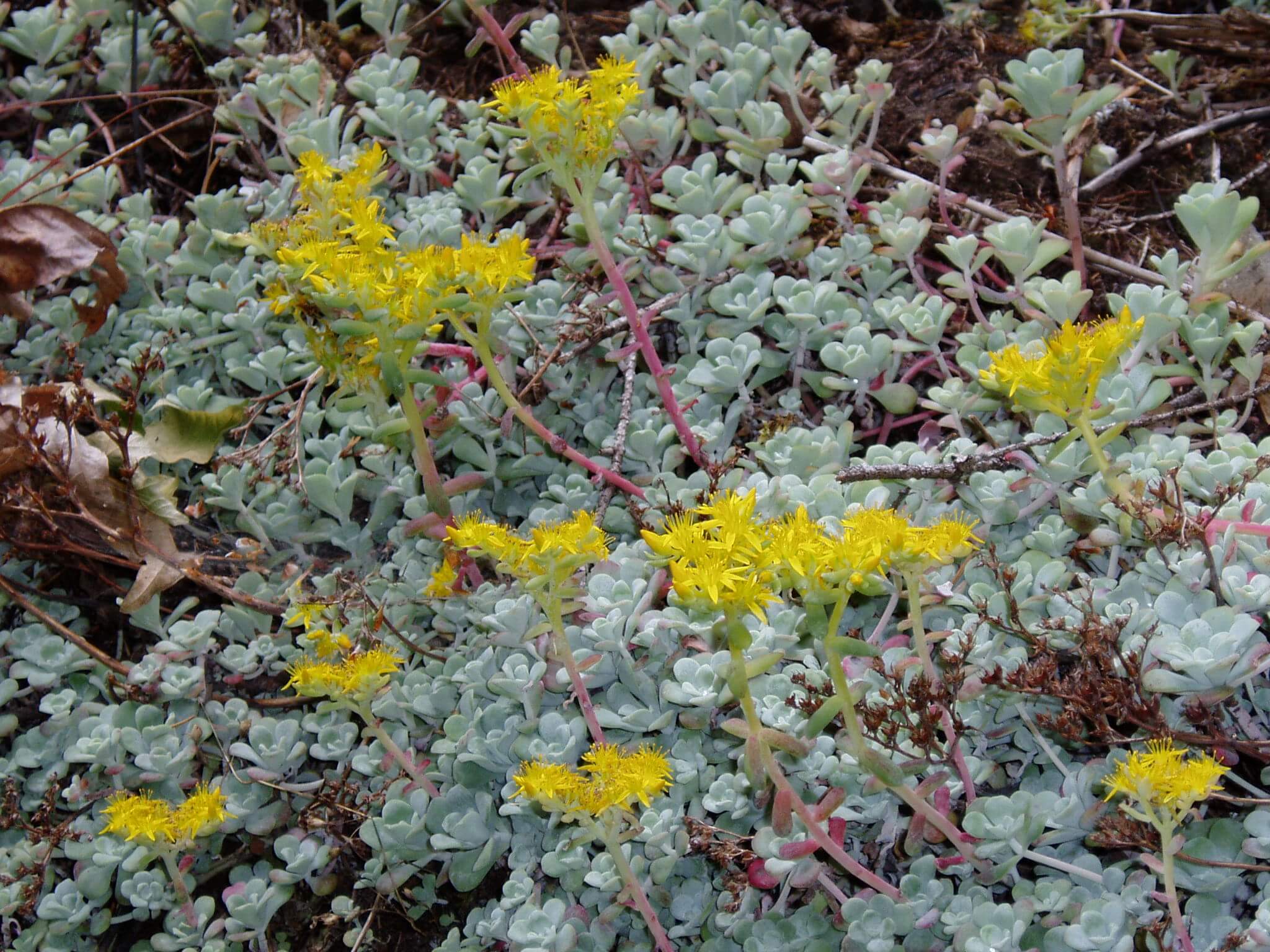
There it was, carpeting a cliff along the beach, one of the toughest plants I know. Broad-Leaved Stonecrop.
The rain drains quickly, rinsing nutrients from the rocky soil.
Drought-tolerant.
No need for feed.
A suitable candidate for planting on a green roof?
photo by SVSeekins
It clings & dangles tenaciously, spreading when leaning stems touch ground & sprout tiny roots. If a piece breaks off, it’s determined to grow right where it lands.
Resolved.
Insistent.
photo by SVSeekins
It seems content in shade.
In full sun, the succulent, spatula-shaped leaves change from grey-green to red.
Who needs flowers when foliage is so decorative?
photo by SVSeekins
But Sedum spathulifolium blooms, too — starry, bright yellow flowers in June. Happy flowers.
I welcomed this coastal native into my garden a couple of years ago & am not disappointed. Once placed in a gravelly patch, there’s not much to do with it. I leave it alone, & so do the deer. Score!
So very carefully, I dug some wild violets from our Cedar Hill garden to transplant at our new home, hoping they’d survive the move. They’ve thrived. 🙂
photo by SVSeekins
That was 10 years ago.
The small patch of viola did so well I shared them around, planting them in other beds & borders. They grew happily in pretty much any situation.
Undaunted. Workhorses.
photo by SVSeekins
And then some emigrated to the lawn.
Determined.
Now, each spring, their swath of purple blooms signals that soon, the rest of the garden will be bursting with colour too.
photo by SVSeekins
I just have to smile. Some folks bemoan the fact that once violets get into the lawn, there really is no going back. Fortunately, C has relaxed his goal of a monocultural, grassy lawn.
Who can complain about a city meadow of wildflowers that rarely grows high enough to mow?
Or tough-as-nails groundcover that stays green through our dry summers?
The identification of violets isn’t as easy as I expected. There are well over 500 species worldwide, with many indigenous to North America.
For a long time, I figured this little gem was the Common Blue Violet (Viola sororia), but those are from the continent’s eastern side. Now I reckon it is either the Western Dog Violet (Viola adunca) or the very similar Alaska Violet (Viola langsdorfii) – both common on Vancouver Island.
photo by SVSeekins
I consider it a special bonus that these lawn jewels are native to the Pacific Northwest (and beyond) — because for local wildlife, especially spring pollinators, this is comfort food.
Wild violets have been an addition to human diets as well – long before they became trendy as colour in salads. I can’t say I’ve gathered any for supper, but thinking of our lawn as an extension of the veggie garden is kind of cool.
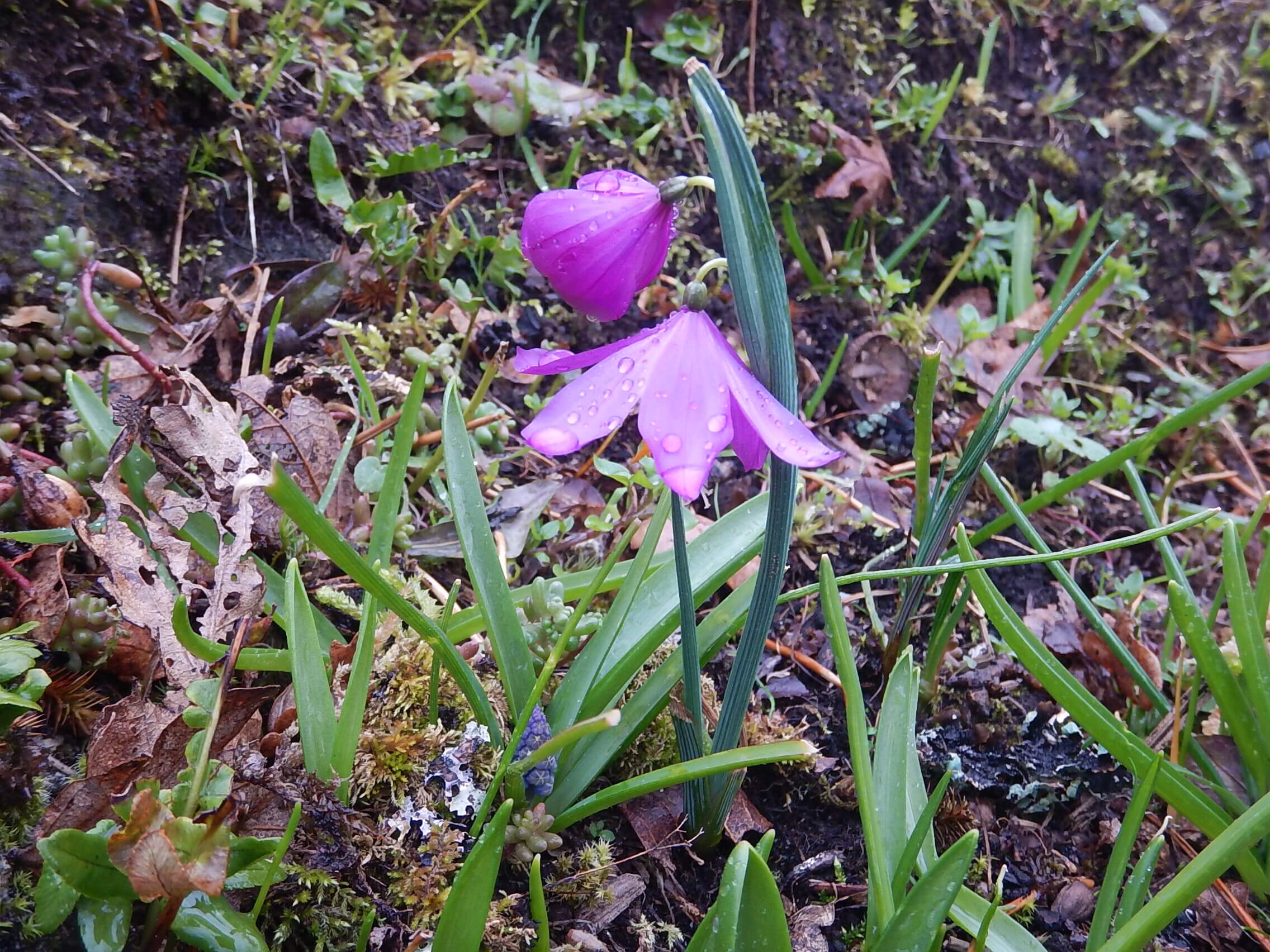
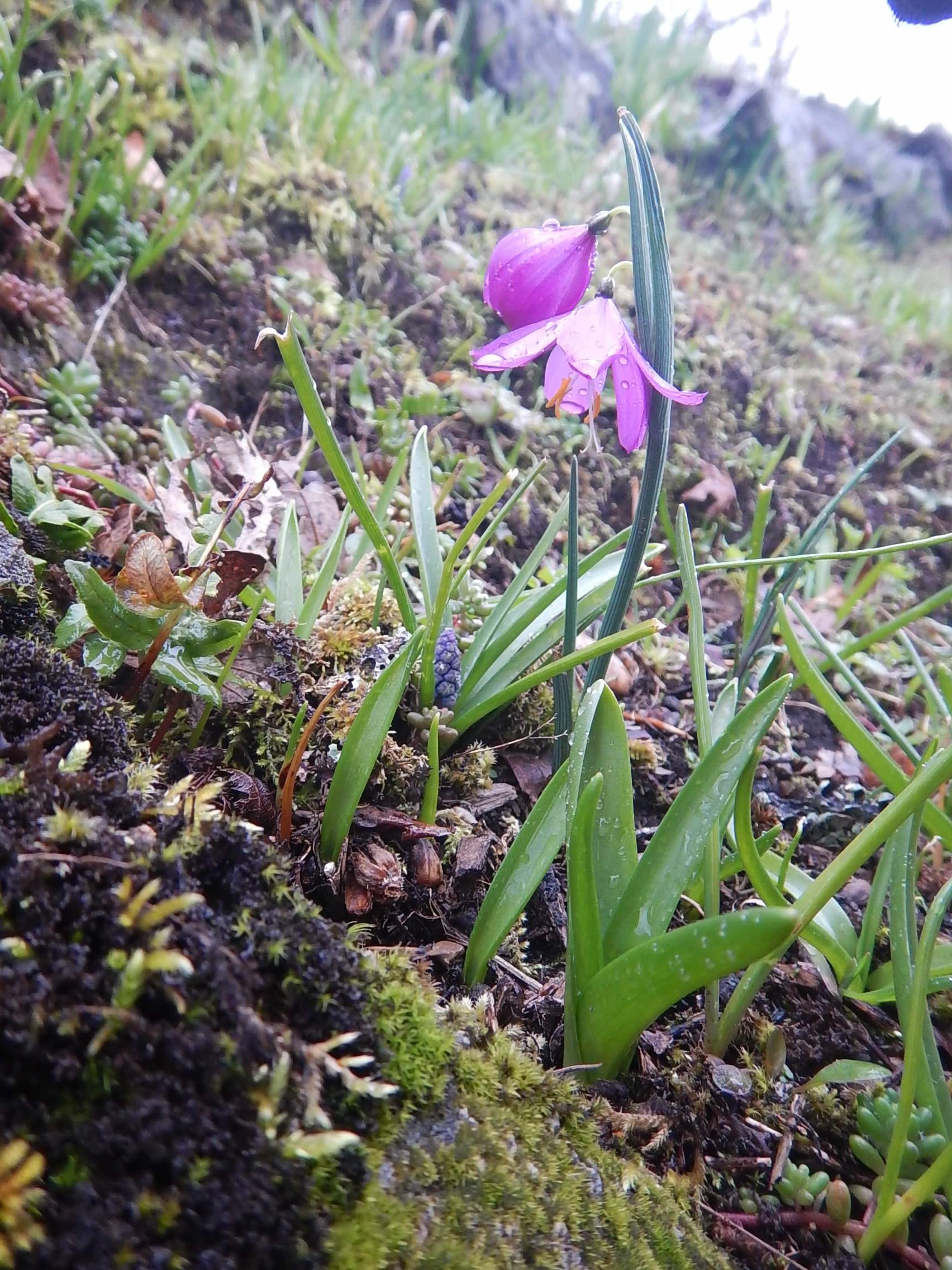
Woohoo!! The Satin Flower bloom opened the other day – – AND I’ve checked it 3 mornings in a row now – It’s Still There!!
photo by SVSeekins
Ok, so that sounds just a little crazed,
but Satin Flower is one of the very earliest Pacific Northwest native wildflowers –
and it’s so pretty!
photo by SVSeekins
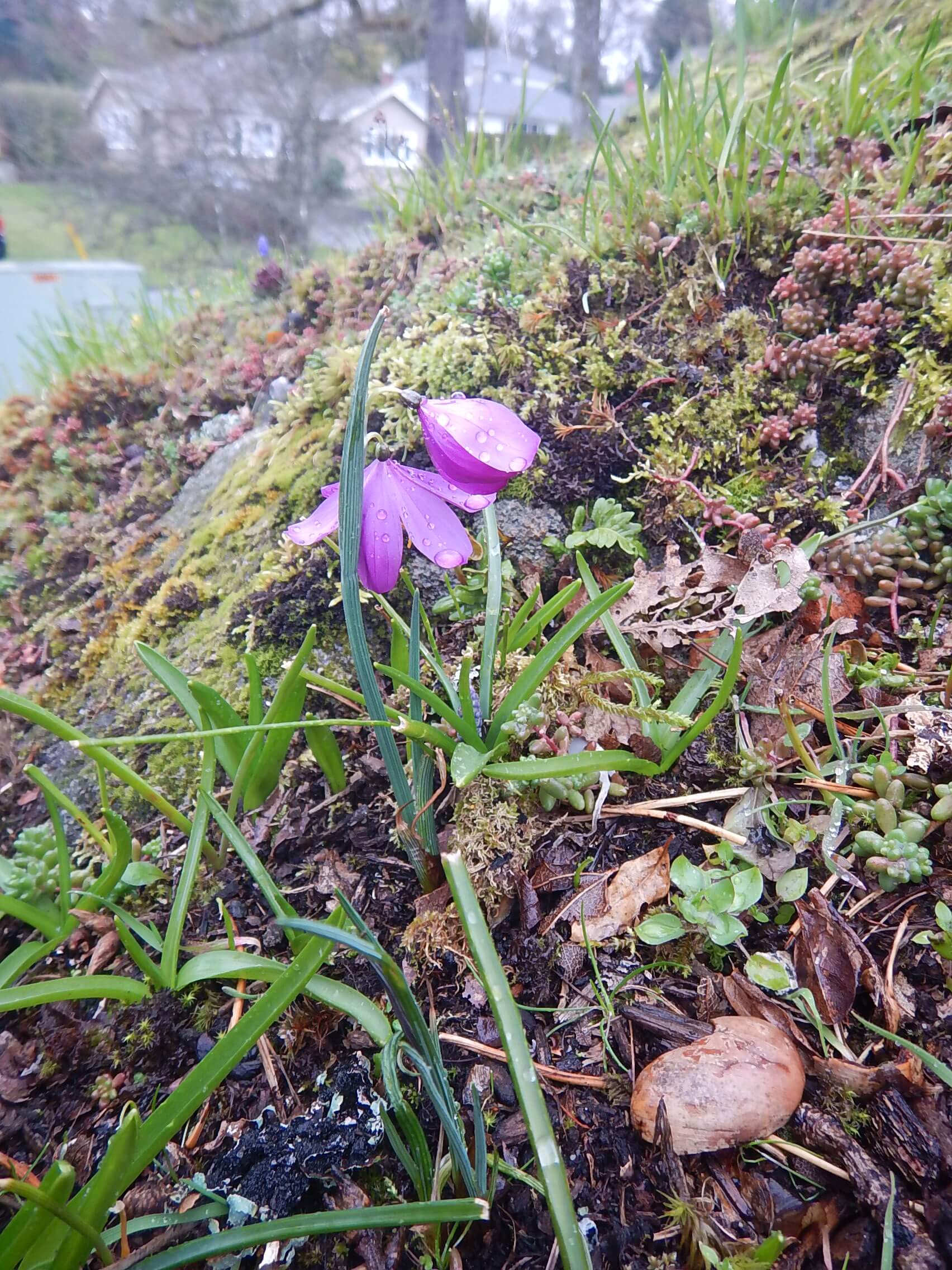
It’s really well suited to our rocky outcrop that’s very moist in winter & very dry in summer. So, this Olsynium douglasii (aka Douglas’ olsynium, Douglas’ grasswidow, grasswidow, blue-eyed grass, purple-eyed-grass, or satin flower) should be happy in our gary oak meadow.
But the deer are happy here, too.
photo by SVSeekins
When I first bought a couple of these perennial herbs from Sannich Native Plants (Thank you Kristen & James!), I planted them too near the deer’s regular route. Fortunately, I saw the bloom the first morning.
It was gone the next.
I simply shifted the plants to a steeper section of our rocky outcropping, hoping the deer might leave them alone. Fingers crossed.
The next year – Success.!
Now I’m hoping these sweet little flowers will happily do their thing & naturalize into more of a clump – maybe even spread around a bit! 🙂





 Garden Variety Life