Category Archives: evergreens

July Meadow

After our drain tile renovation destroyed our lawn, we laid sod.

clover, selfheal, purple deadnettle, meadow, self-heal, Prunella, garden Victoria BC Pacific Northwest
photo by SVSeekins

In the 10 years following, other plants joined the grassy monoculture.  Our classic lawn has become more of an urban meadow.

I still enjoy the tidy look of a freshly mown lawn… all smooth & green…  But I appreciate the wildflowers, too.

blacktail fawn deer garden Victoria, Vancouver Island, BC, Pacific Northwest
photo by SVSeekins

And I’m not alone.

The local deer seem to be grazing the meadow more than harvesting the ornamental beds.
Hooray for that!
For the moment, I can enjoy watching the young family  – – rather than spend my time shooing them out of the garden.

wild clover, trefoil, Trifolium, garden Victoria BC Pacific Northwest
photo by SVSeekins

Wild clover naturalized early on.  It mostly blooms white, like the short Dutch clover, but often with a hint of pink.  Is it interbred with the larger red clover, which we grew fields of on the homestead?  So sweet.  Think clover honey…
(FYI – I’ve never been stung in our yard).

selfheal, purple deadnettle, self-heal, Prunella, garden Victoria BC Pacific Northwest
photo by SVSeekins

Self-heal, aka purple deadnettle, works wonderfully as a low-growing groundcover too. Like the clover, it stays green while grass browns in the summer dry. Prunella vulgaris blossoms attract more beneficial insects into our yard.  The seed feeds birds, too.
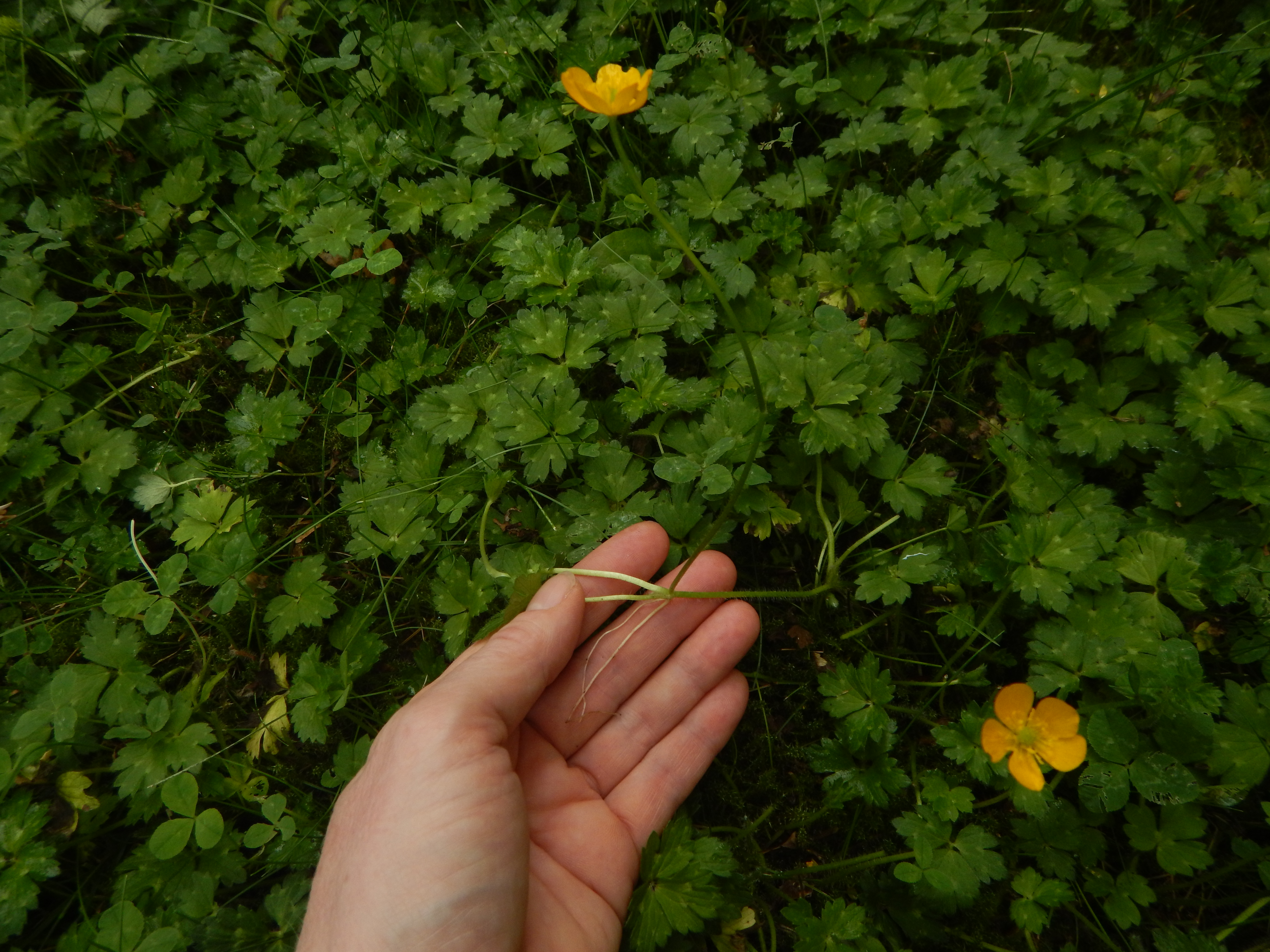
creeping buttercup, sitfast, restharrow, creeping crowfoot, Ranunculus repens, garden Victoria, Vancouver Island, BC, Pacific Northwest
photo by SVSeekins

The European Creeping Buttercup is well established under our apple tree & along the shady foundations of the house.  Ranunculus repens resides safely below the lawnmower blades. It colonizes via runners. New roots spring off a runner a few inches from the mother plant, creating a baby.  Then the same runner continues along for more adventures.  In our yard, it’s never crept toward the drier, sunnier areas.

creeping buttercup, sitfast, restharrow, creeping crowfoot, Ranunculus repens, garden Victoria, Vancouver Island, BC, Pacific Northwest
photo by SVSeekins

C thinks the buttercup is pretty.
But the deer avoid the whole plant.   They’ll graze carefully all around it.  To mammals, buttercup is toxic. (Blisters inside the mouth & throat are reason enough to avoid.)
That said, insects enjoy the flowers.
🙂
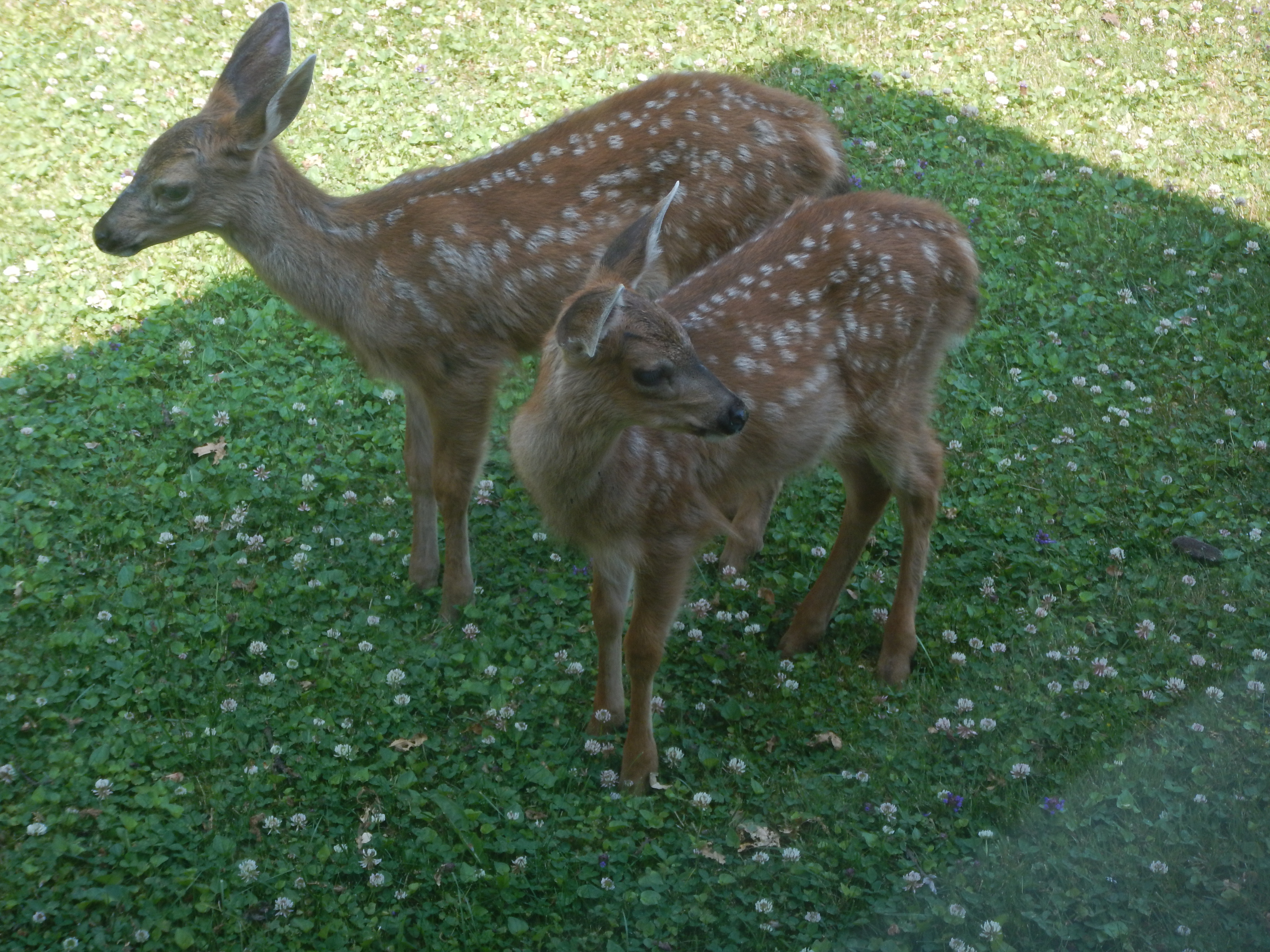
blacktail fawn twins deer, garden Victoria, Vancouver Island, BC, Pacific Northwest
photo by SVSeekins

I recently learned from Dr. L. A. Gilkeson that insects have declined at least 45% since the 1970s. (!! That’s 10 times faster than we’re losing mammals  !!) The decline is mostly due to habitat loss – and lawns don’t count as ‘habitat’ if they’re monocultures.
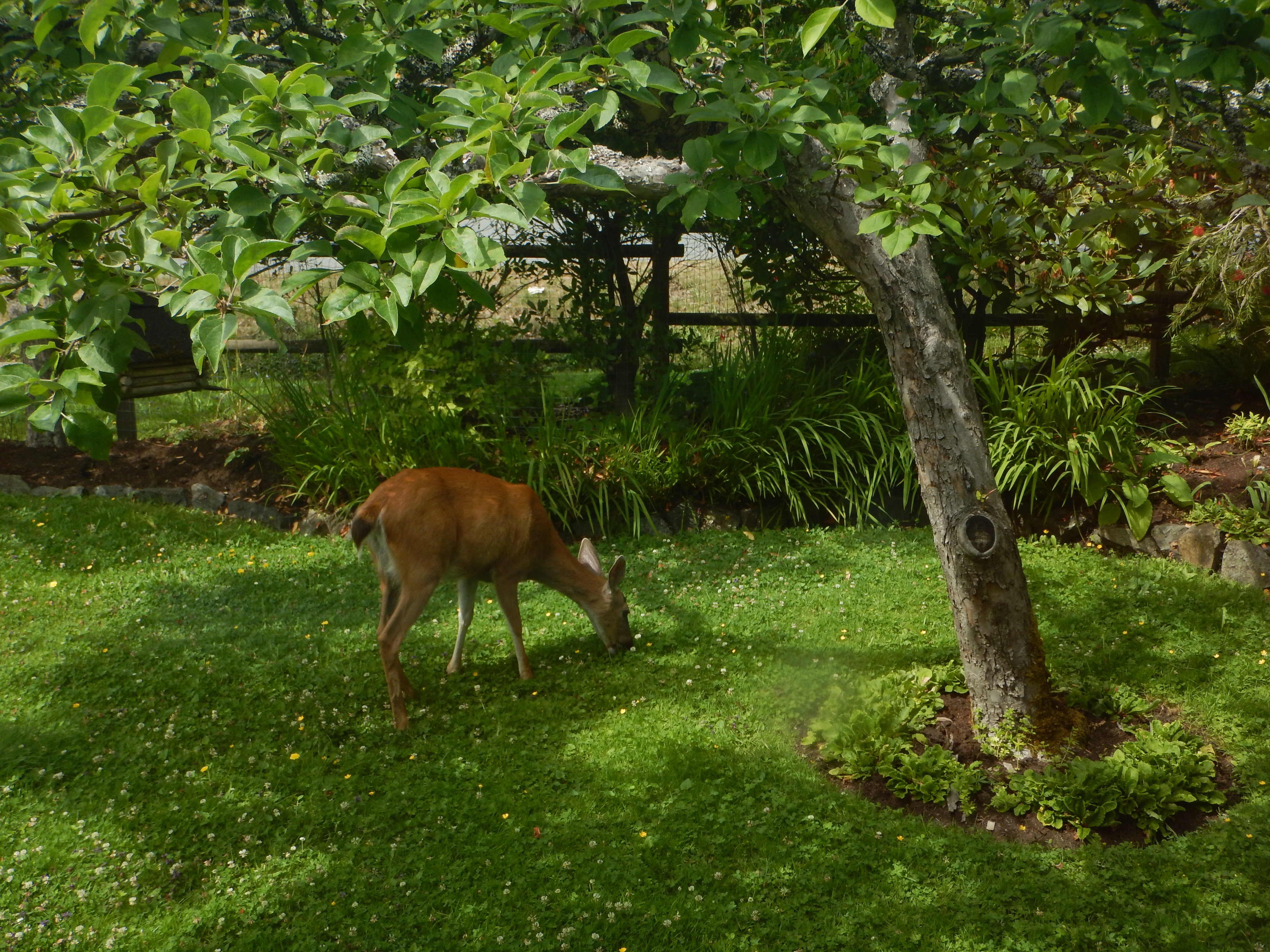
blacktail doe deer grazing on clover selfheal meadow, garden Victoria, Vancouver Island, BC, Pacific Northwest
photo by SVSeekins

In fact, untended weedy lots have more insects than a diverse ornamental garden.  Perhaps in relaxing our ideas about the golf green lawn, we’re helping sustain the insect population that’s left?  I’m confident our meadow hosts far more insects than the post-reno sod did.

blacktail fawn deer garden Victoria, Vancouver Island, BC, Pacific Northwest
photo by SVSeekins

This meadow is undoubtedly better for the birds & bees.  The deer like it more.  And it’s less maintenance for us.  With the deer helping out, C doesn’t need to mow or fertilize it as often.  We don’t water it as much.  Granted, the meadow wants to creep into the decorative borders just like a grass lawn does. So, I’m still edging the beds.  Oh well, one day, I’ll devise a solution for that.  In the meantime, I’m enjoying the flowers & all the wildlife.    🙂

-30-

Here are some other meadows:

Prince’s Pine

Typically I curse steep switchbacks. They are exhausting!

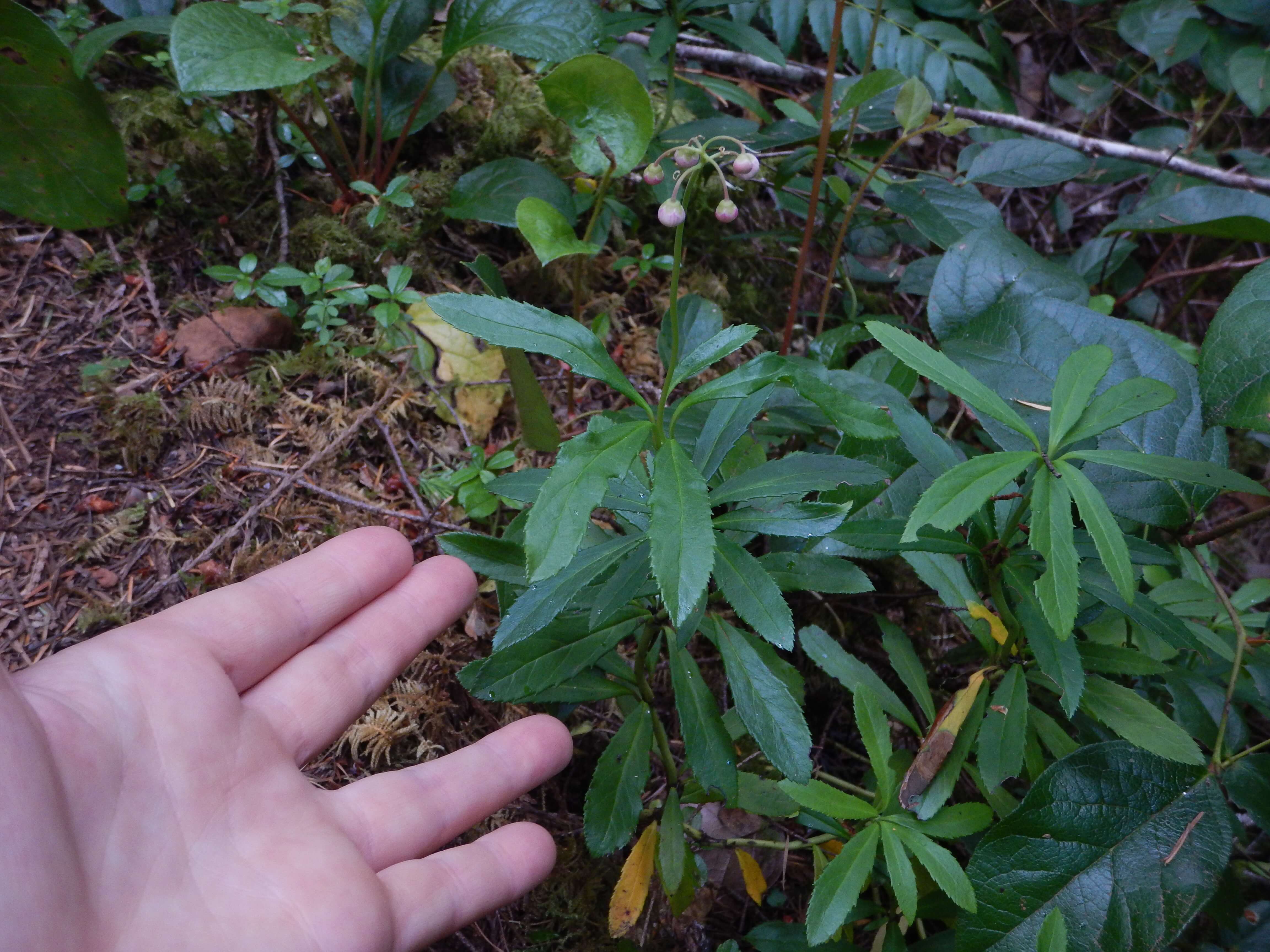
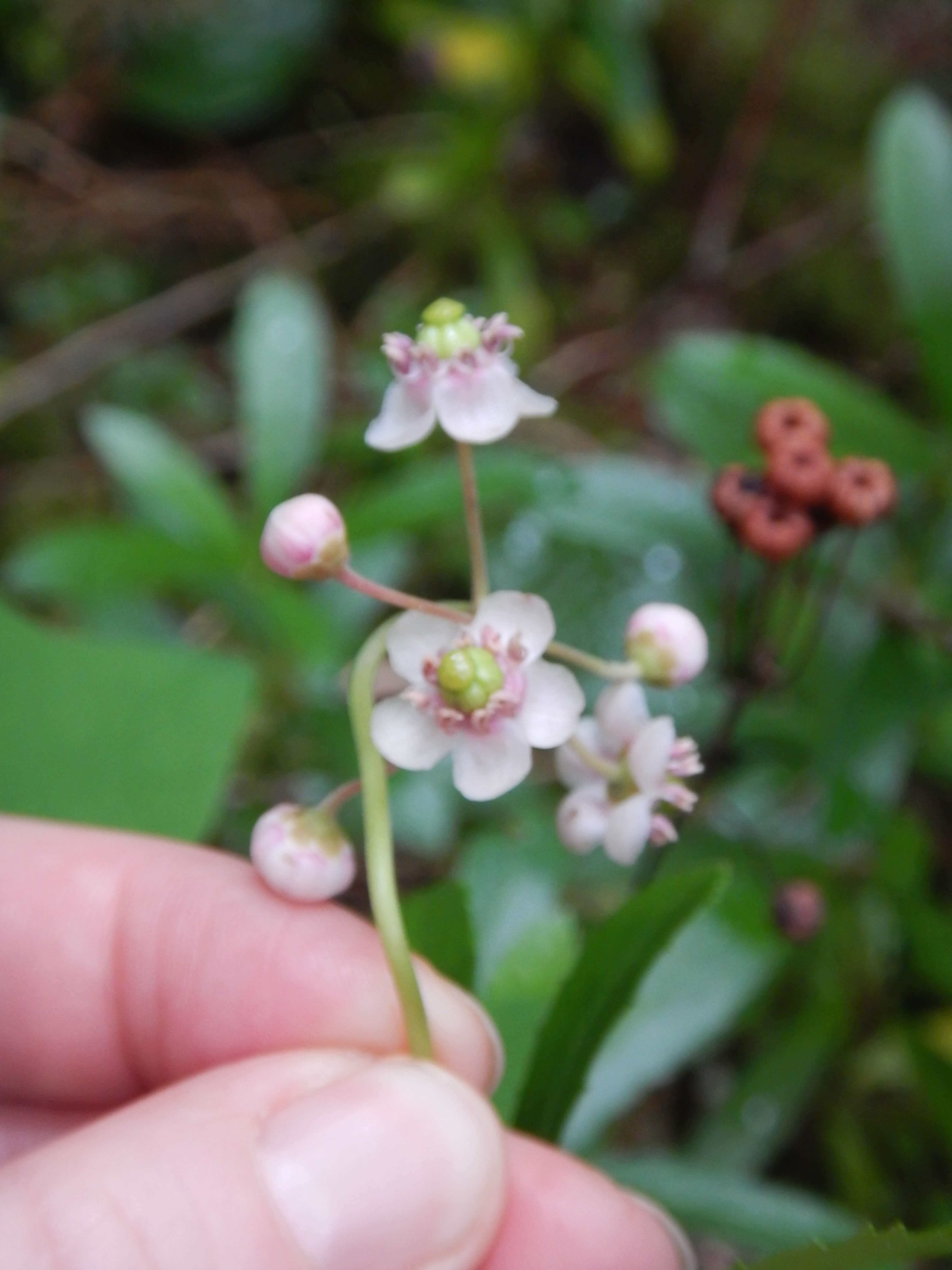
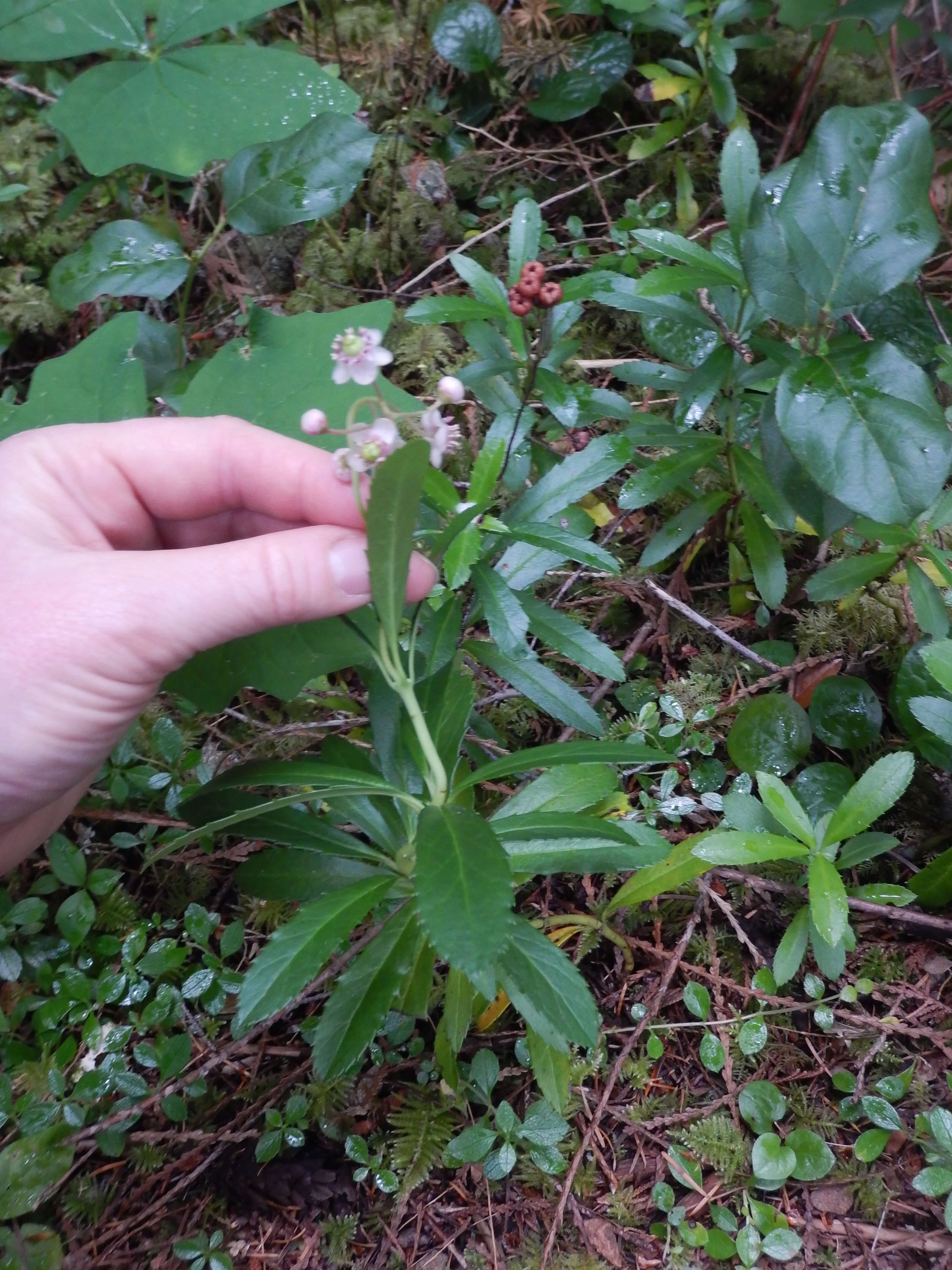
blooming evergreen prince's pine, sub-shrub, Chimaphila umbellata, occidentalis , pipsissewa, umbellate wintergreen,, garden Victoria BC Pacific Northwest
photo by SVSeekins

Now, I have reason to appreciate them.  One trail in Strathcona Park is so steep that the inside slope is only an arm’s reach away.  I have close-up views of the tiny plants that don’t usually catch my attention.   I stop, puffing for a few moments, taking in the forest’s carpet of mysteries.

blooming evergreen prince's pine, sub-shrub, Chimaphila umbellata, occidentalis , pipsissewa, umbellate wintergreen,, garden Victoria BC Pacific Northwest
photo by SVSeekins

At first, the evergreen plant, Prince’s pine, escapes my notice.

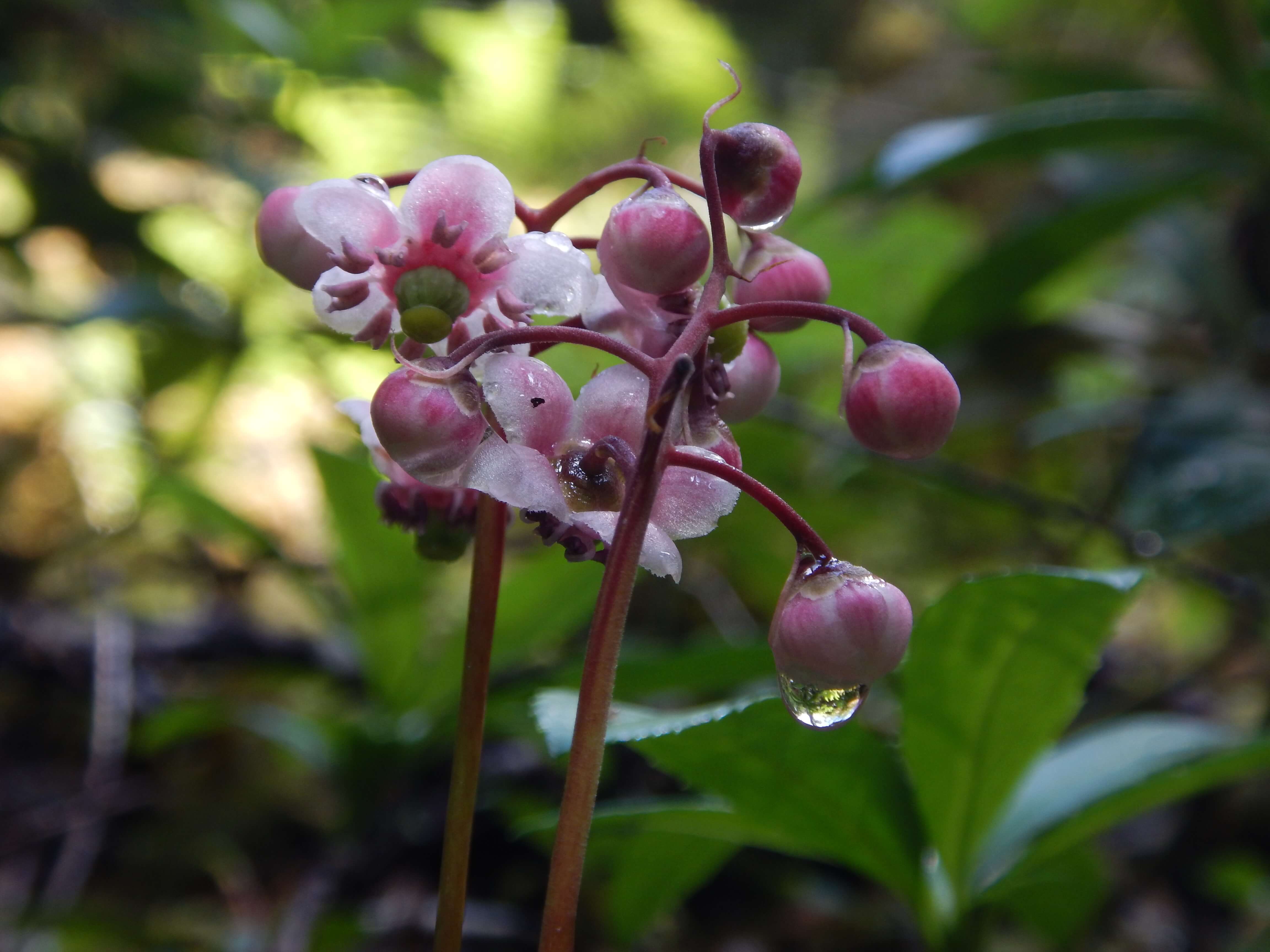
But then, my eyes spy the wildflower buds – such a delicate pink!

Further along the path, I find specimens in full bloom.  And some already setting seed — in early June.   🙂

blooming evergreen prince's pine, sub-shrub, Chimaphila umbellata, occidentalis , pipsissewa, umbellate wintergreen,, garden Victoria BC Pacific Northwest
photo by SVSeekins

The tiny, waxy-looking blossoms are such a contrast to the deep woodland duff of the understory.   Enchanting.  (There must be faeries nearby.)

I delight in the flowers while mourning that Chimaphila umbellata is probably not suited to our own garden.  (Yes, our garden is well-drained, but it’s shaded by Garry oak– not conifers.)

Back at the campsite, the mini-shrub is confirmed by Plants of the Pacific Northwest Coast (my wild plant Bible).   Woo Hoo — one more native plant in my repertoire.

blooming evergreen prince's pine, sub-shrub, Chimaphila umbellata, occidentalis , pipsissewa, umbellate wintergreen,, garden Victoria BC Pacific Northwest
photo by SVSeekins

It’s not until a wintery February morning, while attending Seedy Saturday that I meet Andy McKinnon, co-author of my treasured plant ID book.   He teaches me this science word for today.

Mixotrophic.

Prince’s pine is mixotrophic.  It has a friendly relationship with the fungus in the ground.

blooming evergreen prince's pine, sub-shrub, Chimaphila umbellata, occidentalis , pipsissewa, umbellate wintergreen,, garden Victoria BC Pacific Northwest
photo by SVSeekins

Like many plants, through photosynthesis, Prince’s pine produces sugars (its food).  It shares those sugars with fungi.  The fungi, in return, offer up access to nutrients from the soil.
Friendly, eh?
But wait – there’s more…

Prince’s pine & this fungi take their relationship a step further.

blooming evergreen prince's pine, sub-shrub, Chimaphila umbellata, occidentalis , pipsissewa, umbellate wintergreen,, garden Victoria BC Pacific Northwest
photo by SVSeekins

The fungi in the soil also connect to another plant (other than the Prince’s pine).  Through this threesome, the Prince’s pine can get sugars from this other plant.   Neighbours helping neighbours in times of need…. all through a fungi trade route.
(That’s Mixotrophic)

Isn’t Nature amazing?

-30-

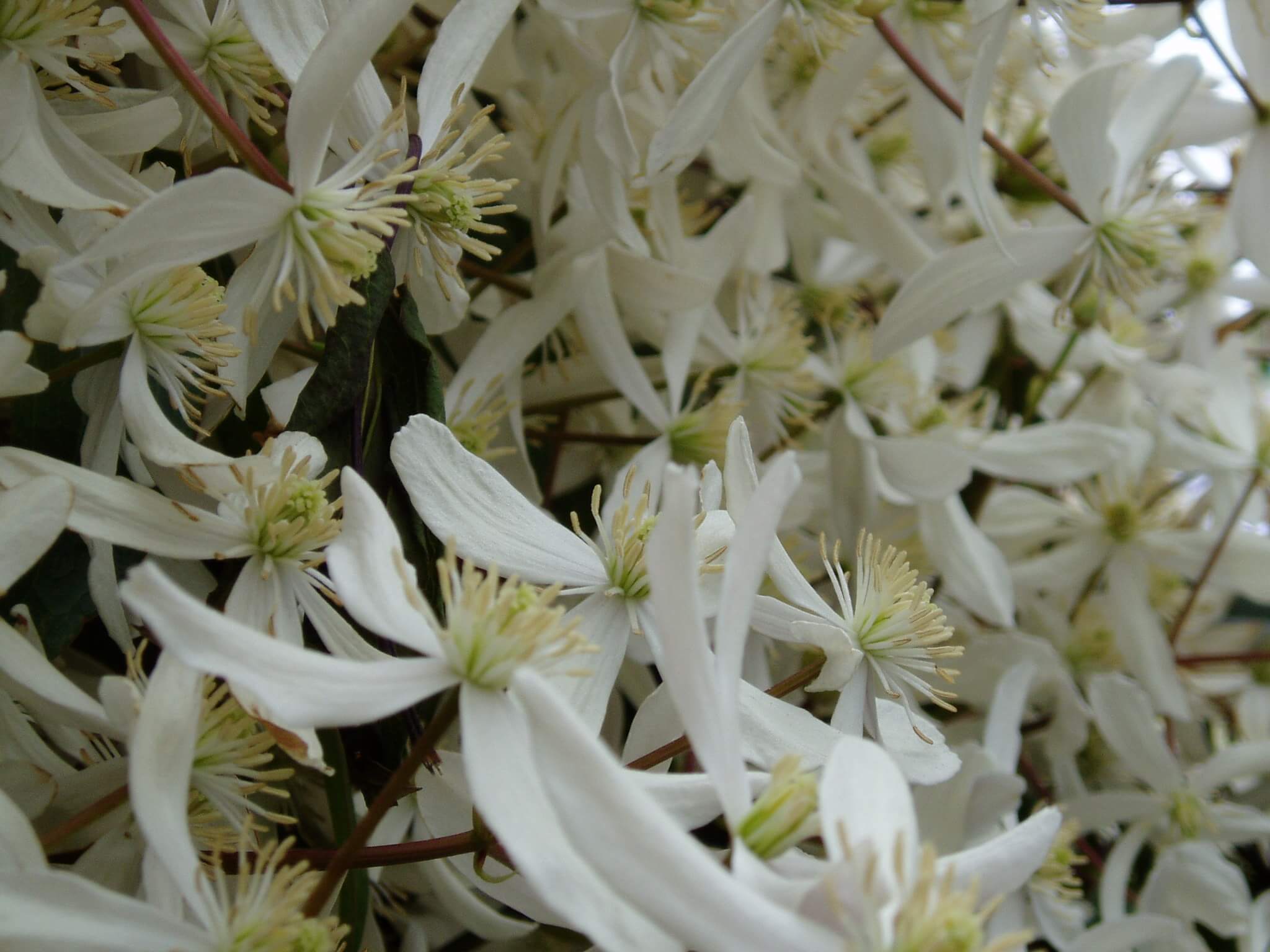
Winter Blooming Evergreen Clematis

It starts as early as January, with just a single bloom and a few buds.

traveller's joy, vine, Armand clematis, winter blooming evergreen clematis armandii snowflake garden Victoria BC Pacific Northwest
photo by SVSeekins

Such promise!
The darkening days of autumn are over.
The solstice has passed.
Winter is inching toward a brighter spring. 🙂  It’s an excellent time to celebrate evergreen Clematis in the Pacific Northwest.

Clematis armandi has a tough evergreen leaf that our local deer ignore – even in winter when grazing choices are limited.

traveller's joy, vine, Armand clematis, winter blooming evergreen clematis armandii snowflake garden Victoria BC Pacific Northwest
photo by SVSeekins

This clematis is poisonous to people, so maybe that extends to ungulates, too? The vine likes to be at the top of whatever it’s climbing, so there’s little left within reach of deer’s attention anyway.  The show is up in the air.

The foaming white flowers that cover the weeping vines through February & March certainly catch my attention.

traveller's joy, vine, Armand clematis, winter blooming evergreen clematis armandii snowflake garden Victoria BC Pacific Northwest
photo by SVSeekins

It’s a choice vine to situate so that you see it from your winter vantage points inside the home. Wouldn’t it make a lovely focal point while sipping your morning brew?  This particular behemoth hides a 6-foot tall chain-link fence dividing a block of offices from a parking lot.  It’s a good thing that the fence is sturdy.

traveller's joy, vine, Armand clematis, winter blooming evergreen clematis armandii snowflake garden Victoria BC Pacific Northwest
photo by SVSeekins

Evergreen Clematis’ clinging tendrils can find purchase in small cracks of walls & even shingles.  That’s why it’s most often welcome climbing pergolas & fences rather than homes.

By mid-May, the winter show will be over.  It’ll be time to give the heavy climber a proper pruning before it overwhelms the world.  Until then, I’m just enjoying the view.

-30-