The warm July browns the moss on our rocky outcropping. The licorice ferns have disappeared into their summer dormancy. It’s the Nodding Onions that brave the drought.
photo by SVSeekins
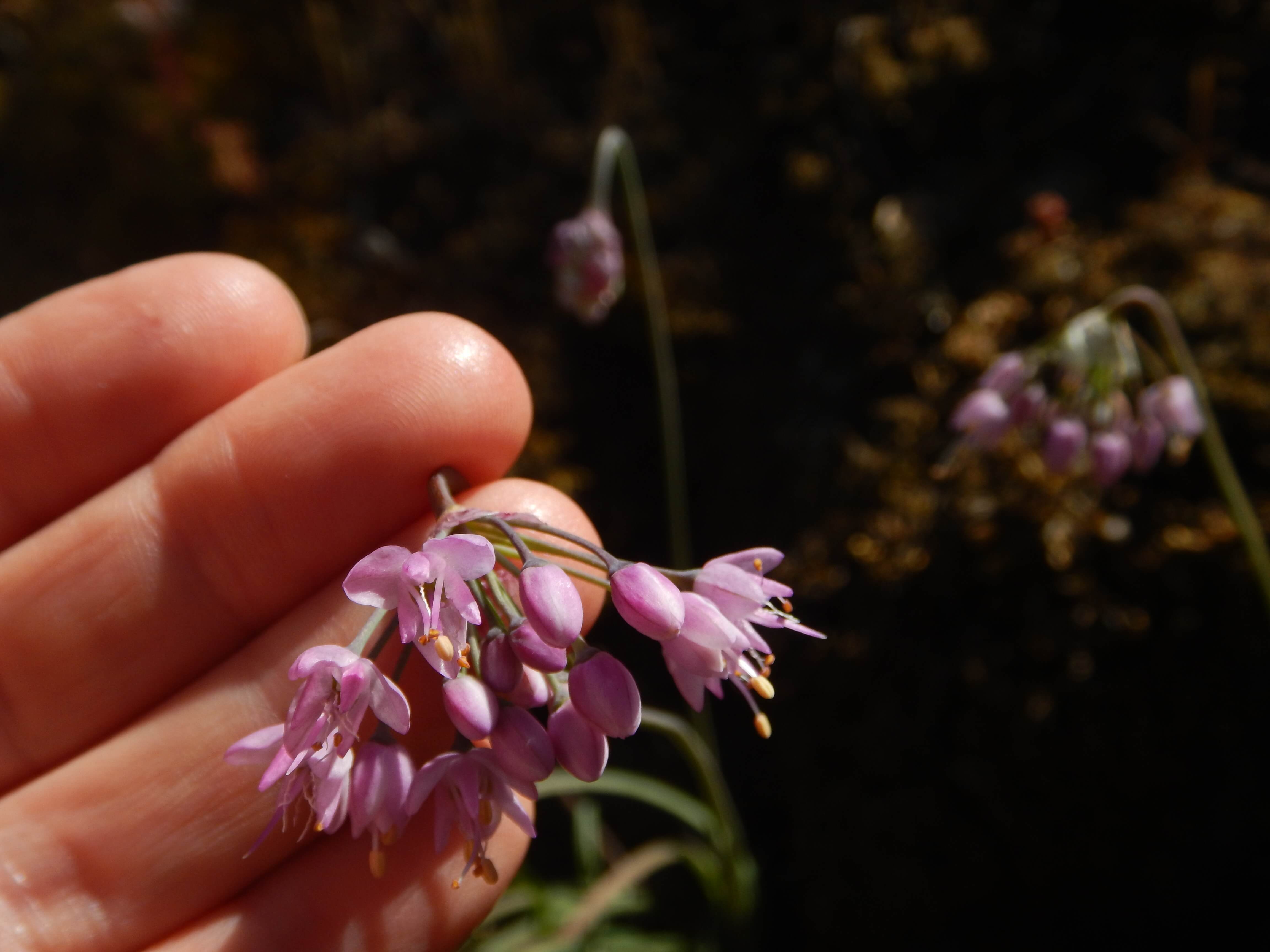
The delicate pink flowers of Allium cernuum look too fragile to survive the heat – but here they are. 🙂
Last year the deer grazed this patch of wild bulbs. That surprised me because deer tend to leave smelly plants alone. But this year? It seems this onion is not on their menu. Who knows why?
photo by SVSeekins
Nodding onion is a native wildflower throughout the Pacific Northwest, liking the winter rain & summer dry of Southern Vancouver Island. It’s a perfect low-maintenance garden plant. Instead of primping & coddling exotic plants – I welcome more of these natives into our ornamental garden.
So, I’m letting this little clump just do its thing.
No deadheading,
therefore
Self-seeding.
I’m imagining a haze of summer pink on this hillside in a few years. Can’t you picture it?
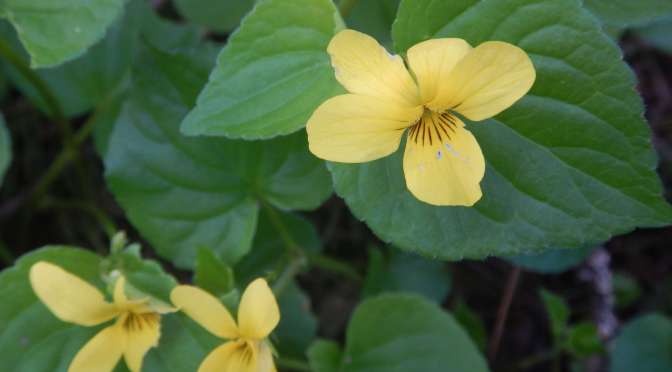
It is on a spring walk through Goldstream Park that we spot wild yellow violets.
So tiny!
But so precious!
(It’s very rare for me to catch sight of this native wildflower.)
It was SM who spotted them. Once we saw the first one, we noticed a few more further along the trail.
photo by SVSeekins
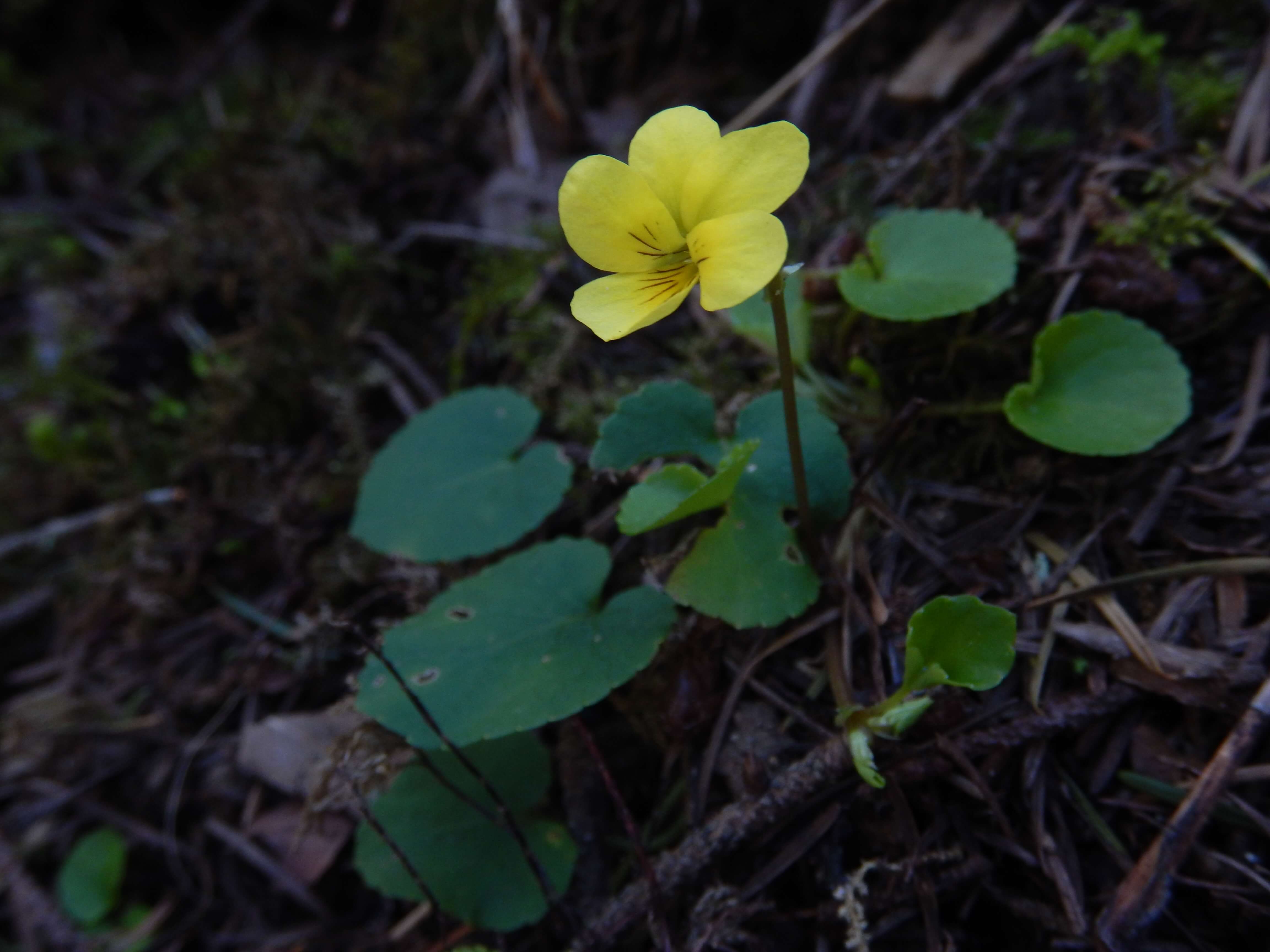
These are Viola glabella, AKA yellow wood violet, stream violet, pioneer violet, or smooth yellow violet.
They enjoy the moist woodlands of the Pacific Northwest & are even found along Asia’s Pacific Northeast.
🙂
I wonder how many more names they have there?
There’s another similar yellow violet, Viola pubescens, but it’s native to the eastern side of our continent. It’s definitely not this one either.
I first encountered yellow wood violets in a municipal campground in Washington State. Perhaps that patch was more mature, or further into it’s growing season because it was a larger clump.
photo by SVSeekins
Maybe it was bigger because it had a bit more sunshine? (Our walk at Goldstream Park was through lots of tall trees.)
I can easily imagine wanting some yellow wood violets in our own (dry) woodland garden if we weren’t tending a meadow of the western dog violet (Viola adunca).
photo by SVSeekins
Another friend (PS) has yellow wood violets in her irrigated woodland garden. They’re doing well & are slowly spreading between the other perennials. The challenge is sharing ground with the more persistent & dry tolerant western dog violet. They look so similar that it’s only when a dog violet blooms (purple) that PS digs it out, giving the yellow violets priority. It’s a longterm strategy. I have my fingers crossed for her.
On second thought, maybe I could find an isolated, shady spot in our yard where there are no dog violets & enough moisture…
Typically I curse steep switchbacks. They are exhausting!
photo by SVSeekins
Now, I have reason to appreciate them. One trail in Strathcona Park is so steep that the inside slope is only an arm’s reach away. I have close-up views of the tiny plants that don’t usually catch my attention. I stop, puffing for a few moments, taking in the forest’s carpet of mysteries.
photo by SVSeekins
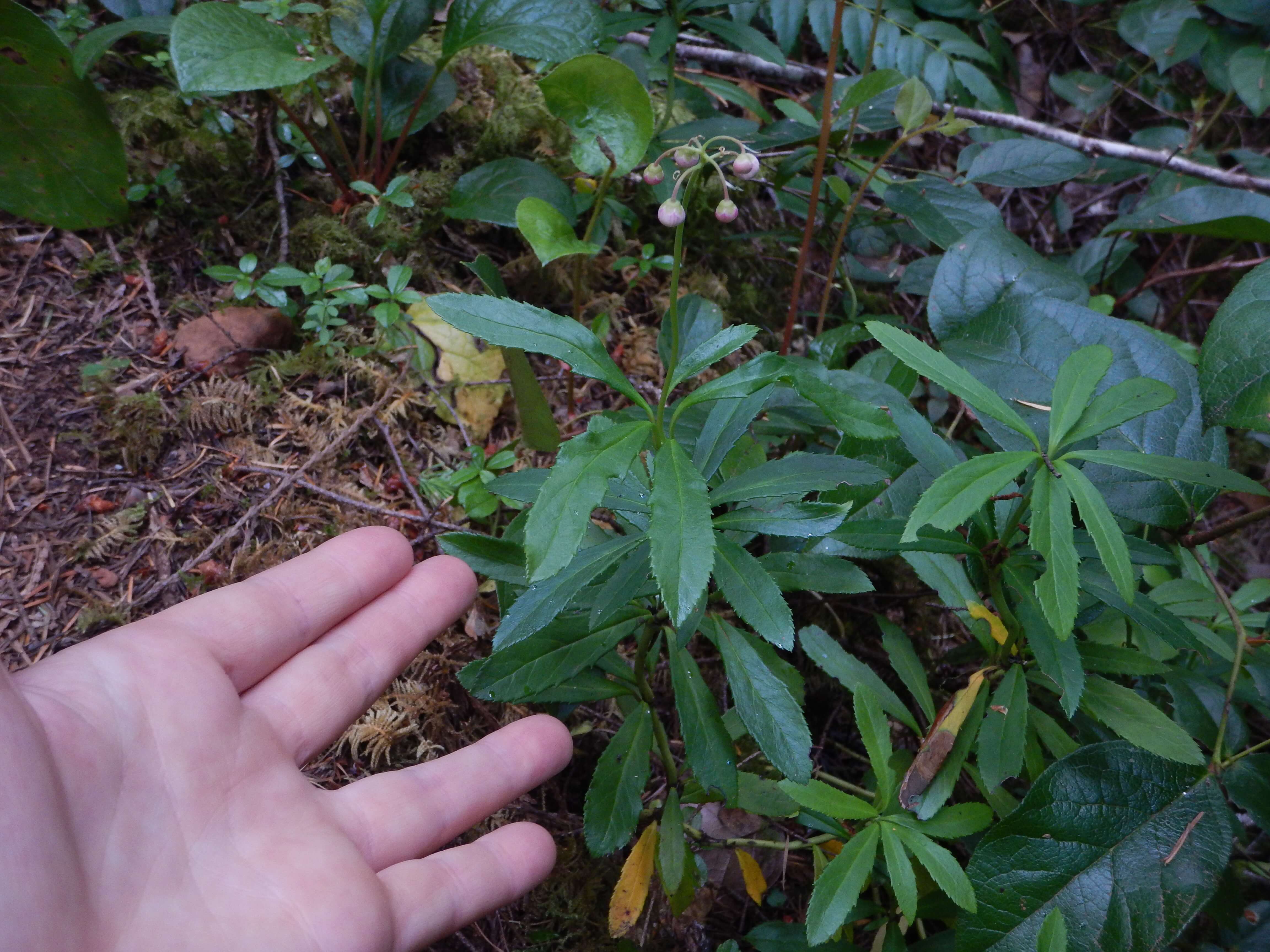
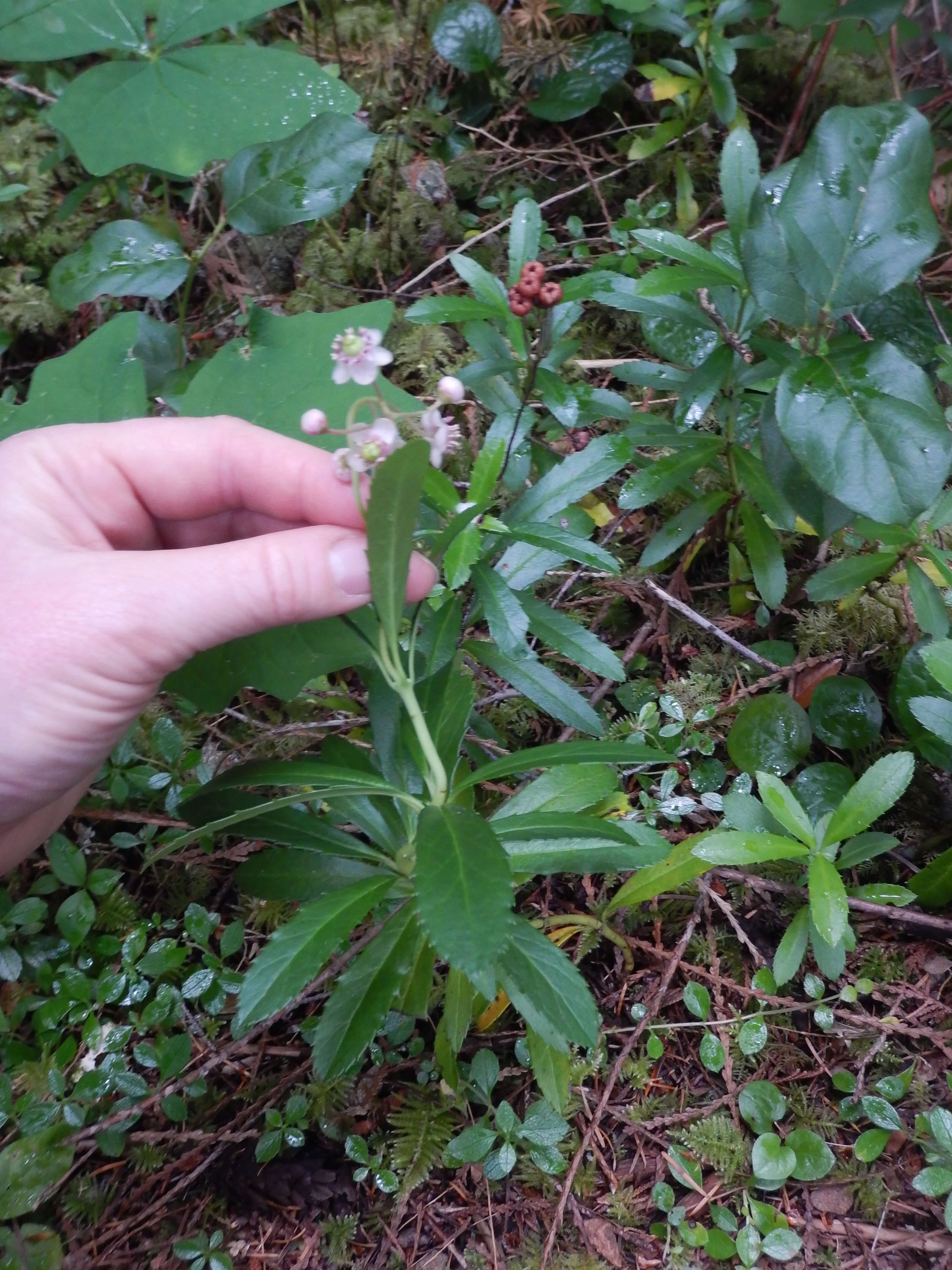
At first, the evergreen plant, Prince’s pine, escapes my notice.
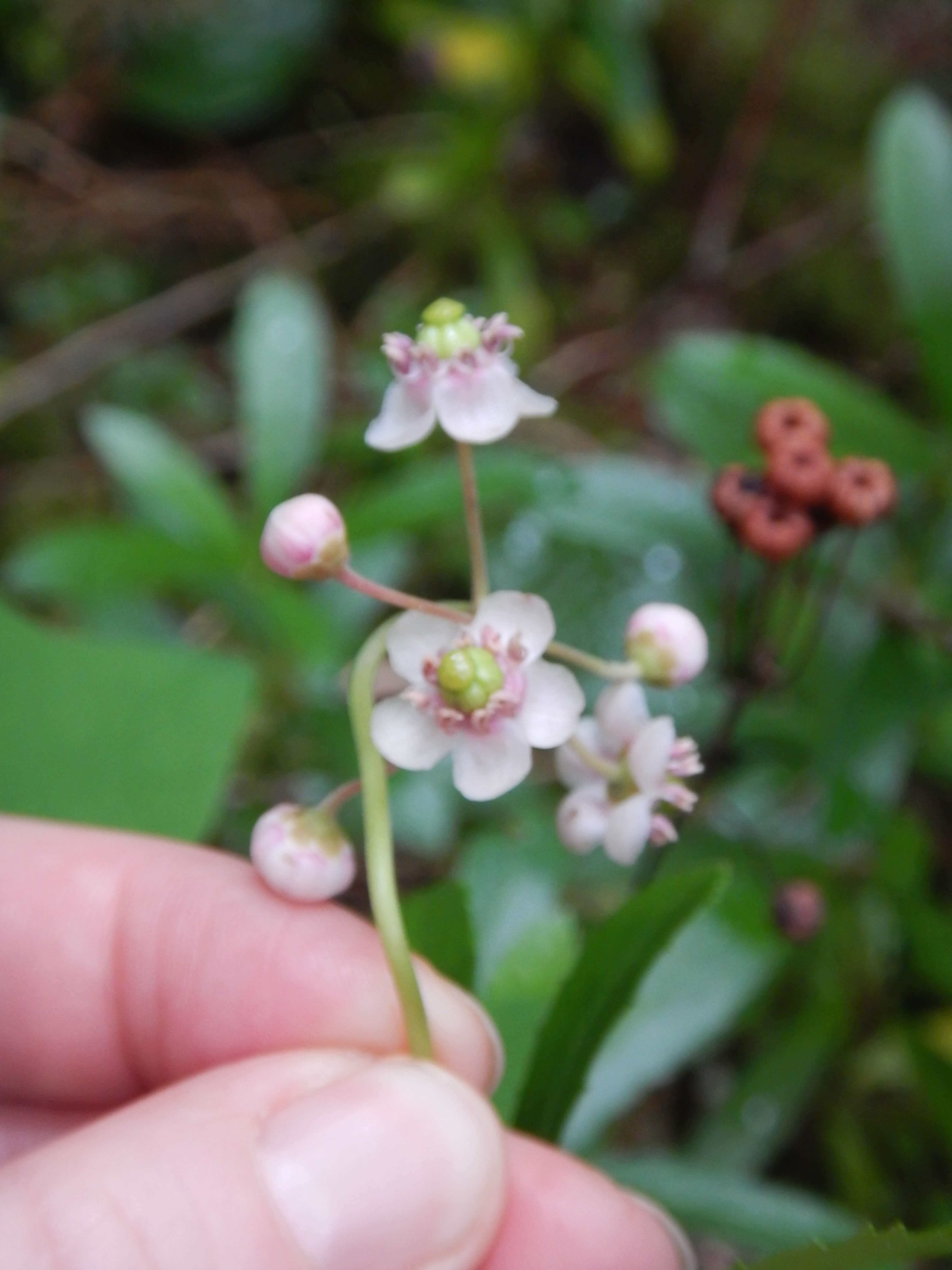
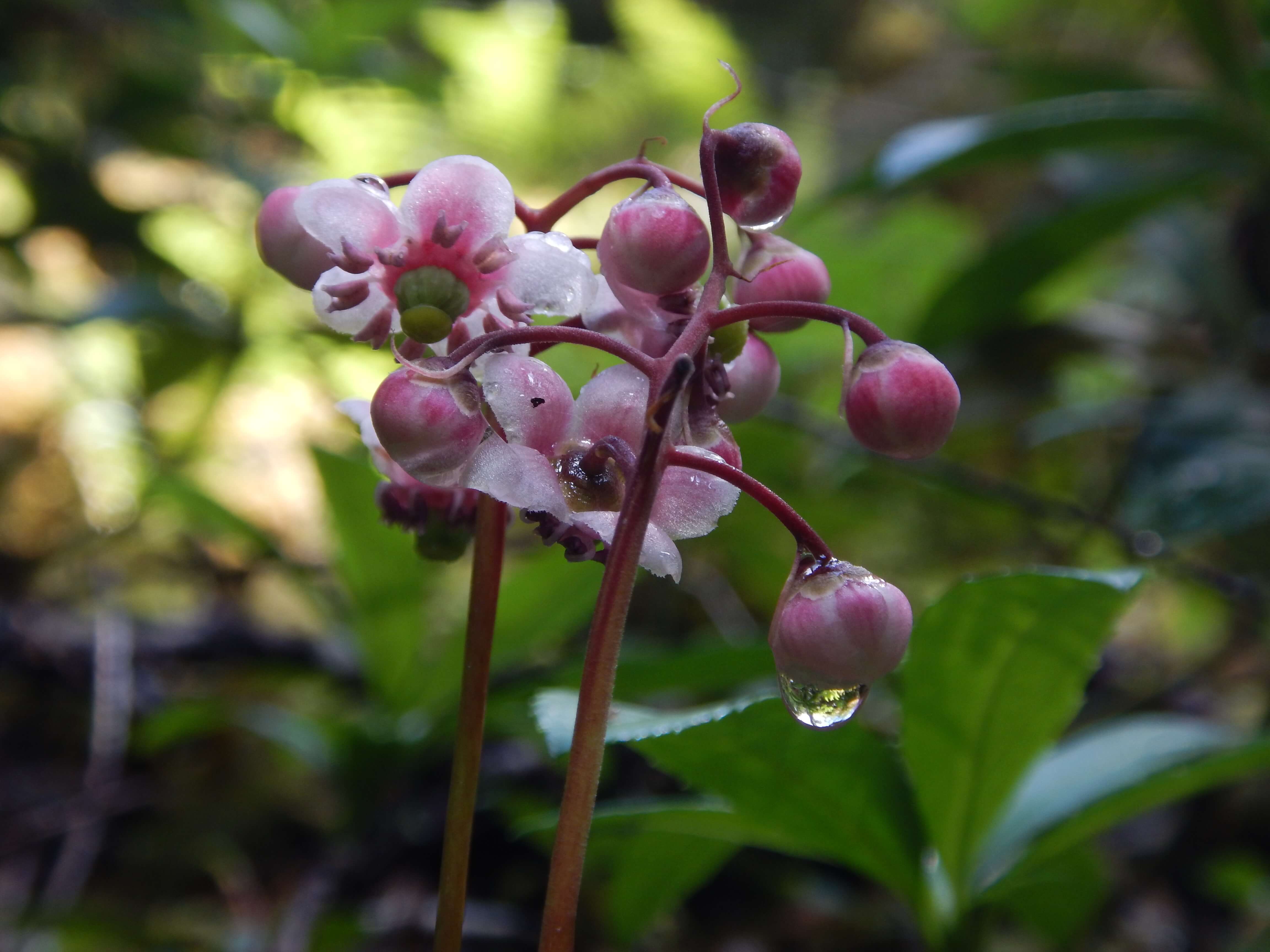
But then, my eyes spy the wildflower buds – such a delicate pink!
Further along the path, I find specimens in full bloom. And some already setting seed — in early June. 🙂
photo by SVSeekins
The tiny, waxy-looking blossoms are such a contrast to the deep woodland duff of the understory. Enchanting. (There must be faeries nearby.)
I delight in the flowers while mourning that Chimaphila umbellata is probably not suited to our own garden. (Yes, our garden is well-drained, but it’s shaded by Garry oak– not conifers.)
Back at the campsite, the mini-shrub is confirmed by Plants of the Pacific Northwest Coast (my wild plant Bible). Woo Hoo — one more native plant in my repertoire.
photo by SVSeekins
It’s not until a wintery February morning, while attending Seedy Saturday that I meet Andy McKinnon, co-author of my treasured plant ID book. He teaches me this science word for today.
Mixotrophic.
Prince’s pine is mixotrophic. It has a friendly relationship with the fungus in the ground.
photo by SVSeekins
Like many plants, through photosynthesis, Prince’s pine produces sugars (its food). It shares those sugars with fungi. The fungi, in return, offer up access to nutrients from the soil.
Friendly, eh?
But wait – there’s more…
Prince’s pine & this fungi take their relationship a step further.
photo by SVSeekins
The fungi in the soil also connect to another plant (other than the Prince’s pine). Through this threesome, the Prince’s pine can get sugars from this other plant. Neighbours helping neighbours in times of need…. all through a fungi trade route.
(That’s Mixotrophic)







 Garden Variety Life