Category Archives: garden plant lists

featured plants

Hooray For Naked Ladies

Yes, this title is cheeky, but it’s true.  It’s no secret I like Naked Ladies.  Last fall, I admitted it.  At the time, I was referring to Colchicum.  The common name made sense to me because the flowers & stems appeared so naked without the leaves as to clothe them.
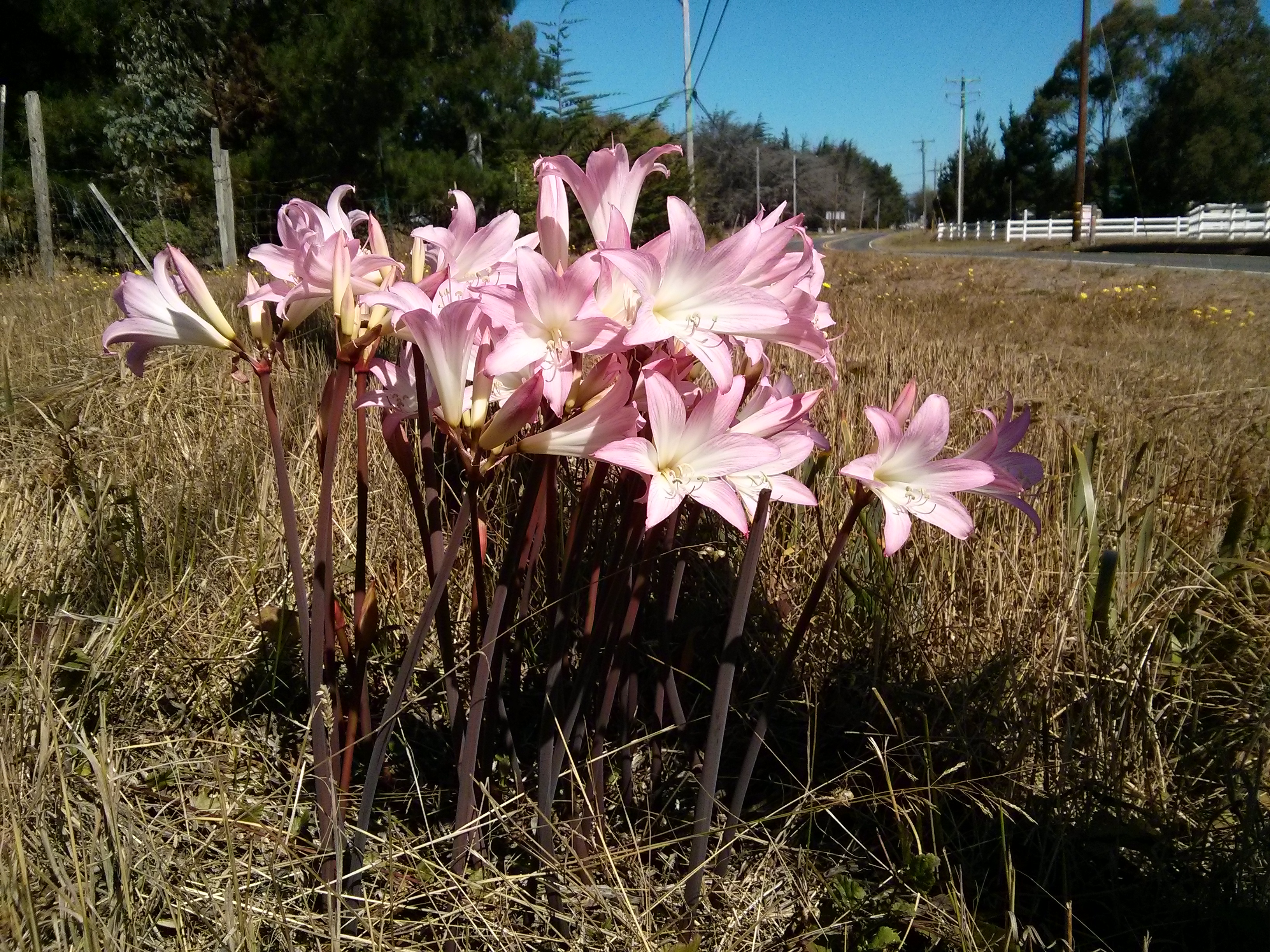
Naked Ladies in a California ditch
photo by SVSeekins

Recently, while travelling in northern California, I learned that the common name Naked Ladies can also refer to Amaryllis belladonna.  Through the countryside, even in ditches & deserted farmyards, these Naked Ladies danced happily.  Everything else seemed to have died back from dehydration.  Wow.  I figure they’re very sun & drought-tolerant to thrive in those places.

Nerine Lilies along a Victoria path
photo by SVSeekins

There’s a very similar pink flower that also blooms in the fall:  Nerine Lily.  Apparently, it’s also part of the Amaryllis family, but the flowers aren’t naked; the leaves show up along with the blooms.   I thought I’d identified some Nerine Lilies in our neighbourhood last year, but now I’m not so sure. Some leaves are showing, but not many.  Nerine?  Not So Naked Ladies?  It’s tricky.

This lovely patch of pink blossoms is in a yard along Mayfair Drive on Mt. Tolmie.  What’s especially impressive is how well they’ve stood up through the torrential rains of the past week!  Wow!  Sun & drought-tolerant… deer-resistant… and downpour-durable!

Just imagine: Naked Ladies– dancing in the rain.    Woo hoo !!
🙂

PS – Last night chatting with a couple of Garden Club ladies, a couple other fall-blooming, pink flowers were mentioned.
SK recommended Schizostylis (Kaffir Lily)  from the Iris family. (aka Hesperantha)
JJ recommended Crinum from the Amaryllis family.

-30-

Here are some other pink autumn bloomers:

kaffir lily, scarlet river lily, crimson flag lily, Hesperantha coccinea, Schizostylis coccinea, garden Victoria BC Pacific Northwest
photo by SVSeekins

© SVSeekins and Garden Variety Life, 2013

Landscaping With Wild Strawberries

An early summer adventure when I was a kid, was picking tiny, wild strawberries.  They were packed with incredible flavour.  We would forage for ages just to bring home a small bowl full, but it was always worth it.

wild strawberries 1
photo by SVSeekins

More recently (2 years ago), at a ‘Gardening with Native Plants’ workshop, I learned those very same plants will happily grow in the urban landscape.  How cool is that?  Plants that provide an opportunity to forage in my own yard AND do double duty as a ground cover! Bring it on!

I’d never seen thick mats of strawberries like those in the photos at the gardening workshop, but Pat Johnston really knows her stuff, so I totally believed it was possible.  I immediately formed a plan.

Trent Street garden
photo by SVSeekins

Pat explained the 2 kinds of local wild strawberries to take into consideration.  The coastal strawberry is a tough, full sun, drought tolerant workhorse.  The woodland strawberry also works great as a ground cover, but performs much better in more shady parts of the garden.

After running across a bed of wild strawberries growing prolifically in a curbside city garden – – and looking like they were about to take over the sidewalk, I was even more encouraged. Who knew wild strawberries would grow so well in town? I set about planting coastal strawberries in our sunny garden bed.

The landscape trend was spreading.  A new native landscape area at the college down the street was planted with wild strawberries, too.

strawberry patch at Camosun's Lansdowne campus
photo by SVSeekins

The other day (2 years later) I walked by the spot and was impressed by how well that area had filled in.  Perhaps the Camosun groundskeepers fertilize a little more than I do?… or maybe they water the area more?  or maybe they originally planted more starts?… I’m not sure.  But it looks great, doesn’t it?.

I reckon our strawberry patch will catch up in another year or two.  In the meantime I’m enjoying watching my own little community of strawberries send out their ‘runner babies’.

The birds are more vigilant than I am, so I don’t expect to ever have enough harvest to make jam or pie.  I figure the occasional berry is a reward for getting out in the garden to water or weed.

-30-
© SVSeekins and Garden Variety Life, 2013

strawberry patch at Camosun'
photo by SVSeekins

Bottlebrush

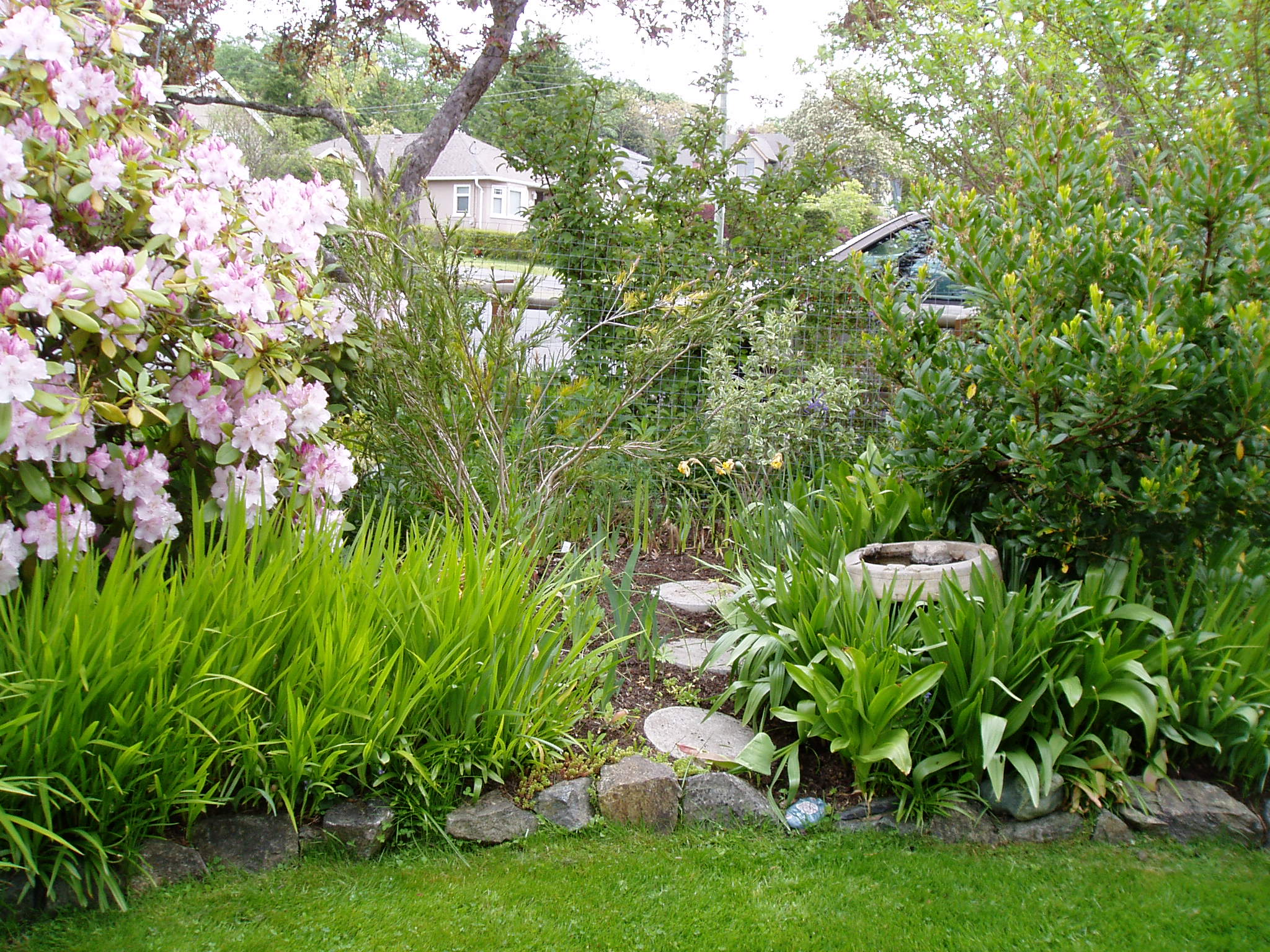
bottlebrush to the right of the pink rhodo
photo by SVSeekins

Most of the time the Bottlebrush is just an unusual evergreen weeping shrub.  Its spiky, lance-shaped leaves don’t look like the needles of any coniferous tree I’ve ever seen.  But it’s kinda funky – – and you know, I appreciate funky.   🙂  So it makes perfect sense to me to plant one as a backgrounder in the shrub border.

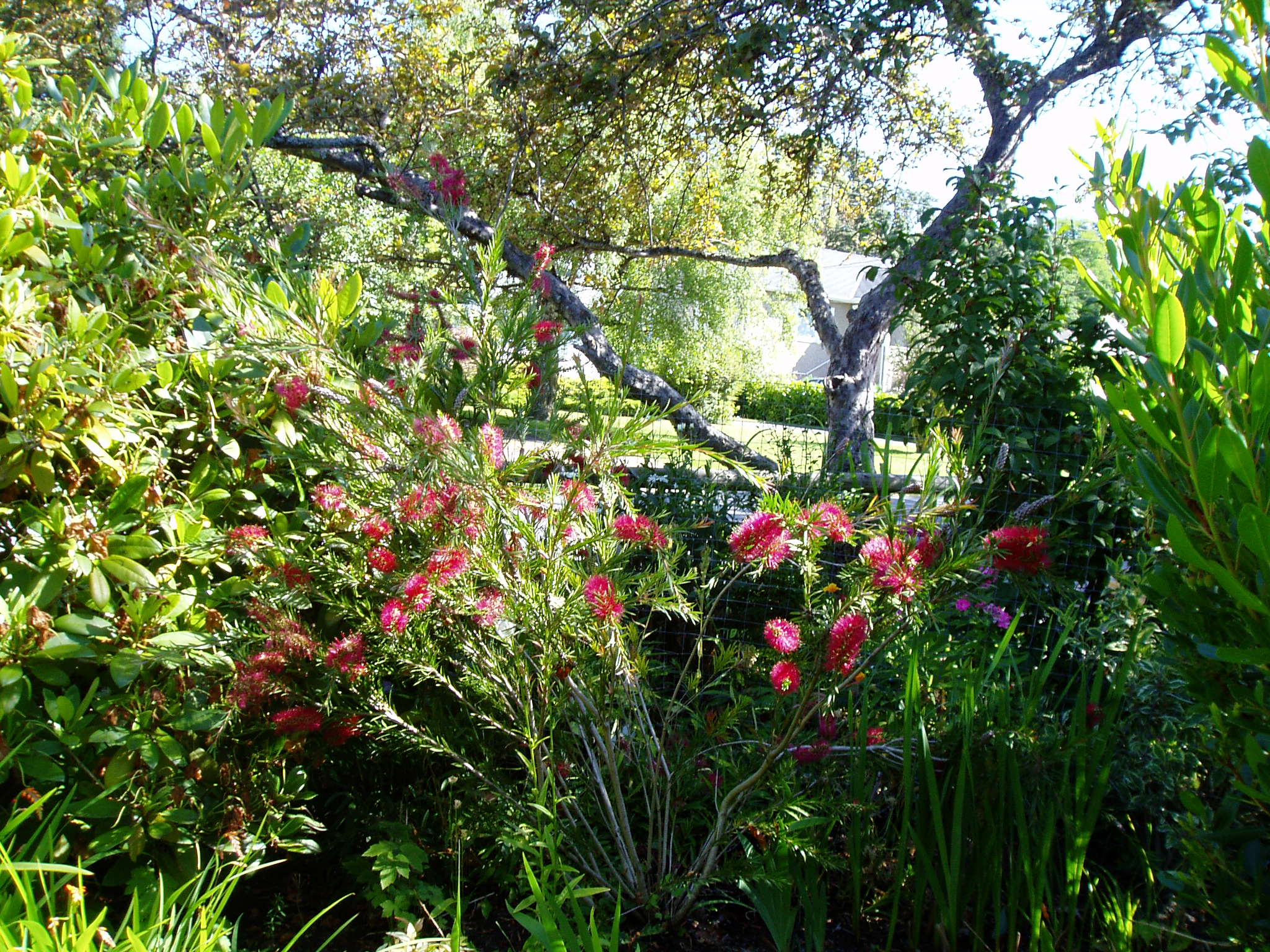
bottlebrush in bloom Callistemon garden Victoria BC Pacific Northwest
photo by SVSeekins

It gets very little notice when the rhododendron right beside it blooms in May.

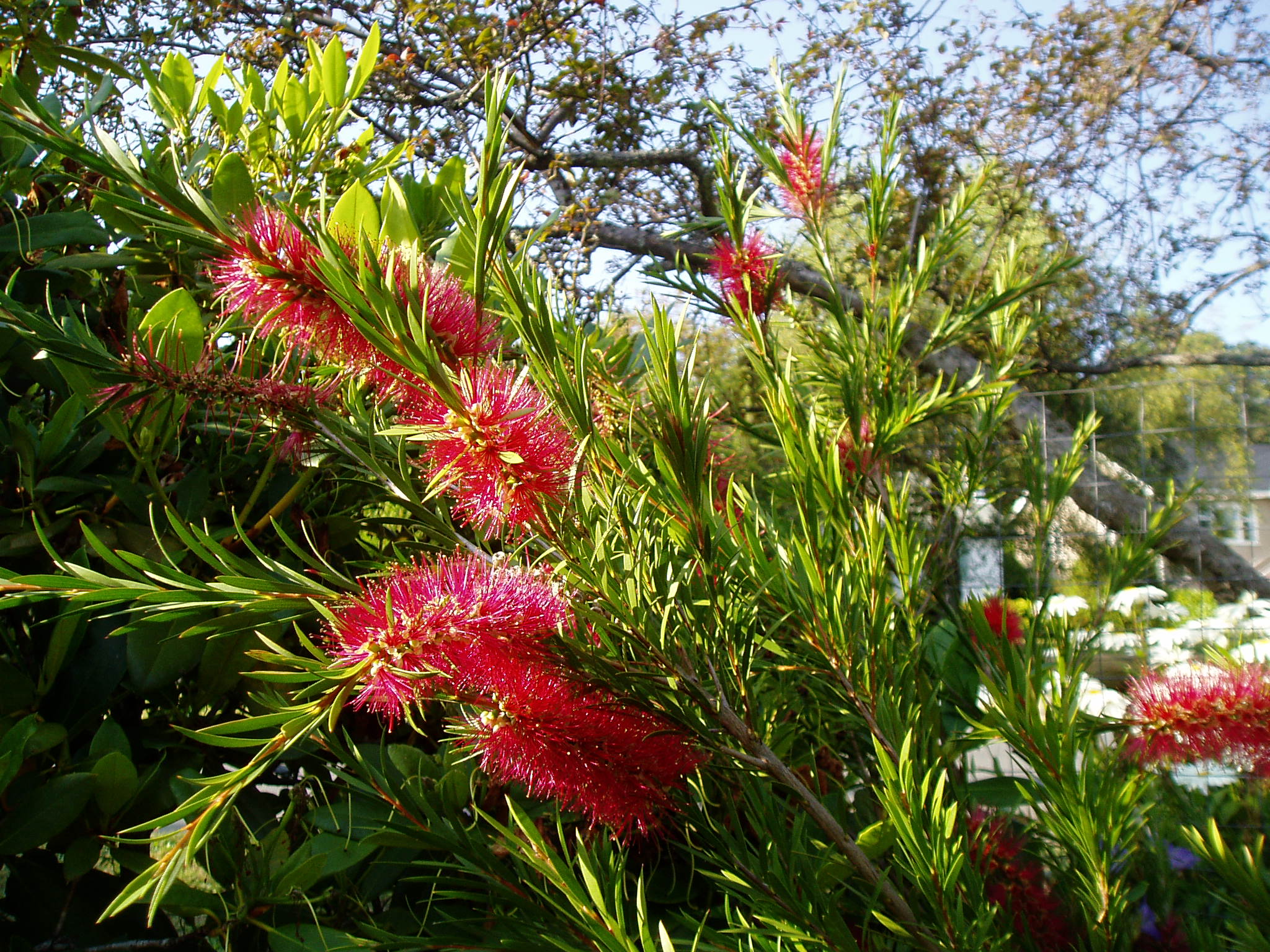
But come July, the spring spectacular in the garden fades.  The hummingbirds & butterflies shift their attention as the Callistemon commands centre stage.  For a couple of weeks, the red blooms are spectacular: a true summery colour.

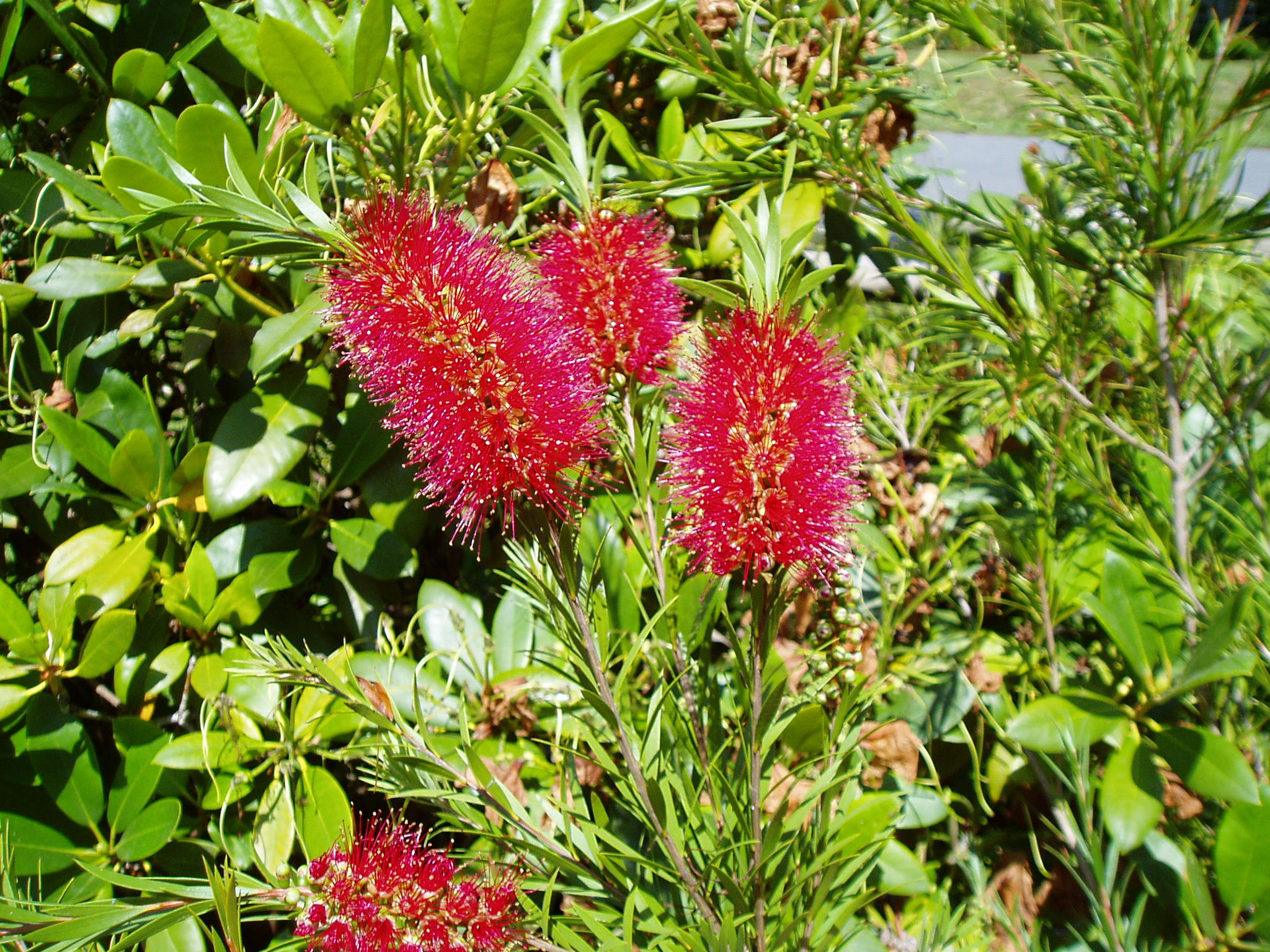
bottlebrush blooms Callistemon garden Victoria BC Pacific Northwest
photo by SVSeekins

The flowers are 5 inches long + 2 inches wide, but STRANGE….

Instead of bobbing at the top of stem-like normal flowers do, the bottlebrush flower petals circle the branch itself.  These blossoms remind me of the gizmo we use to wash out wine bottles.  The name bottlebrush is àpropos.

As the blooms fade the seed clusters add a little interesting texture as the shrub returns to its regular backdrop duties.

bottlebrush seed head Callistemon garden Victoria BC Pacific Northwest
photo by SVSeekins

I know bottlebrush has coastal Australian origins, so I”ve crossed my fingers it’ll survive our occasional winter freeze.  So far, so good.

It’s reputed to like a little moisture too, but after it became established I’ve really reduced the mollycoddling.  With a whole lot more mulch & a lot less water, it seems as drought tolerant as it needs to be in this pacific northwest garden.

bottlebrush blooms Callistemon garden Victoria BC Pacific Northwest
photo by SVSeekins

Because of the tough needle-like leaves, I didn’t expect any trouble from the deer, but we did have a problem the first year this bottlebrush was planted.

A young buck came into the yard.  Frustrated with his velvet antlers, he was rubbing them on anything that might help remove the itchy felt.  He took on the trunk of the evergreen magnolia (surviving still, but will never reach its grand potential)… he took on the columnar cedar bushes (recovered well)…  He took on the bottlebrush & it shredded under his antlers. Poor thing.

recovering bottlebrush Callistemon garden Victoria BC Pacific Northwest
photo by SVSeekins

It was a good thing I was broke at the time because otherwise I might have just dug it up & replaced it with something else.  Instead, I cut back the broken stems darn near the ground. It was delightful the following year to see it spring back & grow like crazy.  I caged it for a year or so, but now it’s larger & unprotected.  

protected bottlebrush, Callistemon garden Victoria BC Pacific Northwest
photo by SVSeekins

There’s another young buck coming around this summer, so I’ll keep an eye out for any signs of antler rubbing & be on the ready with more wire fencing.

-30-
© SVSeekins and Garden Variety Life, 2013