Category Archives: perrennials

False Lily of the Valley

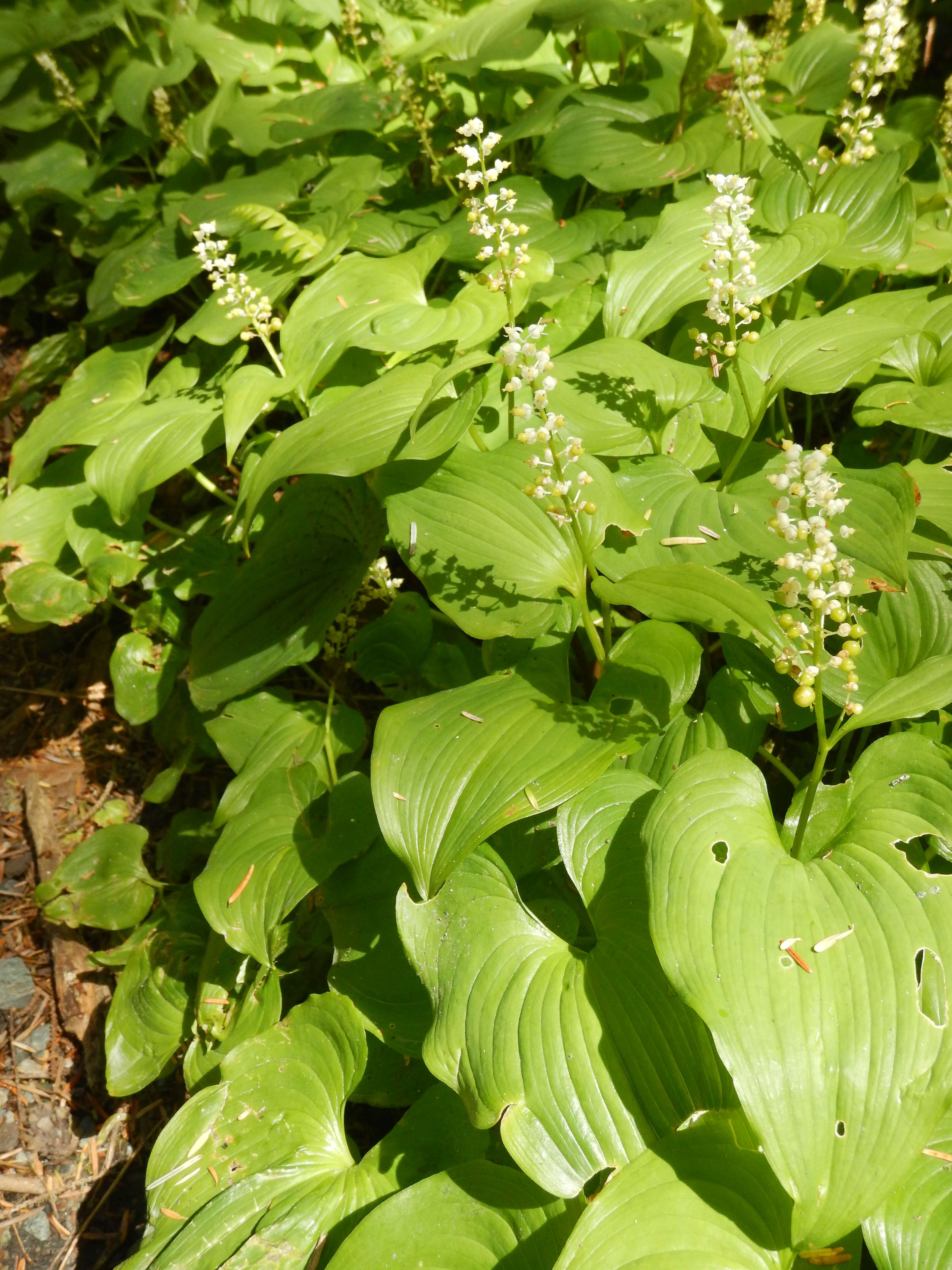
False Lily of the Valley is one of my favorite native groundcovers.  Fabulous carpets of it grow along the trails to Botanical Beach + the Visitor Centre at Long Beach.
false lily of the valley, Maianthemum dilatatum, lily-of-the-valley, snakeberry, Maianthemum bifolium ssp. kamtschaticum, Maianthemum bifolium var. kamtschaticum, Maianthemum kamtschaticum, garden Victoria BC Pacific Northwest
photo by SVSeekins

This summer, on a trip through Northern BC, I spotted a patch.  ‘Turns out my untrained eye was fooled by Wild Lily of the Valley.

Good grief!  Add in the ‘true’ Lily of the Valley & there are 3 plants to confuse! Let’s consider the similarities:

  • they’re all perennial…
  • spread by creeping rhizomes forming thick carpets…
  • display clusters of white flowers in spring…
  • long markings run the length of the leave from stem to tip…
  • live happily in moist, shady woods…

But consider differences:

false lily of the valley, Maianthemum dilatatum, lily-of-the-valley, snakeberry, Maianthemum bifolium ssp. kamtschaticum, Maianthemum bifolium var. kamtschaticum, Maianthemum kamtschaticum, garden Victoria BC Pacific Northwest
photo by SVSeekins
  • False Lily of the Valley is a common coastal groundcover around the Pacific Rim.
    1. The Wild cousin grows in Northeastern BC & across much of the boreal forest.
    2. The original Lily of the Valley is unrelated– native to Europe, but introduced to gardens across North America.

      false lily of the valley, Maianthemum dilatatum, lily-of-the-valley, snakeberry, Maianthemum bifolium ssp. kamtschaticum, Maianthemum bifolium var. kamtschaticum, Maianthemum kamtschaticum, garden Victoria BC Pacific Northwest
      photo by SVSeekins
  • False Lily of the Valley, Maianthemum dilatatum,  has wider leaves (dilatatum means wide).   And heart-shaped.
    1. The Wild cousin, Maianthemum canadense, is also heart-shaped, but slightly more oblong.
    2. The European colonizer has oblong leaves – not heart-shaped at all.

      false lily of the valley, Maianthemum dilatatum, lily-of-the-valley, snakeberry, Maianthemum bifolium ssp. kamtschaticum, Maianthemum bifolium var. kamtschaticum, Maianthemum kamtschaticum, garden Victoria BC Pacific Northwest
      photo by SVSeekins
  • False Lily of the Valley has berries that start out pale with red speckles, but the speckles multiply until the berry is quite dark.
    1. The Wild cousin reacts much the same way.
    2. I’ve never noticed speckles on the European berry. It’s more of an orangey red.

      false lily of the valley, Maianthemum dilatatum, lily-of-the-valley, snakeberry, Maianthemum bifolium ssp. kamtschaticum, Maianthemum bifolium var. kamtschaticum, Maianthemum kamtschaticum, garden Victoria BC Pacific Northwest
      photo by SVSeekins
  • False Lily of the Valley is used for several purposes by Coastal First Nations, especially the berries.
    1. The Interior First Nations haven’t mentioned eating the berries.
    2. The European Lily of the Valley, Convallaria majalis, is poisonous — don’t eat any of it!

Typically I stay away from  ‘poisonous’ plants, but this is an exception.  Visiting deer haven’t eaten our Convallaria majalis, so I let it grow.  I’d prefer to have the False Lily of the Valley in our garden, but because the locals eat it, I reckon the deer would too.

Bummer.

-30-
A Place for Fireweed

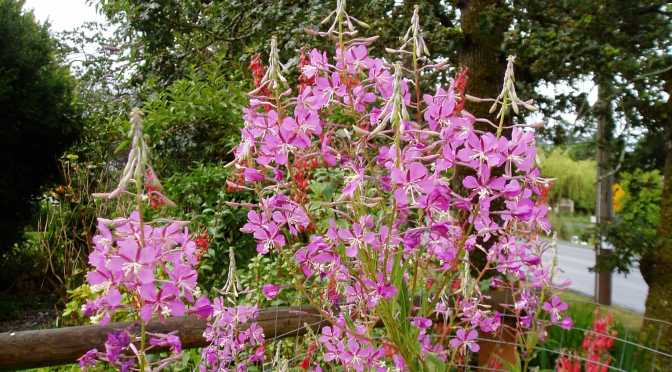
Fireweed, bombweed, rosebay willowherb, Chamerion angustifolium, great willow herb, wickup, Epilobium angustifolium, garden Victoria BC Pacific Northwest
photo by SVSeekins

Even as a  child, I thought fireweed was one of the prettiest flowers going.  Each tiny bloom in a spire of blooms is beautiful on its own – together, they’re just gorgeous. In any kid’s wildflower bouquet, fireweed is the showpiece.

I admired the large swaths of purple along Alberta’s ditches, meadows & forest edges.

Now, living on the West Coast, they delight me along hiking trails & even shorelines.   In fact, I’ve seen them growing pretty much everywhere in BC, except in the arid Okanagan.

Fireweed, bombweed, rosebay willowherb, Chamerion angustifolium, great willow herb, wickup, Epilobium angustifolium, garden Victoria BC Pacific Northwest
photo by SVSeekins

When I found some growing in the gravel of a parking lot, I figured they had to be tough enough to grow in our yard. 
(I ‘rescued’ a few.)

It turns out that deer enjoy the young shoots. The fireweed flourished, planted at the base of a new tree that we’d caged to protect from deer too.

Fireweed, bombweed, rosebay willowherb, Chamerion angustifolium, great willow herb, wickup, Epilobium angustifolium, garden Victoria BC Pacific Northwest
photo by SVSeekins

Aside from the beauty factor, there are a few other reasons I grow this perennial in our garden:

  • The blooms start low in the tier & gradually open further and further up as the summer progresses, providing color over a long stretch.
  • Bees & butterflies love fireweed– as do hummingbirds…. honey producers, tea & jelly makers…. herbalists…

    Fireweed, bombweed, rosebay willowherb, Chamerion angustifolium, great willow herb, wickup, Epilobium angustifolium, garden Victoria BC Pacific Northwest
    photo by SVSeekins
  • Even when it’s ‘gone to seed’ it’s decorative.  The fluffy seedheads carry the seasonal interest well into the fall with a funky Halloween vibe.

    Fireweed, bombweed, rosebay willowherb, Chamerion angustifolium, great willow herb, wickup, Epilobium angustifolium, garden Victoria BC Pacific Northwest
    photo by SVSeekins
  • AND fireweed isn’t a super-thirsty plant.  Yes, it wants some water, and can even go crazy in a moist setting. But it does just fine through our long dry summers without anything more than what it gets when I’m dragging around the hose.  No fuss.
Fireweed, bombweed, rosebay willowherb, Chamerion angustifolium, great willow herb, wickup, Epilobium angustifolium, garden Victoria BC Pacific Northwest
photo by SVSeekins

Nature is a great gardener.
What was there to admire after fires wiped out Yellowstone?
Or after Mt. St. Helens erupted?
Or even after London was bombed in WWII?
Fireweed.

Nature is beautiful &  tenacious.  Celebrate fireweed.  There will always be a place for Chamerion angustifolium in our garden.

-30-

Burgundy Bunchberry

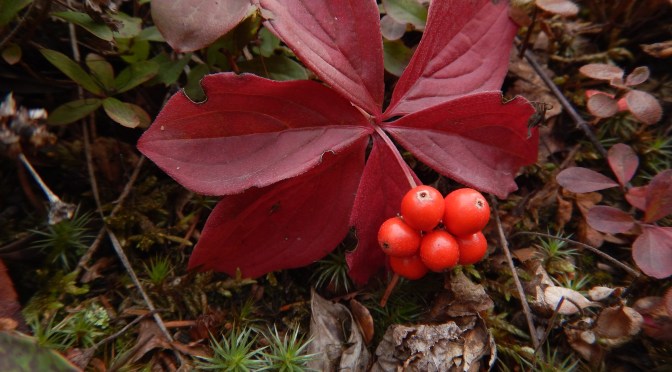
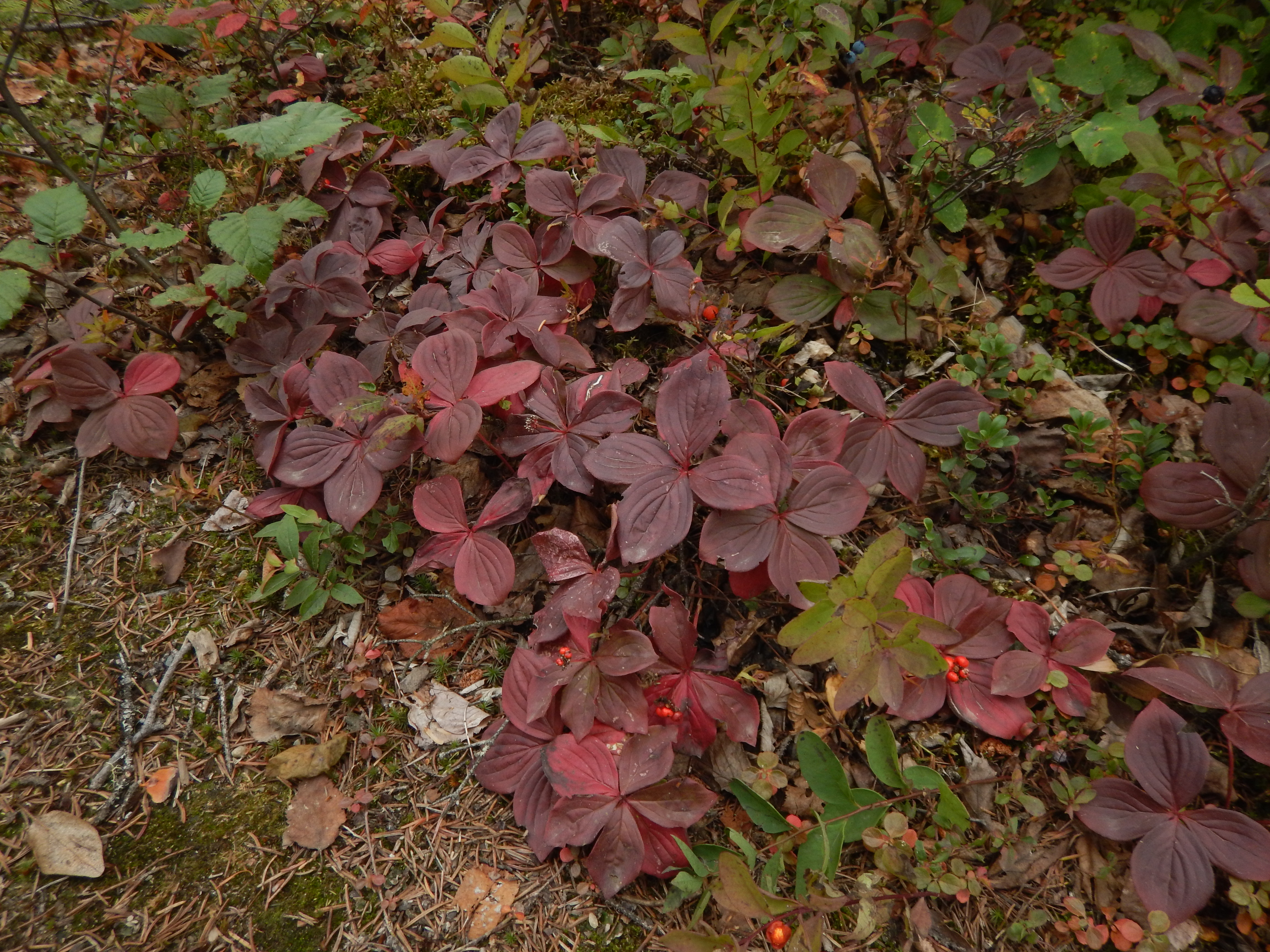
On a stroll through Crooked River Provincial Park in Northern BC, I’ve finally found bunchberry (Cornus canadensis) in full autumn glory.

bunchberry, Cornus canadensis, dwarf dogwood,, creeping dogwood, dwarf cornel, crackerberry, native wildflower, garden Victoria BC Pacific Northwest
photo by SVSeekins

Before now, I’d only read that the leaves turned burgundy in the fall.

Granted, the color blends in with the soil surrounding it, but the really bright orange of the berries & red of the foliage is striking.

bunchberry, Cornus canadensis, dwarf dogwood,, creeping dogwood, dwarf cornel, crackerberry, native wildflower, garden Victoria BC Pacific Northwest
photo by SVSeekins

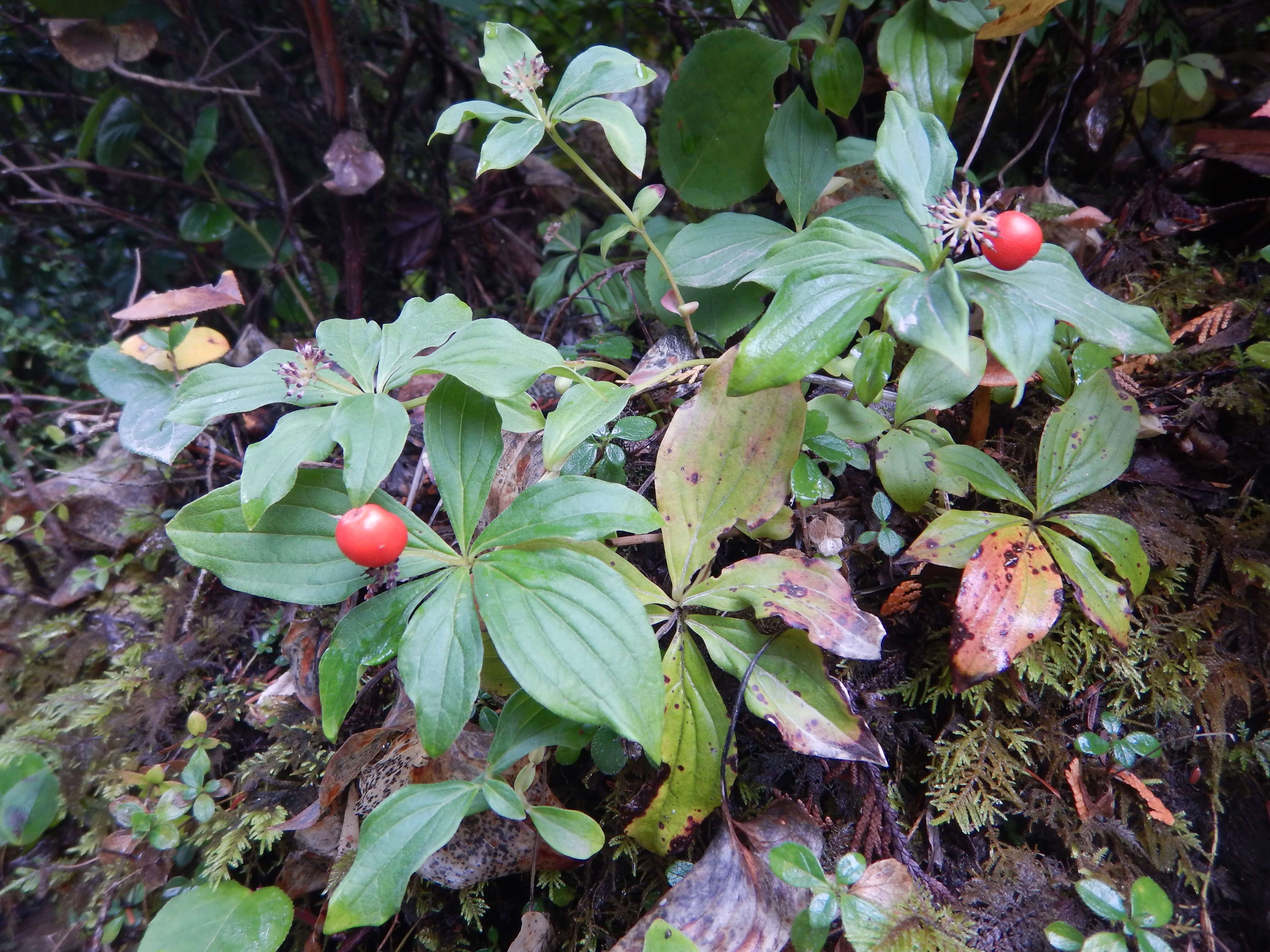
In Tofino, on the west coast of Vancouver Island, I’ve found the green leaves yellowing through October.  Why no red coloring?

Perhaps the difference between the weather in northern BC & the West Coast is key.   The northern site had already experienced fall frost.  The southern site hadn’t.  Maybe the burgundy color comes only in reaction to a freeze?

bunchberry, Cornus canadensis, dwarf dogwood,, creeping dogwood, dwarf cornel, crackerberry,, native wildflower, garden Victoria BC Pacific Northwest
photo by SVSeekins

Bunchberry is ‘circumboreal‘. It occurs throughout Canada, as well as in Greenland, Russia & Asia.
It crosses many plant hardiness zones (2-9). It has a huge range.
Let’s compare:
Where have you seen the leaves turning burgundy?

-30-

See also: