Category Archives: perrennials

Cyclamen Coum Naturalizing

My favourite Cyclamen is the winter-blooming Cyclamen Coum.  Its bright flowers stand out in the drizzling winter gloom of southern Vancouver Island.

hardy cyclamen coum, persian violet, eastern sowbread, round-leaf cyclamen,C. coum garden Victoria, Vancouver Island, BC, Pacific Northwest
photo by SVSeekins

The decorative leaf appears in September once the summer temperatures begin to drop.  It’s a promise of blooms to come.  By late December, tiny buds show themselves.  When it’s even colder & I’m more desperate for flowers, c.coum begins to bloom.  By February & March its in full celebration in Victoria.

hardy cyclamen coum, persian violet, eastern sowbread, round-leaf cyclamen,C. coum garden Victoria, Vancouver Island, BC, Pacific Northwest
photo by SVSeekins

Hardy cyclamen are known to naturalize well where they’re native (Turkey).  Here, in the Pacific Northwest, they’re just as happy. The climate is similar enough.

hardy cyclamen coum, persian violet, eastern sowbread, round-leaf cyclamen,C. coum garden Victoria, Vancouver Island, BC, Pacific Northwest
photo by SVSeekins

I planted 3 C. coum around the base of our Gravenstein apple tree in 2009.  Ten years later, I’m rewarded with several naturalizing in the grass.  The furthest is about 6 feet away!

My fingers are crossed for blooms in the lawn this February!  I reckon they’ll be reasonably safe, as C is less likely to mow that early.  When he brings the lawnmower out in March, I’ll ask him to cut at its highest setting.
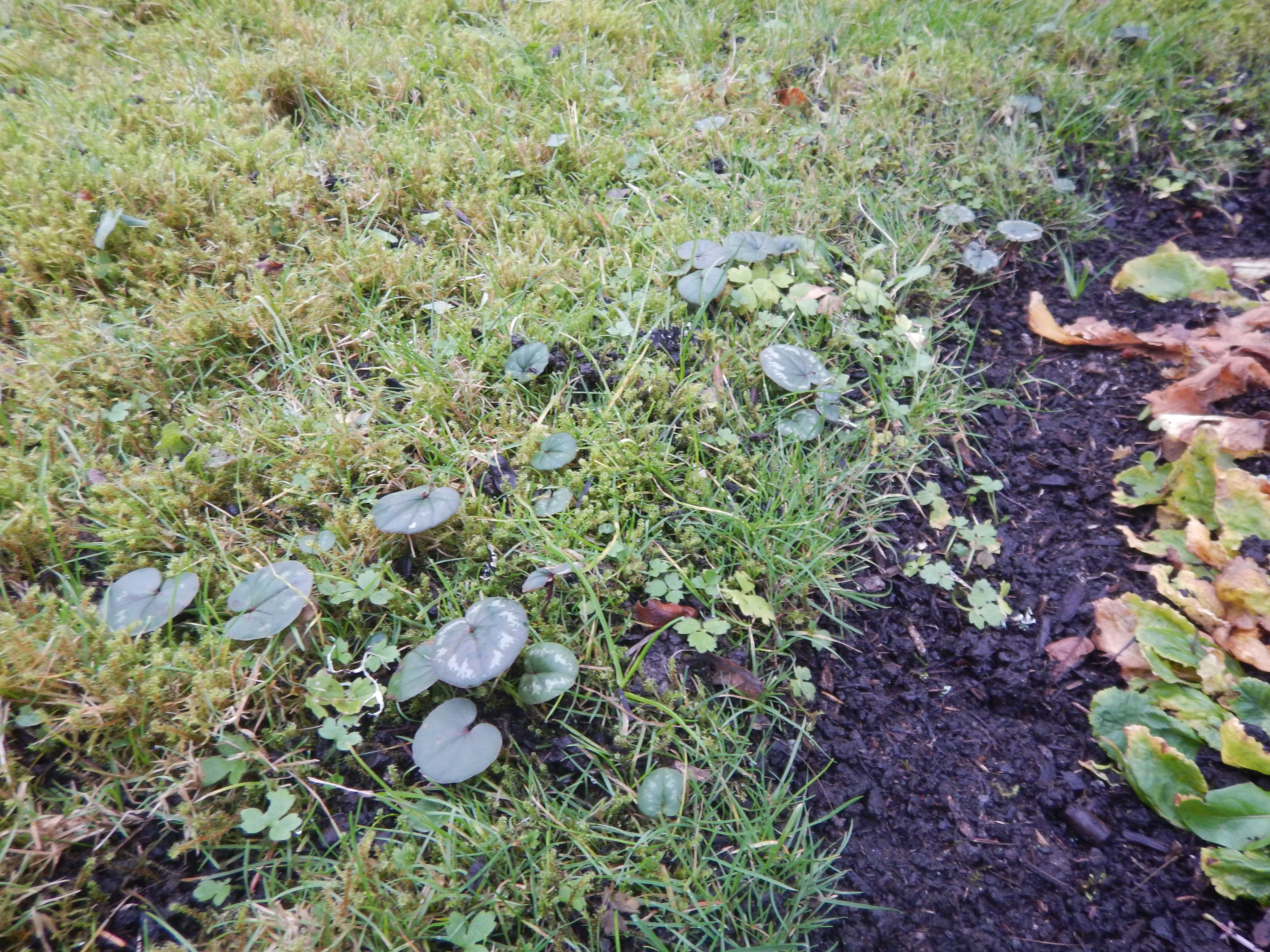
hardy cyclamen coum, persian violet, eastern sowbread, round-leaf cyclamen,C. coum garden Victoria, Vancouver Island, BC, Pacific Northwest
photo by SVSeekins

Cyclamen coum is a mild-mannered plant.  It can easily be out-competed by the autumn-blooming Cyclamen hederifolium.  I am careful to keep the dominating C. hederifolium far away from our treasured C. coum.

-30-
Winter Jasmine

The solstice has passed, so it’s officially winter. With that, the joy of winter jasmine presents itself in our garden.

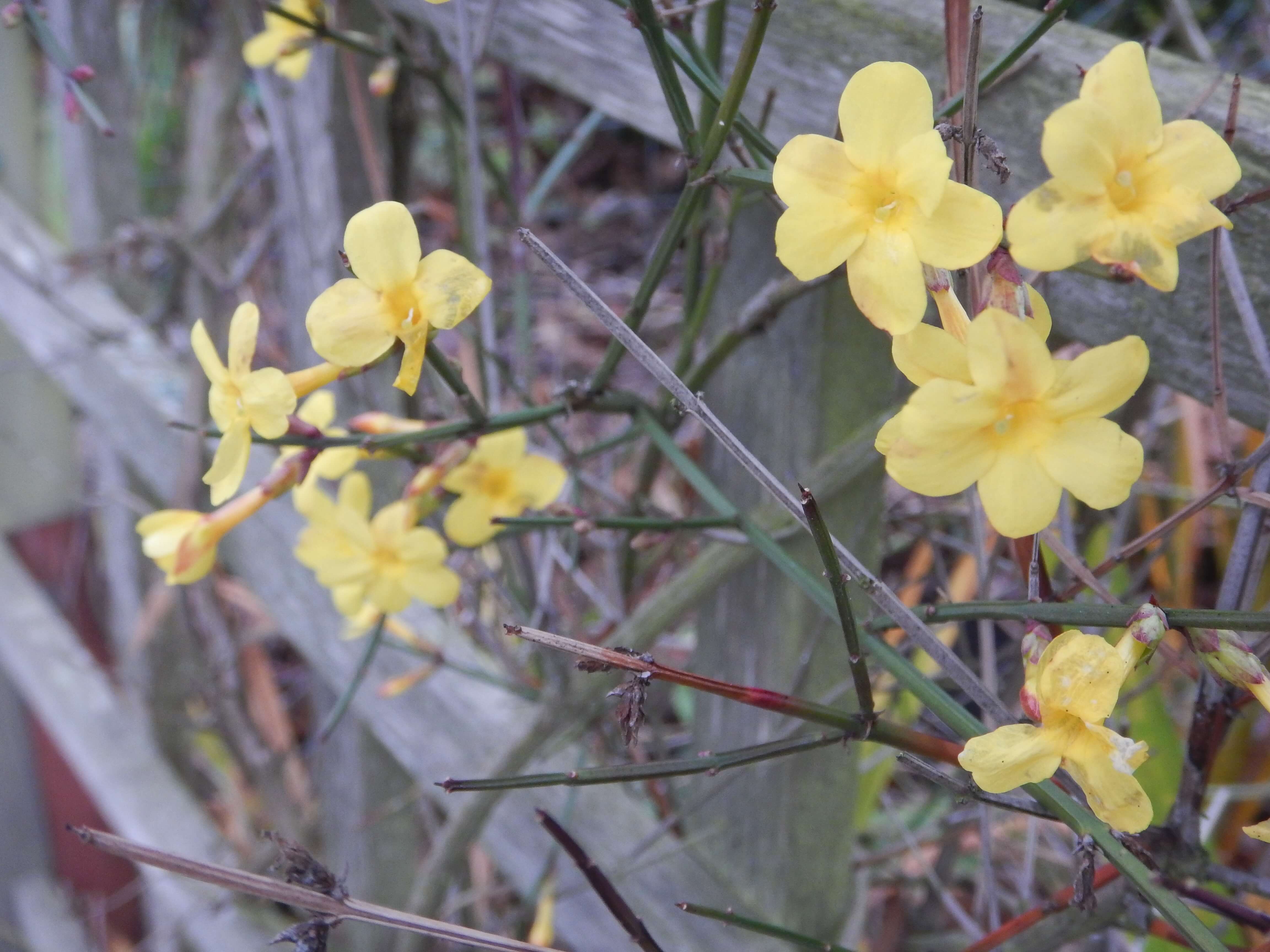
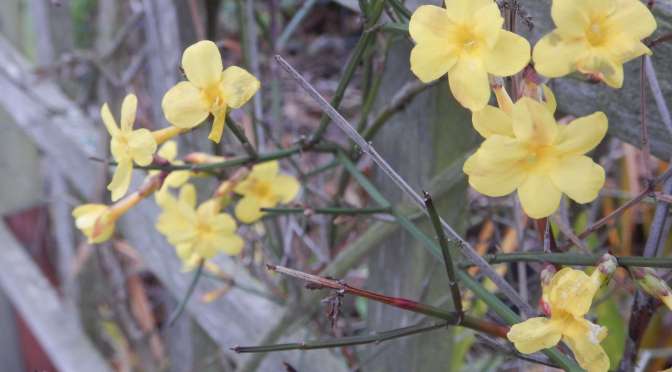
Many years ago, Dad brought me a cutting of a plant he found blooming on New Year’s Day. It turns out that Jasminum nudiflorum can bloom even earlier than that!  The first of the flowers started to appear in November. Most years, it’ll keep blooming right into spring, finishing up in April.

winter jasmine, winter-flowered jasmine, jasminum nudifolium, Jasminum sieboldianum, garden Victoria, Vancouver Island, BC, Pacific Northwest
photo by SVSeekins

I’m happy with this low-maintenance winter bloomer.  It doesn’t demand a precious full-sun location.   In 10 years, I’ve never pruned it. Aside from just a bit of water through the driest months, it requires no attention.  It’s hardy to zone 6, so our occasional coastal snowstorm hasn’t ever phased it. (Isn’t zone 8-9 grand?)

winter jasmine, winter-flowered jasmine, jasminum nudifolium, Jasminum sieboldianum, garden Victoria, Vancouver Island, BC, Pacific Northwest
photo by SVSeekins

The branches have no clinging tendrils, & it doesn’t twine around supports like a vine.  I weave new growth through the trellis to lift the blooming branches up to eye level.

When one branch lay on the ground, it sprouted roots, creating another plant.  That turned out to be a bonus – – not a worry.  Winter jasmine is not a bully at all.

Our trellis hosts

I gotta like plants that play nicely together?

-30-

What’s Eating The Licorice Fern

When we first moved to the slopes of Mt. Tolmie, lush licorice fern decorated the mossy rock outcropping in our side yard.

Licorice fern, Polypodium glycyrrhiza,Polypodium occidentale, Polypodium vulgare subsp. occidentale, many footed fern, sweet root, , garden Victoria, Vancouver Island, BC, Pacific Northwest
photo by SVSeekins

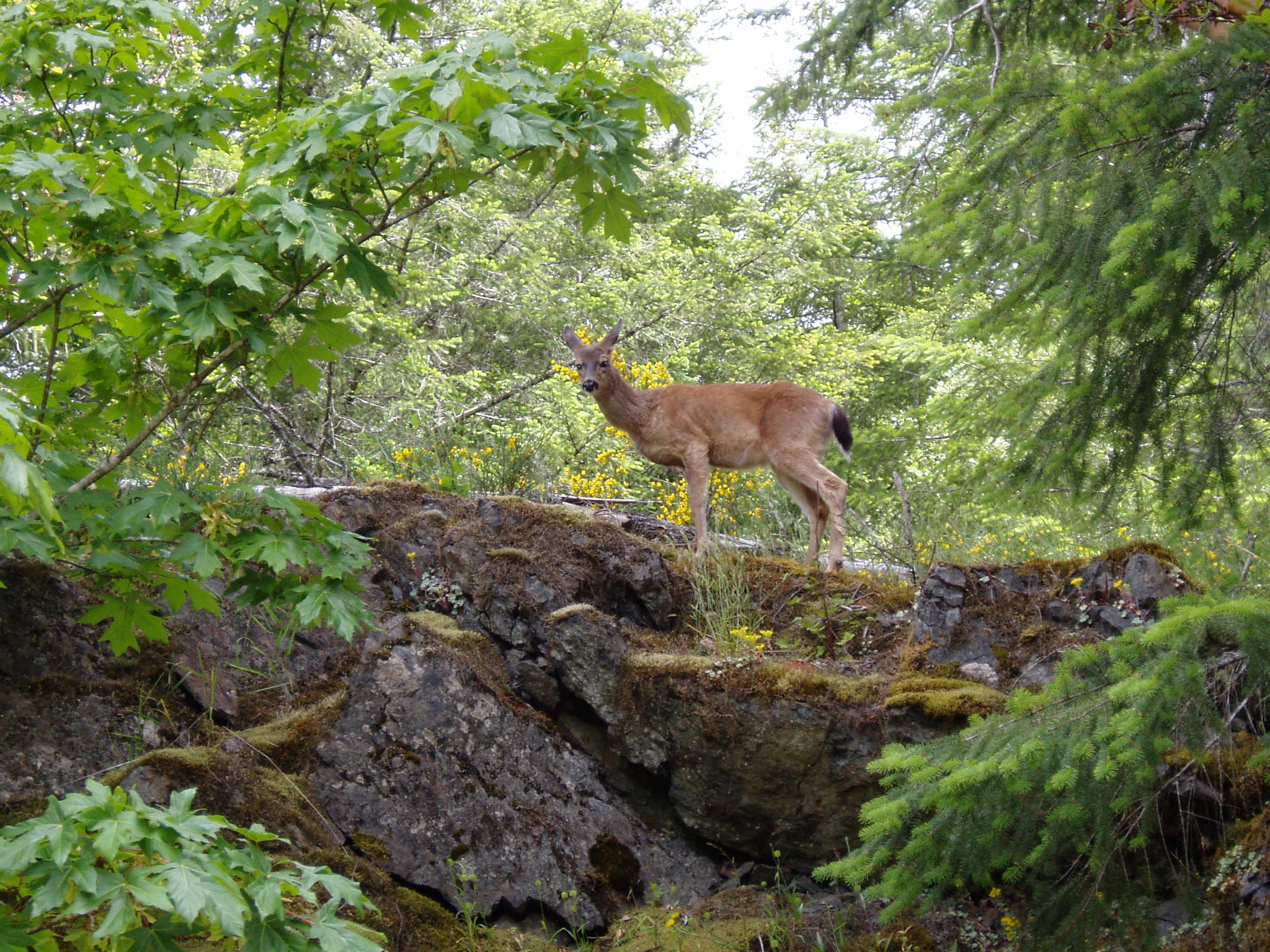
Urban deer wandered the neighbourhood. They spent long afternoons hanging out at the top of our rock, chewing their cud  & enjoying the safety of the vantage point.

The licorice fern flourished.  The deer seemed uninterested.  Typically deer aren’t interested in licorice fern.  Typically.

Licorice fern, Polypodium glycyrrhiza,Polypodium occidentale, Polypodium vulgare subsp. occidentale, many footed fern, sweet root, , garden Victoria, Vancouver Island, BC, Pacific Northwest
photo by SVSeekins

A dozen years pass & their family grows.  The large buck has several generations of grandkids browsing the neighbourhood.

Just down the street, beside a busy pathway to the college, licorice ferns still flourish on a similar rock outcrop.

Licorice fern, Polypodium glycyrrhiza,Polypodium occidentale, Polypodium vulgare subsp. occidentale, many footed fern, sweet root, , garden Victoria, Vancouver Island, BC, Pacific Northwest
photo by SVSeekins

Perhaps the deer don’t linger there?

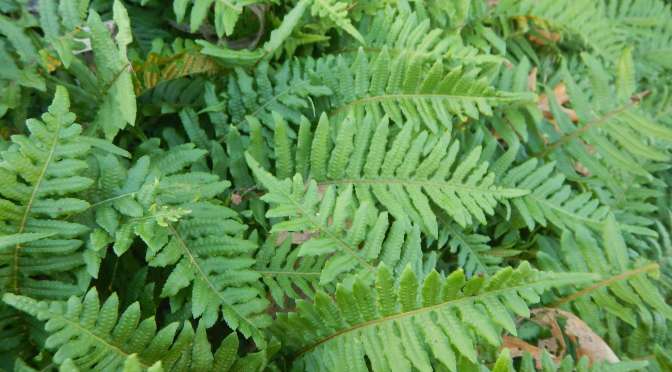
Looking more carefully, I find a couple fronds that have been munched.  Mostly the ferns are full-sized & healthy.

Licorice fern, Polypodium glycyrrhiza,Polypodium occidentale, Polypodium vulgare subsp. occidentale, many footed fern, sweet root, , garden Victoria, Vancouver Island, BC, Pacific Northwest
photo by SVSeekins

On our chunk of rock – where several more deer now hang out – – the licorice ferns are small, nibbled and struggling.

Coincidence?

Perhaps they’re less ‘deer resistant’ than I think.

Licorice fern, Polypodium glycyrrhiza,Polypodium occidentale, Polypodium vulgare subsp. occidentale, many footed fern, sweet root, , garden Victoria, Vancouver Island, BC, Pacific Northwest
photo by SVSeekins

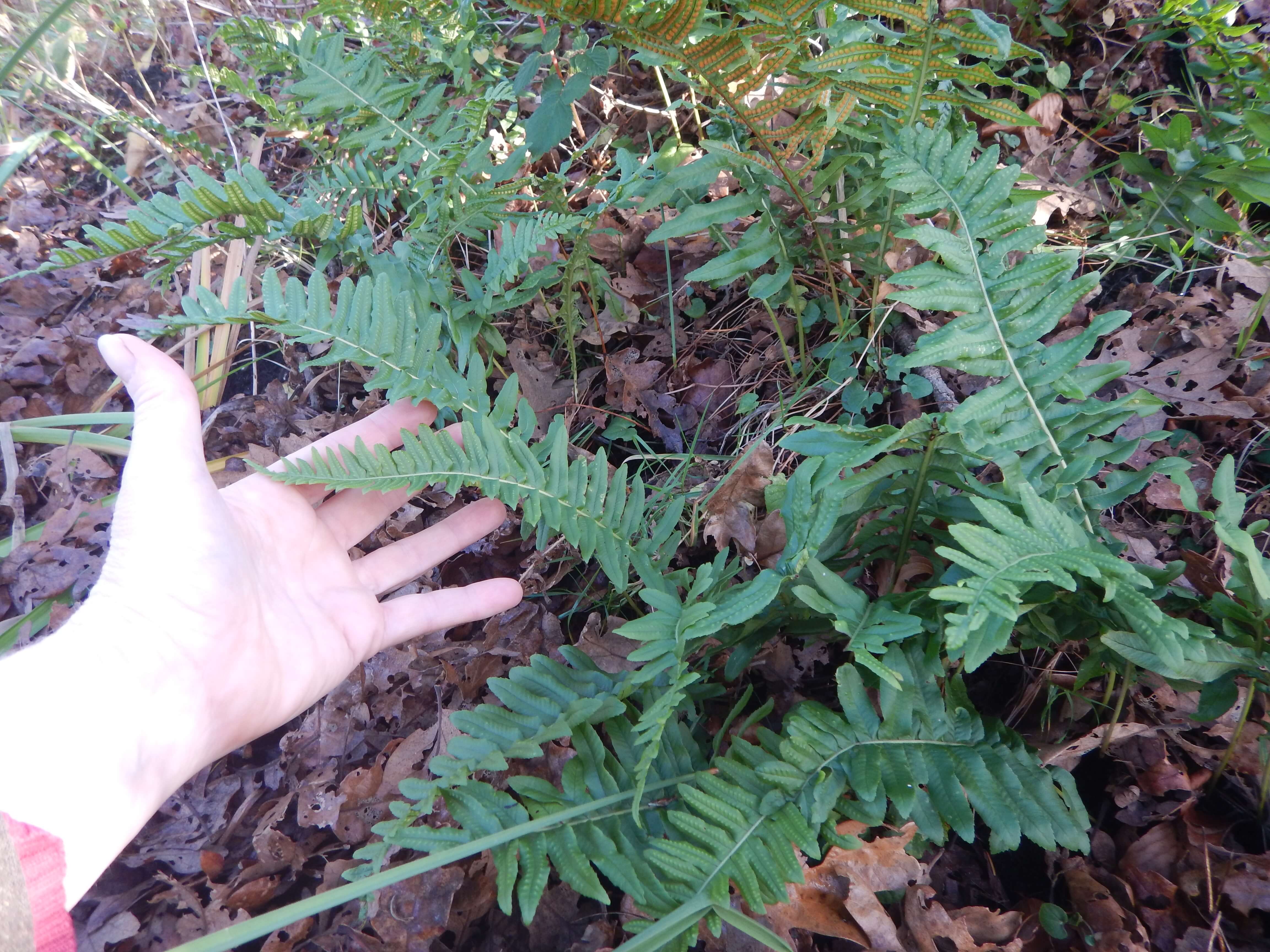
A couple years ago, I shifted a few small mats of licorice fern from our rock to other spots around the garden.  In places where the deer rarely linger, the ferns grow to their regular size.  Hmmmmmm.

Licorice fern, Polypodium glycyrrhiza,Polypodium occidentale, Polypodium vulgare subsp. occidentale, many footed fern, sweet root, , garden Victoria, Vancouver Island, BC, Pacific Northwest
photo by SVSeekins

Deer aren’t typically interested in licorice fern…

  • unless there’s a dense population of deer…
  • and the hyper-active fawns just want to taste everything
  • and the herd’s favourite hangout is carpeted in licorice fern…

    Licorice fern, Polypodium glycyrrhiza,Polypodium occidentale, Polypodium vulgare subsp. occidentale, many footed fern, sweet root, , garden Victoria, Vancouver Island, BC, Pacific Northwest
    photo by SVSeekins

THEN deer can have a negative impact on licorice ferns.
Just because a plant is considered deer resistant, doesn’t mean it won’t suffer when the population of deer intensifies.

black tail deer near hiking trail in Sooke, Victoria, Vancouver Island, BC, Pacific Northwest
photo by SVSeekins

That’s my guess.
But really, who knows for sure?

Maybe it’s the raccoons?
Or squirrels?
Rabbits?
Ravens? Cats?
Maybe I’m just blaming deer because I notice them so often.

-30-

Some other ‘resistance’ musings: