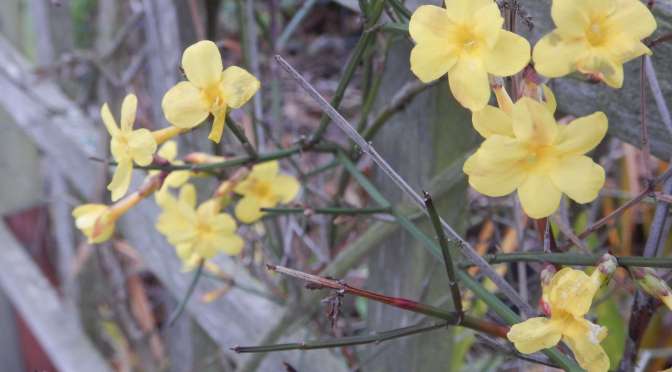
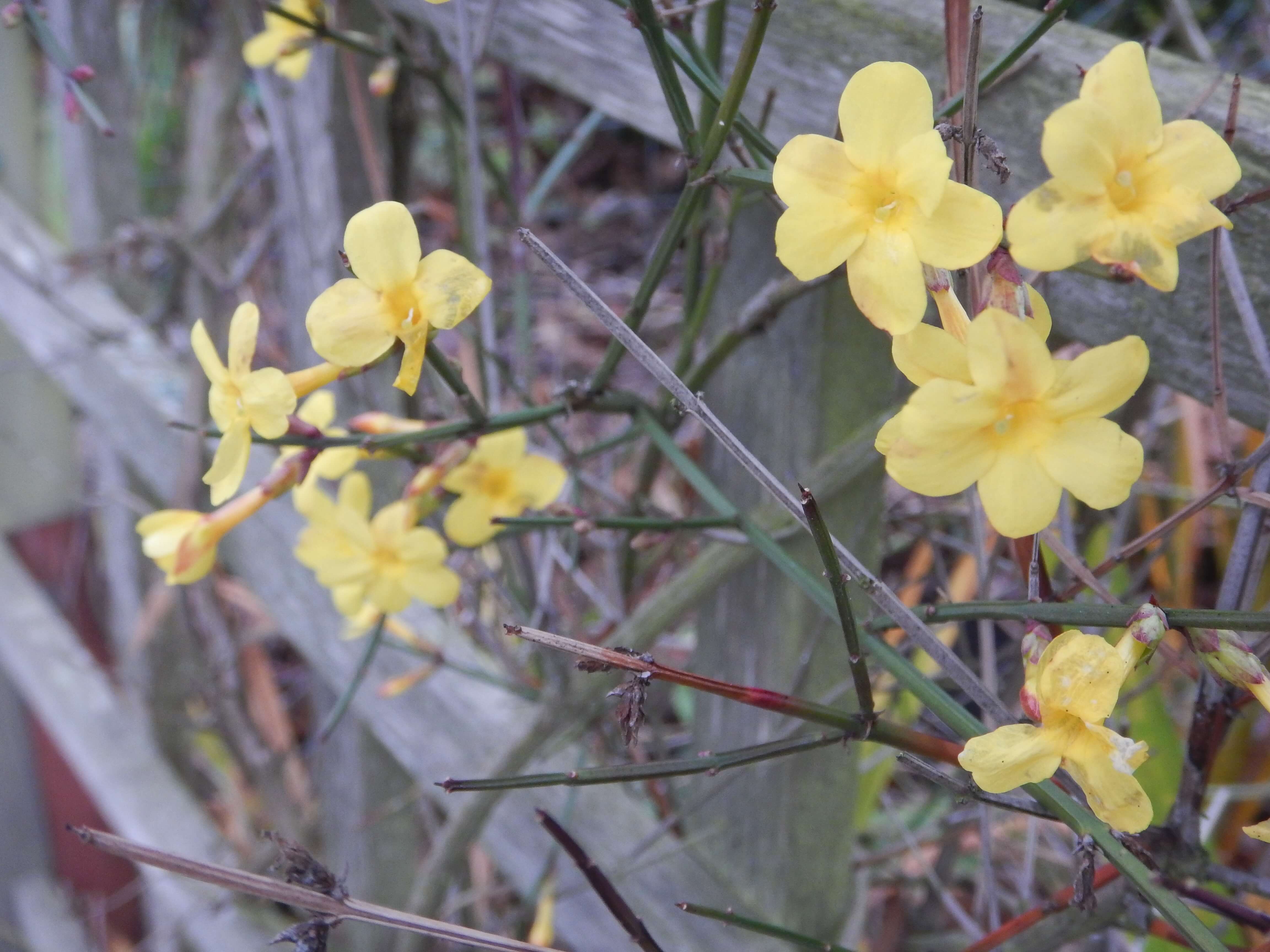
The solstice has passed, so it’s officially winter. With that, the joy of winter jasmine presents itself in our garden.
Many years ago, Dad brought me a cutting of a plant he found blooming on New Year’s Day. It turns out that Jasminum nudiflorum can bloom even earlier than that! The first of the flowers started to appear in November. Most years, it’ll keep blooming right into spring, finishing up in April.
photo by SVSeekins
I’m happy with this low-maintenance winter bloomer. It doesn’t demand a precious full-sun location. In 10 years, I’ve never pruned it. Aside from just a bit of water through the driest months, it requires no attention. It’s hardy to zone 6, so our occasional coastal snowstorm hasn’t ever phased it. (Isn’t zone 8-9 grand?)
photo by SVSeekins
The branches have no clinging tendrils, & it doesn’t twine around supports like a vine. I weave new growth through the trellis to lift the blooming branches up to eye level.
When one branch lay on the ground, it sprouted roots, creating another plant. That turned out to be a bonus – – not a worry. Winter jasmine is not a bully at all.
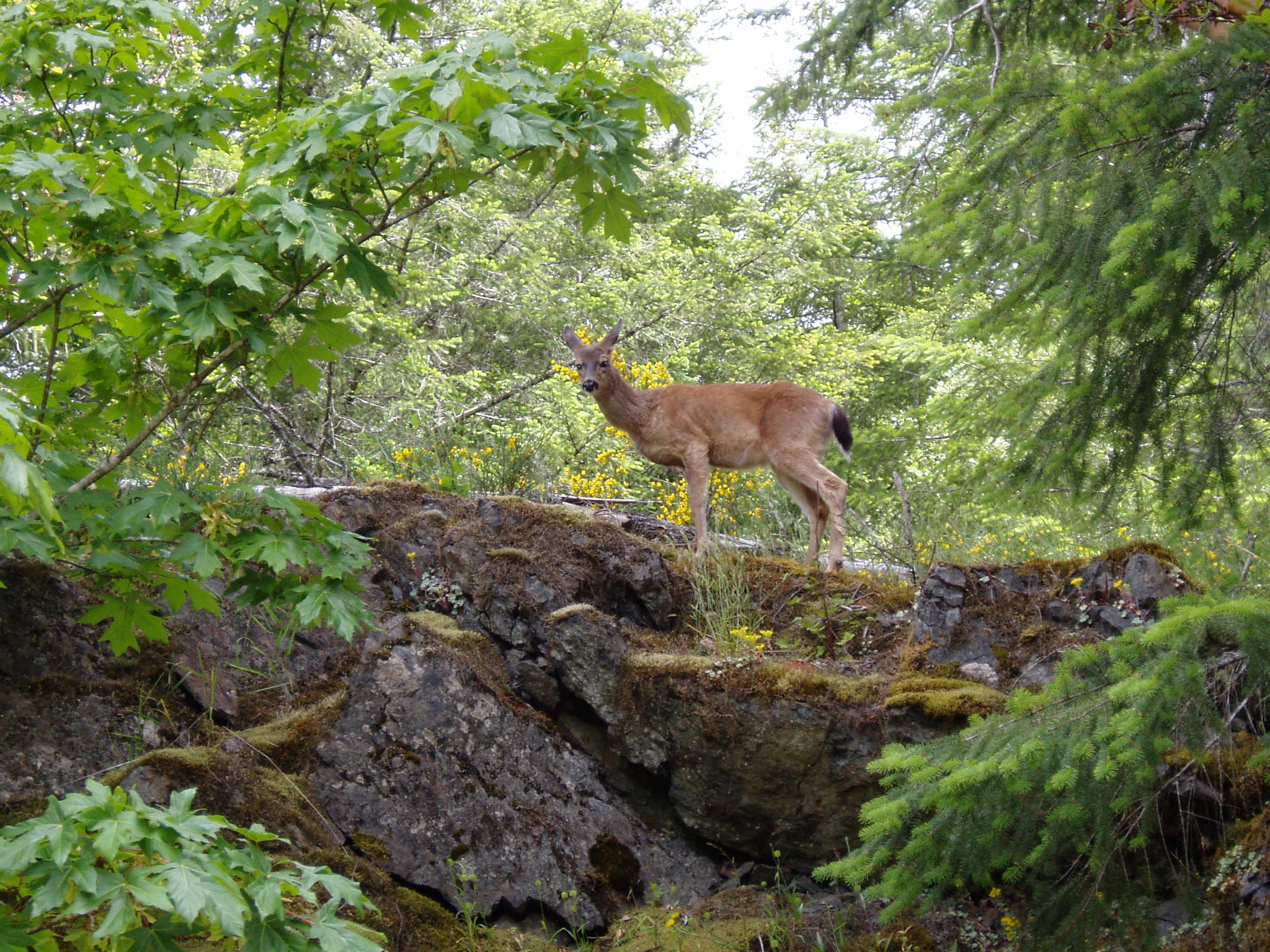
When we first moved to the slopes of Mt. Tolmie, lush licorice fern decorated the mossy rock outcropping in our side yard.
photo by SVSeekins
Urban deer wandered the neighbourhood. They spent long afternoons hanging out at the top of our rock, chewing their cud & enjoying the safety of the vantage point.
A dozen years pass & their family grows. The large buck has several generations of grandkids browsing the neighbourhood.
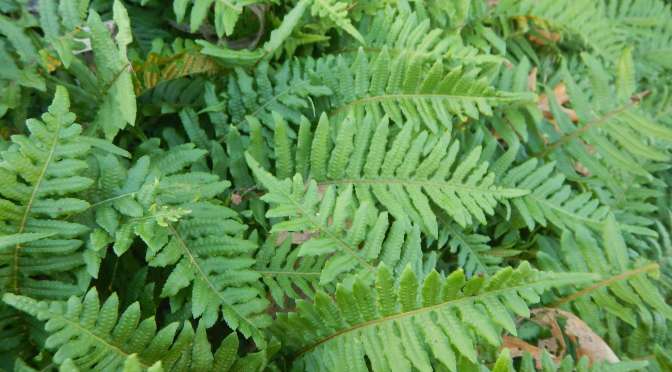
Just down the street, beside a busy pathway to the college, licorice ferns still flourish on a similar rock outcrop.
photo by SVSeekins
Perhaps the deer don’t linger there?
Looking more carefully, I find a couple fronds that have been munched. Mostly the ferns are full-sized & healthy.
photo by SVSeekins
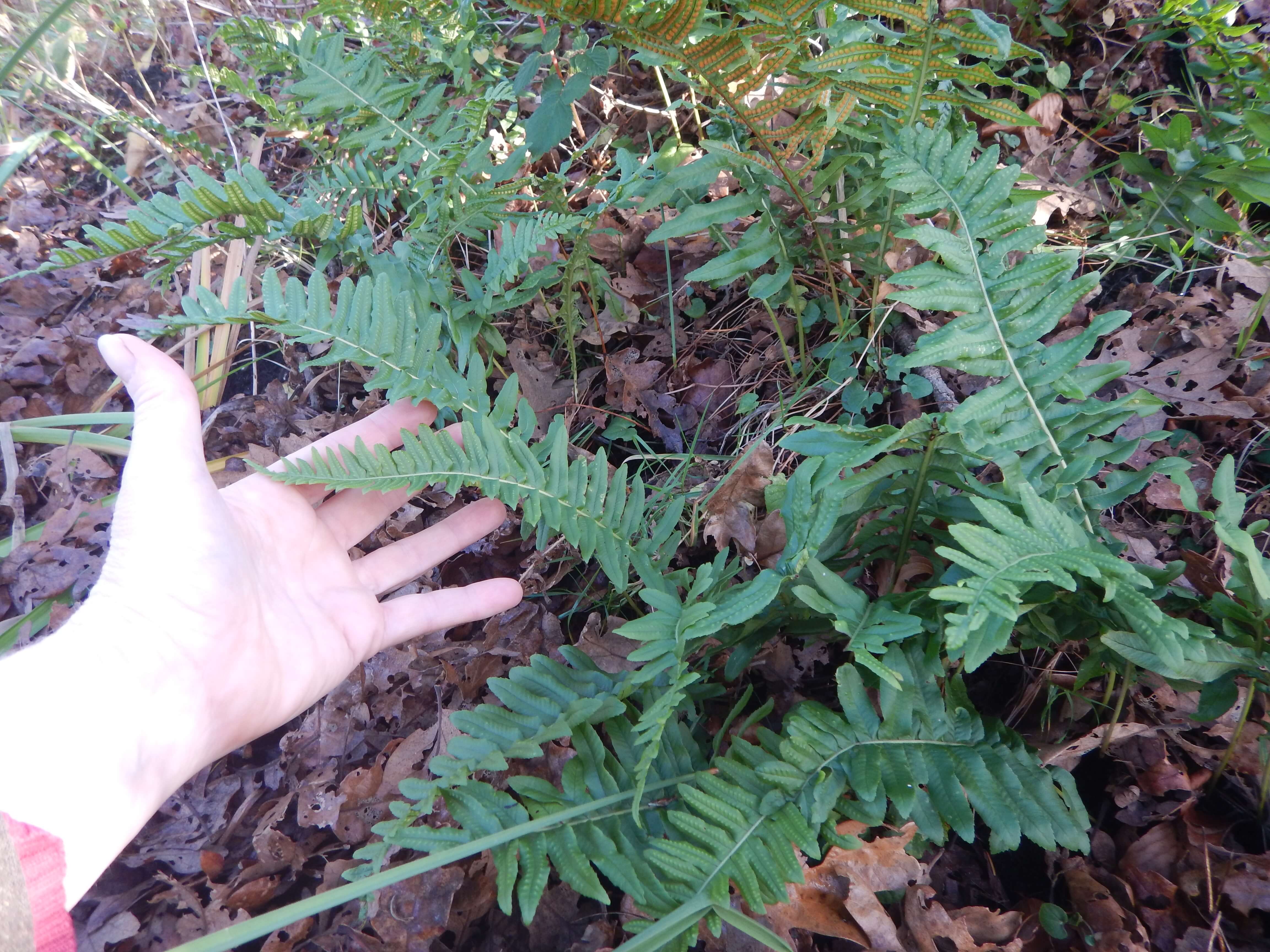
On our chunk of rock – where several more deer now hang out – – the licorice ferns are small, nibbled and struggling.
Coincidence?
Perhaps they’re less ‘deer resistant’ than I think.
photo by SVSeekins
A couple years ago, I shifted a few small mats of licorice fern from our rock to other spots around the garden. In places where the deer rarely linger, the ferns grow to their regular size. Hmmmmmm.
photo by SVSeekins
Deer aren’t typically interested in licorice fern…
unless there’s a dense population of deer…
and the hyper-active fawns just want to taste everything…
and the herd’s favourite hangout is carpeted in licorice fern…
photo by SVSeekins
THEN deer can have a negative impact on licorice ferns.
Just because a plant is considered deer resistant, doesn’t mean it won’t suffer when the population of deer intensifies.
photo by SVSeekins
That’s my guess.
But really, who knows for sure?
Maybe it’s the raccoons?
Or squirrels?
Rabbits?
Ravens? Cats?
Maybe I’m just blaming deer because I notice them so often.
What does Southern Vancouver Island have in common with Turkey on the Mediterranean?
Hardy Cyclamen.
photo by SVSeekins
Cyclamen hederifolium is native to Turkey, and that climate is quite like ours.
Would you’ve guessed?
So it kinda makes sense:
What prospers there…
prospers here.
photo by SVSeekins
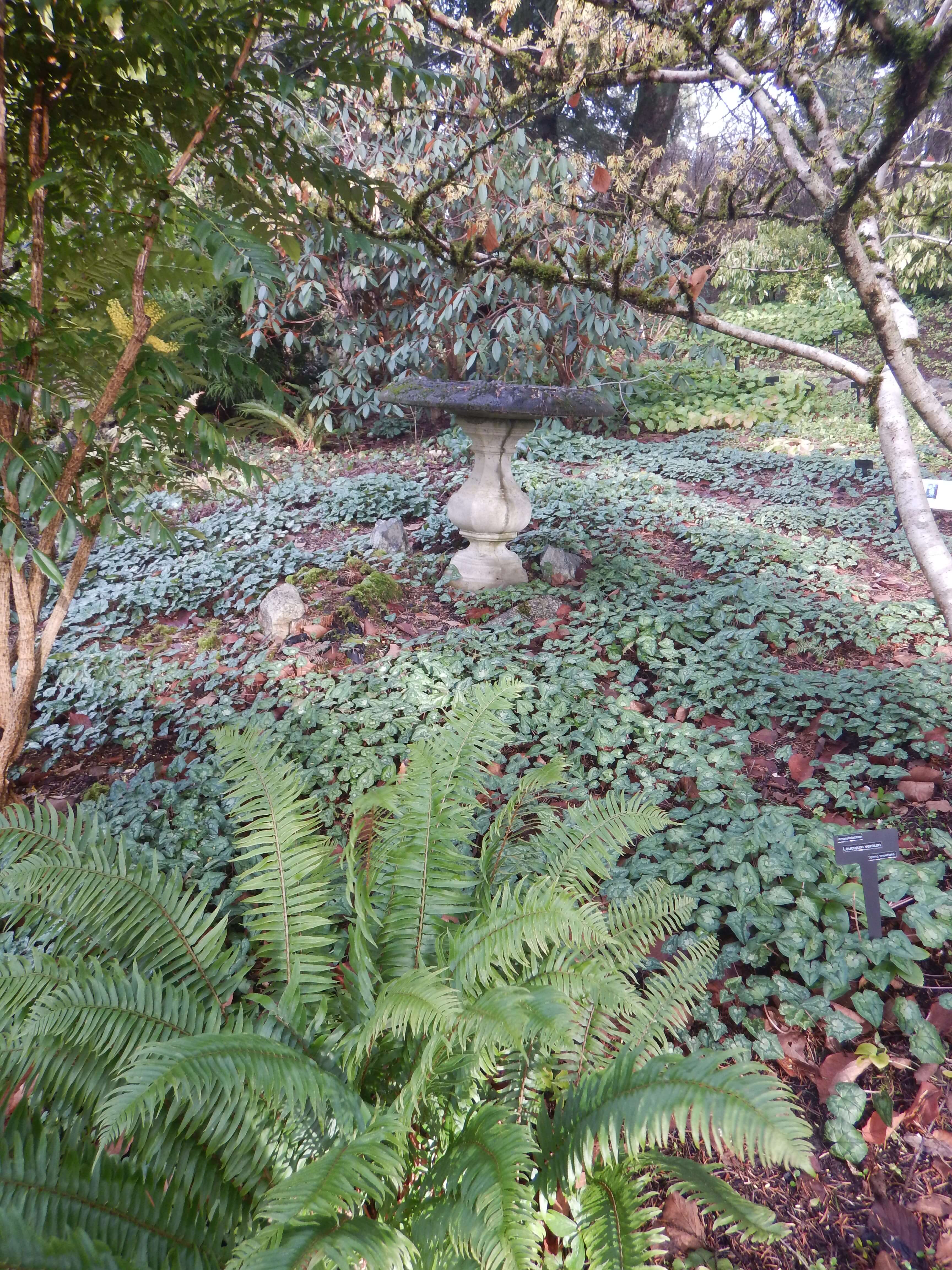
Hardy Cyclamen likes our dry summer. It goes dormant. Later, the cooling temperatures & returning rain of September triggers the awakening. One morning flowers are popping out of the ground & dancing in the dappled shade. What a lovely surprise. Flowers in autumn!
(Plus, what a bonus – a pretty plant that doesn’t need me dragging around a garden hose… AND one that’s happy in those tough-to-garden spots under trees!)
photo by SVSeekinsphoto by SVSeekins
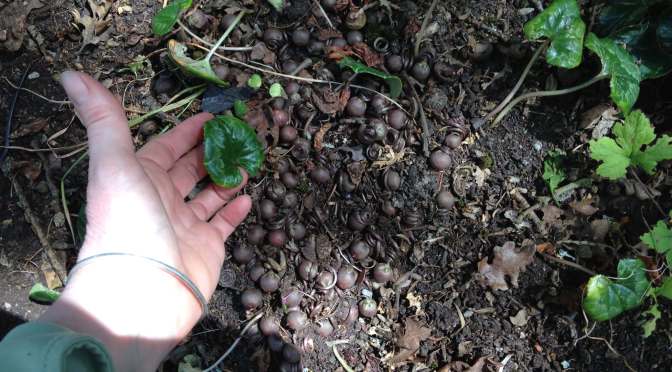
After pollinators do their thing, the flower stems curl into tight coils, pulling the seed pods to the ground. Leaves emerge, protecting the pods from our winter wind & rain. How tidy is that? I never feel the urge to deadhead. (Extra bonus – decorative foliage that stays green through our long, glum winter. And IF we get snow & severe cold, the cyclamen survives to -28C a colder winter than we’re likely to get.)
photo by SVSeekins
While so much of the garden is going nuts through spring, Cyclamen hederifolium is wrapping up its display. The leaves die back, revealing the maturing seed pods. A matt of balls on coil springs remind me where the plant is preparing for sleep. Doesn’t it look GROOVY?
photo by SVSeekins
Ants think it’s pretty groovy, too. The seeds are coated with a sweet film. Ants gather them & take them home to feed the masses.
Win – Win – Win.
Ants get a treat.
The seed is sown.
And the gardener has a new no-fuss plant.
photo by SVSeekins
What an ingenious system for naturalizing through the garden … and beyond.
Barely noticeable little seedlings sprout in lawns & woodland parks alike. Eventually, the tiny corms can grow to the size of dinner plates.
Welcome or not.
photo by SVSeekins
I grow a few varieties of Hardy Cyclamen. Over 10 years, I’ve noticed a couple baby plants growing near their parents. I’m particularly fond of the February bloomer Cyclamen coum.
C. coum is a timid seeder in comparison with the C. hederifolium. The fall bloomer out-competes the winter bloomer. I’m very careful to keep each cyclamen variety in its own bed.
photo by SVSeekins
Believe it or not — C. hederifolium is on the District of Saanich’s Invasive Plants list! It naturalizes that well around here. It must out-compete more than just the C. coum.
I have to admit to still holding a torch for these funky plants.
Does it count in my favour that I’ve dug some cyclamen invaders out of a couple wild parklands?
They’ve been planted in spots they’re not likely to escape without notice…











 Garden Variety Life