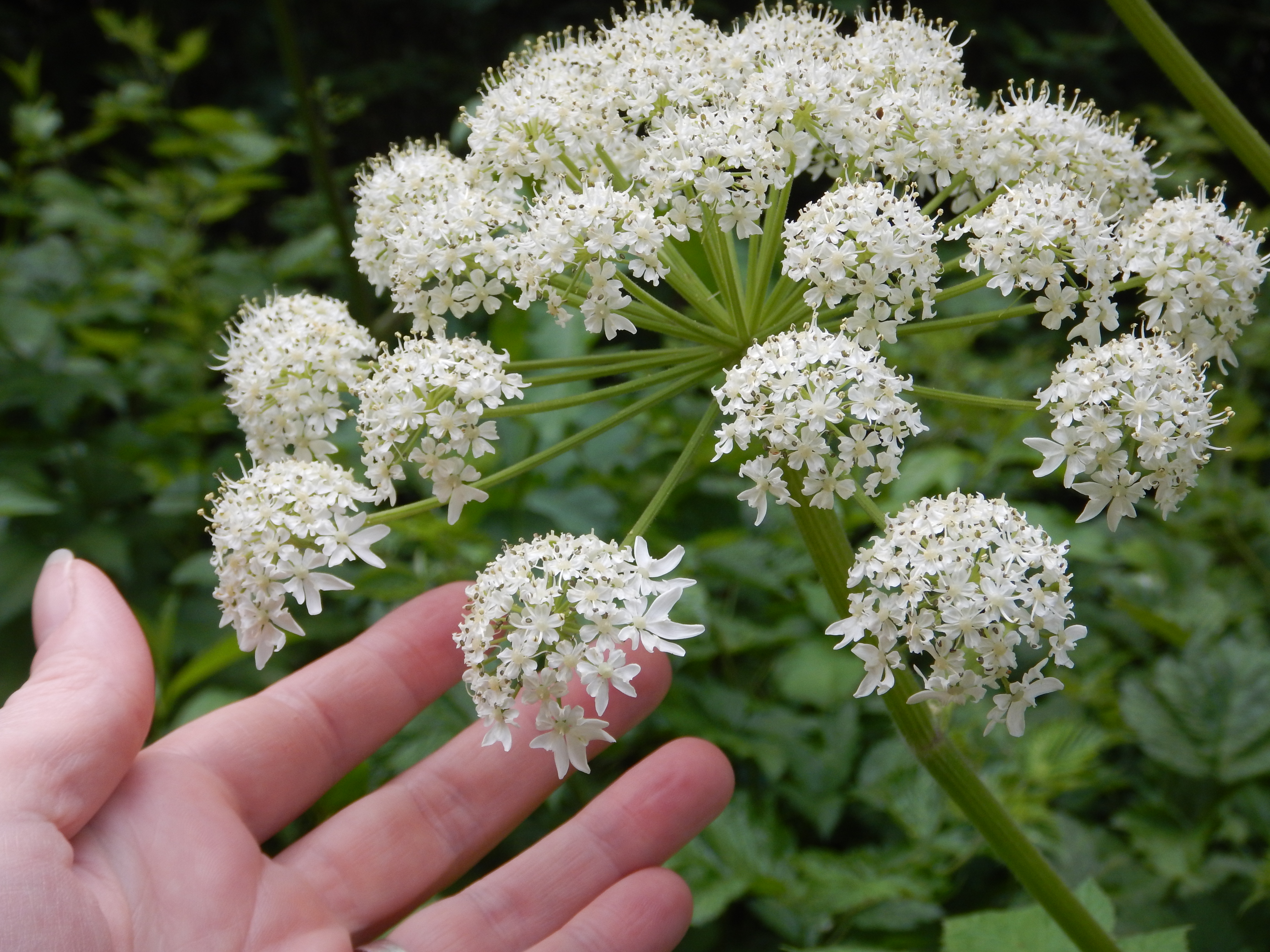
Even still, this beauty contains a milky sap that is photo-toxic, kinda like euphorbia & poinsettia. Once exposed to sunshine, any skin that contacted the sap burns & blisters. Nasty.
photo by SVSeekins
But wait – there are some positive notes:
The giant flowers are landing pads for butterflies. It’s important to many native pollinators.
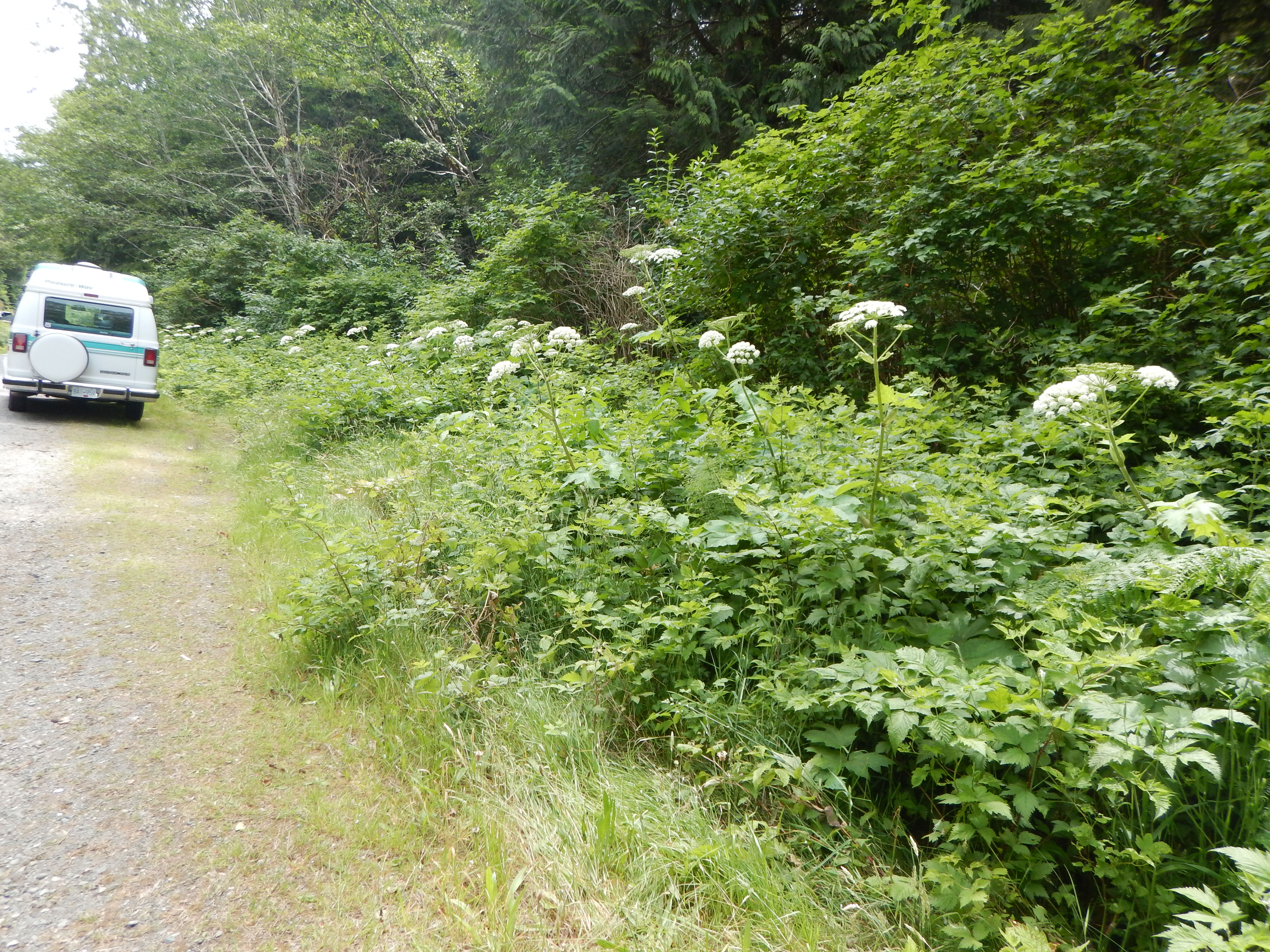
In its happy place, Cow parsnip can reach 3 metres – – that’s 10 feet tall! That’s architecturally impressive.
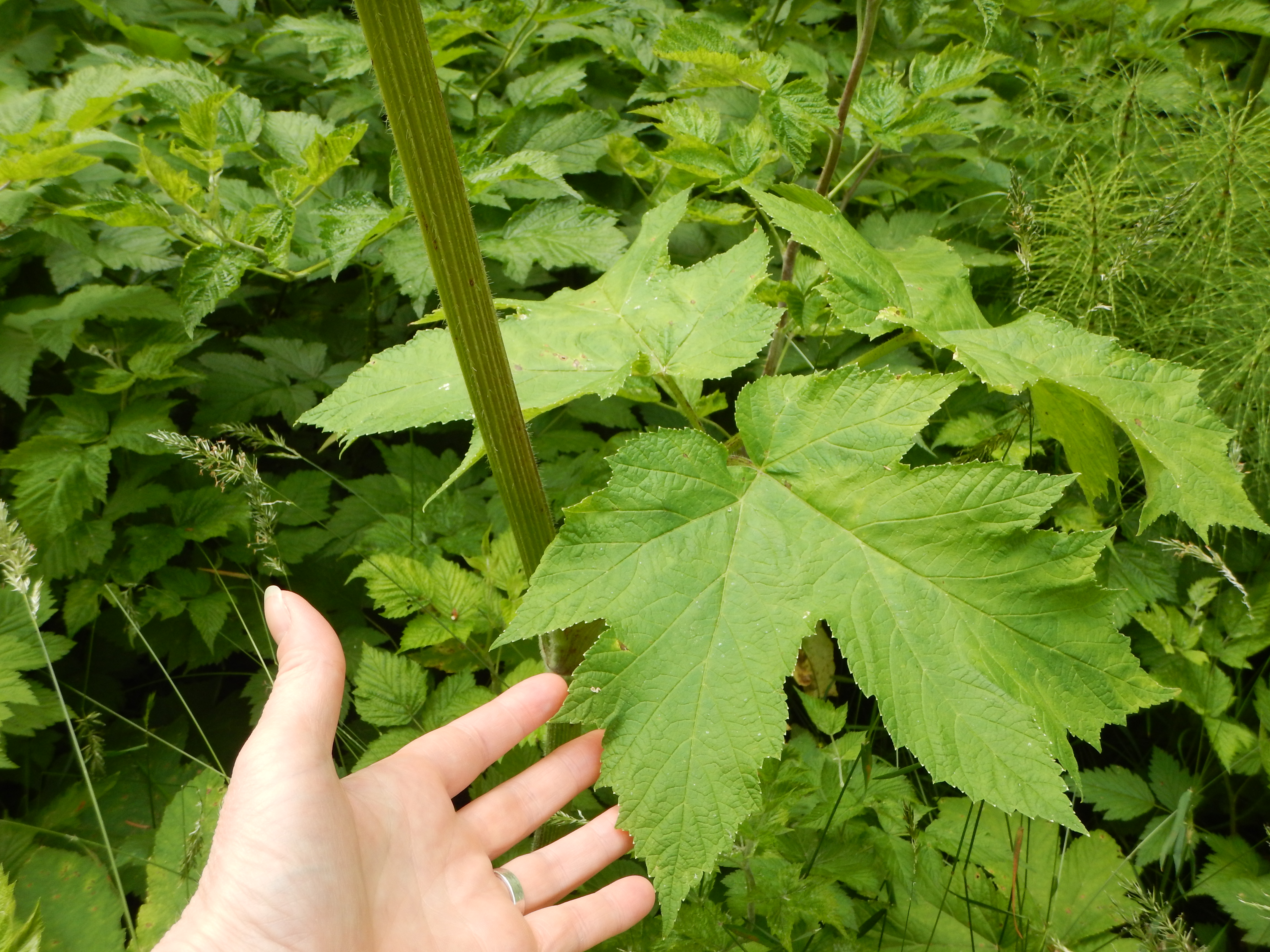
It’s hairy – and deer seem to avoid fuzzy plants. Perhaps they’re finicky that way.
Cow Parsnip is said to be kinda stinky. I didn’t notice, but now that I think about it, I wandered into this patch of Cow Parsnip after 5 days of camping – – so my own stink may have been masking all other smells…
Deer seem to avoid fragrant plants, so there’s a fair chance that Cow Parsnip is safe from them.
photo by SVSeekins
Hmmm, I might not be desperate enough for its food value, but I just might find a spot for Cow Parsnip in our landscape. Imagine this self-seeding biennial as a garden ornamental at the back of a moist bed or border.
We left home in the camper van, and less than 30 minutes later we were pulling into our campsite. Gotta like having great parks so close to Victoria. 🙂 After a quick lunch we head to the trails.
photo by SVSeekinsphoto by SVSeekins
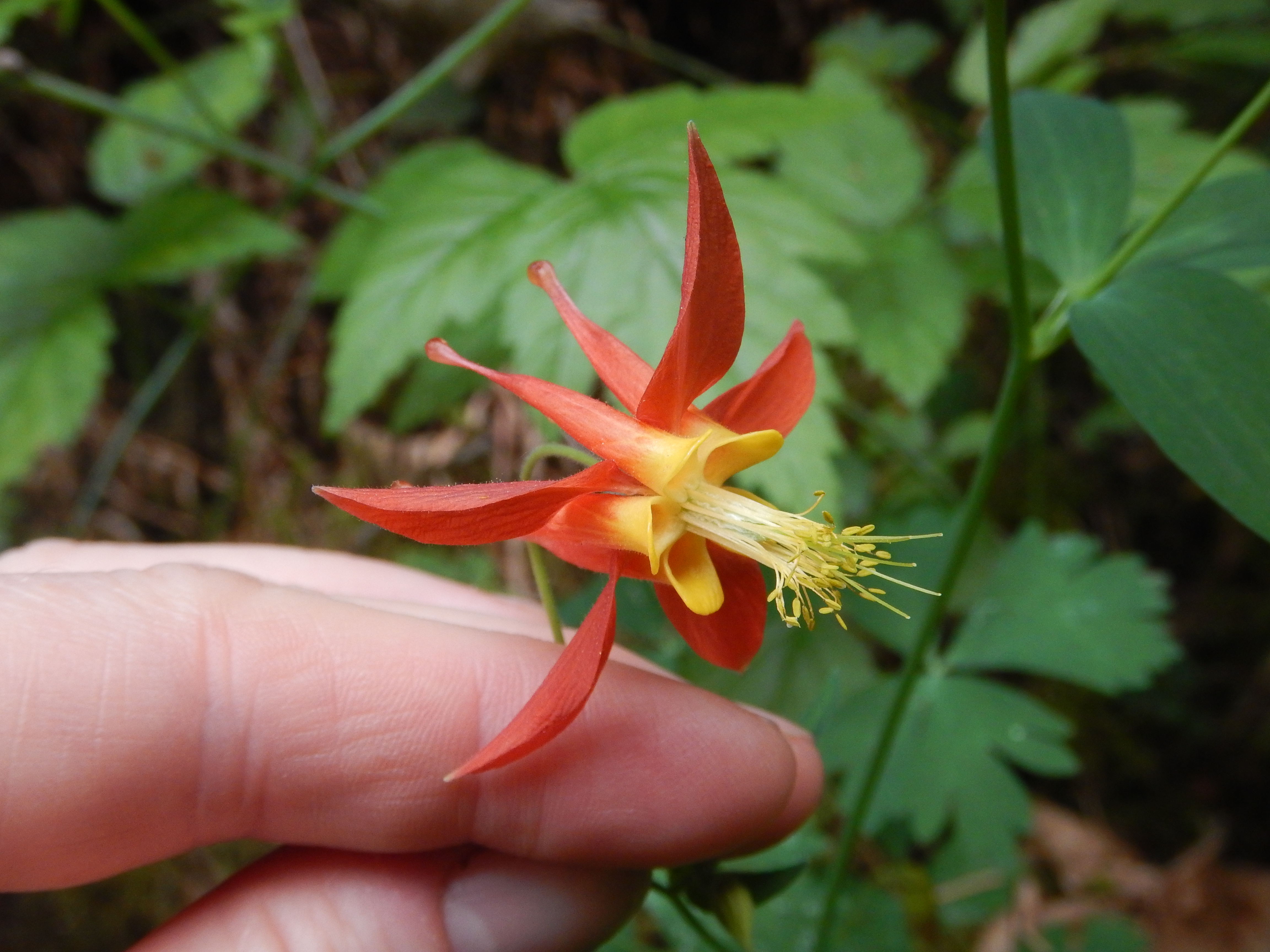
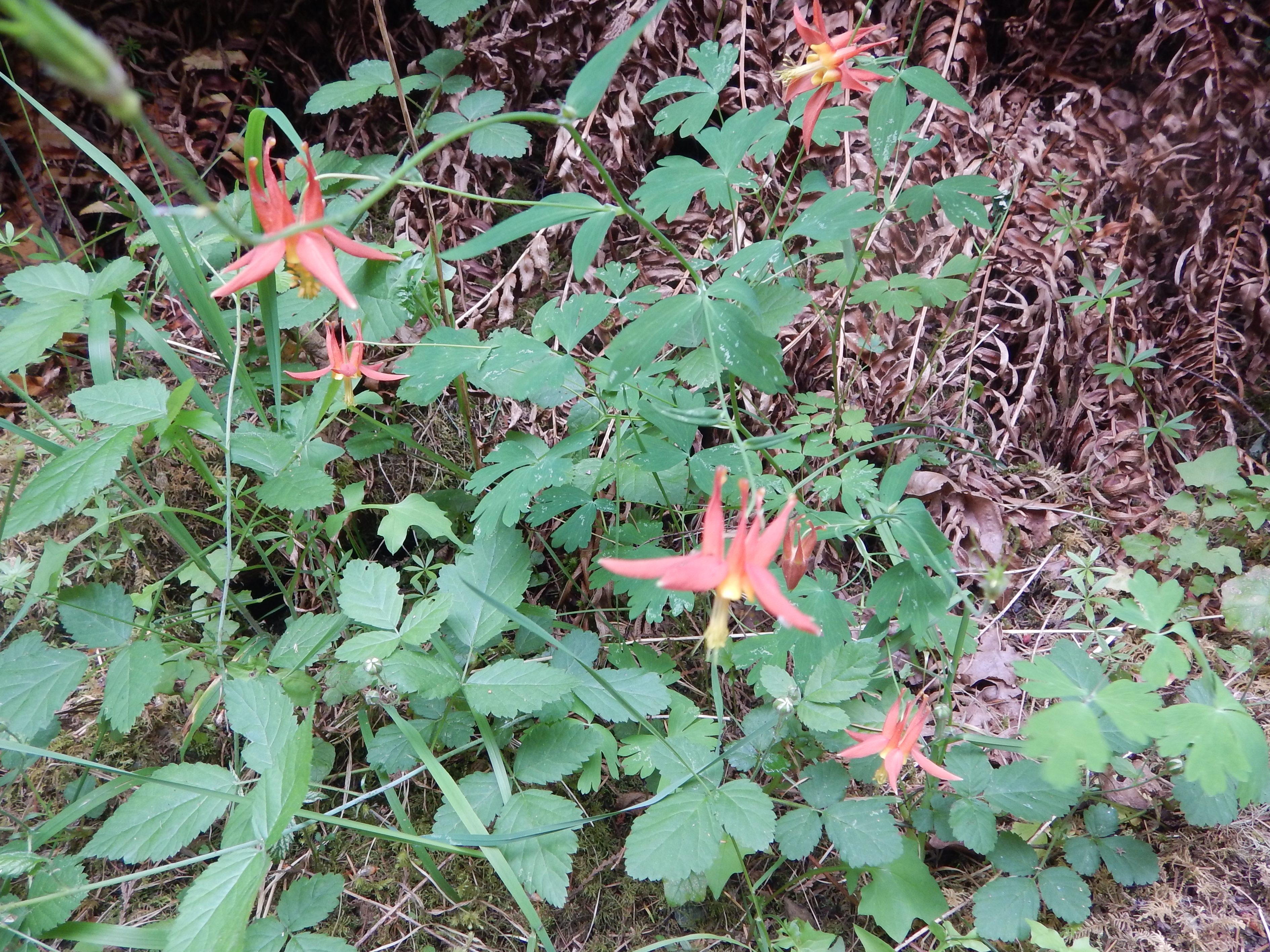
The early show of lilies is past, allowing other flowers to take front stage. Western red columbine rivals any of the earlier shooting stars or fawn lilies.
Columbine is one of the native wildflowers that fits comfortably into a home garden. I’m pleased that one has bloomed in our yard. I’m counting on it to self-seed and grow into a patch. Hummingbirds pretty much feel the same way. They regularly check out the happy colors. Butterflies too. Oh yeah, deer like it as well– especially the blooms. Growing Aquilegia formosa in a protected space is best.
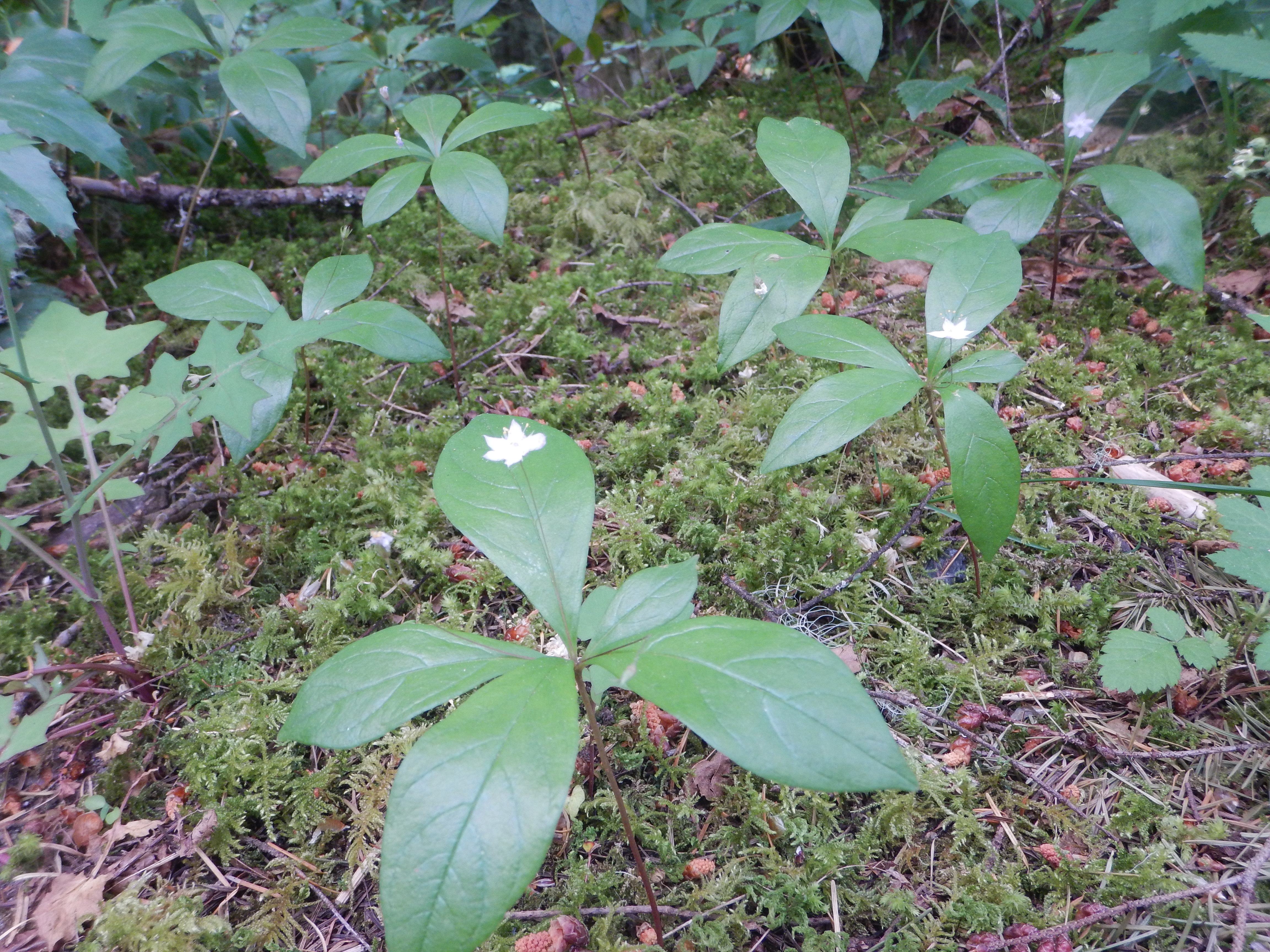
Starflower is a much less conspicuous wildflower. They carpet the ground in mossy dappled shade. The flower is simple and tiny.
It kinda reminds me of the trillium because sometimes the flower is white, and other times it’s pink.
The flower stem is so fine, the blossom seems to float above the plant, hence the name starflower. Kinda cool, eh?
Nearby is another tiny flower. It’s a rose for sure, but so much smaller than the wild rose that’s Alberta’s provincial flower. Granted, I’m not in Alberta anymore… but in BC’s coastal rainforest, plants tend to grow unusually big. (ie. massive trees) Well, it turns out the diminutive baldhip rose (rosa gymnocarpa) is native. It also has teeny-tiny thorns along mature stems. C warns they’re not to be trifled with. The thorns are so small there’s no getting them out once they get in. Can you imagine slipping then grabbing a branch to steady yourself?
photo by SVSeekinsphoto by SVSeekinsphoto by SVSeekinsphoto by SVSeekins
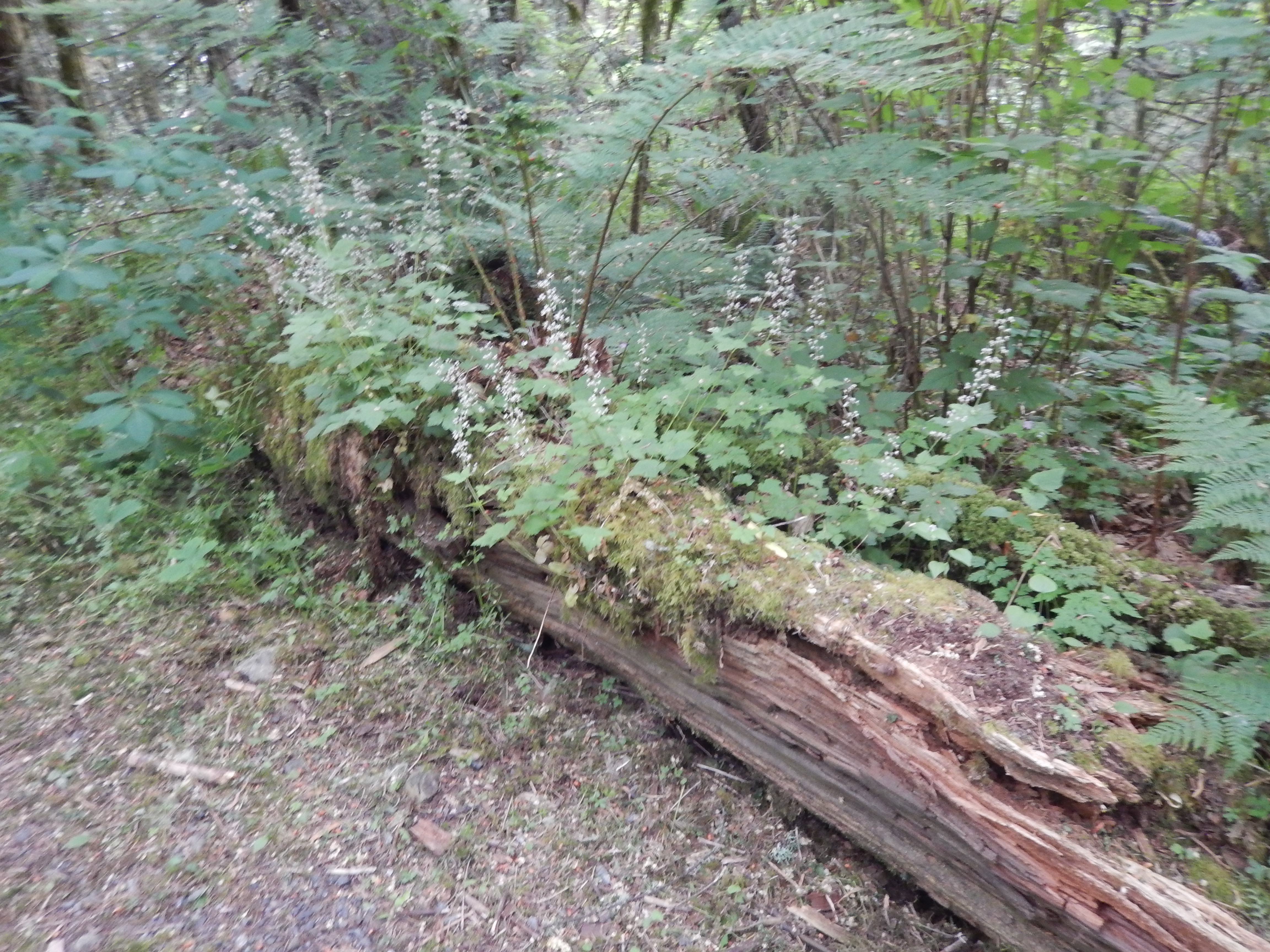
The foamflower (Tiarella trifoliata) is right at home on an old, rotting log not far from the stream-bank.
The frothy cluster of white flowers shoot above the foliage like the foam from an ocean wave surging off a rocky coast.
Poetically named, don’t you think?
This is one of a few native plants that seem very similar to me, therefore making ID a bit tricky.
grow in the moist part-shade of thickets near stream-banks,
have knee-high, erect stems
display their bloom above the foliage,
produce many delicate, white flowers.
are perennial
grow from shallowly rooted rhizomes
But when I study each carefully:
the leaves of foamflower are pointy & grouped in 3’s;
while the fringecup leaves are rounded – – more heart-shaped.
Ffoamflowers dangle away from the stem;
while the fringecup flowers sit much closer to the stem.
The petals of the foamflower are spread open;
while the fringecup are tightly curled and are cup-shaped.
Both have white flowers,
but the fringecup’s shift to pinks as they age.
Both also grow successfully in our garden. And happily, the deer have left them alone 🙂
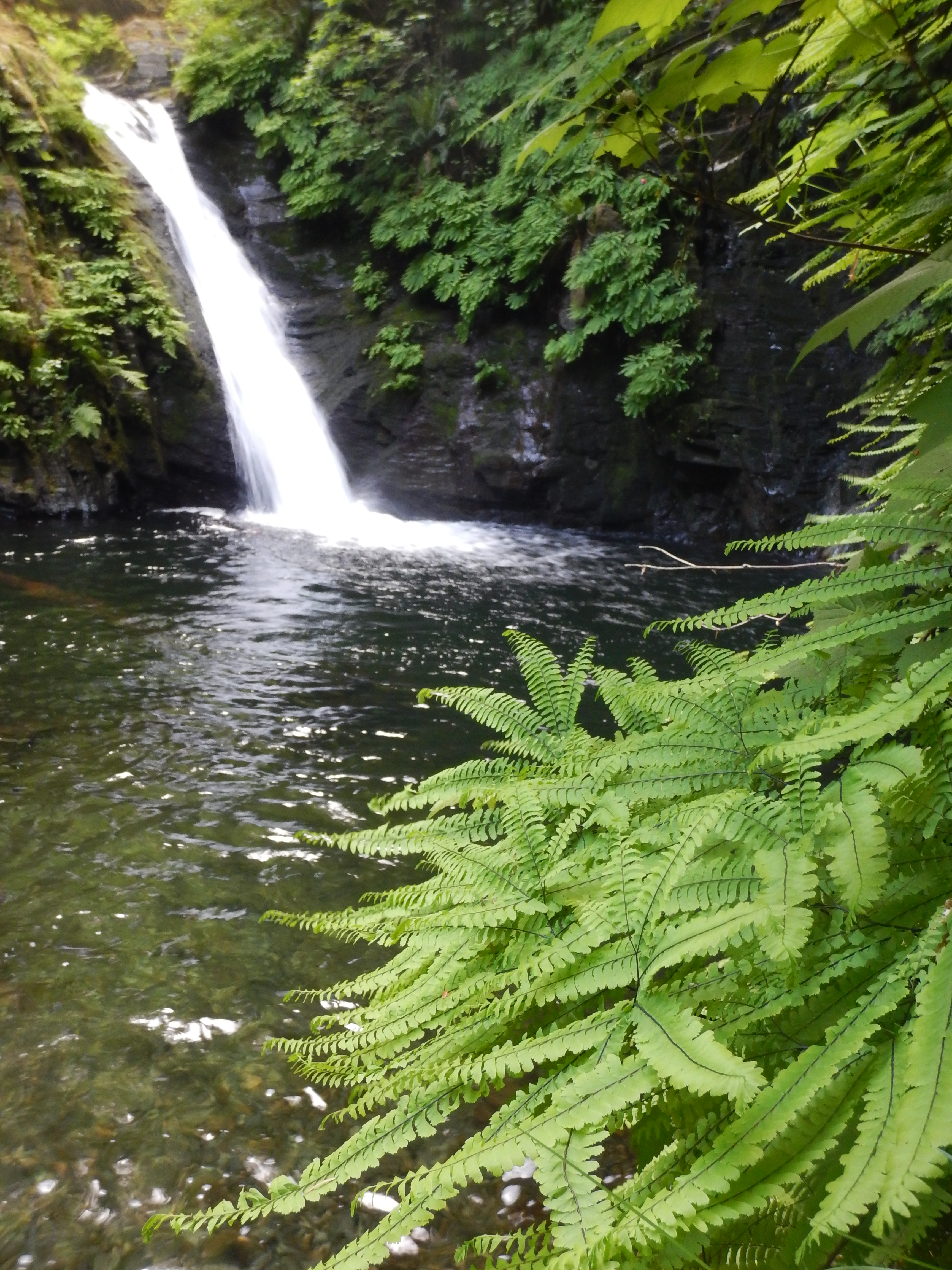
A colony of maidenhair fern (Adiantumpedatum ) grows not far from the fringecup. They also like the moist forest setting – but they like it really moist. They’re practically bathing in the mist of the waterfall. ‘Adiantum’ is Latin for ‘unwetted’. The foliage sheds rain.
photo by SVSeekins
Yes, I realize they’re not wildflowers, but they’re so pretty, I figure they still count.
They’re also super-easy to identify:
They have black stipes (aka stems).
A semi-circular tier of fronds sway in the tiniest breeze above that 1-2 ft. tall stipe.
These 2 facts alone make maidenhairs different from the majority of ferns I encounter out hiking. I’m enchanted by this place!
photo by SVSeekins
I have to apologize to my friend KL for once mocking her family vacations at Goldstream Park. I thought it un-adventurous to camp less than 10 km from home. Now I understand better & appreciate their choice.
It’s my rule never to plant annuals. They’re a waste of time because the plants die in their first year. They must be planted again & again, each year, hence the moniker: annual.
photo by SVSeekins
But every once in a while there’s one I think worth that extra effort.
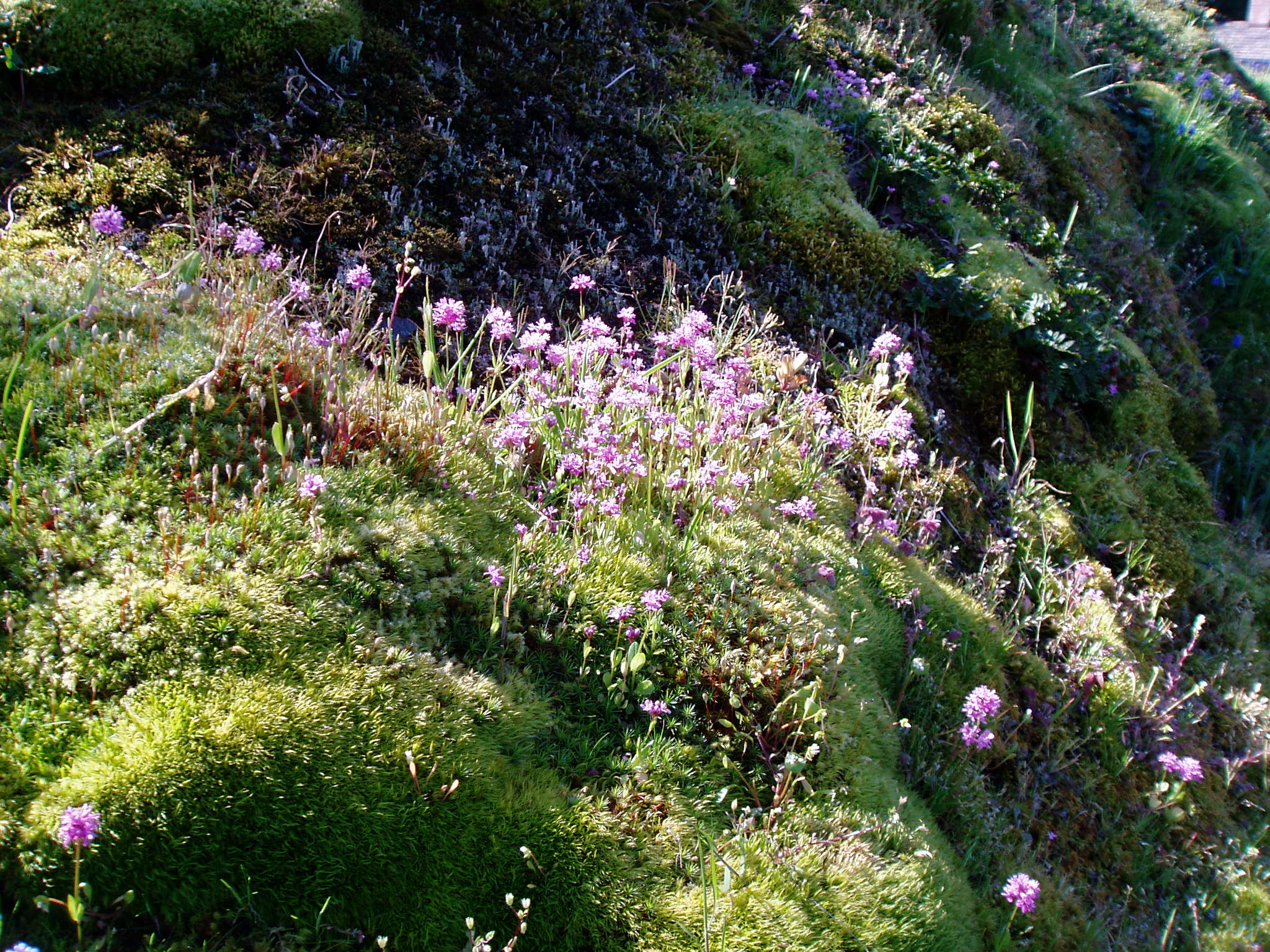
Sea Blush tops my list of favorite annuals.
And when I don’t want to spend packets of money buying seed, or can’t find packets of seed to buy, even more work is required.
photo by SVSeekins
At first, there was the effort to acquire the wildflowers for our garden. Happily those transplants survived the move & seeded themselves around a bit. I celebrated the discovery of a couple more blooms the following year. These little successes make me happy. 🙂
photo by SVSeekins
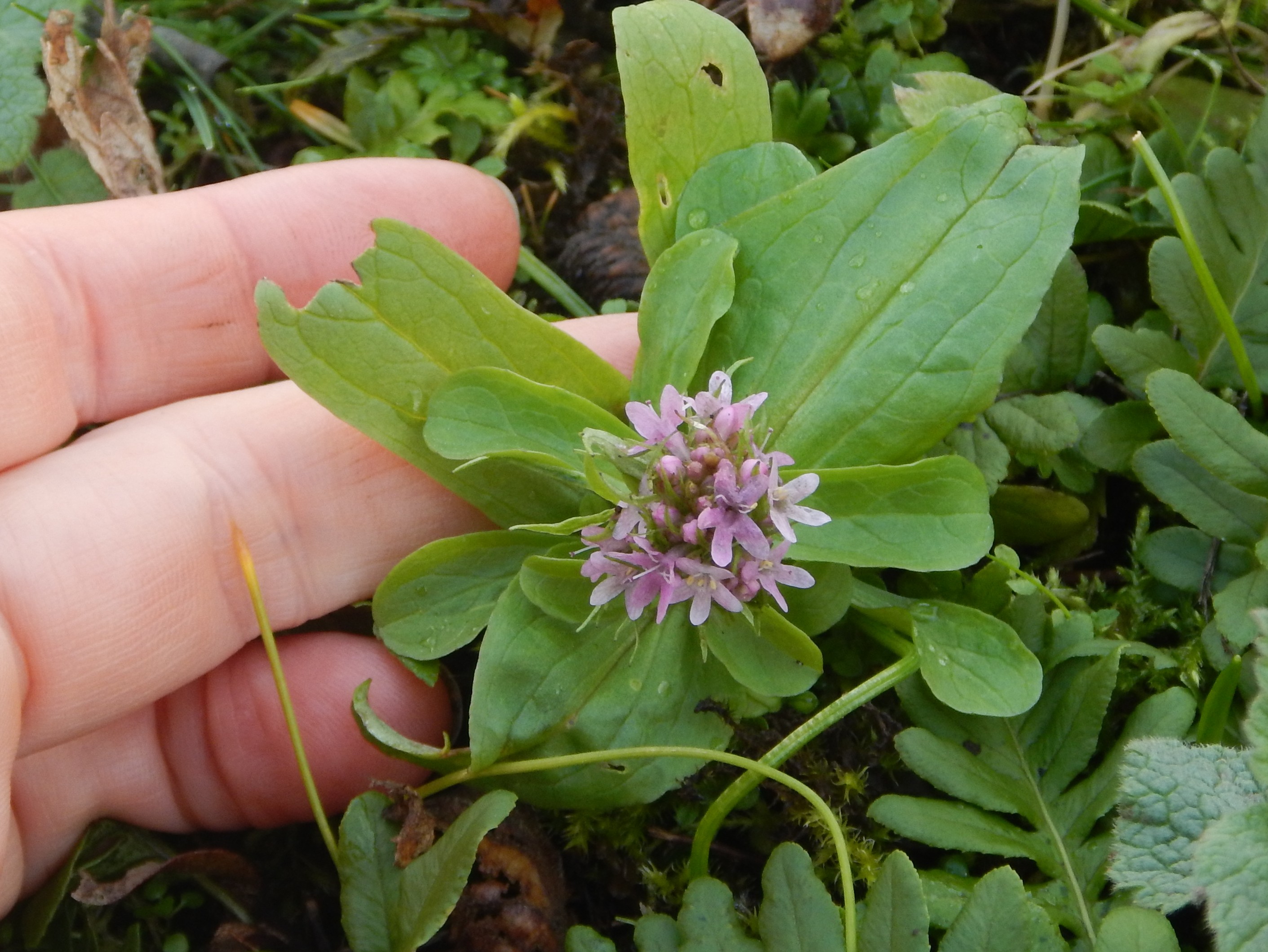
Once a patch of Sea Blush was establishing, I wanted to be sure I wasn’t doing anything to ruin it. The seeds germinate during our coastal winter rains, and start showing up with the first wave of weeds early in the new year. l didn’t want to pull any out of the garden by mistake, so I learned to identify a Sea Blush seedling .
photo by SVSeekins
Now that additional plants are surviving, I want to speed the spread of them around our mountain (rocky outcropping) even more. As the flowers fade, I’ve kept a keen eye on the patch in order to collect seed. The plan is to sow the seed in some similar mossy crevices.
I’m surprised that the Sea Blush goes to seed so early – – it’s not even June yet – – a full month before summer begins!
photo by SVSeekins
Some of the seed stalks are harvested & scattered on other slopes of our mountain.
Other stalks are left in place – – just in case the seed isn’t mature enough yet. These will self sow when they’re good & ready, confidently guaranteeing some plants for next year.
But, cross my fingers, that every seed is viable. Hopefully allthis effort pays off & there’s even more patches of Sea Blush on the mountain next spring.












 Garden Variety Life