Category Archives: months 07-09: summer

July thru September

Devil’s Club In Berry

Devil"s Club Oplopanax horridus native wildflower, garden Victoria BC Pacific Northwest
photo by SVSeekins

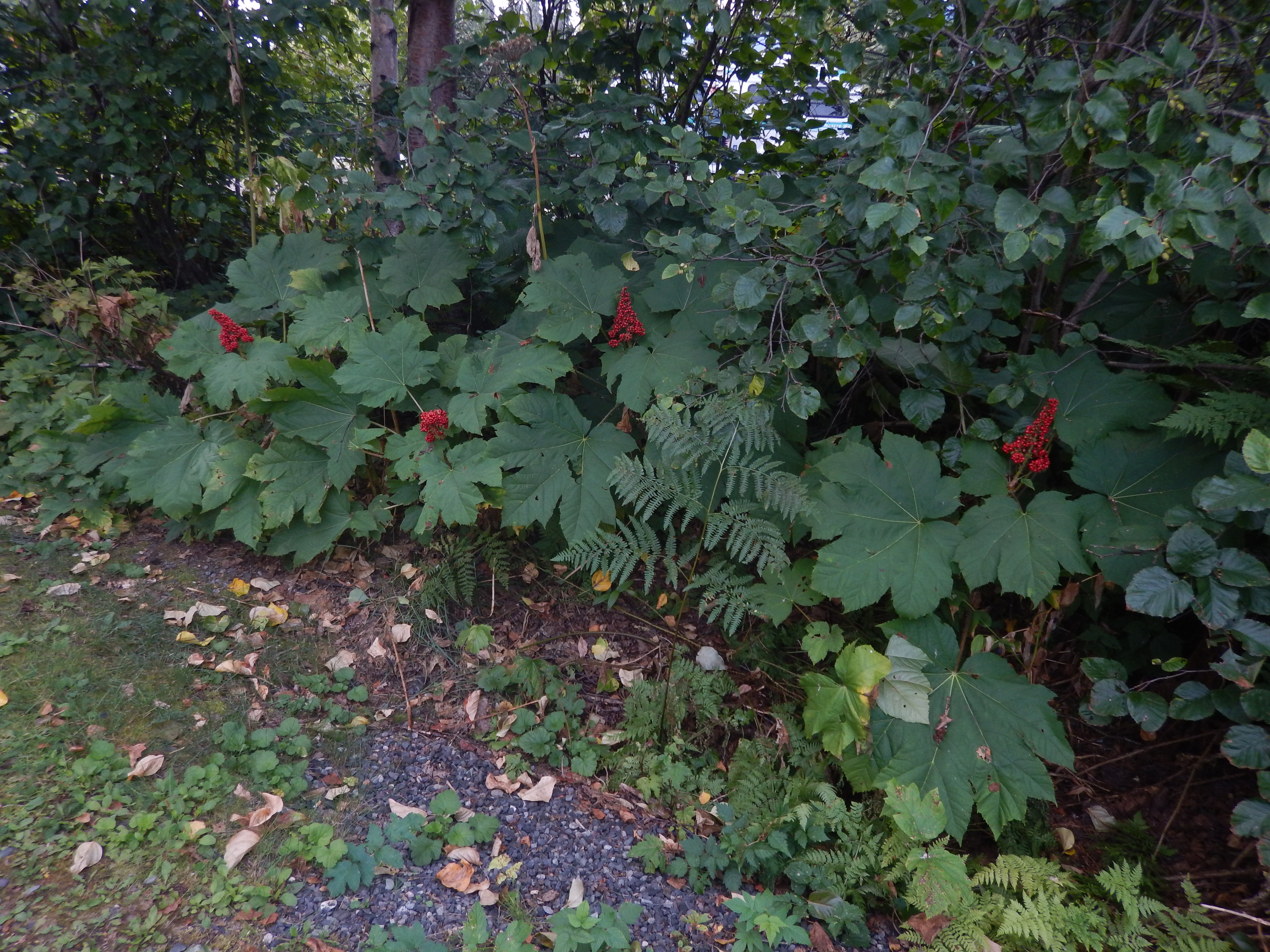
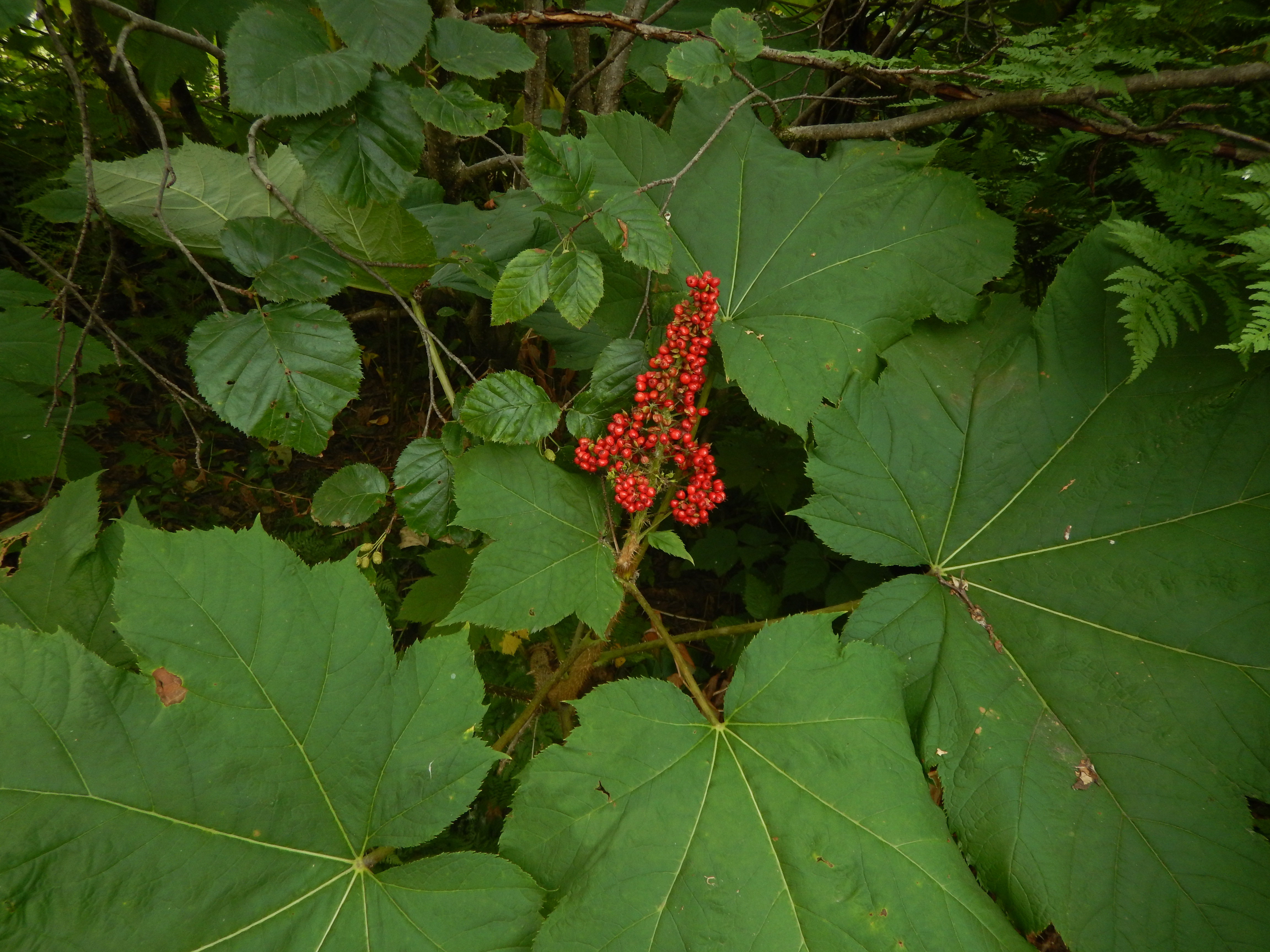
Late August, while camping at Meziadin Lake in Northern BC, I happened across a lovely hedge of Devil’s Club in berry.

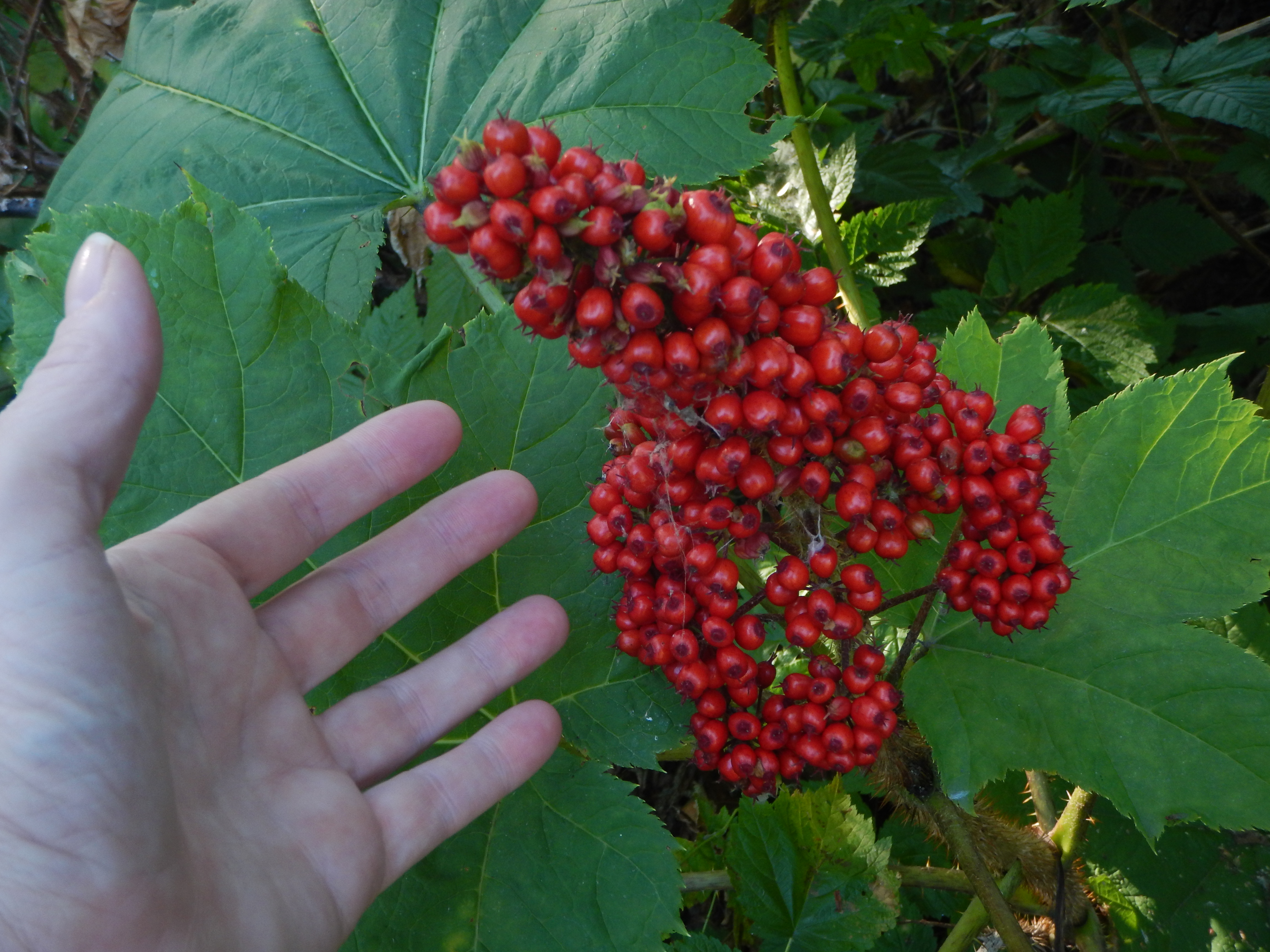
Leaves the size of dinner plates contrast nicely with the background greenery. But it’s the large pyramids of red berries that really catch my eye.
Devil"s Club Oplopanax horridus native wildflower, garden Victoria BC Pacific Northwest
photo by SVSeekins

No wonder this moisture loving shrub is gaining popularity as a decorative garden specimen.

But for me, no matter how enticing the look of the plant, I’m keeping my distance.  Consider the warning in the name: Devil’s Club.
Even in the Latin name: Oplopanax horridus.  
Devil"s Club Oplopanax horridus native wildflower, garden Victoria BC Pacific Northwest
photo by SVSeekins
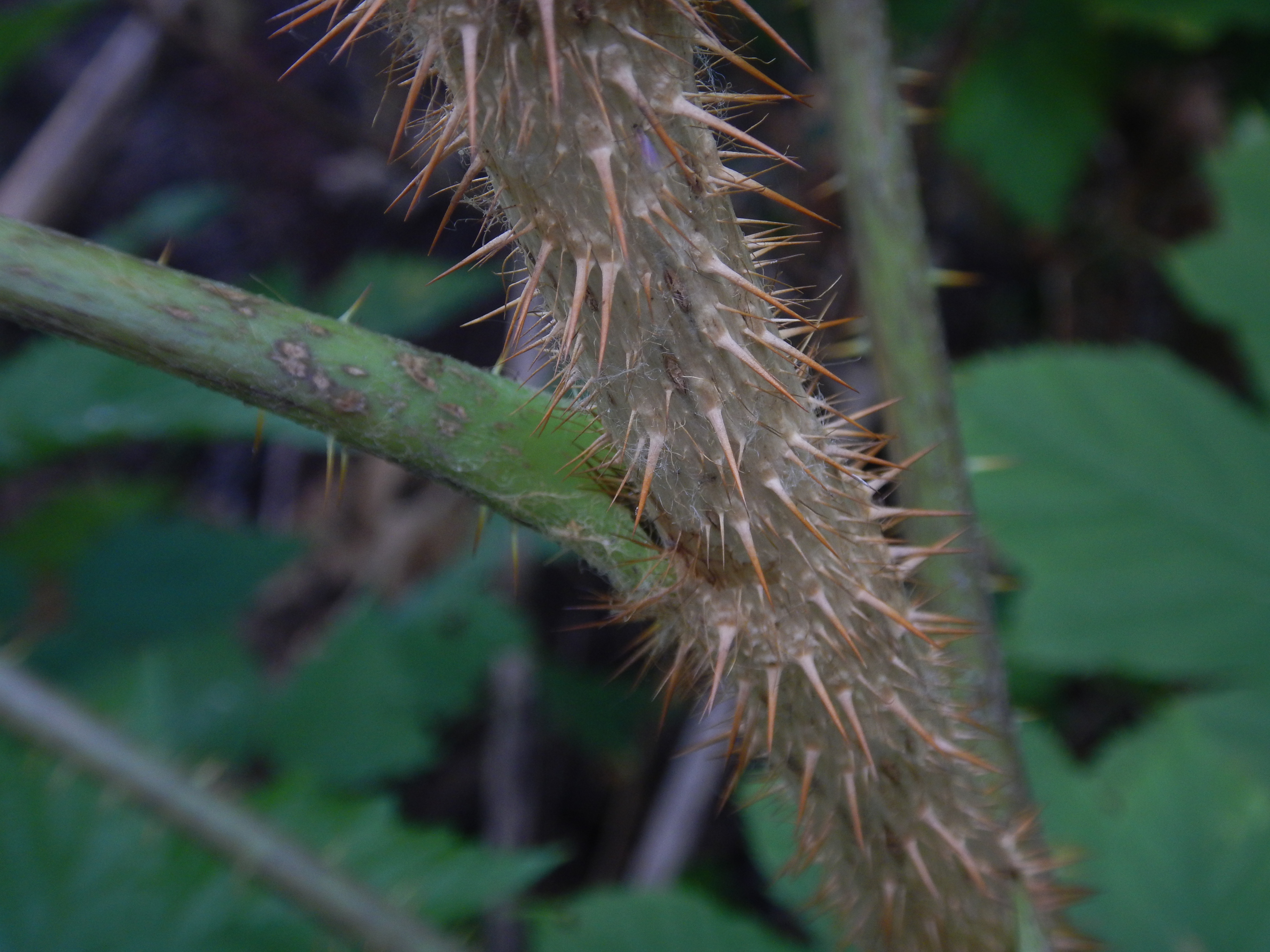
  • To start, the thorns are especially horridus.  

Spikes & brittle thorns not only circle trunks & stems but protect the leaves– both top & bottom!  They easily break off, causing festering wounds in the victim.  What gardener wants that?
Devil’s Club is just plain standoffish.

Devil"s Club Oplopanax horridus native wildflower, garden Victoria BC Pacific Northwest
photo by SVSeekins
  • And those beautiful berries?
    Poison.
    Unless you’re a bear…

Bear are really hungry in late summer.  They’re desperate to gain weight before winter & must have guts of steel.
Devil’s Club just wants to be left alone.

Devil"s Club Oplopanax horridus native wildflower, garden Victoria BC Pacific Northwest
photo by SVSeekins
  • And then there’s the sad tendency for Devil’s Club to get tall & lanky.  That looks fine in the ditches of a campground, but in a well-groomed garden?
    Not so much.

Even though I’m extremely wary of Devil’s Club, it’s held in high regard by many indigenous nations throughout its range.  Perhaps because of its many threats to humans, folks gain stature for mastery over its dangers.  I’m not that kind of gardener.  I’m looking for pretty, low maintenance plants that attract birds & butterflies.  I’m kinda wimpy that way.

Devil"s Club Oplopanax horridus, garden Victoria BC Pacific Northwest
photo by SVSeekins

But for others, if the attraction is the primordial look, I suggest  Japanese aralia (Fatsia Japonica).  It has large palmate leaves, too, but without prickly spines.  I also prefer its funky spring flower.  And the big bonus: Japanese aralia isn’t poisonous.  🙂
Devil"s Club Oplopanax horridus native wildflower, garden Victoria BC Pacific Northwest
photo by SVSeekins

If it’s the bright red berries you’re hoping for, then I reckon those on the Mountain Ash are just as stunning.  They attract birds, not bear, and persist long after the leaves have fallen. (Great outdoor Christmas decorations.)

Don’t get me wrong – – Devil’s Club is a beautiful & powerful native plant.
I garden with many other native plants.
And I really admire Devil’s Club– in the wilderness   🙂

-30-

Wooly Sunflower has Staying Power

May blooms in our garden
photo by SVSeekins

This year I’ve really enjoyed the usual spring flush of color in the garden.  One plant, in particular, has attracted my admiration more than any of the others.

Eriophyllum lanatum, Woolly Eriophyllum, Wooly Sunflower, Oregon Sunshine, woody eriophyllum, wooly daisy, sunshine flower, garden Victoria, Vancouver Island, BC, Pacific Northwest
photo by SVSeekins

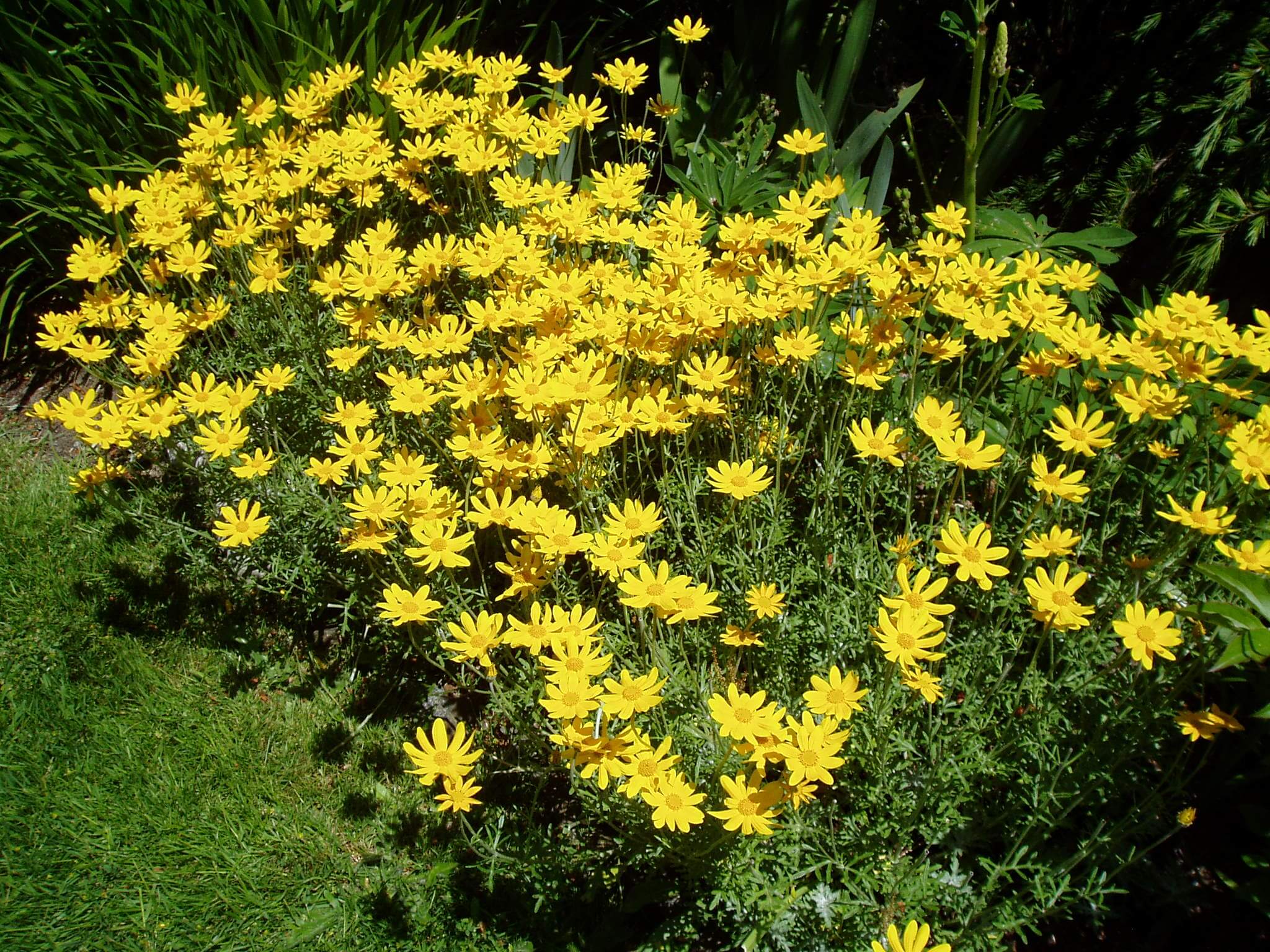
Wooly Sunflower (aka Oregon Sunshine & Eriophyllum lanatum) started blooming mid-May and didn’t stop until the end of June!  The sunny, yellow, daisy blooms lasted as the peonies & rhododendron spectacles came and went.  Hooray for Staying Power.

There are more reasons to admire Wooly Sunflower:

  • Eriophyllum lanatum, Woolly Eriophyllum, Wooly Sunflower, Oregon Sunshine, woody eriophyllum, wooly daisy, sunshine flower, garden Victoria, Vancouver Island, BC, Pacific Northwest
    photo by SVSeekins

    Deer leave it alone – – no missing flowers or over-pruned foliage.

  • It attracts & feeds the local pollinators especially well because it’s native to our part of the world (southern BC & through the states to Mexico).
  • Eriophyllum lanatum, Woolly Eriophyllum, Wooly Sunflower, Oregon Sunshine, woody eriophyllum, wooly daisy, sunshine flower, garden Victoria, Vancouver Island, BC, Pacific Northwest
    photo by SVSeekins

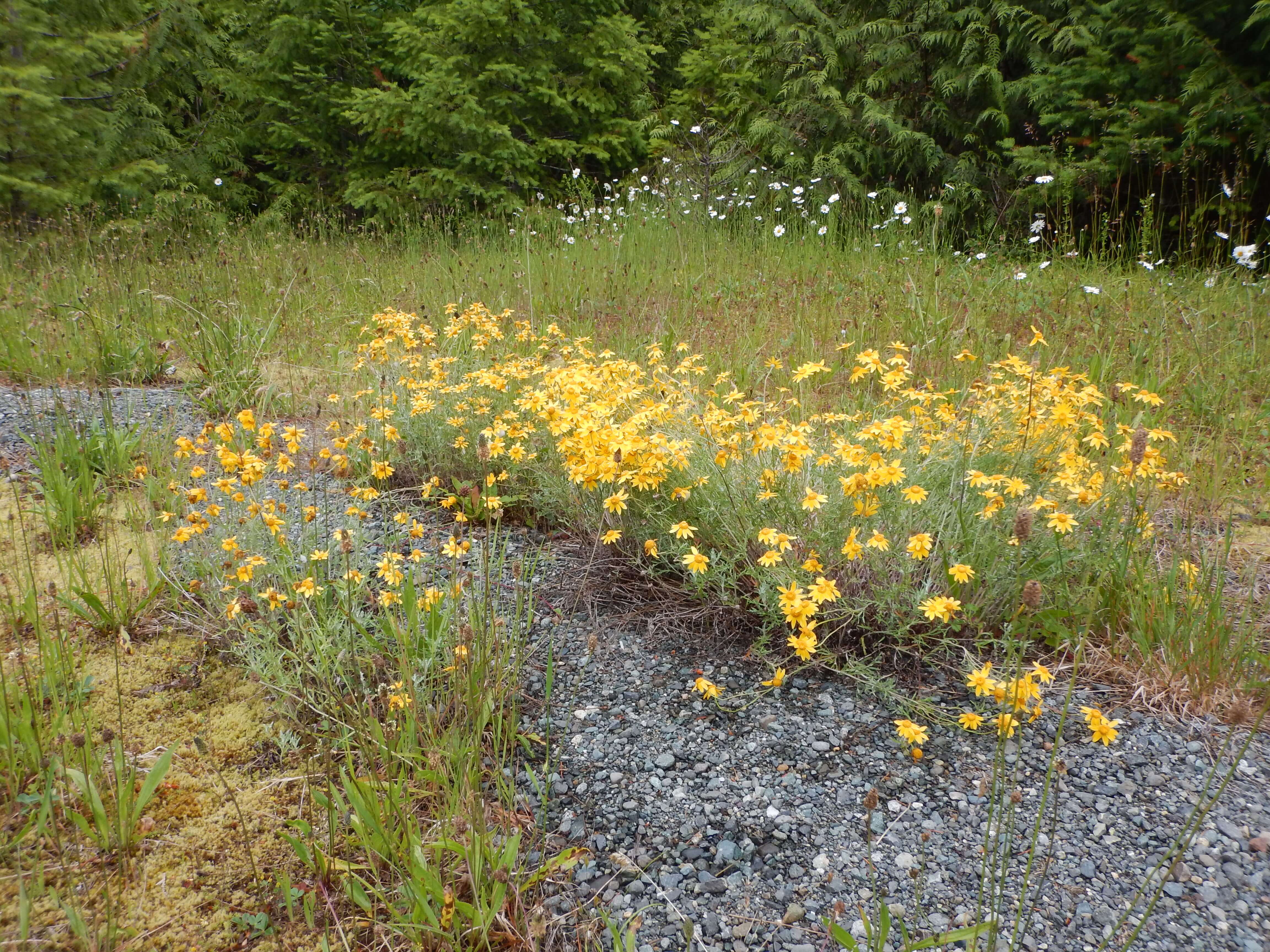
    It’s very drought tolerant.  I’ve seen them in Strathcona Park, growing in the gravel of a roadside pull-out!  They actually seem to do better with LESS water in our garden.  The plants that I watered more regularly sent out long blooming stems that flopped over under the weight of the blooms.

  • Once established, it’s easy-care.  all I do is sheer off the spent flowers in July or August, creating a well-groomed look.
  • Eriophyllum lanatum, Woolly Eriophyllum, Wooly Sunflower, Oregon Sunshine, woody eriophyllum, wooly daisy, sunshine flower, garden Victoria, Vancouver Island, BC, Pacific Northwest
    photo by SVSeekins

    In our climate, it’s evergreen – – or shall I say, ever-grey. It’s so nice to have the tidy mounds of foliage through the more barren garden of winter.

Originally, I thought it would be an easy addition to our garden.  I had a tough time getting the small 4-inch pots of Eriophyllum lanatum established.   Although I watered them weekly, they struggled on our rocky outcrop – – a match to their natural habitat!  After a couple of years, I was frustrated.  What worked, in the end, was shifting the small starts to an area with deeper soil, that was still watered weekly but not baked in as much sun.

Eriophyllum lanatum, Woolly Eriophyllum, Wooly Sunflower, Oregon Sunshine, woody eriophyllum, wooly daisy, sunshine flower, garden Victoria, Vancouver Island, BC, Pacific Northwest
photo by SVSeekins

The plants quickly grew, spreading to a foot wide in one season.  They were a bit lanky & not terribly attractive, but had established a stronger root mass.  In the fall I divided them, keeping deep rootballs, & planted them into drier areas.  They settled into their new homes over our moist winter & flourished with very little water through the following dry summer.

Eriophyllum lanatum, Woolly Eriophyllum, Wooly Sunflower, Oregon Sunshine, woody eriophyllum, wooly daisy, sunshine flower, garden Victoria, Vancouver Island, BC, Pacific Northwest
photo by SVSeekins

Now we have Wooly Sunflower in several areas: the boulevard, the rocky outcrop, & our more traditional flower garden.  I’m on the lookout for even more easy-care native plants that suit…..

-30-

Other native plants that I’d welcome into our garden:


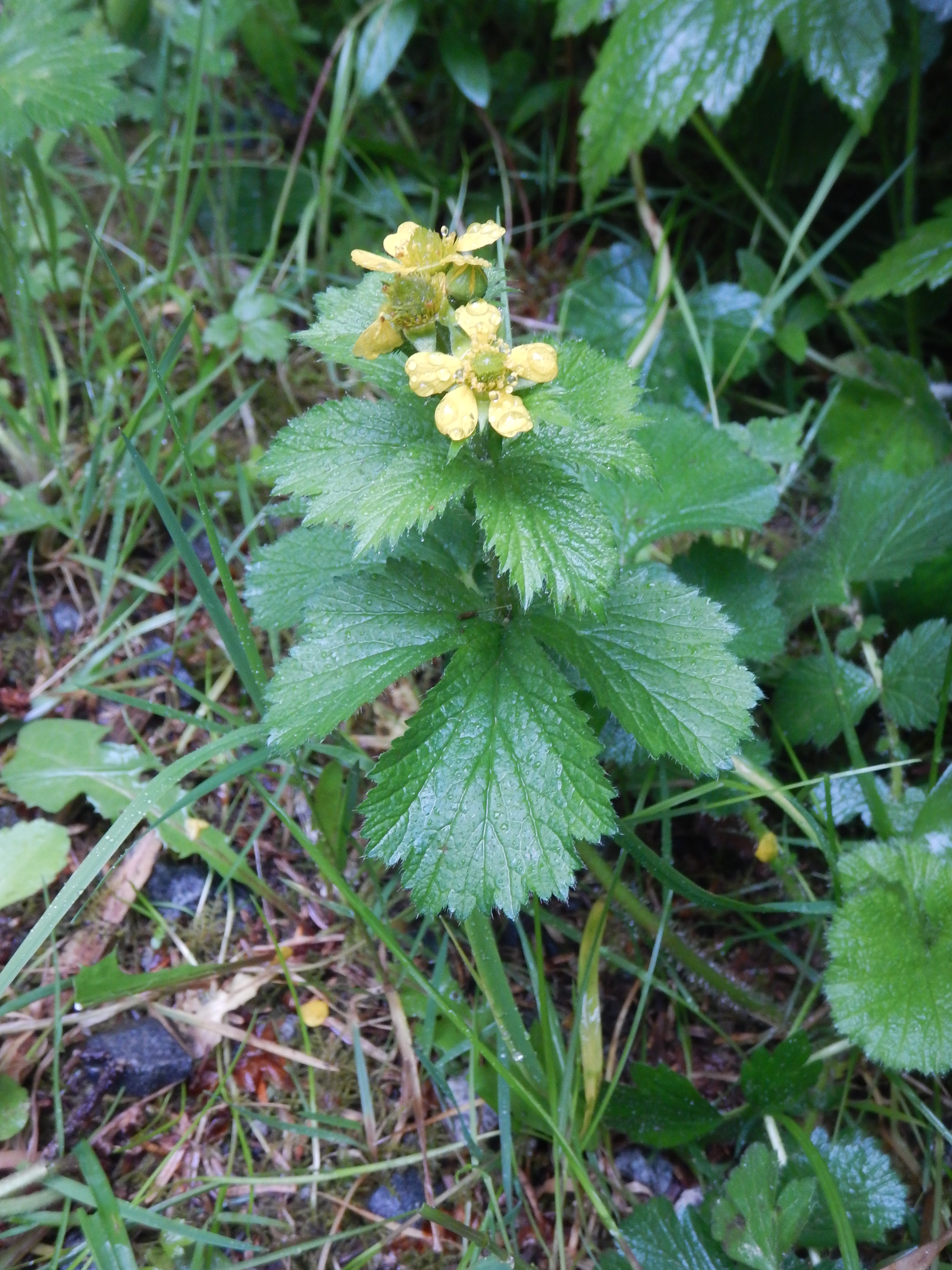
Geum macrophyllum – Large-Leaved Avens

garden Victoria, Vancouver Island, BC, Pacific Northwest
photo by SVSeekins

I first really noticed Large-Leaved Avens as a specific wildflower when I found it blooming beside the waterfall at Goldstream Park one May.  Before that, it was just one of the many yellow blooms we see in spring.

garden Victoria, Vancouver Island, BC, Pacific Northwest
photo by SVSeekins

Recently I was pleased to see it blooming in a parking lot, not far from the ocean, near Tofino.  That was at Thanksgiving!

October is really very late for a spring wildflower to be blooming – but I’m not complaining.   🙂

garden Victoria, Vancouver Island, BC, Pacific Northwest
photo by SVSeekins

The flower is a simple yellow daisy style; a smiling happy bloom that I find charming.
Unassuming.
Easy.

But Geum macrophyllum is not as plain as it first appears.

large-leaved avens, Geum macrophyllum, largeleaf avens, big leaf avens, garden Victoria, Vancouver Island, BC, Pacific Northwest
photo by SVSeekins

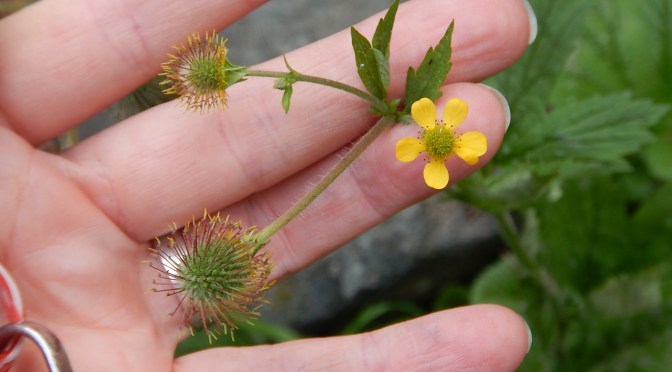
The seedhead is funky – certainly something that I’d let stand in my garden rather than tidy up.

The achenes (fruits) kinda remind me of googly eyes floating above the alien body.    Apparently, the pom-poms are happy to catch rides on passing pant legs or animals: free spirits looking for adventures far afield.  Groovy.

garden Victoria, Vancouver Island, BC, Pacific Northwest
photo by SVSeekins

But really, the magic is in the foliage.  What other plant has 2 kinds of leaves?  Right at the base, near the ground, the leaves are round.  Further up the stem, near the flowers, they’ve morphed into 3 lobes with deep serrations.  Crazy.

The guidebooks say Avens are common to wetlands across most of North America.  I’m hoping they’ll become common in my garden, too.  Last month I won 3 in the plant raffle at the Native Plant Study Group.  They’re now growing in one of our courtyard beds (where they’re more likely to get the extra summer moisture they need).  Cross your fingers for me.

-30-