Category Archives: months 10-12: fall

October thru December

Cyclamen Coum – February Romance

I think February is sleeping in.  The days are getting longer, but it seems so slow. Standing at the kitchen sink, staring out the window at the drizzle, I let out a squeal.  Hot pink blooms at the base of the apple tree!  I’m saved!  Happy dance.
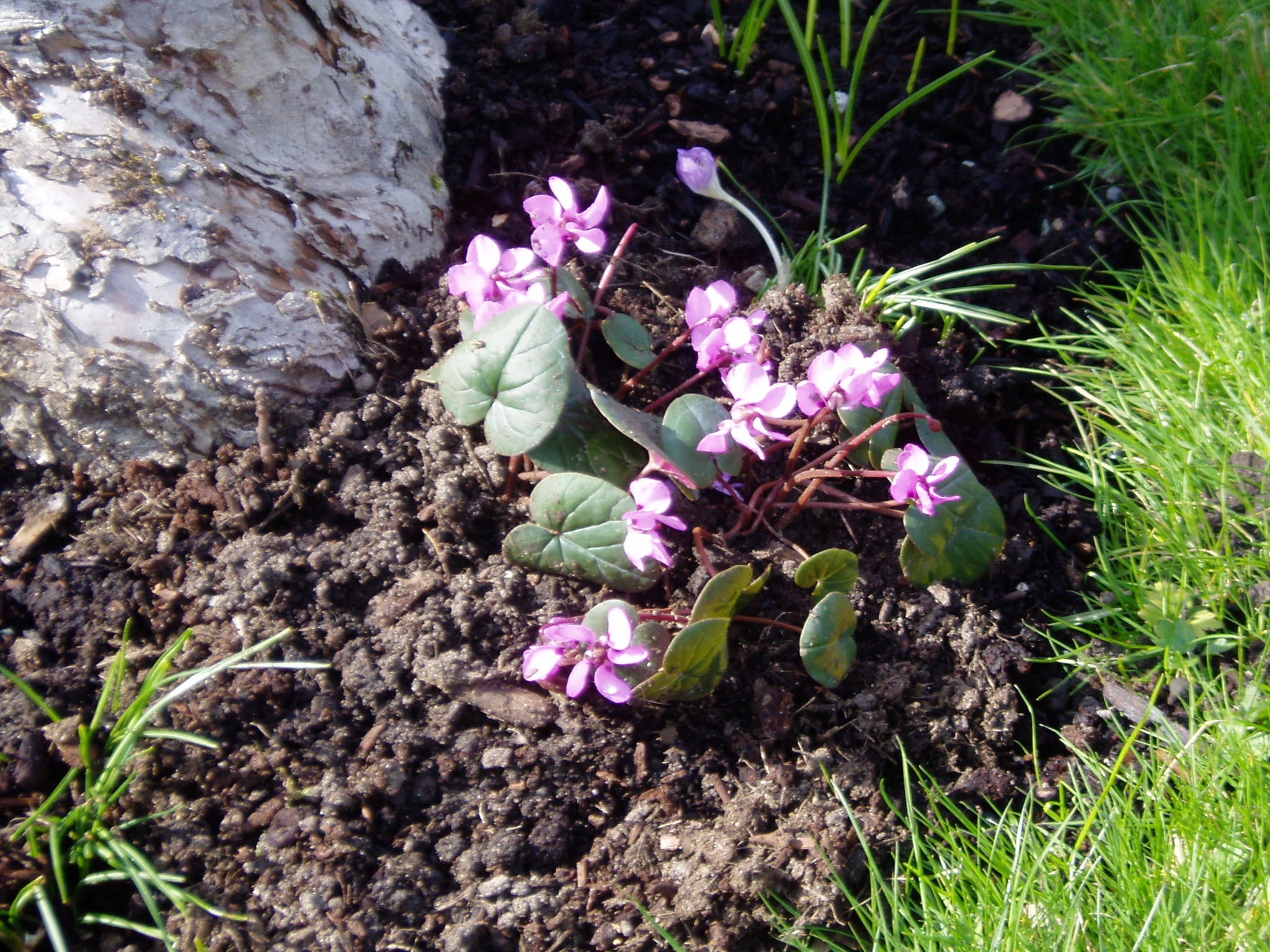
cyclamen coum - full bloom
photo by SVSeekins

Cyclamen coum shouts for me to come outside and play.  I drop everything to grab the camera. Kneeling down on the soggy lawn, I fumble for the Close-Up setting.  The rain dribbles down my neck, but I don’t care.  Blooms!  I see blooms!

For such a tiny flower, it packs a punch.

I mean, snowdrops are lovely, but they’re demure, unassuming white flowers.  Cyclamen coum are bright, exotic, FEISTY flowers.  Round 1 goes to C. coum.

cyclamen coum - full bloom
photo by SVSeekins

In round 2 C. coum throws a low blow to my gut.  It’s a little pricier than my usual comfort zone, especially considering that it comes in such a tiny pot.  But determined to have real colour in the winter garden, I stayed strong & paid the price.

cyclamen coum - debris
photo by SVSeekins

In round 3, I struggled with where to showcase the winter bloomer.  I keep the little bed under the apple tree empty – mostly because I read somewhere that certain bugs climb up tall plants as a way to get high into the apple tree & infect the fruit.  I don’t know whether that’s really true, but it gives me a clear spot, visible from inside, for the cyclamen to show off.  Good thinking, eh?

C. coum are so small that they could easily be lost under a pile of leaf debris, so in round 4 I get busy & do the winter clean up chores.

cyclamen coum - January
photo by SVSeekins

Their speckled, round leaves started to show in October.  By mid-January, C. coum had minuscule, bright fuchsia buds.  I often found myself outside cheering them on.  It took a few extra weeks for their flowers to open.  That entertainment value wins them round 5.

So now, I’m on my knees with the camera, looking a bit foolish, but happy.  I’m head over heels.   How many more rounds to go?  None,  round 6 is a simple knockout.

Cyclamen coum has got to be my all-time favourite – EVER.   🙂

cyclamen hederifolium - February - leaf only
photo by SVSeekins

Hardy Cyclamen is more often known as a fall bloomer.  Most varieties start in August, and some continue through November.  There are lovely examples growing in Abkhazi Garden.

Cyclamen hederifolium (with ivy-shaped leaves) is a bully, overrunning many other varieties.  There are several small patches around our yard, but I’m being ever so careful about placing each variety separately and not too close together.

cyclamen hederifolium - September bloom only
photo by SVSeekins

On a positive note, C. hederifolium’s flowers seem to appear magically out of nowhere, and the leaves show up weeks later.  That’s kind of cool for a bully.

cyclamen hederifolium - February - rock crevices
photo by SVSeekins

Cyclamen are well-suited as a rockery plant, too.  I’m happy to have success with some rooting well into the steep mossy rock in our side yard. My hope is that it’s tough to mix varieties when they’re each growing in their own crevice.

Garden gurus Carole & Bill Dancer have lovely masses of hardy cyclamen flowering throughout their garden beds at this time of year.  Bill says the cyclamen spread effortlessly.  He chuckles that the ants do the work.  They happily move the sticky seeds around for him. My guess is the ants are just as susceptible to this February romance as I am.

-30-

The Dandelion Dilemma

In my mind dandelions have pretty yellow flowers.  They’re deer resistant.  Long blooming. Survive drought & famine.  They’re tasty as salad greens.  And even make wine.

To C, that’s just not enough.

C carries a big grudge against dandelions.  He harbors dark thoughts & plots their demise.   He’s carried bucket loads away from the lawn after battle.  But still he lives in fear that the common dandelion will win the war.

This fall I initiated a new plan.

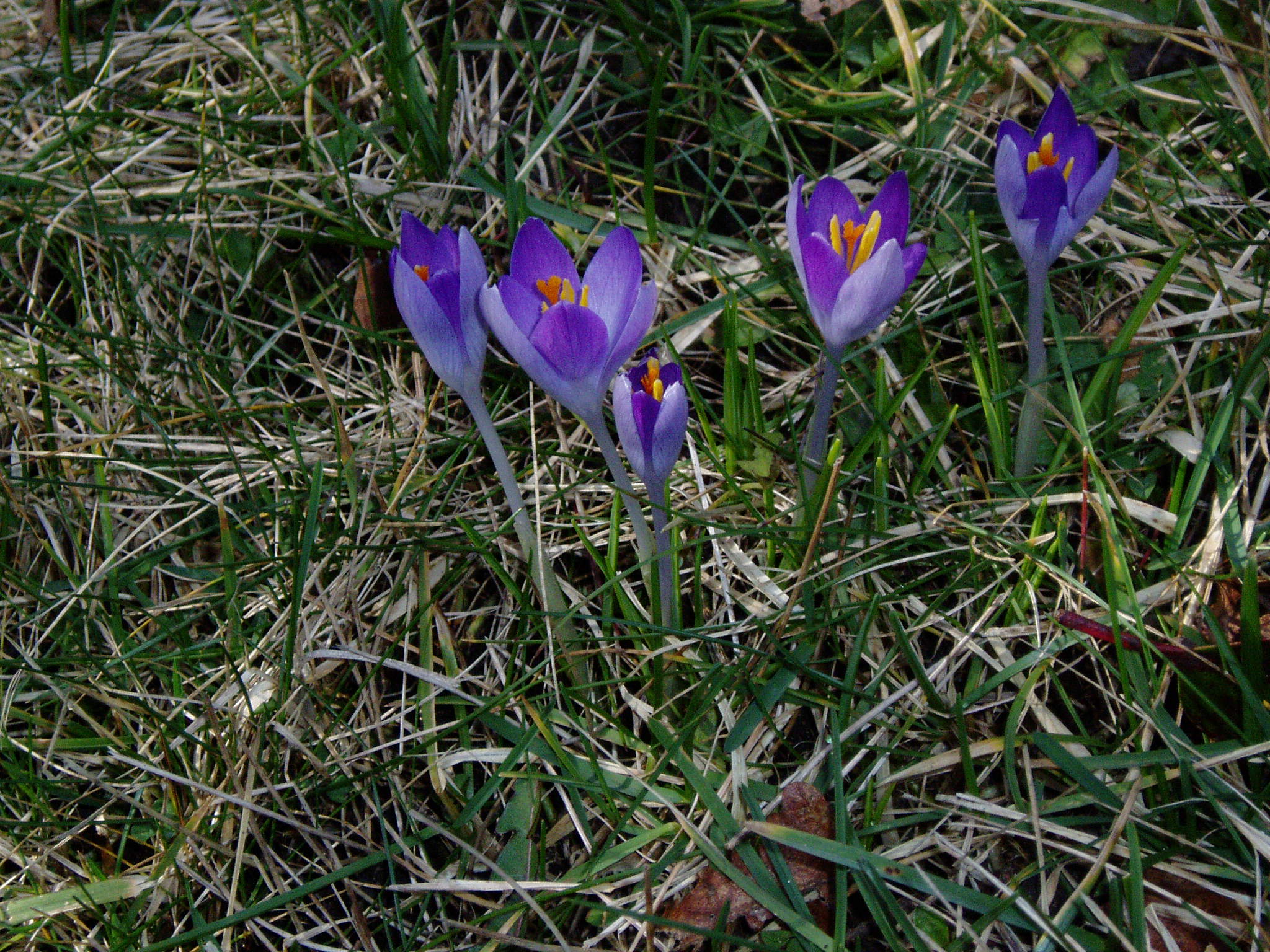
After having some success during wet seasons past, I decided to have another go at digging the dandelions out – and this time replacing them with crocus.

spring crocus
photo by SVSeekins

Fall is the proper time to plant bulbs. Considering I’ve dug the hole to get the dandelion out, I might as well take advantage of the effort, right?

My good friend AT planted the idea in my mind years ago.  When she was very young, her dad had employed the same reasoning in his yard: replace dandelions with crocus.  I’ve never seen that lawn, but in my imagination it is wonderful.

The crocus of choice promises to grow no higher than 4 inches tall.  They bloom in mid February.  Even if they’re still blooming when C brings out the lawnmower, they should be safely below the blade.  Cross my fingers.

After some rain in the fall, most plants can be dug out quite easily.  The soil is moist, and therefore softer, and easier to dig.   Dandelions however, have multiple, deep, sometimes cork-screwing roots.  If any section of root remains in the ground, it’ll happily renew itself.

planting crocus in lawn
photo by SVSeekins

For this project I chose the dandelion patch just outside the fence-line.  It was especially resplendent in dandelion.  It’s also a high visibility area that C is the most embarrassed about.  I gave special attention to get as much root as possible.

Working an hour or two at a time, I slowly made progress.  There was so much digging that the lawn looked pretty rough for the first while.

Well over 400 crocus bulbs were planted.

I’m hoping that by spring there will be a colorful blooming meadow.

So much of gardening doesn’t seem to be about having a green thumb.  Having a strong back is certainly a plus.  So is crossing fingers.   Wish me luck.   🙂

-30-
© SVSeekins and Garden Variety Life, 2012

snow crocus, woodland crocus, early crocus, summit park, crocus, garden Victoria, Vancouver Island, BC Pacific Northwest
photo by SVSeekins

PS – here’s the follow-up post a year or so later:

… and one from an established meadow

For the Birds: Suet Logs

Quick link to Recipe
(
thanks to DavidSuzuki.org)

Each December, the urge to CREATE sweeps into our home. C looks forward to taking a few days off before Christmas to play in Santa’s Workshop.

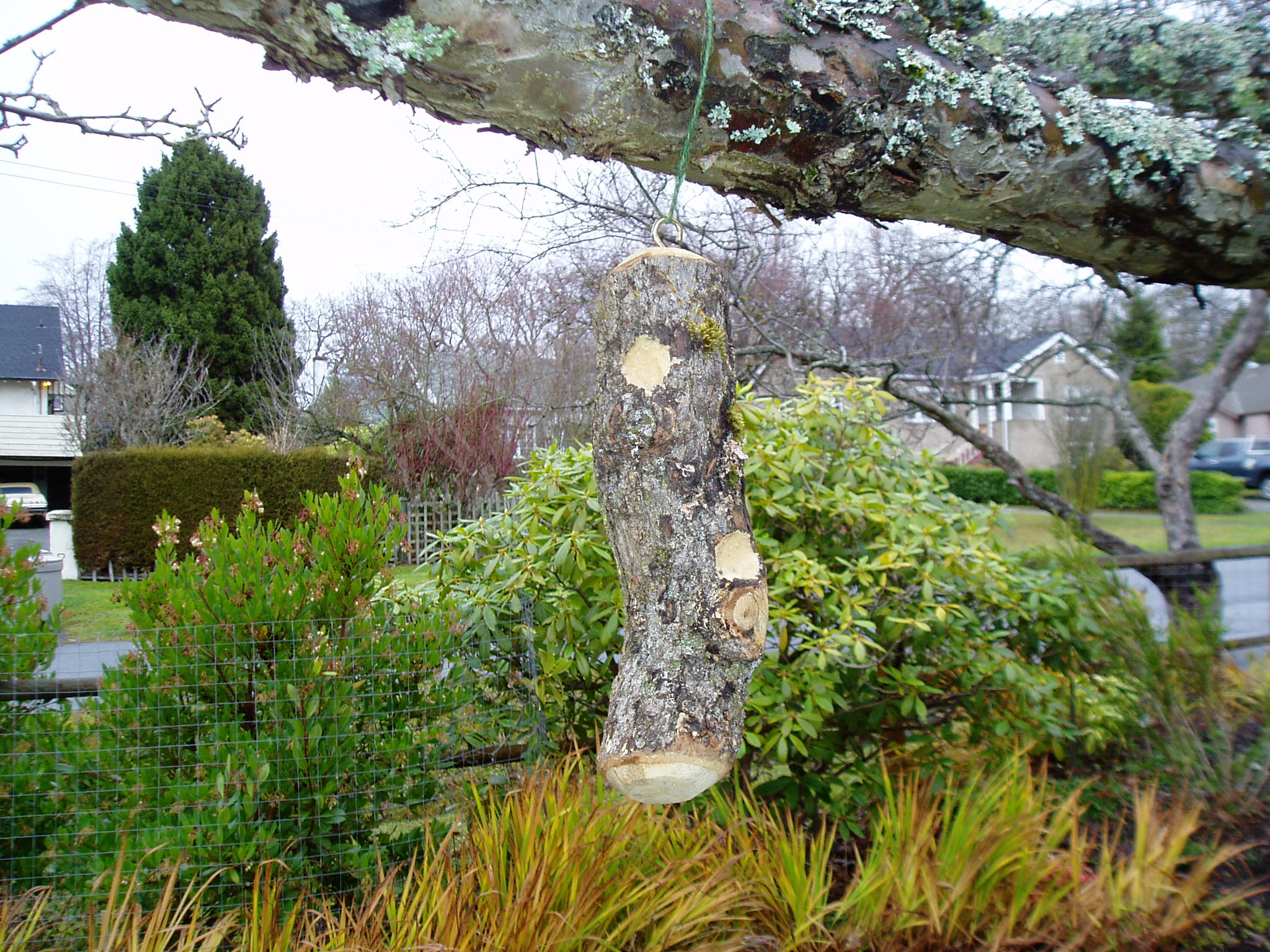
This year the project idea came from a store-bought gift we’d given C’s mum this summer. It was a bird feeder – a Suet Log to be more specific. It’s just like a tree branch with holes drilled & filled with a suet mixture. The birds, especially the woodpeckers, flocked to her 3rd-floor deck. They LOVED it

The fellow at the store said many birds find their food inside the bark of trees, so these feeders attracted more birds than those looking for seeds.  Customers had reported over 110 different varieties of birds using this feeder.

bird feeder
photo by SVSeekins

C had to make some himself.  His Santa’s Workshop project plan was in place early.

All summer & fall, we put commercial  ‘bark butter’ into Mum’s feeder each time we were at her apartment.  After a while, the cost added up, so I figured it was time to try making the birdfeed from scratch, too.

A year or so ago Swan Lake Nature Sanctuary gave me instructions for pine cone bird feeders. They were stuffing homemade bird suet into open pine cones. The idea intrigued me. I figured the fat should work just as well inside the drilled holes of C’s logs as it would inside the pine cones. Although I came across those instructions this summer & put them ‘somewhere safe,’ do you think I could find them now?

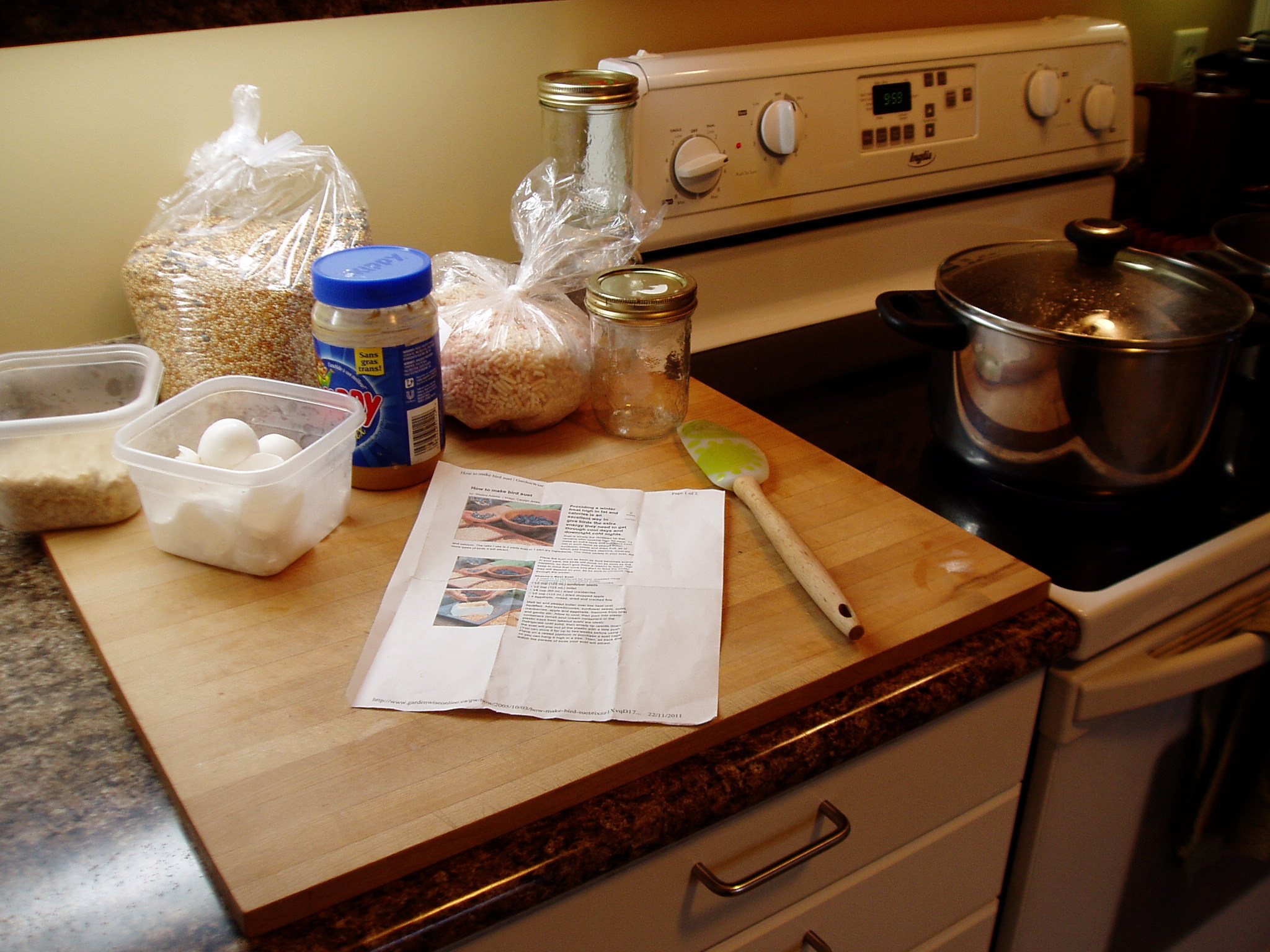
In the end, I found a recipe from Garden Wise magazine that would do the trick.

suet bird feed ingredients
photo by SVSeekins

Procuring most of the ingredients was straight forward.  Peanut butter, dried fruit & breadcrumbs were already in the kitchen.   I washed eggshells & stored them frozen until needed.  The sunflower seed & millet was sourced in the bulk section at Buckerfields, a local feed store.

The rendered fat (suet) was a little tougher. I looked around for plain suet blocks that could be melted down & converted into this pliable recipe for the logs.  Even on sale, these wouldn’t be cost-effective.

It turns out, suet is available from the butcher.  I went to a butcher that specializes in British fare.  The British use suet in spotted dick – a steamed pudding.  Who knew?

Once I’d collected all of the ingredients for our bird suet, it didn’t take long to put it all together.

suet bird feed in jars
photo by SVSeekins

For packaging, it was important to me not to be wasteful. So I decided on canning jars. I had lots of them, & they can be reused or recycled.

We’re pretty happy with the finished product.    Now we’re waiting to see what kind of bird will be the first to find the new feeder in our garden.

-30-

Check out the recipe:

or there’s an easier option:

Enter your email address to subscribe to this blog and receive notifications of new posts by email.