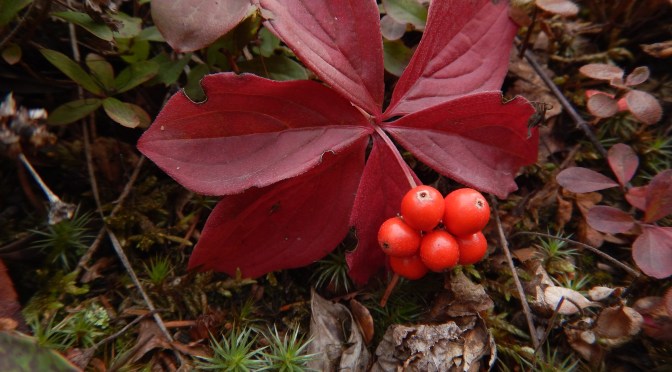
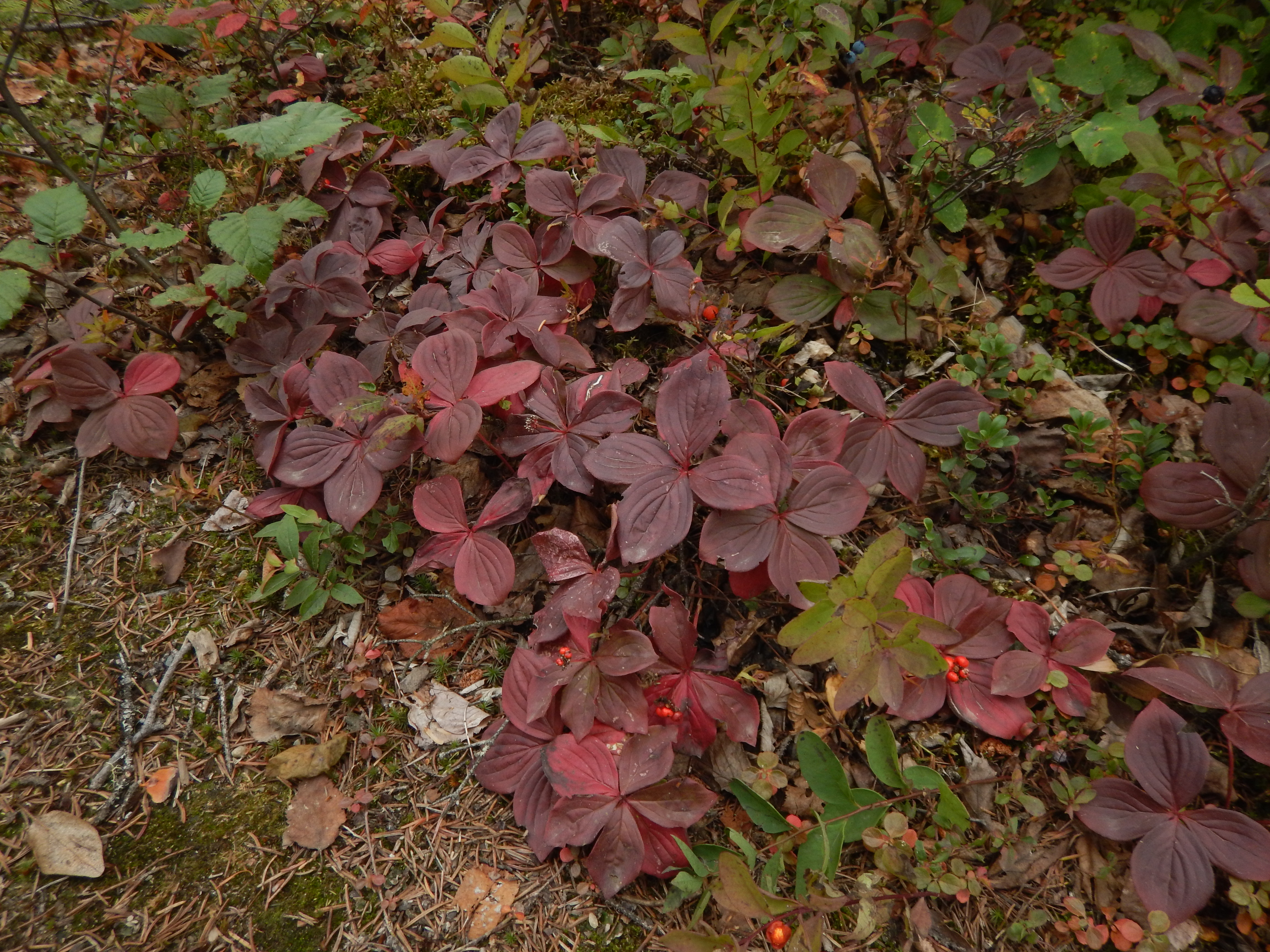
Before now, I’d only read that the leaves turned burgundy in the fall.
Granted, the color blends in with the soil surrounding it, but the really bright orange of the berries & red of the foliage is striking.
photo by SVSeekins
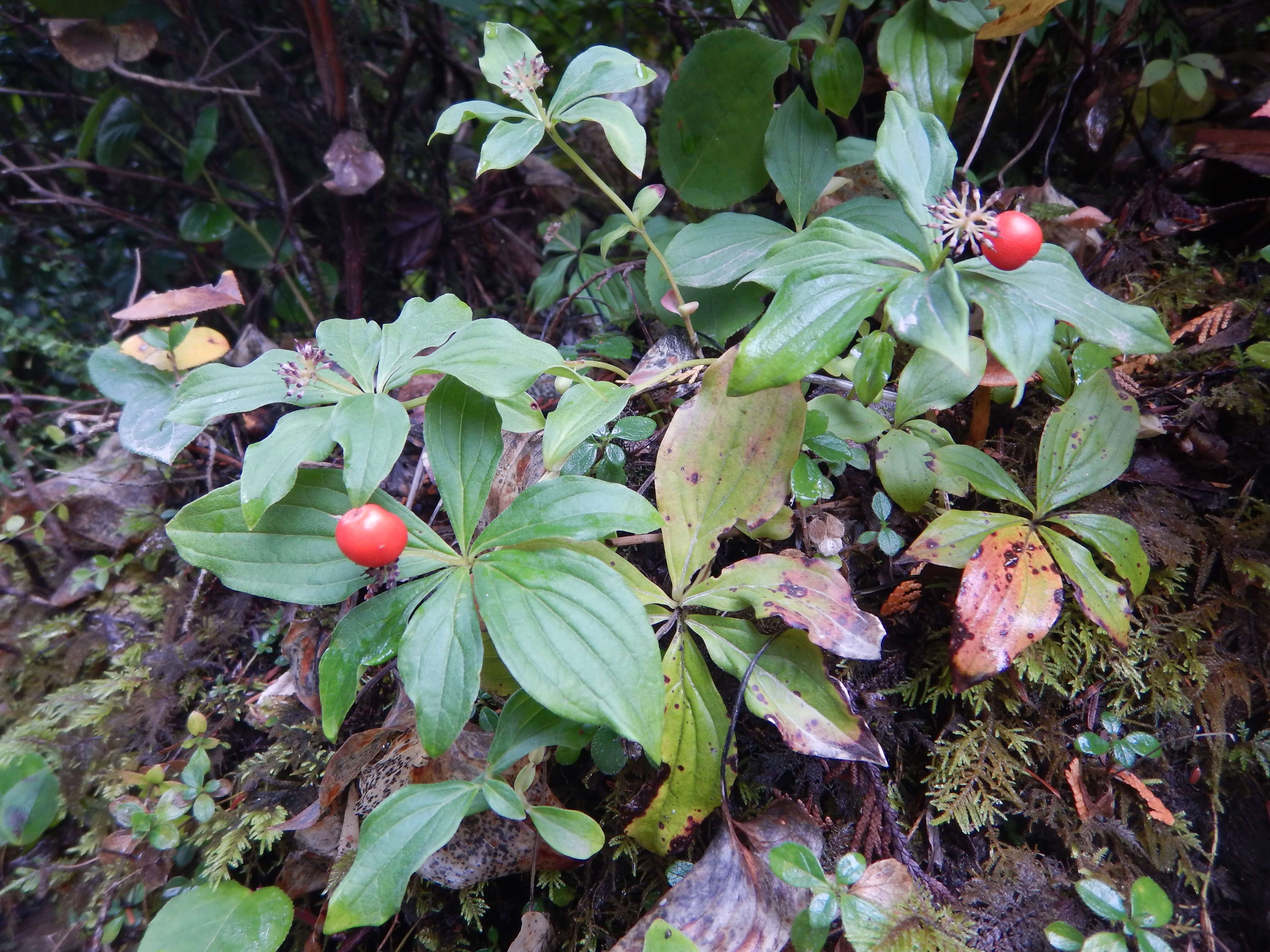
In Tofino, on the west coast of Vancouver Island, I’ve found the green leaves yellowing through October. Why no red coloring?
Perhaps the difference between the weather in northern BC & the West Coast is key. The northern site had already experienced fall frost. The southern site hadn’t. Maybe the burgundy color comes only in reaction to a freeze?
photo by SVSeekins
Bunchberry is ‘circumboreal‘. It occurs throughout Canada, as well as in Greenland, Russia & Asia.
It crosses many plant hardiness zones (2-9). It has a huge range.
Let’s compare:
Where have you seen the leaves turning burgundy?
This year I’ve really enjoyed the usual spring flush of color in the garden. One plant, in particular, has attracted my admiration more than any of the others.
photo by SVSeekins
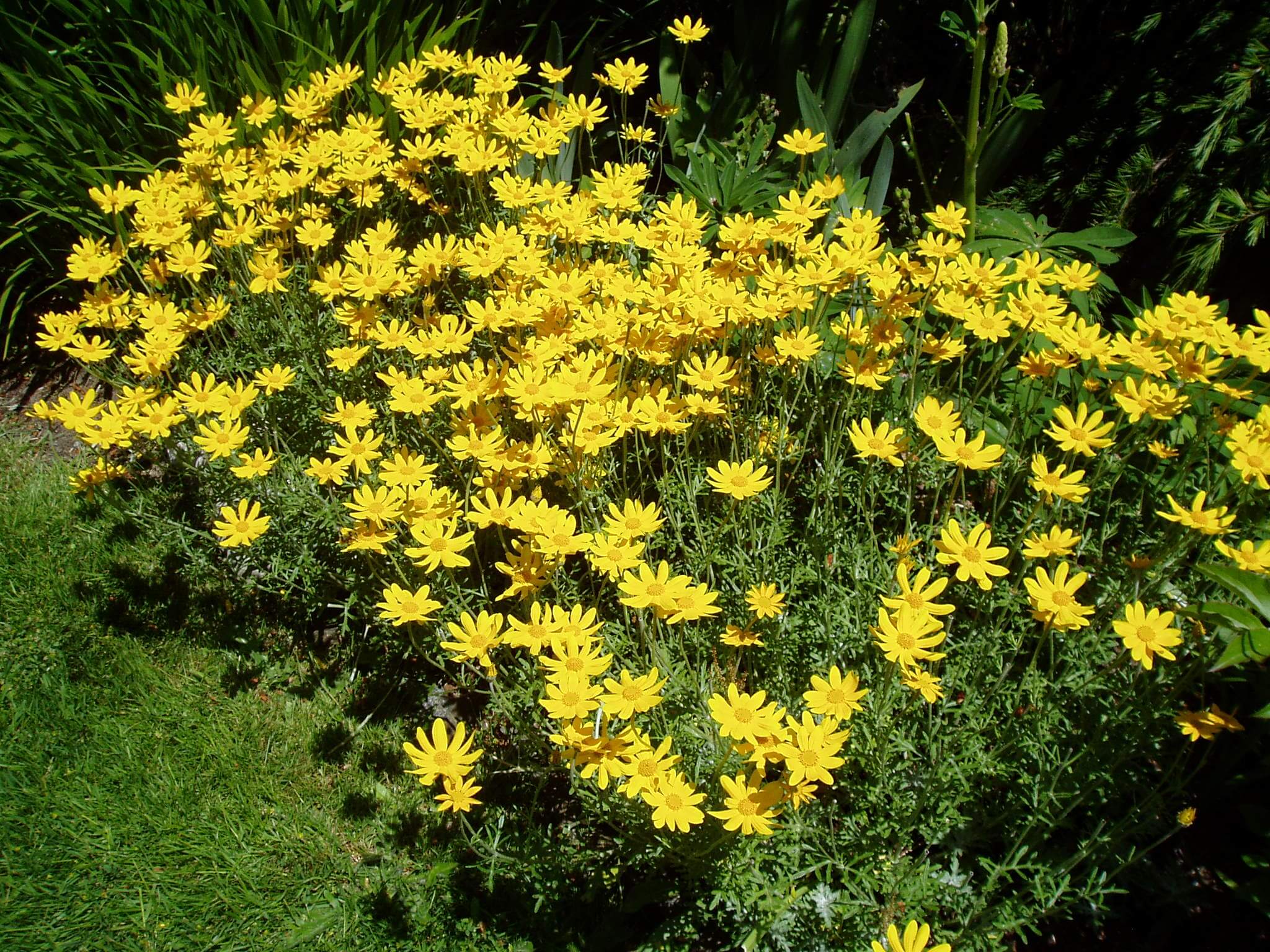
Wooly Sunflower (aka Oregon Sunshine & Eriophyllum lanatum) started blooming mid-May and didn’t stop until the end of June! The sunny, yellow, daisy blooms lasted as the peonies & rhododendron spectacles came and went. Hooray for Staying Power.
Deer leave it alone – – no missing flowers or over-pruned foliage.
It attracts & feeds the local pollinators especially well because it’s native to our part of the world (southern BC & through the states to Mexico).
photo by SVSeekins
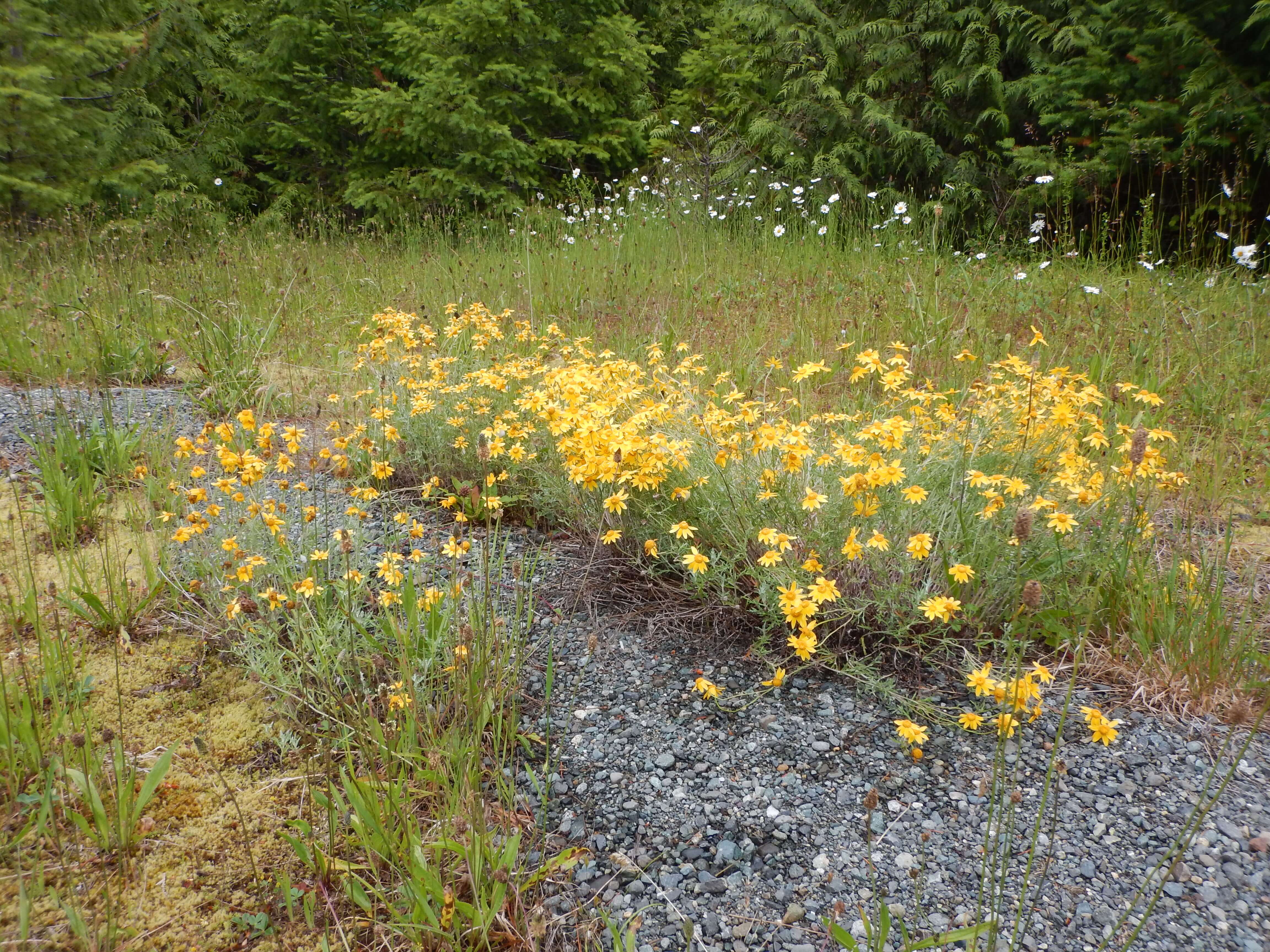
It’s very drought tolerant. I’ve seen them in Strathcona Park, growing in the gravel of a roadside pull-out! They actually seem to do better with LESS water in our garden. The plants that I watered more regularly sent out long blooming stems that flopped over under the weight of the blooms.
Once established, it’s easy-care. all I do is sheer off the spent flowers in July or August, creating a well-groomed look.
photo by SVSeekins
In our climate, it’s evergreen – – or shall I say, ever-grey. It’s so nice to have the tidy mounds of foliage through the more barren garden of winter.
Originally, I thought it would be an easy addition to our garden. I had a tough time getting the small 4-inch pots of Eriophyllum lanatum established. Although I watered them weekly, they struggled on our rocky outcrop – – a match to their natural habitat! After a couple of years, I was frustrated. What worked, in the end, was shifting the small starts to an area with deeper soil, that was still watered weekly but not baked in as much sun.
photo by SVSeekins
The plants quickly grew, spreading to a foot wide in one season. They were a bit lanky & not terribly attractive, but had established a stronger root mass. In the fall I divided them, keeping deep rootballs, & planted them into drier areas. They settled into their new homes over our moist winter & flourished with very little water through the following dry summer.
photo by SVSeekins
Now we have Wooly Sunflower in several areas: the boulevard, the rocky outcrop, & our more traditional flower garden. I’m on the lookout for even more easy-care native plants that suit…..
-30-
Other native plants that I’d welcome into our garden:
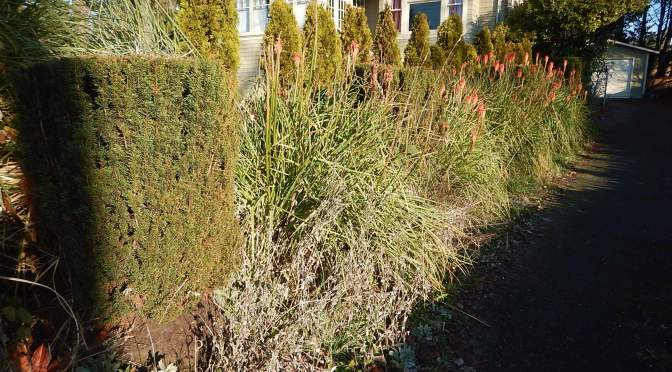
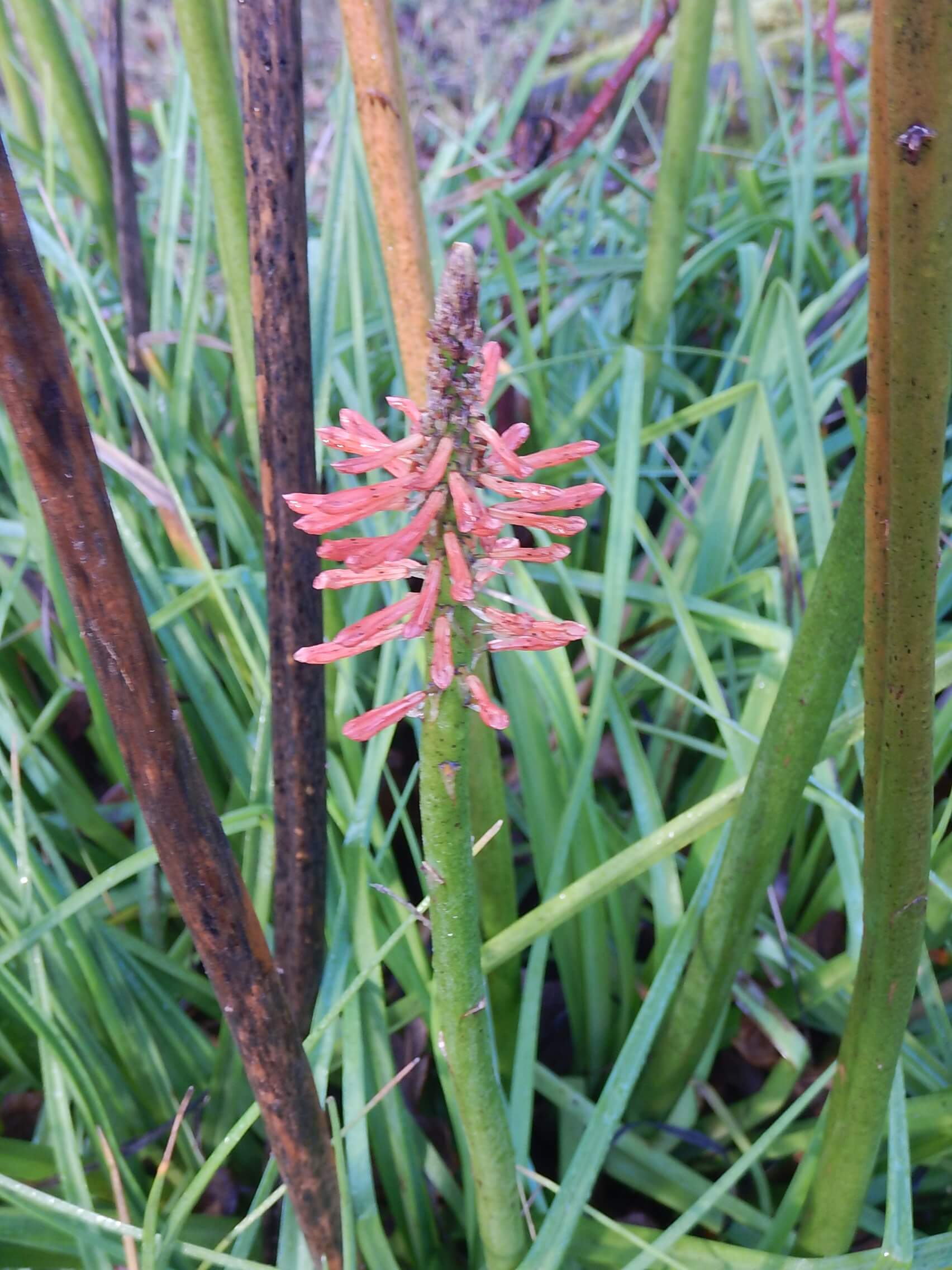
A blooming swath of red-hot pokers (aka torch lily, aka Kniphofia) caught my eye last November. Seriously – November!
photo by SVSeekins
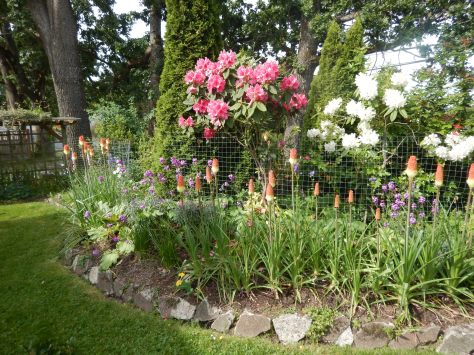
That seems crazy. Its broad, strappy foliage resembles the Kniphofia that blooms in our garden in May– six months earlier. Who knew there were such varieties? And how can I get some??
In the cool overcast of autumn, these kniphofia flowers stand up much longer than our spring bloomers.
photo by SVSeekins
When it starts to snow on Christmas Eve, I’m concerned. On Christmas Day, the snow sparkles on the garden, telling the world that winter is here.
In my experience, snow cover is the tipping point when red-hot pokers disintegrate into a slimy mess. (Fortunately, they come back in spring! Some Kniphofia are actually cold hardy to zone 5 – that’s to -25 C 🙂 I can’t imagine them growing in the Tiffindel ski area of South Africa, but apparently, that’s home. )
photo by SVSeekins
By Boxing Day, the snow is gone. I’m ecstatic. Don’t get me wrong – there is something magical about a White Christmas — but followed by a Green Boxing Day is perfection!
photo by SVSeekins
Mysteriously, all of the Kniphofia survive– leaves and all! Relief!
Now, I’m curious to know which temperature precisely brings on their disintegration.
photo by SVSeekins
In Victoria, we have a School-Based Weather Network. Most schools host tech monitoring the individual climatic pockets around town. It’s very handy. There’s a station just a block away. I prefer to confirm rainfall & temperatures uber-locally and not count on the information coming out of Victoria Airport, 25 km away.
photo by SVSeekins
As it turns out, the temperatures through the storm barely dipped a degree below freezing. We’ve had plenty of mornings like that through December, just without the snow. Perhaps it’s temperatures like -5 or -10 C that knocks the Kniphofia back? We get those temperatures here, but rarely. Any idea?
Now, at the end of January, the blooms around the corner from us are just wrapping up. It’s amazing, really: 3 months of colour. I admit they’re looking a bit ratty, but I’m desperate for flowers at this time of year. 🙂
-30-
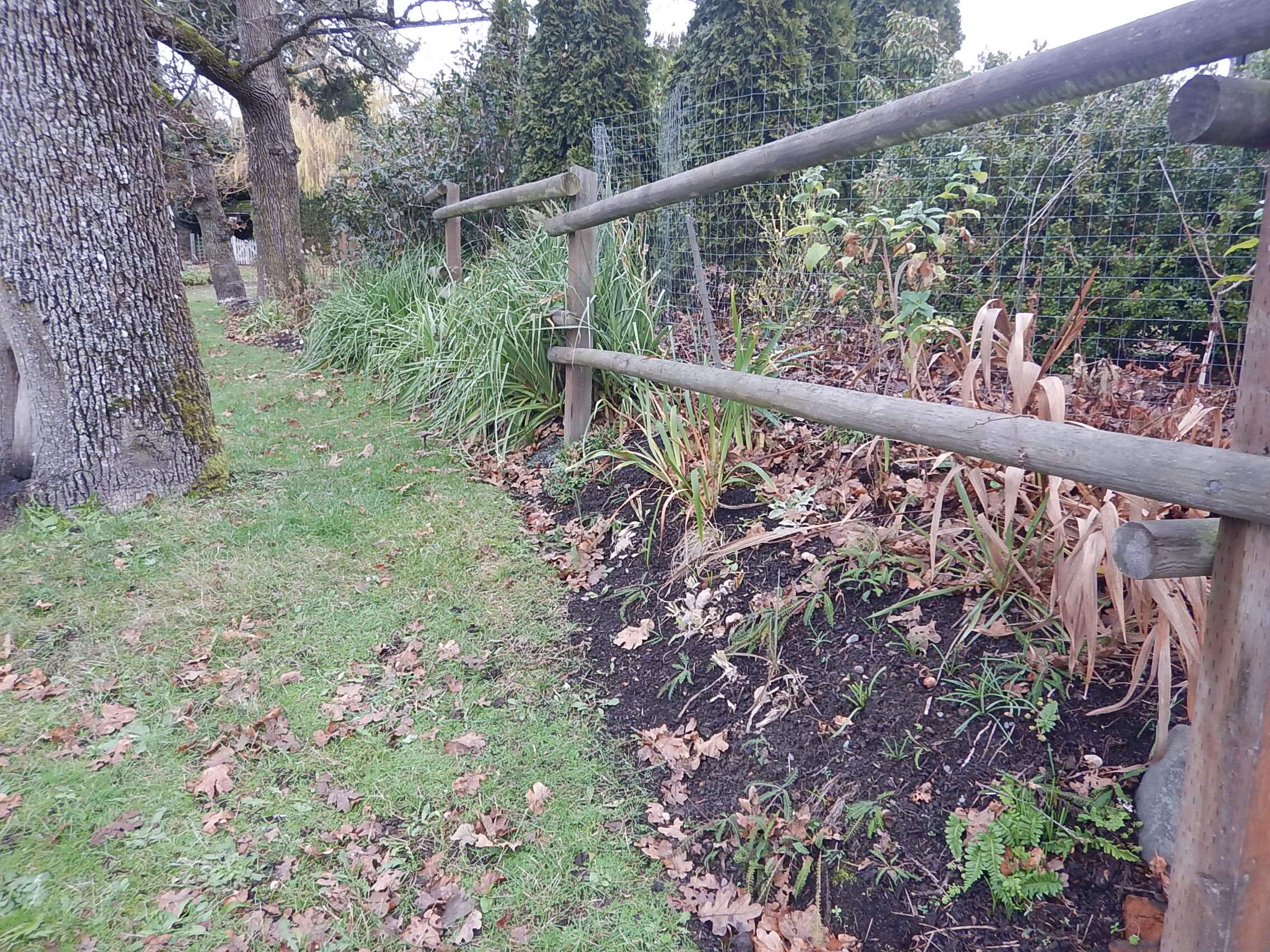
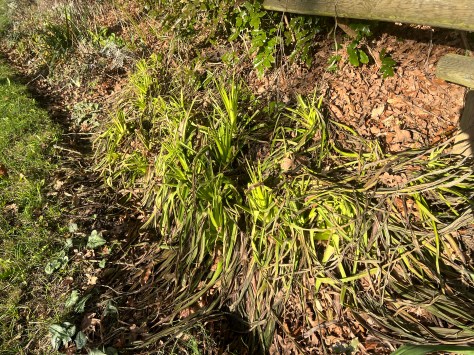
PS– Fast-forward to January 2024… It’s snowed again. (It’s snows each winter, but the Kniphofia stayed green.) This time, the temperatures dipped to -10 C. That did it. The Red Hot Pokers collapsed. Some went a bit slimy, others just seemed dehydrated.
photo by SVSeekins
Temperatures on one side of the shrub border seem to have been colder than on the other side. Perhaps wind direction made a difference? By early February, the Red Hots on that ‘other side’ are already starting to recover…
photo by SVSeekins
By early April, I’m not seeing new shoots from the colder side of the shrub border. My fingers are crossed. I’m hoping that by May, they’ll be happily blooming again.











 Garden Variety Life