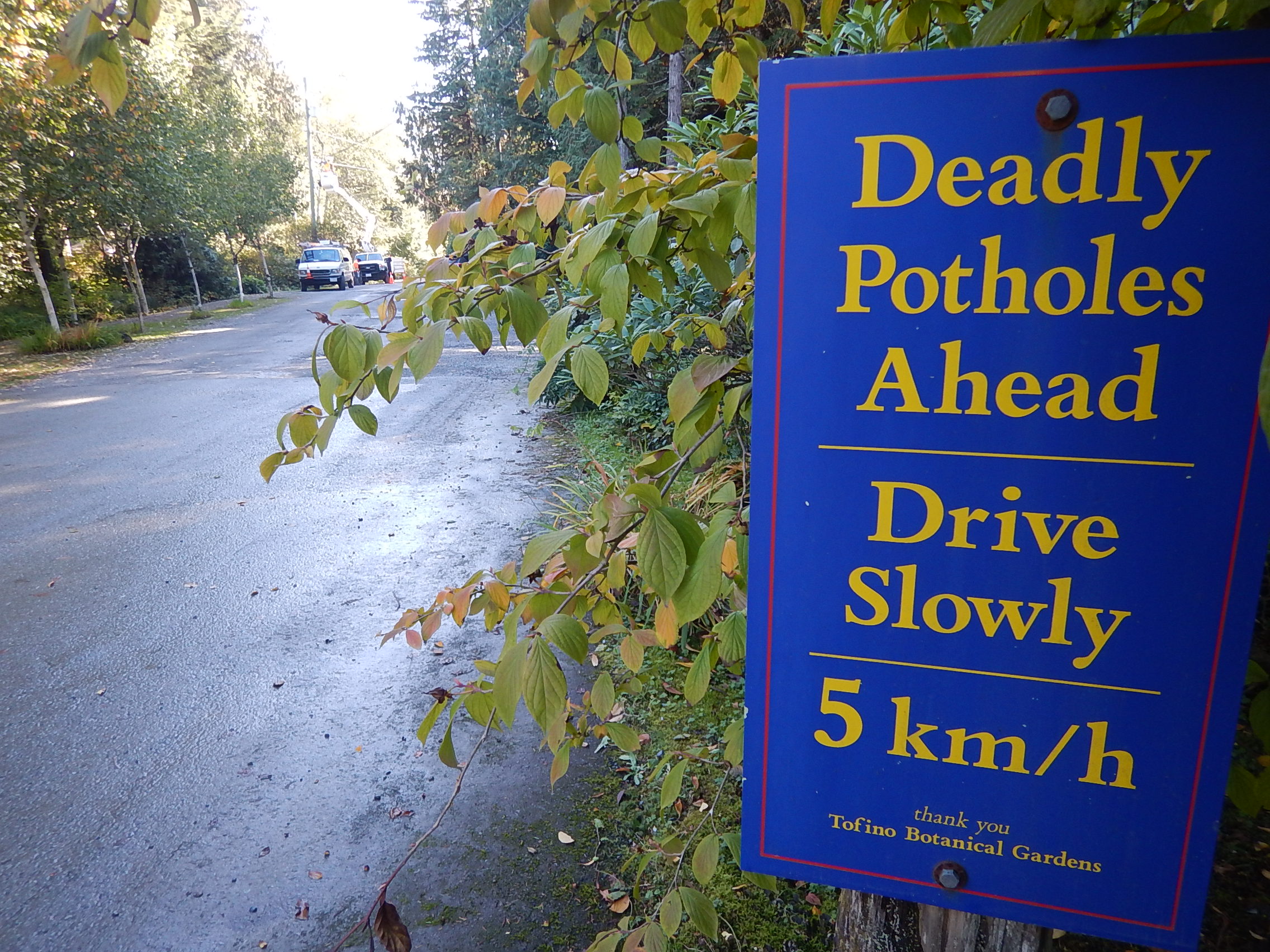
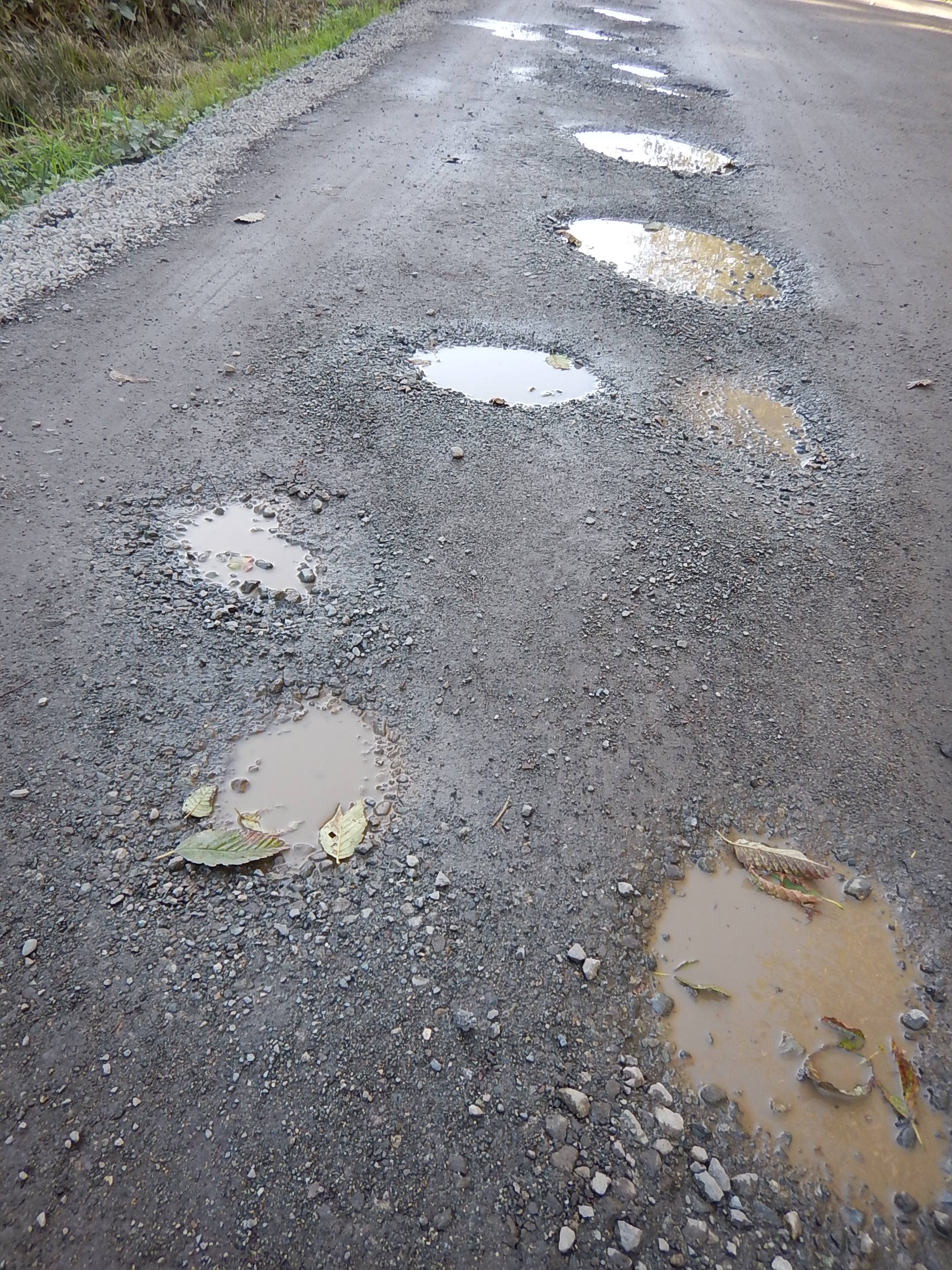
What can you do when the average precipitation is almost 11 feet each year? (That’s well over 3 meters!)
Accept that potholes happen.
Commit to continuous maintenance program.
Promote a sense of humour.
photo by SVSeekins
These wicked road conditions remind me of our farm in northern Alberta.
Each rainy season, the driveway was impassable. We parked & packed groceries the 1/4 mile to the house.
Each year we added more rocks & gravel.
This is one reason I really enjoy the surf haven of Tofino.
photo by SVSeekins
It’s another crazy place of extremes.
Folks love it anyway.
They have a sense of humour.
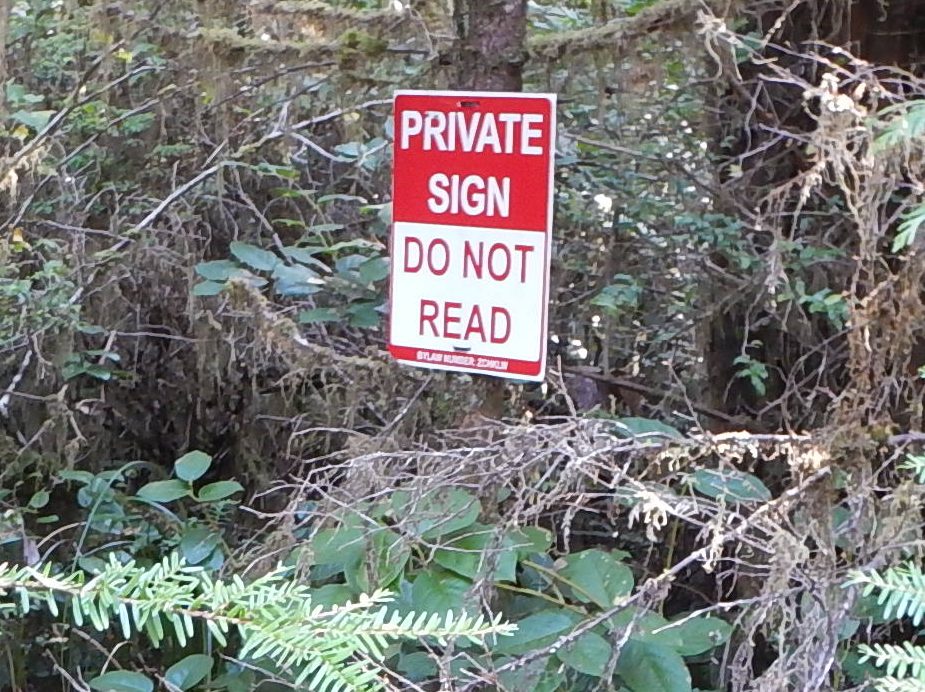
PS – The signs are from the Tofino Botanical Garden & the potholes are from MacKenzie Beach Road.
This fall I’m really trying to let fungi thrive. Mushrooms pop up in several spots around our place. They’re pretty, but for some reason I’ve always weeded them out…
photo by SVSeekins
Perhaps they scare me a bit.
Are they edible?
Hallucinogenic?
Medicinal?
Poisonous?
Perhaps I’m just a neat- freak?
Years ago someone told me that trees use fungi root systems as information highways between other trees. I dismissed the idea. It sounded too airy-fairy. But scientists are looking into it. UBC’s Suzanne Simard explores & maps the fungi mycelium networks that trees use to share nutrients with offspring & neighbours. Sounds a bit like the storyline of Avatar, doesn’t it? Perhaps the Old Ones were on to something?
photo by SVSeekins
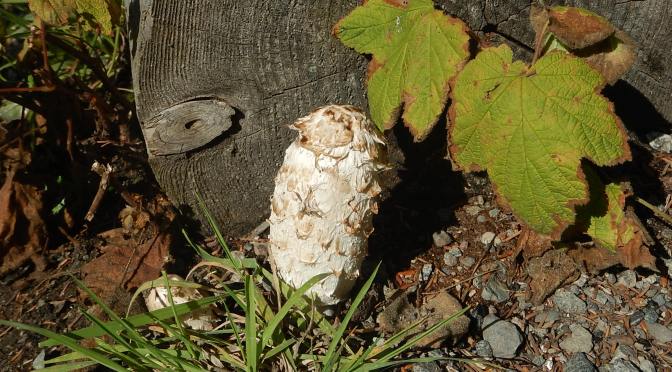
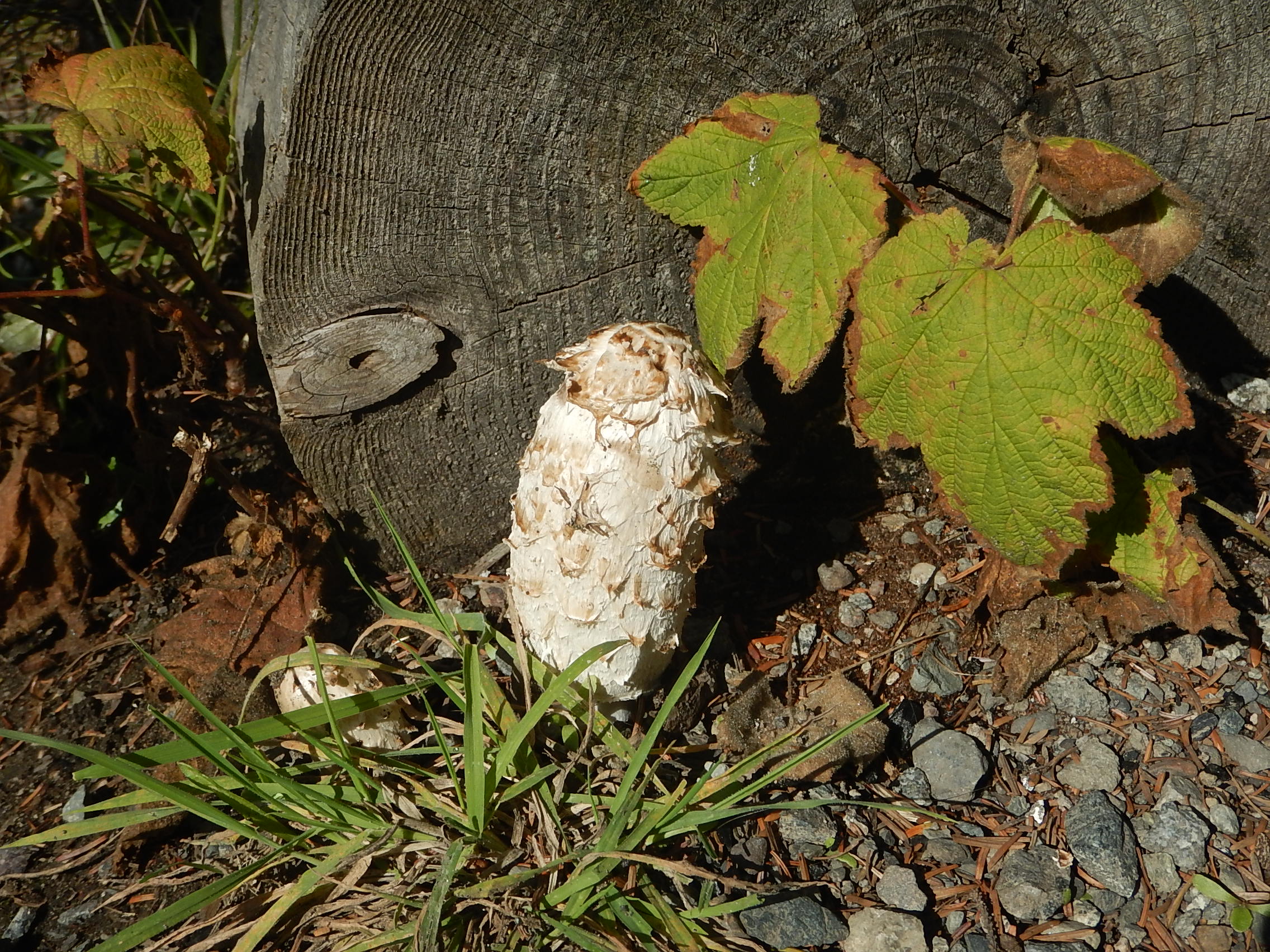
The Pacific Northwest is a great place for mushrooms. The rainforest at one of our favourite campsites is prime. In 2015 I was charmed by orange stools with white spots. This October, right at our campsite, was a beautiful white shaggy mushroom.
photo by SVSeekins
Growing in afternoon sunshine beside a well-trodden gravel pathway, not far from the beach, it struck me as unusual. This is not the regular deep humus-rich growing site I’d expect for fungi.
The shape & outer texture of the mushroom is distinctive. I’m pretty sure it’s the edible Shaggy Mane, aka Lawyer’s Wig, aka Coprinus Comatus. That said, I’m no expert.
photo by SVSeekins
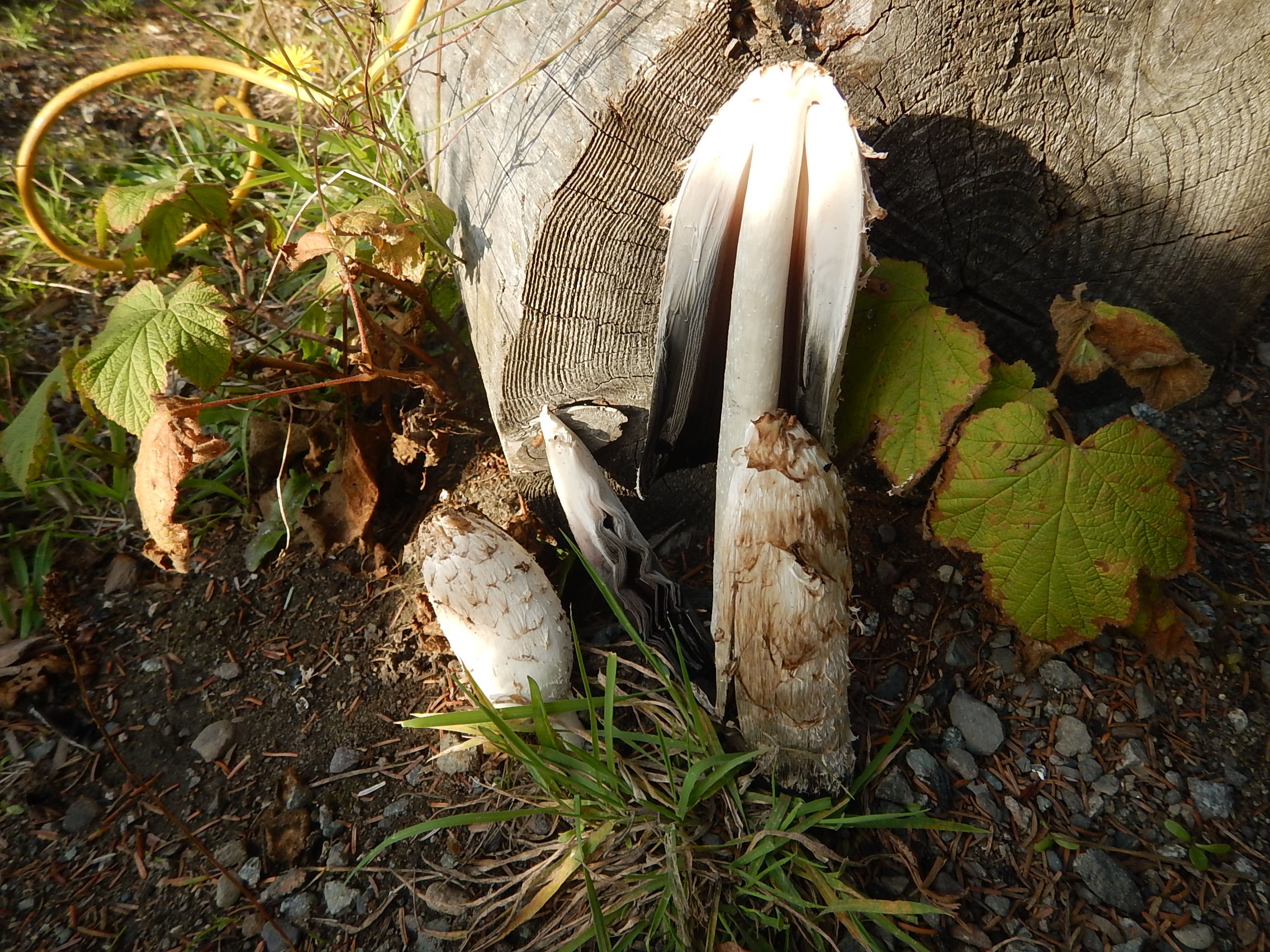
For several days we carefully left the cap to its business. While striking camp, the mushroom was knocked open. I felt bad but took the chance to look at the inner gills where the spores were maturing. The dark colouring is further evidence that the ID is correct. Maybe we should’ve made mushroom soup. (Actually, I wasn’t tempted to use it because of the high-traffic area & the large population of dogs around camp.)
photo by SVSeekins
Did you also notice how much the fruit grew in just 3-4 days? Doubling size in 48 hours seems amazing to me. The apples in our garden don’t produce like that.
Now I’ll try to keep a closer eye on the fungi growing through our gardens. Perhaps I’ll shift even further out of my comfort zone & explore farming some edible types.
🙂
Life is magic. Two days after the heavy winter storm, life proves itself.
photo by SVSeekins
And magic begins.
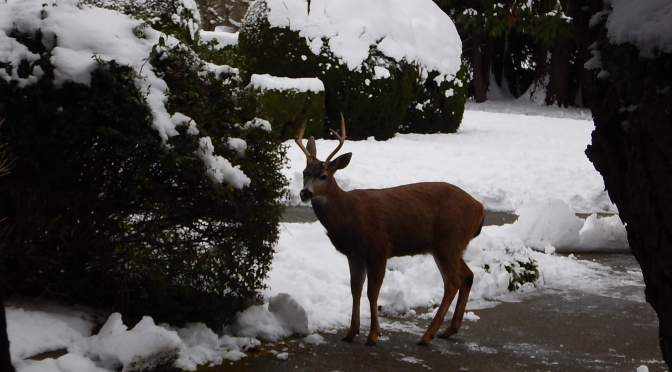
The snow has melted! In just 2 days? Even here on the coast, that seems crazy-fast.
I tentatively wander through the yard assessing the damage.
photo by SVSeekins
My muscles certainly remember shoveling sidewalks & shaking shrubs. But the winter blooms? They’re like children in a hospital ward. Perhaps a little bent & broken, but mostly they’re just happy to be alive and enjoying the sunshine.
photo by SVSeekins
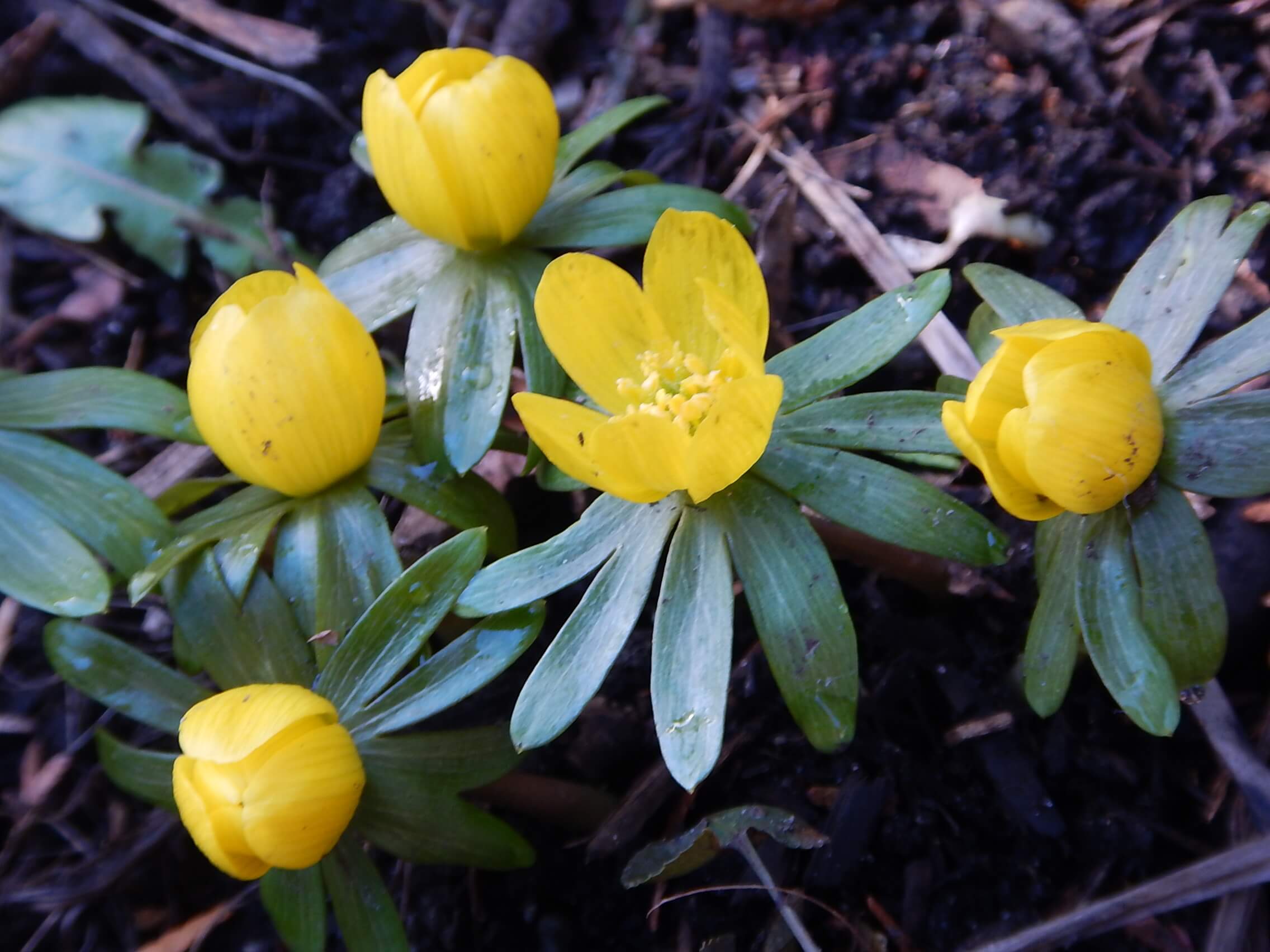
The yellow cups of the winter aconite (Eranthis) don’t seem to have noticed they’ve survived 33 cm of snowfall since they showed themselves in January. (That’s more than 12 inches – a full foot – – radical for balmy Victoria BC!)
photo by SVSeekins
The snowdrops (Galanthus) have also held up well.
The Primula Wanda leaves are super-sad, but who can’t smile at those tough purple flowers?
I hadn’t even noticed the crocus buds before the snow. How did they arrive so quickly?
photo by SVSeekins
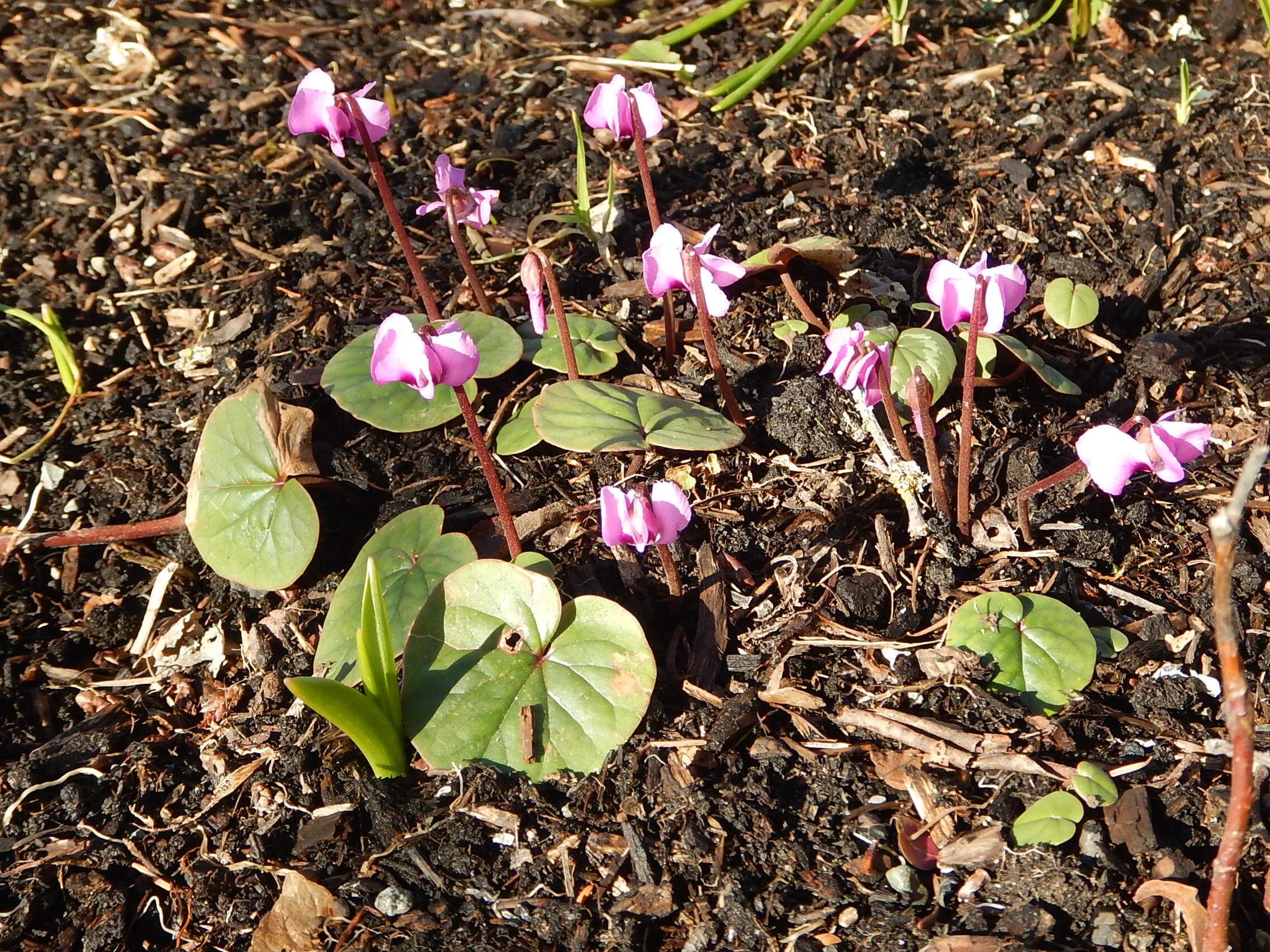
The Cyclamen coum unfurl their petals as the sun warms them. More blooms are on their way, too! Soon they’ll be a mound of pink.







 Garden Variety Life