Category Archives: garden visits

exploring other gardens

The Art of Arrangement

For me it’s near impossible to clip a healthy bloom from the garden.  A bouquet is a lovely display, but I’ve never had the knack for arranging one nicely.  My lack of confidence means sacrificing the beauty in the garden just doesn’t happen.
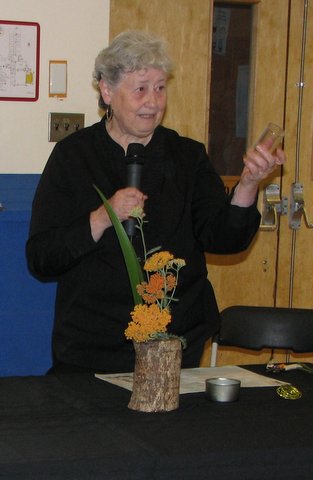
hollowed log with glass vase inside
photo by Joyce Sturney

Friends KC & JJ have the knack & the know how.  I’ve admired their prowess for years, so when I was organizing a speaker presentation for the View Royal Garden Club, it’s not a surprise who got the call.

Their challenge was creating ‘a few’ real life arrangements with little more than what’s available in our own homes & gardens.

My garden in early summer looks lush, but pretty much all the colourful spring show is done….  meaning dead.  By this time of year I’m more interested in camping than watering the yard.  I’m sure there’re more hardy perennials that would stand up to my non-nurturing… I’m sure I could source them out… if I made the effort.  But I don’t, so there.

mossy branch curls around triangle
photo by Joyce Sturney
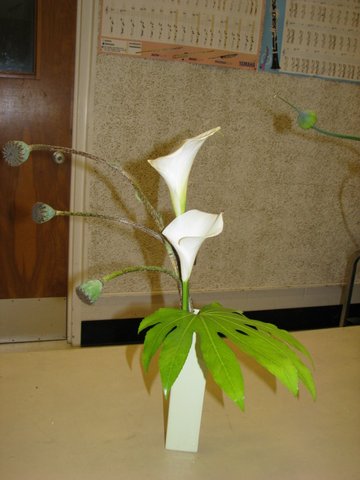
Calla Lilies with Funky Poppy
photo by Joyce Sturney

Even still, I feel kinda guilty having diddly to offer for the project.

The dynamic duo took to their tasks with gusto none the less.  Both master gardeners have long since downsized from their family sized gardens (acerages), but they gleaned what they could around their current modest yards.  Then they went further afield.

We sweet talked neighbours, pilfered boulevards, and waded rural ditches in search of art & inspiration.

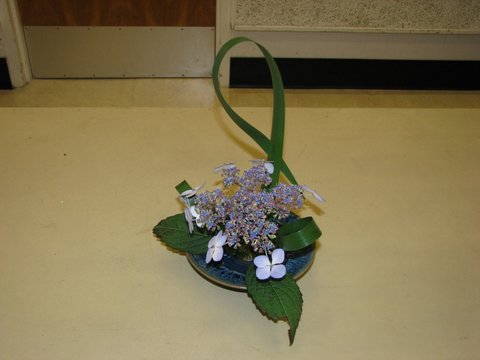
candy dish display
photo by Joyce Sturney
tall / narrow triangle
photo by Joyce Sturney
a leaf twits back & thru itself
photo by Joyce Sturney
classic triangle design
photo by Joyce Sturney

The adventure was for a good cause: my education & entertainment.  (AND for the simple sake of the adventure itself!)

I’m happy to report a few of the tips I picked up:

  • Hiding a little vase inside a hollowed out piece of firewood provides an added element to a rustic arrangement.
  • Seed pods, mossy twigs, & other non-blossoms add something extra to a bouquet.
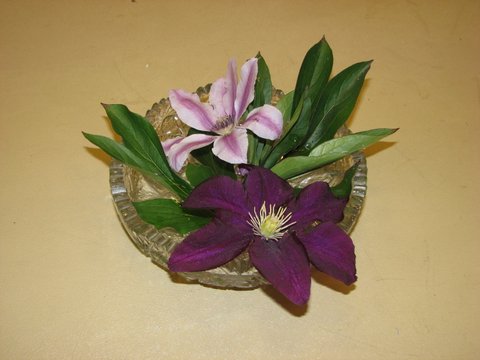
  • A candy dish works perfectly as a base for a low centrepiece of fragrant clematis and a peony leaf.  How easy is that !?!
  • Pulling inspiration from the colour palette of the container helps in grouping otherwise dissimilar blooms.
  • It is fun to play with different textures in flowers and foliage.
  • Oasis is really only good once as a medium for holding a fresh display.  After that it gets too crumbly to support stems firmly – and it loses its moisture holding capacity.
  • Those heavy little metal bases-with-spikes-sticking-up have a funky name.  They’re called “frogs”.  🙂   They’re far better for holding flowers over multiple occasions; PLUS they help weigh down a top-heavy arrangement; PLUS they can be sourced for cheap at thrift stores.  Win Win Win !!!
  • The safest shape to start with is a triangle & it doesn’t matter if it’s equilateral or obtuse.
  • Arrangers are notorious for manipulating nature.  Securing a gladioli stem to a stick overnight will convince the specimen to straighten for the big show.  Carefully stuffing cotton balls behind the blooms for that same time period will bend them just enough they face one direction.  Pretty tricky, eh?
  • Stick to odd numbers in groupings:  3’s, 5’s, 7’s – – for some reason even groups can be boring.
  • Even when the iris bloom is done, the smooth, flat spike of the leaf works as a background for other blossoms in an arrangement.

Many of the handy tips sound very similar to those for arranging a garden bed.  One thing I’ve learned from that experience is if it doesn’t work the first time, switch it up a bit.  It’s just a learning thing.

Do you have the nerve for giving it a go?

-30-
© SVSeekins and Garden Variety Life, 2013
Living Wall Garden

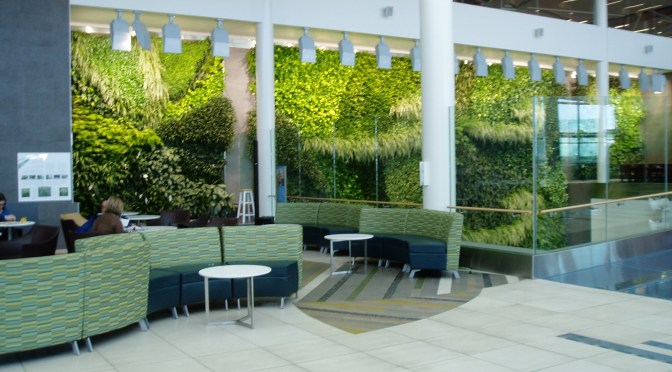
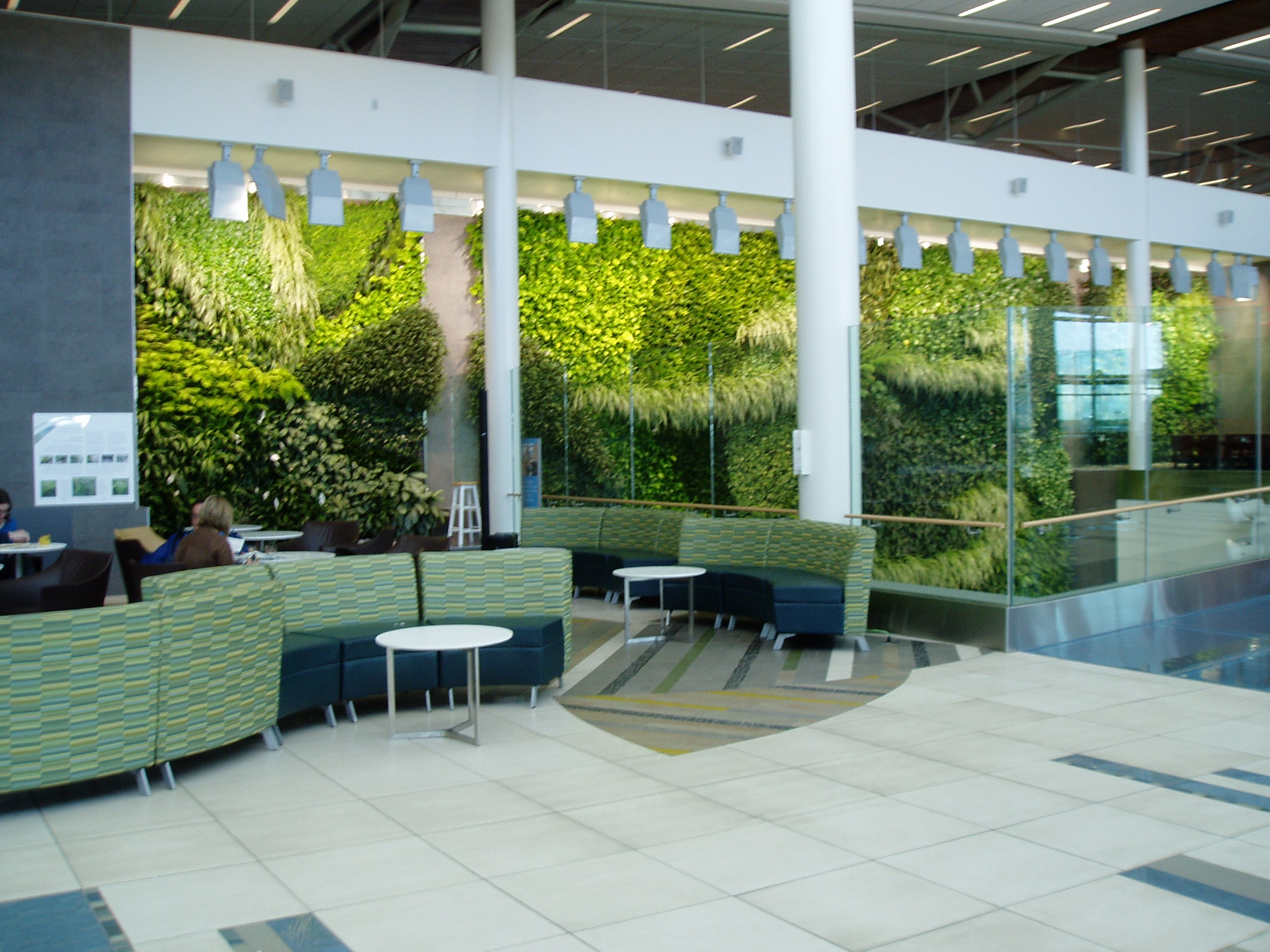
Last week I flew into Alberta expecting their usual June entertainment.  Hot sunshine, rampant mosquitoes and evening lightning storms.  The big sky & open prairies create that kind of excitement.  I wasn’t expecting a touch of the tropics, but that’s what appeared before me at the Edmonton International Airport.

green living wall garden- Edmonton International Airport 1
photo by SVSeekins

Even though family was waiting for me at arrivals, I just had to stop & check it out.   Through the glass, I could see the wall descended a 2nd full story down into another part of the airport.  It was a massive living wall garden!

green living wall garden- Edmonton International Airport 2
photo by SVSeekins

The lounge to the left of the glass was a lovely spot for passengers to relax while waiting to board their planes.  It also allowed me the opportunity to walk up close to see if the plants were real.  They were.   🙂

This particular wall was created by Mike Weinmaster of Green Over Grey, a company that builds green walls across North America.  Apparently, Mike has a Masters of Science in Environmental Engineering & Sustainable Infrastructure.  It figures it would take some know-how for adding moist tropicals to a building’s wall without having it rot out & fall down in short order.  🙂

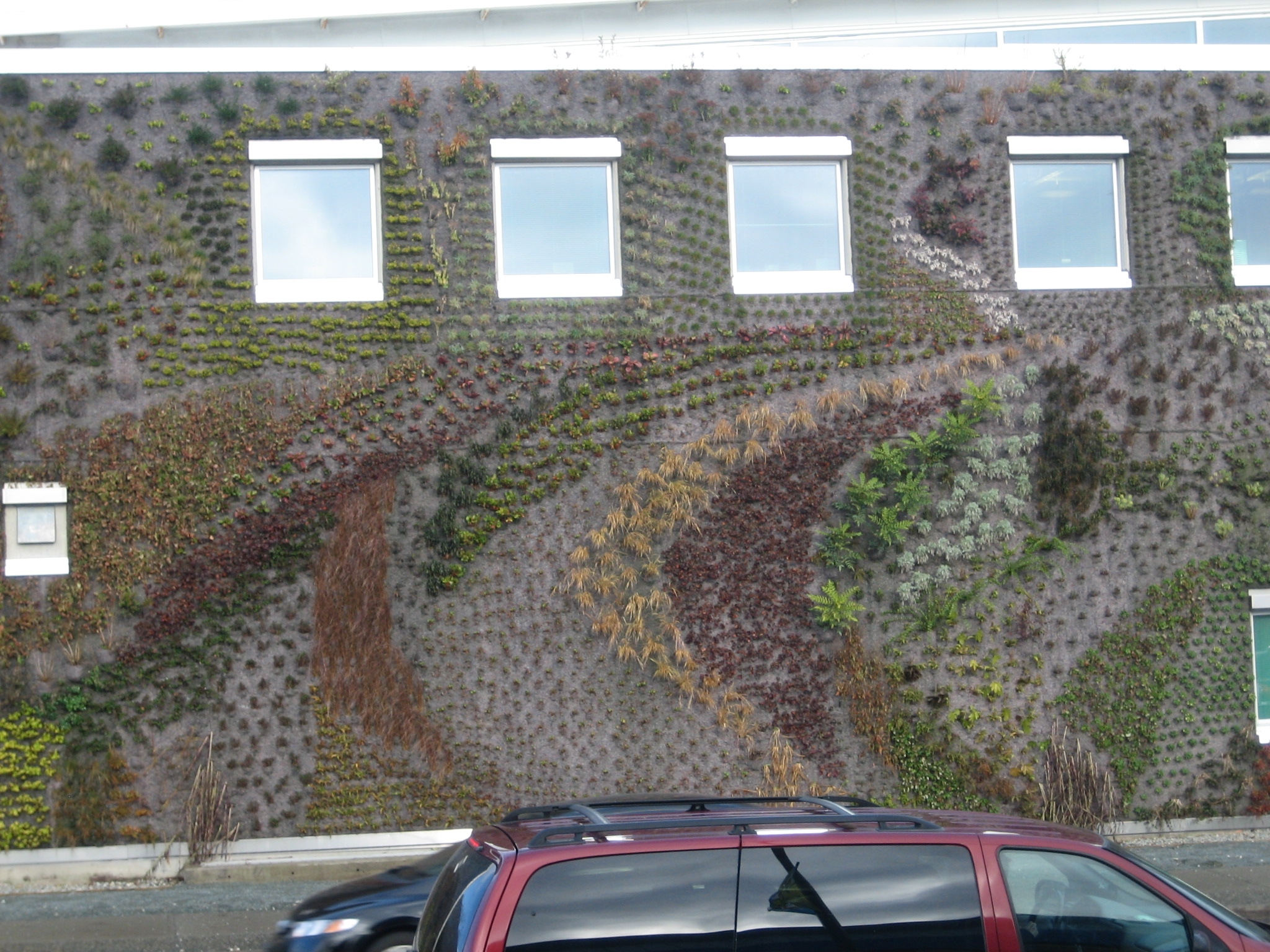
outdoor plant wall at the Surrey Library 2
photo by Barbara Hansen

As it turns out, these are the same folk who created the world’s largest outdoor living wall on the library in Surrey (Vancouver).  Some friends & I ran across that piece of public art shortly after it was planted in the fall of 2010.

It has all sorts of drought-tolerant native plants that typically thrive on rocky cliff sides with minimal soil.  I figured it was smart to add the new plantings in autumn after the stress of summer heat had passed.  The new little guys were probably much happier getting acclimatized during the fall wet.

I’ve wanted to make a pilgrimage back there, to see how the vertical garden is surviving. Imagine the 3D effect of a short mat of wild strawberries, interspersed with Oregon grape shrubs  & grasses growing out from the wall itself.  That’s depth & texture, eh?

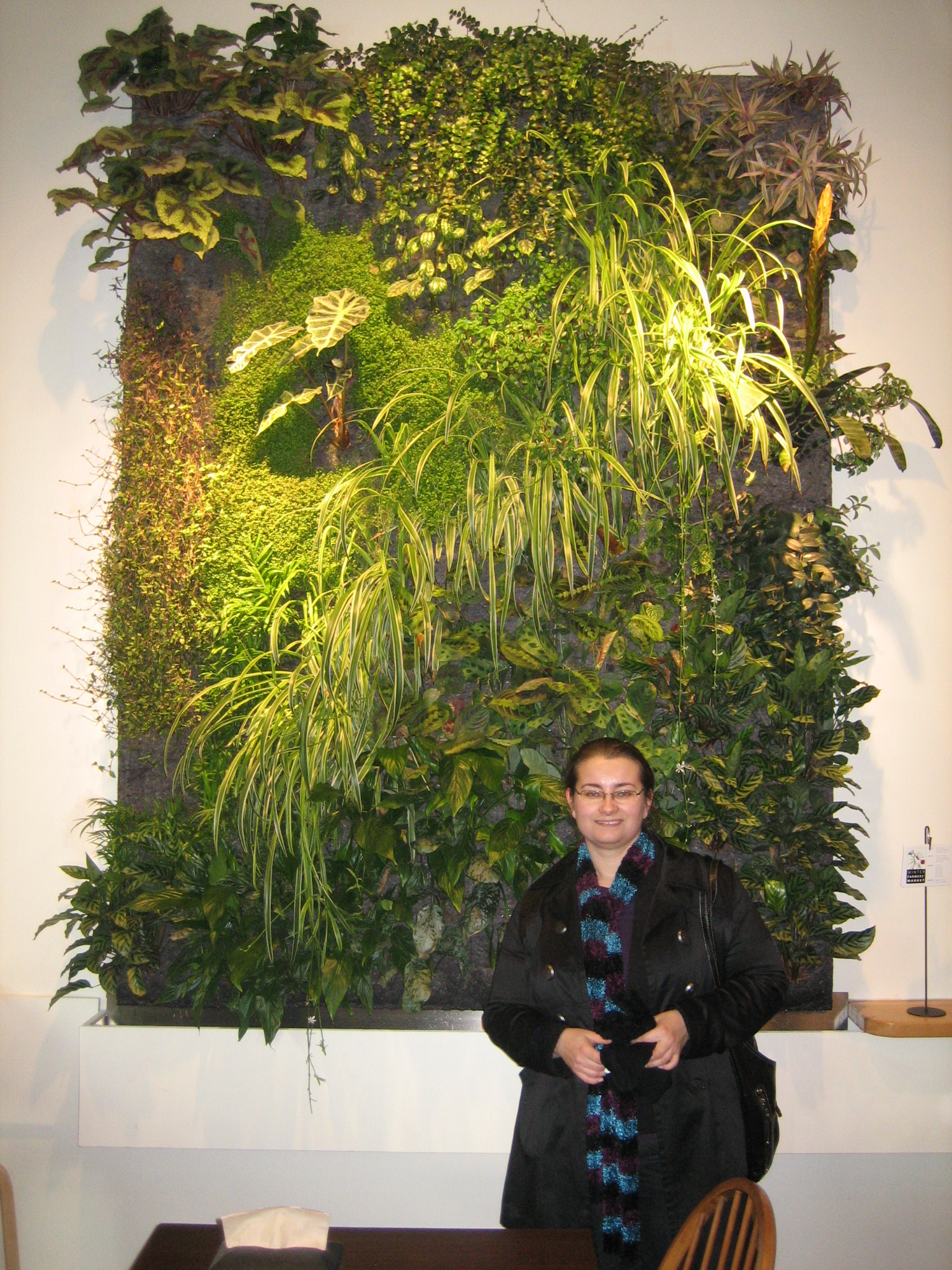
Vertical Wall Garden inside the Atrium building in Victoria
Photo by Barbara Hansen

A couple of months later, those same friends from the Vancouver trip discovered a small version of a bio wall inside a little café in Victoria’s Atrium building.  When I inquired, it turned out Green Over Grey created it as well.  What wonderful botanical art!

Since then, I’ve been looking for a guest for our garden club to speak about creating a vertical garden.  More projects are showing up around town, but so far, folks are so busy building these plant walls, that I haven’t been able to get anyone to spare an evening for us.  I can understand.  These projects look pretty fun to me.  I wouldn’t want a distraction from my goal of completing one.  🙂

-30-
© SVSeekins and Garden Variety Life, 2013
Enter your email address to subscribe to this blog and receive notifications of new posts by email.

Meadow Blooms 5 – Camas

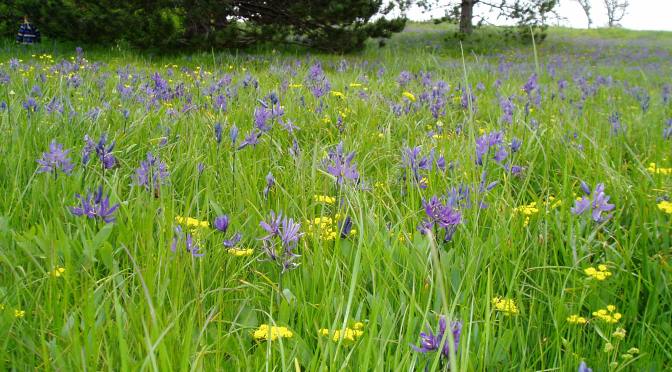
The camas meadow swaying in the spring breeze is like no other.  Suddenly I’m walking in a fairytale instead of strolling in a Victoria park.  Has my mind gone wild?  Could I ever have come up with a dream so lovely?  No.  It must be real.

No gardener created this scene, either.  This is Nature’s beauty.

Camas Meadow - Beacon Hill Park 3
photo by SVSeekins
camas at Mt. Tolmie Park 2
photo by SVSeekins

Camas meadows have flourished on South Vancouver Island longer than memory reaches into the past.  The southern slope of Beacon Hill has been a camas meadow for centuries.  It’s probably one of the key reasons it’s preserved as a park today.  The same goes for the Garry oak meadows of Mt. Tolmie Park.  At this time of year, they’re magical places.

Early peoples saw more than beauty in the camas; they saw food.  I wonder who it was to first realize the bulbs are delicious?

Camas at Mt. Tolmie Park 1
photo by SVSeekins

Perhaps she had gardening tendencies like mine; seeing a lovely flower automatically triggers an urge to have that flower in my own garden.  (I’m known to dig up plants from roadsides.)

Before we moved from the Cedar Hill property to the Richmond house, I dug up as many camas as possible.  The Garry oak meadow in the backyard was a great natural source for them, but the digging wasn’t so easy.

When I was able to dig deep enough, I often found the bulb tucked securely in a tight rocky crevice.  Un-obtainable! I did manage to get a good number of bulbs (perhaps 2 dozen), but there was no risk of over-harvesting that hillside.

camas blooms cu
photo by SVSeekins

There was certainly more risk of starvation if camas had been my only sustenance.   A good deal of effort for a very small reward.  That gardener from long ago must’ve had more ingenuity than I have.

Apparently, she figured out a method that includes burning the meadow first. (?!?!…)  Perhaps that was a way of cooking the camas in the process? By the time she got one out of the ground, it was already transformed into a sweet treat?  I just can’t figure it….

Happily, after all my sweat equity, I now enjoy blooming borders.

  • snowdrops in January… 
  • crocus in February… 
  • daffodils in March… 
  • hyacinth in April… 
  • and camas in May… 

It times out nicely.  When the foliage of the spring bulb dies back, the daylily takes over for the summer.  And from all that bounty, it’s only the latter that the deer like to feast on.  🙂

a bit of history on camas
a camas recipe
growing camas

-30-
© SVSeekins and Garden Variety Life, 2013

Camas Meadow - Beacon Hill Park 1
photo by SVSeekins