Category Archives: attracting birds

Autumn Red Hots for Months

The first fall Kniphofia bloom opened in early September. A lonely orange ember floating above a mass of strappy green leaves.  I was delighted to see it as so many voluptuous summer colours had faded in the sunshine. I was NOT ready for the show to be over.

autumn red hot pokers, kniphofia, garden Victoria, Vancouver Island, BC, Pacific Northwest
photo by SVSeekins

To start with, it was the native asters that I was more pleased about. They were putting on more of a show this year — even the deer hadn’t sheered them back too much. But it’s nice to have a variety of colours in the garden as so much was brown from seasonal drought.

To my delight, several more Torch Lily blooms quickly followed. Our own little fireworks display! 

autumn red hot pokers, kniphofia, garden Victoria, Vancouver Island, BC, Pacific Northwest
photo by SVSeekins

I’d traded some of our May-blooming Kniphofia for this unusual fall-blooming type. Fortunately for us, it likes its new home.

By October, the asters were finishing, & the Red Hot Pokers became the star, enhanced by the fall colours of the forsythia in the background.

Even through November, they practically glowed in the autumn sunshine. (And stood tall against the occasional storm).
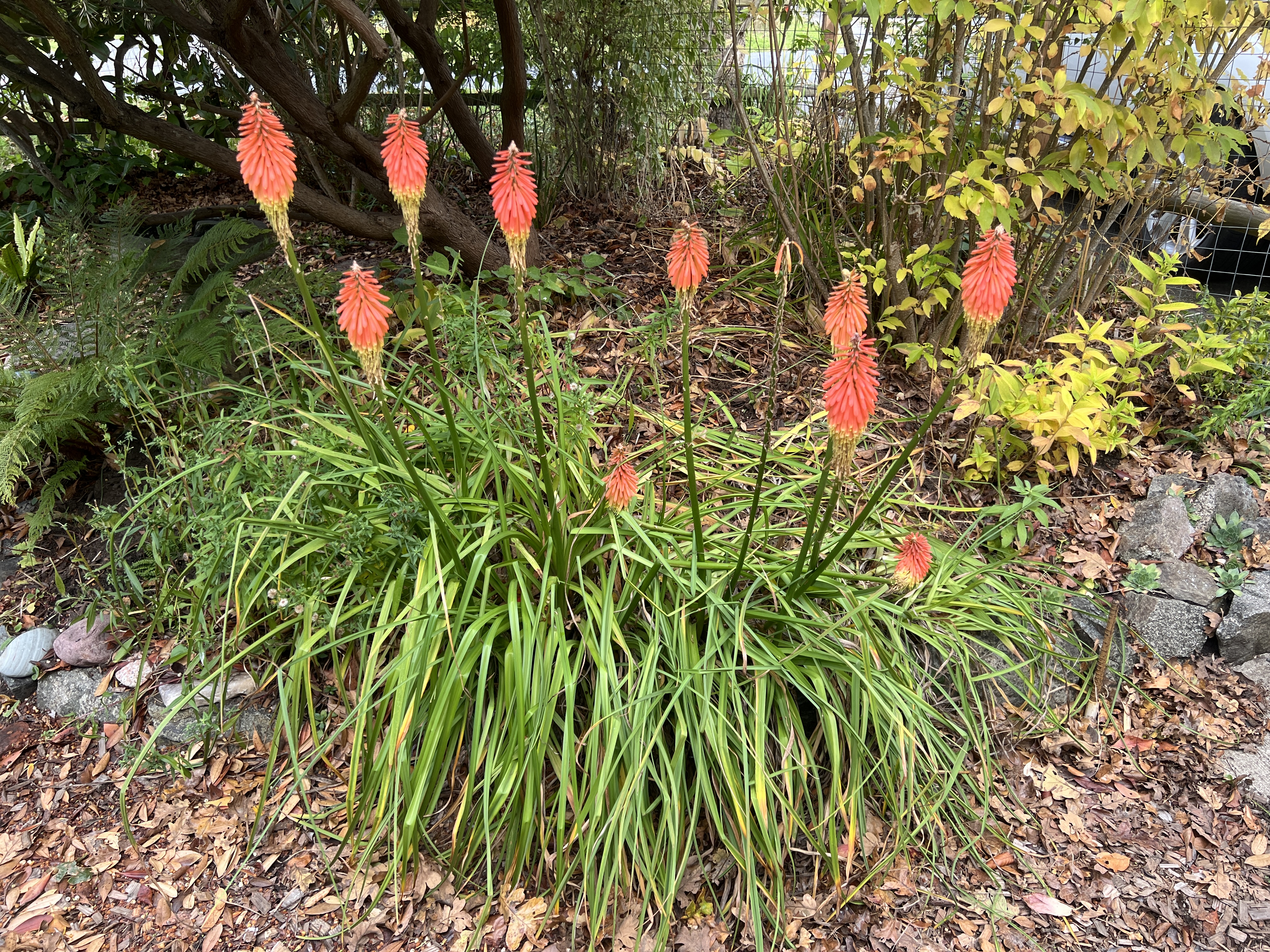
autumn red hot pokers, kniphofia, garden Victoria, Vancouver Island, BC, Pacific Northwest
photo by SVSeekins

Through these months, the hummingbirds were either feeding on the kniphofia nectar or resting amongst the blooms & red fruit of the strawberry tree. They were around so much, there’s a good chance they took up residence, but I couldn’t find a nest. Perhaps they just roost at this time of year?

autumn red hot pokers, kniphofia, garden Victoria, Vancouver Island, BC, Pacific Northwest
photo by SVSeekins

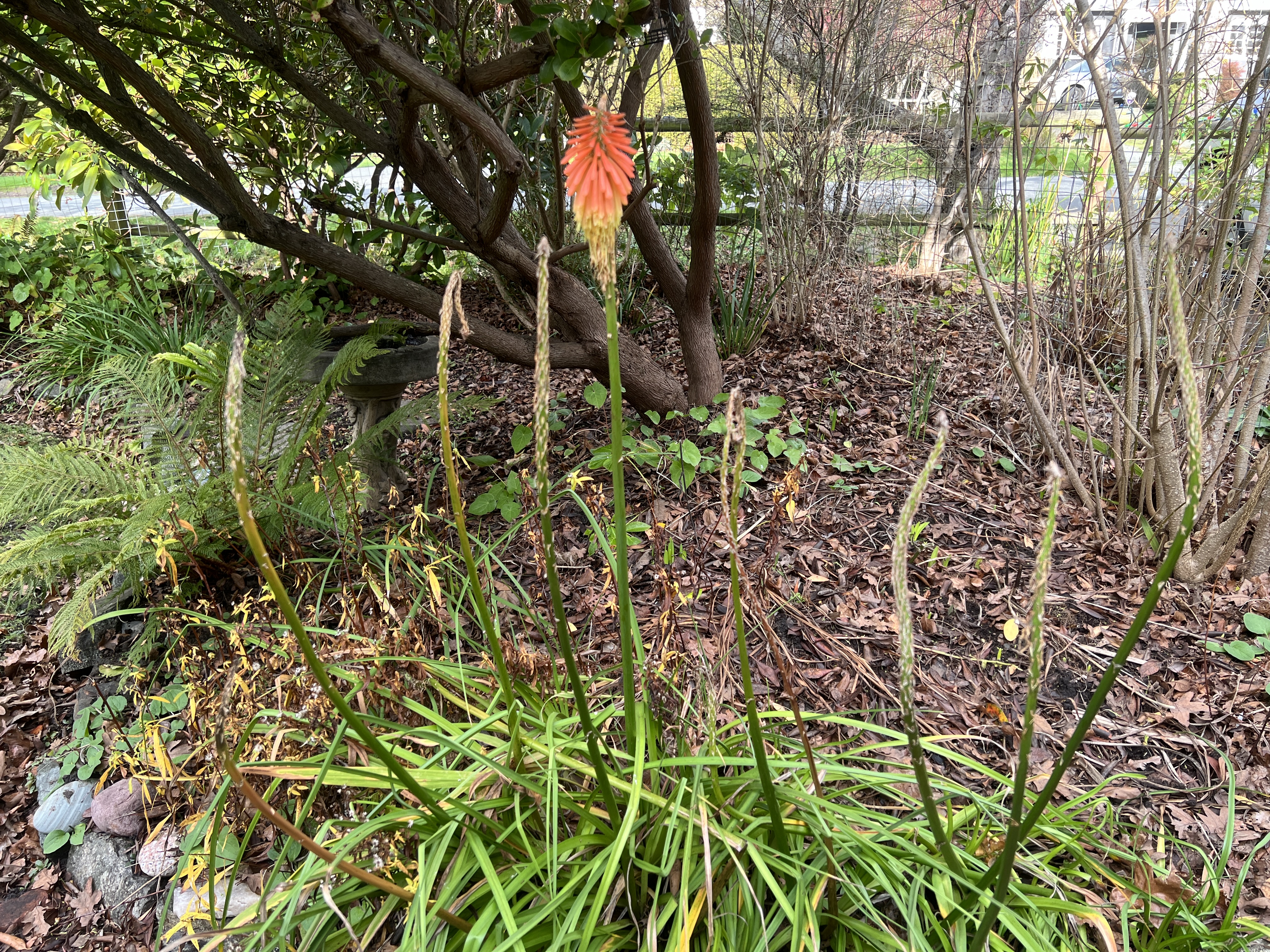
By December, the trees had shed all their leaves & most of the garden looked forlorn. Honestly, the Kniphofia looked worse for wear, too, but some of the blooms held on. I couldn’t help but admire their tenaciousness — after all, they were 3 months in! A public garden would have staff get in there to tidy things up right away. My hands were busy raking leaves & clearing ditches before the next dump of rain… besides, I wanted to see just how long the spikes of colour could last. 
autumn red hot pokers, kniphofia, garden Victoria, Vancouver Island, BC, Pacific Northwest
photo by SVSeekins

At the very end of December, one lonely torch smiled at me from outside the window as I drank my morning coffee inside our cozy home.

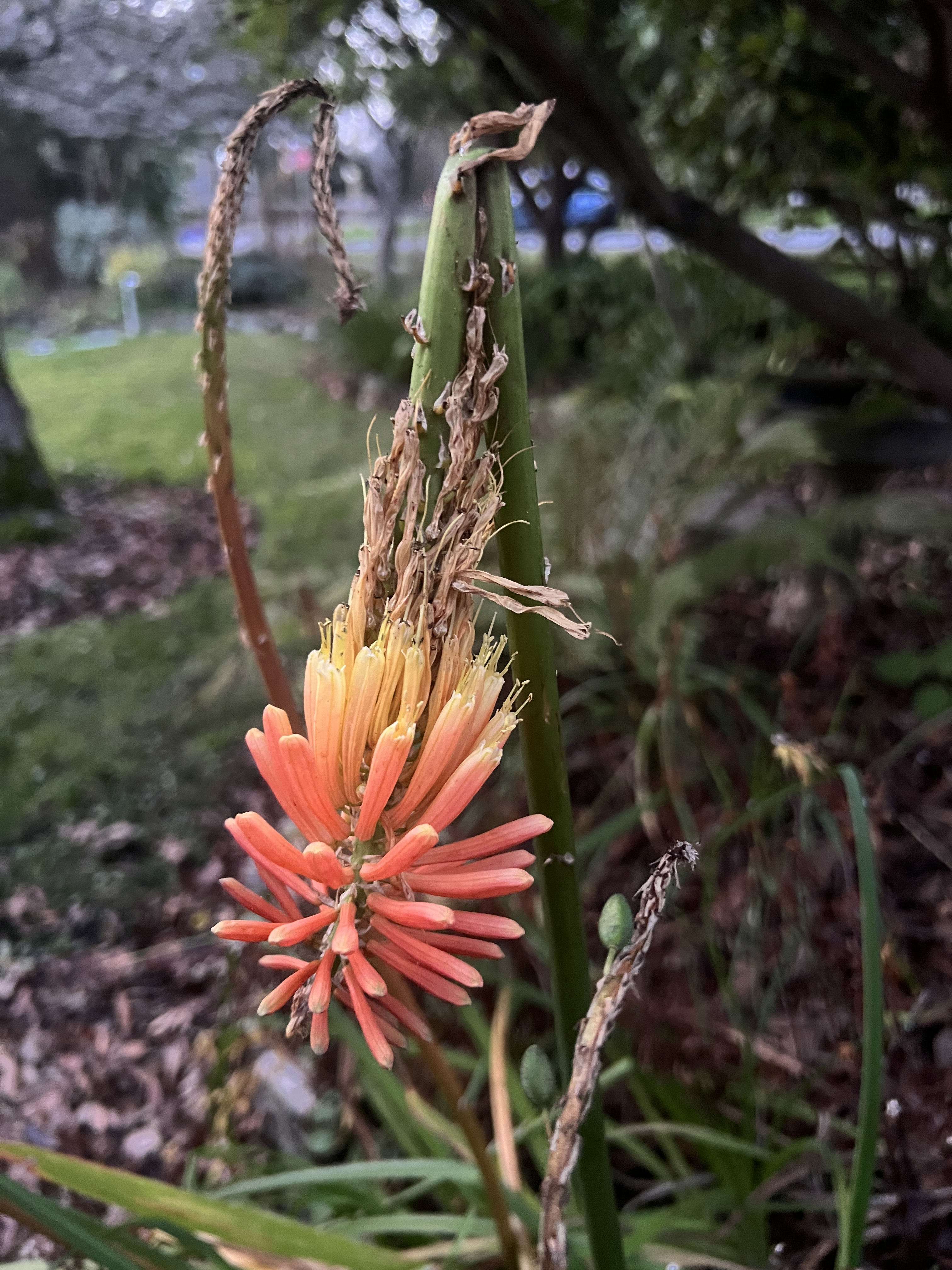
Then, one chilly morning in early January — after 4 months of constant blooming — the show was over. 
Sort of. 

The last stem had bent under the weight of its torch. The elements had taken their toll. The flame continued — but now it was upside down! 
autumn red hot pokers, kniphofia, garden Victoria, Vancouver Island, BC, Pacific Northwest
photo by SVSeekins

OK, I know it’s a stretch, but I cheered it on even though I had to admit it was finished. The Red Hot Poker had toughed it out where others had died off. 

Four months of colour is fabulous for any perennial — in any season. But through the entire autumn? That is extra special.

Fall kniphofia is a keeper.
🙂

-30-

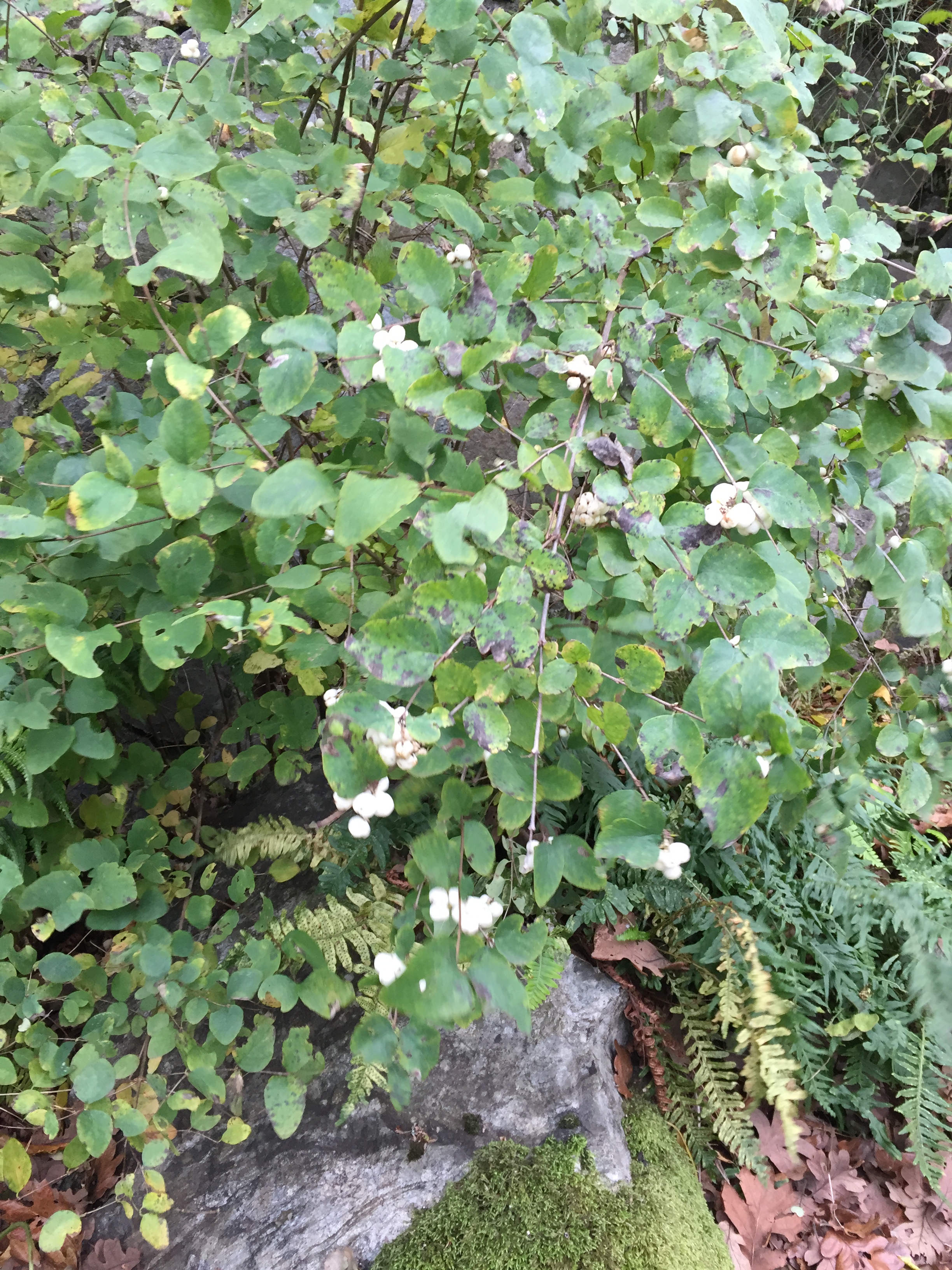
Common Snowberry

The simple addition of the word ‘Common’ before a plant name seems to make it less desirable, doesn’t it?

common snowberry, wax berry, white coralberry, corpse berry, snake's berry, waxberry, ghostberry, Symphoricarpos albus, Symphoricarpos rivularis, Symphoricarpos racemosa, garden Victoria, Vancouver Island, BC, Pacific Northwest
photo by SVSeekins

Who would want a common plant in a garden? Don’t we all want flash – bling — the unusual? In truth, the backbone of a great many gardens is made up of ‘Common ‘ plants. It’s the common plants that enhance the flash & bling of unusual ones.

common snowberry, wax berry, white coralberry, corpse berry, snake's berry, waxberry, ghostberry, Symphoricarpos albus, Symphoricarpos rivularis, Symphoricarpos racemosa, garden Victoria, Vancouver Island, BC, Pacific Northwest
photo by SVSeekins

Common Snowberry seems an insignificant deciduous shrub, but it has qualities that raise its value in a garden.

  • ‘Common’ basically means: it can grow pretty much anywhere.
    • Here on the southern tip of Vancouver Island, where our challenge is summer drought & winter wet, Symphoricarpos albus still thrives.
    • Have you got a steep yard where your hedge struggles because it’s dry at the top of the slope & soggy lower down? Snowberry handles that broad spectrum. It also handles sheering if you’re after a tidy, dense form. AND It supplies a nice cohesive look dotted throughout a mixed hedgerow.
    • How about that difficult dry, shady patch where it’s tough for plants to survive? Yup, snowberry handles that, too.
    • It grows well in the feast or famine water supply of bioswales & rain gardens that are so prized for slowing stormwater runoff.
    • Because its vigorous roots spread via suckers, snowberry is a workhorse in erosion control, which is why it’s also recommended for restoration sites.
common snowberry, wax berry, white coralberry, corpse berry, snake's berry, waxberry, ghostberry, Symphoricarpos albus, Symphoricarpos rivularis, Symphoricarpos racemosa, garden Victoria, Vancouver Island, BC, Pacific Northwest
photo by SVSeekins
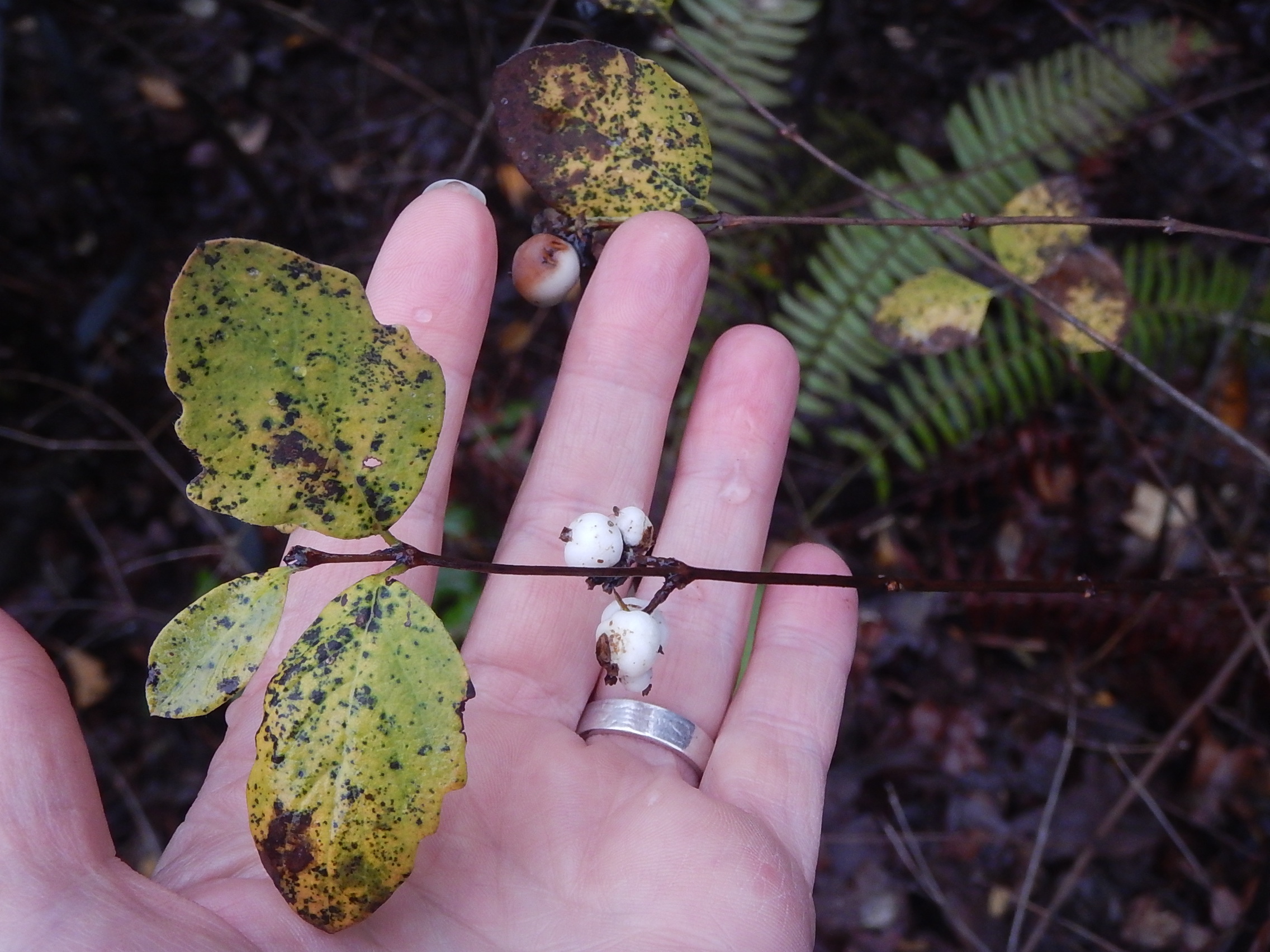
  • Snowberry has unusual fruits.
    • White berries are not the norm — and the snowberry is even more unusual in that it’s NOT even a berry! It’s a ‘drupe.’ Each fruit contains 2 ‘nutlets’ — just like the fruit of a cherry contains a pit. Cool, eh? How many folks at the garden club can you entertain with that trivia?
    • Symphoricarpos albus’ bitter drupes persist late into the winter, providing welcome food for birds when other supplies run low.
    • This small shrub was considered interesting & decorative enough that a couple centuries ago, it was imported by Britain & grown in many fashionable gardens. Side note: It’s become so comfortable there that it spread into their wilderness areas, too! See — it’ll grow pretty much anywhere.
common snowberry, wax berry, white coralberry, corpse berry, snake's berry, waxberry, ghostberry, Symphoricarpos albus, Symphoricarpos rivularis, Symphoricarpos racemosa, garden Victoria, Vancouver Island, BC, Pacific Northwest
photo by SVSeekins
  • Snowberry is a native plant that welcomes wildlife to the garden.
    • The diminutive pink flowers in early summer are especially appreciated by native pollinators & other beneficial insects. Both the Anna’s & Rufus hummingbirds compete for access to the blooms.
    • Deer & other ungulates browse on snowberry, but it isn’t tasty enough to be gorged on as their dessert.
    • Even in its naked winter state, a Symphoricarpos albus thicket provides protection, food & shelter for small birds & mammals.
common snowberry, wax berry, white coralberry, corpse berry, snake's berry, waxberry, ghostberry, Symphoricarpos albus, Symphoricarpos rivularis, Symphoricarpos racemosa, garden Victoria, Vancouver Island, BC, Pacific Northwest
photo by SVSeekins

I used to think snowberry was a pretty dull little shrub, but I’ve since changed my mind. A couple of years ago, I planted one in our little woodland border. Without any further attention, the snowberry survived last summer’s drought & this year, it bore fruit– several puffy white drupes. 🙂

Now the plan is to introduce it into a couple other challenging spots. The wildlife will be happy if it flourishes. If its vigorous roots spread too far, I’m sure the deer will help keep it in check.

-30-

White Stonecrop Challenge

Sedum album hanging basket, white stonecrop, Oreosedum album , small house leek, garden Victoria, Vancouver Island, BC, Pacific Northwest
photo by SVSeekins

Ok – I thought it was a gorgeous, drought-tolerant addition to a hanging basket. I was so pleased with the look of the white stonecrop when it started to flower in July. The blooms looked great for a month or so.
I was stoked.

Sedum album hanging basket, white stonecrop, Oreosedum album , small house leek, garden Victoria, Vancouver Island, BC, Pacific Northwest
photo by SVSeekins

AND then, as nature progresses, the flowers turned to seed heads.
hmmm. Brown.
Kinda messy looking. .. My inner tidy freak cringes. 😦
An over-tidy garden isn’t all that great for wildlife.

And THEN we went camping for a couple weeks in early September & I didn’t have to control my urge to deadhead the perfectly good birdseed.

Now, autumn is arriving & with it cooler temperatures + some moisture. The licorice ferns are coming alive.

Licorice fern, Polypodium glycyrrhiza, many-footed fern, sweet rootSedum album hanging basket, white stonecrop, Oreosedum album , small house leek, garden Victoria, Vancouver Island, BC, Pacific Northwest
photo by SVSeekins

The messy seed heads of the sedum album are overshadowed.
Crisis averted.

Last year the ferns on our rocky outcrop were not surviving the appetite of our local deer. Shifting sheets of moss that the licorice ferns were growing in & creating a basket hanging above the reach of Bambi has proved successful. 🙂
The baskets promise to hold my interest through the humidity of fall & winter,

So now the question:
Is there anything I could plant to distract from the brown look through August & early September until the licorice fern becomes The Show? It needs to be drought tolerant & happy in a bit of shade ….
Any suggestions?

-30-