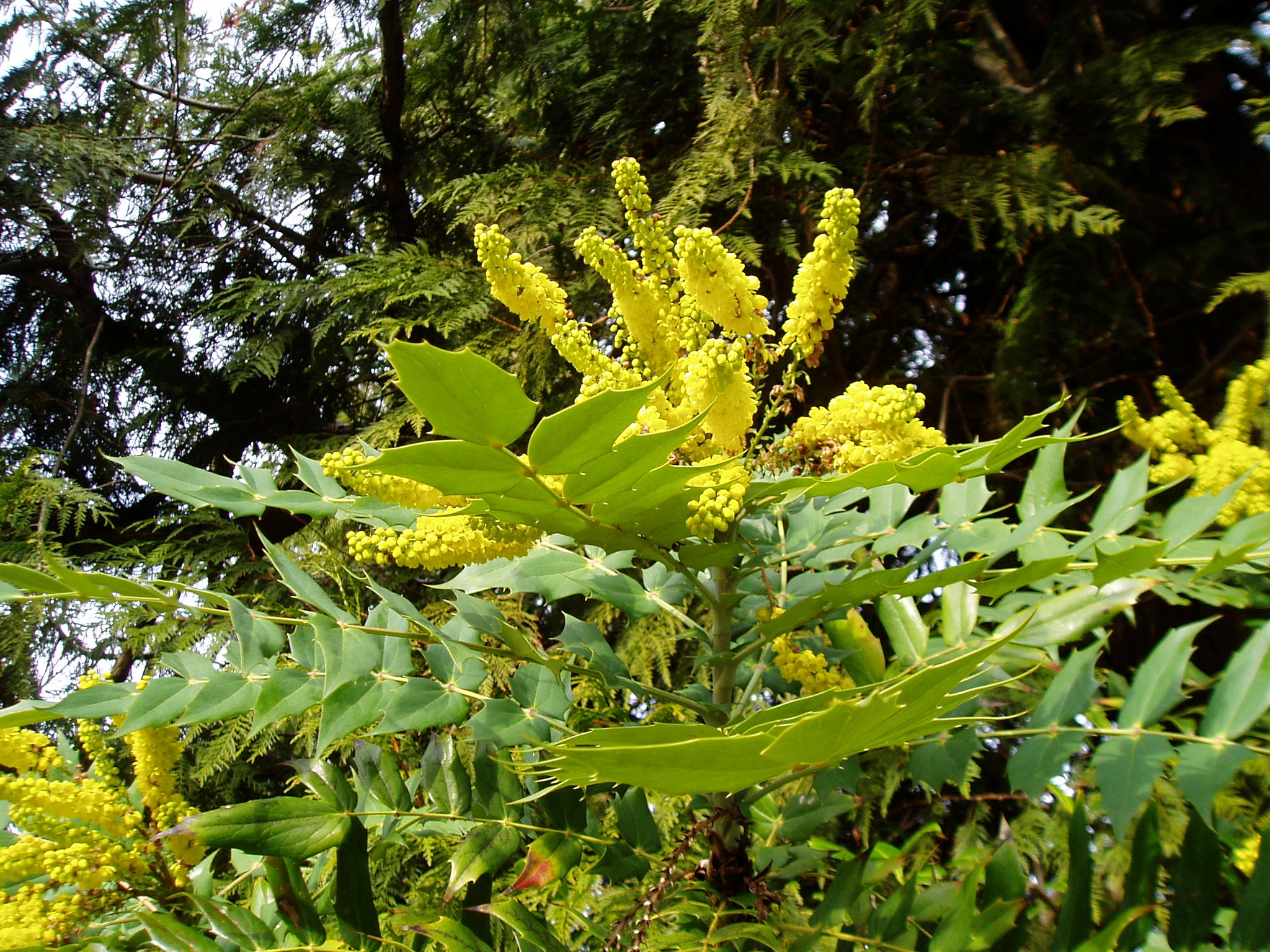
It was early February when I ran across this burst of sunshine in Victoria.
photo by SVSeekinsphoto by SVSeekins
Mahonia is an evergreen shrub that boasts happy yellow flower clusters through winter.
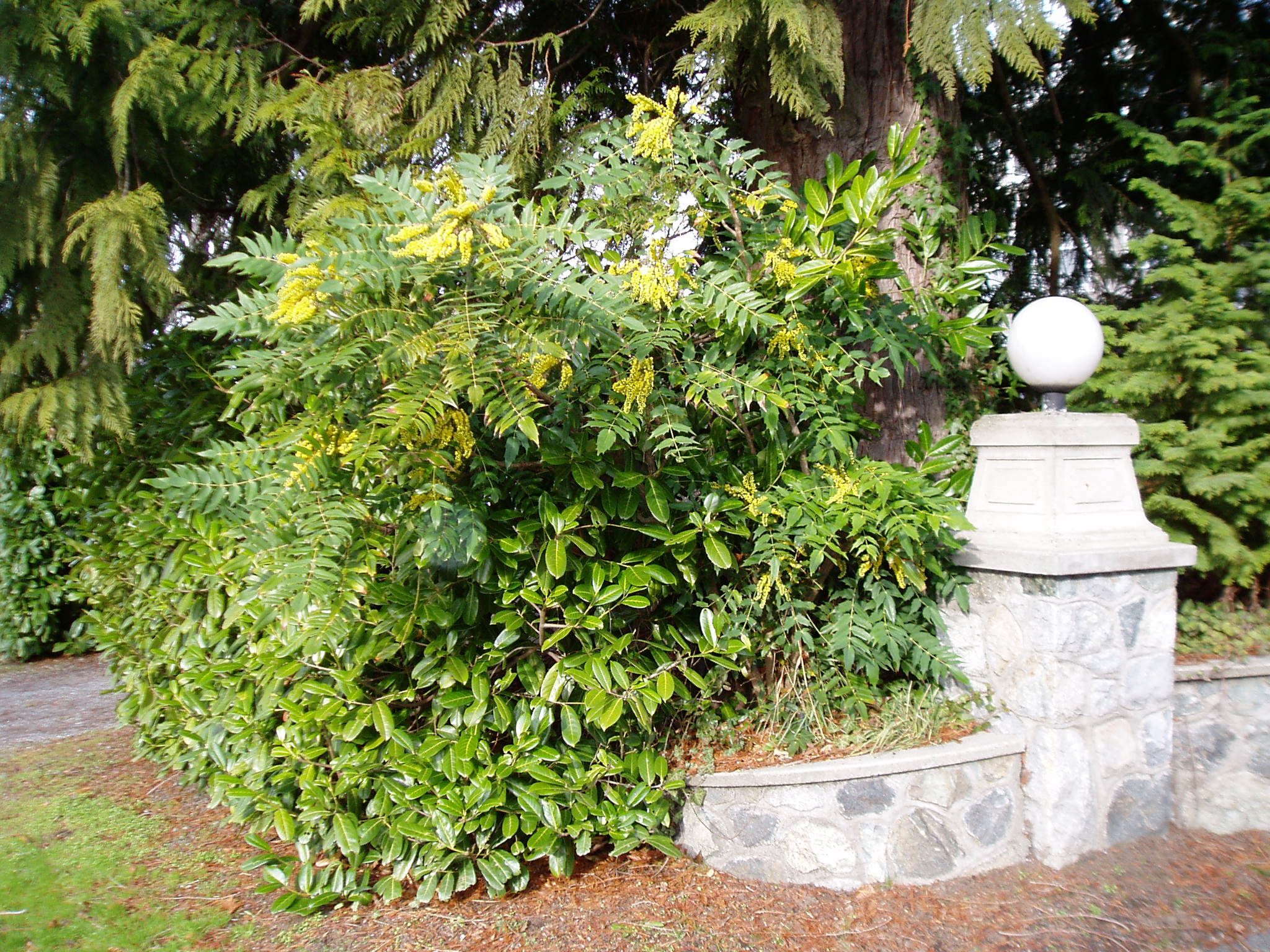
This particular specimen is certainly more showy than the local mahonia (Oregon grape) that grows in our yard.
At this time of year the tall Oregon grape in our shrub border is only just preparing to bloom.
photo by SVSeekins
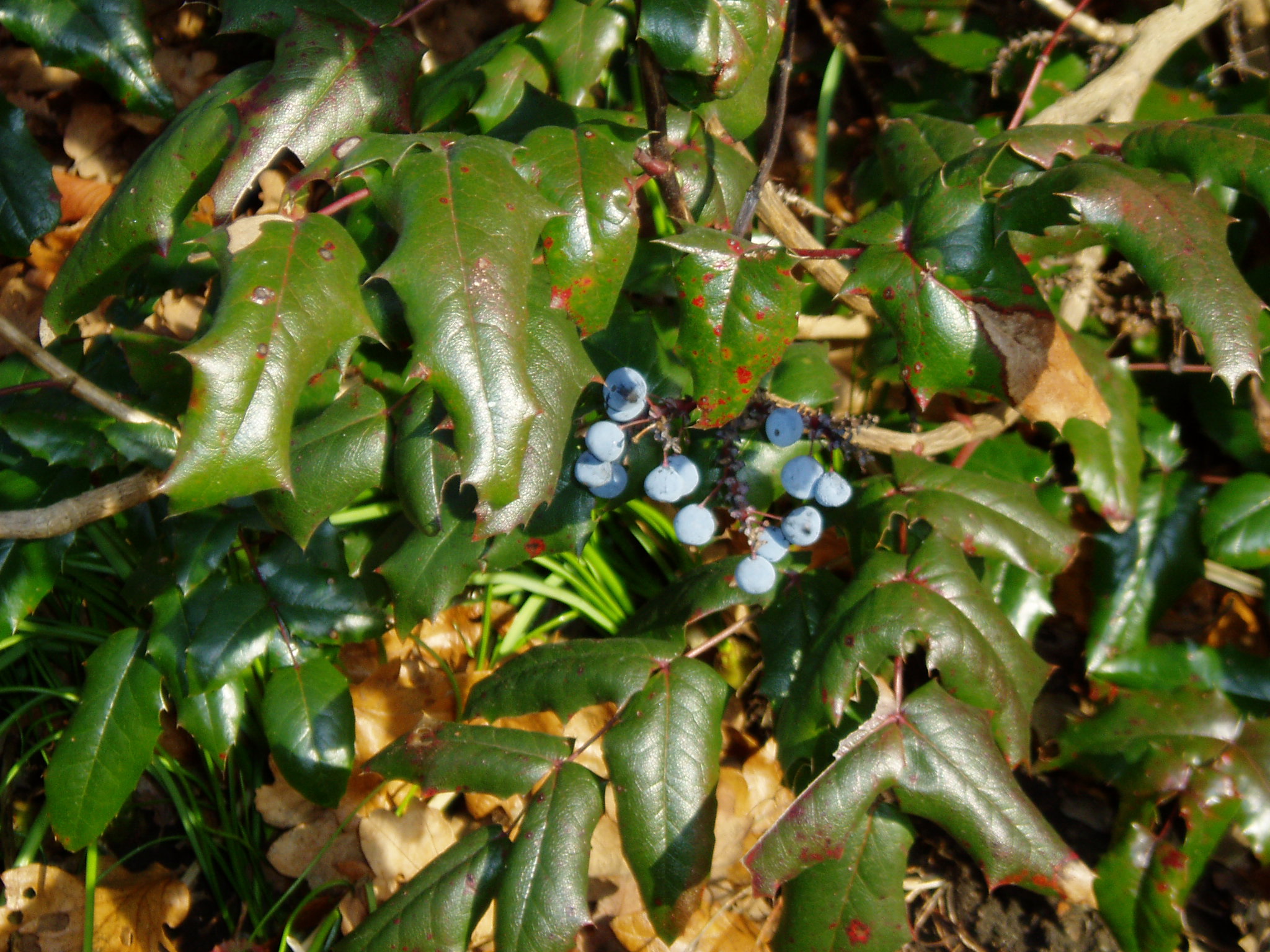
By summer it’ll be sporting dark berries. One of my favorite resource books, Plants of the Pacific Northwest Coast, tells that some use the berries to make jelly with real pucker power.
photo by SVSeekins
The leaves are shaped like holly, but aren’t nearly as hard and prickly.
I’ve seen full-sized holly trees, but mahonia only seem to come in shrubs or ground covers.
Holly berries are red, while mahonia’s are blue.
In some places, folks consider holly an invasive. I’ve not heard any such complaint about the mahonia.
Aside from watering it for the first summer after transplanting, Oregon grape seems happy here with no attention at all.
This one is a hard worker. It’s evergreen, so it’s interesting all year-long. The winter blooms feed hummingbirds. The summer fruit feeds other birds. The mild prickles deter deer. Who could ask for more?
After a few months of grey, drizzly days & dark, windy nights of the west coast winter, it’s not really a surprise to find me kneeling down in the wet to confirm a tiny flower sighting.
Even though the prairies are suffering through the deep freeze, they have sunny days to lift spirits. I’m just too wimpy about snow, so I tough it out on the west coast – – and I appreciate the sunshine that bursts from a little yellow bud.
That’s probably why Victoria promotes a flower count in the first week of March each year. It might seem obnoxious to the rest of Canada, but this is how we cope with the depression of the grey skies. Sorry.
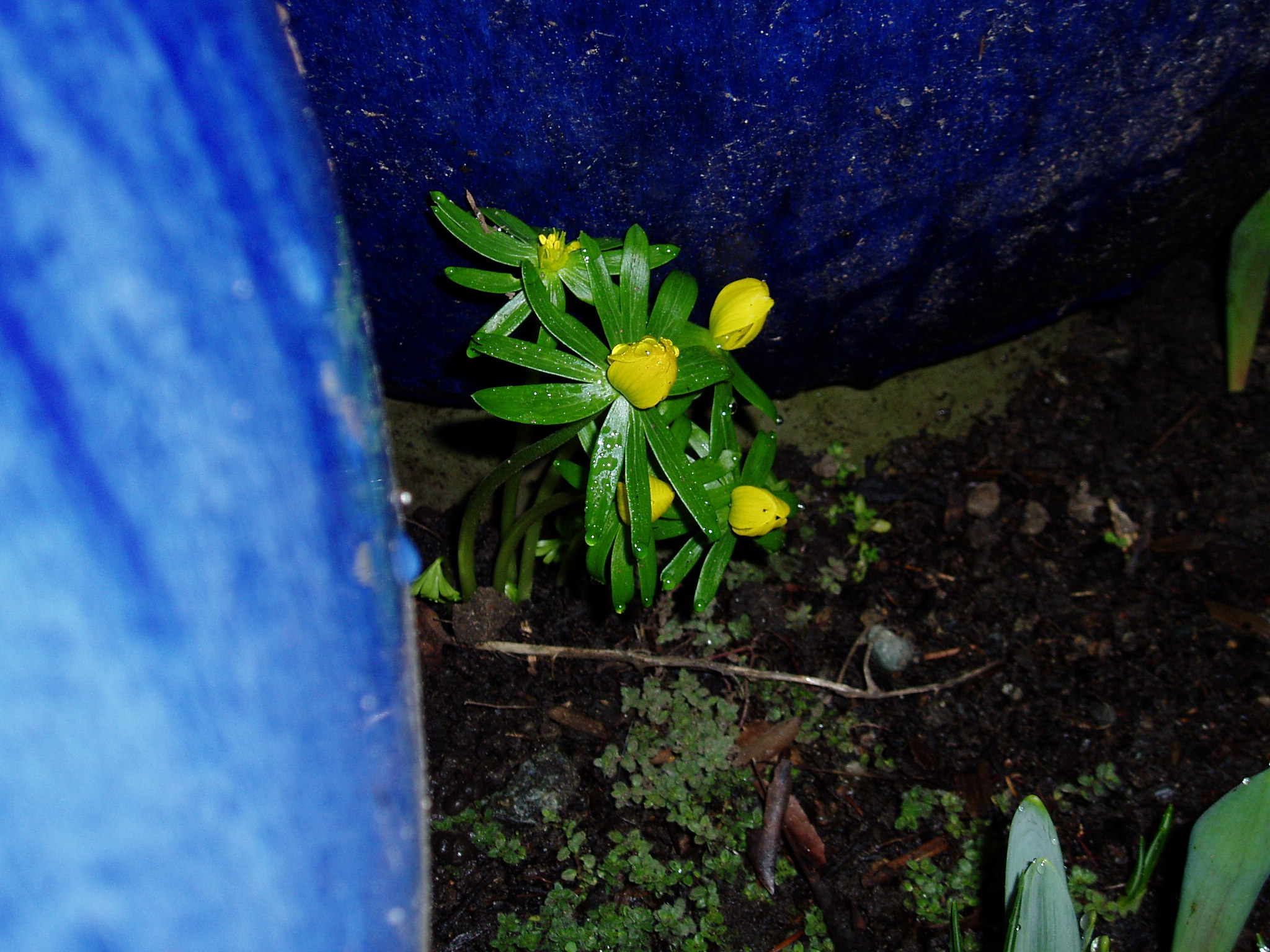
Commonly called winter aconite, eranthis has a simple little flower. It blooms even before crocus. It’s not much, but if you’re looking for action this early in the year, eranthis is a good pick.
photo by SVSeekins
Garden shops stock eranthis bulbs in September & October for fall planting. Well, it’s not actually a bulb. When I first opened the package, I was a little concerned with the small, shrivelled bits. Perhaps they’re called corms? I’m not sure, but they’re certainly not like any bulbs I know. Which side is up? No pointy tip to place up. No roots to place down.
The hole was already dug, so with nothing to lose by throwing them in, I crossed my fingers.
photo by SVSeekins
Happily they survived.
And the deer leave them be! That’s another win. 🙂
Hopefully they’ll settle into this new home for the long-term. I know their blooms will pass, and even the leaves will die back by mid spring, but if they’re happy with the scene, and an occasional drink, I’m told they’ll naturalize & maybe even spread a bit. That would be nice.
Isn’t it a nice idea to look forward to such welcome visitors each winter?
I think February is sleeping in. The days are getting longer, but it seems so slow. Standing at the kitchen sink, staring out the window at the drizzle, I let out a squeal. Hot pink blooms at the base of the apple tree! I’m saved! Happy dance.
photo by SVSeekins
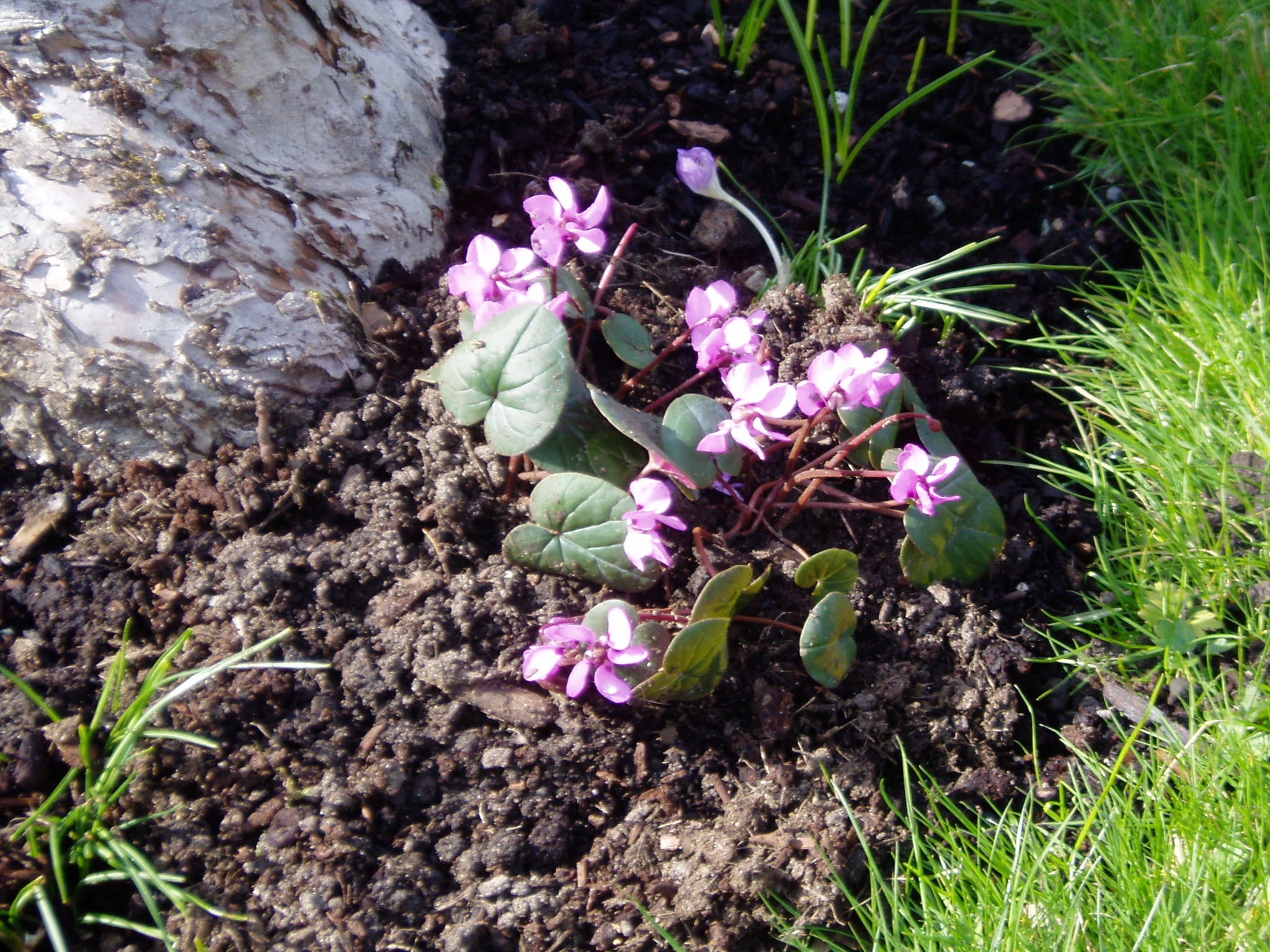
Cyclamen coum shouts for me to come outside and play. I drop everything to grab the camera. Kneeling down on the soggy lawn, I fumble for the Close-Up setting. The rain dribbles down my neck, but I don’t care. Blooms! I see blooms!
For such a tiny flower, it packs a punch.
I mean, snowdrops are lovely, but they’re demure, unassuming white flowers. Cyclamen coum are bright, exotic, FEISTY flowers. Round 1 goes to C. coum.
photo by SVSeekins
In round 2 C. coum throws a low blow to my gut. It’s a little pricier than my usual comfort zone, especially considering that it comes in such a tiny pot. But determined to have real colour in the winter garden, I stayed strong & paid the price.
photo by SVSeekins
In round 3, I struggled with where to showcase the winter bloomer. I keep the little bed under the apple tree empty – mostly because I read somewhere that certain bugs climb up tall plants as a way to get high into the apple tree & infect the fruit. I don’t know whether that’s really true, but it gives me a clear spot, visible from inside, for the cyclamen to show off. Good thinking, eh?
C. coum are so small that they could easily be lost under a pile of leaf debris, so in round 4 I get busy & do the winter clean up chores.
photo by SVSeekins
Their speckled, round leaves started to show in October. By mid-January, C. coum had minuscule, bright fuchsia buds. I often found myself outside cheering them on. It took a few extra weeks for their flowers to open. That entertainment value wins them round 5.
So now, I’m on my knees with the camera, looking a bit foolish, but happy. I’m head over heels. How many more rounds to go? None, round 6 is a simple knockout.
Cyclamen coum has got to be my all-time favourite – EVER. 🙂
photo by SVSeekins
Hardy Cyclamen is more often known as a fall bloomer. Most varieties start in August, and some continue through November. There are lovely examples growing in Abkhazi Garden.
Cyclamen hederifolium (with ivy-shaped leaves) is a bully, overrunning many other varieties. There are several small patches around our yard, but I’m being ever so careful about placing each variety separately and not too close together.
photo by SVSeekins
On a positive note, C. hederifolium’s flowers seem to appear magically out of nowhere, and the leaves show up weeks later. That’s kind of cool for a bully.
photo by SVSeekins
Cyclamen are well-suited as a rockery plant, too. I’m happy to have success with some rooting well into the steep mossy rock in our side yard. My hope is that it’s tough to mix varieties when they’re each growing in their own crevice.
Garden gurus Carole & Bill Dancer have lovely masses of hardy cyclamen flowering throughout their garden beds at this time of year. Bill says the cyclamen spread effortlessly. He chuckles that the ants do the work. They happily move the sticky seeds around for him. My guess is the ants are just as susceptible to this February romance as I am.








 Garden Variety Life