Category Archives: attracting birds

Belief In Magic

It was one morning in September 2006 when I realized fairies are real.  Dancing in the autumn chill beneath the birdbath was a flurry of naked ladies.

colchicum in bloom
photo by SVSeekins

I found them enchanting…
surely elves & pixies would pop up any minute.

Only a month had passed since we’d purchased our home.  I’d done nothing in the yard, besides delivering a few pots from our old home.  This magic just ‘happened‘…  unprompted.
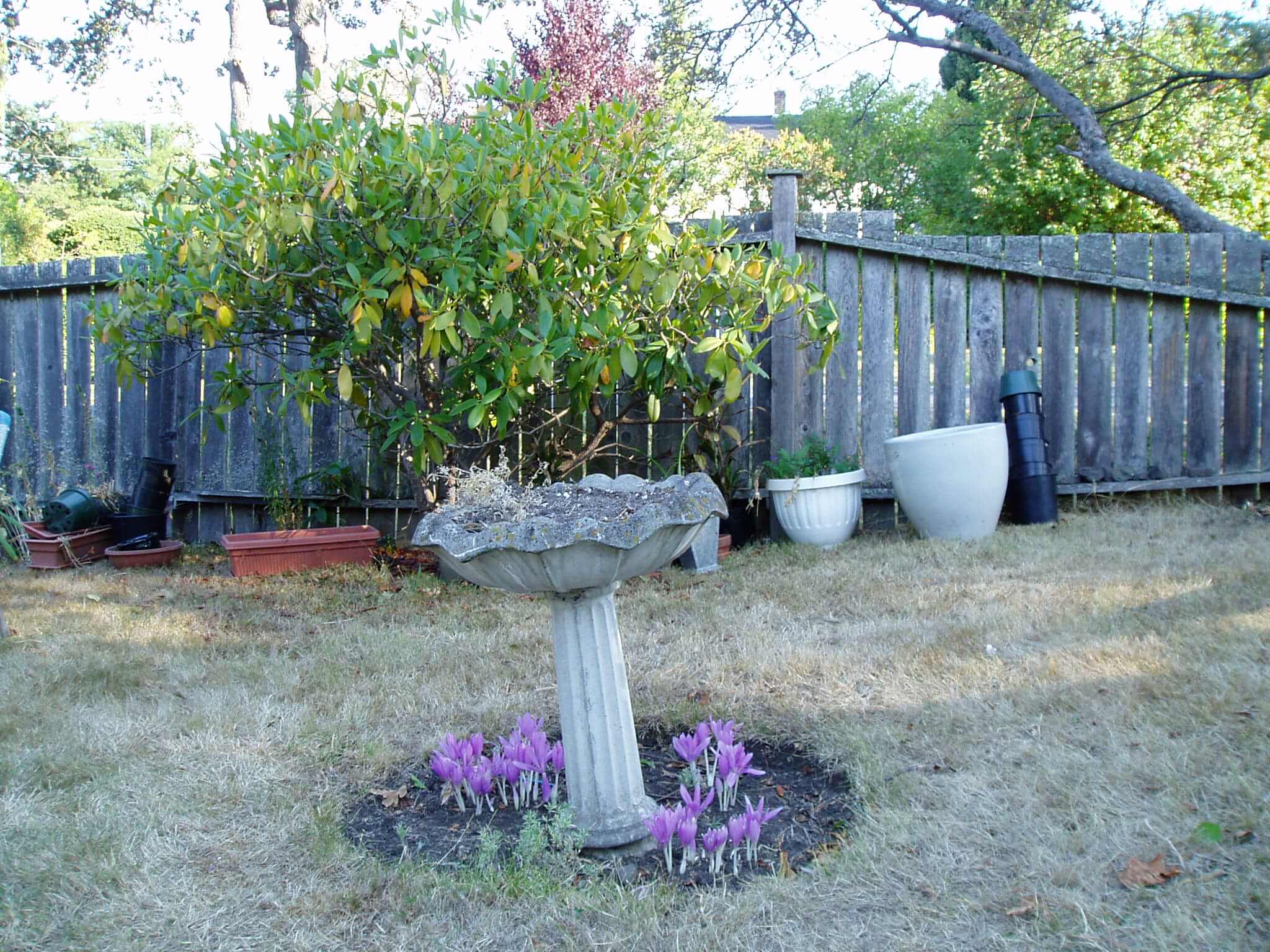
birdbath 2006 09
photo by SVSeekins

We were crazy-busy, making the house our own.  It would be a long while before much time could be spared for gardens…
yet I knew, then & there, this circle of fairy dancers had to be incorporated into our landscape plans… Somehow.

Given the birdbath & tiny flower bed was awkwardly adrift in a sea of lawn, I needed imagination.  It took me a while to figure out what to do with it.

birdbath bed 2008 01
photo by SVSeekins

Finally, we moved forward, creating a corner border. Rock edging started at the forsythia & gate (to the right / east)…
encompassed the birdbath,  & cherry tree at the end of the driveway (center-right)…
then followed the northern fence line to the rhododendron (far left).  (photo: Xmas 2007)
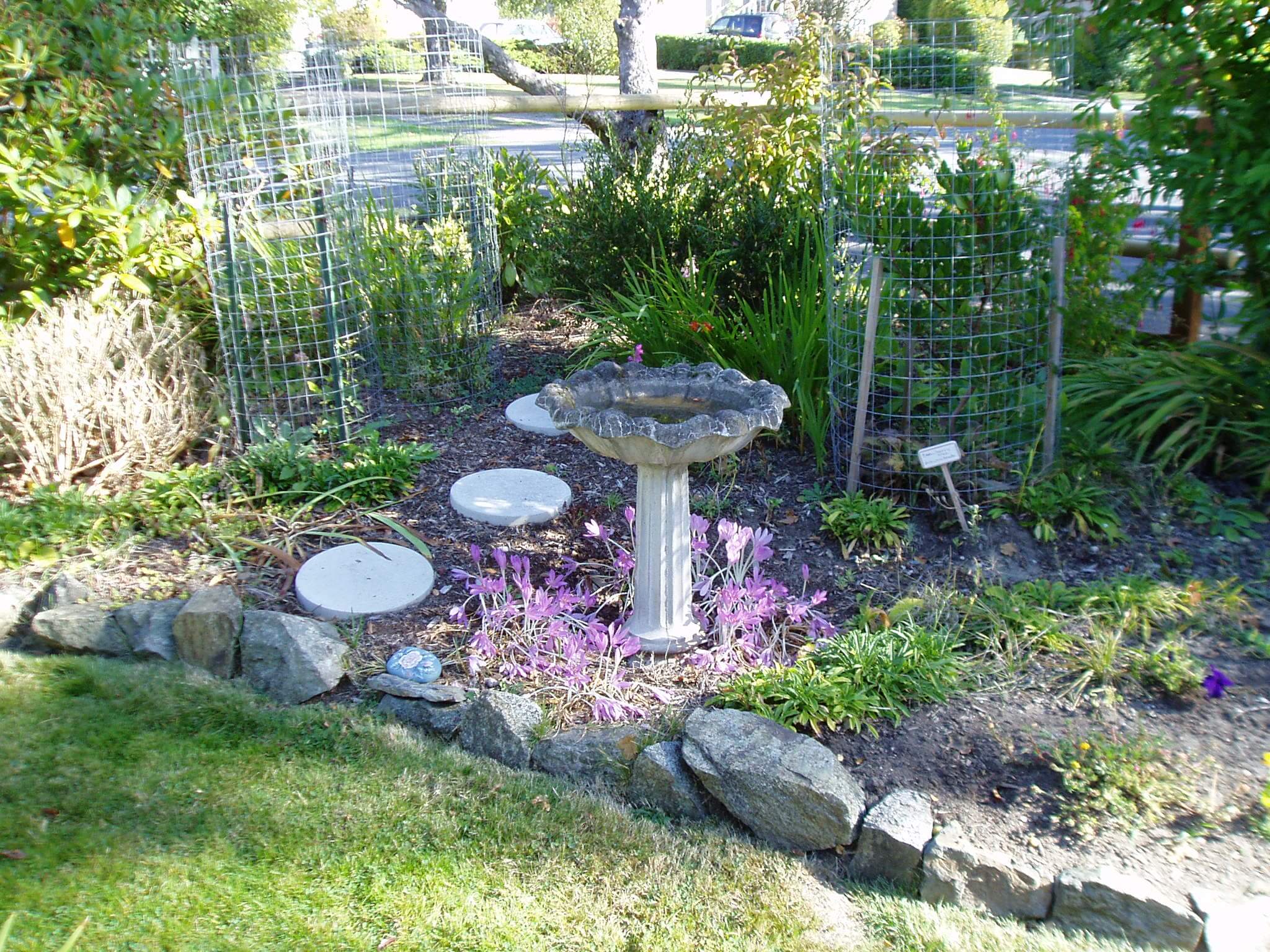
birdbath bed 2009 08
photo by SVSeekins

Early on, it felt like a giant, near-empty space that would take forever to turn into a real garden.  The new shrubs seemed tiny & lost. The local deer nibbled the Strawberry Tree (Arbutus unedo).  They nearly destroyed the Bottlebrush (Callistemon) with their antlers. Happily, the fairies came back every autumn to dance in the shivery sunshine.  The deer gave them peace. 🙂     (photo: August 2009)
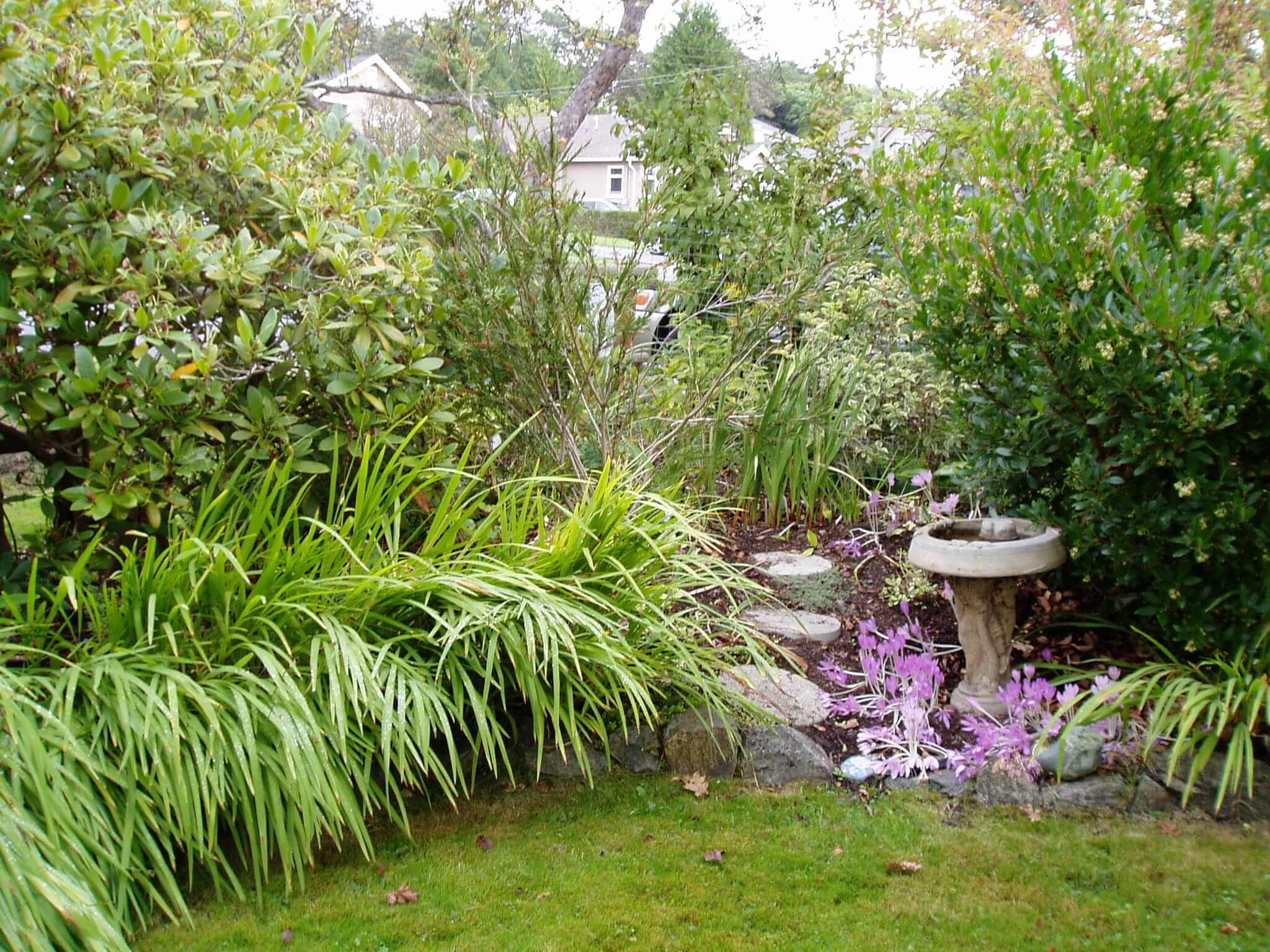
birdbath bed 2013 09
photo by SVSeekins

Five years in, it was starting to look like something more.   The Rhodo (far left) loved the company – growing almost as much as the newer shrubs.  Those shrubs were now large enough to stand up against the deer a little better, so I removed their cages.  The birds & fairies were enjoying the extra privacy as the garden grew up around the birdbath.   (photo: Sept. 2013)
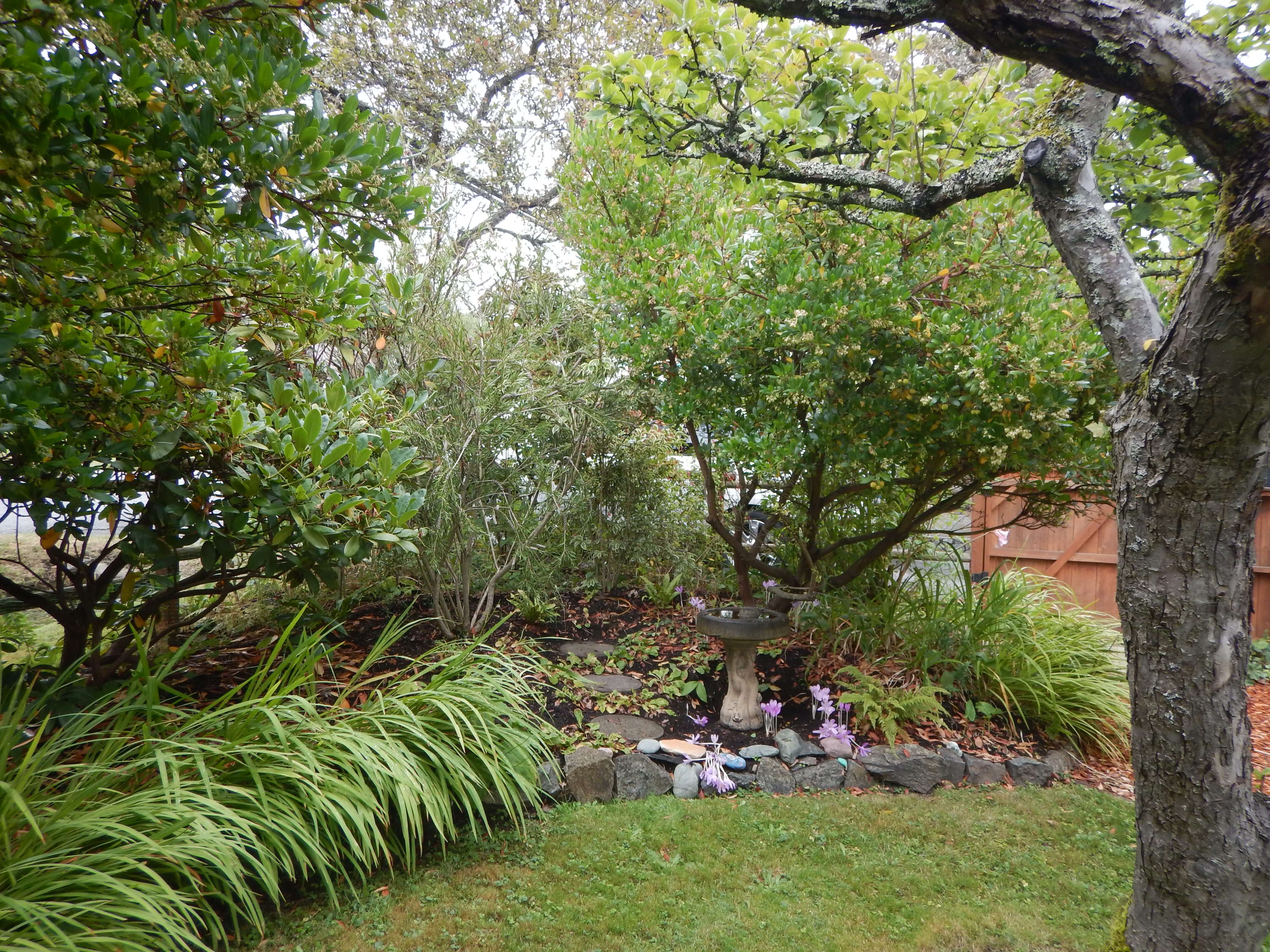
birdbath bed 2019 09
photo by SVSeekins

After a dozen years, the party continues.  The shrubs have matured into small trees.  The border has grown into a mini-woodland.  The birdbath almost disappears in the dappled understory! I reckon it’s even more magical than before. And each September, the fairies come to dance.     (photo: Sept. 2019)

-30-

July Meadow

After our drain tile renovation destroyed our lawn, we laid sod.

clover, selfheal, purple deadnettle, meadow, self-heal, Prunella, garden Victoria BC Pacific Northwest
photo by SVSeekins

In the 10 years following, other plants joined the grassy monoculture.  Our classic lawn has become more of an urban meadow.

I still enjoy the tidy look of a freshly mown lawn… all smooth & green…  But I appreciate the wildflowers, too.

blacktail fawn deer garden Victoria, Vancouver Island, BC, Pacific Northwest
photo by SVSeekins

And I’m not alone.

The local deer seem to be grazing the meadow more than harvesting the ornamental beds.
Hooray for that!
For the moment, I can enjoy watching the young family  – – rather than spend my time shooing them out of the garden.

wild clover, trefoil, Trifolium, garden Victoria BC Pacific Northwest
photo by SVSeekins

Wild clover naturalized early on.  It mostly blooms white, like the short Dutch clover, but often with a hint of pink.  Is it interbred with the larger red clover, which we grew fields of on the homestead?  So sweet.  Think clover honey…
(FYI – I’ve never been stung in our yard).

selfheal, purple deadnettle, self-heal, Prunella, garden Victoria BC Pacific Northwest
photo by SVSeekins

Self-heal, aka purple deadnettle, works wonderfully as a low-growing groundcover too. Like the clover, it stays green while grass browns in the summer dry. Prunella vulgaris blossoms attract more beneficial insects into our yard.  The seed feeds birds, too.

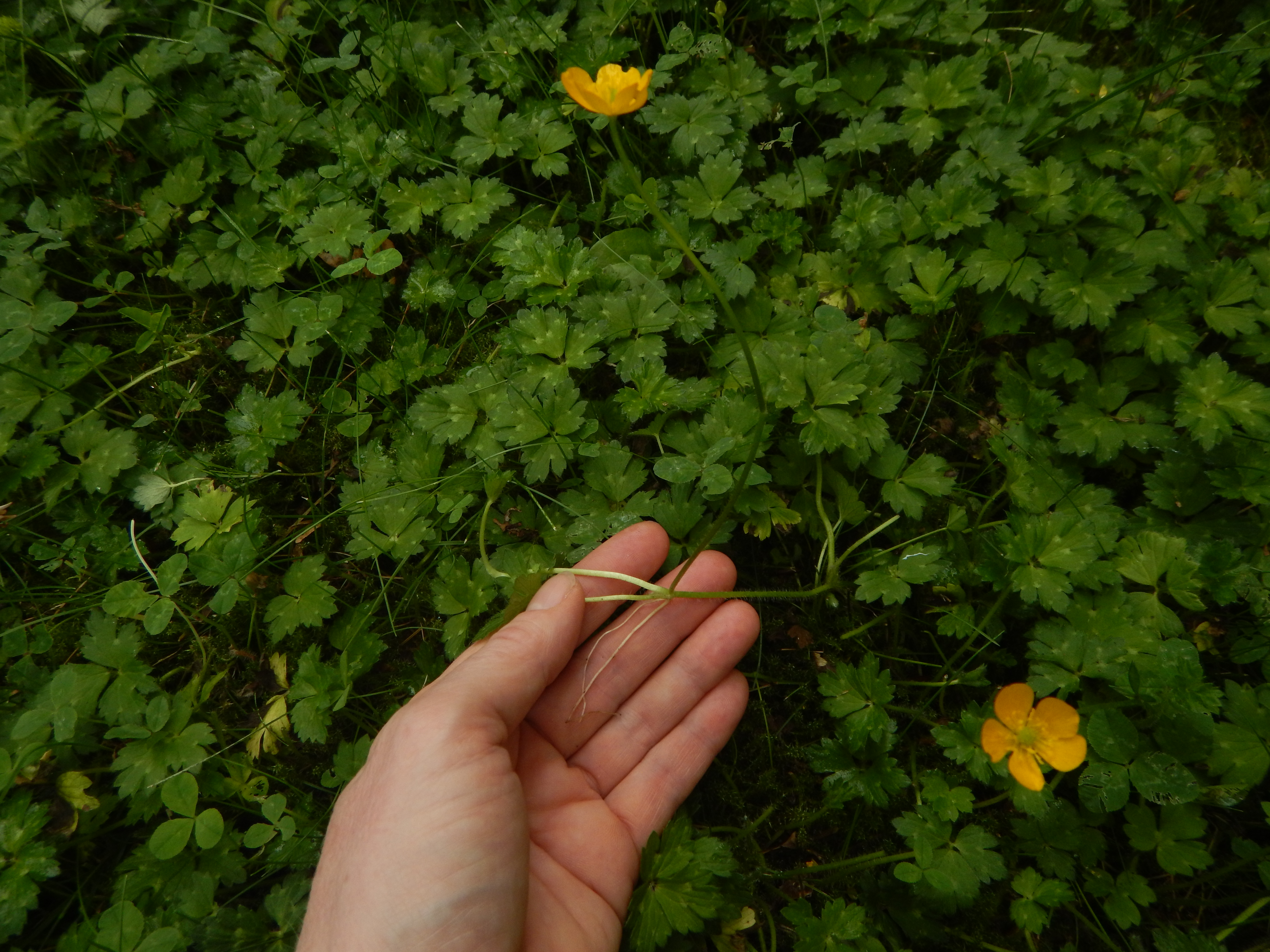
creeping buttercup, sitfast, restharrow, creeping crowfoot, Ranunculus repens, garden Victoria, Vancouver Island, BC, Pacific Northwest
photo by SVSeekins

The European Creeping Buttercup is well established under our apple tree & along the shady foundations of the house.  Ranunculus repens resides safely below the lawnmower blades. It colonizes via runners. New roots spring off a runner a few inches from the mother plant, creating a baby.  Then the same runner continues along for more adventures.  In our yard, it’s never crept toward the drier, sunnier areas.

creeping buttercup, sitfast, restharrow, creeping crowfoot, Ranunculus repens, garden Victoria, Vancouver Island, BC, Pacific Northwest
photo by SVSeekins

C thinks the buttercup is pretty.
But the deer avoid the whole plant.   They’ll graze carefully all around it.  To mammals, buttercup is toxic. (Blisters inside the mouth & throat are reason enough to avoid.)
That said, insects enjoy the flowers.
🙂

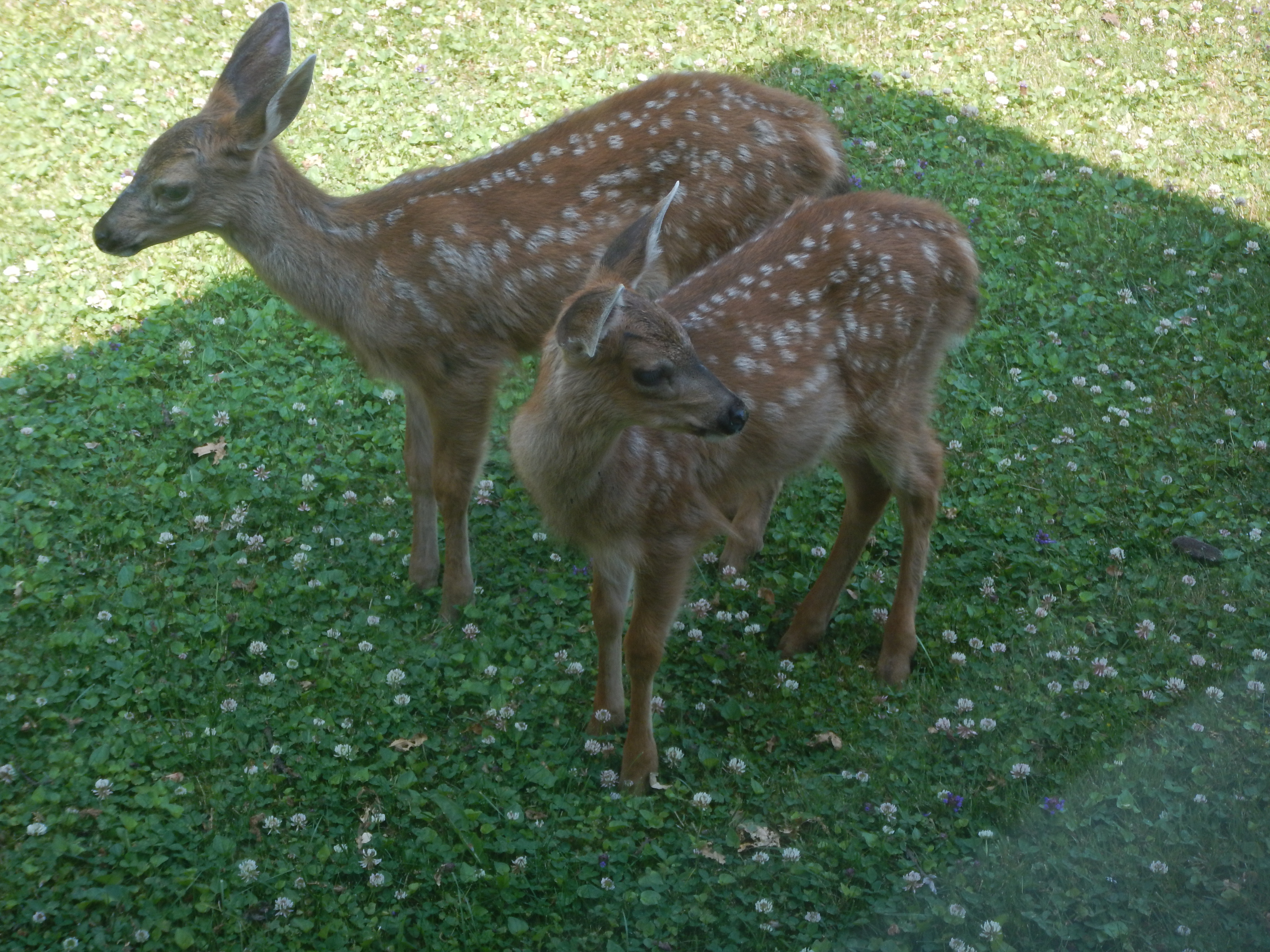
blacktail fawn twins deer, garden Victoria, Vancouver Island, BC, Pacific Northwest
photo by SVSeekins

I recently learned from Dr. L. A. Gilkeson that insects have declined at least 45% since the 1970s. (!! That’s 10 times faster than we’re losing mammals  !!) The decline is mostly due to habitat loss – and lawns don’t count as ‘habitat’ if they’re monocultures.

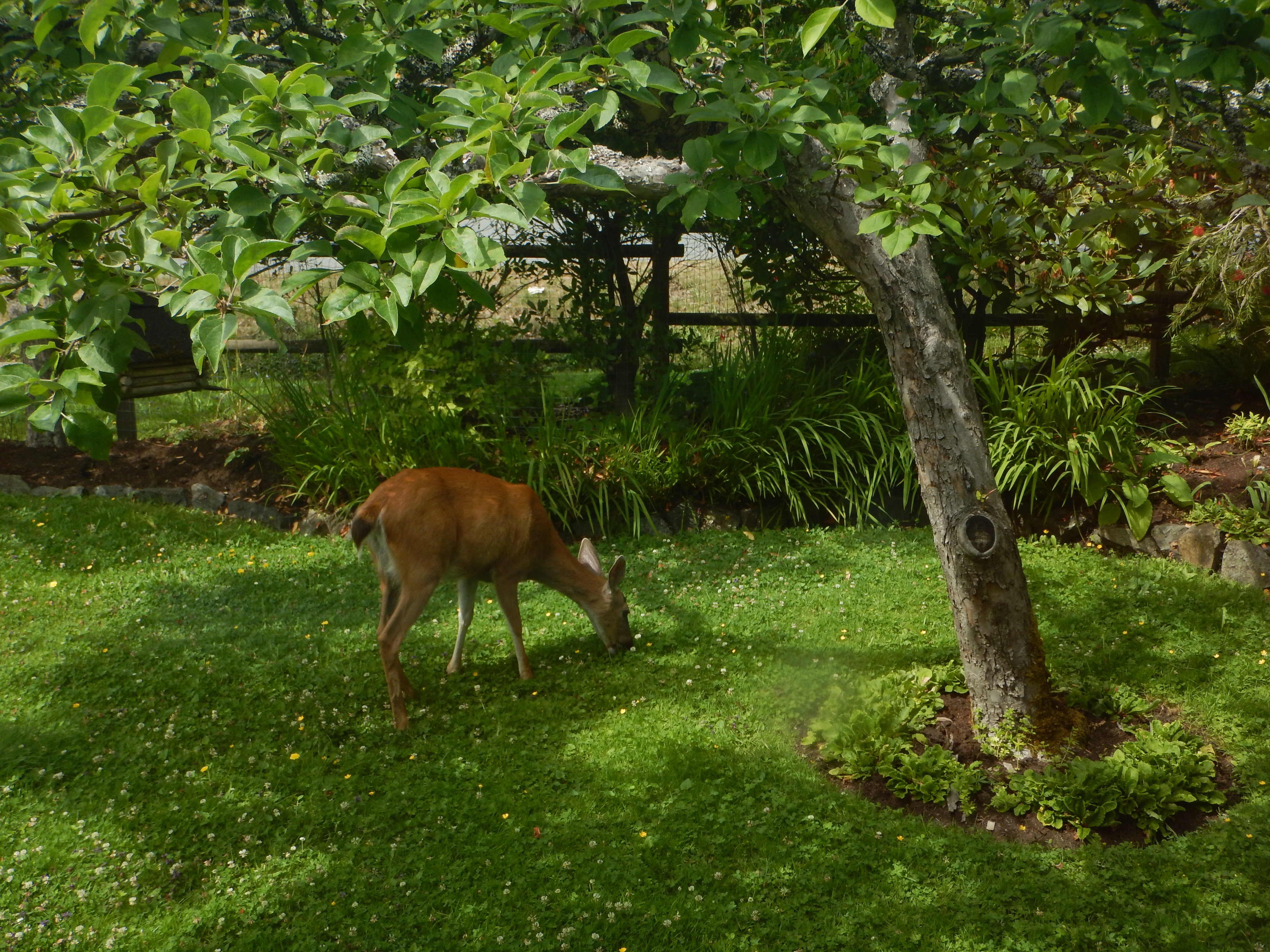
blacktail doe deer grazing on clover selfheal meadow, garden Victoria, Vancouver Island, BC, Pacific Northwest
photo by SVSeekins

In fact, untended weedy lots have more insects than a diverse ornamental garden.  Perhaps in relaxing our ideas about the golf green lawn, we’re helping sustain the insect population that’s left?  I’m confident our meadow hosts far more insects than the post-reno sod did.

blacktail fawn deer garden Victoria, Vancouver Island, BC, Pacific Northwest
photo by SVSeekins

This meadow is undoubtedly better for the birds & bees.  The deer like it more.  And it’s less maintenance for us.  With the deer helping out, C doesn’t need to mow or fertilize it as often.  We don’t water it as much.  Granted, the meadow wants to creep into the decorative borders just like a grass lawn does. So, I’m still edging the beds.  Oh well, one day, I’ll devise a solution for that.  In the meantime, I’m enjoying the flowers & all the wildlife.    🙂

-30-

Here are some other meadows:

Native Groundcovers

It was always my goal for our garden to be low maintenance.  Native plants fit the bill perfectly.  They evolved locally, so need little pampering when grown in sites they’re suited to.

Eriophyllum lanatum, Woolly Eriophyllum, Wooly Sunflower, Oregon Sunshine, woody eriophyllum, wooly daisy, sunshine flower, garden Victoria, Vancouver Island, BC, Pacific Northwest
photo by SVSeekins

Our garden only gets water when it falls from the sky, or when I drag around a hose. (A hose is NOT low maintenance).  Here, in Victoria, we get plenty of rain (23 inches /year), but most of that falls in winter. Summer is 3-4 months without rain. Plants that succeed in our yard must be fairly drought tolerant.

Groundcovers help the garden become more drought tolerant by shading large pieces of soil. That has benefits:

twinflower, garden Victoria BC Pacific Northwest
photo by SVSeekins
  • reduces moisture loss through evaporation.
  • suppresses weeds, reducing competition.
  • reduces soil compaction, helping water soak into the ground instead of running off.
  • reduces erosion (no soil – no garden).
  • and, as a bonus, native groundcovers are especially wildlife & pollinator friendly.  🙂

Here are my
TOP 5 BULLETPROOF NATIVE GROUNDCOVERS:
(They all flourish in our dry garden & even survive the foraging urban deer.)

  1. wild strawberry patch at Camosun, garden Victoria BC Pacific Northwest
    photo by SVSeekins

    Wild Strawberry (Fragaria virginiana)
    and its cousin Coastal Strawberry (Fragaria chiloensis) loves full sun.  Woodland Strawberry (Fragaria vesca) prefers shade.   They create wide carpets via runners but don’t choke out any of the perennials sharing the space. I’m even delighted when they emigrate into our lawn, as they’re low enough to survive the mower’s blade.

  2. yarrow achillea millefolium native plant garden Victoria, Vancouver Island, BC, Pacific Northwest
    photo by SVSeekins

    Yarrow (Achillea millefolium)
    grows in gravel parking lots – – so I knew it would survive in our yard.  Be warned – – this yarrow can become a thug in an irrigated garden.  Because our garden is so dry, yarrow isn’t a nuisance.  Even still, I don’t let it self-seed… but  I am thinking of experimenting with it in our ‘lawn’ (potential manicured meadow.)

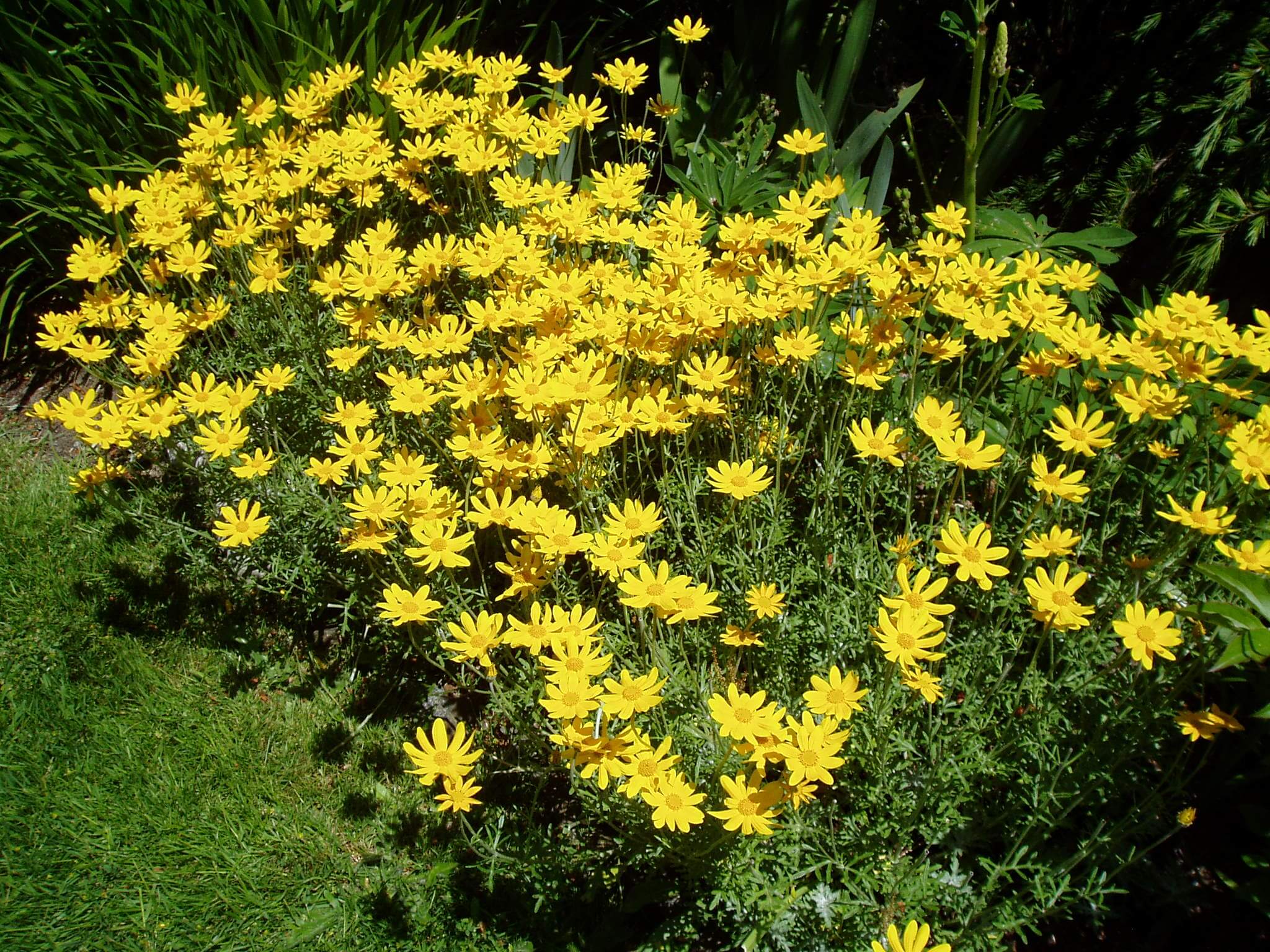
  3. Eriophyllum lanatum, Woolly Eriophyllum, Wooly Sunflower, Oregon Sunshine, woody eriophyllum, wooly daisy, sunshine flower, garden Victoria, Vancouver Island, BC, Pacific Northwest
    photo by SVSeekins

    Wooly Sunflower (Eriophyllum lanatum)
    is another sun-lover.  It took a little attention to get it established in our yard, but once it got going…  🙂
    Decent sized divisions re-establish in new beds quickly and are very drought tolerant.  Yeah, baby!!

  4. broad leaved stonecrop, spatula-leaved, sedum spathulifolium,, pacific sedum, spoon-leaved, Colorado stonecrop, garden Victoria, Vancouver Island, BC, Pacific Northwest
    photo by SVSeekins

    Broad-Leaf Sedum (Sedum spathulifolium)
    grows naturally in gravel & rocky bluffs beside the ocean.  It’s superpower is tolerating shade as well as sun. There are several patches in our yard.  When autumn comes I’m careful not to rake them up along with the leaf debris.

  5. Pacific Bleeding Heart in bloom
    photo by SVSeekins

    Pacific Bleeding Heart (Dicentra formosa)
    is a woodland groundcover.  It spread rapidly when we first planted our garden.  Trying to establish the new shrub border, I watered often.  With the extra moisture, the Bleeding Heart flowered in dappled shade for most of the summer.  Now that our mature shrubs require less watering, the Bleeding Heart gives a great spring display, then goes dormant until the following winter.

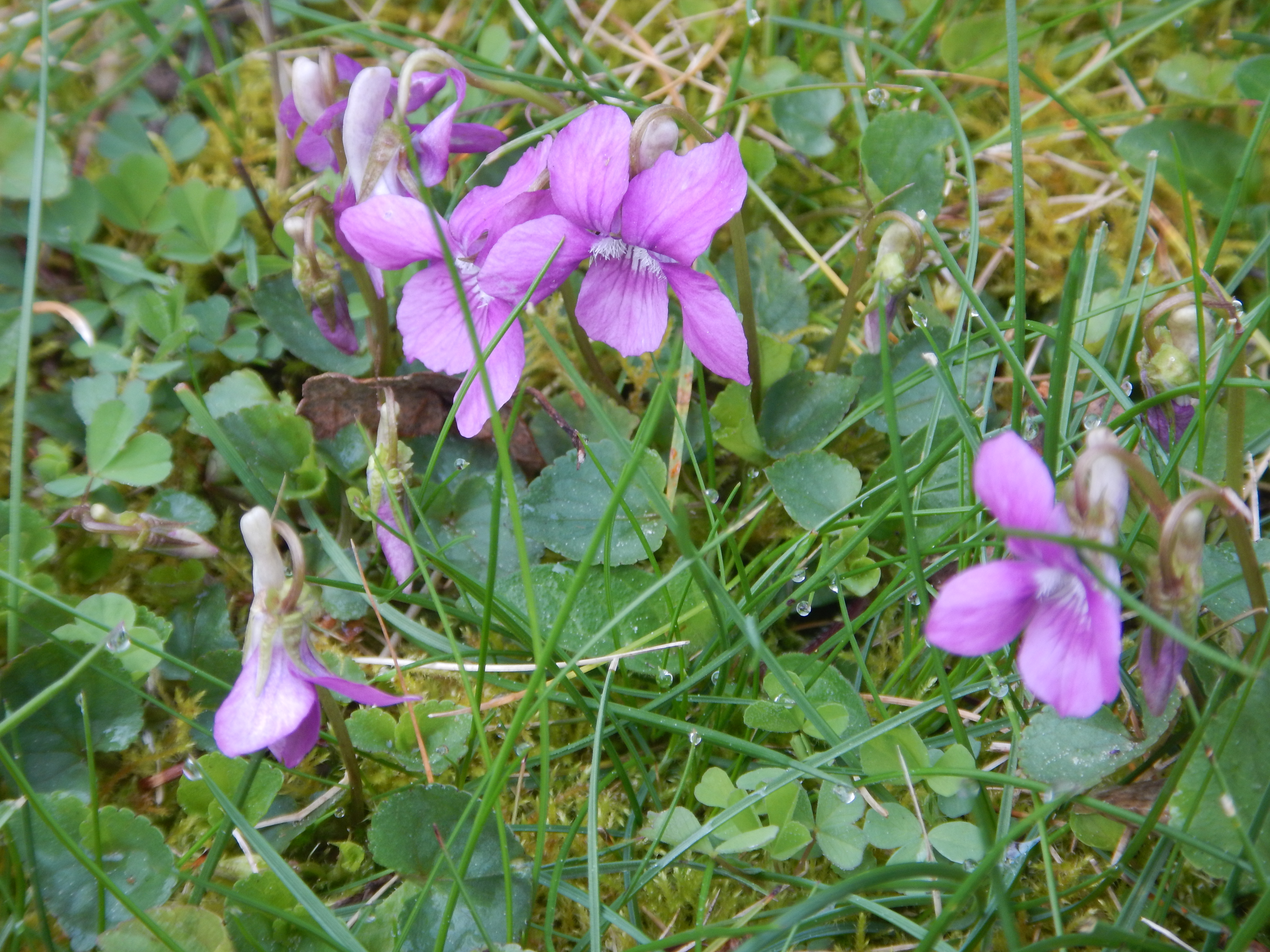
  6. wild violets in lawn, early blue violet, sand violet, western dog violet, hooked spur violet, viola audunca, alaska violet, aleutian violet, viola lnagsdorfii, garden Victoria, Vancouver Island, BC, Pacific Northwest
    photo by SVSeekins

    (BONUS)  Wild Violet (Viola adunca)
    is shade & drought tolerant once established.  It self-seeds prolifically, so is considered invasive by many gardeners.  Roots reach deep into the soil for moisture.  That makes it a little tougher to pull out of places where I don’t want it.  (The top 5 groundcovers are all easy to contain in our beds.)

Of course, there are many native groundcovers that look lovely & grow successfully in other local gardens:

  • bunchberry, Cornus canadensis, dwarf dogwood,, creeping dogwood, dwarf cornel, crackerberry, native wildflower, garden Victoria BC Pacific Northwest
    photo by SVSeekins

    Bunchberry (Cornus canadensis)
    needs a little more moisture than I’m prepared to supply but I’ve envied its presence in a friend’s irrigated garden… as well as admired it beside shady trails & sunny clear-cuts along the west coast.   It’s unusual for a plant to be just as happy in sun as in shade.  Bunchberry’s prime happy place is growing on old stumps & deadwood.

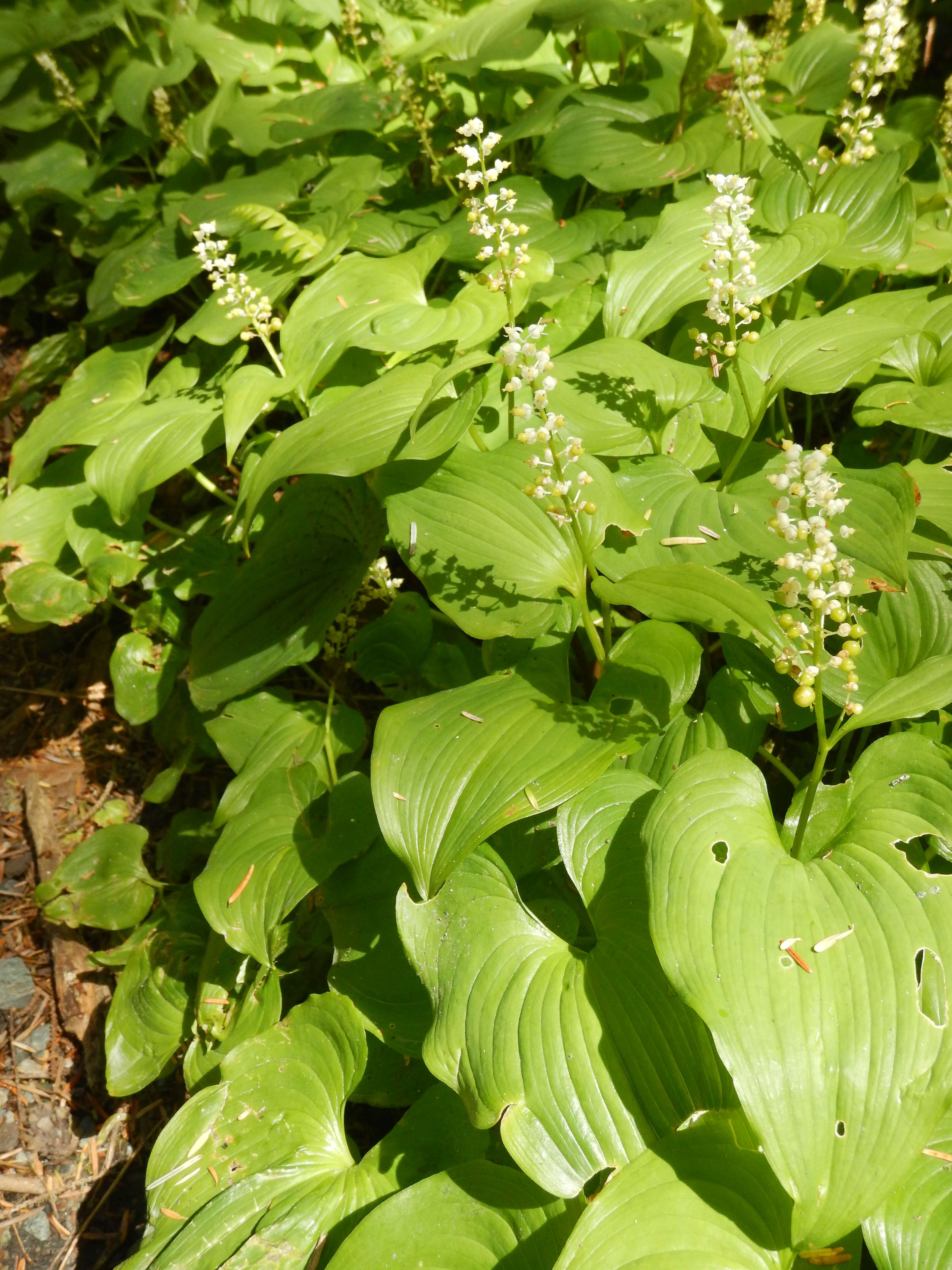
  • false lily of the valley, Maianthemum dilatatum, lily-of-the-valley, snakeberry, Maianthemum bifolium ssp. kamtschaticum, Maianthemum bifolium var. kamtschaticum, Maianthemum kamtschaticum, garden Victoria BC Pacific Northwest
    photo by SVSeekins

    False Lily of the Valley (Maianthemum dilatatum) can be observed in the native plant garden at the Royal BC Museum. It likes access to regular moisture & tolerates a good deal of shade. I often appreciate the lushness of  False Lily of the Valley in the understory of our local parks.

  • Aster, garden Victoria BC Pacific Northwest
    photo by SVSeekins

    Aster
    is one of those simple wildflowers of late summer. Unfortunately the deer in our neighborhood feast on any I plant.  Just a couple blocks away is a lovely patch. (What’s their secret???) Another native plant gardener, Louise Goulet, told me she enjoyed the common native  Douglas Aster (Symphyotrichum subspicatum) in her irrigated garden but said she’d finally removed all of it because it was taking over the world.

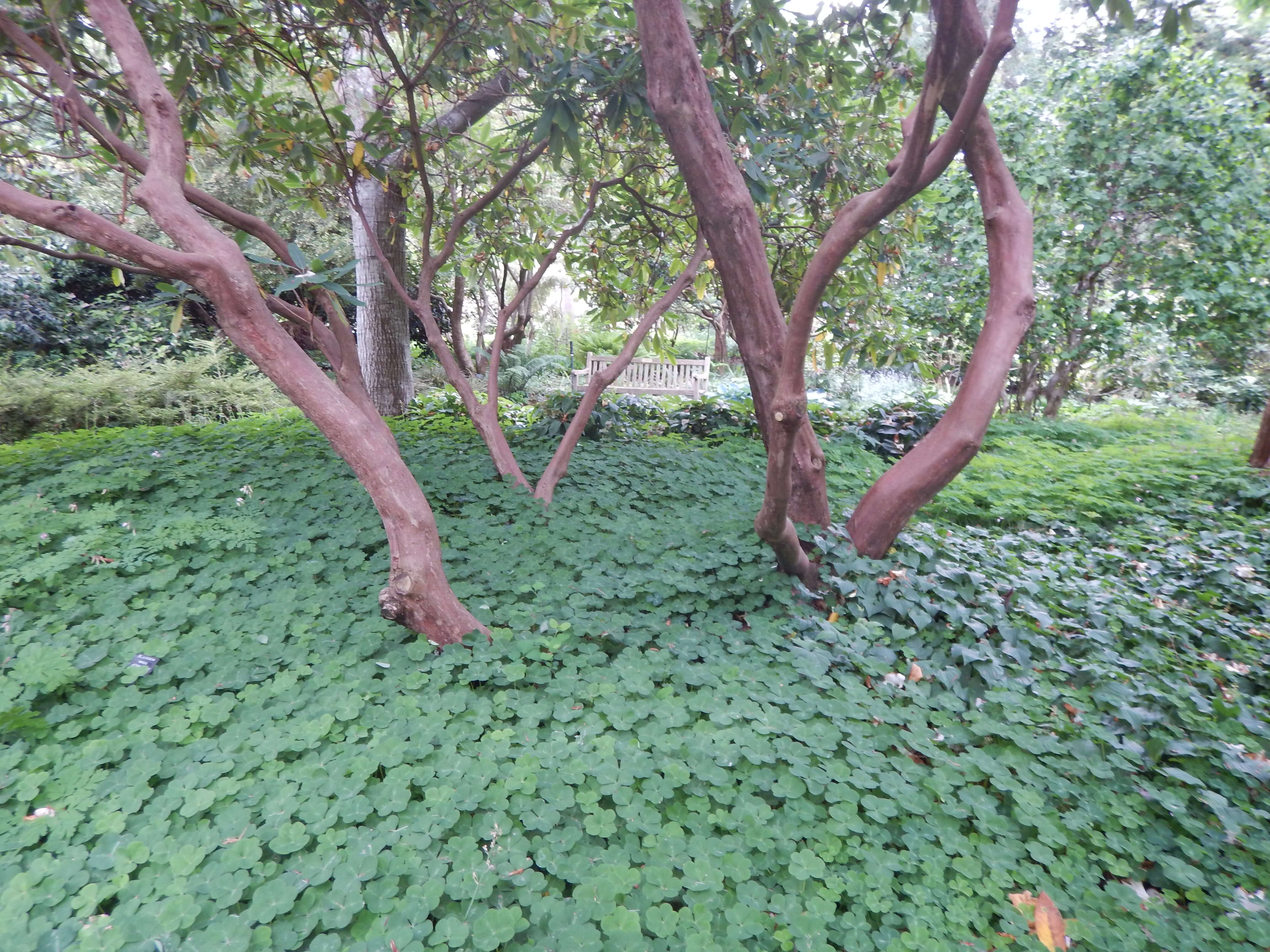
  • redwood sorrel, oxalis oregana, garden Victoria BC Pacific Northwest
    photo by SVSeekins

    Redwood Sorrel (Oxalis oregana) grows happily in the irrigated understory of Finnerty Gardens at UVic.  I’m unduly biased against oxalis because of its cousin, Oxalis corniculata. Corniculata is a weed with maroon leaves & it spreads like the dickens.  It’s next to impossible to get out of a garden completely.

  • wild ginger, asarum caudatum, British Columbia Wild Ginger, Western Wild Ginger, Long-Tailed Wild Ginger, garden Victoria BC Pacific Northwest
    photo by SVSeekins

    Wild Ginger (Asarum caudatum) grows in a shady patch at the Horticultural Centre of the Pacific.  I’ve tried to grow it, but sadly it requires more moisture than I’m willing to provide.

  • sword fern at Cowichan Lake, Polystichum munitum, garden Victoria BC Pacific Northwest
    photo by SVSeekins

    Sword Fern (Polystichum munitum)
    grows in great swaths around building foundations at UVic.  This is one of the few ferns that survive in dry sites.  The specimens in our garden do just fine but don’t flourish enough for me to think of them as a groundcover.  In moist lowland like UVic, or around Cowichan Lake – – they go crazy.  Now that’s a groundcover!

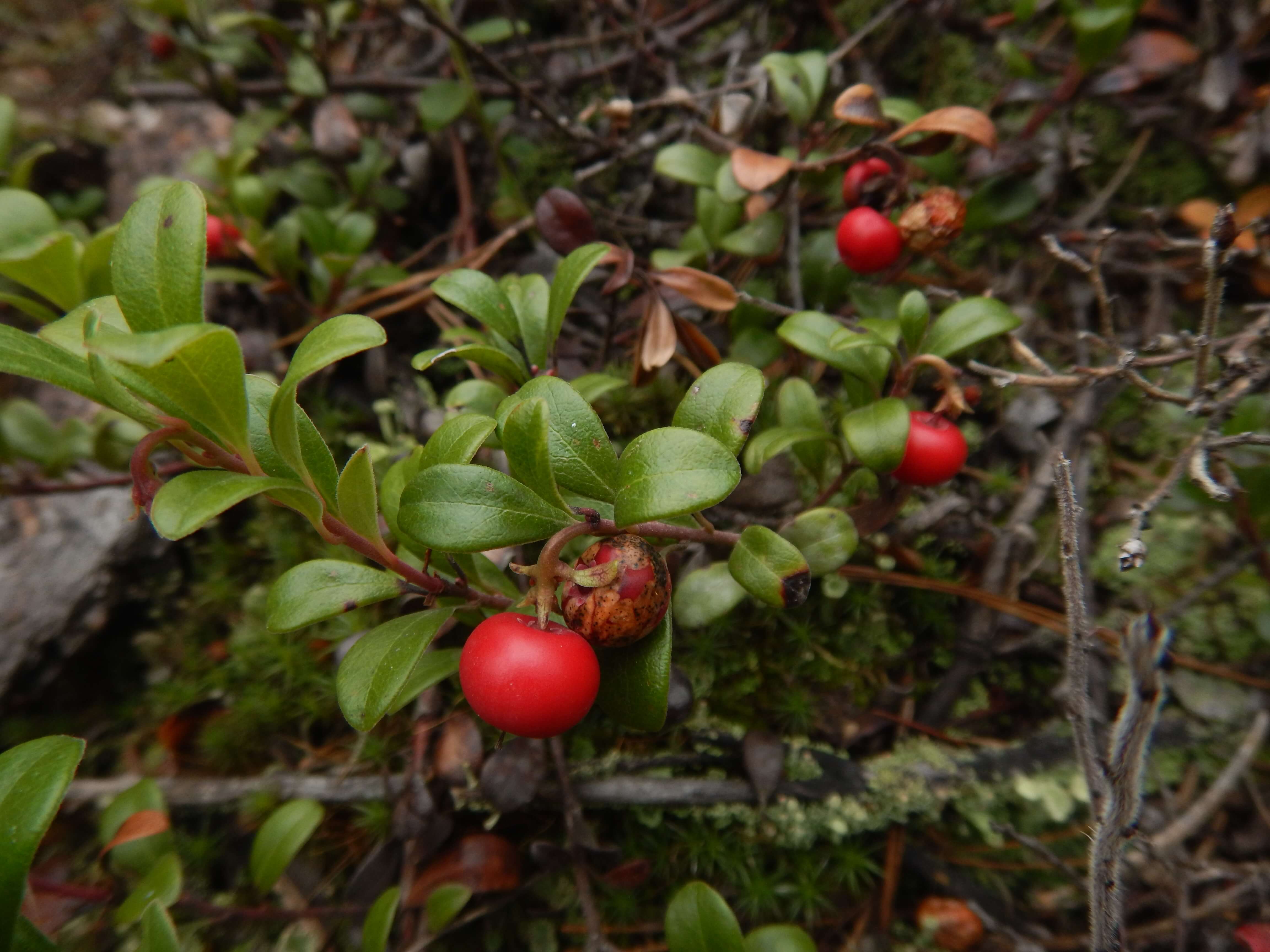
  • Kinnikinnick, Arctostaphylos uva-ursi, common bearberry, garden Victoria BC Pacific Northwest
    photo by SVSeekins

    Kinnikinnick (Arctostaphylos uva-ursi)
    is one of those plants that is so great it’s become commonplace in commercial landscaping. It’s evergreen…
    flowers in spring…
    berries in fall…
    even survives the fumes around gas stations! I can’t be snobby about it – – it checks all the boxes.  (Ditto for Dull Oregon Grape & Salal).

I have my eye on some other native plants that have great potential for home gardeners.  They’re possibly already used, but I’ve only noticed them in the wild:

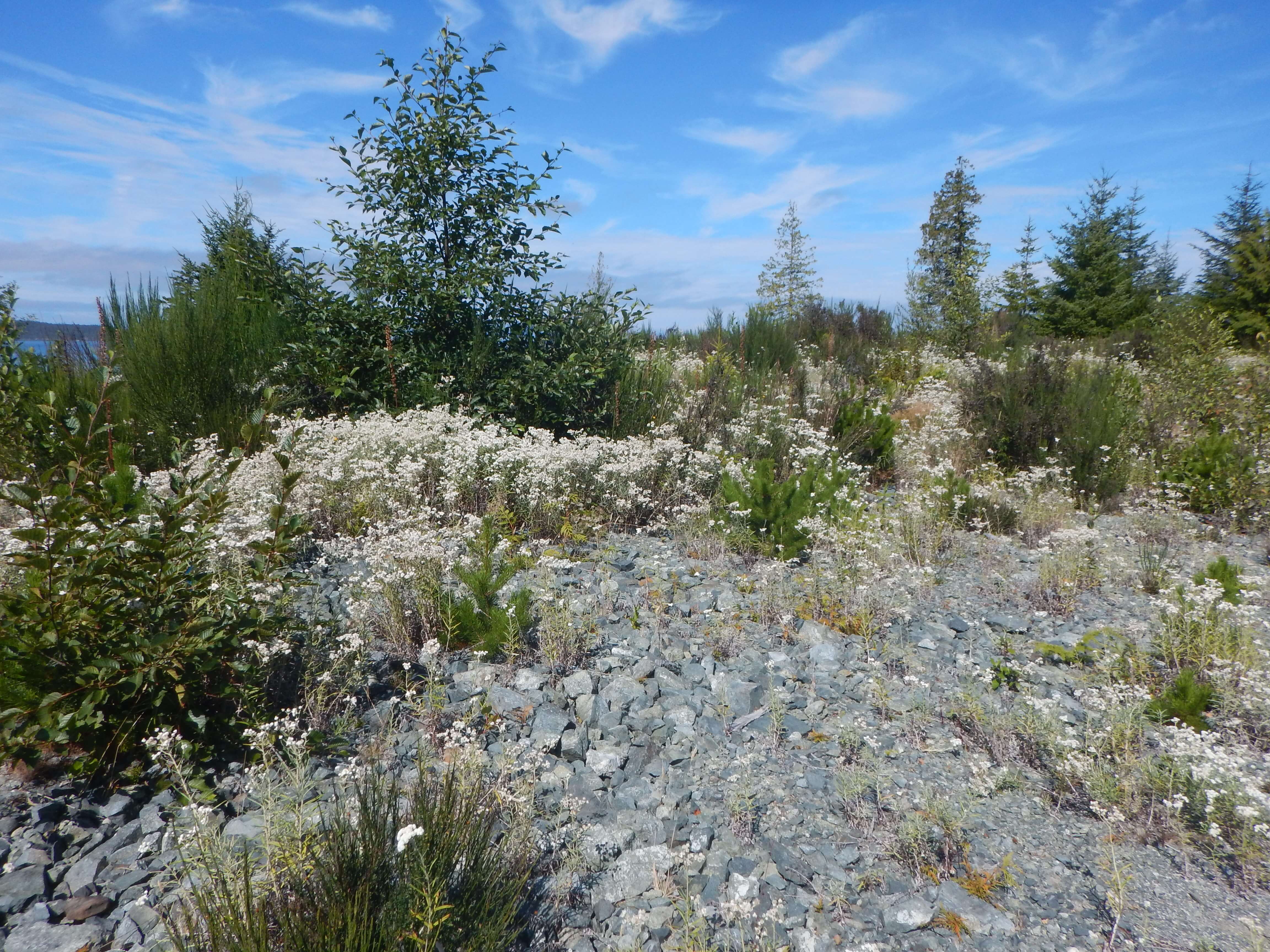
  • pearly everlasting, Anaphalis margaritacea, garden Victoria BC Pacific Northwest
    photo by SVSeekins

    Pearly Everlasting (Anaphalis margaritacea)
    has been on my wish list for several years.  It grows in tough places all over Canada.  Check out how well it’s repopulating this proposed building site in Telegraph Cove.  I reckon it’ll completely blanket the gravel before building permits are issued…

  • vanilla leaf, deer foot, Sweet After Death, Deervetch, achlys triphylla, garden Victoria BC Pacific Northwest
    photo by SVSeekins

    Vanilla Leaf (Achlys triphylla) carpets the forest edge around  Ralph River campsites in Strathcona Park.  Its unusual leaf shape would add texture & interest to a moist woodland garden.

  • twinflower, garden Victoria BC Pacific Northwest
    photo by SVSeekins

    Twinflower (Linnaea borealis)
    is a mat-forming, evergreen perennial that dangles 2 delicate bell flowers from lamp post stems.  It’s slow growing & a favored snack for Roosevelt Elk (so I reckon deer graze it too.)  But if you’ve got a protected mossy understory or forest edge… what a treasure.

There are so many treasures that grow naturally here.  The more we set up our yards to mimic the natural landscapes, the more ‘low maintenance’ our gardens become.  Even the City of Victoria is returning to this style.  The parks department is favoring native plants over bedding in public gardens.  I’m really looking forward to seeing what the horticulturalists will do!

-30-