Category Archives: attracting birds

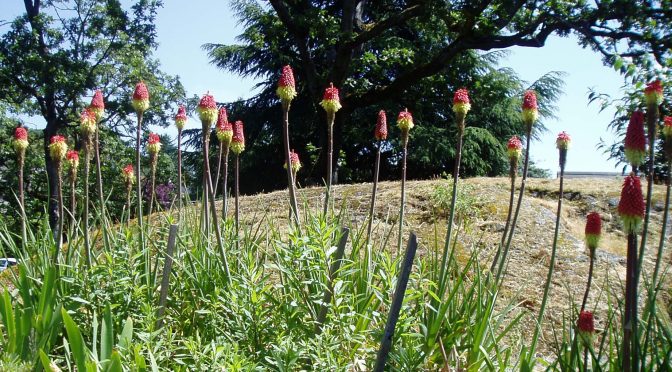
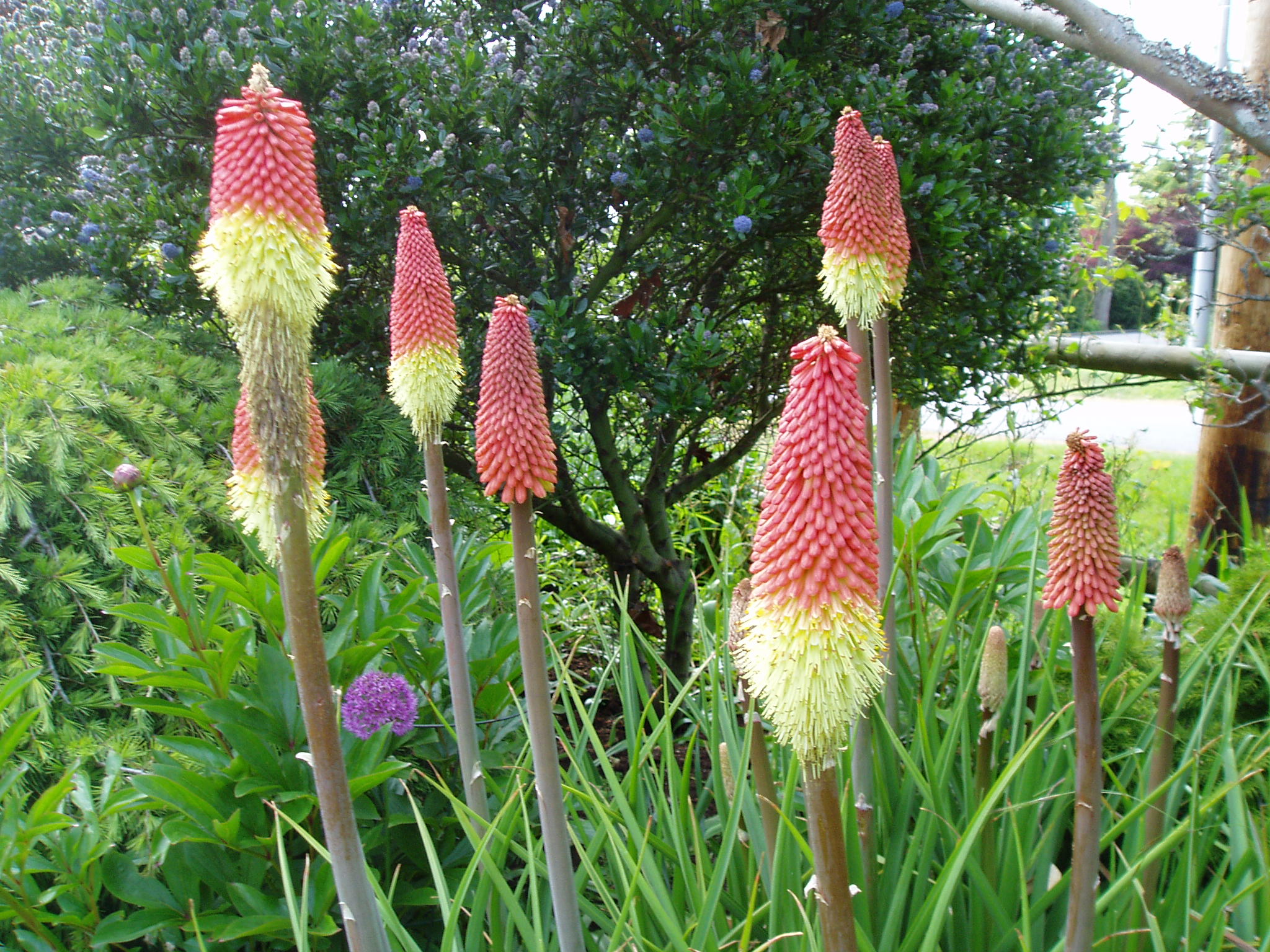
Red Hot Pokers – Kniphofia

red hot pokers, kniphofia garden Victoria, Vancouver Island, BC, Pacific Northwest
photo by SVSeekins

Red Hot Pokers are goofy plants.

Folks either love ’em or hate ‘en.

Me?
I love ’em.

Here’s why:

  •  The ‘red hot’ blooms remind me of Halloween candy corn from when I was a kid.
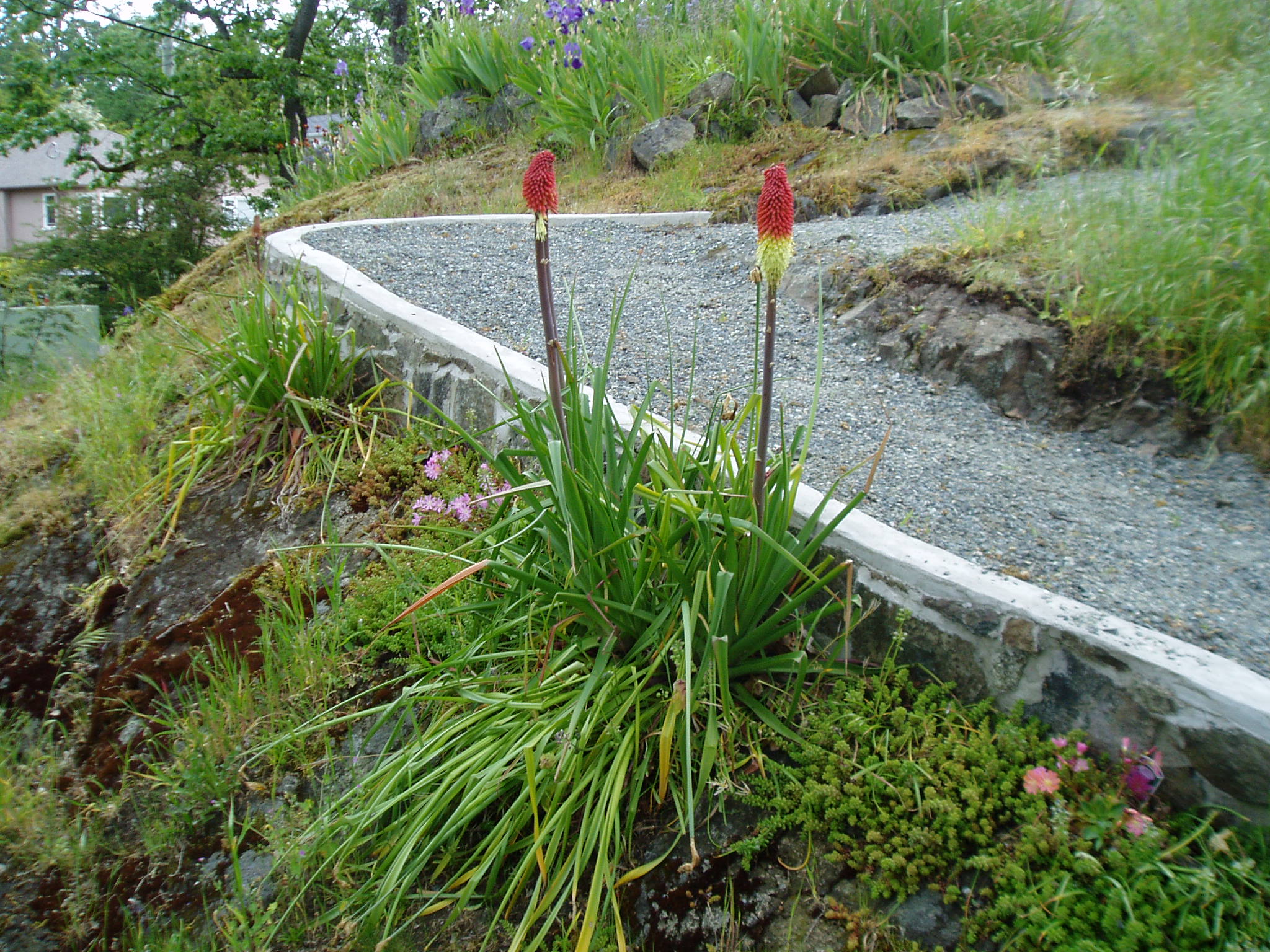
    gravel screenings on our garden path, garden Victoria, Vancouver Island, BC, Pacific Northwest
    photo by SVSeekins
  • Kniphofia grow happily on our rocky outcrop in very little soil…
    with very little moisture…
    So they’re super drought tolerant AND low maintenance, too.  Win, win!
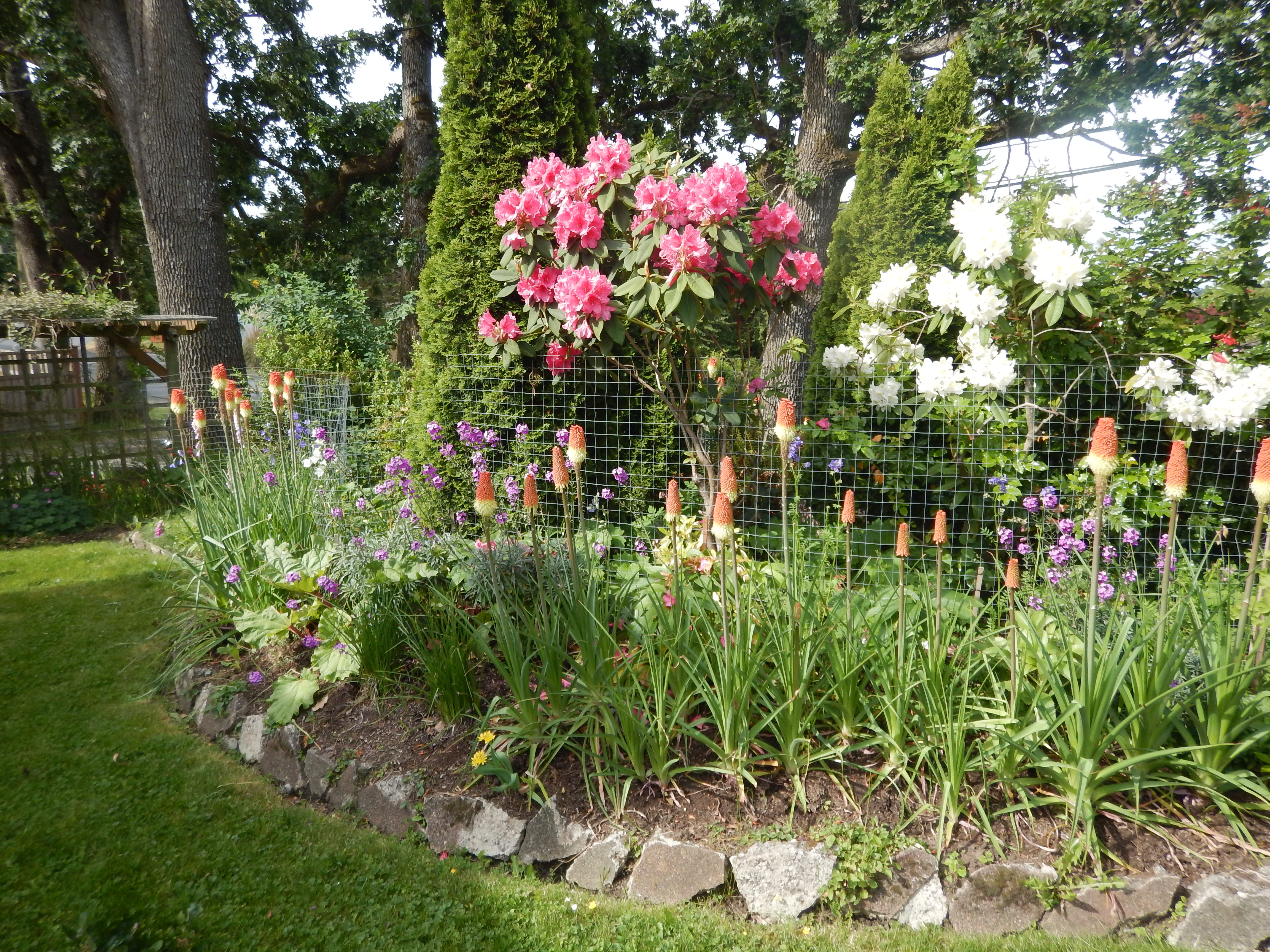
  • They’ve transplanted easily into partial-shade borders.  I like plants that are easy to grow.

    red hot pokers, kniphofia garden Victoria, Vancouver Island, BC, Pacific Northwest
    photo by SVSeekins
  • Hummingbirds & bees LOVE LOVE LOVE the blooms.
  • The deer – – not so much.  Our local deer just ignore the Kniphofia     🙂
  • Red Hot Pokers, aka Torch Lilies, are pretty much evergreen in Victoria – –  unless it snows.
    In which case they immediately turn to slime…
    Then come up fresh & green again when the weather calms down.  That works just fine for me.
    red hot pokers, kniphofia garden Victoria, Vancouver Island, BC, Pacific Northwest
    photo by SVSeekins

The Red Hots I’m most familiar with  – – those with the graduated red + orange + yellow on one poker – –   bloom in our garden in May.

Last July I saw some blooming in  the Government House Gardens.  I immediately searched out a few summer bloomers for our place.

red hot pokers, kniphofia garden Victoria, Vancouver Island, BC, Pacific Northwest
photo by SVSeekins

These varieties, likely Knifophia uvaria ‘echo mango’ and ‘echo rojo’ are  dwarf and have much narrower leaves. They’re designed to re-bloom throughout the growing season.

They also stayed green through the winter,  although they looked a little more dried & messy compared to the May bloomers.  Happily they bounced back in the spring sunshine.  Now they’re blooming !

The deer have nibbled a couple tender flower spikes, but I’m hoping that’s just curiosity, and they’ll leave the dwarf plants alone from now on.  Finger’s crossed.
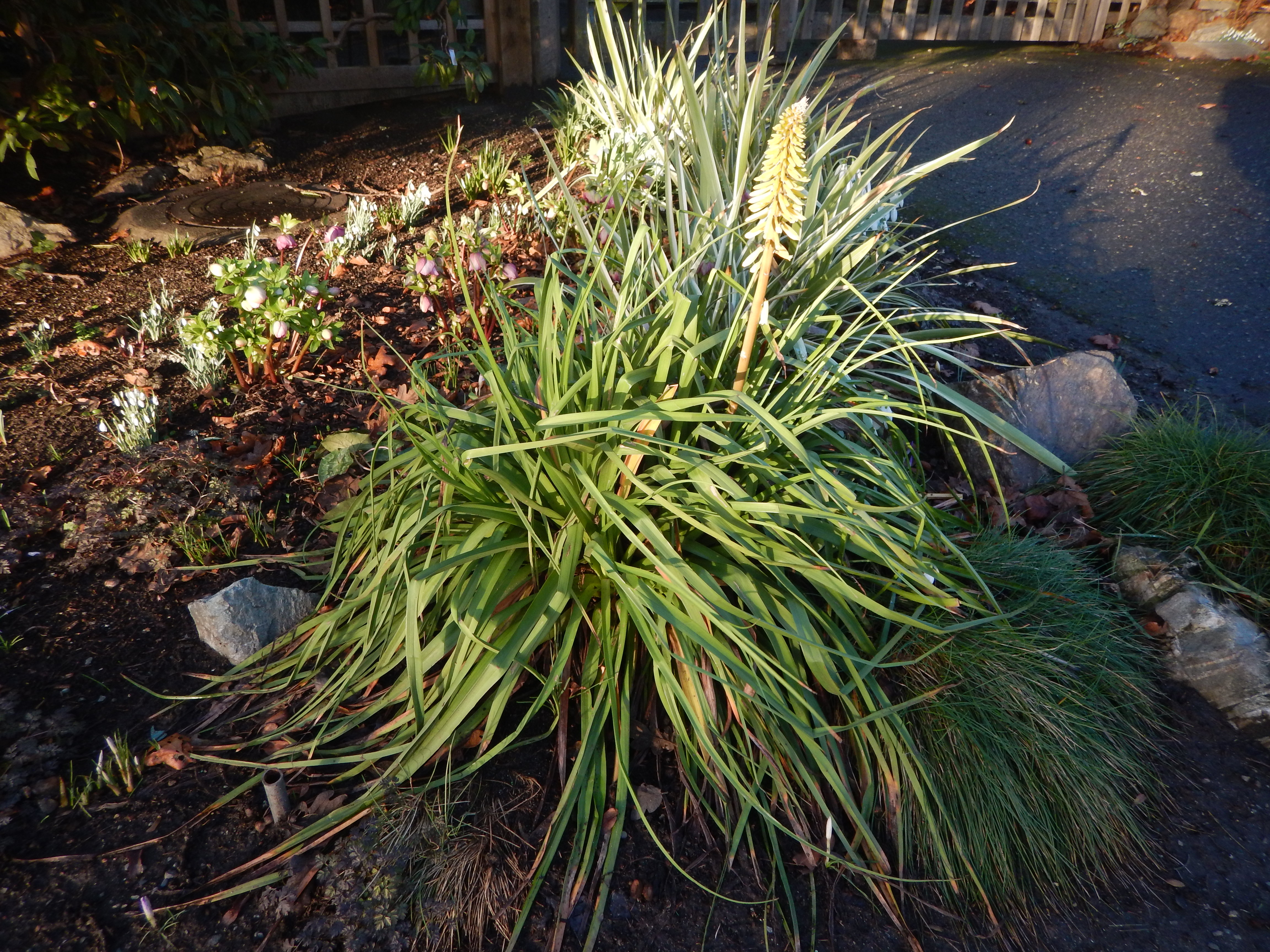
red hot pokers, kniphofia garden Victoria, Vancouver Island, BC, Pacific Northwest
photo by SVSeekins

To my amazement Abkhazi Garden had some Red Hot Pokers blooming near their front gate in December!
Who knew?

Isn’t that a Must Have?

Anyone know where I can source some of those??
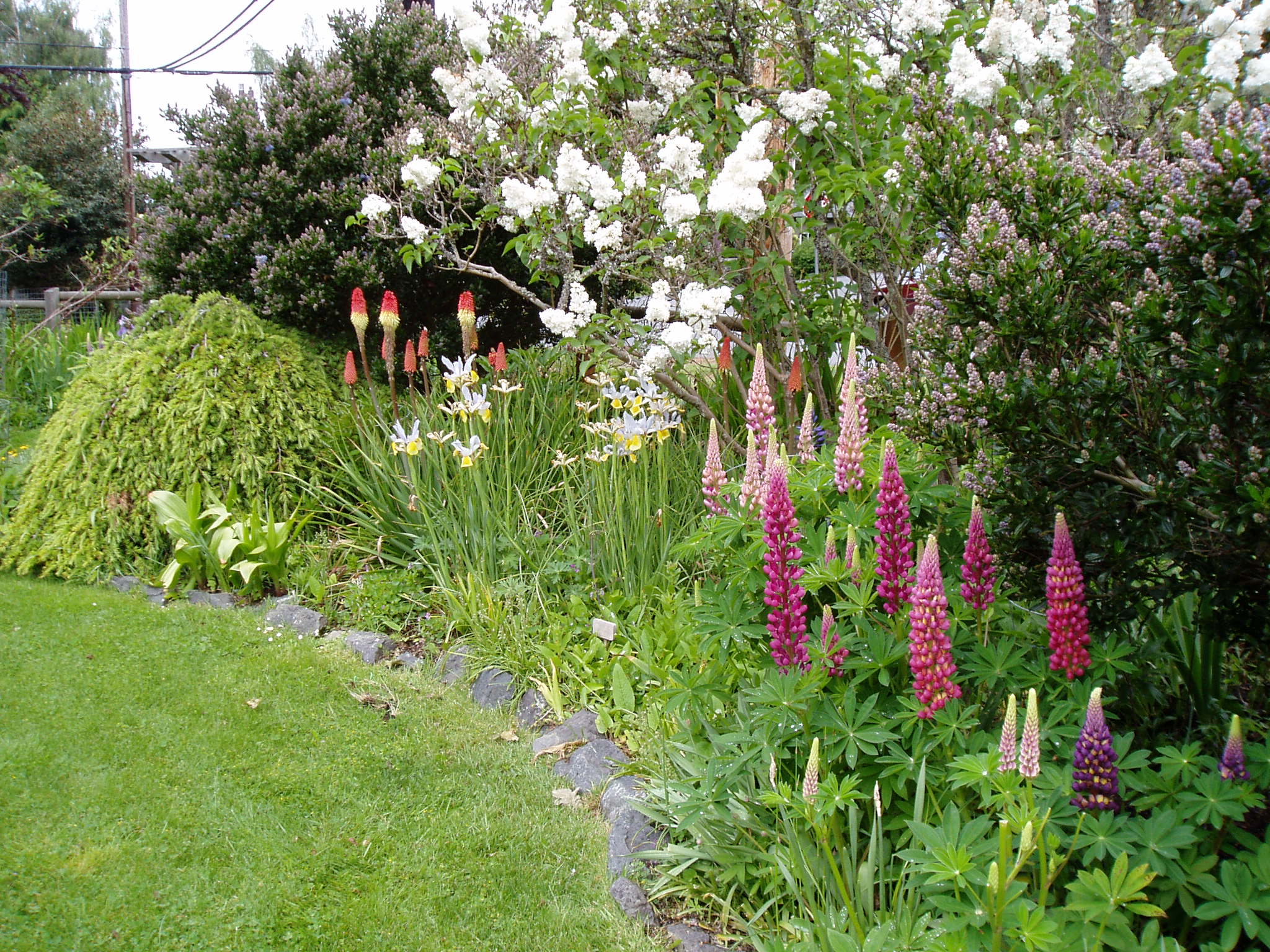
lilac, red hot pokers, irs, lupin Lupinus, with the ceanothus just about to come into bloom too, garden Victoria, Vancouver Island, BC, Pacific Northwest
photo by SVSeekins

-30-

Surviving Drought With Rock Rose

In the heat of summer I’m more interested in camping than staying home to water the garden.

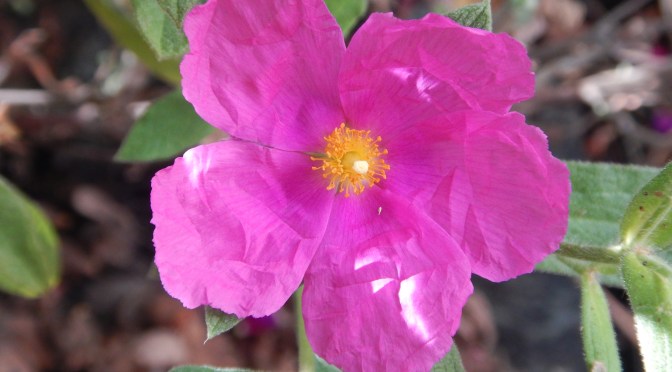
cistus, sunset rock rose, garden Victoria, Vancouver Island, BC, Pacific Northwest
photo by SVSeekins

Happily the spring extravaganza of bloom was mostly bulb, and being spring ephemerals, they’re content to dry up & hibernate until the rains come again. But I’m not content with a brown garden in July.

Rock Rose to the rescue.

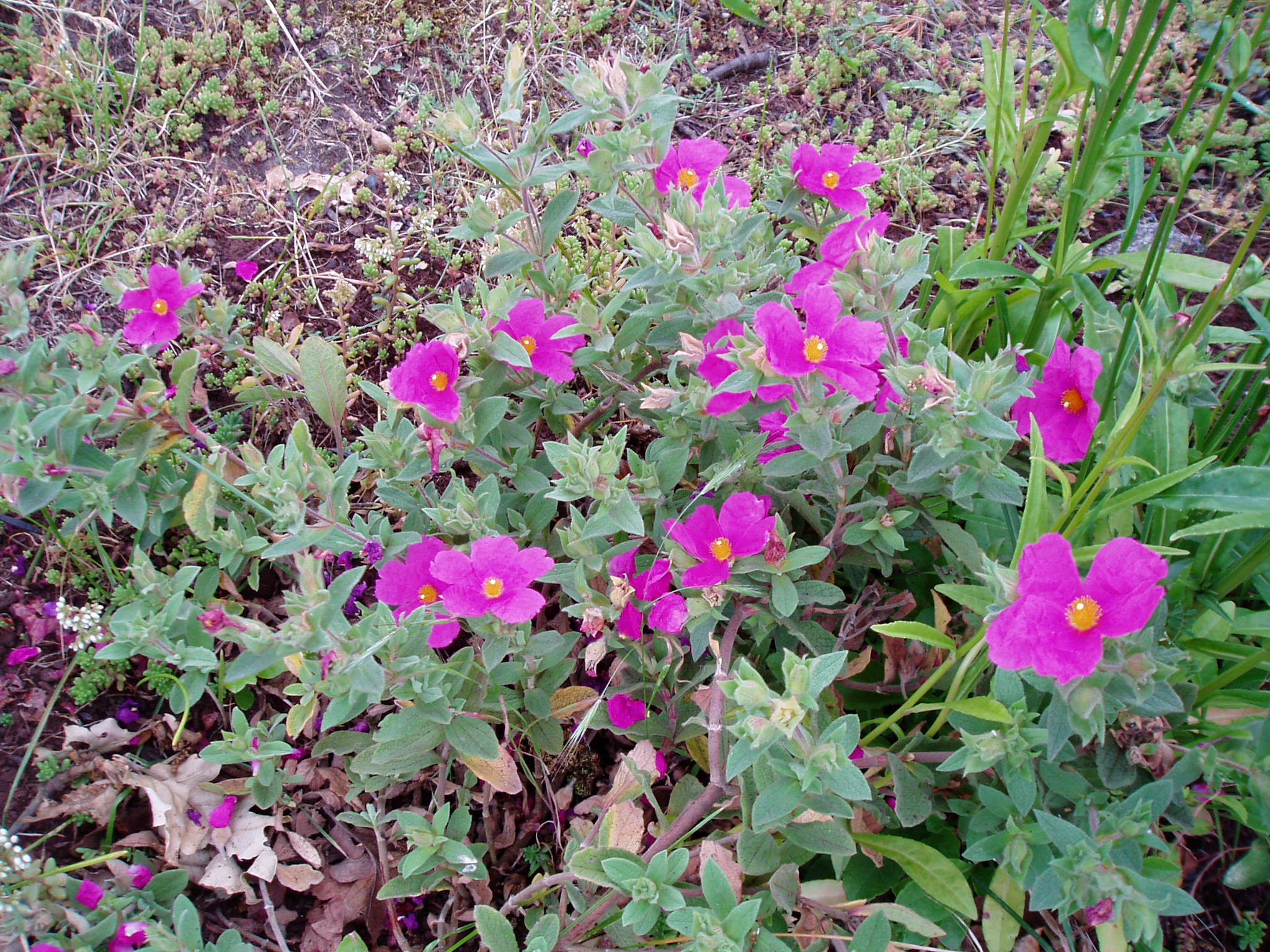
cistus, sunset rock rose, garden Victoria, Vancouver Island, BC, Pacific Northwest
photo by SVSeekins
  1. Once established, Cistus ‘sunset’ has proven to be one tough-as-nails, evergreen shrub.
  2. it’s fuzzy leaves make the most of any dew or moisture they find.
  3. Our local deer find it unpalatable.
  4. The butterflies & other pollinators gravitate to the energizing magenta flowers.
  5. The honey fragrance of the blooms makes it a good choice to plant near a high-traffic area.

Those 5 reasons easily convinced me that Cistus is a keeper for our landscape.

-30-

Hardhack

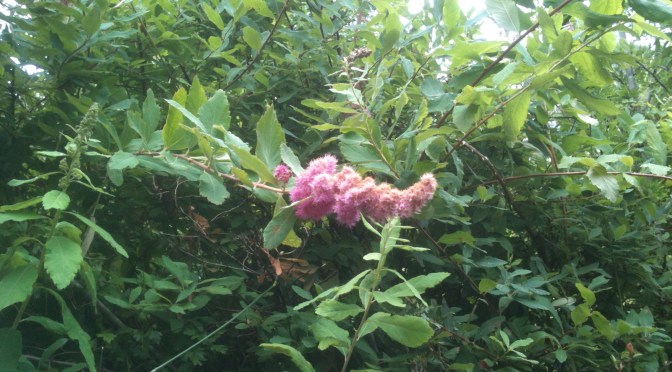
It first caught my eye on a walk in the sunny, rolling hills of Panama Flats.  What a pretty shrub!  AND It’s happily growing in the wild with no gardener to fuss over it!!!

hardhack, steeplebush garden Victoria BC Pacific Northwest
hardhack
photo by SVSeekins

My mind flashes to fantasies of a low maintenance garden. Isn’t this shrub  a good candidate for membership?

My go-to native plant guide, Plants of the Pacific Northwest, helps identify it:
Common names: hardhack & steeplebush.
BUT it’s the Latin name that rings bells with me:   Spirea Douglasii
Spirea !!
Cousin to the decorative spirea that I see in so many urban landscapes.
Very encouraging.

non-native spirea garden Victoria BC Pacific Northwest
non-native spirea
photo by SVSeekins

The Douglas Spirea ‘s deciduous leafs are grayish with woolly texture which leads me to guess that they’re deer tolerant. Word has it that black tail deer graze it.  Then another source says it is deer resistant  Who knows?

It tops out at 6ft./ 2m, which is handy for hedging.

The typical home is in moist areas.  That explains why it’s found at Panama Flats as well as Swan Lake Nature Sanctuary.  It’s suckering habit produces dense thickets along stream banks.

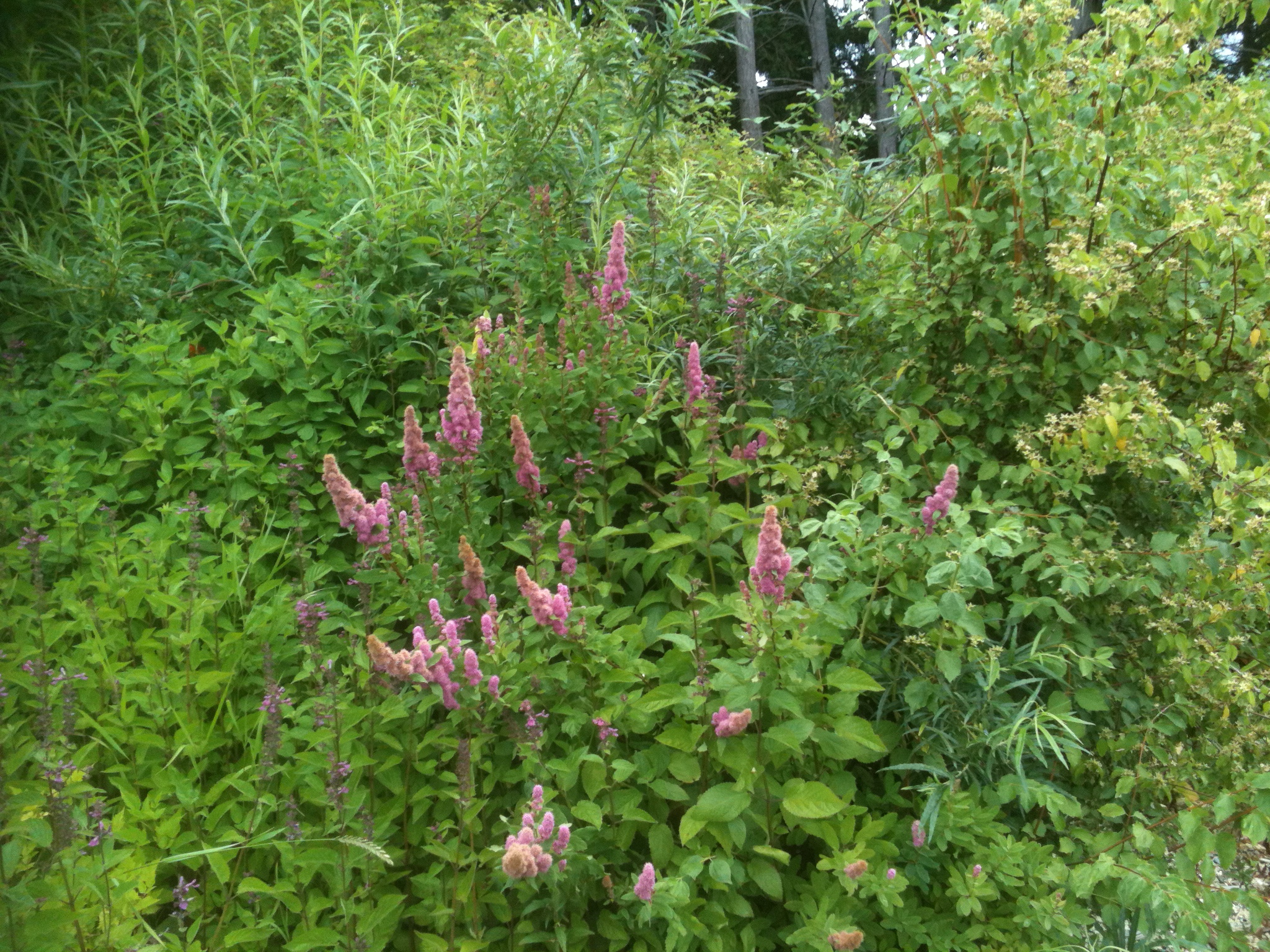
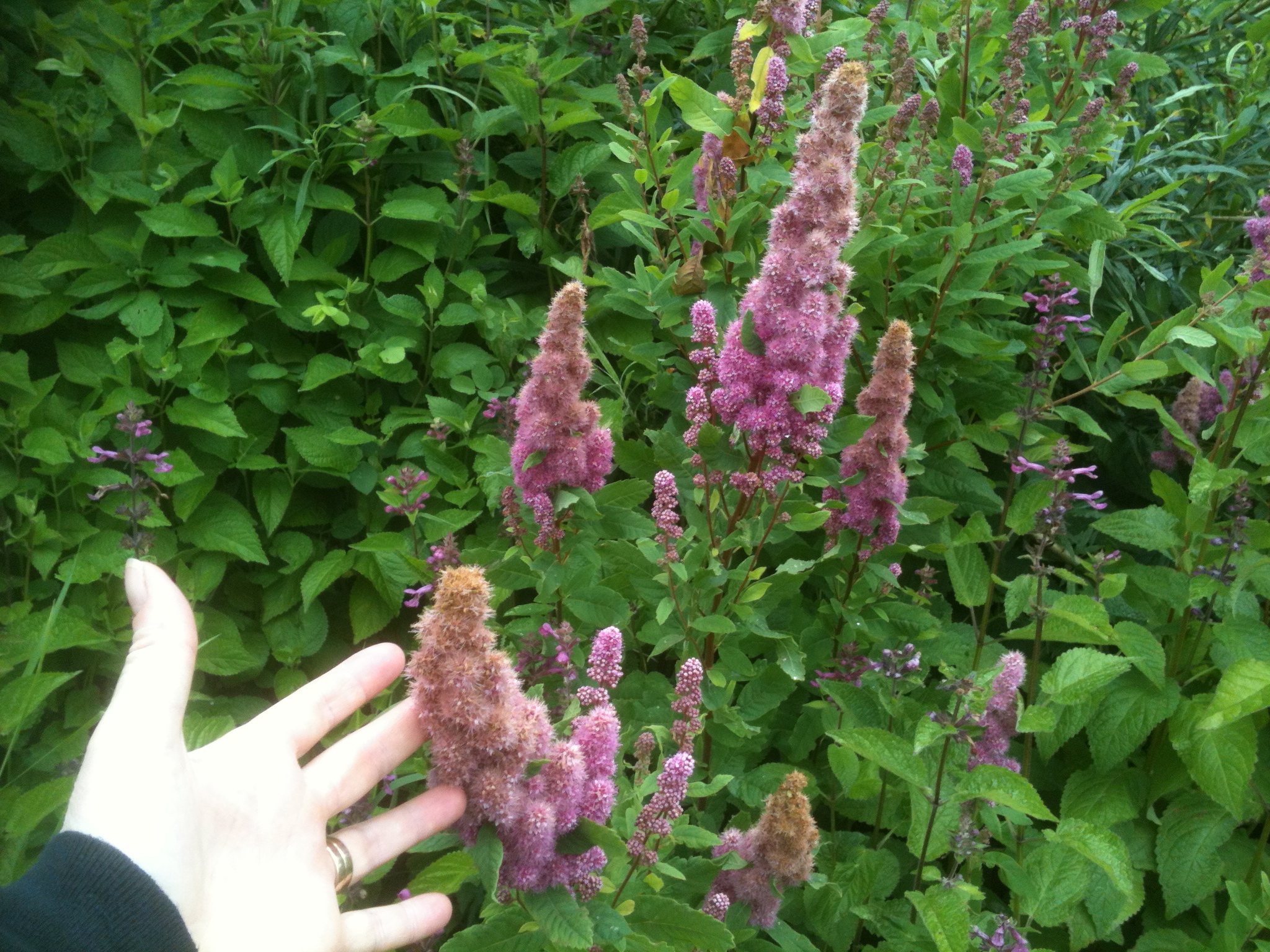
The pink steeples of Hardhack first appear in June.  The flowers last through the heat of summer eventually turning to brown seed clusters that hold on long after the leaves fall.  That’s a luxuriously long season for feeding bees, then birds!

hardhack, steeplebush garden Victoria BC Pacific Northwest
hardhack / steeplebush
photo by SVSeekins

This plant is just as pretty as the classic lilac (syringa)  & butterfly bush (buddleja).  Both of those shrubs can be dominating in a garden landscape, seeding or suckering willy-nilly.  I reckon hardhack is a choice replacement option, especially because it is much more of a food source to local birds,  pollinators, & wild life.   It can be dominating like the other two, but only in very moist situations.

I’d like to grow hardhack in my yard, but the moisture requirements are too high.  We do have a ditch that would supply the moisture needed…  maybe C would give up a patch of grass along there ??

-30-