Category Archives: urban deer

Top 5 Deer Resistant, Late Spring Bulbs

The deer in our neighborhood of Victoria ( Mt. Tolmie’s black-tailed deer) have shown no interest in these spring blooming bulbs.

An added bonus is that picks # 1, 3 & 4 (and the bonus pick) have proven themselves drought tolerant through our long dry summers (even 100 days without rain).

1- Dutch Iris (Iris hollandica) starts to emerge from dormancy in early autumn.  It’s nice to see their green sprouts through winter.  The blooms fulfill the promise in May.

 Dutch Iris, Iris hollandica, garden Victoria, Vancouver Island, BC, Pacific Northwest
photo by SVSeekins
  • 22 inches high
  • naturalizing
  • Full Sun – Part Shade
  • zone 5

special notes
-Like Reticulated Iris, Dutch Iris is a bulb.  Other iris have rhizomes or regular-looking root systems.  So far, all that I’ve grown have been deer tolerant.

2- Summer Snowflake (Leucojum aestivum) joins the spring celebrations in April & May.

Leucojum, summer snowflake, garden Victoria, Vancouver Island, BC, Pacific Northwest
photo by SVSeekins
  • 14 inches
  • naturalizing
  • Full Sun – Part Shade
  • zone: 5

special notes
-Leucojum is fairly new to me, but it’s delightful to find another spring flower the deer leave alone.  It reminds me of a snowdrop on steroids & blooms much later in the season.

3- Great Camas (Camassia leichtlinii ) is a bulb I anticipate all spring.  It finally blooms in late May early June.

Great Camas, Camassia leichtlinii along Uplands Park path, garden Victoria BC Pacific Northwest
photo by SVSeekins
  • 36 inches high
  • naturalizing
  • Full Sun – Part Shade
  • zone  4

special notes
– Great Camas grow happily in full sun as well as along edges, so it suits my garden. Camassia quamash, the Common Camas, must have full sun.  It doesn’t survive in my beds & borders.
– see also

4- Yellow Onion (Allium Moly Luteum) bloom in June after most of the spring show is waning.

Allium Moly Luteum, golden garlic, yellow onion, garden Victoria, Vancouver Island, BC, Pacific Northwest
photo by SVSeekins
  • 10 inches high
  • naturalizing
  • Full sun – Part Shade
  • zone 3

special note
– Allium smell like an onion (so the deer leave them alone) but this is a decorative flower rather than one intended for the grill.
–  The most spectacular Allium are the giant purple balls, but they slowly disappeared from my beds. Moly Luteum  is steadfast, handles shade and drought, and grows easily in our garden — therefore it’s my fave.

5- Calla or Arum Lily (Zantedeschia aethiopica) appears around town as early as May, but the variety in our garden blooms in June.

Zantedeschia aethioica, calla or arum lily , garden Victoria, Vancouver Island, BC, Pacific Northwest
photo by SVSeekins
  • 36 inches
  • naturalizing
  • Full Sun – Part Shade
  • zone: 8

special notes
–  This particular white Zantedeschia (not a true lily) is hardy to our area, but any of the colored varieties have never survived more than one winter outside in our garden.  Dad & Jane, in zone 3,  winter theirs inside the heated garage.
– Visually, I look at the underground part of the Zantedeschia, and it seems more rhizome-like than bulb-ish, BUT I’ve seen it classified as a bulb on some websites…  and it’s often sold at the same time as the spring-blooming bulbs… AND I like it… so it’s staying on this list.  🙂

Special Pick

 Bluebells (Hyacinthoides hispanica & Hyacinthoides non-scripta) carpet gardens & parkland in May.

Hyacinthoides hispanica – spanish blue bells garden Victoria, Vancouver Island, BC, Pacific Northwest
photo by SVSeekins
Hyacinthoides hispanica – spanish blue bells garden Victoria, Vancouver Island, BC, Pacific Northwest
photo by SVSeekins
Hyacinthoides hispanica – spanish blue bells garden Victoria, Vancouver Island, BC, Pacific Northwest
photo by SVSeekins
  • 14 inches
  • naturalizing
  • Full Sun – Part Shade
  • zone: 4

special notes
-There is SO MUCH controversy about bluebells locally & in Europe.  They’re incredibly determined growers. Once in a garden it’s nearly impossible to be without them. (I once discarded a bunch in the compost & covered them with on 3 feet of garden waste – – they bloomed the next spring!)  I’ve heard claims that bluebells choke out our native Camas. I’ve also heard  warnings that the bluebell bulb contains toxins that kill off the competition — but I haven’t been able to verify that.  (Help me if you can.)
Either way, because Camas is a food source & bluebell isn’t I prefer Camas.
I have so many bluebells in my yard that my procedure is to enjoy the blooms until they show sign of wilt, then quickly pull flowers & foliage – – harsh, but that hasn’t reduced their abundance in any of the beds.
– aka: Scilla campanulataScilla hispanica and Endymion hispanicus.

To be honest, I’m almost exhausted after the spring bloom wraps up.  There’s so much excitement over the past few months.  Now instead of tending garden, my mind turns toward camping.  Fortunately, aside from tidying up after the ephemeral bulbs have died back, there’s little else to do with them – – except remember where they’re sleeping.  I don’t want to disturb them when I get the urge to planting something more.

-30-

Satin Flower (Olsynium douglasii)

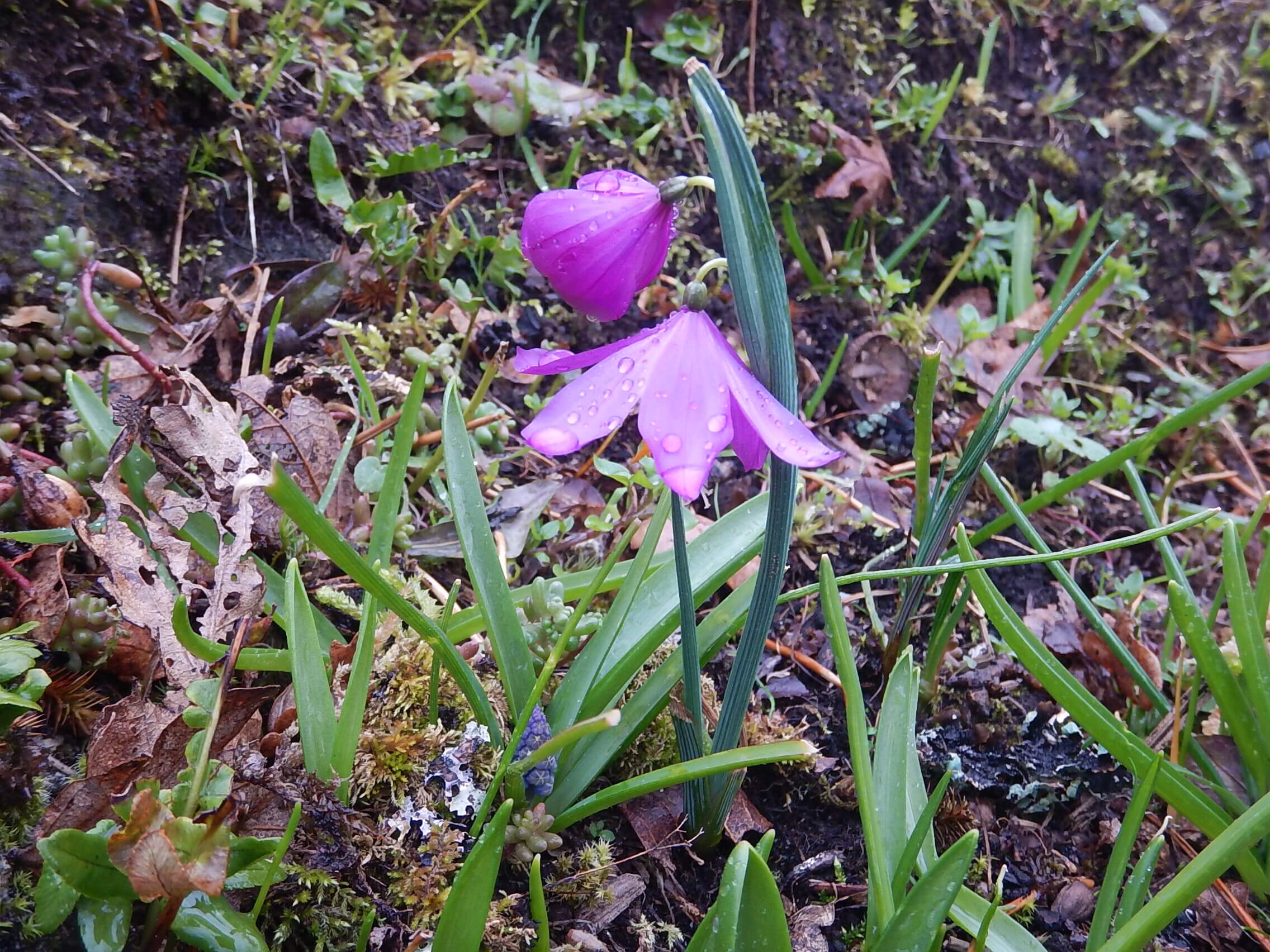
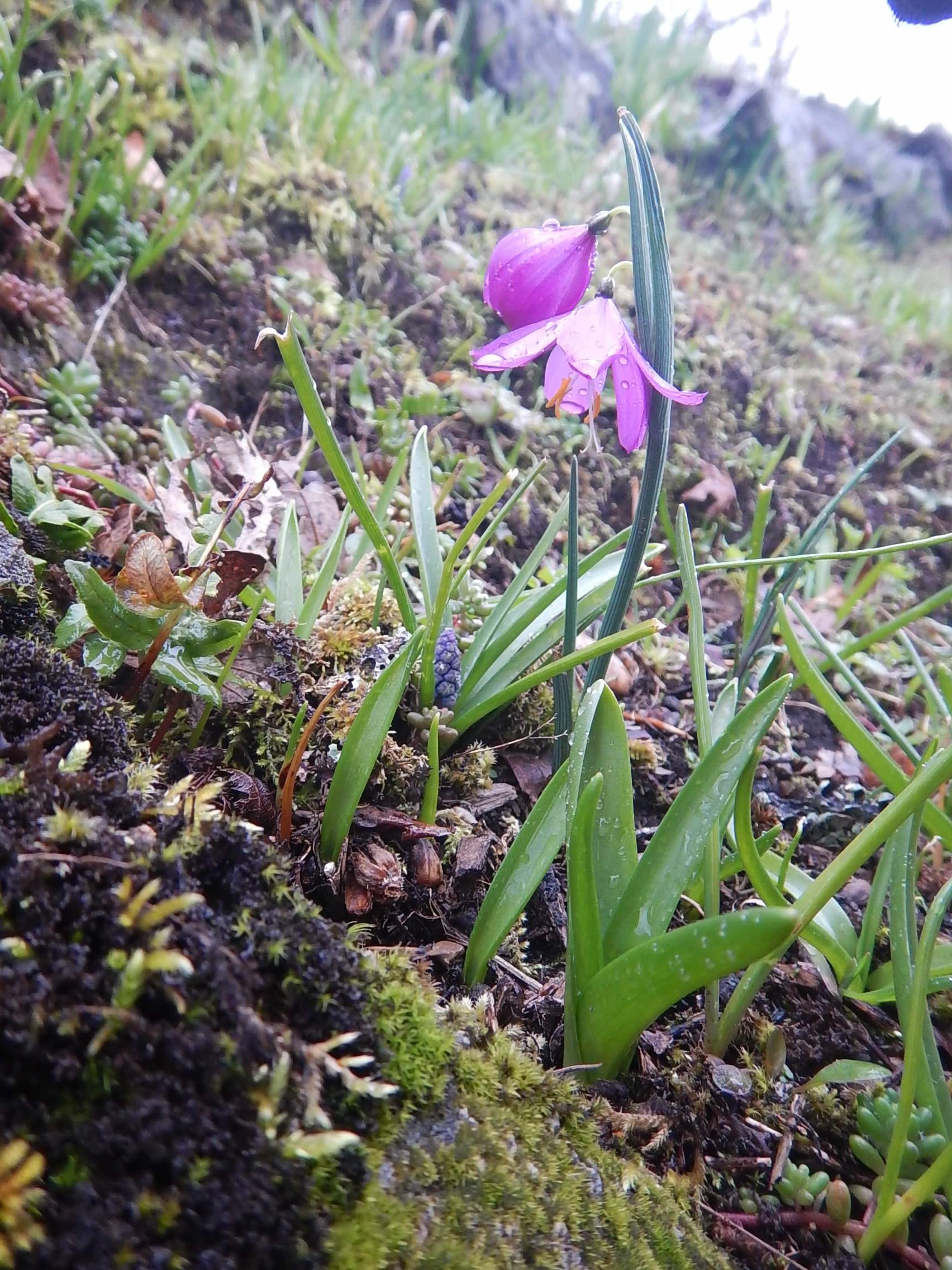
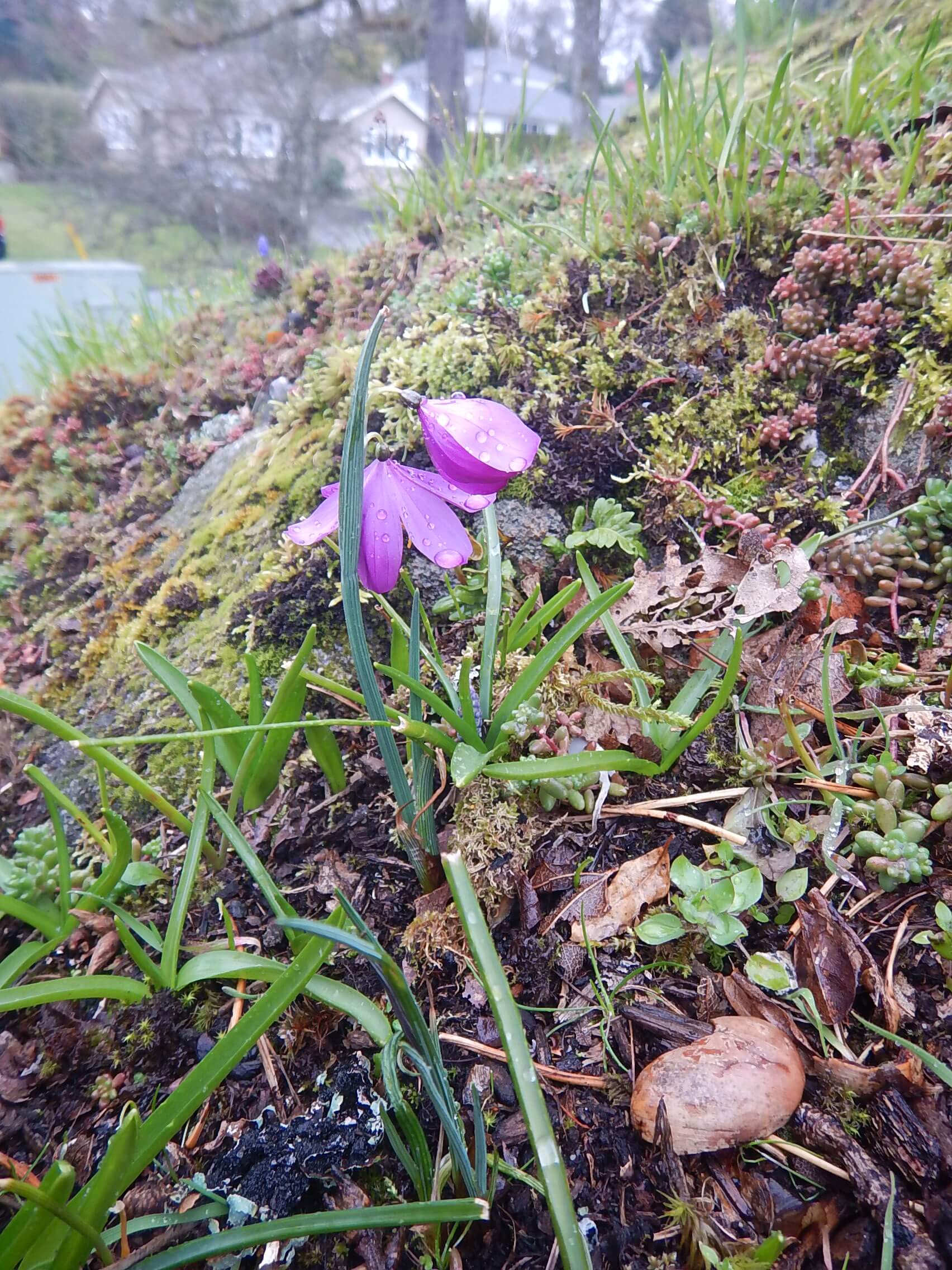
Woohoo!! The Satin Flower bloom opened the other day – – AND I’ve checked it 3 mornings in a row now – It’s Still There!!

Olsynium douglasii, Douglas' olsynium, Douglas' grasswidow, grasswidow, blue-eyed grass, purple-eyed-grass, satin flower, Sisyrinchium douglasii, garden Victoria, Vancouver Island, BC, Pacific Northwest
photo by SVSeekins

Ok, so that sounds just a little crazed,
but Satin Flower is one of the very earliest Pacific Northwest native wildflowers –
and it’s so pretty!

garden Victoria, Vancouver Island, BC, Pacific Northwest
photo by SVSeekins

It’s really well suited to our rocky outcrop that’s very moist in winter & very dry in summer.  So, this Olsynium douglasii (aka Douglas’ olsynium, Douglas’ grasswidow, grasswidow, blue-eyed grass, purple-eyed-grass, or satin flower) should be happy in our gary oak meadow.

But the deer are happy here, too.

Satin Flower, garden Victoria, Vancouver Island, BC, Pacific Northwest
photo by SVSeekins

When I first bought a couple of these perennial herbs from Sannich Native Plants (Thank you Kristen & James!), I planted them too near the deer’s regular route.  Fortunately, I saw the bloom the first morning.
It was gone the next.
I simply shifted the plants to a steeper section of our rocky outcropping, hoping the deer might leave them alone.  Fingers crossed.

The next year – Success.!

Now I’m hoping these sweet little flowers will happily do their thing & naturalize into more of a clump – maybe even spread around a bit!  🙂

-30-

Indian Plum – A Winter Joy

It’s not really a pretty shrub, but still, I’d like a thicket of Indian Plum in our border.

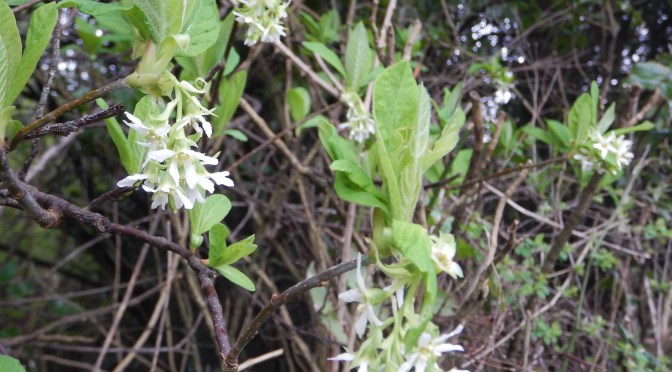
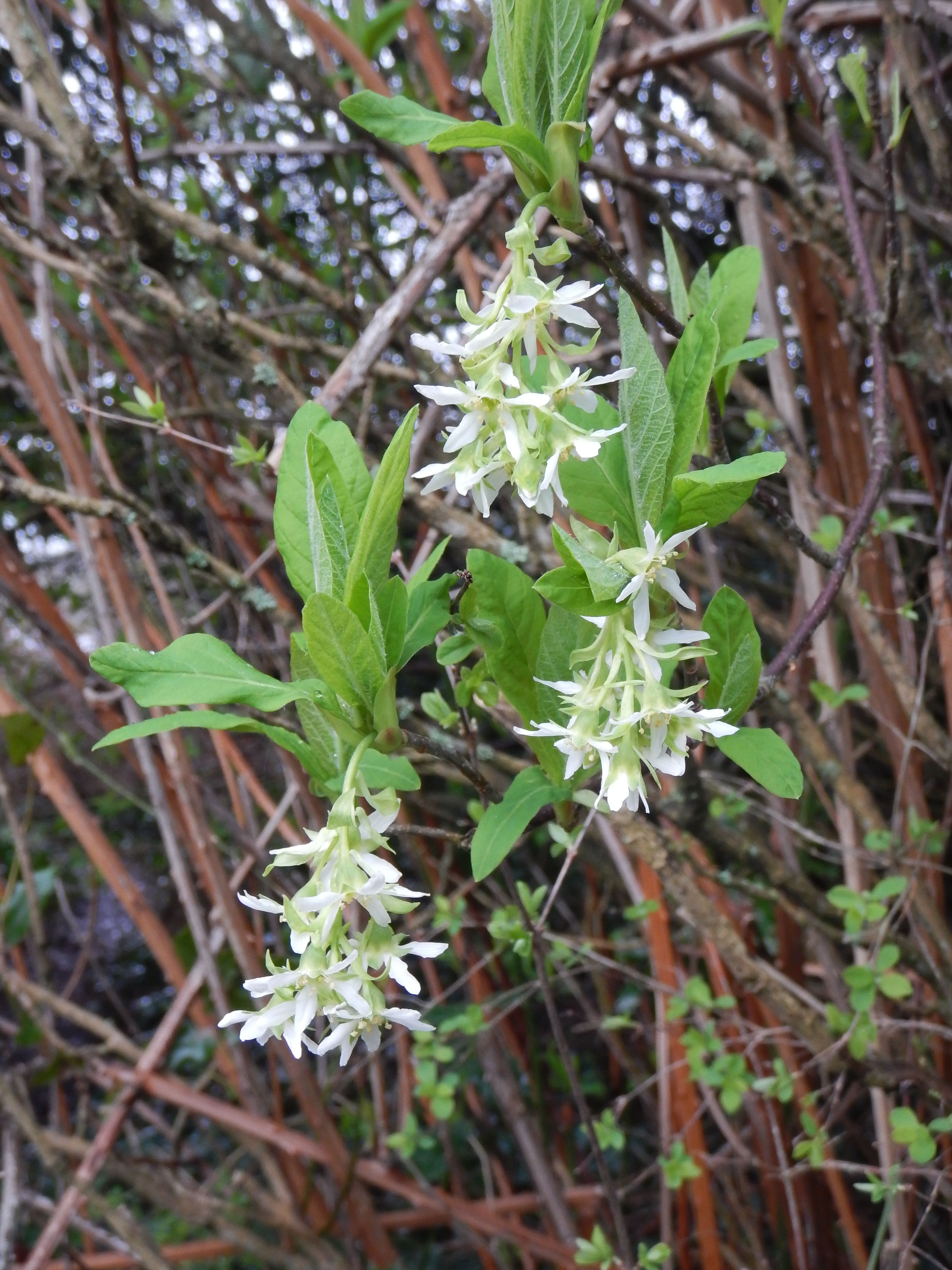
Oemleria cerasiformis, Indian Plum, June plum, Osoberry, Oregon Plum, Indian Peach, garden Victoria, Vancouver Island, BC, Pacific Northwest
photo by SVSeekins

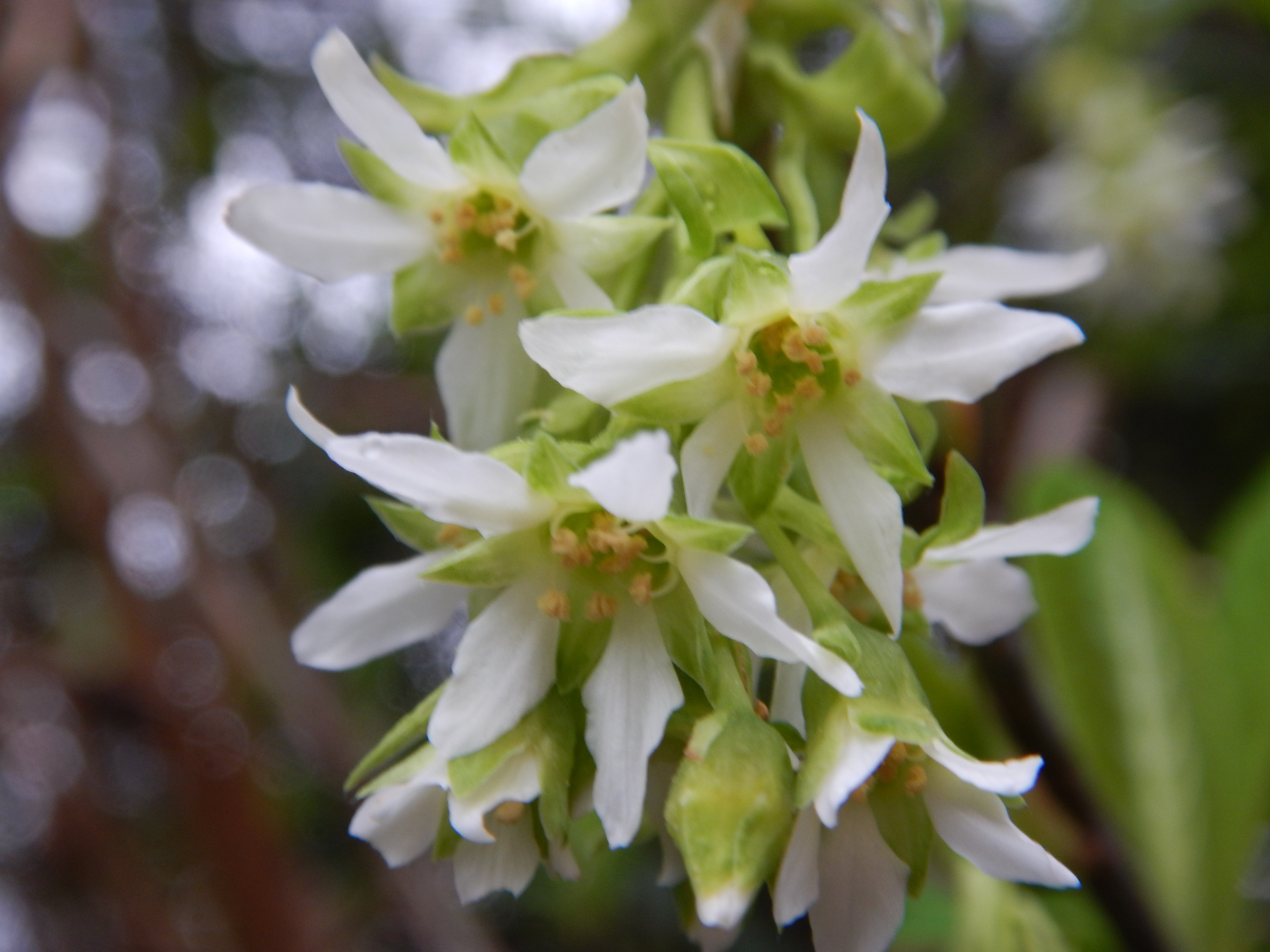
It’s specifically because of the leaf buds & blossoms in February.  They calm my cabin fever & help me through the last several weeks of winter.  Against the grey skies, the leaves look so perky & hopeful … and determined.  Even the inconsequential greenish-white flowers are exciting when little else is happening.

Indian plum grows happily in Partial Shade, not needing the prime Full Sun real estate that I protect for really showy plantings.  It’s common across the coastal Pacific Northwest below  Vancouver Island.

Oemleria cerasiformis, Indian Plum, June plum, Osoberry, Oregon Plum, Indian Peach, garden Victoria, Vancouver Island, BC, Pacific Northwest
photo by SVSeekins

When we lived on Cedar Hill, there was a large suckering thicket behind our house, at the base of the rocky slope.  The robins nested in the multiple stems of the 12-15 ft tall thicket.  The shrubs did their thing in the understory before the gary oaks hogged most of the sunshine through summer.

Perhaps best known as Indian Plum, Oemleria cerasiformis, is sometimes called June Plum, Osoberry, Oregon Plum and Bird Cherry.

Oemleria cerasiformis, Indian Plum, June plum, Osoberry, Oregon Plum, Indian Peach, garden Victoria, Vancouver Island, BC, Pacific Northwest
photo by SVSeekins

It might sound like a promising fruit source, but those inconsequential flowers turn into inconsequential fruits.  I’ve heard the berries shift through a pretty orange kaleidoscope before maturing into a dark purple-black, but I can’t say I’ve noticed.  The shrub blends into the background as other plants compete for attention in later spring.

Oemleria cerasiformis, aka Indian Plum, June plum, Osoberry, Oregon Plum, Indian Peach, or Bird Cherry, garden Victoria, Vancouver Island, BC, Pacific Northwest
photo by SVSeekins

I did check out the un-inticing tiny black plums once.
Bitter.
With pits.
Perhaps it’s best to consider it wildlife forage.

The early flowers feed hungry resident Anna’s hummingbirds e and signal that the Rufus will soon be returning from warmer climes.  The leaves & fruit provide forage for birds, deer & other mammals.  Isn’t it just good Karma to host a thicket?

-30-