Winter Blooming Hepatica

In a patch of January sunshine, bright violet flowers glow. They’re tiny– but in winter, every flower is precious. I’m stoked.
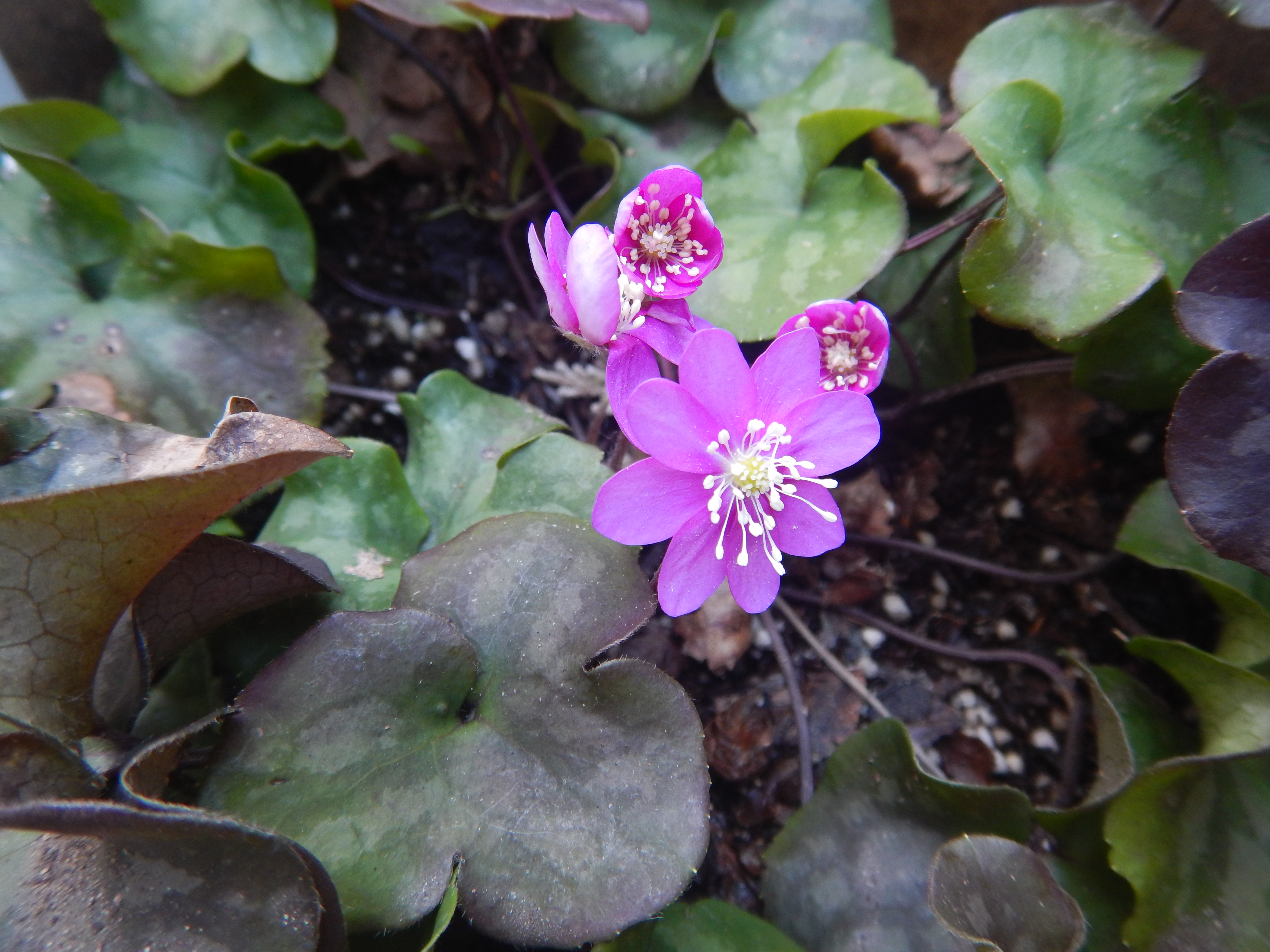
Hepatica, ica January bloom,common hepatica, liverleaf, liver leaf liverwort, hepatica nobilis var. obtusa, round-lobed hepatica, garden Victoria BC Pacific Northwest
photo by SVSeekins

This is Hepatica. I got a pot of it from the Vancouver Island Rock & Alpine Garden Society meeting last January. I’m happy that it’s settled into its new home & is blooming so early. This winter has been fairly mild so far, but we did have snow for 3 days over Christmas. Tough little plant, eh? The leaves didn’t even die back.

These leaves are kind of unusual, too. Each leaf grows up from the crown of the plant & has 3 rounded lobes. They were mottled green last summer but are now changing to a more bronzy colour. Years ago someone decided they looked a bit like a human liver, so that’s why Hepatica is also called liver-leaf or liverwort. I think it’s prettier than that name implies.

Hepatica, common hepatica, liverleaf, liver leaf liverwort, hepatica nobilis var. obtusa, round-lobed hepatica, garden Victoria BC Pacific Northwest
photo by SVSeekins

This little woodland gem grows in zone 4-9 across the northern hemisphere, so it can handle some pretty tough winters. It’s a native wildflower in Eastern Canada.

The flowers open wide in the sunshine then close as the cloud cover moves in or night falls. I reckon that’s a clever strategy for protecting itself until another day when the insects might be out again to help with pollination.

Some sources say Hepatica needs moisture, so I’ve kept it in a pot in the courtyard where I’m sure it’ll get summer water more often than our garden beds do. Other sources say it can be drought-tolerant, too. Here in Victoria, the summers are REALLY dry so I wonder if it can survive that much drought? (There’s certainly no lack of moisture through our Pacific Northwest winters.)
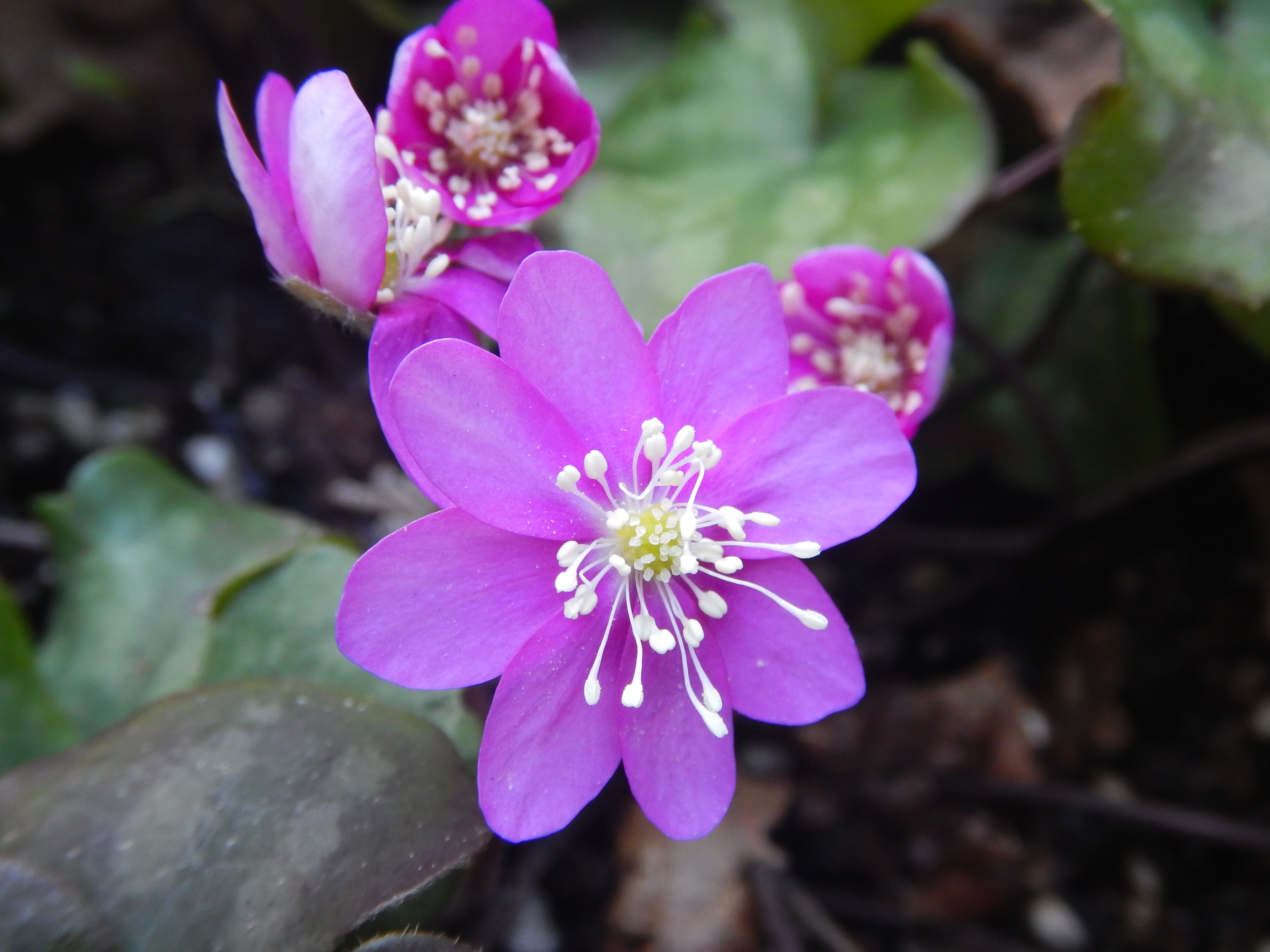
Hepatica, January bloom, common hepatica, liverleaf, liver leaf liverwort, hepatica nobilis var. obtusa, round-lobed hepatica, garden Victoria BC Pacific Northwest
photo by SVSeekins

Hepatica is listed as a handy ‘winter browse‘ & is not safe from deer. That’s just another reason to keep it in our courtyard.

I only have this one plant & I’m reticent to risk it. Hopefully, it’ll set seed. If I can get some new plants started, I might be able to encourage the babies to grow in a protected spot in our garden. Until then, it’ll stay in the pot where I know it’s happy.

-30-

Other January gems in the Pacific Northwest:

Jade Tree Blooming

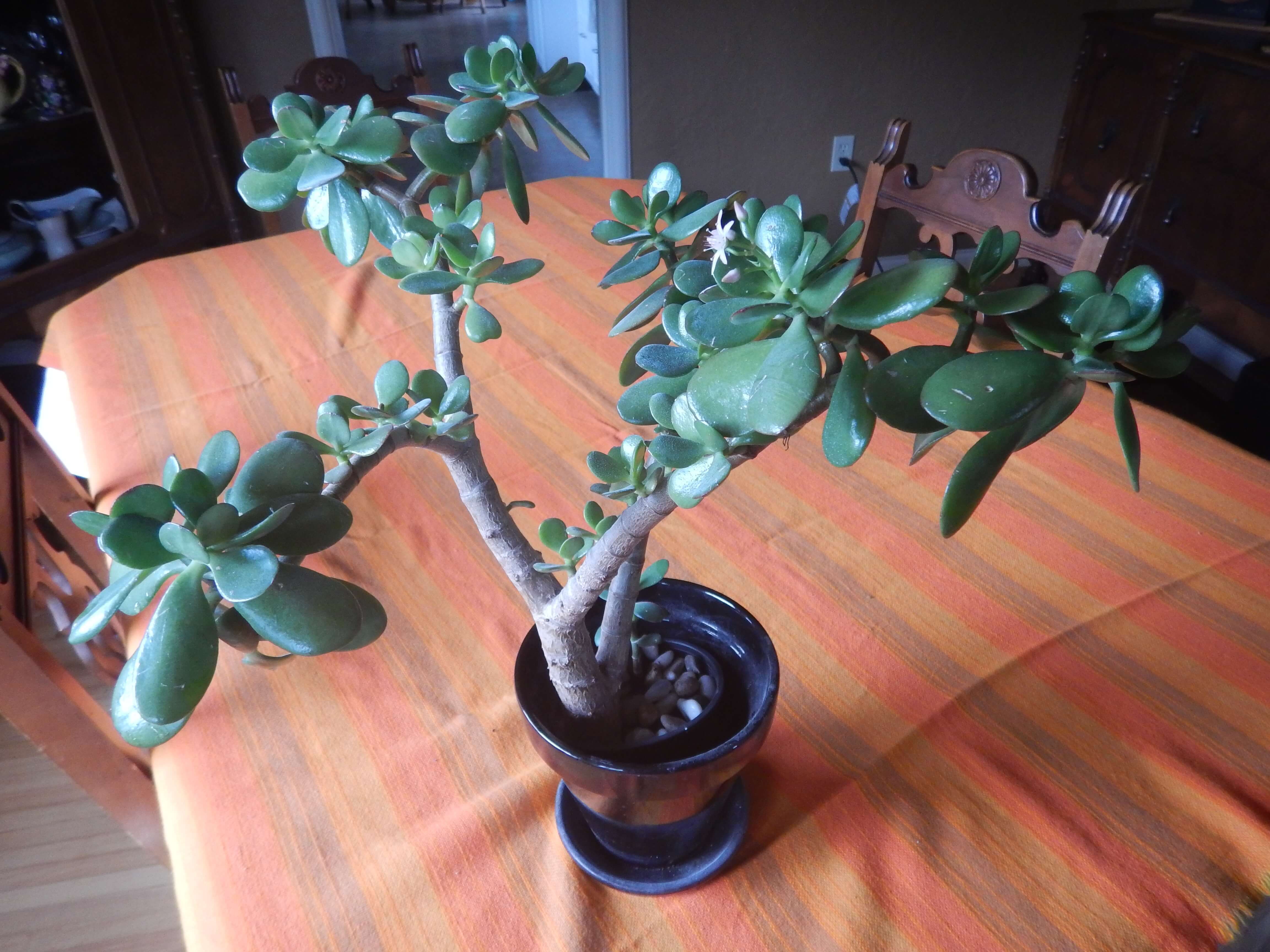
The Jade Tree became a favourite houseplant back in the ’70s when I first grew one in a terrarium. I liked that Crassula ovata is such a funky, almost fake-looking, evergreen plant.

Jade plant, Crassula ovata, Crassula portulacea, Crassula argentea, Jade plant, jade tree, money plant, money tree, succulent, friendship tree, garden Victoria BC Pacific Northwest
photo by SVSeekins

It’s so tough & forgiving that it’s perfect for the newbie grower. I forgot to water every once in a while and it didn’t die. (Aren’t drought-tolerant succulents great?)

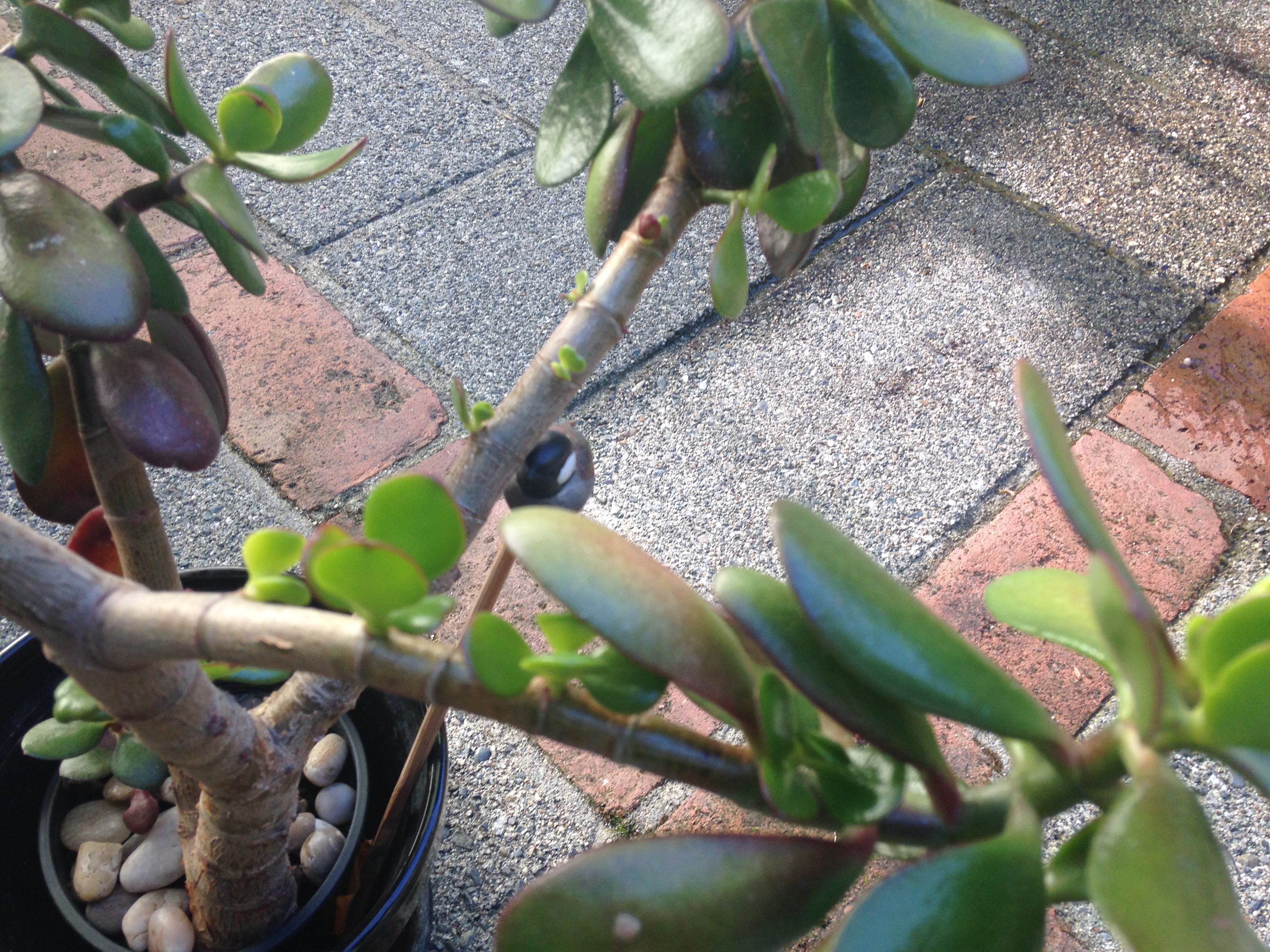
The Jade tree propagates like a dream – who would guess that accidentally knocking off a leaf or a branch would result in a whole new plant? Yup — it’s just that easy. 🙂

It seems to be happy in a tiny pot for years. Happy plants are beneficial for newbies. Success is almost like drugs. I bravely added other succulents & tropicals to the big glass jar. Perhaps that’s where my addiction started?

It wasn’t until I saw a Jade in an Australian garden that it even occurred to me that these houseplants could grow outside
and that it could get big ! (Over waist-high.)
much less bloom !! (Even the flowers look fake.)
I had new goals to strive for.

Jade plant, Crassula ovata, Crassula portulacea, Crassula argentea,  Jade plant, jade tree, money plant, money tree, succulent, friendship tree,  garden Victoria BC Pacific Northwest
photo by SVSeekins

Yup – these South African natives can grow outside in our Pacific Northwest, if only for the summer. I bring the pot outside in May after the last frost & set it in dappled shade for a few weeks. Like me, The Jade tree sunburns easily.

Jade plant, Crassula ovata, Crassula portulacea, Crassula argentea, Jade plant, jade tree, money plant, money tree, succulent, friendship tree, garden Victoria BC Pacific Northwest
photo by SVSeekins

Eventually, I shift it into full sun & the sucker starts to grow like mad.

Ahead of autumn’s first frost, I carefully spray the plant, removing any insects, before moving it inside the house.

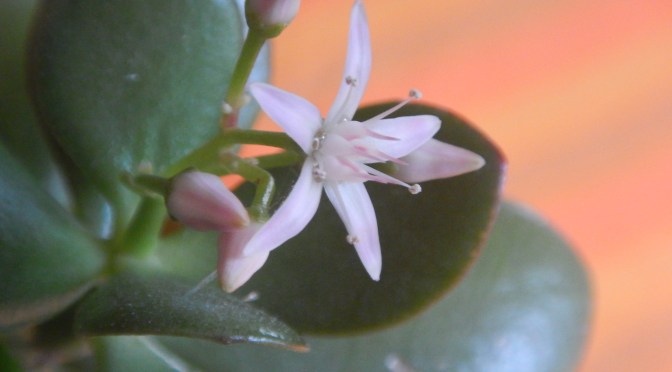
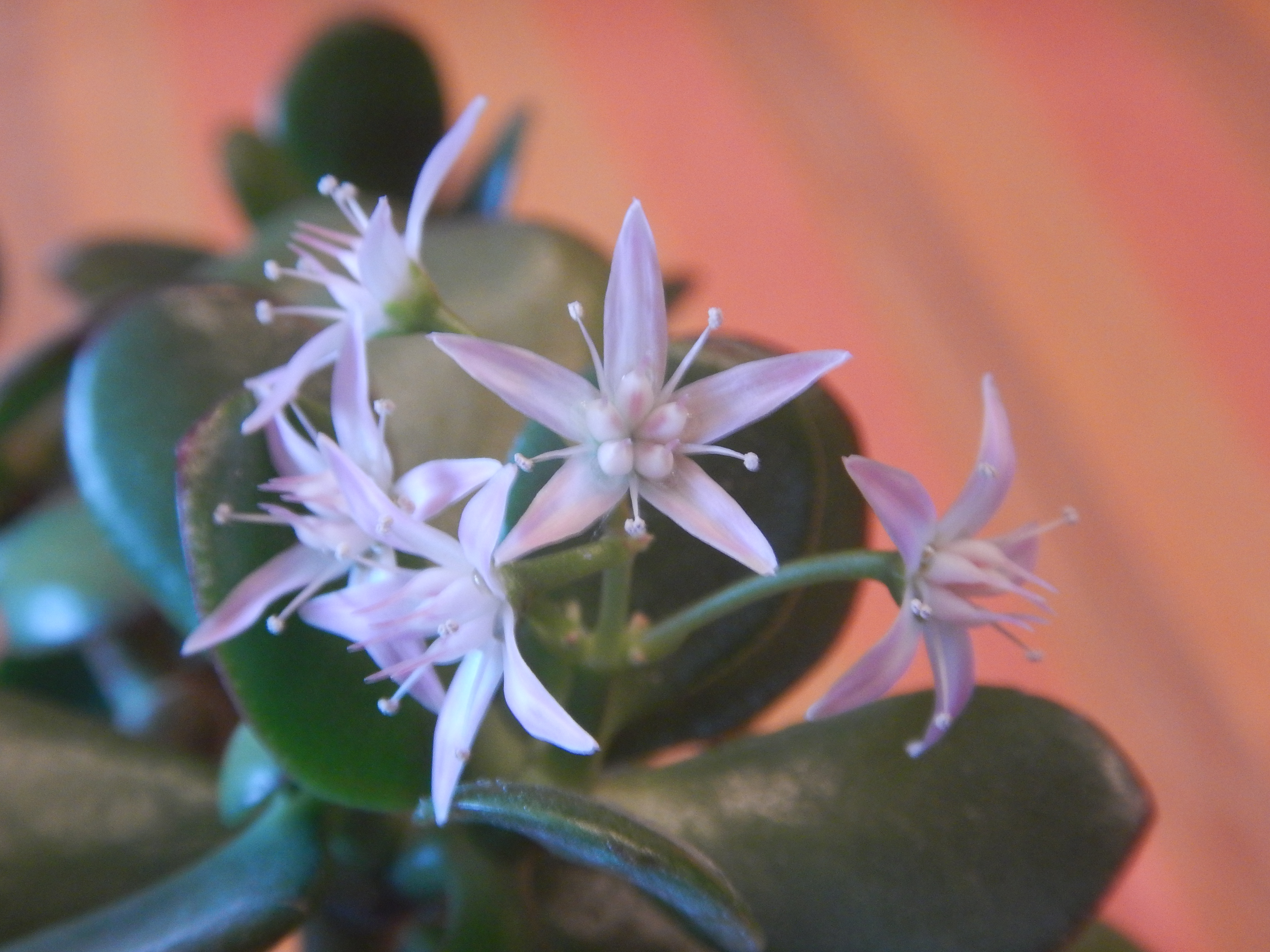
After a of couple weeks inside I was stoked to discover our Jade Tree coming into flower!

Jade plant, Crassula ovata, Crassula portulacea, Crassula argentea, Jade plant, jade tree, money plant, money tree, succulent, friendship tree, garden Victoria BC Pacific Northwest
photo by SVSeekins

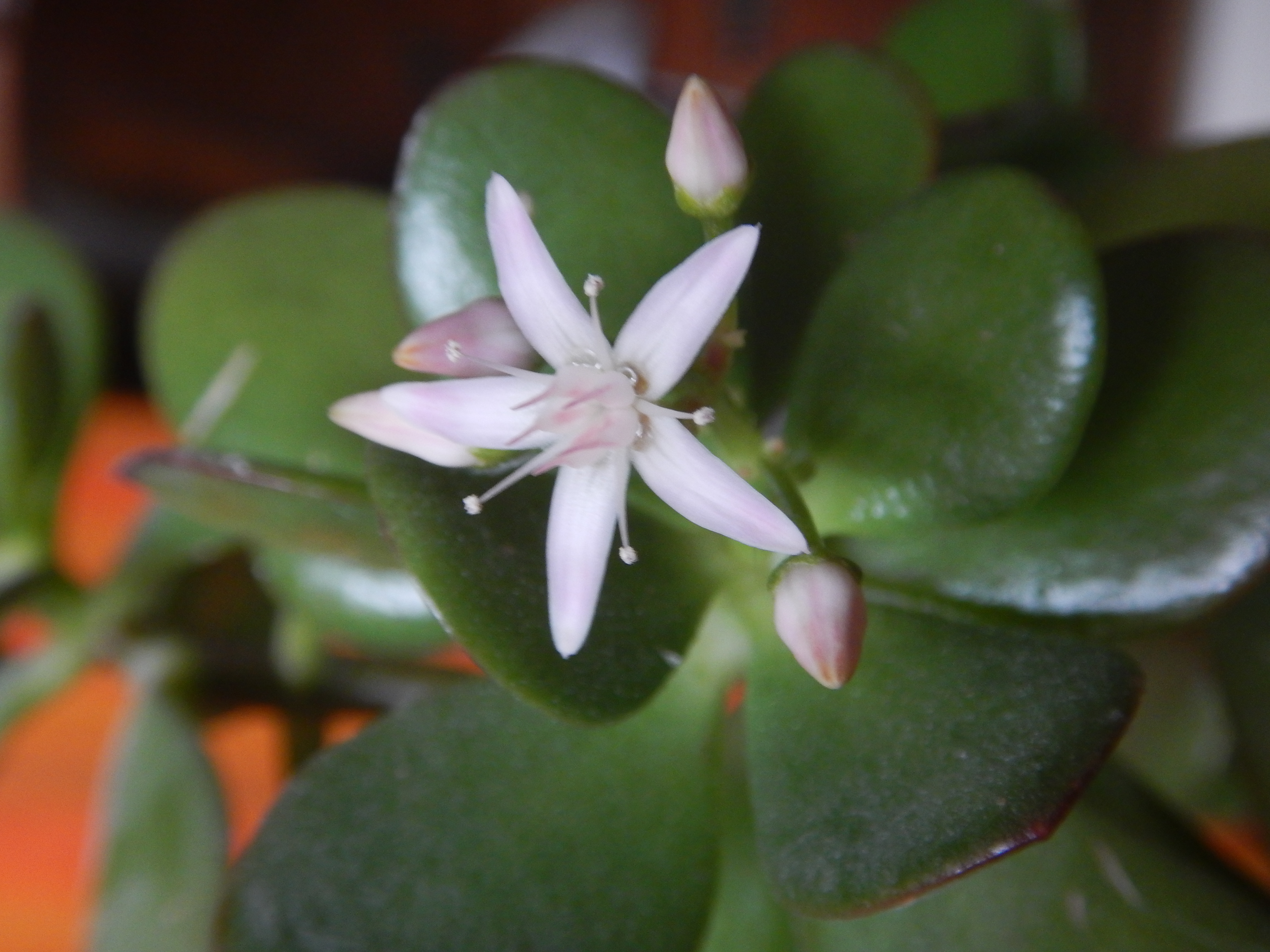
The pot sat beside the cool basement window where it only got sunlight during the day. I rarely go into that room in the evening, so the Jade Tree was in the dark for long periods. It acts just like a poinsettia! They won’t flower either unless the light is limited for a while. What a happy outcome – – I wasn’t even trying to get blooms! (That dream died long ago.)

Jade plant, Crassula ovata, Crassula portulacea, Crassula argentea, Jade plant, jade tree, money plant, money tree, succulent, friendship tree, garden Victoria BC Pacific Northwest
photo by SVSeekins

The circle of buds open slowly, one by one, giving me weeks of enjoyment. Now my plan is to repeat this process next year – – then, just maybe, if it’s blooming even more profusely… we can call the Jade our Christmas tree.

Do you think C would go for that?

-30-

Orange Candleflower

I’ve admired the fall show of Orange Candleflower for ages. I first saw the funky, candle-like seed spikes beside the front gate at Abkhazi garden. Later, KL & I admired swaths of them in a woodland at Government House garden.

Arum Italicum, orange candleflower, lords and ladies, cuckoo's pint, Italian lily, Italian arum, garden Victoria BC Pacific Northwest
photo by SVSeekins

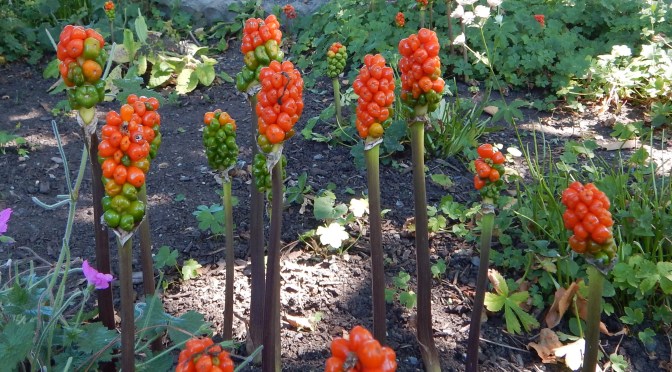
Arum italicum leaves die back in the summer leaving a naked stem & seed head. Groovy, eh? Perhaps that’s why it’s sometimes called Lords & Ladies. The Lady is the shy, white, spring flower. The Lord is the seed head. His Lordship might be inconspicuous early on, but as he matures from green to bright red… he’s certainly aristocratic.

Arum Italicum, orange candleflower, lords and ladies, cuckoo's pint, Italian lily, Italian arum, garden Victoria BC Pacific Northwest
photo by SVSeekins

Over the years I’ve sourced Italian arum through the garden club. I carefully planted several small pots around our garden.
No joy.
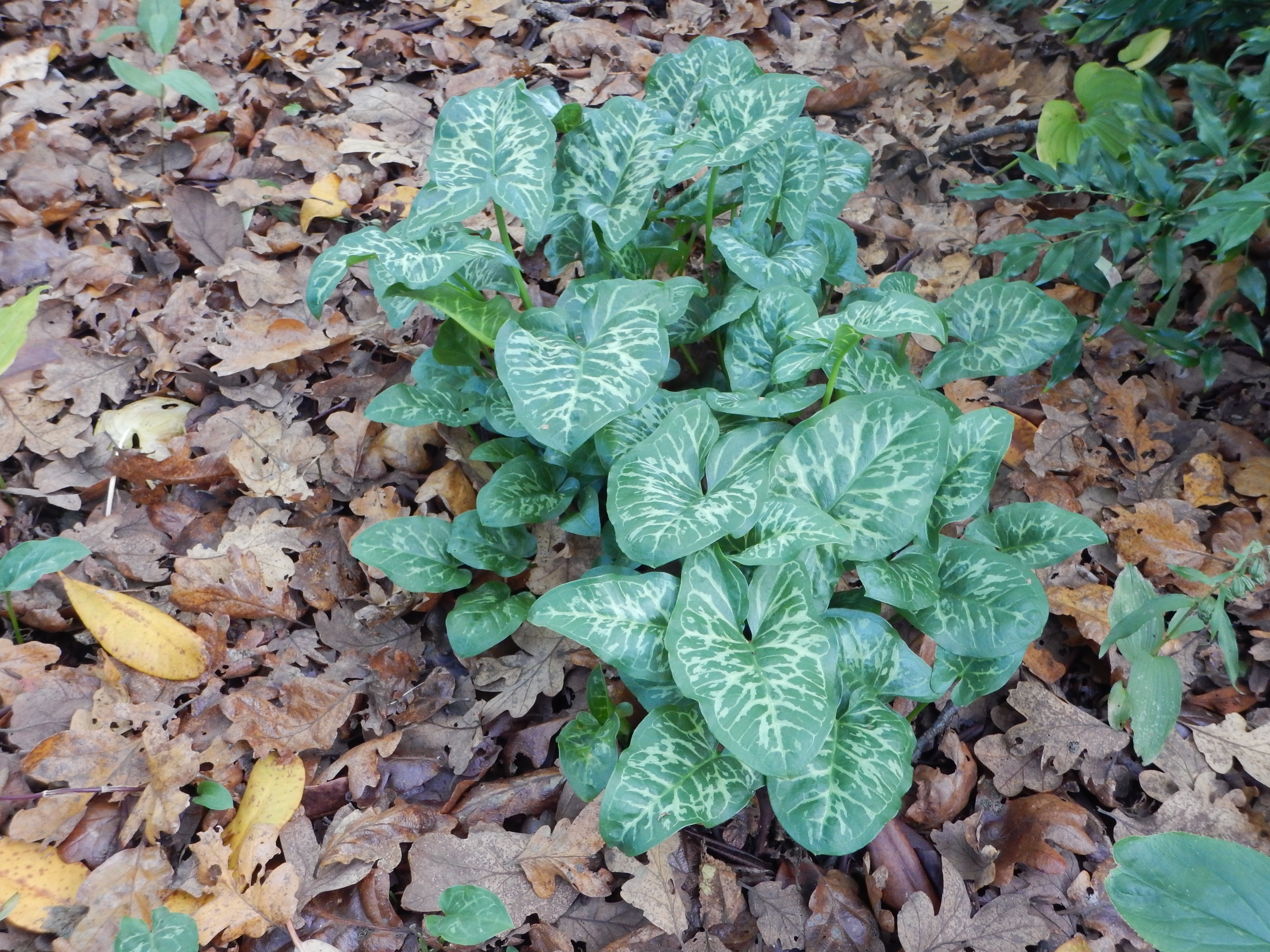
The winter ephemeral leaves delight me from late autumn, right through winter & even spring…
but never flowers. 😦

Blooms are supposed to appear in May – but there’s SO MUCH going on then…. maybe I just missed them? Can I blame the deer? Word has it that Arum Lily, & all its parts, is poisonous to people & animals so my deer excuse doesn’t really fly.

Arum Italicum, orange candleflower, lords and ladies, cuckoo's pint, Italian lily, Italian arum, garden Victoria BC Pacific Northwest
photo by SVSeekins

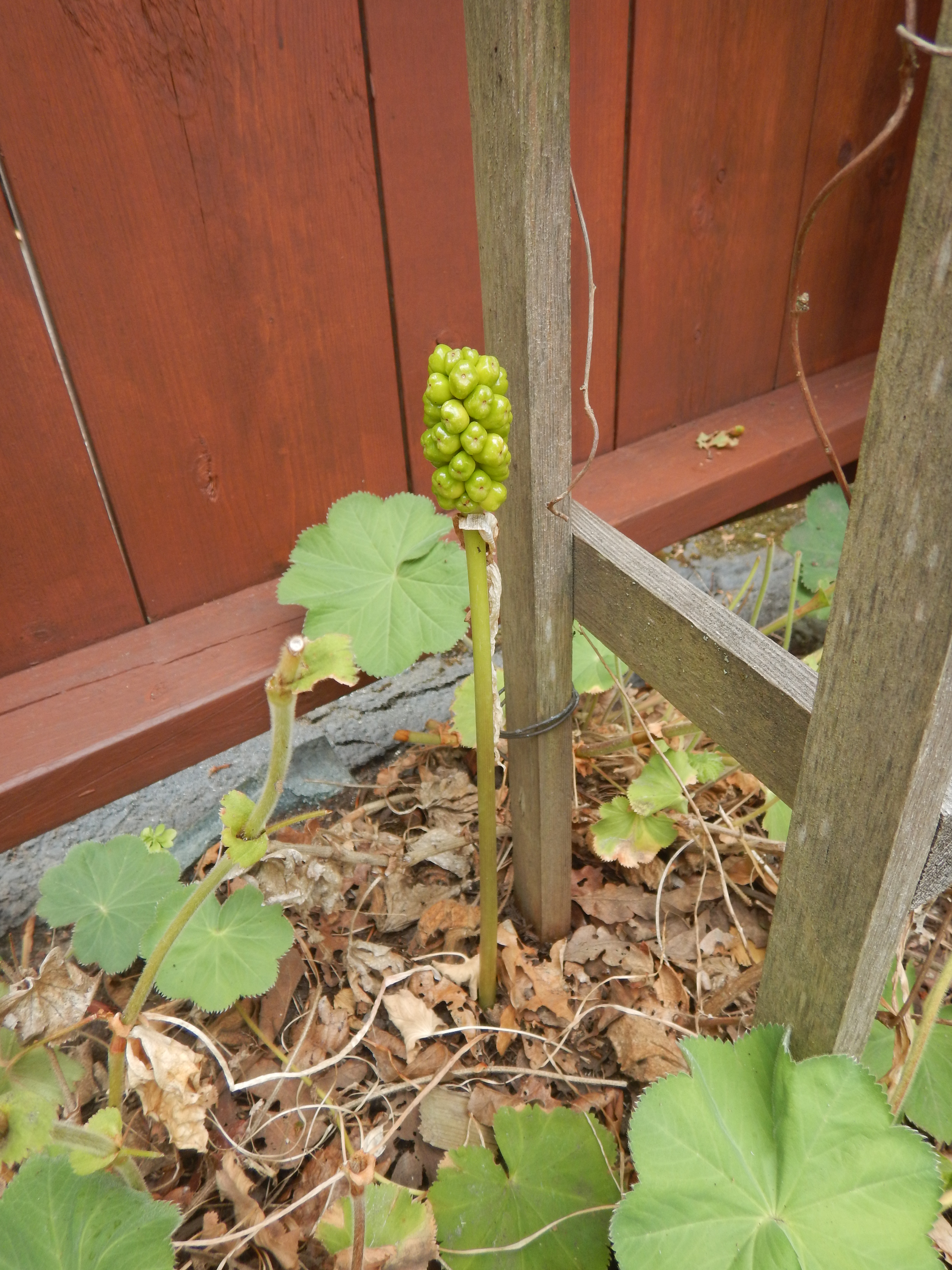
This August I was delighted to spy a stem with berries maturing in a shady spot beside our garden gate. Hooray! Don’t believe me? Take a look…. way down…. one lonely stem… It’s really there!

Arum Italicum, orange candleflower, lords and ladies, cuckoo's pint, Italian lily, Italian arum, garden Victoria BC Pacific Northwest
photo by SVSeekins

I crossed my fingers hoping it would soon turn the vibrant red it’s famous for. It took some time but by October it glowed!

Arum italicum is a Mediterranean perennial that’s naturalized across Britain, Europe and even parts of Australia. It’s apparently causing enough nuisance in Oregon & Washington to be listed as invasive!

Arum Italicum, orange candleflower, lords and ladies, cuckoo's pint, Italian lily, Italian arum, garden Victoria BC Pacific Northwest
photo by SVSeekins

And here I am, excited about a single phallic seed stalk. It’s certainly not conquering anything in our garden.

Consulting several sources reveals these nobles cause revolts in moist environments. That’s probably why I have so little success with it – – I only drag around a water hose when it’s really needed.

I dream of seeing the Lady’s flower. Now my plan is to shift some into more favourable conditions – perhaps the hosta patch? When the hostas die back in the fall, the arum leaf will come alive.
Fingers crossed.

-30-

SVSeekins