November’s Pink: Hesperantha

To be honest, I am not a SUPER-FAN of pink.

kaffir lily, scarlet river lily, crimson flag lily, Hesperantha coccinea, Schizostylis coccinea, garden Victoria BC Pacific Northwest
photo by SVSeekins

But in mid-November…
When it’s cloudy & drizzling…
I’m thrilled by a soft pastel pink.

Today it’s a Hesperantha.  Blooming right beside the deer route!  And this patch will bloom until a hard frost kick’s its butt.

kaffir lily, scarlet river lily, crimson flag lily, Hesperantha coccinea, Schizostylis coccinea, garden Victoria BC Pacific Northwest
photo by SVSeekins

It amazes me that these late-flowering perennials are native to sunny, South African streamsides.  Here they bloom in the light shade of our dry woodland garden.  Perhaps the thick mulch helped protect them from drying out too much this summer?

The mysteries continue… some websites call them ‘crimson flag lily‘ or ‘scarlet river lily.’ But I’ve always thought those are the crimson / scarlet versions that bloom in our sunny borders in spring ??  Perhaps they’re cousins?

kaffir lily, scarlet river lily, crimson flag lily, Hesperantha coccinea, Schizostylis coccinea, garden Victoria BC Pacific Northwest
photo by SVSeekins

What’s more, neither are actually from the lily family.  They kinda remind me of miniature gladioli. BUT they grow from a rhizome rather than a corm.

Scientists say they’re iris.  Go figure.

Can you imagine the hullabaloo & debate at one of those scientific Naming Conventions?  I figure those folks have some serious work on their agendas,
with figuring out who first claimed a name…
checking the flower specifics…
& then all the DNA analysis…

kaffir lily, scarlet river lily, crimson flag lily, Hesperantha coccinea, Schizostylis coccinea, garden Victoria BC Pacific Northwest
photo by SVSeekins

I reckon it’s during the evening cocktails when the final naming decisions happen.

Well, if you can’t choose your family, at least you can choose your friends.  I’m happy to have this friend in our garden.

-30-

PS.  Here are some more pink fall friends:


Bunchberry Sightings

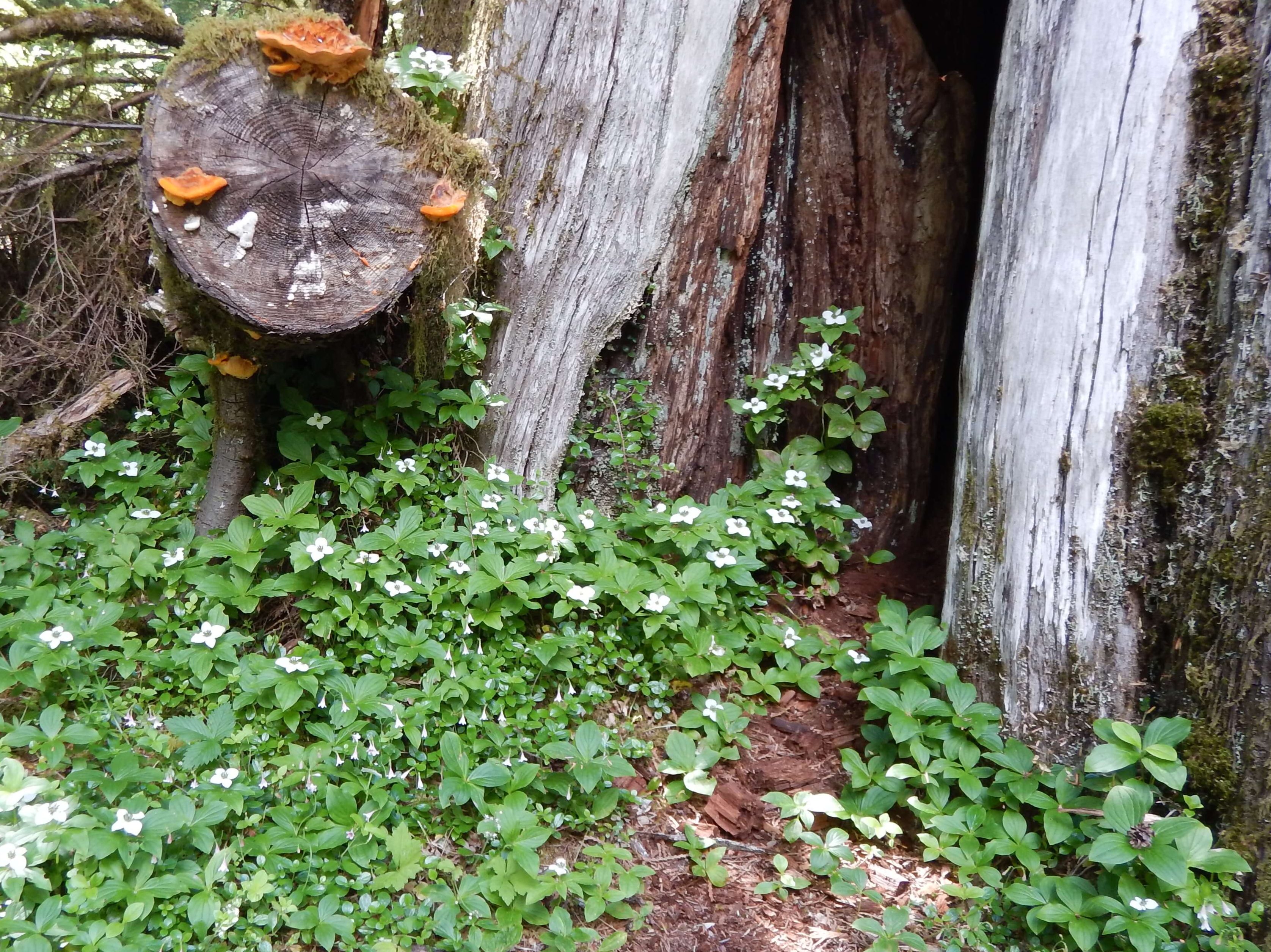
On a moist spring day in June, I spotted my first bunchberry.  It was blooming in the dappled shade, beside an old stump in Strathcona Park.

bunchberry, Cornus canadensis, dwarf dogwood,, creeping dogwood, dwarf cornel, crackerberry,, native wildflower, garden Victoria BC Pacific Northwest
photo by SVSeekins

You know how it is, once you notice something, you suddenly start seeing it everywhere?

That’s what it’s like with Cornus canadensis.

bunchberry, Cornus canadensis, dwarf dogwood,, creeping dogwood, dwarf cornel, crackerberry,, native wildflower, garden Victoria BC Pacific Northwest
photo by SVSeekins

It was in an old clear-cut near Jordan River (also Vancouver Island), I found it again.

bunchberry, Cornus canadensis, dwarf dogwood,, creeping dogwood, dwarf cornel, crackerberry,, native wildflower, garden Victoria BC Pacific Northwest
photo by SVSeekins

Even in full sun, it seems decaying wood is bunchberry’s happy place.

The underground rhizomes spread out, creating a matt of blooms – – almost a meadow   🙂    No wonder it’s also called creeping dogwood. What a beautiful transition for a logging debris field.

After getting comfortable identifying the dwarf dogwood flowers, it became my mission to find the plant in berry.  Shouldn’t be hard, right?  After all, it’s named bunchberry.

bunchberry, Cornus canadensis, dwarf dogwood,, creeping dogwood, dwarf cornel, crackerberry,, native wildflower, garden Victoria BC Pacific Northwest
photo by SVSeekins

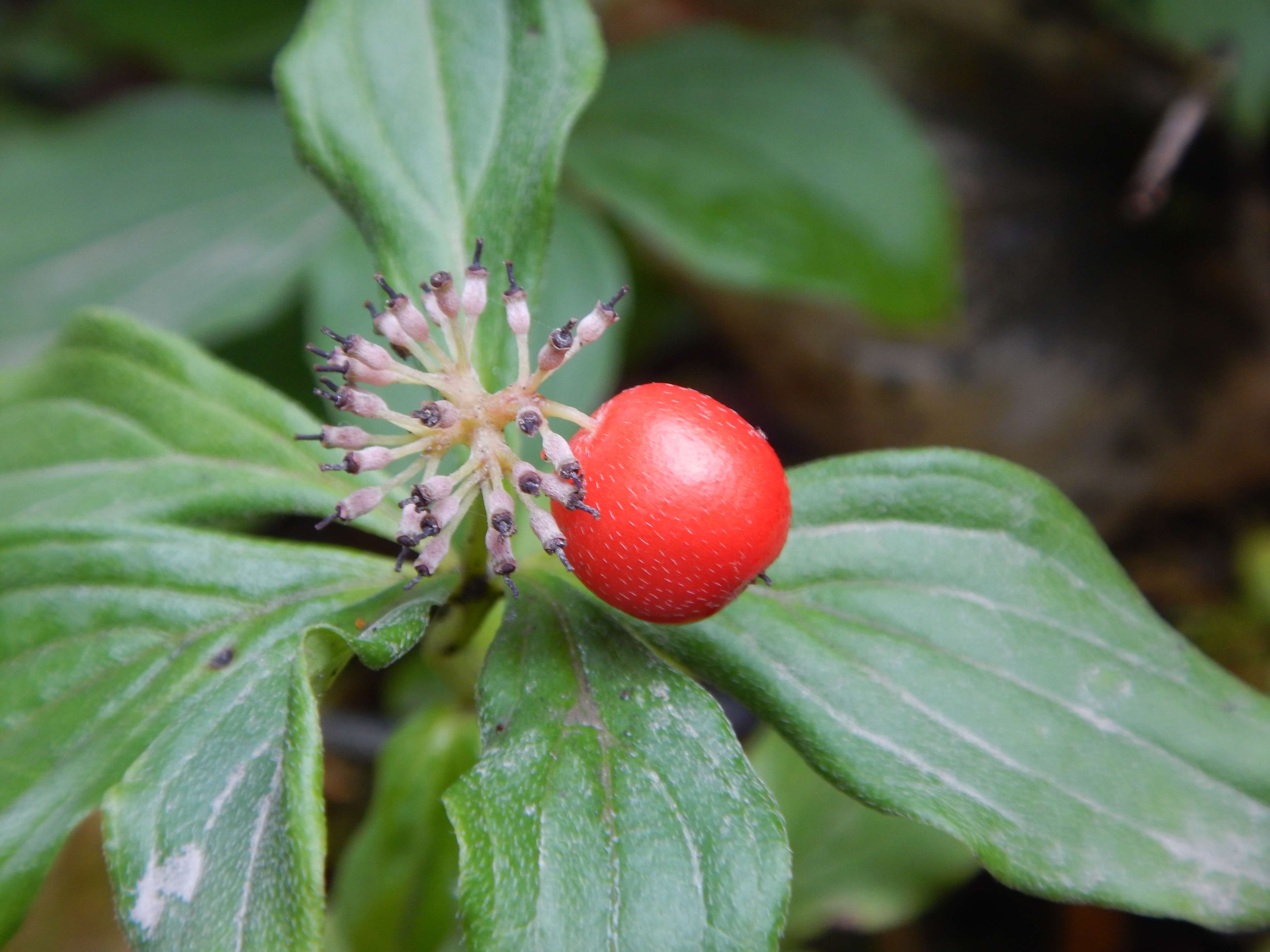
It was 1000 km away, seeking shade from a scorching summer day at Fairmont Hot Springs in the Rocky Mountains when I found the berries.

bunchberry, Cornus canadensis, dwarf dogwood,, creeping dogwood, dwarf cornel, crackerberry,, native wildflower, garden Victoria BC Pacific Northwest
photo by SVSeekins

Now I realize why the Latin name Cornus canadensis makes sense.  They grow all across Canada.

The bright orangey-red berries stand out, even in the dappled shade of the understory.

Apparently, they’re edible, but I didn’t test them.  Alongside this well-travelled trail, and easily below a dog’s hip level…  ??  Nope. I was a teeny bit squeamish.

bunchberry, Cornus canadensis, dwarf dogwood,, creeping dogwood, dwarf cornel, crackerberry,, native wildflower, garden Victoria BC Pacific Northwest
photo by SVSeekins

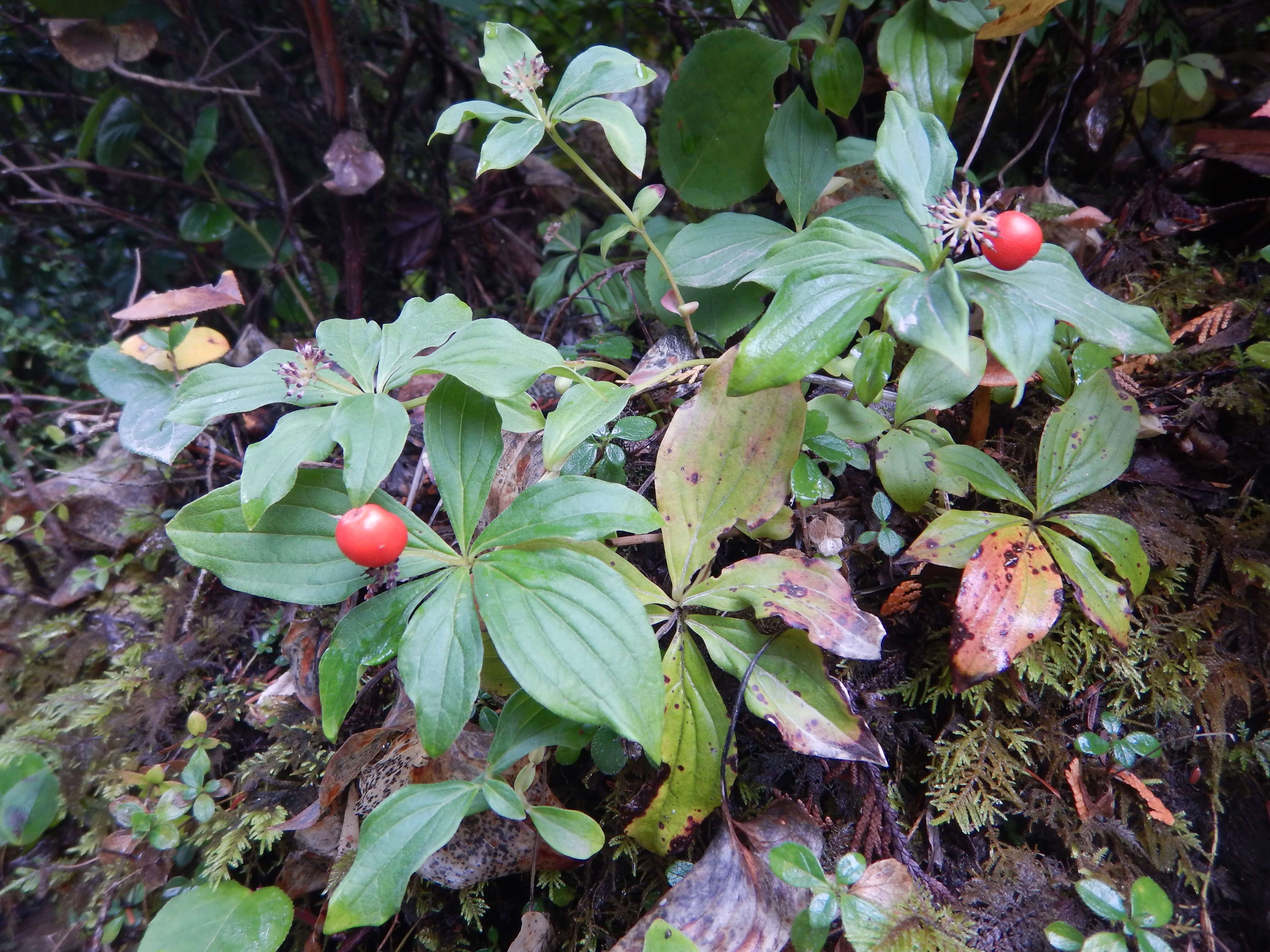
Back on the coast, near Tofino, the bunchberries persisted.

Yup.

Berries
– – in October!

Isn’t that a good way to mark Thanksgiving?

bunchberry, Cornus canadensis, dwarf dogwood,, creeping dogwood, dwarf cornel, crackerberry,, native wildflower, garden Victoria BC Pacific Northwest
photo by SVSeekins

Word has it that bunchberry leaves turn a beautiful red color in the fall.  I noted some autumn color, but perhaps there’s more to come?

It’s also reported semi-evergreen in the Pacific Northwest… so now I have a new mission.  Do you know where I might find more nearby to monitor through winter?

-30-

see also:


Potato Challenge

Back on the farm, when I was a kid,  the veggie patch was huge – –  probably bigger than the footprint of the entire city property I live on now.

potato challenge
photo by J.Sturney

Other than planting, weeding, harvesting & cold storage, my memories don’t include any magic formula for producing a bumper crop.  Maybe just building the soil with old manure from the barns?  I was grunt labor at that time & wasn’t paying much attention.

This year, for kicks, the garden club hosted a Potato Challenge.  Each member took a spud to grow through summer so that, in the fall, we could compare harvests.

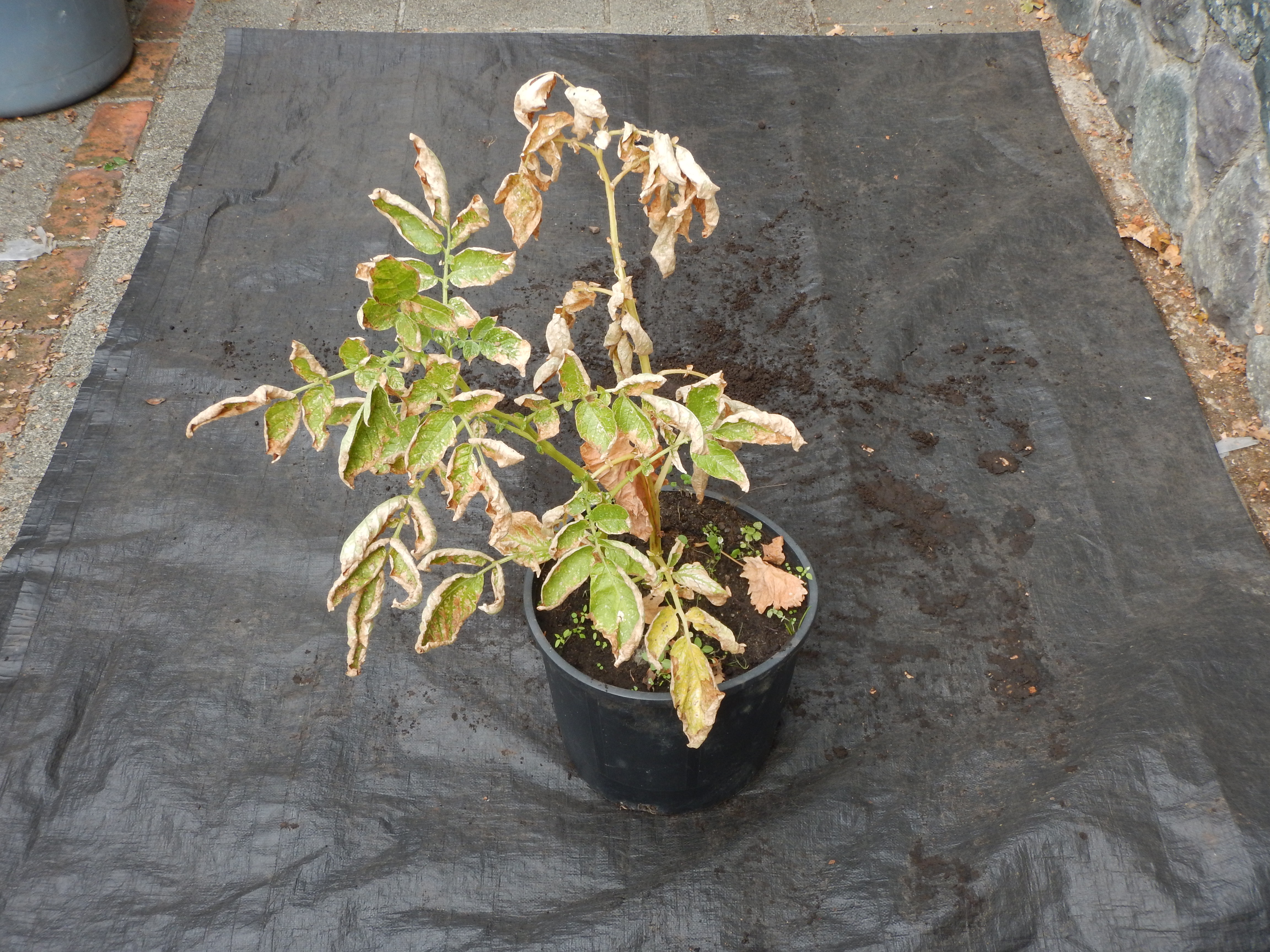
my pot of potato
photo by SVSeekins

Our current garden isn’t fenced, so potatoes are deer food. For safety, I decided to experiment with growing the spud in a 3-gallon deck pot. Trending stories show growing bushels of potatoes this way, so why not test it out… right?

I had jitters, perhaps because of the “challenge” part of the experiment,  so hedging my bets, I planted 2 pots.

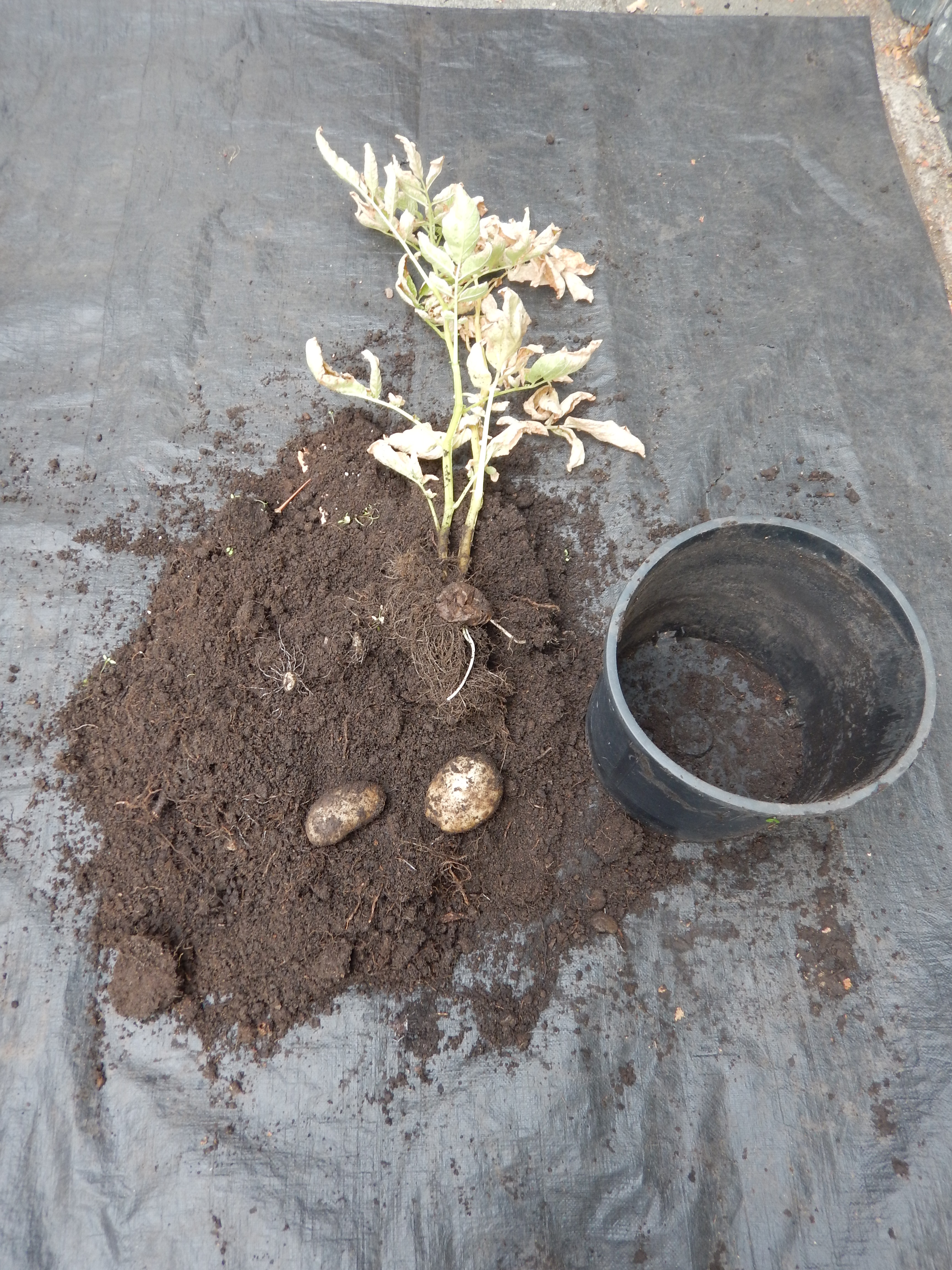
potato harvest
photo by SVSeekins

After adding just a few inches of soil to the bottom of each pot, I planted the  Kennebec seed potatoes.

As the young sprouts grew, I hilled them,  adding more soil, covering the stem up to the first set of leaves.

They grew.   I hilled.

Eventually, the pots were full.   I dreamt of the deep root system developing oodles of edible tubers.

the 'seed potato' top right
photo by SVSeekins

I diligently watered.  Even the house-sitters kept up  the watering during a very hot August.

When it came time for the Competition, it completely slipped my mind… or was it performance anxiety?  No. It was simple forgetfulness.

Finally, it was time to harvest.  Ta-Da !!!

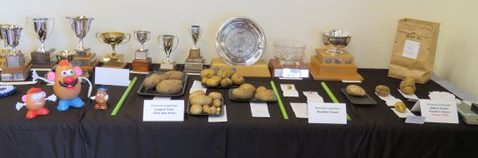
potato challenge - highest yield
photo by J.Sturney

Hmmmm…
Underwhelming.

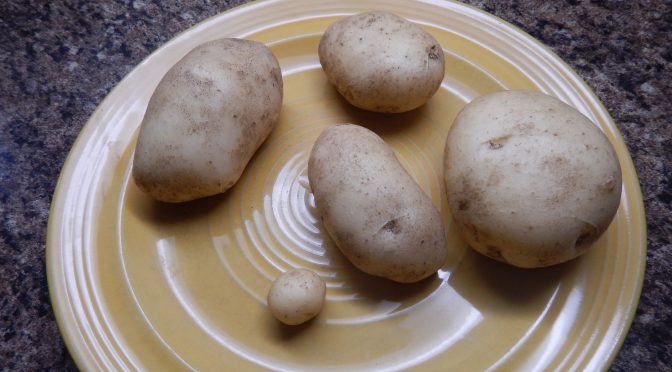
Each plant yielded 2 lovely potatoes + 1 tinier one.  In one pot, the original seed potato was even visible, at least what was left of it.  It had doubled the investment, but it wasn’t gonna feed us through the winter.  Where were all those bushels?   What had I missed?

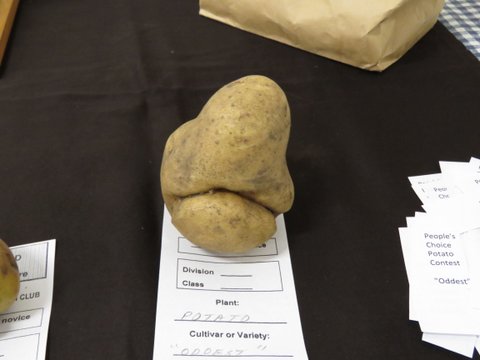
potato challenge - ugliest potato
photo by J.Sturney

The Fall Show boasted categories for biggest & smallest potato,… ugliest potato.   Even highest yield.

I didn’t win any prizes, but we did enjoy 2 autumn meals.  Boiled & buttered.  They were delicious.  That’s what really counts… right?

potato challenge
photo by J.Sturney

But wait – – this just in:
Growing potatoes above ground only works well IF the soil is protected from heat.    Our courtyard is super-hot.  So now the pressure’s off – – next year I can try potatoes in the rich compost at the top of our mountain, and as long as I can keep them watered… and safe from the deer…

-30-

SVSeekins