Bunchberry

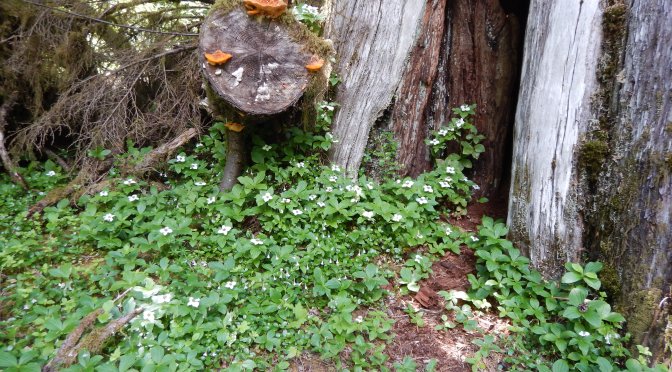
bunchberry aka Cornus canadensis and dwarf dogwood, garden Victoria BC Pacific Northwest
photo by SVSeekins

Native to the moist Pacific Northwest, bunchberry is at home in the forest shade around Buttle Lake and the Ralph River Campground of Strathcona Park.

It also happens to be comfortable growing at the base of an old stump in PS’ fern garden here in Victoria.

PS has nurtured her garden for 40+ years and is particular in what she grows.  I understand why Cornus canadensis (aka dwarf dogwood) makes her list.
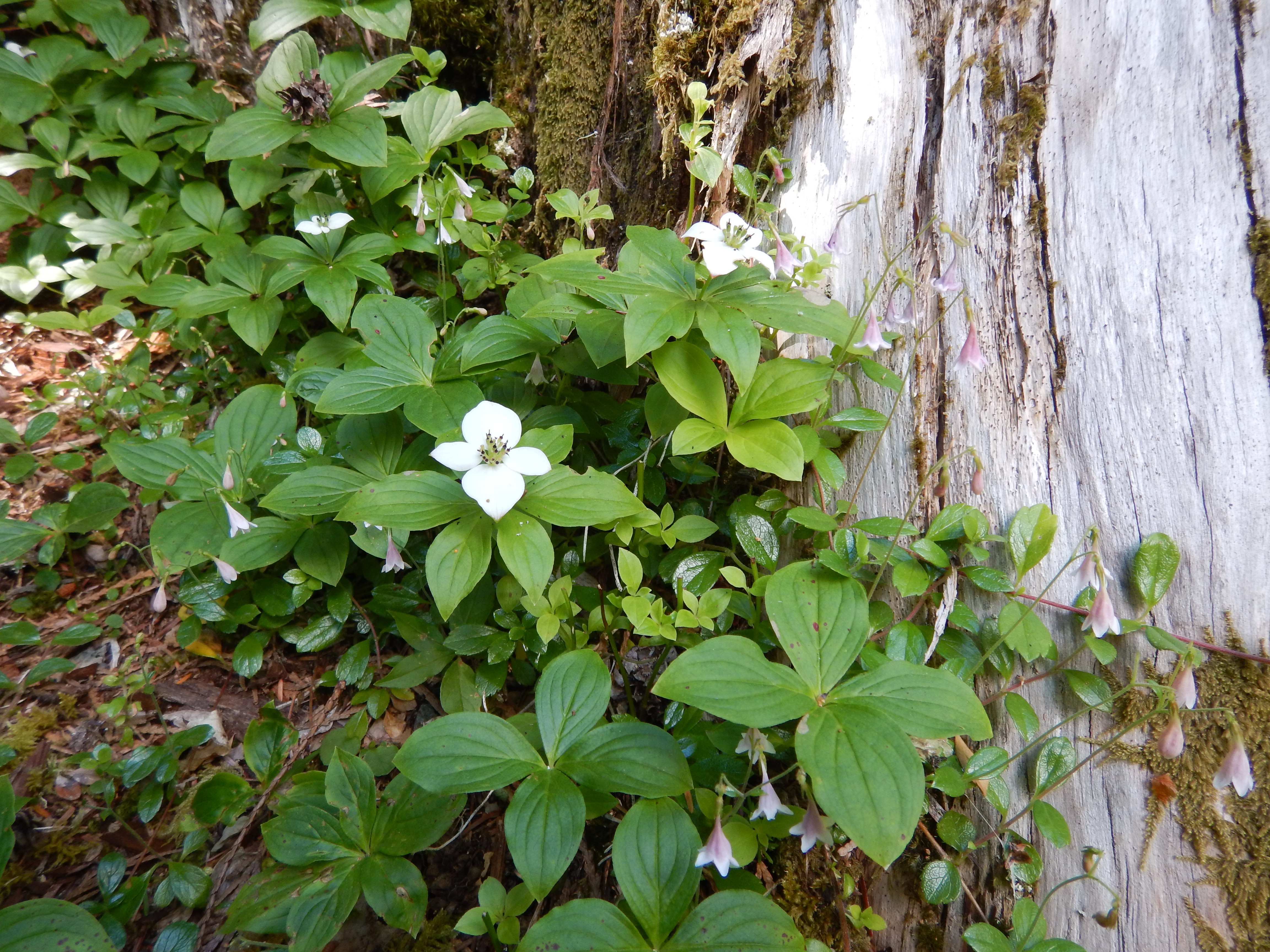
bunchberry aka Cornus canadensis and dwarf dogwood, garden Victoria BC Pacific Northwest
photo by SVSeekins

Extended Seasonal Interest

  • late spring:  white flowers
  •  mid-summer: edible red berries
  • autumn: burgundy leaves
  • winter: darn near evergreen

It’s almost enough to make my list too because it invites wildlife into the garden.  The birds like the berries and I’m willing to share.  It’s the local deer that I have little faith in.  With small juicy plants like this, they’re not likely to leave anything for me to enjoy.

-30-

see also:

Devil’s Club

The pyramid of flowers is as tall as a beer stein…

Devil"s Club Oplopanax horridus, garden Victoria BC Pacific Northwest
photo by SVSeekins

The leaves are wider than a dinner plate…

The plant towers over my head !

It reminds me of something from Gulliver’s Travels into the land of giants.  Where else would I find such drama??

But we aren’t in Brobdingnag.  Strathcona Park is a real place (and just as magical).  It’s these moist rain forests of Vancouver Island that provide the right conditions for Devil’s Club (Oplopanax horridus).

Devil"s Club Oplopanax horridus, garden Victoria BC Pacific Northwest
photo by SVSeekins

This could make a great architectural statement in the garden.  Shouldn’t I get one?

Actually no.   It’s armed and dangerous.

ARMED:
Check out the spikes!
They spiral all the way up the stem and run along the veins of the leaves — on both sides!  Yikes!

Devil"s Club Oplopanax horridus, garden Victoria BC Pacific Northwest
photo by SVSeekins

C had an adventure hiking through a stand once.  Can you imagine?  WorkSafe BC does not recommend it.

DANGEROUS:
It’s not just the wicked spines.  The luscious red berries look mighty tempting but they’re poisonous.  Yup.  Bears might chow them down for dessert, but if you’re a people, give them a miss.

The original people of this coast have a long history with Devil’s Club. Uses vary widely, from making fishing hooks to tattoo dye. They celebrate its powerfully medicinal as well as spiritually protective  charms.

I wonder how many centuries it would take before I gathered enough nerve to ask anything of a plant so obviously stand-offish.

-30-

Camas Identification


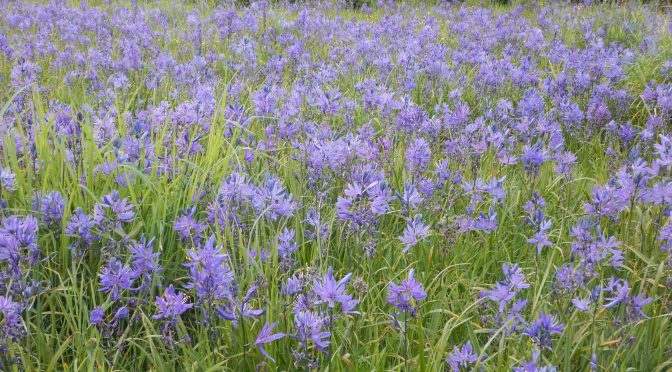
Uplands Park Camas meadow, garden Victoria BC, Pacific North West
photo by SVSeekins

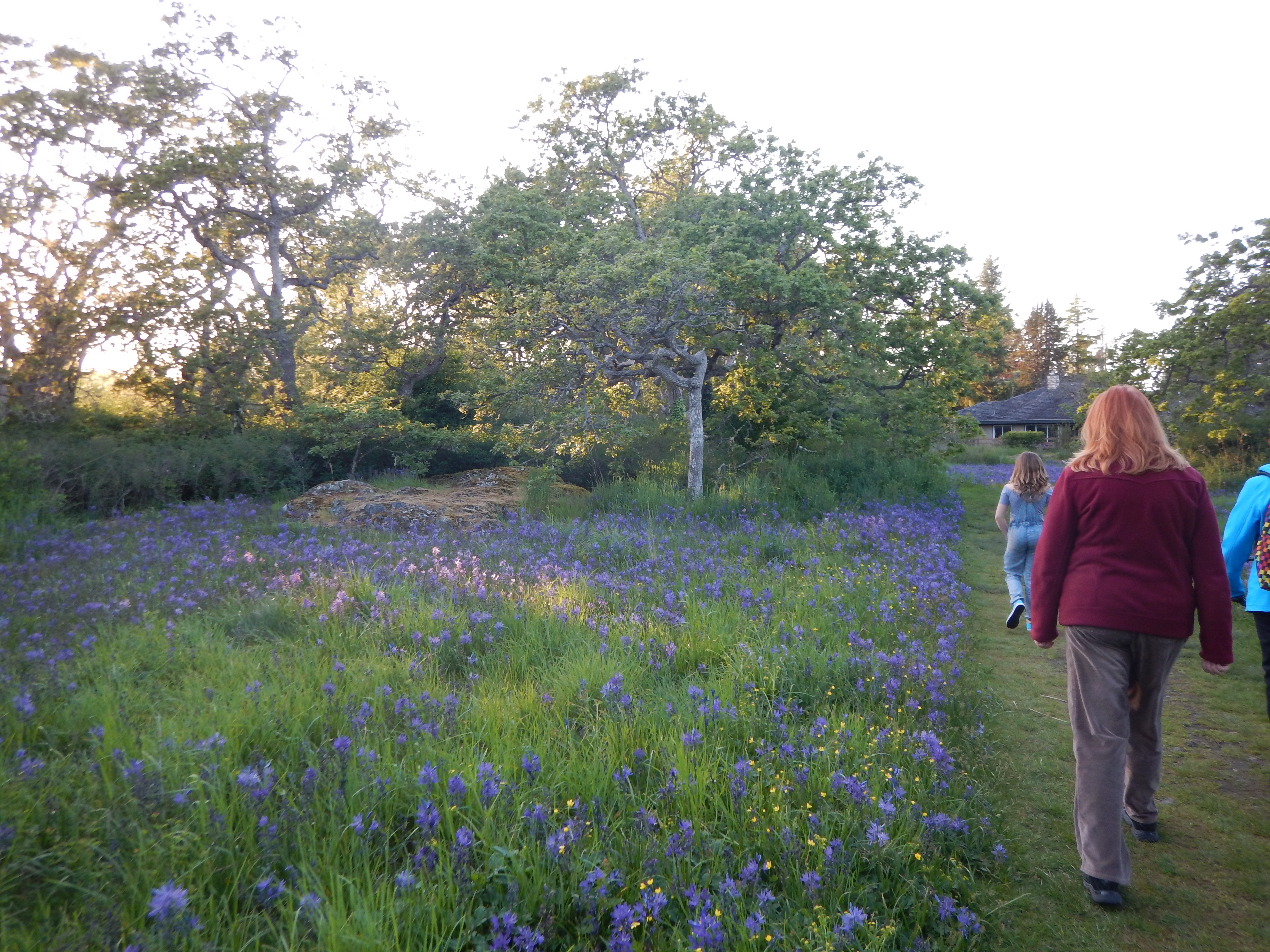
This spring, the camas meadows are a delight.  Uplands Park is exceptionally beautiful.
(Who knew the park is more than Willows Beach & a boat launch?!?
It’s so much larger than that.)

An evening walk with the native plant enthusiasts of Friends of Uplands Park was fun AND educational.

Common Camas vs Great Camas

another camas meadow in Uplands Park, garden Victoria BC Pacific Northwest
photo by SVSeekins
  •  Common Camas flowers first, sometimes starting as early as March in the Pacific Northwest.
    Great  Camas follows a few weeks later, peaking in May.  The whole show is usually over by June.

    Great Camas along Uplands Park path, garden Victoria BC Pacific Northwest
    photo by SVSeekins
  • Common Camas is shorter & sticks to meadows in full sun.
    Great  Camas is taller & likes the meadows too, but also tolerates the partial shade along woodland paths. (see photo right)
    (Ergo the only camas to survive in our day-lily beds are the Great Camas)  

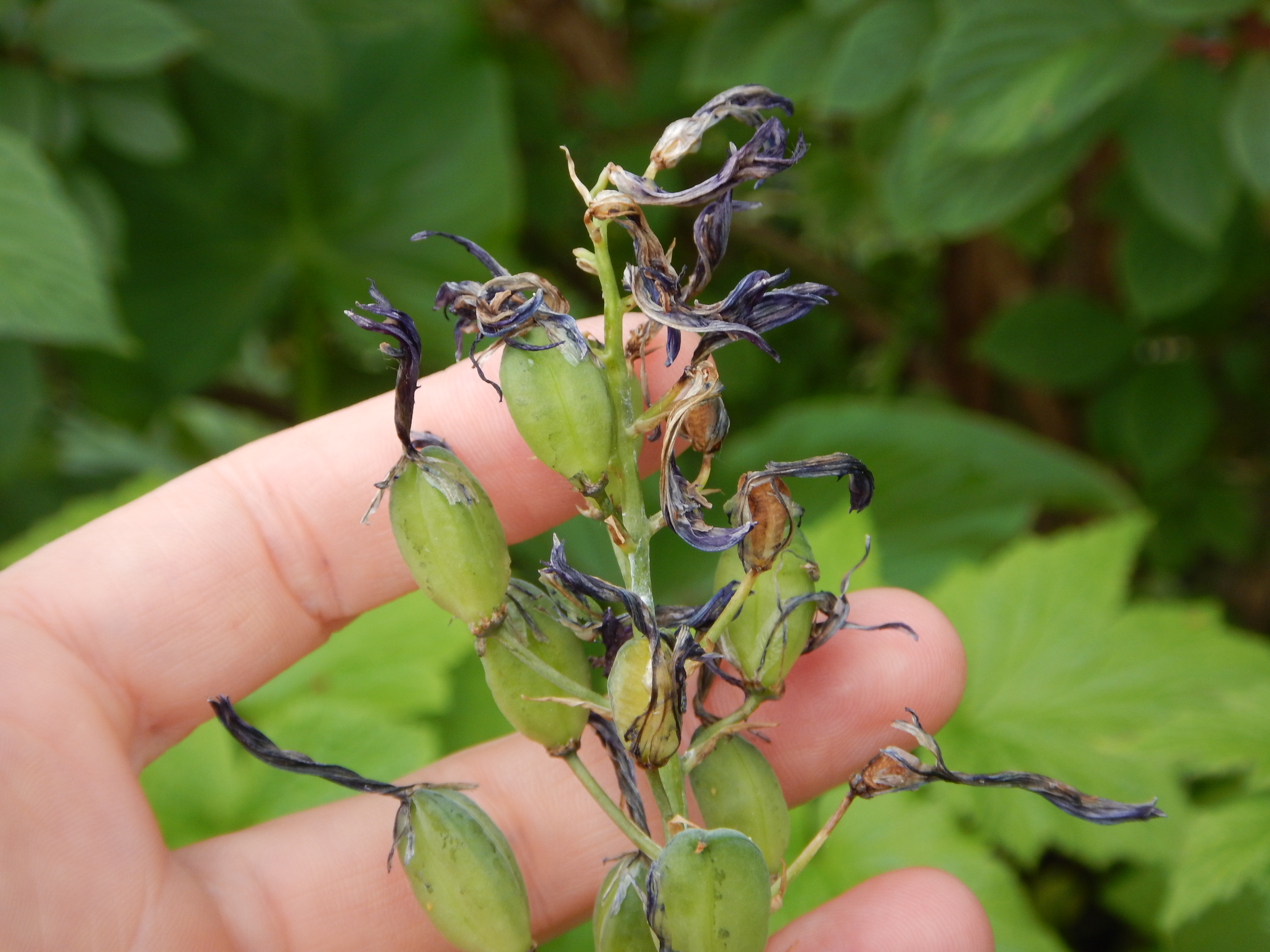
    common camas after bloom, garden Victoria BC Pacific Northwest
    Common Camas
    photo by SVSeekins
  •  The Common Camas bloom opens quickly, with most of the spike in full flower all at one time.
    The Great  Camas bloom opens gradually from bottom to top. Sometimes the flowers at the bottom of the spike are finishing while the very top is yet to begin.

    common camas after bloom
    Great Camas photo by SVSeekins
  • A funky way to tell the two apart is with the withering bloom.   The  Common Camas flower petals die back willy-nilly. (see photo above)
    The Great Camas flowers die back gracefully, with the petals wrapping themselves into a hug.  (see photo right)

    a white camas - not a death camas, garden Victoria BC Pacific Northwest
    photo by SVSeekins
  • A white camas flower is usually just an albino version of an ordinary camas.  Some say the same bulb will often produce a regular flower, but some years it’ll throw an abnormal one.  Unusual but not dangerous.

    Death Camas in Uplands Park, garden Victoria BC Pacific Northwest
    photo by SVSeekins
  • Death Camas is dangerous.  It has a white flower too but looks quite different.  After the blooms are gone, it’s pretty tough to tell the types apart from just the foliage.  Indigenous people used camas as a food source, but they were very wary of the Death Camas.  It makes sense that they harvested while the plants were in bloom.  I’m told it’s toxic to the touch …. so hands off!

That certainly calls a halt to the romantic sunset stroll, doesn’t it?  It’s all pixies & fairy dust until someone is poisoned…
Hmmm, that kinda sounds like the setting for a murder mystery.  What do you think?  Would you read that book?

-30-

Other places to see Camas Meadows:

Enter your email address to subscribe to this blog and receive notifications of new posts by email.

SVSeekins