Iris Foetidissima Through Four Seasons

It’s an uncommon garden plant for 2 good reasons.
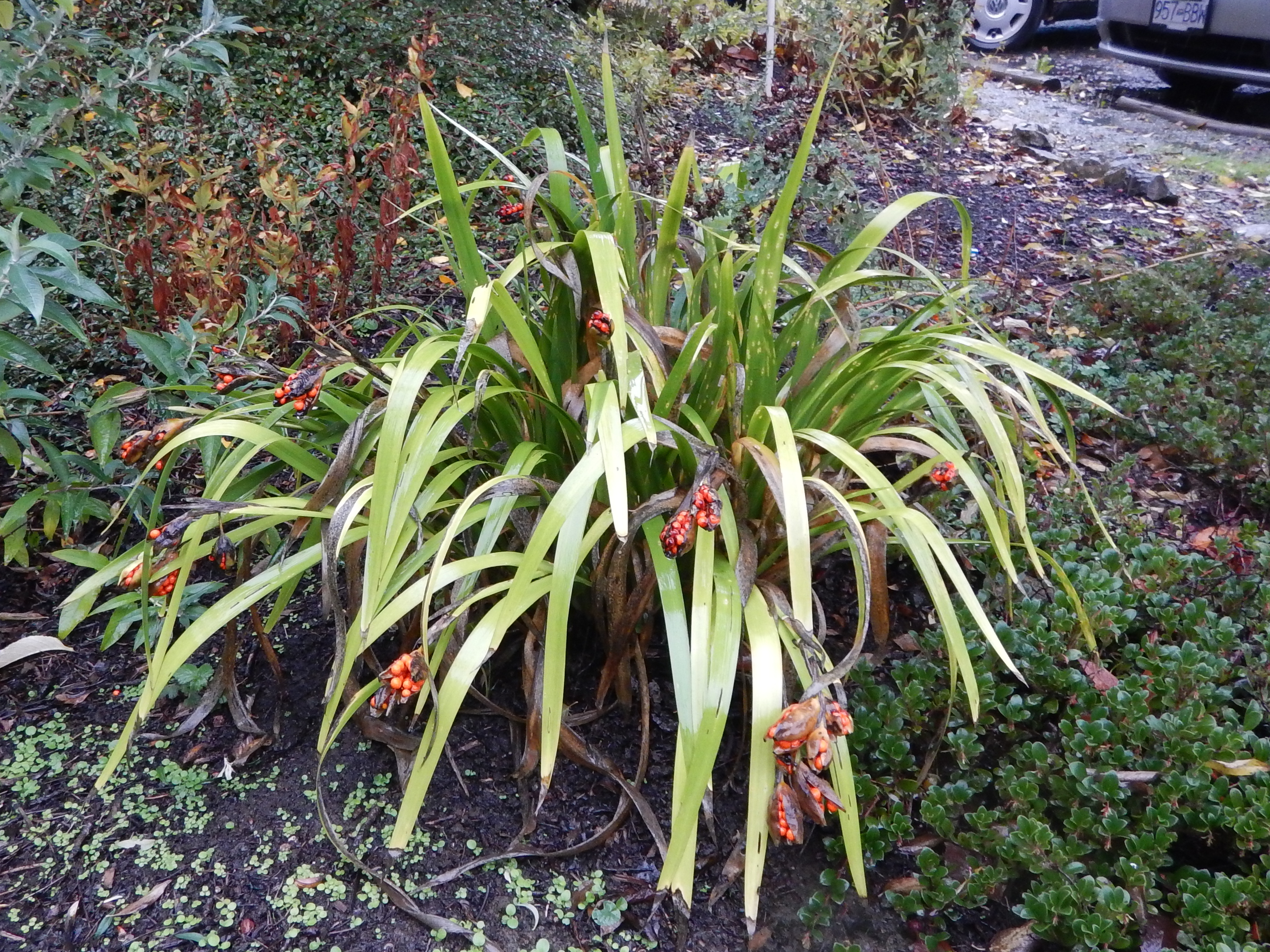
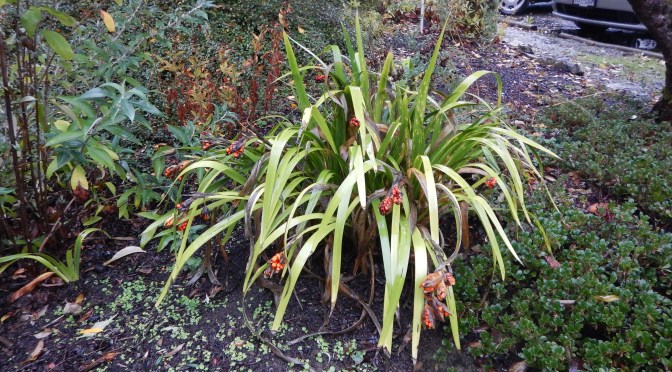
Iris foetidissima, Stinking iris, Fetid Iris, Scarlet berry iris, roast beef plant, Scarlet-Seeded Iris, Coral Iris, Orange Seeded Iris, blue seggin, Gladden, Gladdon, Gladwin, Gladwyn, Stinking Gladwin, garden Victoria, Vancouver Island, BC, Pacific Northwest
photo by SVSeekins
  1. Most gardeners aren’t plant shopping in winter when this iris looks its best.
  2. Fetid in a name just puts folks off.

It’s sad, really. Stinking Iris is a harsh moniker – – uncalled for, in my humble opinion. Apparently, if you stomp on a clump, the crushed leaves reek of spoiled roast beef. I’ve gardened around it for several years now & have yet to detect any offending odour. Iris foetidissima is very welcome in our garden.

I mean, it’s not the first plant I’d buy for a new garden, but it’s a great supporting actor.
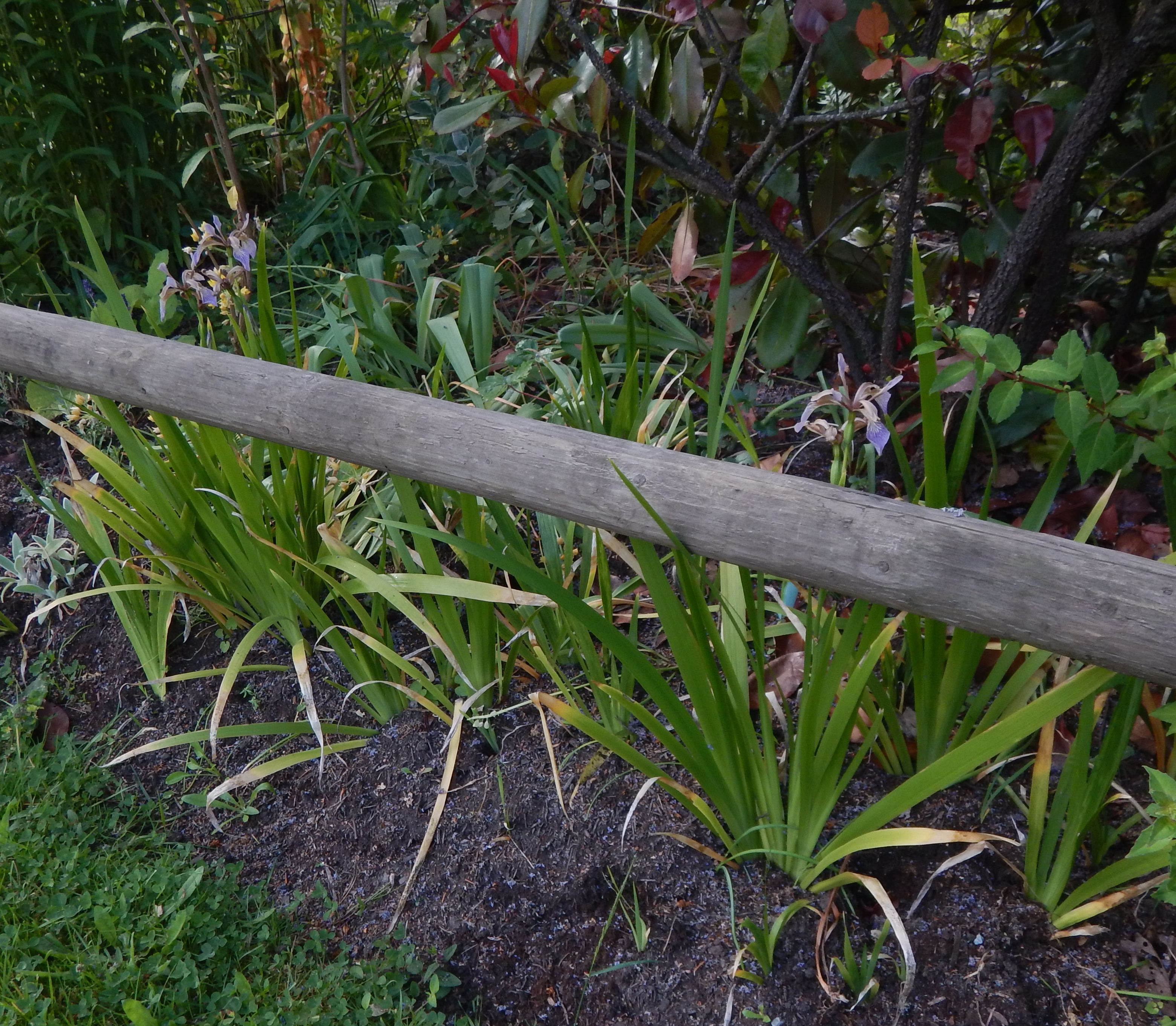
Iris foetidissima, Stinking iris, Fetid Iris, Scarlet berry iris, roast beef plant, Scarlet-Seeded Iris, Coral Iris, Orange Seeded Iris, blue seggin, Gladden, Gladdon, Gladwin, Gladwyn, Stinking Gladwin, garden Victoria, Vancouver Island, BC, Pacific Northwest
photo by SVSeekins
  • It’s evergreen.
    & year-round structure is coveted in December when pretty much everything else has collapsed to the ground.
  • It happily handles the dry conditions under a shady tree where few plants survive.
  • Our hungry neighbourhood deer leave it strictly alone. 🙂
    & it’s getting harder to find something they won’t eat around here!
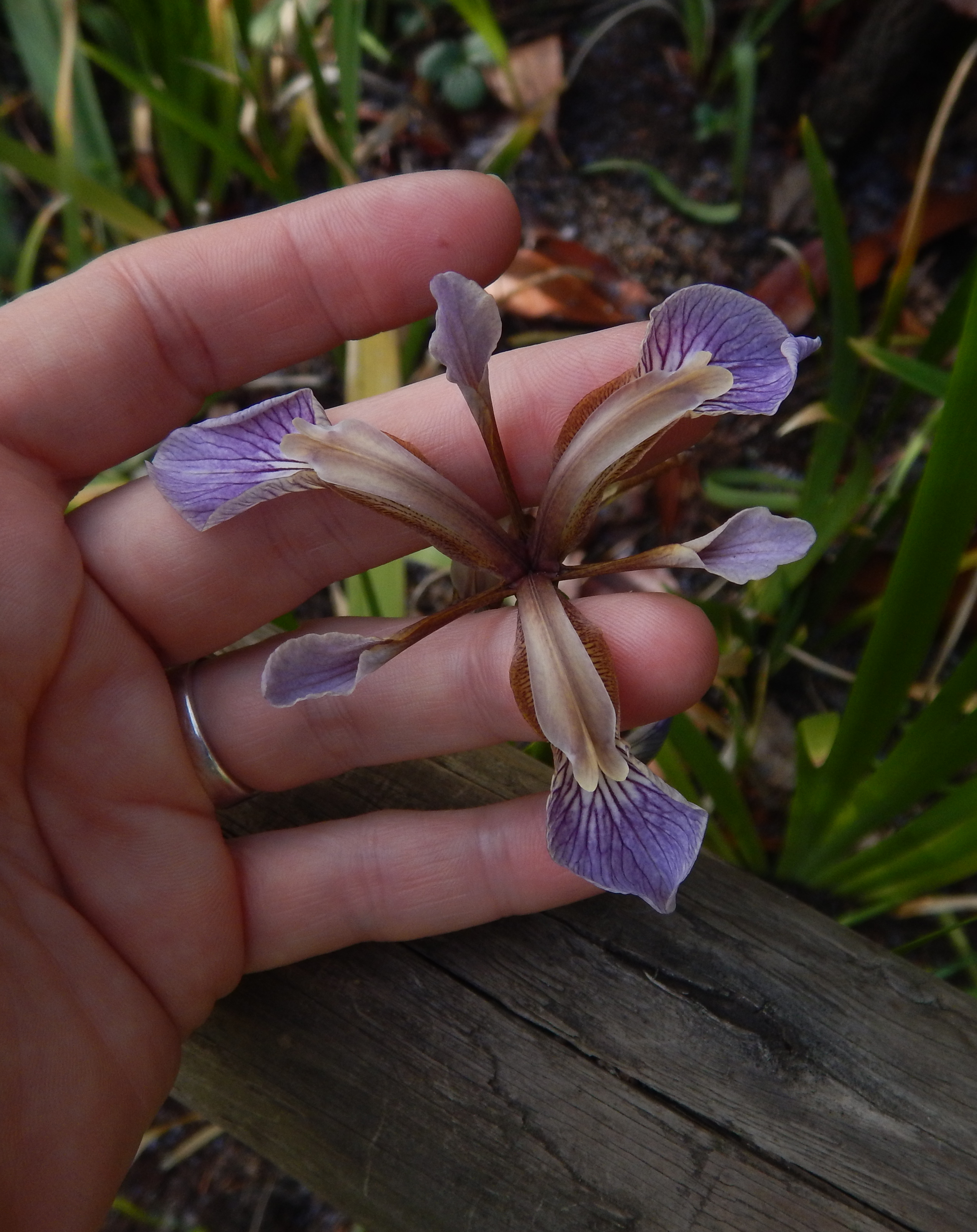
Iris foetidissima, Stinking iris, Fetid Iris, Scarlet berry iris, roast beef plant, Scarlet-Seeded Iris, Coral Iris, Orange Seeded Iris, blue seggin, Gladden, Gladdon, Gladwin, Gladwyn, Stinking Gladwin, garden Victoria, Vancouver Island, BC, Pacific Northwest
photo by SVSeekins

The flower is easy to miss. Pale lavender petals open in June & are overshadowed by other, more boisterous blooms. It’s pretty but not spectacular, like so many other iris. I reckon it’d be perfect potted up on a north-facing balcony where little else gives four seasons of interest. Right?

But don’t be too quick to tidy those flower stems!
They morph into heavy seedheads that curl open in autumn with the actual show. 🙂
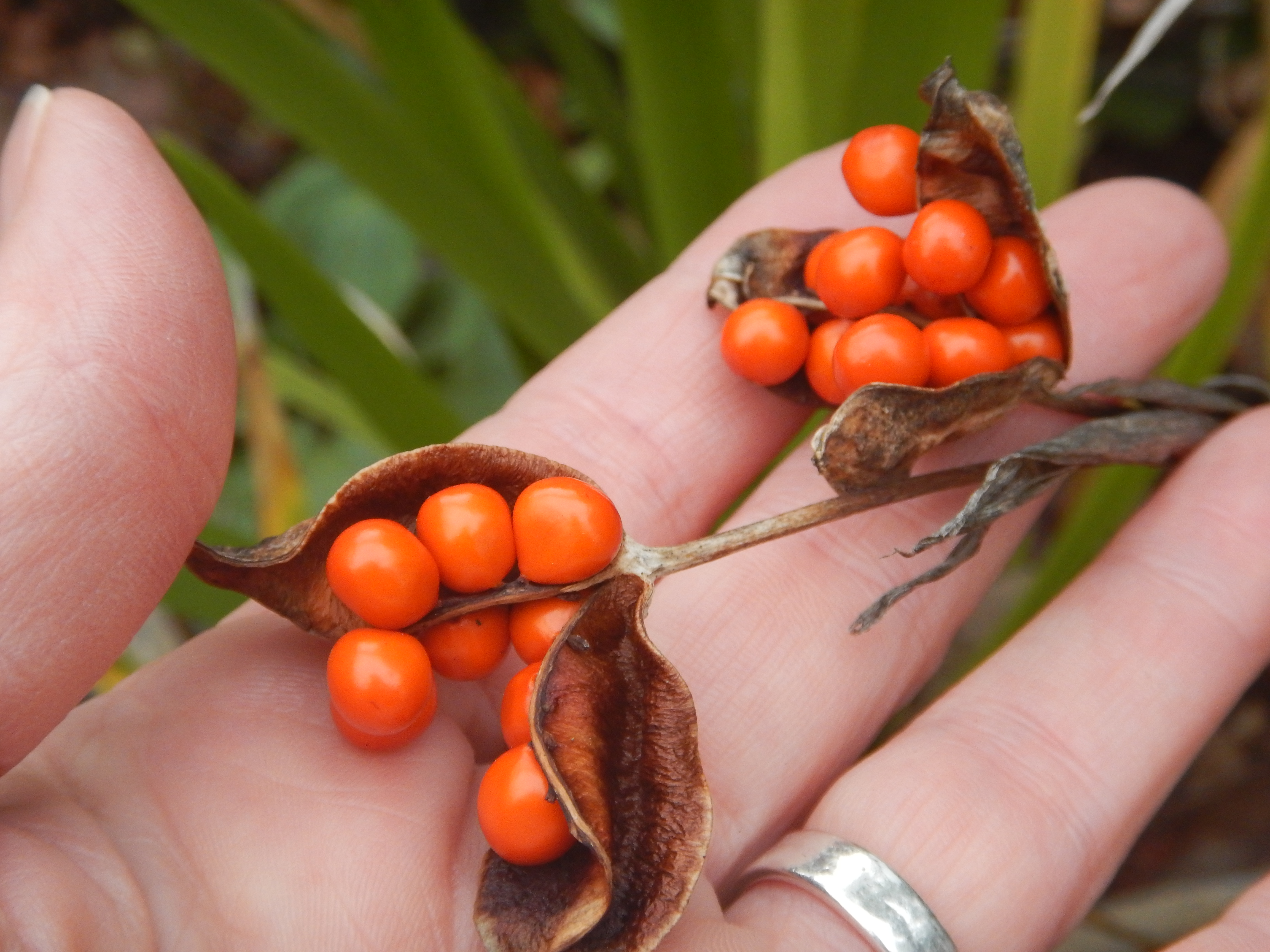
Iris foetidissima, Stinking iris, Fetid Iris, Scarlet berry iris, roast beef plant, Scarlet-Seeded Iris, Coral Iris, Orange Seeded Iris, blue seggin, Gladden, Gladdon, Gladwin, Gladwyn, Stinking Gladwin, garden Victoria, Vancouver Island, BC, Pacific Northwest
photo by SVSeekins
  • Those bright orange berries are just so funky looking!
    & it’s so gratifying to have interest through fall & winter.

The seed doesn’t seem to appeal to the birds – – and it turns out to be toxic to cats, dogs & humans… even cattle will sicken if they chew on the roots. So, Scarlet Berry Iris might be an issue if I plant it on the woodland edge of pastureland. I’m surprised cows would take a nibble when the deer clearly don’t.

Iris foetidissima‘s native range is southern Europe & northern Africa. I’ve never heard of it going astray in North America. Still, it’s considered invasive in parts of New Zealand & Australia. I found some berries dropped onto the lawn edge so I tucked them in the soil around the plants. I’d be happy a bigger show next year.
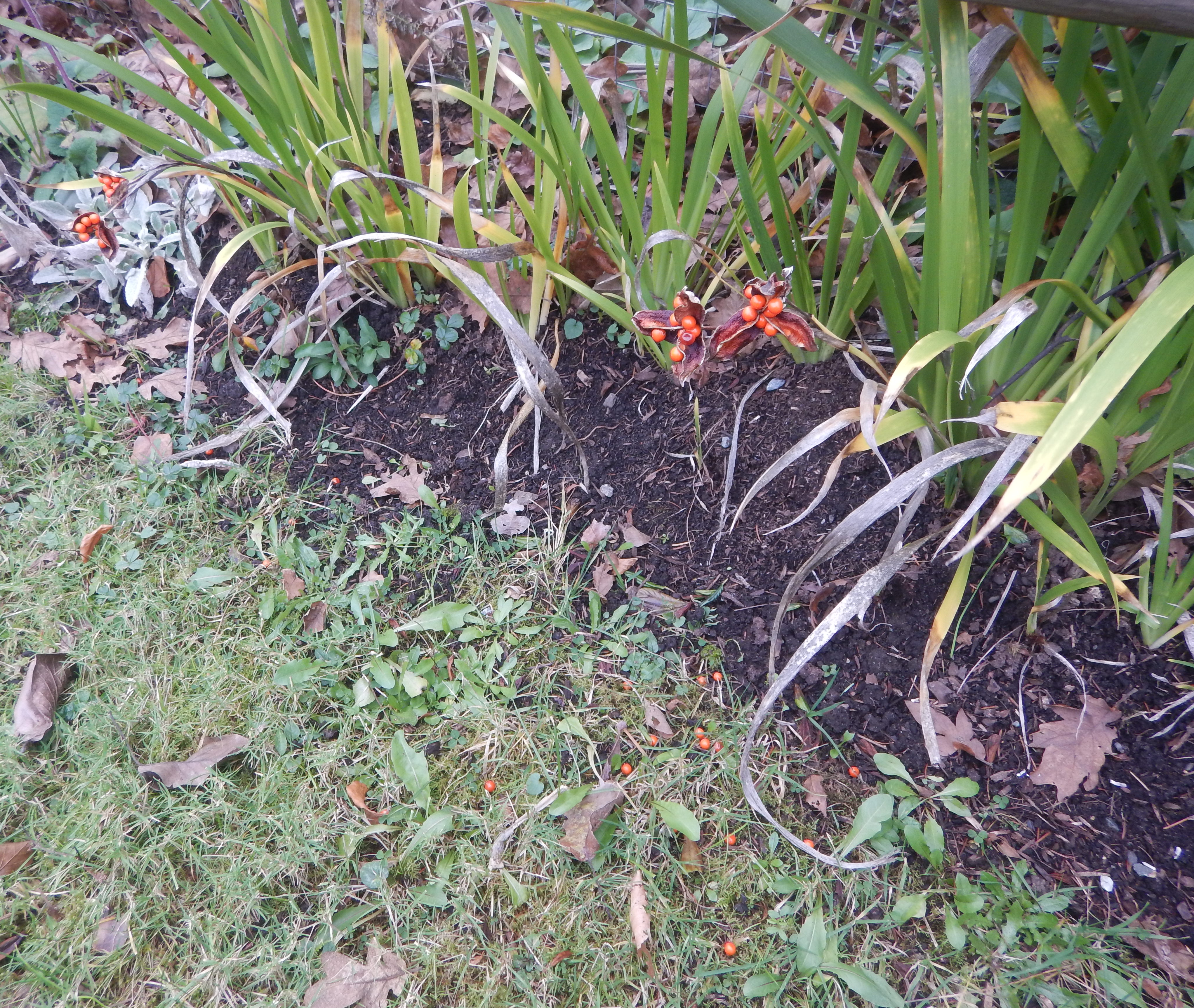
Iris foetidissima, Stinking iris, Fetid Iris, Scarlet berry iris, roast beef plant, Scarlet-Seeded Iris, Coral Iris, Orange Seeded Iris, blue seggin, Gladden, Gladdon, Gladwin, Gladwyn, Stinking Gladwin, garden Victoria, Vancouver Island, BC, Pacific Northwest
photo by SVSeekins

-30-

Other indispensables:

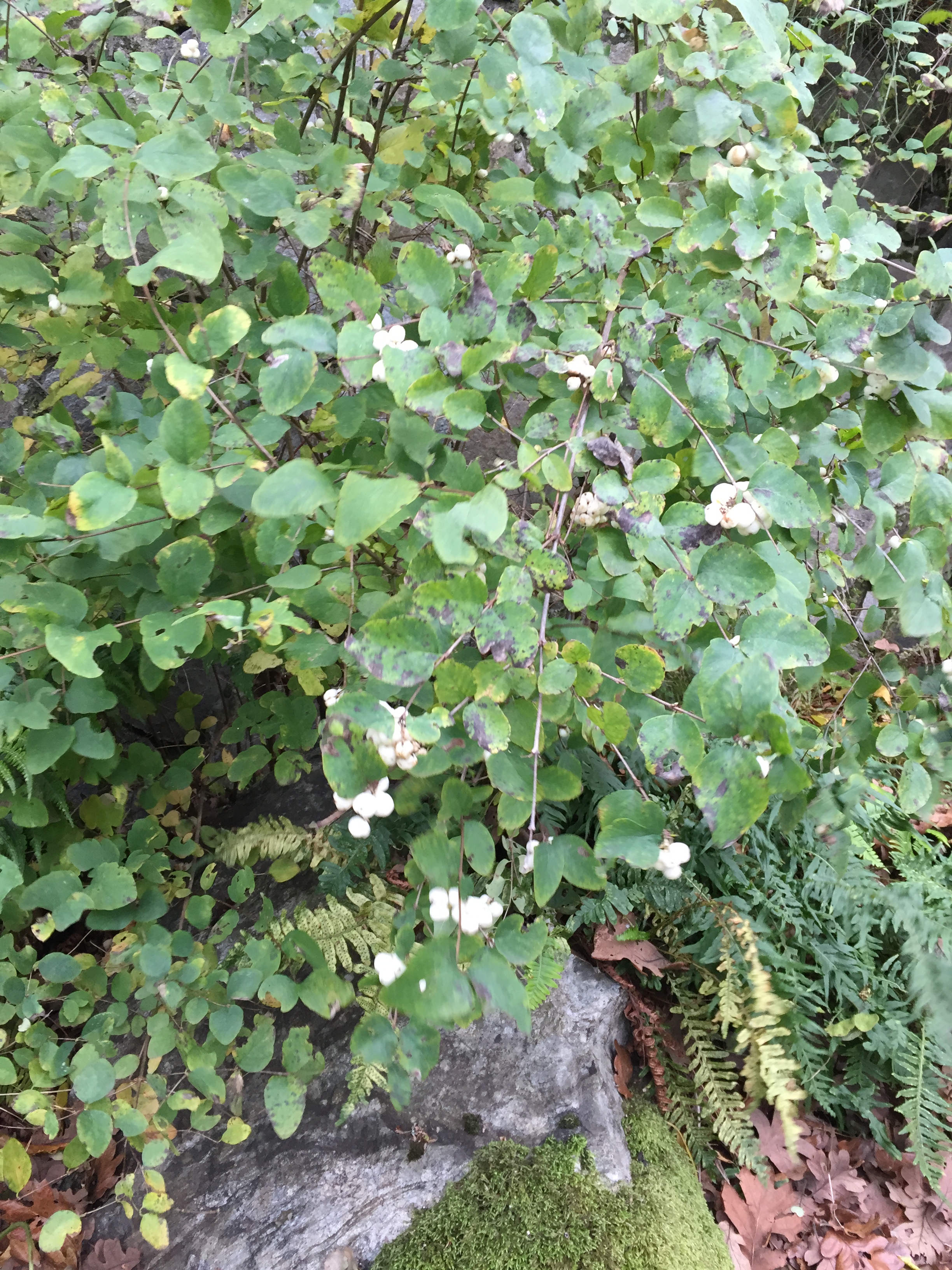
Common Snowberry

The simple addition of the word ‘Common’ before a plant name seems to make it less desirable, doesn’t it?

common snowberry, wax berry, white coralberry, corpse berry, snake's berry, waxberry, ghostberry, Symphoricarpos albus, Symphoricarpos rivularis, Symphoricarpos racemosa, garden Victoria, Vancouver Island, BC, Pacific Northwest
photo by SVSeekins

Who would want a common plant in a garden? Don’t we all want flash – bling — the unusual? In truth, the backbone of a great many gardens is made up of ‘Common ‘ plants. It’s the common plants that enhance the flash & bling of unusual ones.

common snowberry, wax berry, white coralberry, corpse berry, snake's berry, waxberry, ghostberry, Symphoricarpos albus, Symphoricarpos rivularis, Symphoricarpos racemosa, garden Victoria, Vancouver Island, BC, Pacific Northwest
photo by SVSeekins

Common Snowberry seems an insignificant deciduous shrub, but it has qualities that raise its value in a garden.

  • ‘Common’ basically means: it can grow pretty much anywhere.
    • Here on the southern tip of Vancouver Island, where our challenge is summer drought & winter wet, Symphoricarpos albus still thrives.
    • Have you got a steep yard where your hedge struggles because it’s dry at the top of the slope & soggy lower down? Snowberry handles that broad spectrum. It also handles sheering if you’re after a tidy, dense form. AND It supplies a nice cohesive look dotted throughout a mixed hedgerow.
    • How about that difficult dry, shady patch where it’s tough for plants to survive? Yup, snowberry handles that, too.
    • It grows well in the feast or famine water supply of bioswales & rain gardens that are so prized for slowing stormwater runoff.
    • Because its vigorous roots spread via suckers, snowberry is a workhorse in erosion control, which is why it’s also recommended for restoration sites.
common snowberry, wax berry, white coralberry, corpse berry, snake's berry, waxberry, ghostberry, Symphoricarpos albus, Symphoricarpos rivularis, Symphoricarpos racemosa, garden Victoria, Vancouver Island, BC, Pacific Northwest
photo by SVSeekins
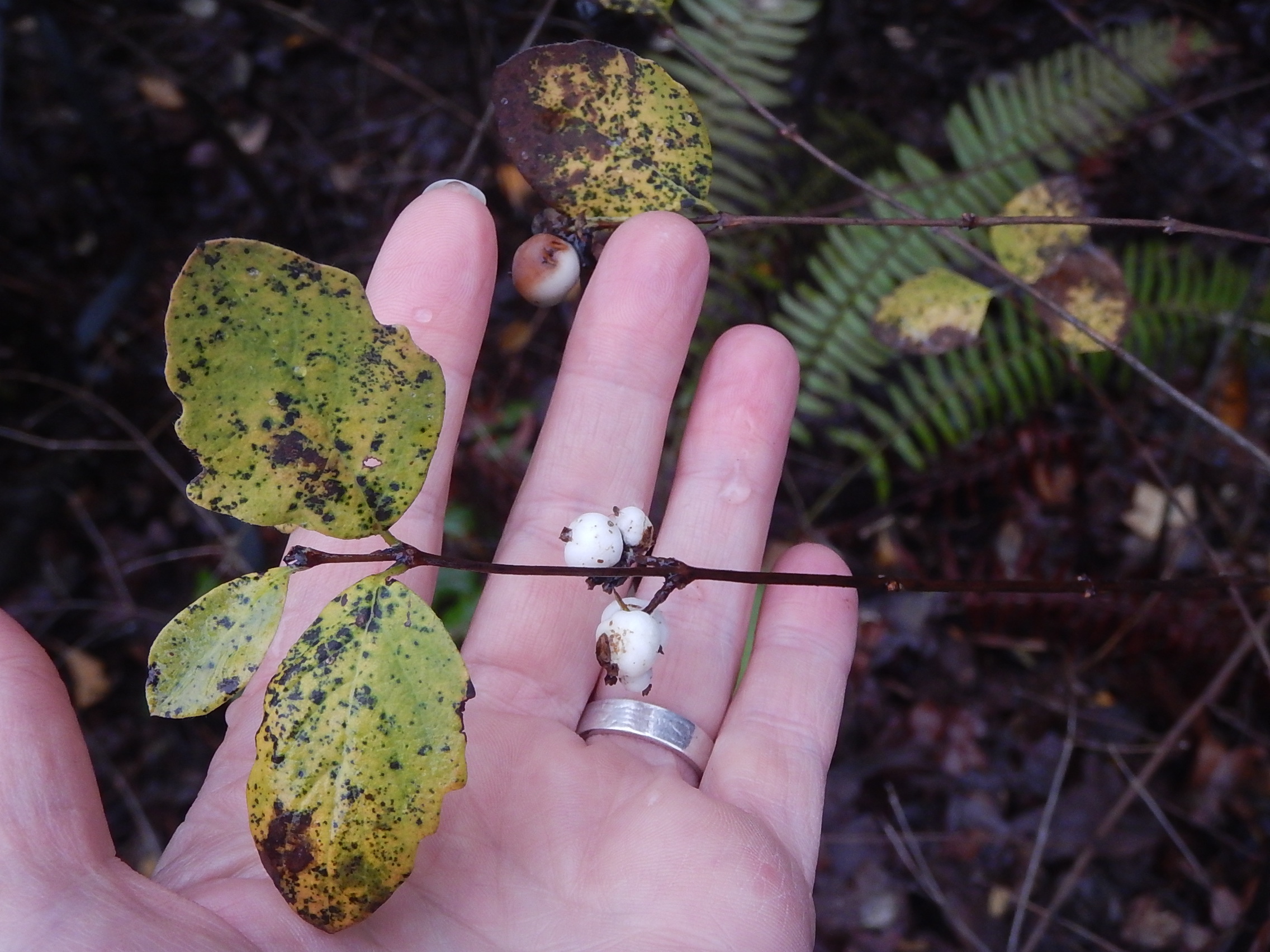
  • Snowberry has unusual fruits.
    • White berries are not the norm — and the snowberry is even more unusual in that it’s NOT even a berry! It’s a ‘drupe.’ Each fruit contains 2 ‘nutlets’ — just like the fruit of a cherry contains a pit. Cool, eh? How many folks at the garden club can you entertain with that trivia?
    • Symphoricarpos albus’ bitter drupes persist late into the winter, providing welcome food for birds when other supplies run low.
    • This small shrub was considered interesting & decorative enough that a couple centuries ago, it was imported by Britain & grown in many fashionable gardens. Side note: It’s become so comfortable there that it spread into their wilderness areas, too! See — it’ll grow pretty much anywhere.
common snowberry, wax berry, white coralberry, corpse berry, snake's berry, waxberry, ghostberry, Symphoricarpos albus, Symphoricarpos rivularis, Symphoricarpos racemosa, garden Victoria, Vancouver Island, BC, Pacific Northwest
photo by SVSeekins
  • Snowberry is a native plant that welcomes wildlife to the garden.
    • The diminutive pink flowers in early summer are especially appreciated by native pollinators & other beneficial insects. Both the Anna’s & Rufus hummingbirds compete for access to the blooms.
    • Deer & other ungulates browse on snowberry, but it isn’t tasty enough to be gorged on as their dessert.
    • Even in its naked winter state, a Symphoricarpos albus thicket provides protection, food & shelter for small birds & mammals.
common snowberry, wax berry, white coralberry, corpse berry, snake's berry, waxberry, ghostberry, Symphoricarpos albus, Symphoricarpos rivularis, Symphoricarpos racemosa, garden Victoria, Vancouver Island, BC, Pacific Northwest
photo by SVSeekins

I used to think snowberry was a pretty dull little shrub, but I’ve since changed my mind. A couple of years ago, I planted one in our little woodland border. Without any further attention, the snowberry survived last summer’s drought & this year, it bore fruit– several puffy white drupes. 🙂

Now the plan is to introduce it into a couple other challenging spots. The wildlife will be happy if it flourishes. If its vigorous roots spread too far, I’m sure the deer will help keep it in check.

-30-

Monkey Puzzle Envy

Half a block along our street grows a tree I admire.

  • It’s evergreen.
  • It’s super tidy & symmetrical.
  • And it’s just so FUNKY looking.
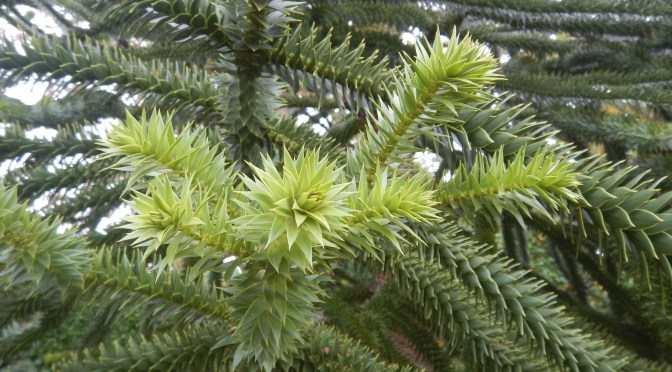
monkey puzzle tree, Araucaria araucana, monkey puzzle tree, monkey tail tree, piñonero, pewen, Chilean pine, garden Victoria, Vancouver Island, BC, Pacific Northwest
photo by SVSeekins

The Monkey Puzzle Tree, Araucaria araucana, is the national tree of Chile but seems to grow happily all along the coast of the Pacific Northwest.

monkey puzzle tree, Araucaria araucana, monkey puzzle tree, monkey tail tree, piñonero, pewen, Chilean pine, garden Victoria, Vancouver Island, BC, Pacific Northwest
photo by SVSeekins

That said, I reckon there’s no danger of it overwhelming the gardens hereabouts. That beautiful symmetry is created by triangular leaves spiralling around the branches and even along the trunk. The rigid leaf edges are sharp & the tips are severe needles.

It’s downright dangerous.

Even still, I NEEDED one in our garden.

No gardener of sound mind would position a Monkey Puzzle Tree near a high traffic area — nor underplant with high maintenance perennials.

monkey puzzle tree, Araucaria araucana, monkey puzzle tree, monkey tail tree, piñonero, pewen, Chilean pine, garden Victoria, Vancouver Island, BC, Pacific Northwest
photo by SVSeekins

Ever so carefully, I installed a Monkey Puzzle in an out-of-the-way section of our yard. I mulched from the trunk to the dripline. The very first season, a large buck attacked it with his antlers. I watched in amazement. I’ll bet the deer walked away with a migraine. The poor sapling survived with only 1 broken branch.

The Araucaria lasted maybe 3 or 4 years before it had sliced C one too many times.
He disappeared it. 😦
It hadn’t had the opportunity to grow to more than 3 feet.
So sad, but I understood.

monkey puzzle tree, Araucaria araucana, monkey puzzle tree, monkey tail tree, piñonero, pewen, Chilean pine, garden Victoria, Vancouver Island, BC, Pacific Northwest
photo by SVSeekins

The neighbour’s Araucaria was here when we arrived in the ‘hood. Over 15 years, it’s grown from a sturdy 6 ft. to an impressive 30 ft tall. (It takes patience to grow a Monkey Puzzle). They’ve limbed up the branches so whoever mows the lawn is much safer.

One day soon, I’m hoping it’ll be mature enough to produce cones. Can you imagine how pre-historic they’ll look, too?

I’ll happily admire it from afar.

-30-