Ok – I thought it was a gorgeous, drought-tolerant addition to a hanging basket. I was so pleased with the look of the white stonecrop when it started to flower in July. The blooms looked great for a month or so. I was stoked.
photo by SVSeekins
AND then, as nature progresses, the flowers turned to seed heads. hmmm. Brown. Kinda messy looking. .. My inner tidy freak cringes. 😦 An over-tidy garden isn’t all that great for wildlife.
And THEN we went camping for a couple weeks in early September & I didn’t have to control my urge to deadhead the perfectly good birdseed.
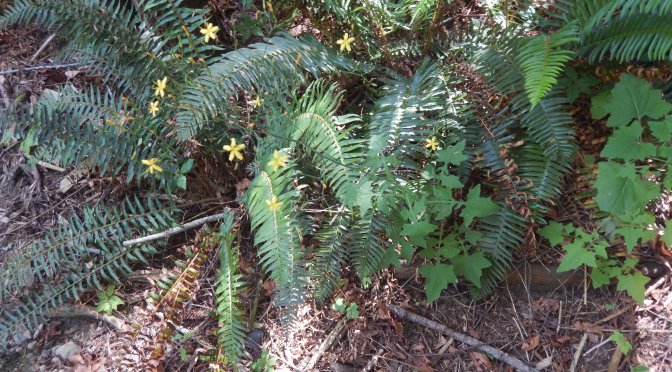
Now, autumn is arriving & with it cooler temperatures + some moisture. The licorice ferns are coming alive.
photo by SVSeekins
The messy seed heads of the sedum album are overshadowed. Crisis averted.
Last year the ferns on our rocky outcrop were not surviving the appetite of our local deer. Shifting sheets of moss that the licorice ferns were growing in & creating a basket hanging above the reach of Bambi has proved successful. 🙂 The baskets promise to hold my interest through the humidity of fall & winter,
So now the question: Is there anything I could plant to distract from the brown look through August & early September until the licorice fern becomes The Show? It needs to be drought tolerant & happy in a bit of shade …. Any suggestions?
Wild Ginger looks lovely carpeting the understory of a Pacific Northwest forest. I’ve often admired it in its native landscape & longed to grow it in our garden.
photo by SVSeekins
Years ago, I bought a small pot at the Swan Lake Native Plant Sale & dug it into a nice spot in our woodland. It didn’t survive. Apparently, Asarum caudatum is only summer drought-tolerant “once established.” Mine died before its roots grew deep enough to survive between waterings. My bad 😦
photo by SVSeekins
Later, I sourced another one from the Native Plant Study Group. I carefully planted it in a pot in our courtyard, where I knew it would get enough water. It thrived & eventually filled the pot. Redeemed!!!!! 🙂
By this spring, the Wild Ginger was established enough to divide.
photo by SVSeekins
Carefully, I slid the plant into a tub of water to tease the roots out of the soil. There’s so much to learn when I get a really good look at the roots of a plant. Asarum caudatum spreads through rhizomes, slowly travelling outward, just under the soil & starting new plants. This way, the established mother ginger can support the young ginger until its new root system develops & reaches deep enough into the ground to find moisture itself.
photo by SVSeekins
The original plant had crept around the pot several times. It created at least a dozen decent-sized root balls. Score! 🙂 🙂
We’ll get several pots to tend through the summer diligently. With regular water & attention, these larger root balls will develop some of those delicate feeder roots & be ready to go into the garden in a few months.
photo by SVSeekins
Asarum caudatum is also known for shy spring flowers that hide under its evergreen leaves. Last month I found seed heads leftover from the blossoms. (Flies & beetles pollinate them – so those beasties had paid better attention than I had when the plant was flowering). I searched for some sign it self-seeded into the pot. (Ants typically carry the seed away.)
There were at least 6 Wild Ginger babies. Most were pretty tiny & I worry they might not survive the transplanting. Here are 3 with roots that are large enough to show up in a photo.
It took 4 new pots the same size the ginger had just come out of to give homes to all the divisions. That’s 5 in total.
photo by SVSeekins
By late September or October, the weather should still be warm & the rains will make the ground workable again. It’ll be an excellent time to transplant our treasures. They’ll settle in over winter & be ready to begin fresh in the spring. I reckon that with this many pots, we’ll be able to test them in a few different spots — to see which locations they like best.
The rosette of jagged leaves hints that this plant is probably related to the common dandelion, but I didn’t know for sure… so I left it growing.
After a bit of time, a tall stem rises from the centre & produces a mist of tiny yellow flowers that are more like a daisy than a dandelion. Hmmm. Weed? Not a weed?
photo by SVSeekins
I kinda like the cloud of yellow daisy flowers ‘floating” 3 feet above the ground. But they don’t last long… then they’re just messy looking.
Mycelis muralis is native to Turkey & other European areas. Wildlife in the Mediterranean evolved using this plant. Not so in North America. Wall lettuce is still new to the wildlife here. If I want more beneficials & pollinators in our garden I’d be further ahead adding more native plants that the wildlife enjoy & depends on.
So, in our garden, wall lettuce is a weed. Decision made.





 Garden Variety Life