Tag Archives: autumn blooms

Cyclamen Seedpods

What does Southern Vancouver Island have in common with Turkey on the Mediterranean?
Hardy Cyclamen.

hardy cyclamen, persian violet, , ivy-leaved cyclamen or sowbread, garden Victoria, Vancouver Island, BC, Pacific Northwest
photo by SVSeekins

Cyclamen hederifolium is native to Turkey,  and that climate is quite like ours.
Would you’ve guessed?
So it kinda makes sense:
What prospers there…
prospers here.

garden Victoria, Vancouver Island, BC, Pacific Northwest
photo by SVSeekins

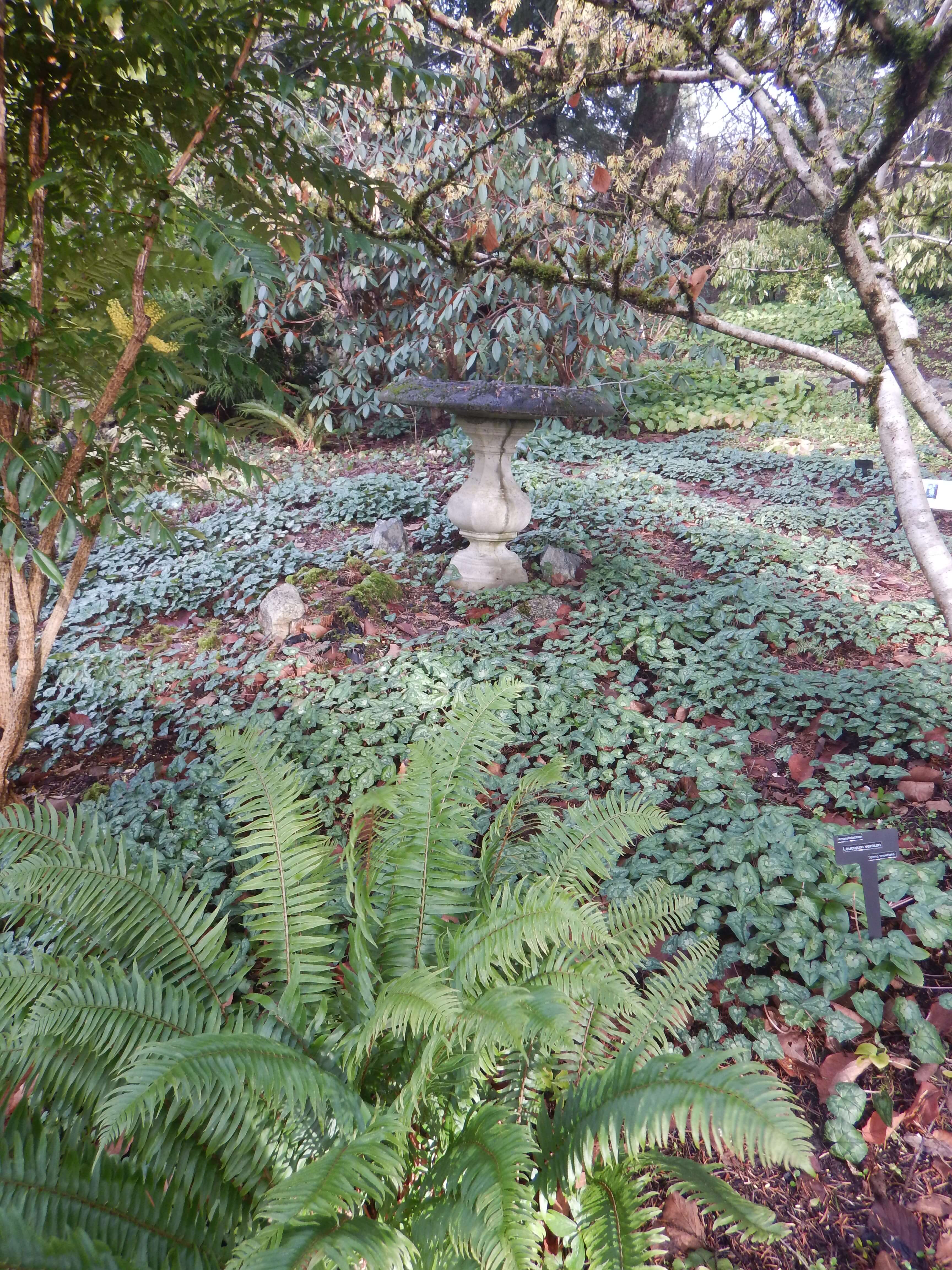
Hardy Cyclamen likes our dry summer.  It goes dormant. Later, the cooling temperatures & returning rain of September triggers the awakening.  One morning flowers are popping out of the ground & dancing in the dappled shade.  What a lovely surprise. Flowers in autumn!
(Plus, what a bonus – a pretty plant that doesn’t need me dragging around a garden hose… AND one that’s happy in those tough-to-garden spots under trees!)

garden Victoria, Vancouver Island, BC, Pacific Northwest
photo by SVSeekins
hardy cyclamen, persian violet, , ivy-leaved cyclamen or sowbread, garden Victoria, Vancouver Island, BC, Pacific Northwest
photo by SVSeekins

After pollinators do their thing, the flower stems curl into tight coils, pulling the seed pods to the ground.  Leaves emerge, protecting the pods from our winter wind & rain.  How tidy is that?   I never feel the urge to deadhead.   (Extra bonus – decorative foliage that stays green through our long, glum winter.  And IF we get snow & severe cold, the cyclamen survives to -28C  a colder winter than we’re likely to get.)

garden Victoria, Vancouver Island, BC, Pacific Northwest
photo by SVSeekins

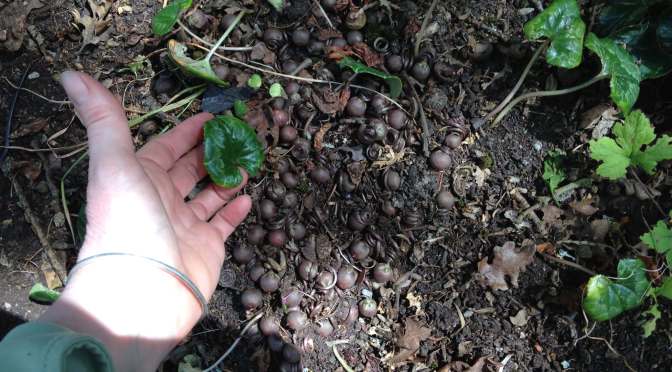
While so much of the garden is going nuts through spring, Cyclamen hederifolium is wrapping up its display. The leaves die back, revealing the maturing seed pods. A matt of balls on coil springs remind me where the plant is preparing for sleep.  Doesn’t it look GROOVY?

hardy cyclamen, persian violet, , ivy-leaved cyclamen or sowbread, garden Victoria, Vancouver Island, BC, Pacific Northwest
photo by SVSeekins

Ants think it’s pretty groovy, too.  The seeds are coated with a sweet film.  Ants gather them & take them home to feed the masses.
Win – Win – Win.
Ants get a treat.
The seed is sown.
And the gardener has a new no-fuss plant.

hardy cyclamen, persian violet, , ivy-leaved cyclamen or sowbread, garden Victoria, Vancouver Island, BC, Pacific Northwest
photo by SVSeekins

What an ingenious system for naturalizing through the garden … and beyond.

Barely noticeable little seedlings sprout in lawns & woodland parks alike.  Eventually, the tiny corms can grow to the size of dinner plates.
Welcome or not.

hardy cyclamen coum, eastern cyclamen C. coum garden Victoria, Vancouver Island, BC, Pacific Northwest
photo by SVSeekins

I grow a few varieties of Hardy Cyclamen. Over 10 years, I’ve noticed a couple baby plants growing near their parents.  I’m particularly fond of the February bloomer Cyclamen coum.

C. coum is a timid seeder in comparison with the C. hederifolium.  The fall bloomer out-competes the winter bloomer.  I’m very careful to keep each cyclamen variety in its own bed.

hardy cyclamen, persian violet, , ivy-leaved cyclamen or sowbread, garden Victoria, Vancouver Island, BC, Pacific Northwest
photo by SVSeekins

Believe it or not — C. hederifolium is on the District of Saanich’s Invasive Plants list!  It naturalizes that well around here.  It must out-compete more than just the C. coum.

I have to admit to still holding a torch for these funky plants.
Does it count in my favour that I’ve dug some cyclamen invaders out of a couple wild parklands?
They’ve been planted in spots they’re not likely to escape without notice…

-30-
Enter your email address to subscribe to this blog and receive notifications of new posts by email.

Geum macrophyllum – Large-Leaved Avens

garden Victoria, Vancouver Island, BC, Pacific Northwest
photo by SVSeekins

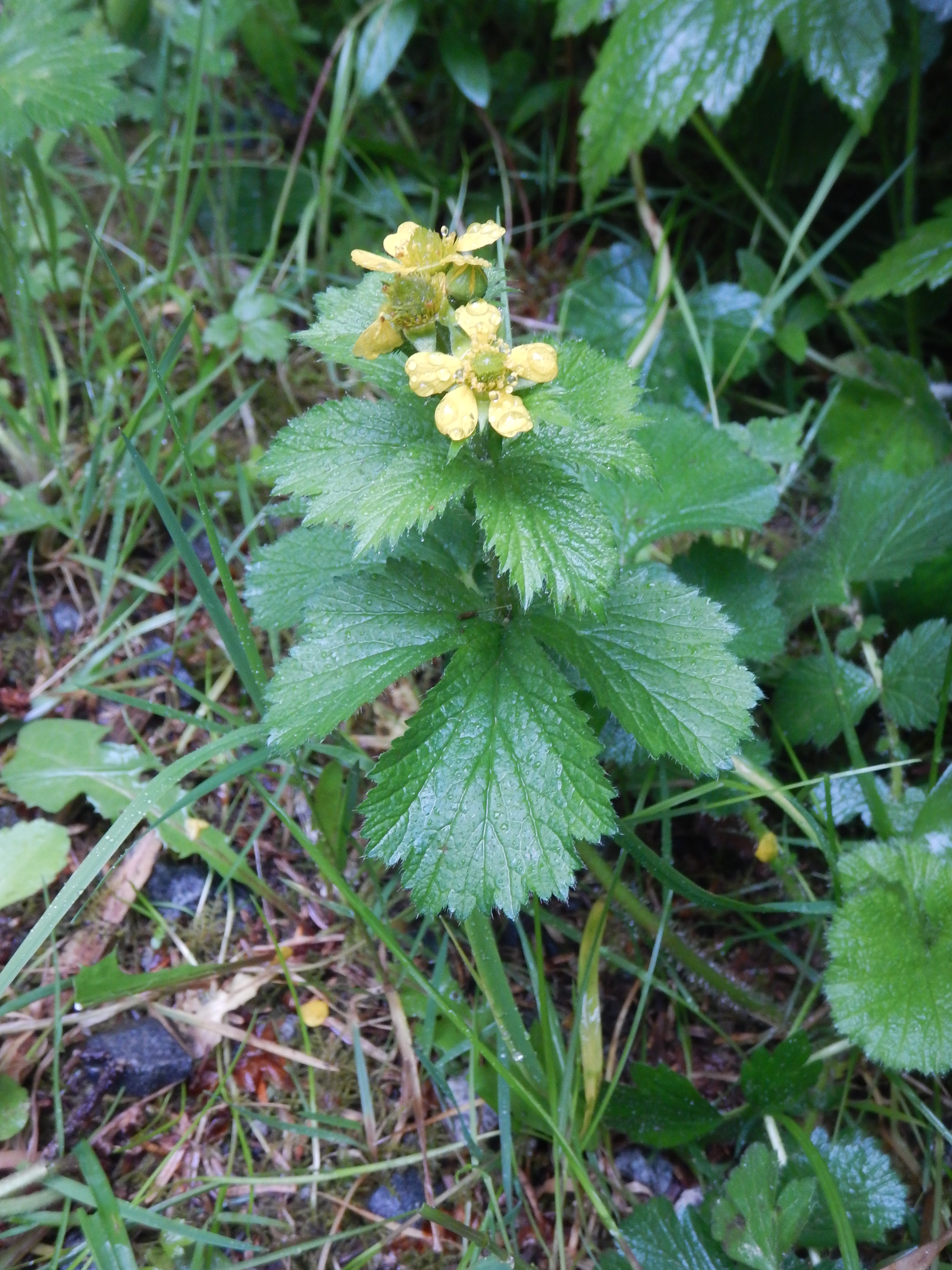
I first really noticed Large-Leaved Avens as a specific wildflower when I found it blooming beside the waterfall at Goldstream Park one May.  Before that, it was just one of the many yellow blooms we see in spring.

garden Victoria, Vancouver Island, BC, Pacific Northwest
photo by SVSeekins

Recently I was pleased to see it blooming in a parking lot, not far from the ocean, near Tofino.  That was at Thanksgiving!

October is really very late for a spring wildflower to be blooming – but I’m not complaining.   🙂

garden Victoria, Vancouver Island, BC, Pacific Northwest
photo by SVSeekins

The flower is a simple yellow daisy style; a smiling happy bloom that I find charming.
Unassuming.
Easy.

But Geum macrophyllum is not as plain as it first appears.

large-leaved avens, Geum macrophyllum, largeleaf avens, big leaf avens, garden Victoria, Vancouver Island, BC, Pacific Northwest
photo by SVSeekins

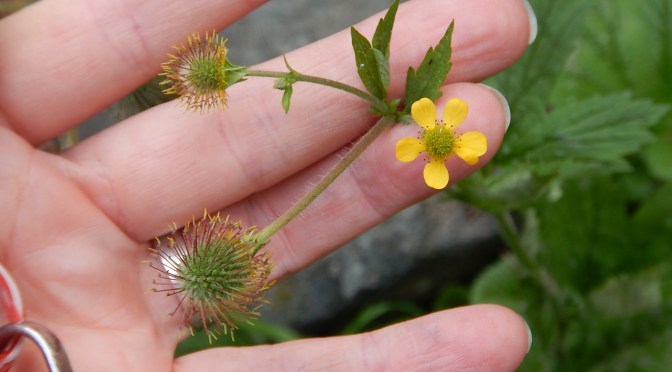
The seedhead is funky – certainly something that I’d let stand in my garden rather than tidy up.

The achenes (fruits) kinda remind me of googly eyes floating above the alien body.    Apparently, the pom-poms are happy to catch rides on passing pant legs or animals: free spirits looking for adventures far afield.  Groovy.

garden Victoria, Vancouver Island, BC, Pacific Northwest
photo by SVSeekins

But really, the magic is in the foliage.  What other plant has 2 kinds of leaves?  Right at the base, near the ground, the leaves are round.  Further up the stem, near the flowers, they’ve morphed into 3 lobes with deep serrations.  Crazy.

The guidebooks say Avens are common to wetlands across most of North America.  I’m hoping they’ll become common in my garden, too.  Last month I won 3 in the plant raffle at the Native Plant Study Group.  They’re now growing in one of our courtyard beds (where they’re more likely to get the extra summer moisture they need).  Cross your fingers for me.

-30-


Shaggy Mushroom

This fall I’m really trying to let fungi thrive.  Mushrooms pop up in several spots around our place.  They’re pretty, but for some reason I’ve always weeded them out…

Coprinus comatus
photo by SVSeekins

Perhaps they scare me a bit.
Are they edible?
Hallucinogenic?
Medicinal?
Poisonous?

Perhaps I’m just a neat- freak?

Years ago someone told me that trees use fungi root systems as information highways between other trees.  I dismissed the idea.  It sounded too airy-fairy.  But scientists are looking into it.  UBC’s Suzanne Simard explores & maps the fungi mycelium networks that trees use to share nutrients with offspring & neighbours.  Sounds a bit like the storyline of Avatar, doesn’t it?  Perhaps the Old Ones were on to something?

Coprinus comatus, shaggy mane
photo by SVSeekins

The Pacific Northwest is a great place for mushrooms.  The rainforest at one of our favourite campsites is prime.  In 2015 I was charmed by orange stools with white spots.  This October, right at our campsite, was a beautiful white shaggy mushroom.

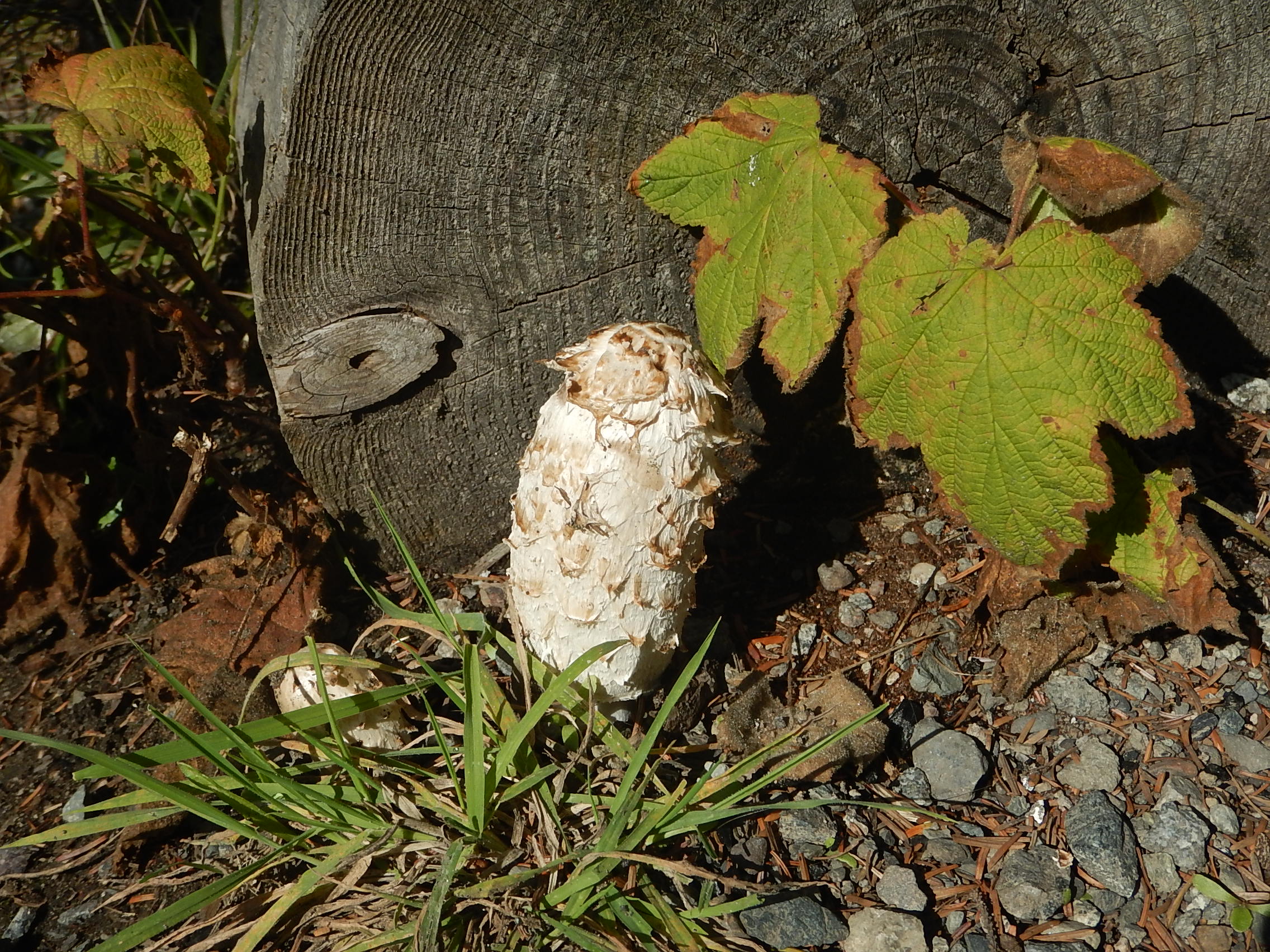
Coprinus comatus, shaggy mane, lawyers wig, mushroom fungi fungus edible garden Victoria, Vancouver Island, BC, Pacific Northwest
photo by SVSeekins

Growing in afternoon sunshine beside a well-trodden gravel pathway, not far from the beach, it struck me as unusual.  This is not the regular deep humus-rich growing site I’d expect for fungi.

The shape & outer texture of the mushroom is distinctive.  I’m pretty sure it’s the edible  Shaggy Mane, aka Lawyer’s Wig, aka Coprinus Comatus.  That said, I’m no expert.

Coprinus comatus
photo by SVSeekins

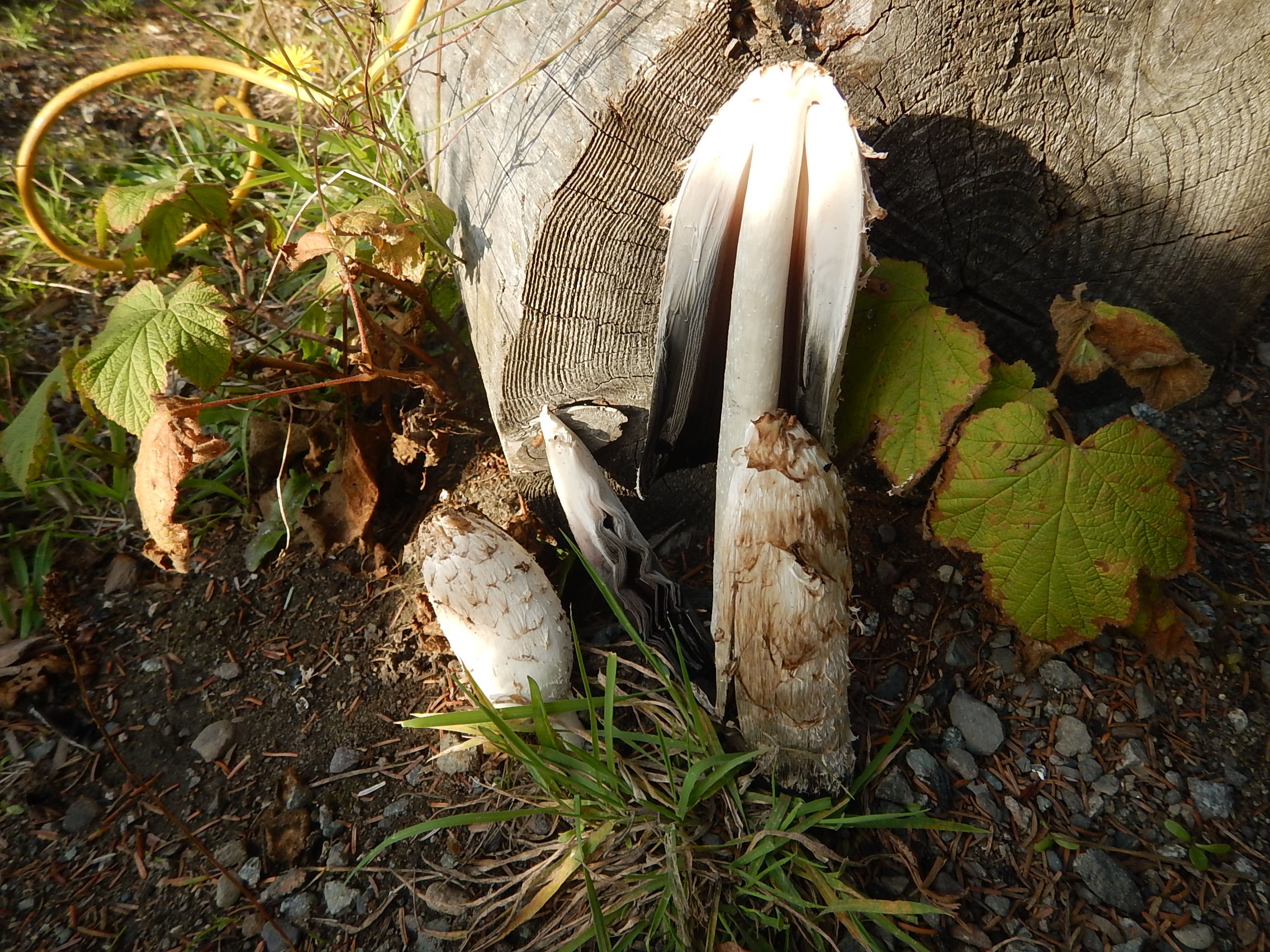
For several days we carefully left the cap to its business. While striking camp, the mushroom was knocked open.  I felt bad but took the chance to look at the inner gills where the spores were maturing.  The dark colouring is further evidence that the ID is correct.  Maybe we should’ve made mushroom soup. (Actually, I wasn’t tempted to use it because of the high-traffic area & the large population of dogs around camp.)

Coprinus comatus
photo by SVSeekins

Did you also notice how much the fruit grew in just 3-4 days?  Doubling size in 48 hours seems amazing to me. The apples in our garden don’t produce like that.

Now I’ll try to keep a closer eye on the fungi growing through our gardens.  Perhaps I’ll shift even further out of my comfort zone & explore farming some edible types.
🙂

-30-