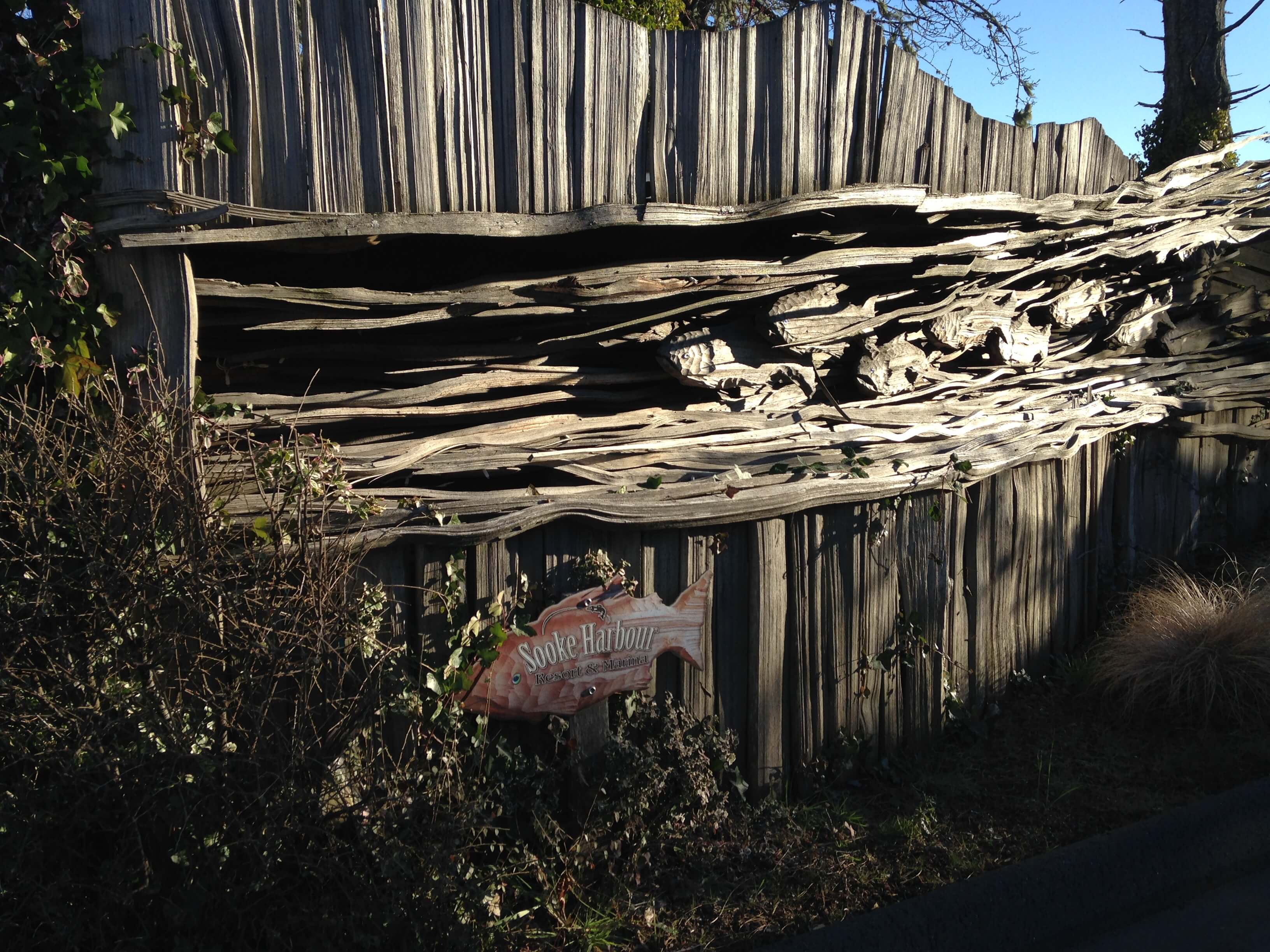
I had to stop to admire this fence in Sooke the other day.
photo by SVSeekins
Swimming salmon.
The lines evoke the feeling of motion – – the motion
of water and fish.
I like the way the shadows and light shift & change, just the way they do when looking into water. My hat’s off to this artist, Renaat Marchand I’m a fan.
photo by SVSeekins
I especially appreciate art with a utility, as well as beauty. It’s not just art stimulating emotion – – it’s a fence serving a purpose. Cool. (My hat’s off to the folks who committed to more than a typical panel barrier, too)
I googled Renaat Marchand, and it turns out he’s made more art at Ed McGregor Park, just down the road from the Sooke Harbour Resort & Marina.
He’s even created the Mermaid Chair for the movie of the same name. It was shot around these parts a while ago.
Apparently, there’s another commissioned fence around about. The Lavender Fence. I’d love to see it, but don’t know where it’s located. Have you seen it around?
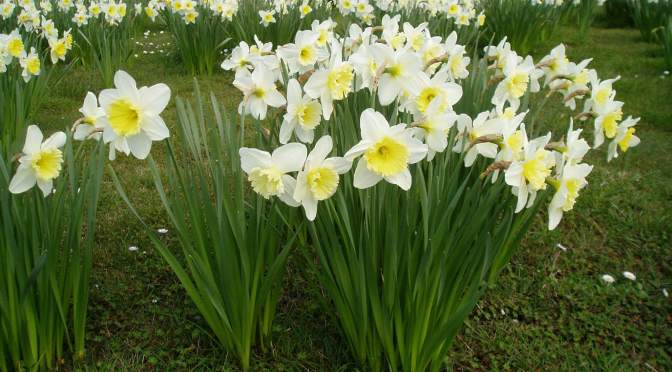
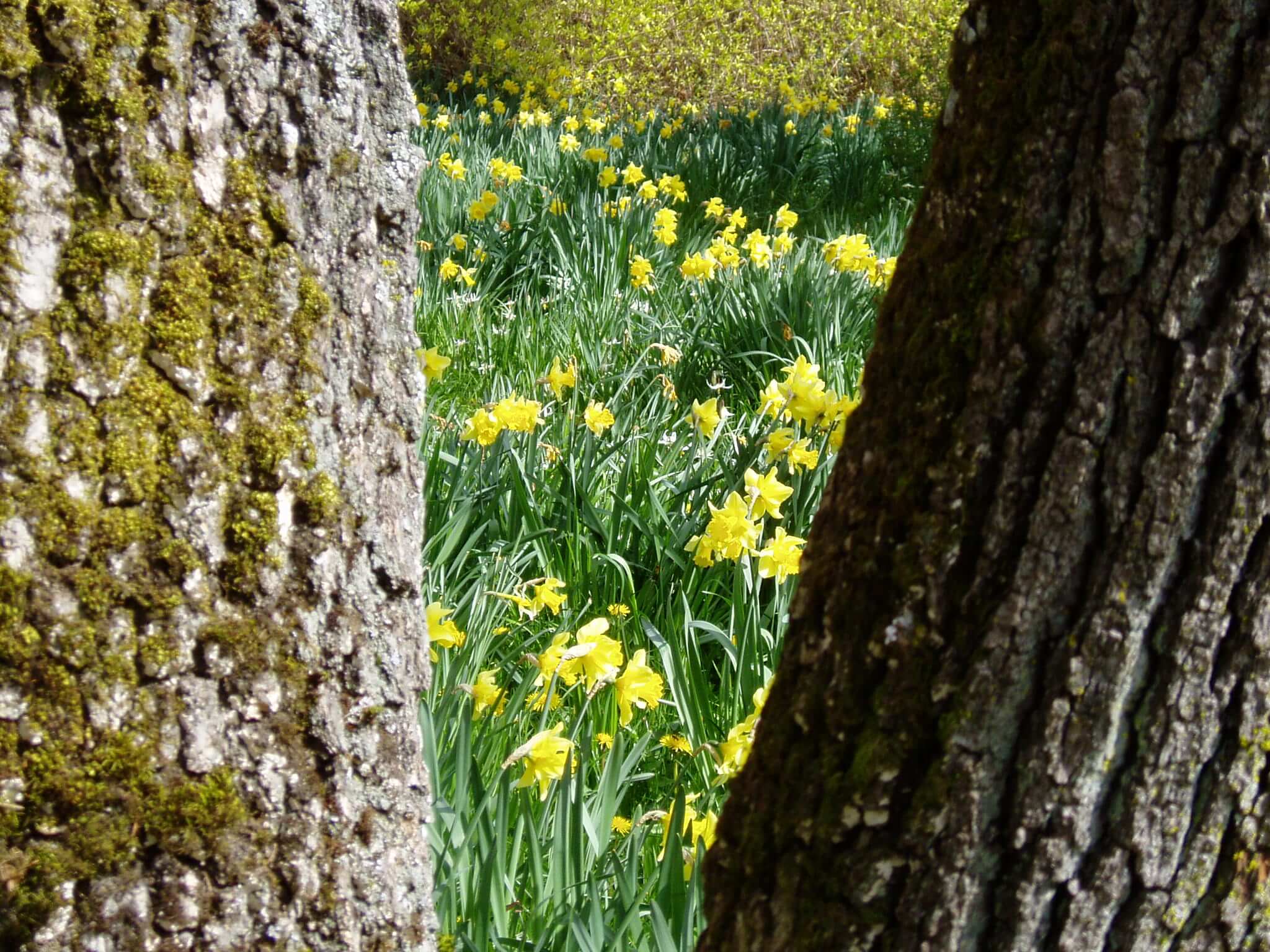
Years ago, I lived beside Beacon Hill Park’s daffodil meadow. It was the first I’d ever seen. Spring magic.
photo by BE Hansen
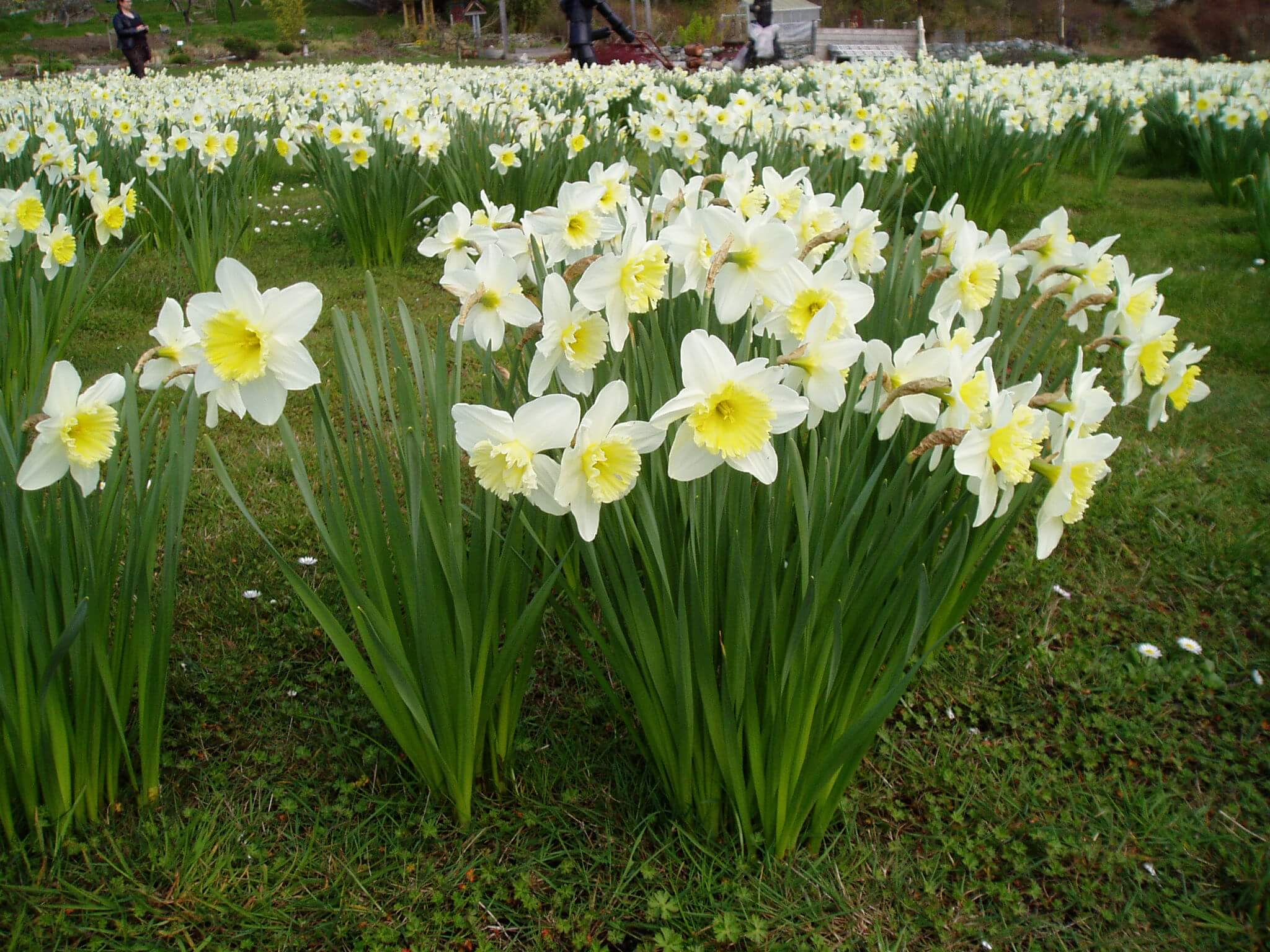
The happy yellow blooms delight me. Plus, I like the little trumpets that protect the flower’s naughty bits from the early rains.
Clever, eh? 🙂
The deer-resistant Narcissus is easy to grow in Victoria. Many varieties are even cold tolerant to zone 3, surviving -40 degrees C! We don’t get anywhere near that cold here. Actually, as our winters gradually become milder, we’re encountering daffodil woes similar to England’s.
photo by SVSeekins
Many of the daffs that show up in your local grocery store’s flower stand originate in Victoria. Famous for producing the largest crop of daffodils in Canada, Vantreights took an early lead in making the daffodil the Flower of Hope for the Canadian Cancer Society.
photo by SVSeekins
At one point, Vantreights farmed on a leased parcel of land that is now The Horticultural Centre of the Pacific: one of my favourite gardens. Today the HCP enjoys a residual daffodil meadow sloping down to the lake.
photo by SVSeekins
Vantreights farmed in Gordon Head before that land became a residential subdivision. I’ve even heard that our street, on the southern slope of Mt. Tolmie, hosted a farm that grew the bulbs, too.
photo by SVSeekins
There are some tricks to growing a spring-flowering meadow. Although daffodils bloom before the grasses start to grow strongly, their leaves are still busy collecting energy for next year’s flowers when C has the uncontrollable urge to dust off the lawnmower. Zip, there goes the meadow!
photo by SVSeekins
The park’s staff at Beacon Hill let the meadow grow naturally all through May before mowing. By then, the ephemeral bulbs have ripened & receded into dormancy.
Shorter growing spring bulbs, like crocus, stand half a chance in our lawn, but not daffodils. Ditto for snowdrops, tulips & camas. These I’ll leave to naturalize in our beds & borders instead.
Typically I curse steep switchbacks. They are exhausting!
photo by SVSeekins
Now, I have reason to appreciate them. One trail in Strathcona Park is so steep that the inside slope is only an arm’s reach away. I have close-up views of the tiny plants that don’t usually catch my attention. I stop, puffing for a few moments, taking in the forest’s carpet of mysteries.
photo by SVSeekins
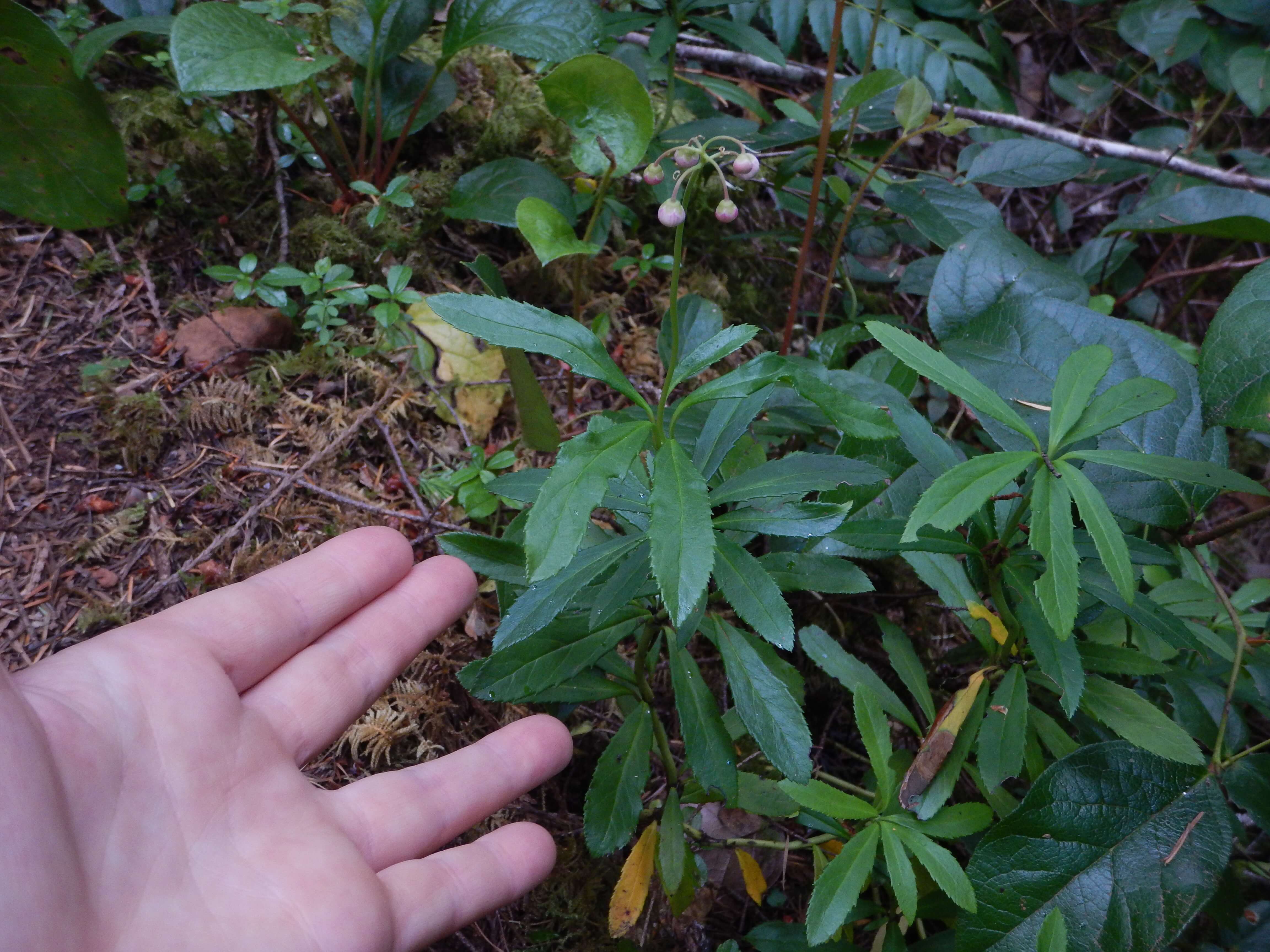
At first, the evergreen plant, Prince’s pine, escapes my notice.
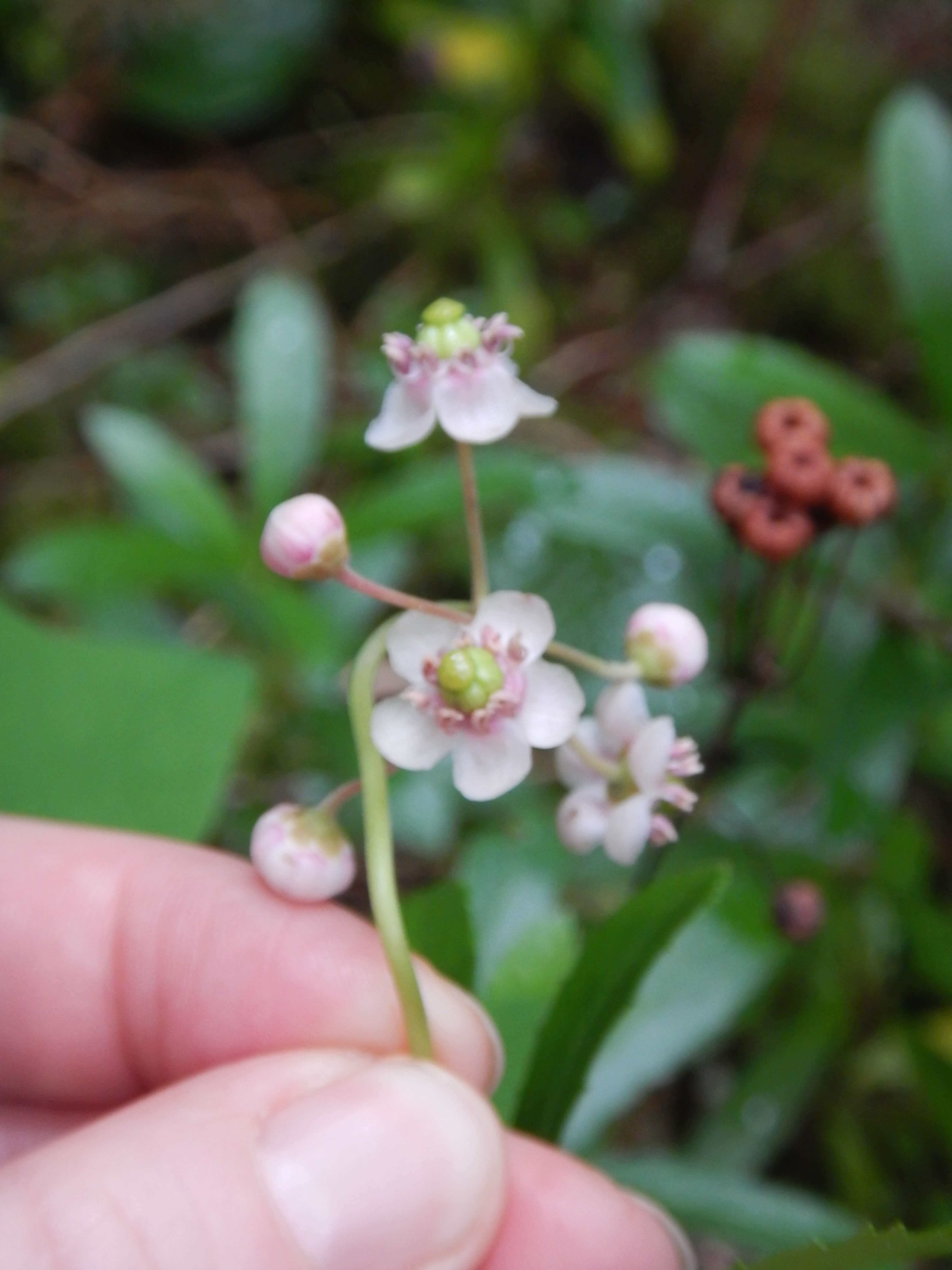
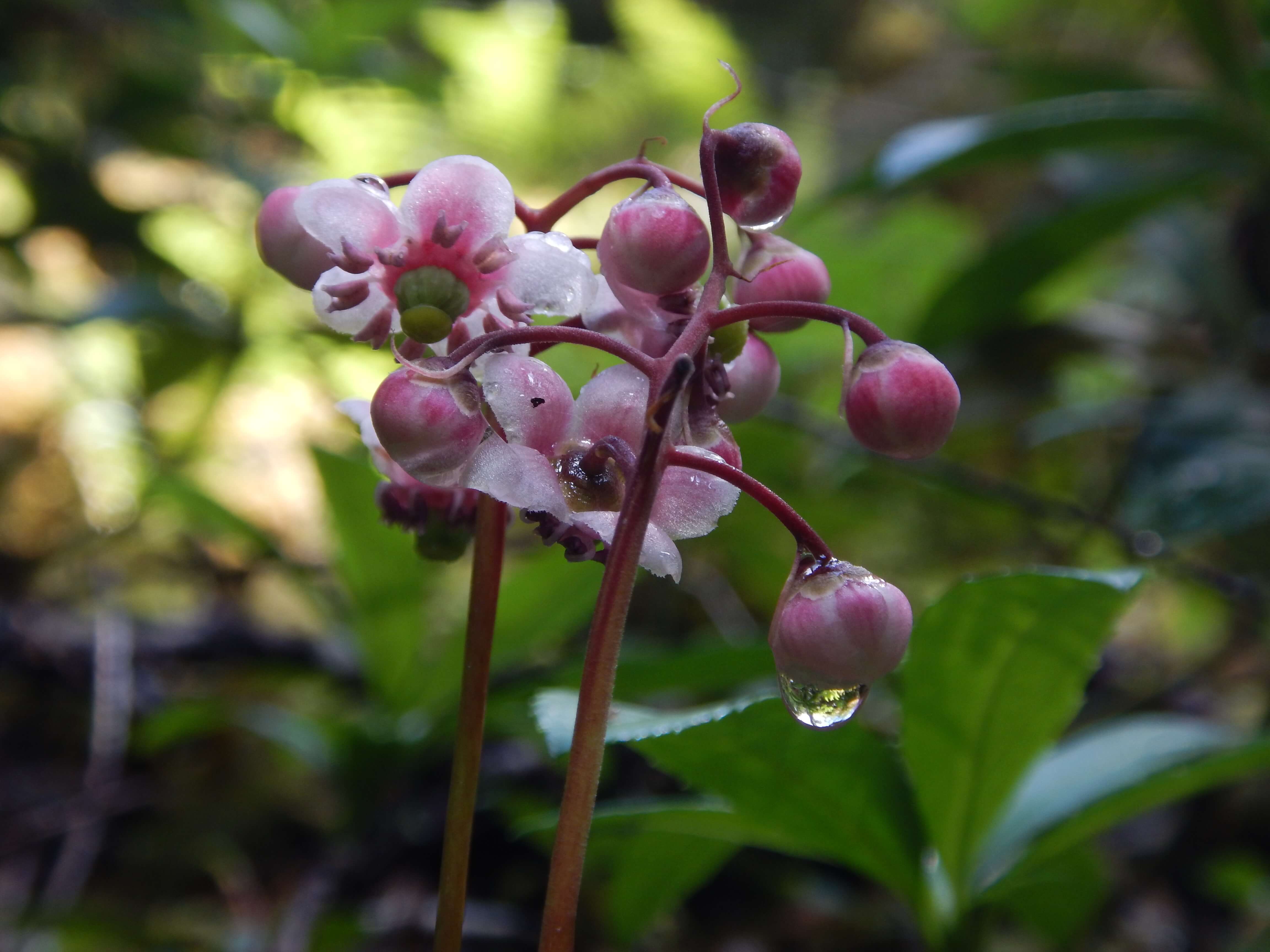
But then, my eyes spy the wildflower buds – such a delicate pink!
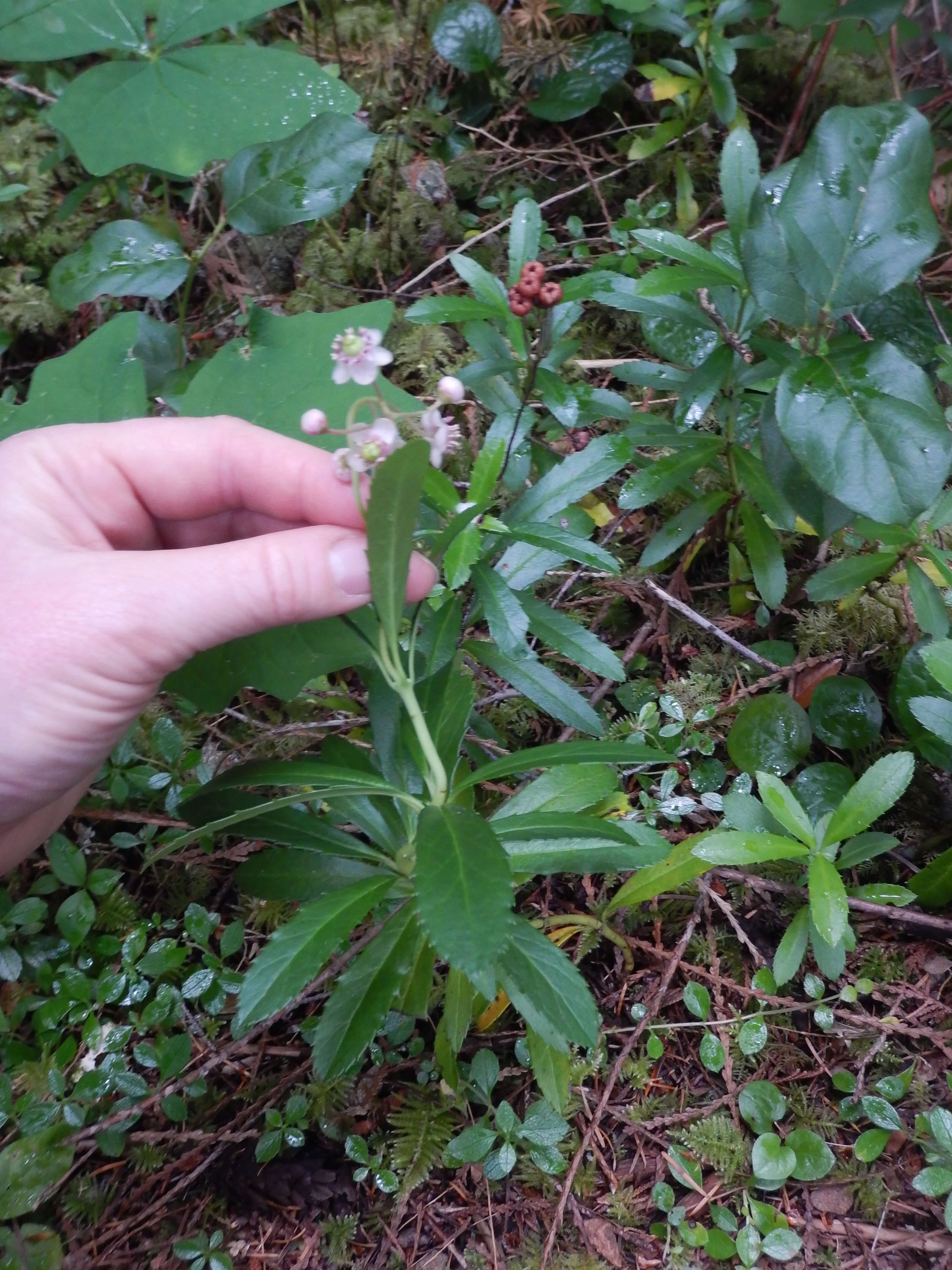
Further along the path, I find specimens in full bloom. And some already setting seed — in early June. 🙂
photo by SVSeekins
The tiny, waxy-looking blossoms are such a contrast to the deep woodland duff of the understory. Enchanting. (There must be faeries nearby.)
I delight in the flowers while mourning that Chimaphila umbellata is probably not suited to our own garden. (Yes, our garden is well-drained, but it’s shaded by Garry oak– not conifers.)
Back at the campsite, the mini-shrub is confirmed by Plants of the Pacific Northwest Coast (my wild plant Bible). Woo Hoo — one more native plant in my repertoire.
photo by SVSeekins
It’s not until a wintery February morning, while attending Seedy Saturday that I meet Andy McKinnon, co-author of my treasured plant ID book. He teaches me this science word for today.
Mixotrophic.
Prince’s pine is mixotrophic. It has a friendly relationship with the fungus in the ground.
photo by SVSeekins
Like many plants, through photosynthesis, Prince’s pine produces sugars (its food). It shares those sugars with fungi. The fungi, in return, offer up access to nutrients from the soil.
Friendly, eh?
But wait – there’s more…
Prince’s pine & this fungi take their relationship a step further.
photo by SVSeekins
The fungi in the soil also connect to another plant (other than the Prince’s pine). Through this threesome, the Prince’s pine can get sugars from this other plant. Neighbours helping neighbours in times of need…. all through a fungi trade route.
(That’s Mixotrophic)









 Garden Variety Life