Tag Archives: BC

Snowdrop Variations

Each January, I’m on the lookout for the first blooms of the New Year.

galanthus, snowdrops, garden Victoria BC Pacific Northwest
photo by SVSeekins

Here, on southern Vancouver Island,  it’s the snowdrops that take centre stage.  Our urban deer leave them alone, so there are patches of the winter blooms all around Victoria.

galanthus, snowdrops, garden Victoria BC Pacific Northwest
photo by SVSeekins

Our garden club was treated to tours of 2 members’ winter gardens.  Carol & Jennifer introduced us to some of the many varieties of Galanthus… Who knew there was more than one kind of snowdrop?

galanthus elwesii snowdrops, garden Victoria BC Pacific Northwest
photo by SVSeekins

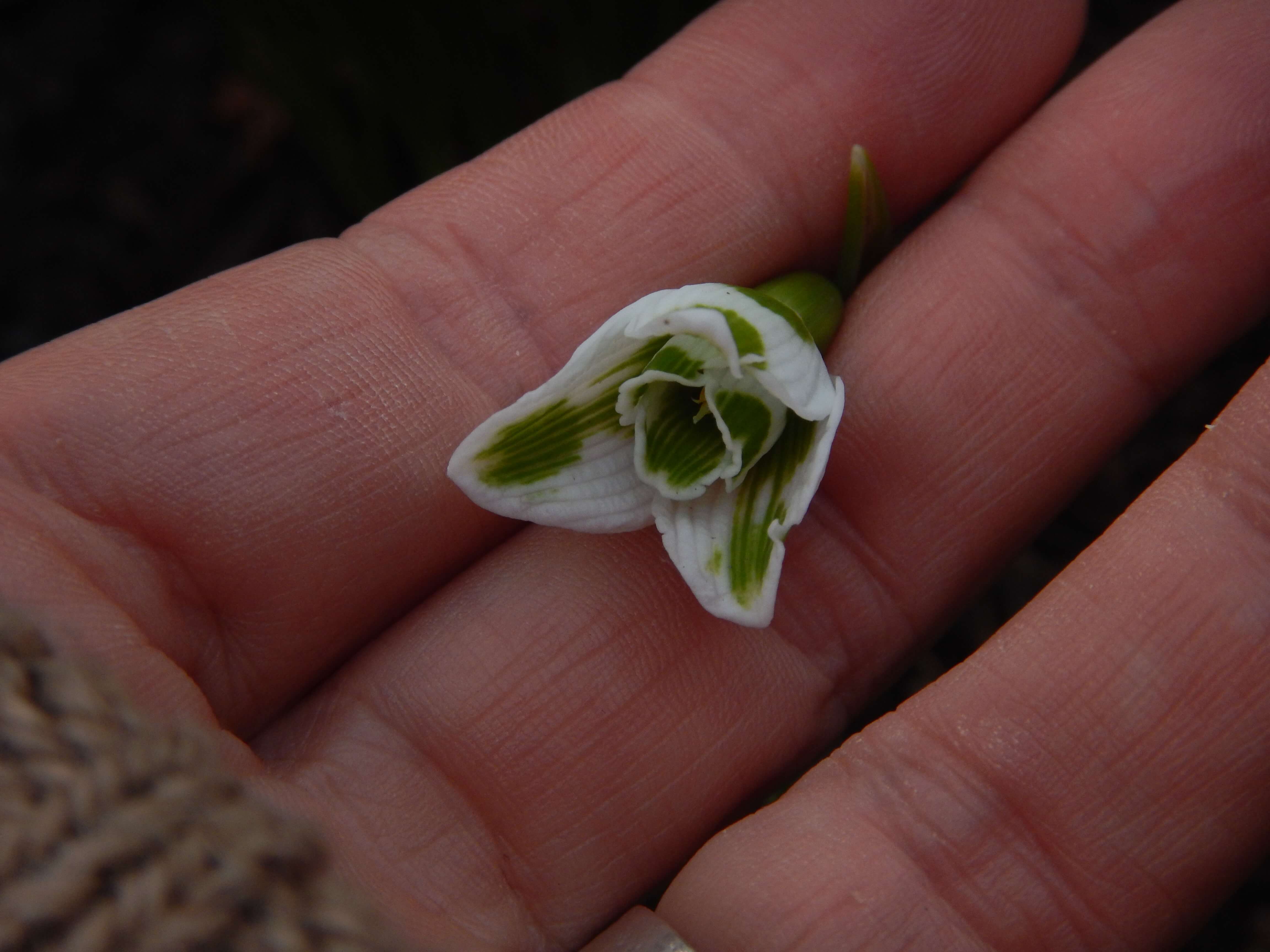
I  start looking more closely at the pure white helicopter blades with their protected cockpit.   Analyzing means kneeling down in the wet grass, camera in hand.
galanthus elwesii snowdrops, garden Victoria BC Pacific Northwest
photo by SVSeekins

Low & behold, one clump of blooms has double green markings on each of the outer petals.  (The inner trumpet is quite green, too.)

Hello, Galanthus elwesii    🙂

galanthus elwesii snowdrops, garden Victoria BC Pacific Northwest
photo by SVSeekins

Farther along the path is another clump – – this one with wee green tips on the outer petals.

Another G. elwesii variety.

galanthus elwesii poculiformis snowdrops, garden Victoria BC Pacific Northwest
photo by SVSeekins

And then, there’s a patch with the standard white outer petals – – but there are 6 instead of the usual 3.

I’m pretty sure these are called Galanthus elwessi poculiformis.

galanthus st annes snowdrops, garden Victoria BC Pacific Northwest
photo by SVSeekins

My favourite way to ID plants is via plant labels – which are great as long as they don’t go missing – –  crows like to claim them as booty.

This label clearly states that this particular snowdrop is Galanthus St. Anne’s.   From a distance, it appears a typical snowdrop, with white outer petals & a small upside-down heart on the inner trumpet…

galanthus st annes snowdrops, garden Victoria BC Pacific Northwest
photo by SVSeekins

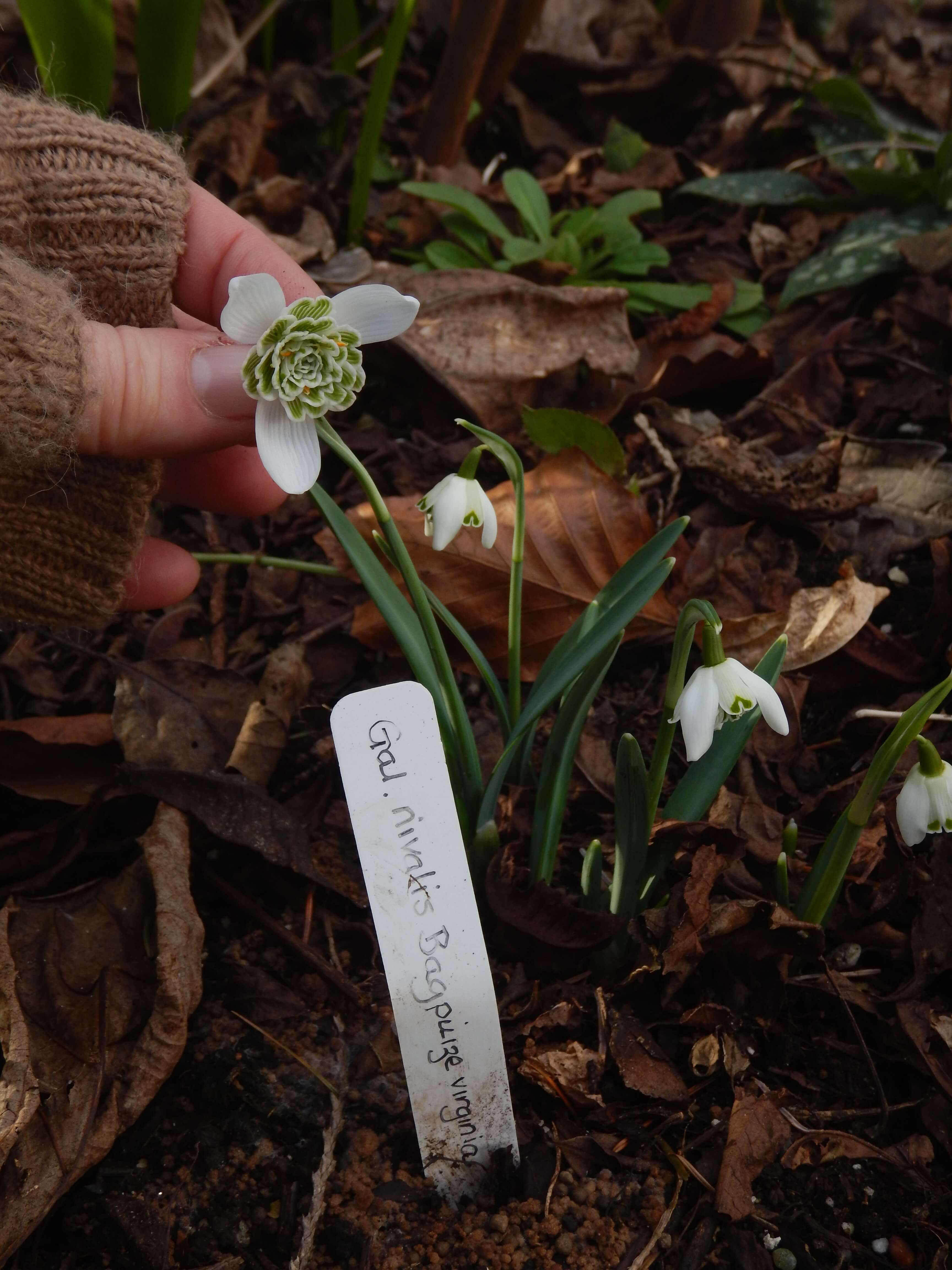
But here’s the reason I don’t mind getting dirty from kneeling on the grass:
Check out the inner petals!
This is how botanists are born, & become addicted to looking at plants soooooo closely.
galanthus nivalis bagpuize virginia snowdrops, garden Victoria BC Pacific Northwest
photo by SVSeekins

Peaking inside some more blooms, I find another delicate flower with an even more ruffled trumpet.  For such a tiny flower, this snowdrop has a ridiculously large name: Galanthus nivalis bagpuize virginia.
How’s that for a mouthful?

galanthus plicatus wendy's gold snowdrops, garden Victoria BC Pacific Northwest
photo by SVSeekins

Protected from the others, is a pot of snowdrops with yellow markings.  This is the first one I’ve noticed with a yellow ovary above the dangling flower.  It’s Galanthus plicatus ‘Wendy’s Gold’.
Quite a treasure.
galanthus elwesii barnes snowdrops, garden Victoria BC Pacific Northwest
photo by SVSeekins

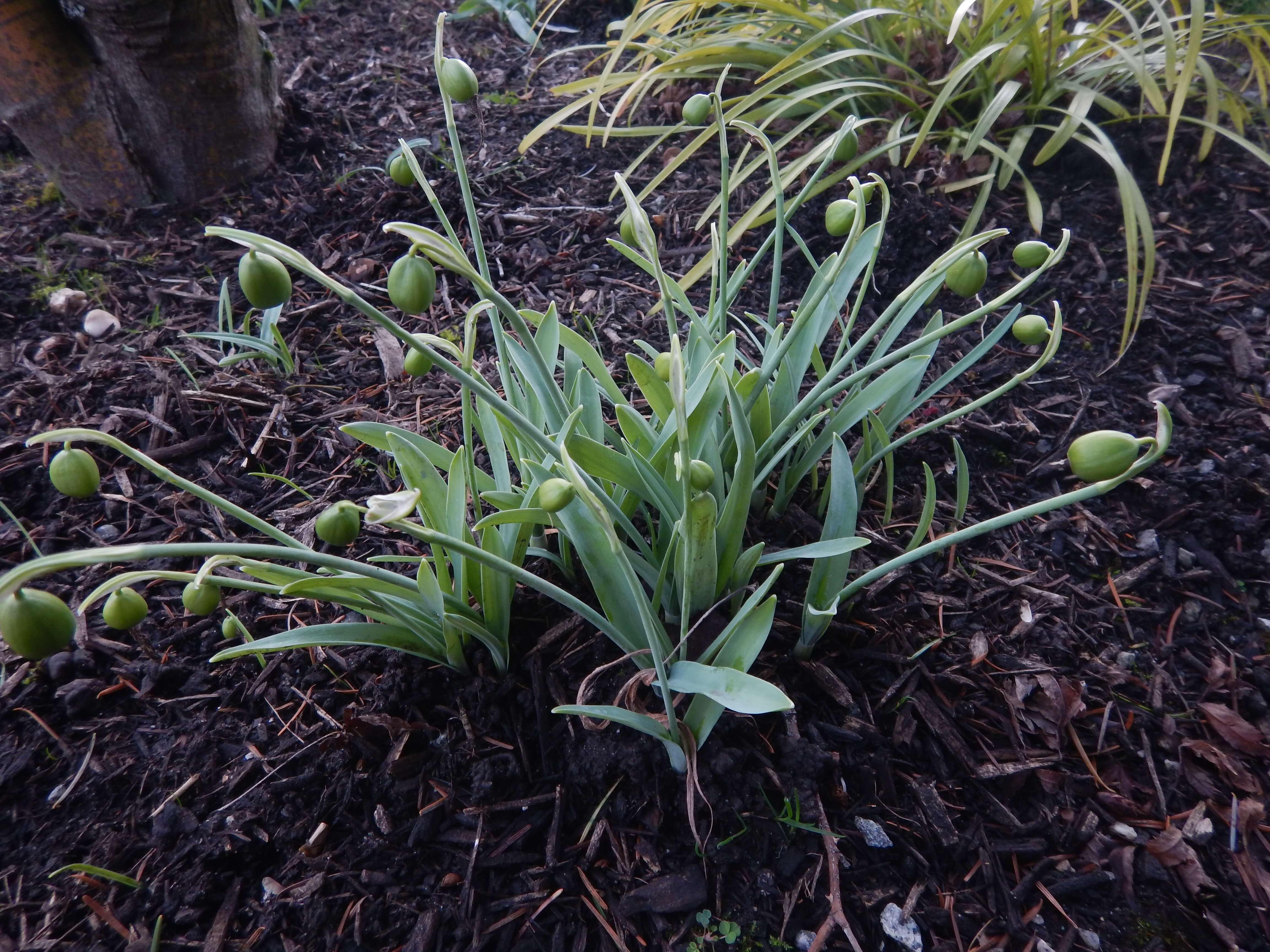
In the collection, I spied a clump of snowdrops that were already going to seed!  Although most snowdrops in Victoria bloom through the winter months, some snowdrops start crazy early in the fall.  Carol’s G. elwesii ‘Barnes’ begins blooming in November!

(It’s reported that G. reginae-olgae is a September bloomer & G. elwesii ‘Potter’s Prelude’ blooms through Halloween.)

galanthus elwesii poculiformis snowdrops, garden Victoria BC Pacific Northwest
photo by SVSeekins

The final mystery of my tour is a variety with green stripes on the outer petals.  The label was there but washed out.

Perhaps it has a name like ‘Greenish,’
or ‘Green Tear’??
Any other guesses?

Only a  galanthophile can be sure.  🙂

-30-

False Lily of the Valley

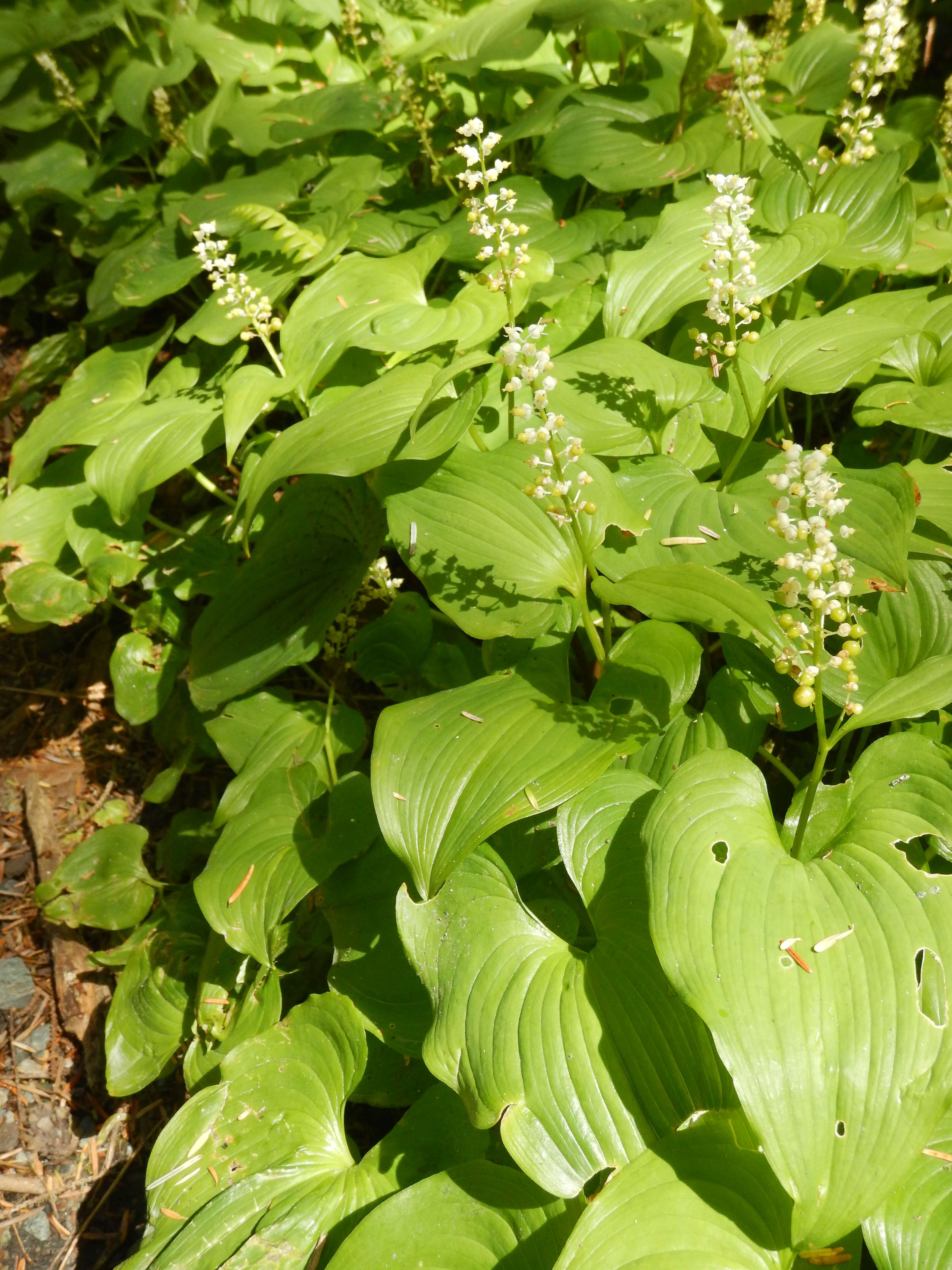
False Lily of the Valley is one of my favorite native groundcovers.  Fabulous carpets of it grow along the trails to Botanical Beach + the Visitor Centre at Long Beach.

false lily of the valley, Maianthemum dilatatum, lily-of-the-valley, snakeberry, Maianthemum bifolium ssp. kamtschaticum, Maianthemum bifolium var. kamtschaticum, Maianthemum kamtschaticum, garden Victoria BC Pacific Northwest
photo by SVSeekins

This summer, on a trip through Northern BC, I spotted a patch.  ‘Turns out my untrained eye was fooled by Wild Lily of the Valley.

Good grief!  Add in the ‘true’ Lily of the Valley & there are 3 plants to confuse! Let’s consider the similarities:

  • they’re all perennial…
  • spread by creeping rhizomes forming thick carpets…
  • display clusters of white flowers in spring…
  • long markings run the length of the leave from stem to tip…
  • live happily in moist, shady woods…

But consider differences:

false lily of the valley, Maianthemum dilatatum, lily-of-the-valley, snakeberry, Maianthemum bifolium ssp. kamtschaticum, Maianthemum bifolium var. kamtschaticum, Maianthemum kamtschaticum, garden Victoria BC Pacific Northwest
photo by SVSeekins
  • False Lily of the Valley is a common coastal groundcover around the Pacific Rim.
    1. The Wild cousin grows in Northeastern BC & across much of the boreal forest.
    2. The original Lily of the Valley is unrelated– native to Europe, but introduced to gardens across North America.

      false lily of the valley, Maianthemum dilatatum, lily-of-the-valley, snakeberry, Maianthemum bifolium ssp. kamtschaticum, Maianthemum bifolium var. kamtschaticum, Maianthemum kamtschaticum, garden Victoria BC Pacific Northwest
      photo by SVSeekins
  • False Lily of the Valley, Maianthemum dilatatum,  has wider leaves (dilatatum means wide).   And heart-shaped.
    1. The Wild cousin, Maianthemum canadense, is also heart-shaped, but slightly more oblong.
    2. The European colonizer has oblong leaves – not heart-shaped at all.

      false lily of the valley, Maianthemum dilatatum, lily-of-the-valley, snakeberry, Maianthemum bifolium ssp. kamtschaticum, Maianthemum bifolium var. kamtschaticum, Maianthemum kamtschaticum, garden Victoria BC Pacific Northwest
      photo by SVSeekins
  • False Lily of the Valley has berries that start out pale with red speckles, but the speckles multiply until the berry is quite dark.
    1. The Wild cousin reacts much the same way.
    2. I’ve never noticed speckles on the European berry. It’s more of an orangey red.

      false lily of the valley, Maianthemum dilatatum, lily-of-the-valley, snakeberry, Maianthemum bifolium ssp. kamtschaticum, Maianthemum bifolium var. kamtschaticum, Maianthemum kamtschaticum, garden Victoria BC Pacific Northwest
      photo by SVSeekins
  • False Lily of the Valley is used for several purposes by Coastal First Nations, especially the berries.
    1. The Interior First Nations haven’t mentioned eating the berries.
    2. The European Lily of the Valley, Convallaria majalis, is poisonous — don’t eat any of it!

Typically I stay away from  ‘poisonous’ plants, but this is an exception.  Visiting deer haven’t eaten our Convallaria majalis, so I let it grow.  I’d prefer to have the False Lily of the Valley in our garden, but because the locals eat it, I reckon the deer would too.

Bummer.

-30-

Vancouver Groundcone – Boschniakia hookeri

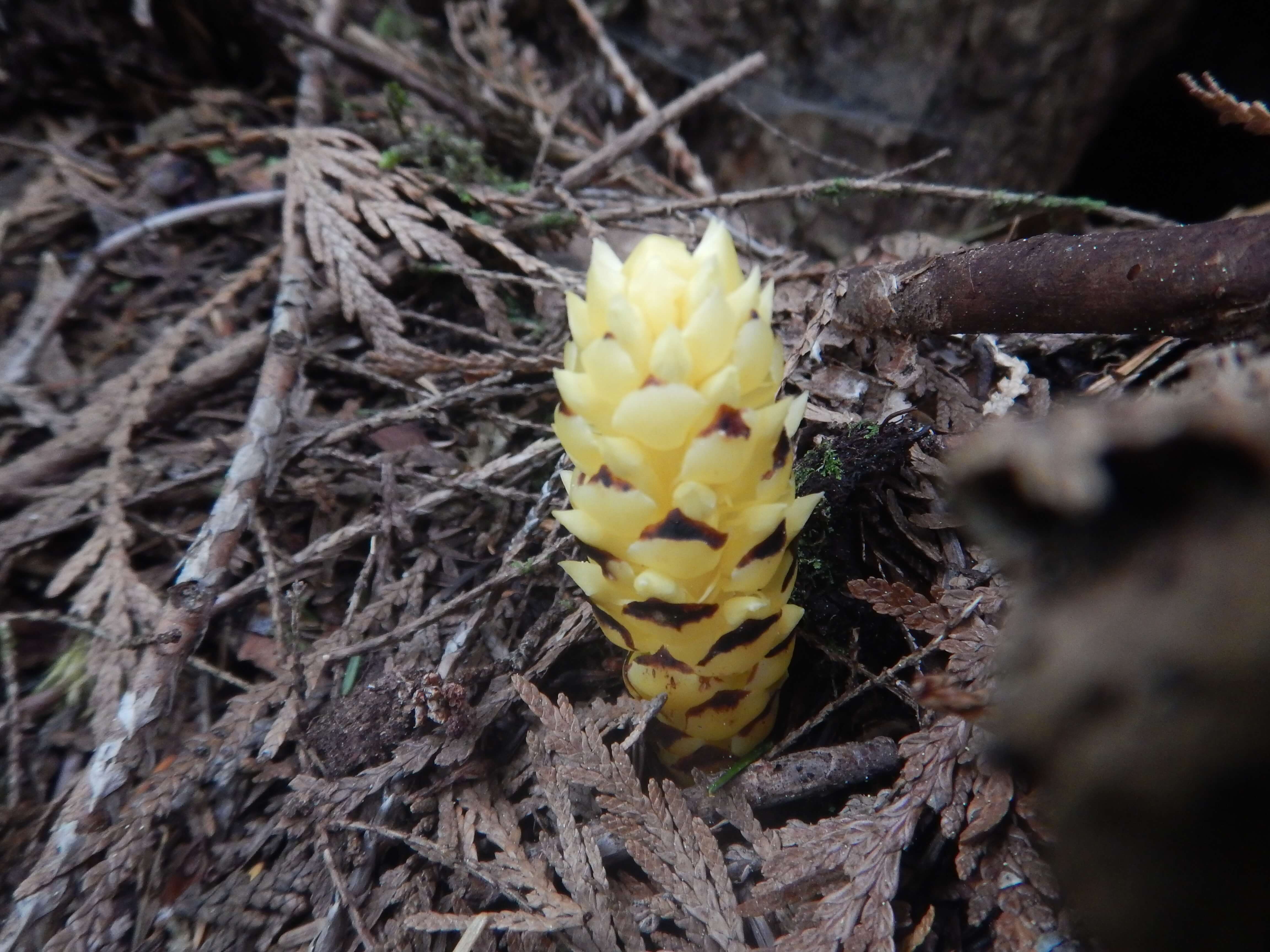
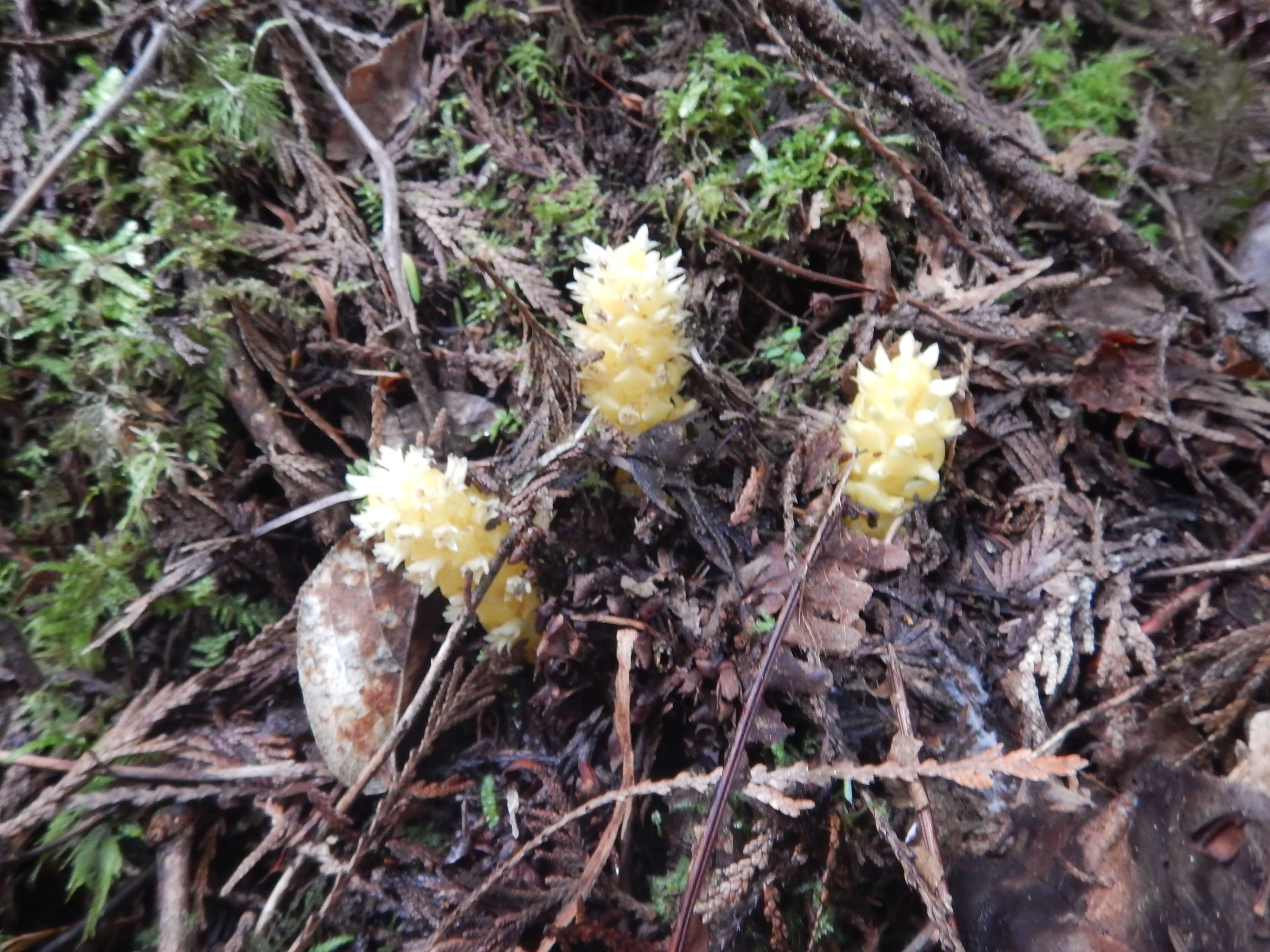
It was high on my list to search for when we went camping with friends near Tofino in mid-May.  On the very first day, a young friend spotted one & brought it to my attention.  Score!

Vancouver groundcone, poque, corn cob, Boschniakia hookeri or Boschniakia strobilacea, garden Victoria, Vancouver Island, BC, Pacific Northwest
photo by SVSeekins

It’s included in a list of ‘oddballs’ in my favorite field guide (Pojar & MacKinnon’s,  Plants Of The Pacific Northwest Coast.)   Who needs space aliens when we have mysteries like this on earth?  Is it a flower? Mushroom? Fungi?

Vancouver groundcone, poque, corn cob, Boschniakia hookeri or Boschniakia strobilacea, garden Victoria, Vancouver Island, BC, Pacific Northwest
photo by SVSeekins

It’s called a Vancouver groundcone, & I can see why. The shape is so similar to a spruce cone standing upright.  Another name is Poque – an anglicized version of an indigenous word.

The unusual coloring indicates the groundcone lacks chlorophyll, & that means it can’t produce its own sugars. For food, it depends on others. It’s a parasitic plant, that taps nutrients from a salal and sometimes kinnikinnick.

Vancouver groundcone, poque, corn cob, Boschniakia hookeri or Boschniakia strobilacea, garden Victoria, Vancouver Island, BC, Pacific Northwest
photo by SVSeekins

Both salal & kinnikinnick are common on our coastlines, so you’d think there’d be plenty of groundcones.  Perhaps there are more around, but I just haven’t been looking for them before?

Boschniakia hookeri grows in the moist (summer dry) coastal lowlands from Haida Gwaii in Central Coastal BC to  Northern California.  This is the first time I’ve ever seen any.  Go figure. Perhaps because they don’t need sunshine, they’re more common in shade, and more difficult to see?

Vancouver groundcone, poque, corn cob, Boschniakia hookeri or Boschniakia strobilacea, garden Victoria, Vancouver Island, BC, Pacific Northwest
photo by SVSeekins

Aside from the yellow specimens I saw, Poque is found in a variety of colors from light yellow to brown to red or purple.  I suspect the yellow contrasts more with its environment, so is slightly easier to spot.  Once young WC showed me a few he’d spotted, I was able to find a few myself.

Now that I’ve checked this plant off my list, next up are more oddballs: Indian Pipe & Pinesaps.  Wish me luck!

-30-