Tag Archives: BC

Top 5 Deer Resistant, Early Spring Bulbs

The deer in our neighborhood of Victoria (the Mt. Tolmie black-tailed deer) have shown no interest in these blooms.

An added bonus is that all 5 picks have proven themselves drought tolerant through our long dry summers (even 100 days without rain).

1- Snowdrops (Galanthus) bloom as early as December, but are more common in January.
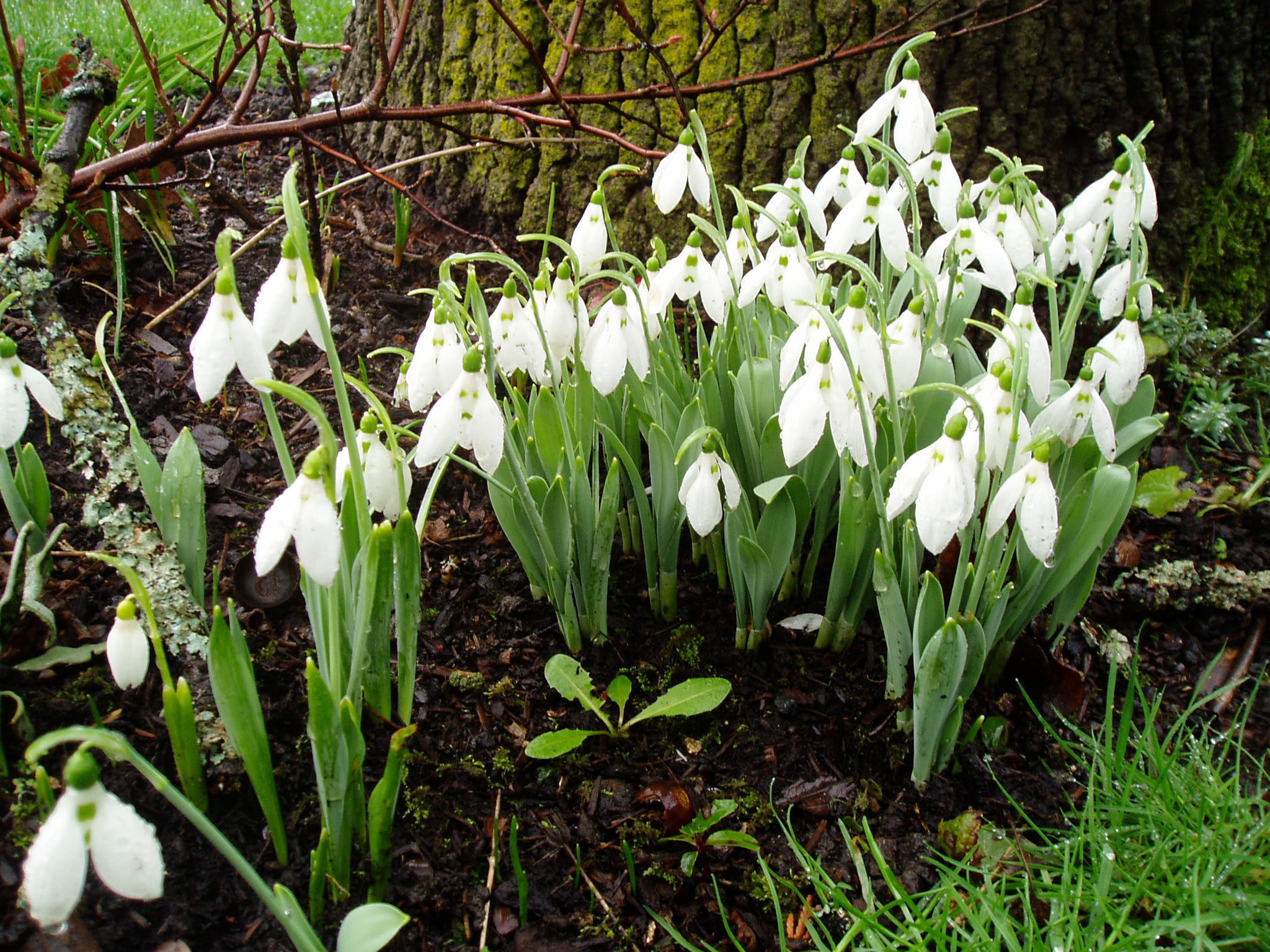
galanthus bus stop snowdrops in January, garden Victoria BC Pacific Northwest
photo by SVSeekins
  • 6-9 inches high
  • naturalizing
  • Full Sun – Part Shade
  • zone 3

special notes
– Divide snowdrops during their bloom instead of after the leaves die back.
– see also
Snowdrops – January Gems
Embarrassment of Riches
Snowdrop Meadow

2- Cyclamen coum present foliage in September, and often bloom from December through March.

hardy cyclamen coum, persian violet, eastern sowbread, round-leaf cyclamen, C. coum, Cyclamen orbiculatum, garden Victoria, Vancouver Island, BC, Pacific Northwest
photo by SVSeekins
  • 4 inches high
  • naturalizing
  • Part Shade
  • zone 5

special notes
– The autumn-blooming Cyclamen hederifolium is a bully that will out-compete C.coum (and most other hardy cyclamen).  I avoid planting the two in the same bed.
Ants are purported to spread the seeds.  In our natural park areas, cyclamen are unwelcome.  I can think of several other foreigners that would make my list long before Cyclamen.
– see also
Joy In The New Year
Winter Magic
Cyclamen Coum – February Romance

3- Reticulated Iris (Iris reticulata) is another exotic looking surprise in the February garden.
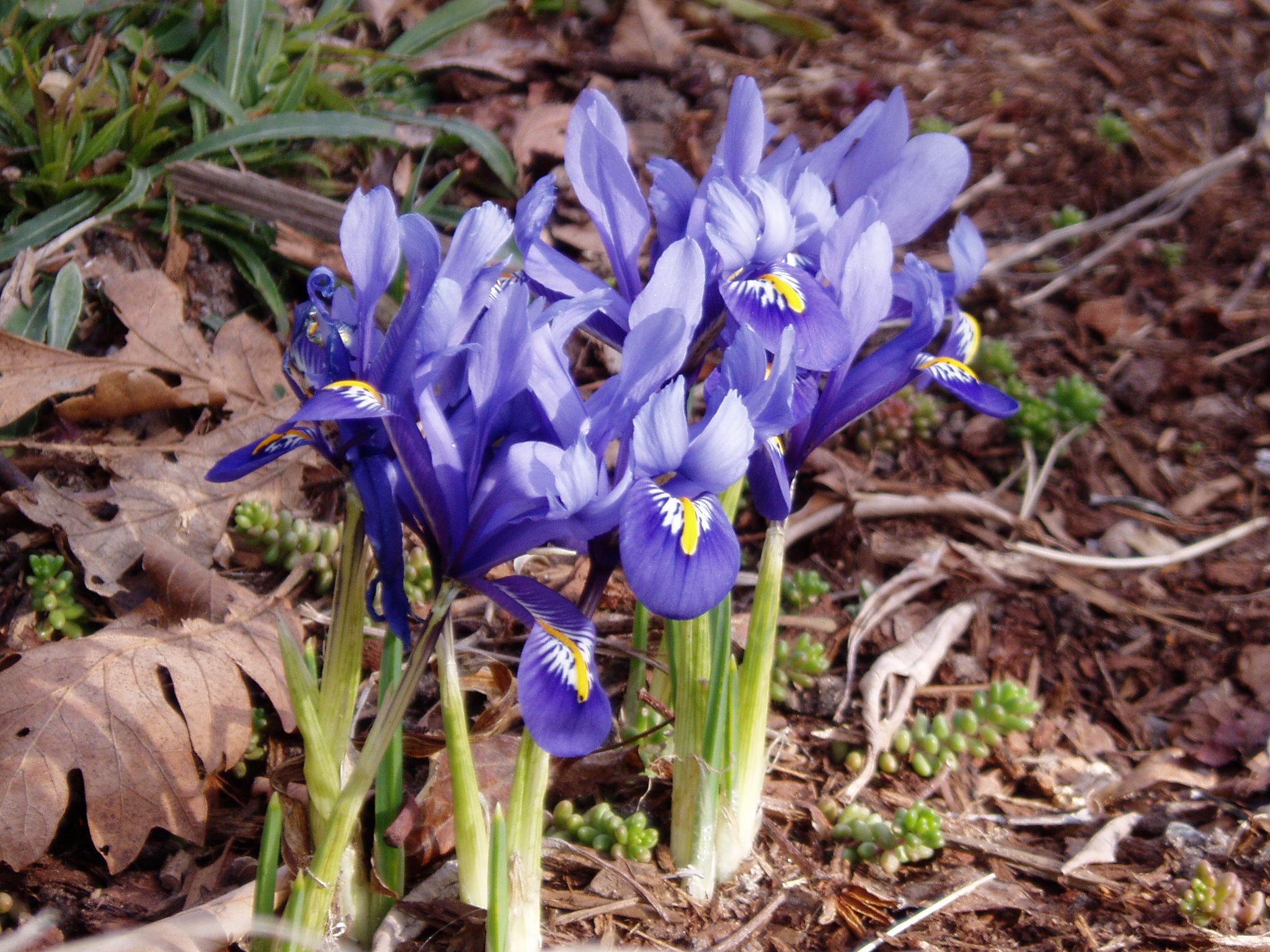
iris reticulata, reticulated iris, dwarf iris garden Victoria, Vancouver Island, BC, Pacific Northwest
photo by SVSeekins
  • 4-6 inches high
  • naturalizing … or at least catalogs claim this.  Our old neighbor Don Smart said his spread like crazy, but mine hasn’t taken off
  • Full Sun – Part Shade
  • zone  5

special notes
– catalogs also claim these are fragrant.  Perhaps this is the reason the deer ignore them even when there is so little else growing
– see also
Flower Count – Day 4 – Iris
10 February Faves

4- Winter Aconite (Eranthis hyemalis) the blooms appear in January & February, just before leafs join the show.
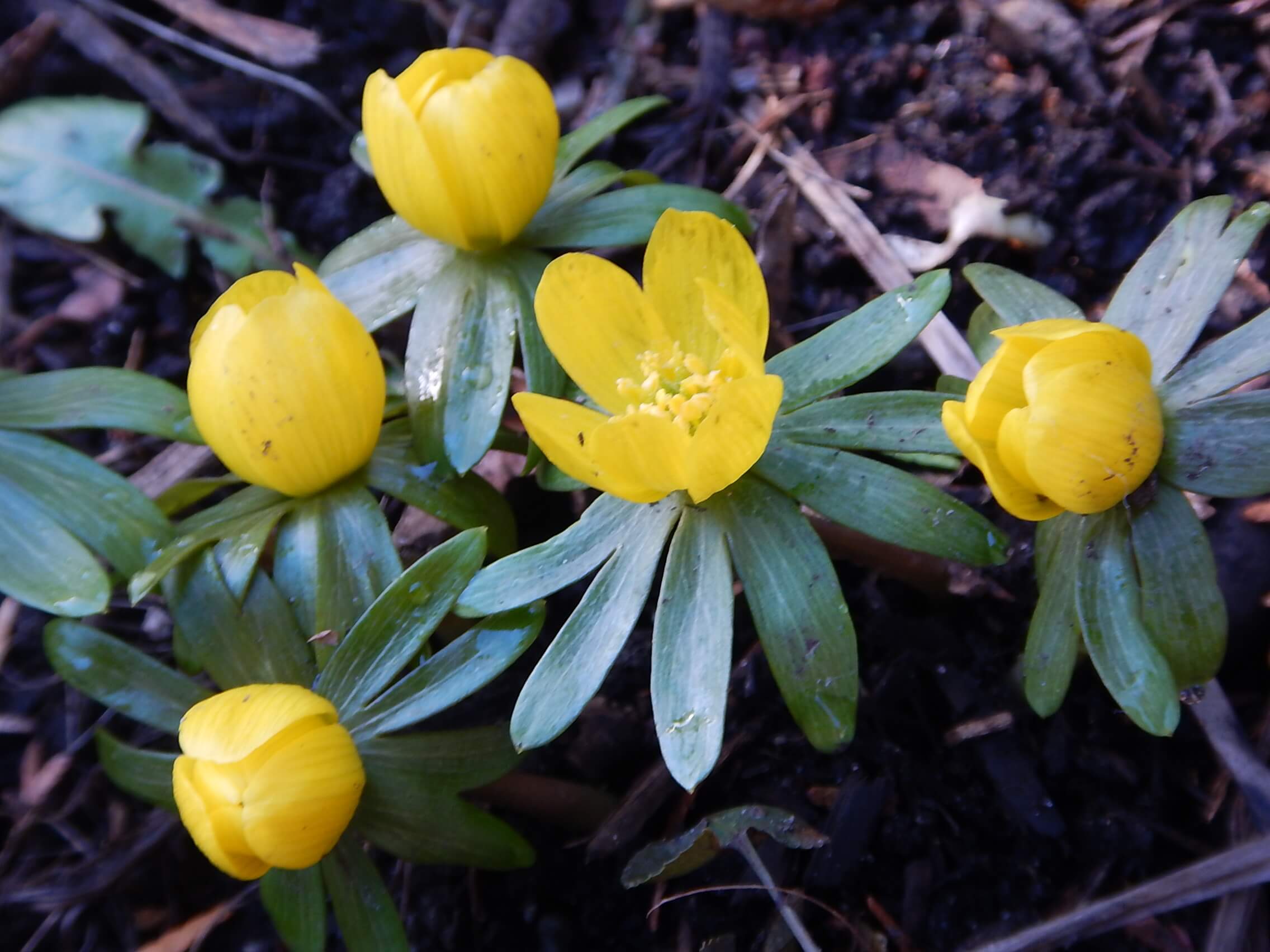
winter aconite, eranthis in early February garden Victoria BC Pacific Northwest
photo by SVSeekins
  •  4-6 inches high
  • naturalizing
  • Full Sun – Part Shade
  • zone: 3

special notes
–  The only way to divide these beauties is during their growing season.  The corms look like tiny clumps of dirt, so they’re impossible to find during dormancy. Sometimes I’ve shifted them unknowingly while moving something else.
– see also
Flower Count – Day 1 – Eranthis
Deer Proof

5- Crocus & Snow Crocus appear in lawns and borders during moments of February sunshine.
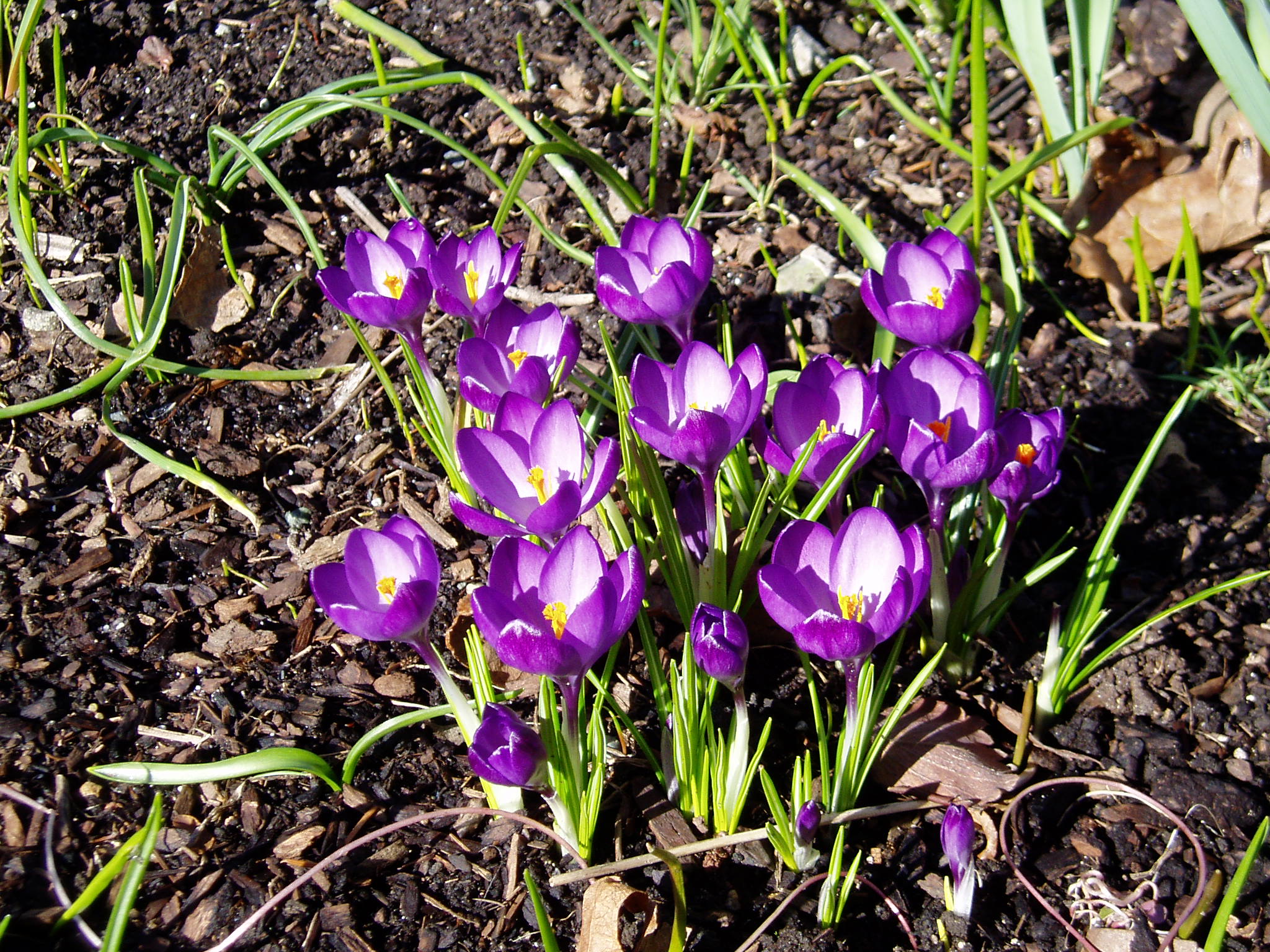
crocus cluster gardem Victoria BC Pacific Northwest
photo by SVSeekins
  •  4-6 inches high (depending on cultivar)
  • naturalizing
  • Full Sun
  • zone:4 (a few are zone 3)

special notes
–  Snow Crocus top out at 4 inches high, so are great for naturalizing in lawns. Regular crocus are just a touch taller – – they don’t survive when the first mower cuts the grass, so they’re safer in beds.
– All of the Crocus in our yard are proven drought tolerant.
– see also
Flower Count – Day 5 – Crocus
Dandelion Dilemma
Meadow Blooms – Crocus

And yeah, I know, all of these super-early gems are called spring flowers even though, in this mild climate, they bloom before the spring equinox. Don’tcha just LOVE the promise of spring?

-30-
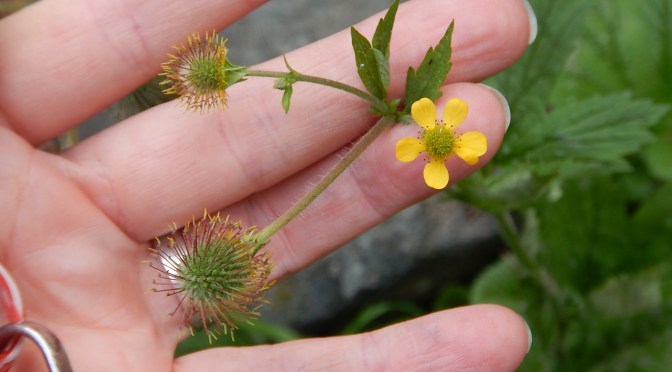
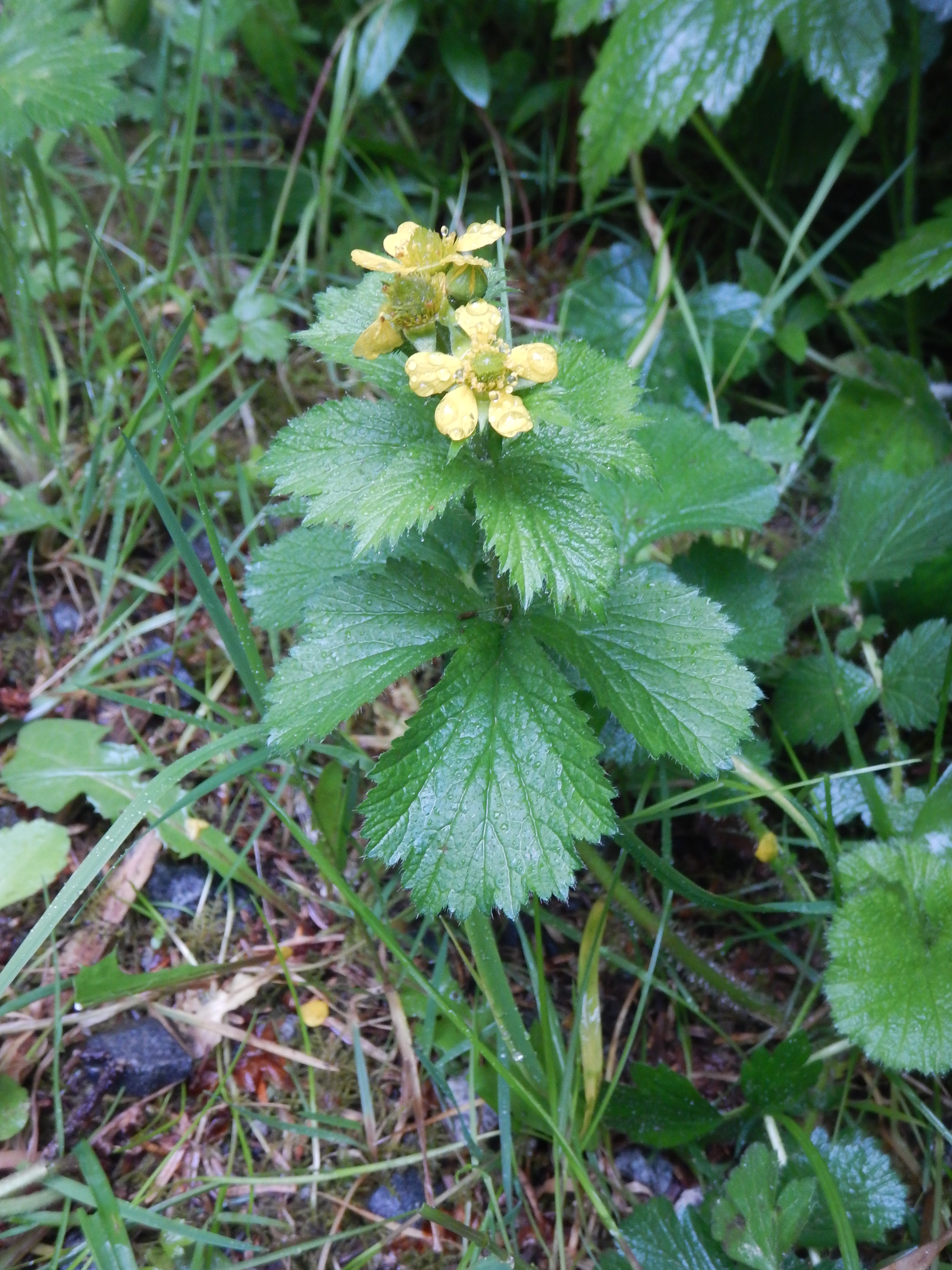
Geum macrophyllum – Large-Leaved Avens

garden Victoria, Vancouver Island, BC, Pacific Northwest
photo by SVSeekins

I first really noticed Large-Leaved Avens as a specific wildflower when I found it blooming beside the waterfall at Goldstream Park one May.  Before that, it was just one of the many yellow blooms we see in spring.

garden Victoria, Vancouver Island, BC, Pacific Northwest
photo by SVSeekins

Recently I was pleased to see it blooming in a parking lot, not far from the ocean, near Tofino.  That was at Thanksgiving!

October is really very late for a spring wildflower to be blooming – but I’m not complaining.   🙂

garden Victoria, Vancouver Island, BC, Pacific Northwest
photo by SVSeekins

The flower is a simple yellow daisy style; a smiling happy bloom that I find charming.
Unassuming.
Easy.

But Geum macrophyllum is not as plain as it first appears.

large-leaved avens, Geum macrophyllum, largeleaf avens, big leaf avens, garden Victoria, Vancouver Island, BC, Pacific Northwest
photo by SVSeekins

The seedhead is funky – certainly something that I’d let stand in my garden rather than tidy up.

The achenes (fruits) kinda remind me of googly eyes floating above the alien body.    Apparently, the pom-poms are happy to catch rides on passing pant legs or animals: free spirits looking for adventures far afield.  Groovy.

garden Victoria, Vancouver Island, BC, Pacific Northwest
photo by SVSeekins

But really, the magic is in the foliage.  What other plant has 2 kinds of leaves?  Right at the base, near the ground, the leaves are round.  Further up the stem, near the flowers, they’ve morphed into 3 lobes with deep serrations.  Crazy.

The guidebooks say Avens are common to wetlands across most of North America.  I’m hoping they’ll become common in my garden, too.  Last month I won 3 in the plant raffle at the Native Plant Study Group.  They’re now growing in one of our courtyard beds (where they’re more likely to get the extra summer moisture they need).  Cross your fingers for me.

-30-


Shaggy Mushroom

This fall I’m really trying to let fungi thrive.  Mushrooms pop up in several spots around our place.  They’re pretty, but for some reason I’ve always weeded them out…

Coprinus comatus
photo by SVSeekins

Perhaps they scare me a bit.
Are they edible?
Hallucinogenic?
Medicinal?
Poisonous?

Perhaps I’m just a neat- freak?

Years ago someone told me that trees use fungi root systems as information highways between other trees.  I dismissed the idea.  It sounded too airy-fairy.  But scientists are looking into it.  UBC’s Suzanne Simard explores & maps the fungi mycelium networks that trees use to share nutrients with offspring & neighbours.  Sounds a bit like the storyline of Avatar, doesn’t it?  Perhaps the Old Ones were on to something?

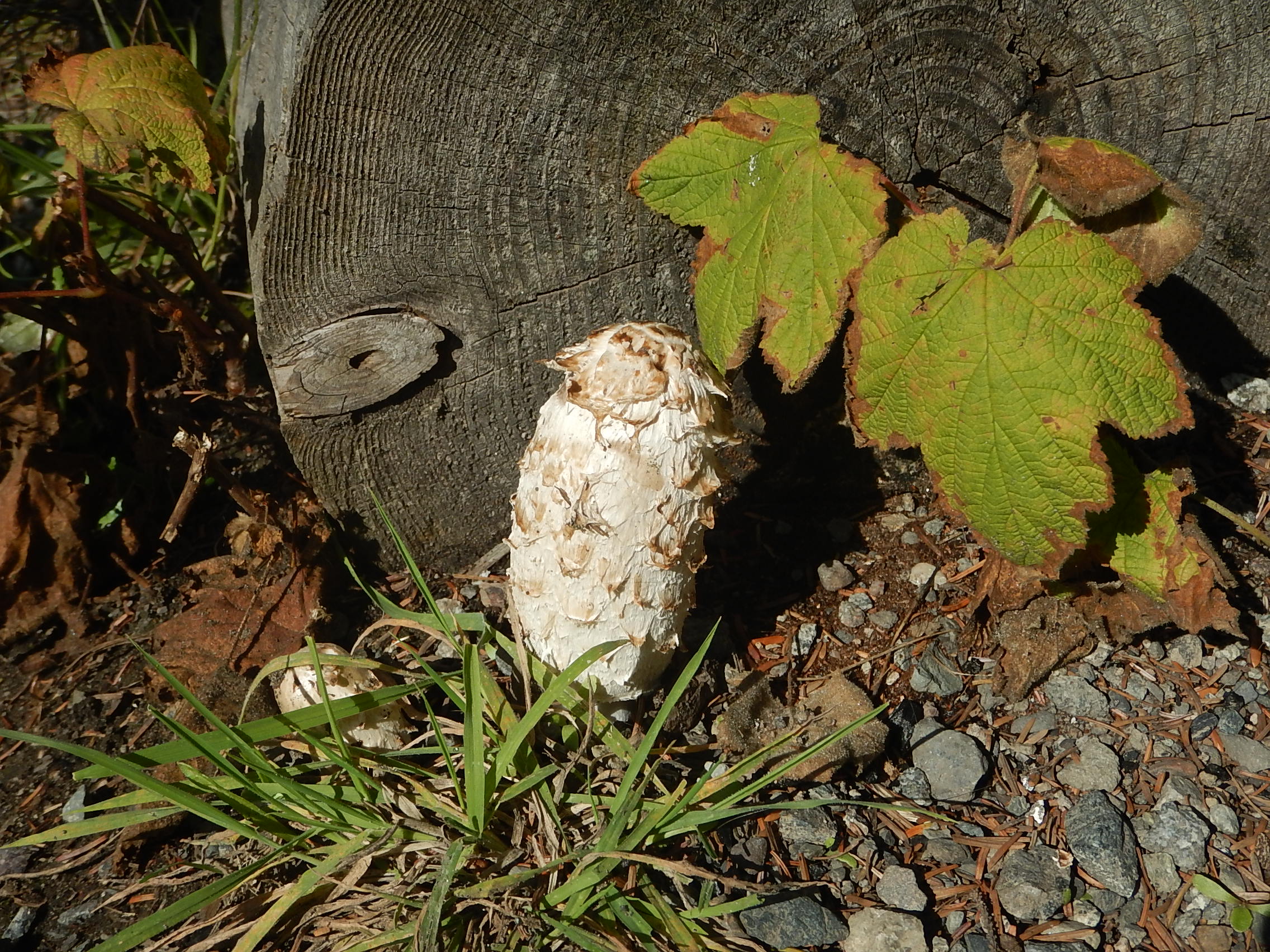
Coprinus comatus, shaggy mane
photo by SVSeekins

The Pacific Northwest is a great place for mushrooms.  The rainforest at one of our favourite campsites is prime.  In 2015 I was charmed by orange stools with white spots.  This October, right at our campsite, was a beautiful white shaggy mushroom.

Coprinus comatus, shaggy mane, lawyers wig, mushroom fungi fungus edible garden Victoria, Vancouver Island, BC, Pacific Northwest
photo by SVSeekins

Growing in afternoon sunshine beside a well-trodden gravel pathway, not far from the beach, it struck me as unusual.  This is not the regular deep humus-rich growing site I’d expect for fungi.

The shape & outer texture of the mushroom is distinctive.  I’m pretty sure it’s the edible  Shaggy Mane, aka Lawyer’s Wig, aka Coprinus Comatus.  That said, I’m no expert.

Coprinus comatus
photo by SVSeekins

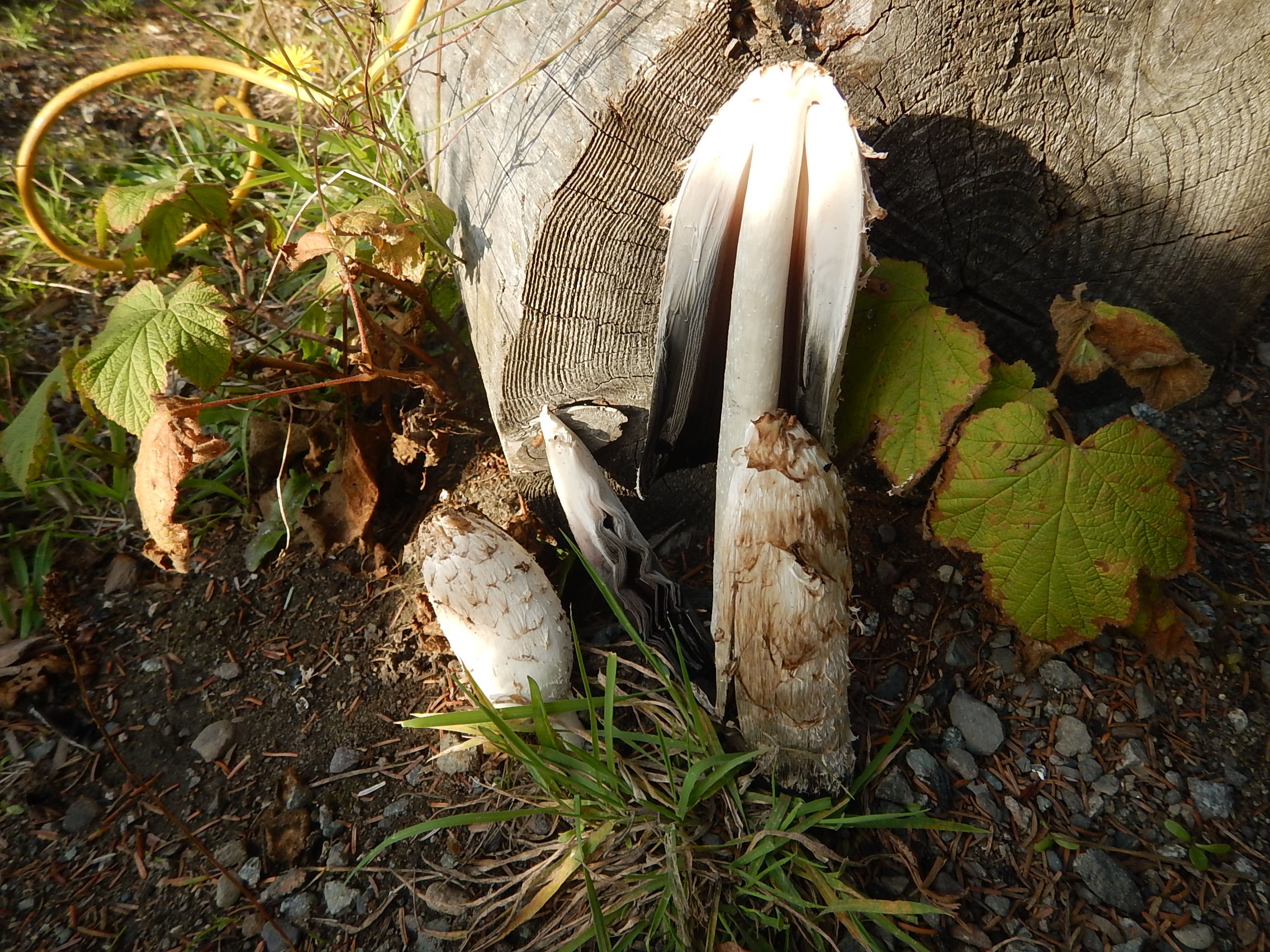
For several days we carefully left the cap to its business. While striking camp, the mushroom was knocked open.  I felt bad but took the chance to look at the inner gills where the spores were maturing.  The dark colouring is further evidence that the ID is correct.  Maybe we should’ve made mushroom soup. (Actually, I wasn’t tempted to use it because of the high-traffic area & the large population of dogs around camp.)

Coprinus comatus
photo by SVSeekins

Did you also notice how much the fruit grew in just 3-4 days?  Doubling size in 48 hours seems amazing to me. The apples in our garden don’t produce like that.

Now I’ll try to keep a closer eye on the fungi growing through our gardens.  Perhaps I’ll shift even further out of my comfort zone & explore farming some edible types.
🙂

-30-