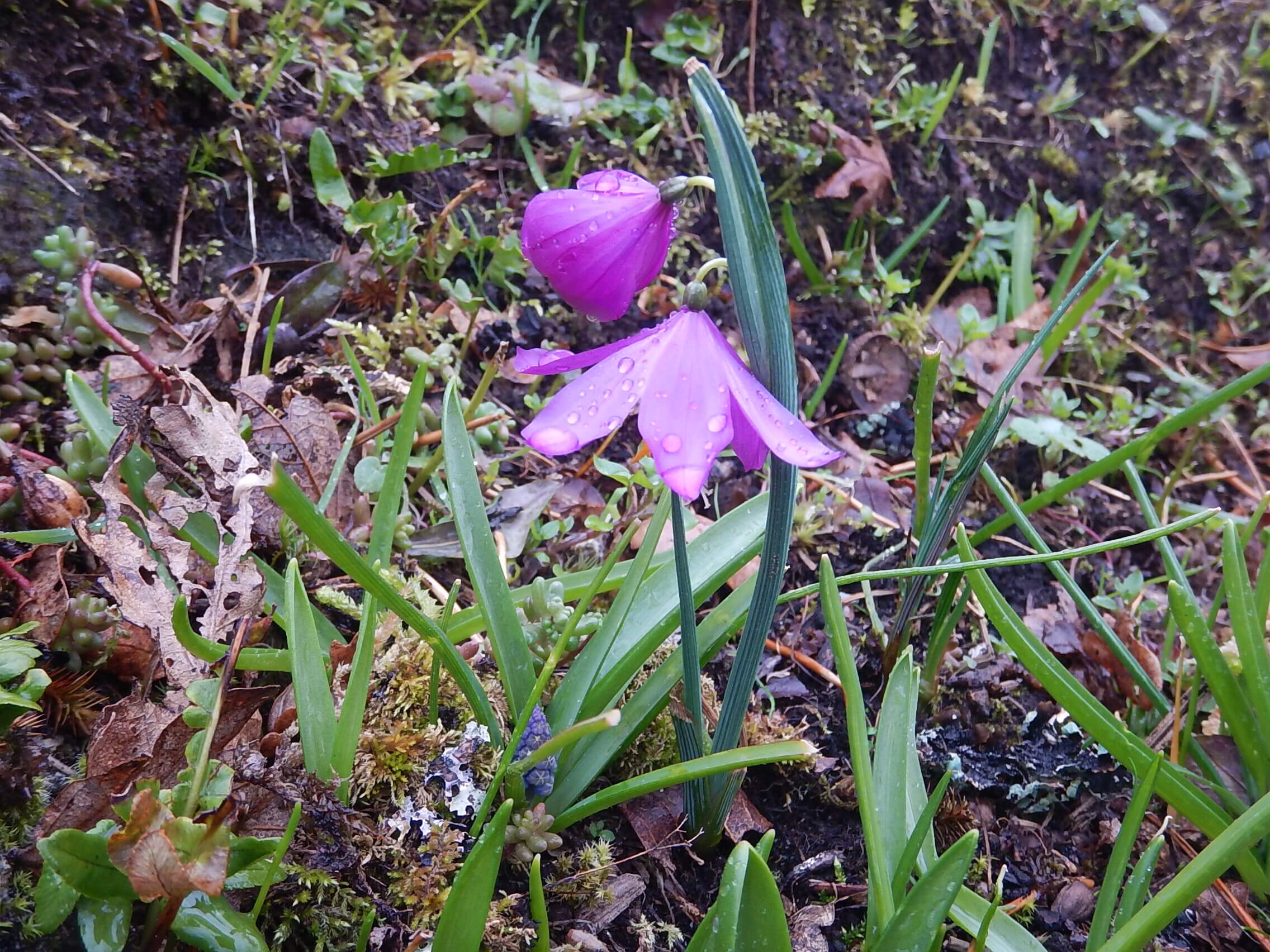
Woohoo!! The Satin Flower bloom opened the other day – – AND I’ve checked it 3 mornings in a row now – It’s Still There!!
photo by SVSeekins
Ok, so that sounds just a little crazed,
but Satin Flower is one of the very earliest Pacific Northwest native wildflowers –
and it’s so pretty!
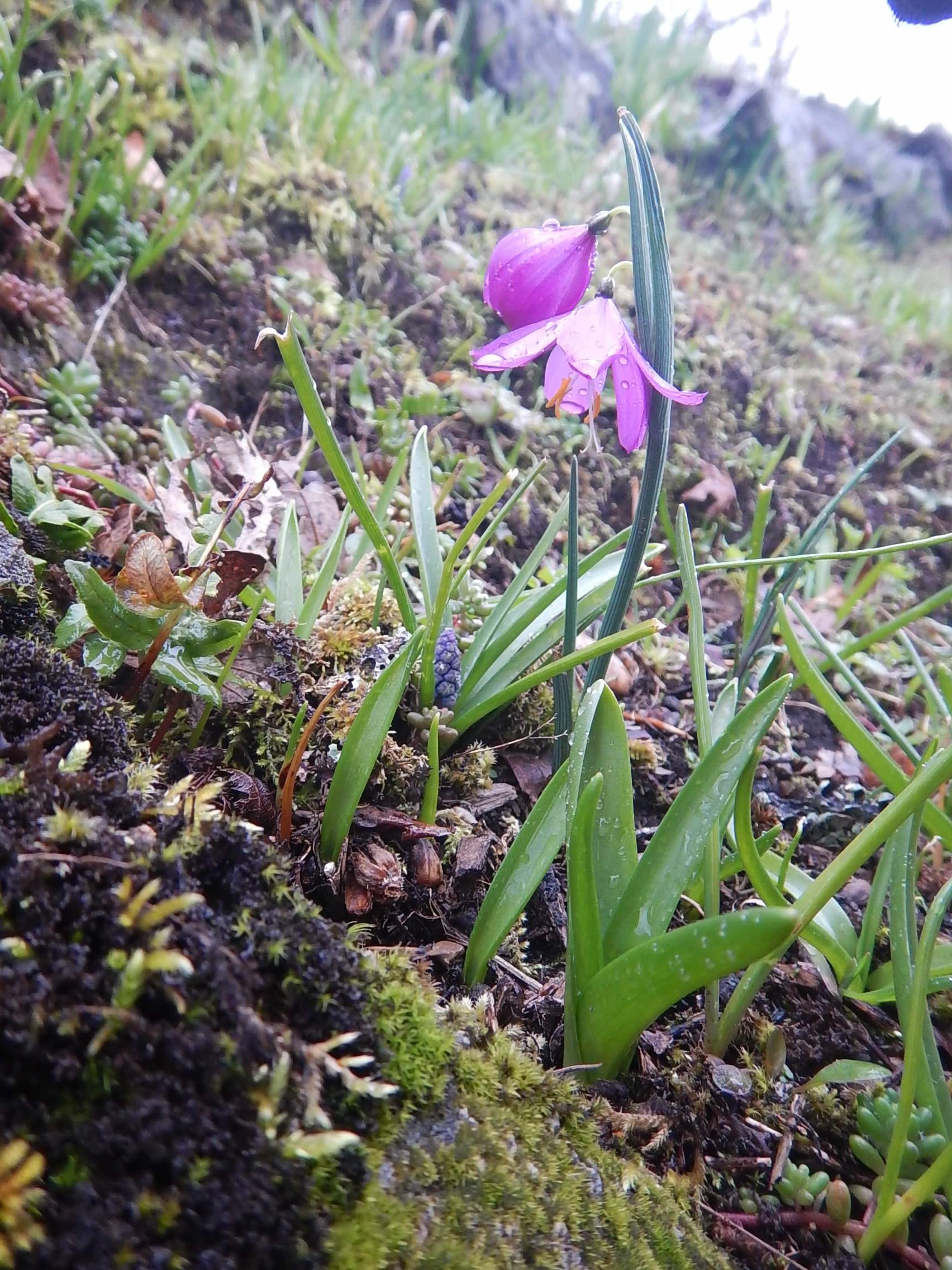
photo by SVSeekins
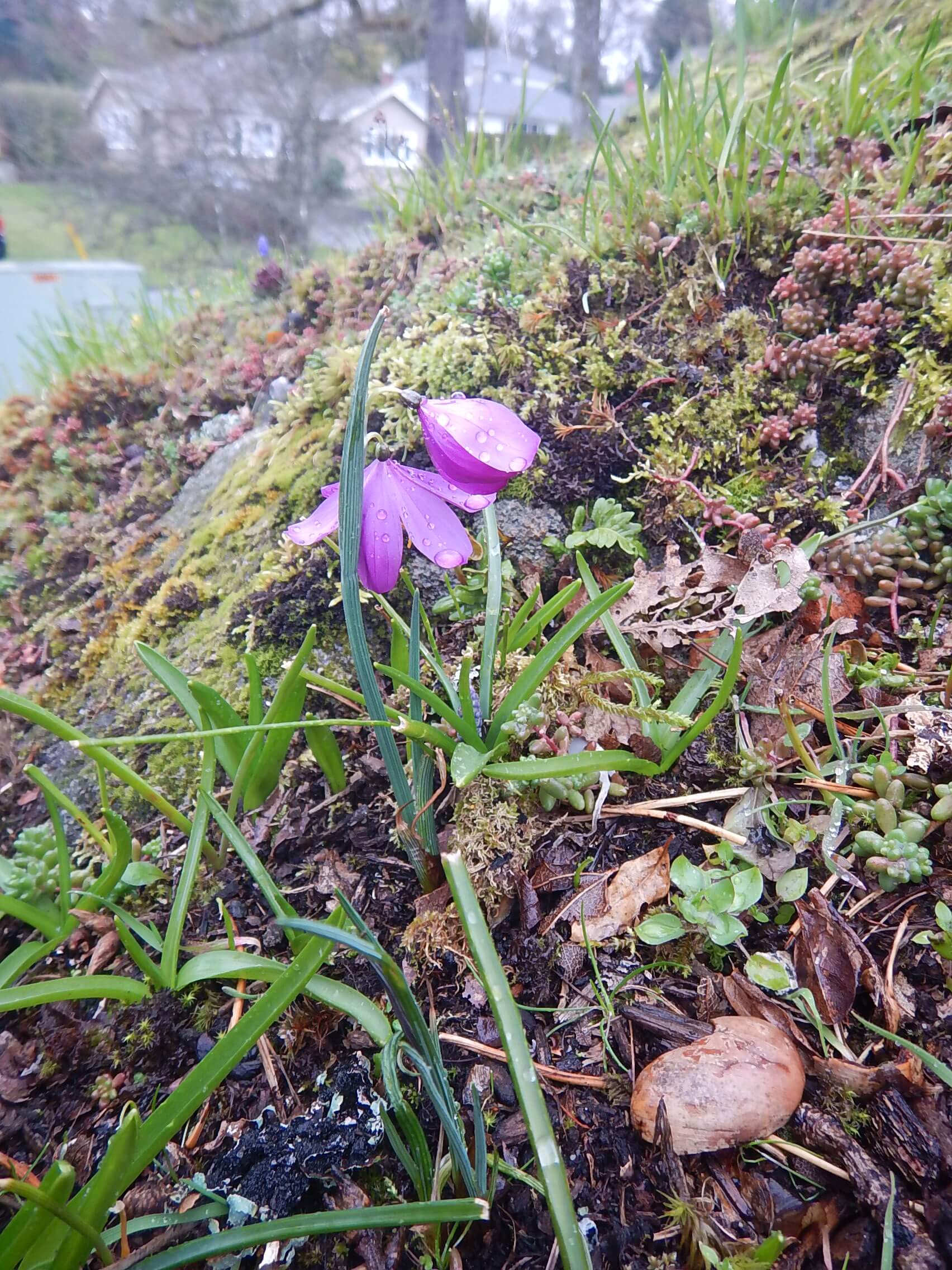
It’s really well suited to our rocky outcrop that’s very moist in winter & very dry in summer. So, this Olsynium douglasii (aka Douglas’ olsynium, Douglas’ grasswidow, grasswidow, blue-eyed grass, purple-eyed-grass, or satin flower) should be happy in our gary oak meadow.
But the deer are happy here, too.
photo by SVSeekins
When I first bought a couple of these perennial herbs from Sannich Native Plants (Thank you Kristen & James!), I planted them too near the deer’s regular route. Fortunately, I saw the bloom the first morning.
It was gone the next.
I simply shifted the plants to a steeper section of our rocky outcropping, hoping the deer might leave them alone. Fingers crossed.
The next year – Success.!
Now I’m hoping these sweet little flowers will happily do their thing & naturalize into more of a clump – maybe even spread around a bit! 🙂
The deer in our neighborhood of Victoria (the Mt. Tolmie black-tailed deer) have shown no interest in these spring blooms.
An added bonus is that all 5 picks have proven themselves drought tolerant through our long dry summers (even 100 days without rain).
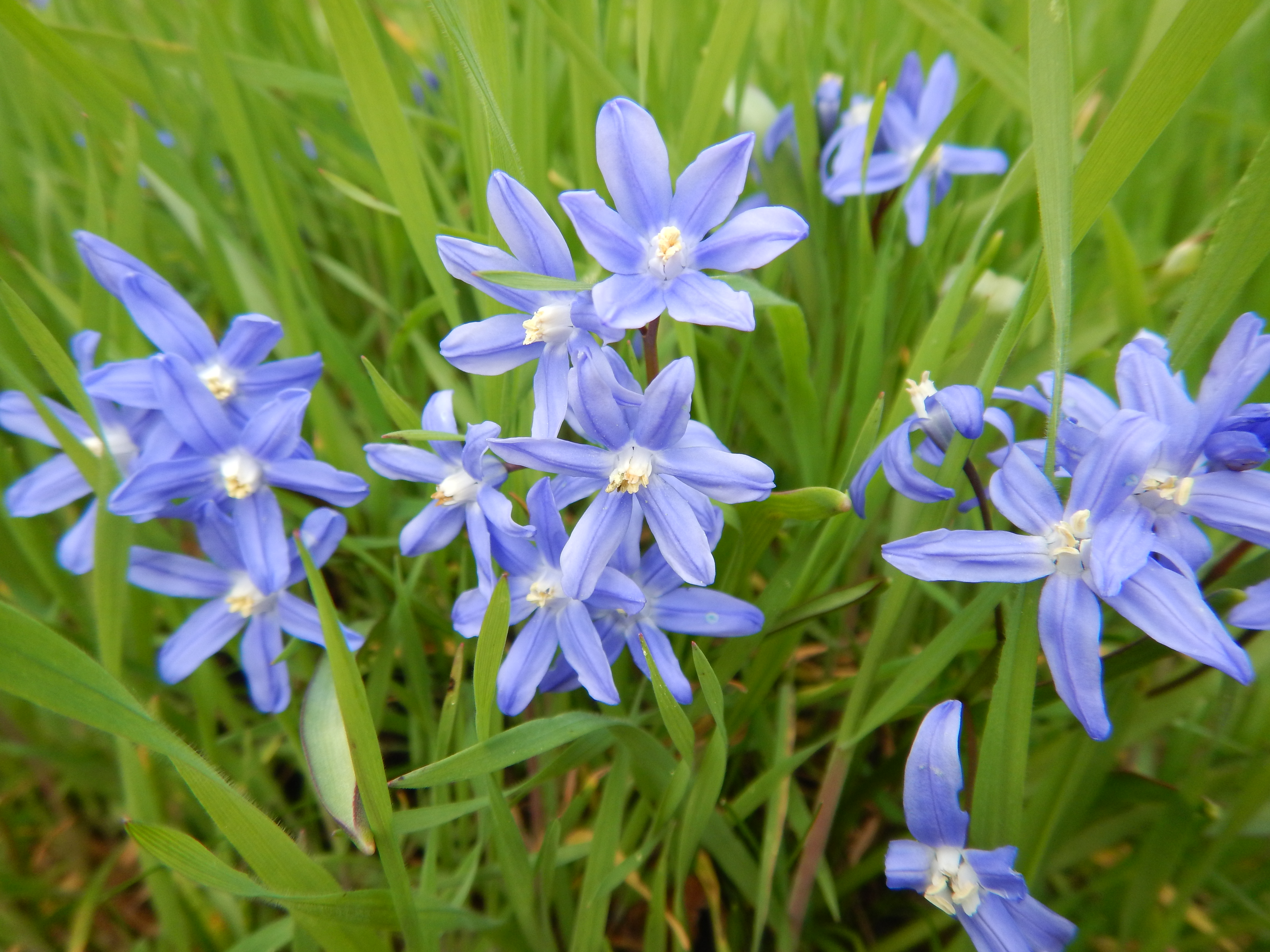
1- Glory of Snow (Chiondoxa forbesii) show their cheery faces in mid-March.
photo by SVSeekins
6 inches high
naturalizing
Full Sun – Part Shade
zone 3
special notes
– A true naturaliser! Some great places to view mass patches of them are Camosun College Lansdown Campus, Metchosin Church graveyard, and Summit Park.
– see also Meadow Blooms 2 – Chiondoxa
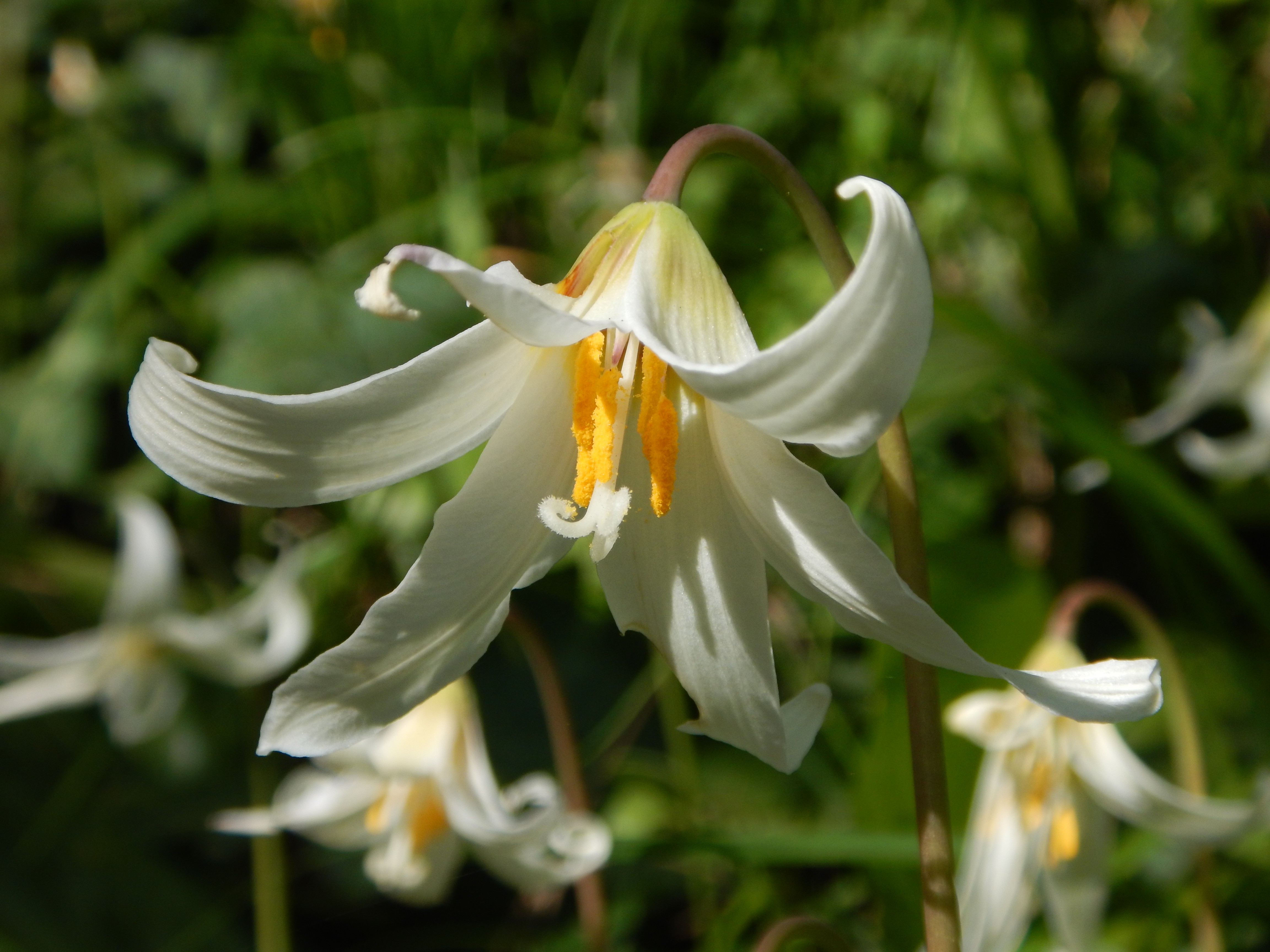
2- Fawn Lily (Erythronium oregonum) is often called the Easter Lily because it shows itself around Easter time – whether that’s in late March or mid-April.
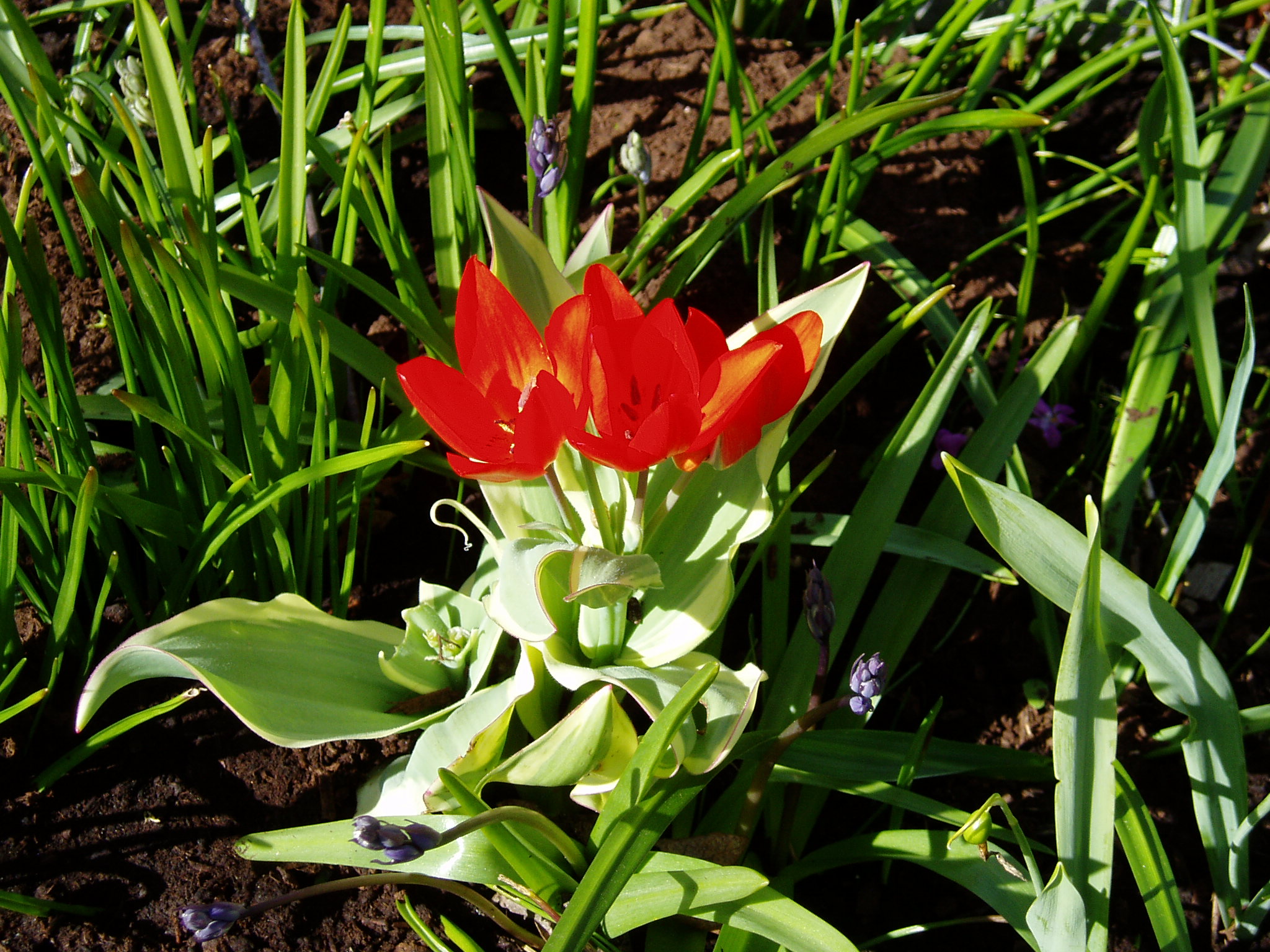
– Botanical Tulips are the only variety of tulips, in my experience, that deer leave alone. Simply because I can, I DO… plant lots of them.
– Tulips prefer summer drought, so if you’re irrigating your garden, the tulips are better kept in pots & set elsewhere when their show is done.
– My current fave is Species Tulipa Praestans Unicum (4 in.) because it has multiple, bright red flowers on each stem AND has variegated foliage.
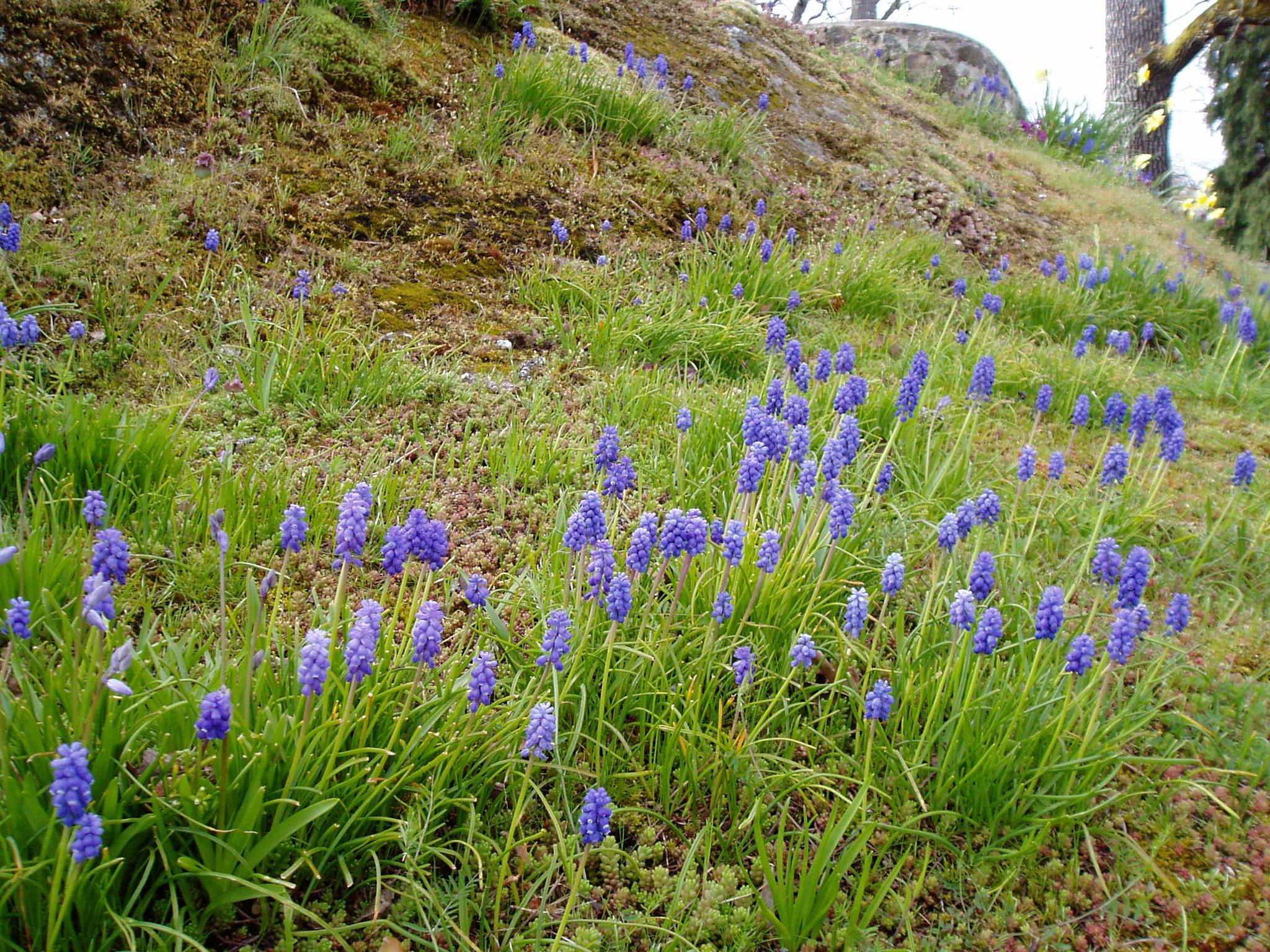
4- Grape Hyacinth (Muscari armeniacum) turn our Gary Oak Meadow to a sweep of blue when they bloom in mid-April.
photo by SVSeekins
6 inches high
naturalizing
Full Sun – Part Shade
zone 4
photo by SVSeekins
special notes
– The leaves show up early in the autumn & are often grazed by the deer through the winter. For whatever reason, shortly before the buds show, the deer lose interest.
– I was stunned when I heard a fellow gardener say that he regretted planting grape hyacinth. They naturalize around here so well that they grow out of cracks along the edge of the driveway. ‘That is determined’, granted, but I still enjoy them.
– see also Looking Forward to Sunshine
5- Daffodils (Narcissus) are bursts of sunshine in the March & April gardens.
photo by SVSeekins
4- 24 inches high depending on the variety
naturalizing
Full Sun – Part Shade
zone 3 or 4 depending on the variety
photo by SVSeekins
special notes
– Daffodils are perhaps the best know bulb for deer resistance. Here’s a quick list of my faves: early – – Dwarf narcissi ( with multi blooms per stem)
–– Tete a Tete (6 in.), Jetfire (10), Jack Snipe (10), Toto (8), Velocity (8)
early – mid – – Rock garden narcissi
–– Suzy (16 in.), Feb Gold + Quail (10),
mid – Late – – -Mini narcissi
— Baby Moon (10 in.) Canalaculatis (5) Golden Bells (4)
Bonus Pick
photo by SVSeekins
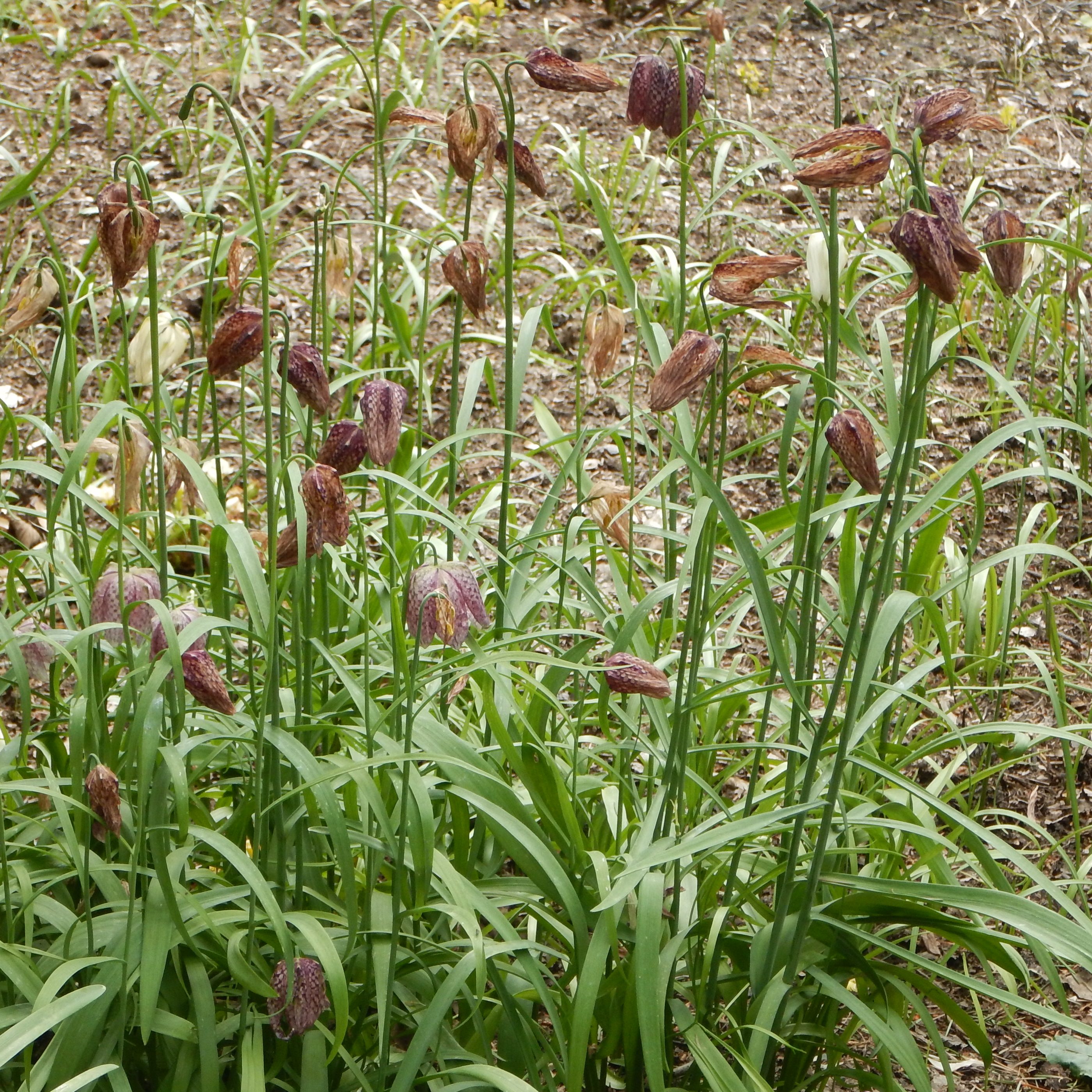
6- Fritillaria also bloom in Victoria in mid-spring.
—Chocolate Lily (Fritillaria michailovskyi) 8 inches, zone 5
—Checkered Lily (Fritillaria meleagris) 8 inches, zone 3
special notes
– I can’t totally swear by these because I haven’t grown them in our garden, but I have seen them locally.
All of the Top 5 picks have been drought tolerant in our garden. Fritillaria might need more moisture than I use in the summer, but I’m like most gardeners — coveting the plant on the other side of the fence.
🙂
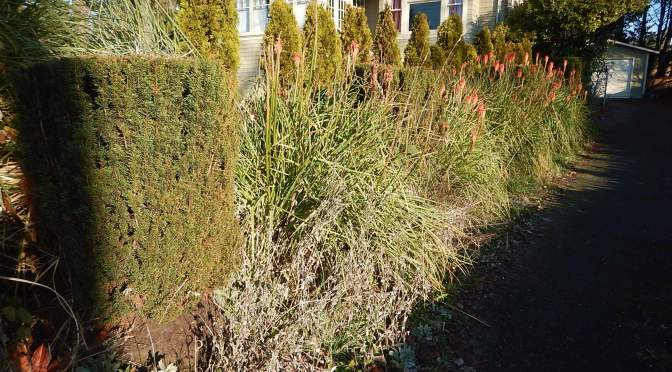
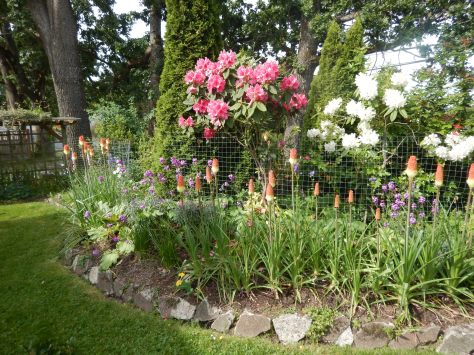
A blooming swath of red-hot pokers (aka torch lily, aka Kniphofia) caught my eye last November. Seriously – November!
photo by SVSeekins
That seems crazy. Its broad, strappy foliage resembles the Kniphofia that blooms in our garden in May– six months earlier. Who knew there were such varieties? And how can I get some??
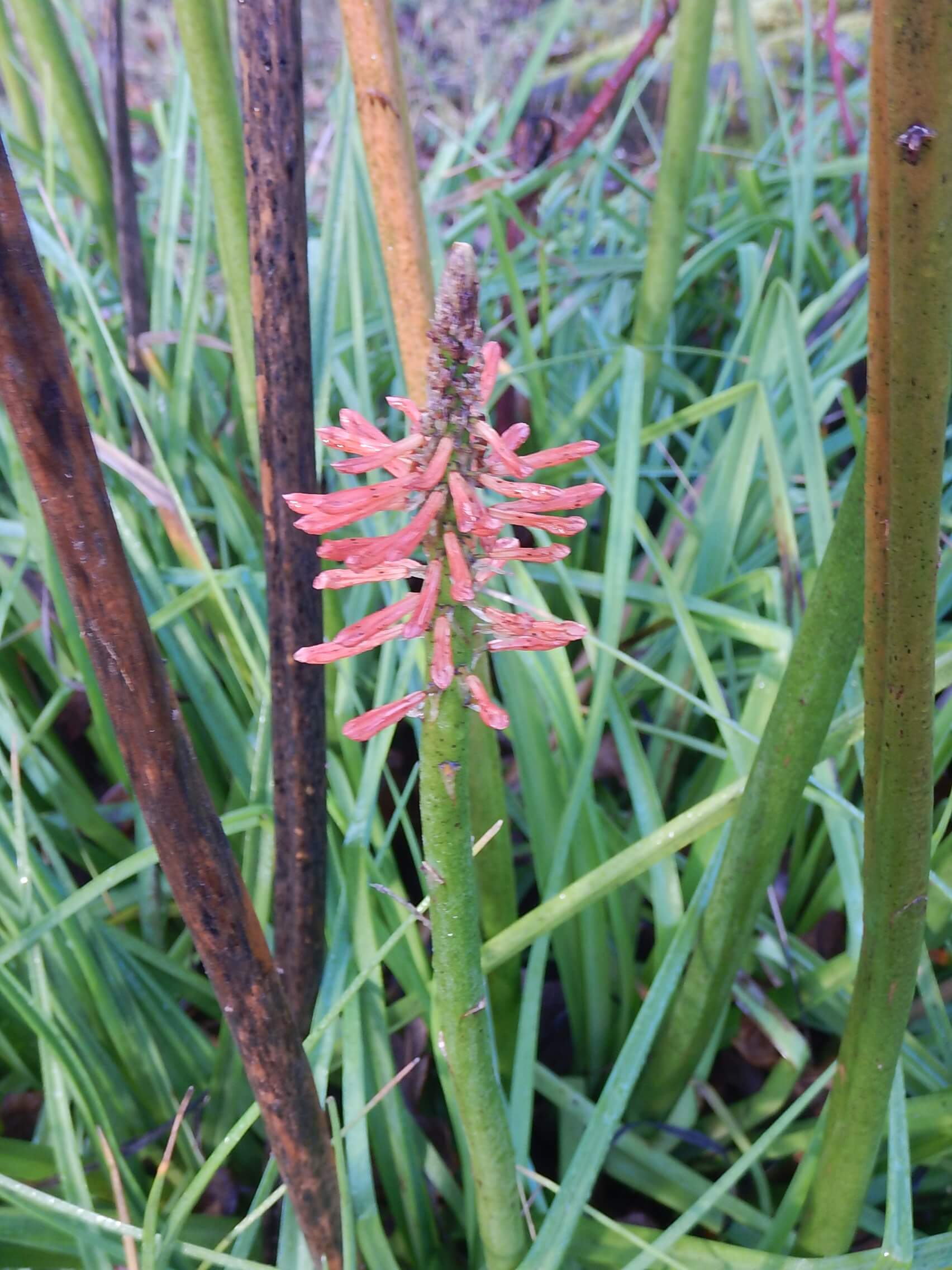
In the cool overcast of autumn, these kniphofia flowers stand up much longer than our spring bloomers.
photo by SVSeekins
When it starts to snow on Christmas Eve, I’m concerned. On Christmas Day, the snow sparkles on the garden, telling the world that winter is here.
In my experience, snow cover is the tipping point when red-hot pokers disintegrate into a slimy mess. (Fortunately, they come back in spring! Some Kniphofia are actually cold hardy to zone 5 – that’s to -25 C 🙂 I can’t imagine them growing in the Tiffindel ski area of South Africa, but apparently, that’s home. )
photo by SVSeekins
By Boxing Day, the snow is gone. I’m ecstatic. Don’t get me wrong – there is something magical about a White Christmas — but followed by a Green Boxing Day is perfection!
photo by SVSeekins
Mysteriously, all of the Kniphofia survive– leaves and all! Relief!
Now, I’m curious to know which temperature precisely brings on their disintegration.
photo by SVSeekins
In Victoria, we have a School-Based Weather Network. Most schools host tech monitoring the individual climatic pockets around town. It’s very handy. There’s a station just a block away. I prefer to confirm rainfall & temperatures uber-locally and not count on the information coming out of Victoria Airport, 25 km away.
photo by SVSeekins
As it turns out, the temperatures through the storm barely dipped a degree below freezing. We’ve had plenty of mornings like that through December, just without the snow. Perhaps it’s temperatures like -5 or -10 C that knocks the Kniphofia back? We get those temperatures here, but rarely. Any idea?
Now, at the end of January, the blooms around the corner from us are just wrapping up. It’s amazing, really: 3 months of colour. I admit they’re looking a bit ratty, but I’m desperate for flowers at this time of year. 🙂
-30-
PS– Fast-forward to January 2024… It’s snowed again. (It’s snows each winter, but the Kniphofia stayed green.) This time, the temperatures dipped to -10 C. That did it. The Red Hot Pokers collapsed. Some went a bit slimy, others just seemed dehydrated.
photo by SVSeekins
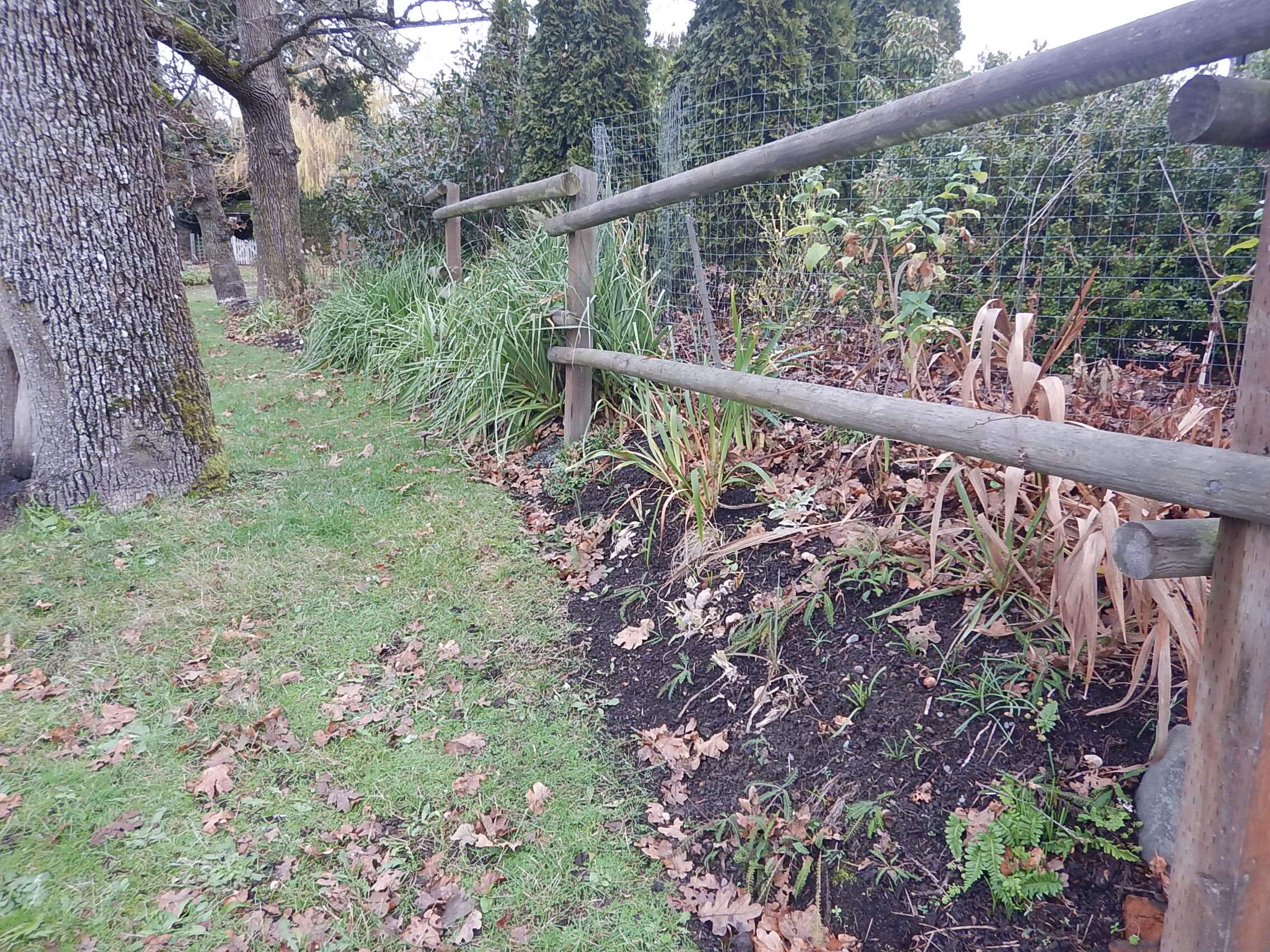
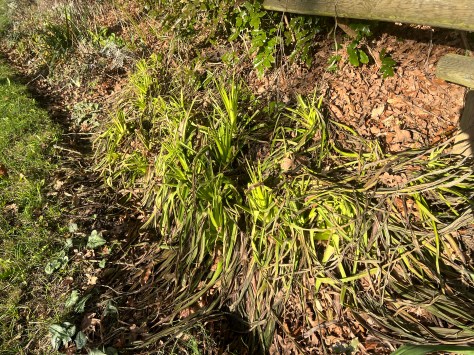
Temperatures on one side of the shrub border seem to have been colder than on the other side. Perhaps wind direction made a difference? By early February, the Red Hots on that ‘other side’ are already starting to recover…
photo by SVSeekins
By early April, I’m not seeing new shoots from the colder side of the shrub border. My fingers are crossed. I’m hoping that by May, they’ll be happily blooming again.










 Garden Variety Life