Tag Archives: native plants

Playfair’s Camas In Bloom

Playfair Park Camas meadow, great camas, Camassia leichtlinii garden Victoria, Vancouver Island, BC, Pacific Northwest
photo by SVSeekins

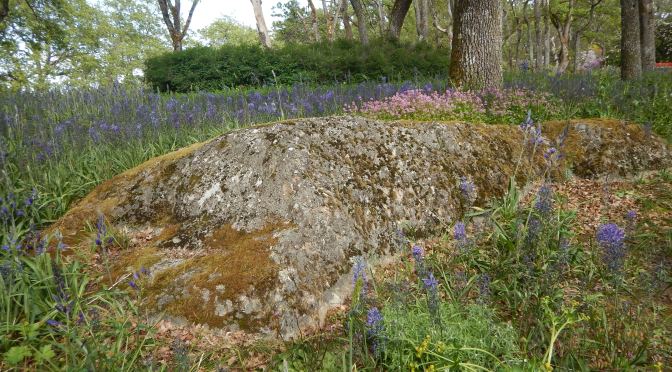
There seems to be a buzz about Playfair Park this spring – and it’s not just the pollinators.  Several people have told me about how spectacular its Camas meadow is.  Of course, I had to check it out.
Playfair Park Camas meadow garden Victoria, Vancouver Island, BC, Pacific Northwest
photo by SVSeekins

I used to think that Camas meadows were beautiful gifts from Mother Nature, but it turns out she’s had a helping hand.  First Peoples farmed Camas for its food value.  Their work created more intense swaths of blue each spring.  Left untended these fruitful fields decline & are overtaken by more dominant species.

Playfair Park Camas meadow not restored garden Victoria, Vancouver Island, BC, Pacific Northwest
photo by SVSeekins

The Camas fields that are now Playfair Park succumbed to invasive grasses and introduced species.  Fortunately, volunteer Colleen OBrien came on the scene around 2010 with grand ideas, determination and stamina.  Over many years she’s gained the respect & cooperation of Saanich Parks, and their Pulling Together Program.

Great Camas, Camassia leichtlinii garden Victoria, Vancouver Island, BC, Pacific Northwest
photo by SVSeekins

The Common Camas bloom (Camas quamash) was pretty much over when I arrived, but the Great Camas (Camassia leichtlinii) was in full glory. I stopped in my tracks, slack-jawed.  It was so much more intense than I’d expected.

Seablush, shortspur, rosy plectritis, Plectritis congesta garden Victoria, Vancouver Island, BC, Pacific Northwest
photo by SVSeekins

What a joy to wander the paths of this paradise.  The over-the-top spectacle of the Camas is complemented by a striking variety of native companion plants:

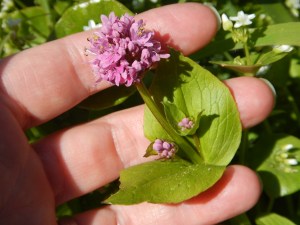
  • Seablush, shortspur, rosy plectritis, Plectritis congesta garden Victoria, Vancouver Island, BC, Pacific Northwest
    photo by SVSeekins

    Seablush (Plectritis congesta) on rocky outcrops will grow happily at only ankle height. In a deep soil meadow, it reaches my knees in little explosions of pink joy.

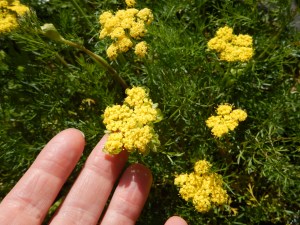
  • Spring Gold, Lomatium utriculatum , common lomatium; fine-leaved lomatium garden Victoria, Vancouver Island, BC, Pacific Northwest
    photo by SVSeekins

    Spring Gold (Lomatium utriculatum) is the most recognized punch of color contrasting the Camas.  Even its ferny foliage contrasts the long straps of the Camas leaves.  The flat tops are great landing pads for pollinators to gather their wits until they decide where in this smorgasbord to head next.

  • Western Buttercup, Ranunculus occidentalis  garden Victoria, Vancouver Island, BC, Pacific Northwest
    photo by SVSeekins

    Western Buttercup (Ranunculus occidentalis) is the royal relative of the common creeping weed that is the bain of Seekers-Of-The-Perfect-Lawn.  This tall cousin also has a long bloom but is welcome in my garden anytime.

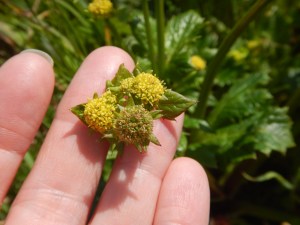
  • Pacific Sanicle , Gamble weed, Pacific blacksnakeroot,  Sanicula crassicaulis, bloom, garden Victoria, Vancouver Island, BC, Pacific Northwest
    photo by SVSeekins

    Pacific Sanicle (Sanicula crassicaulis) is a sturdy plant with palm-shaped leaves at its base & small pom-pom flowers on tall stems.   Its deep tap-root reaches moisture even when the summer drought kills off other plants.

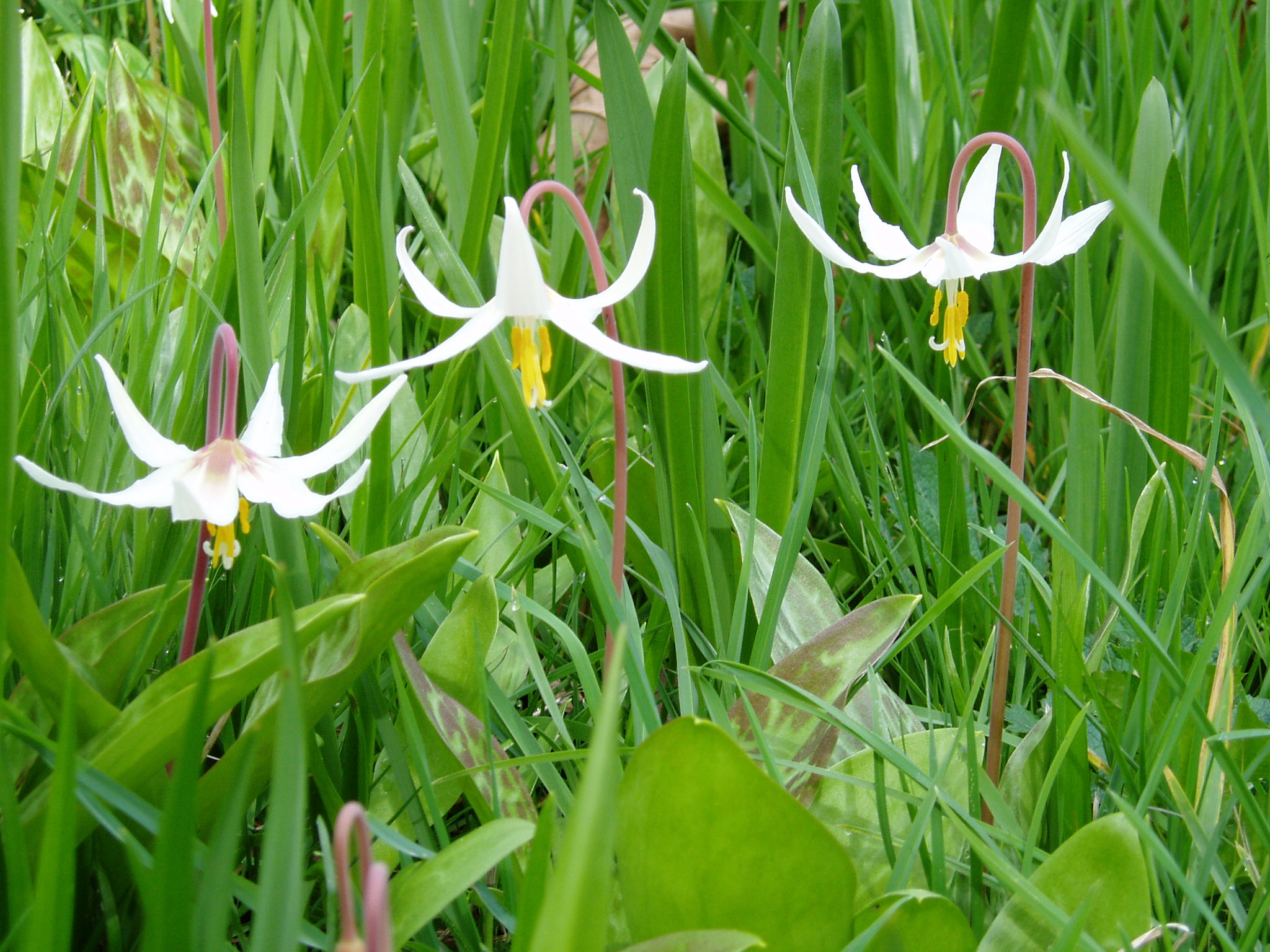
  • Erythronium oregonum, white fawn lily, easter lily, Oregon Lily garden Victoria, Vancouver Island, BC, Pacific Northwest
    photo by SVSeekins

    Fawn Lily (Erythronium oregonum) blooms early, often with the first of the common Camas.  The white of the lily is a dramatic pop of contrast against the blue of the Camas.  By the time the taller Great Camas blooms, the fawn lily bloom is completed and it’s setting seed.

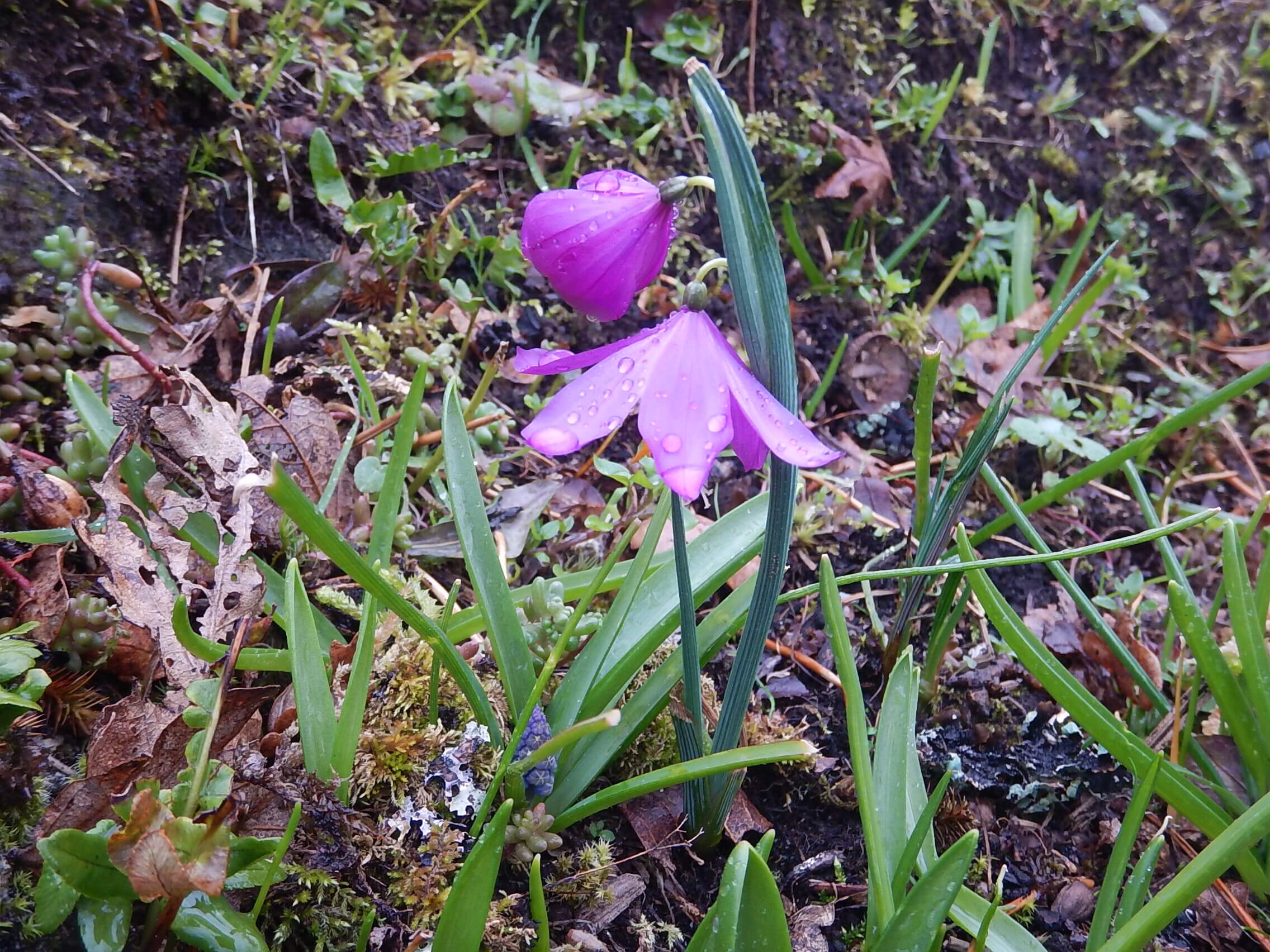
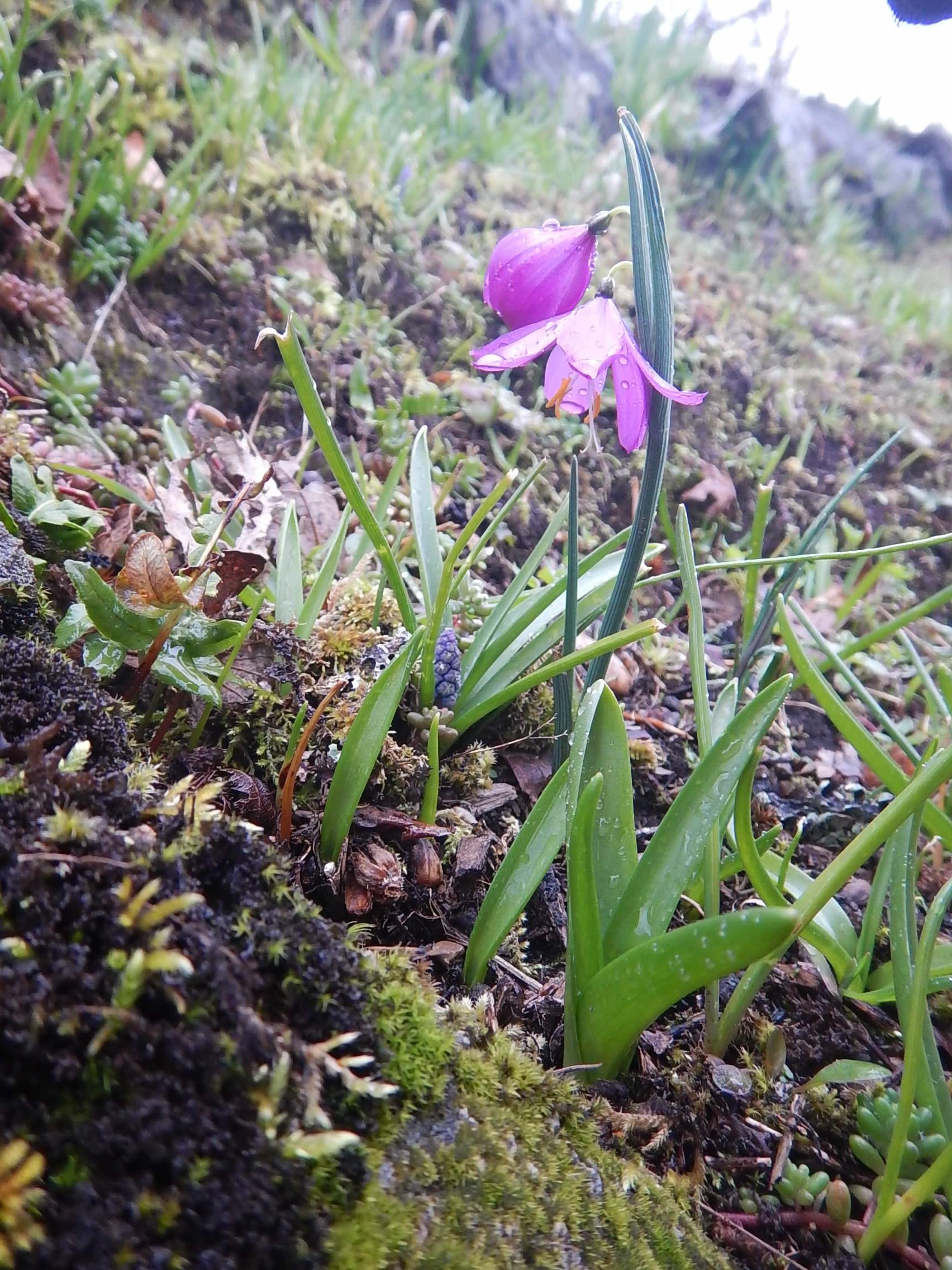
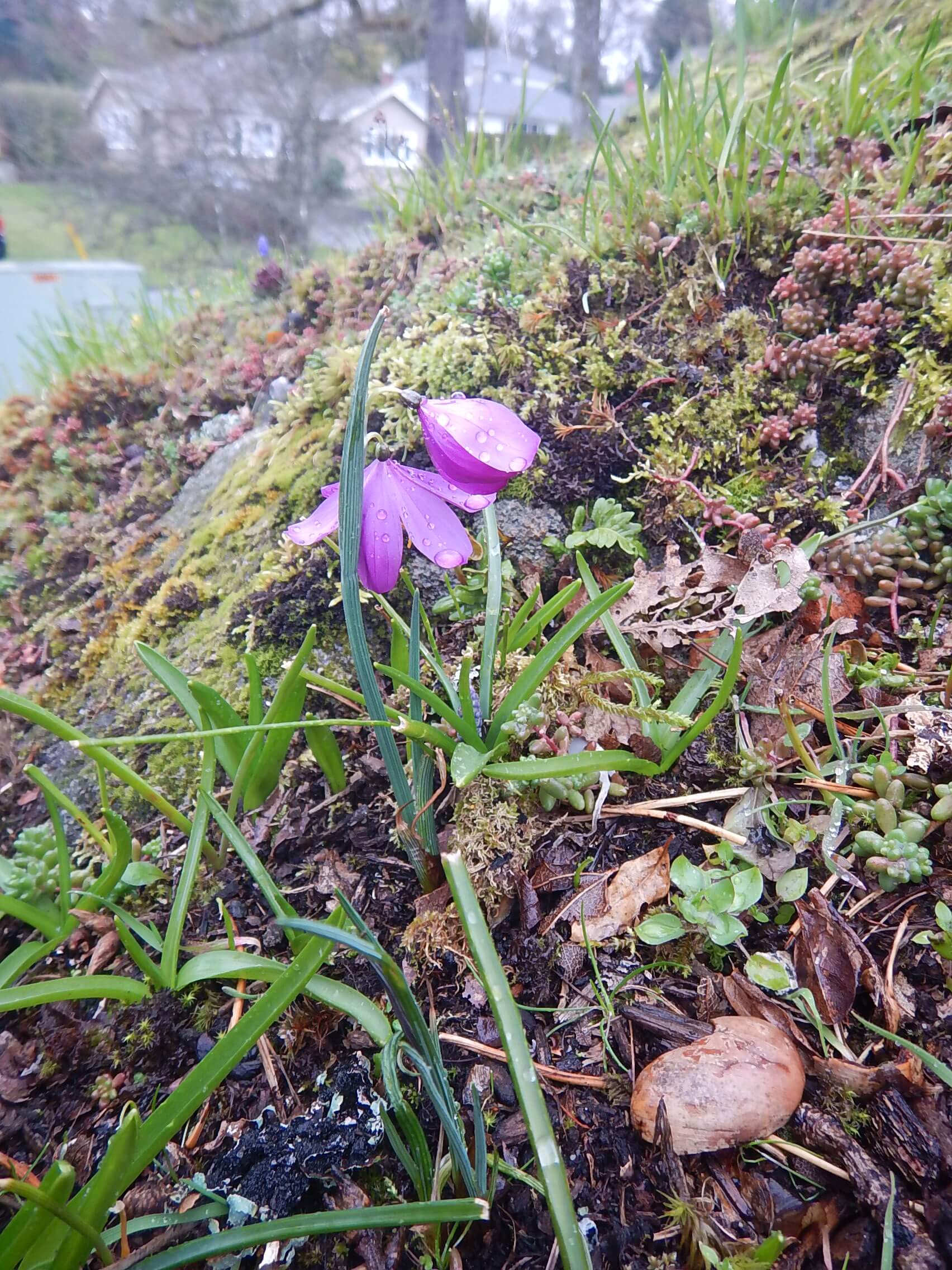
  • broad-leaved shooting star, Henderson's shooting star, mosquito bills, sailor caps bloom, Dodecatheon hendersonii, garden Victoria, Vancouver Island, BC, Pacific Northwest
    photo by SVSeekins

    Shooting Stars (Dodecatheon hendersonii) are spectacular on their own with their delicate, cyclamen-like blooms.  They’re early bursts of colour in rocky outcrops and path edges.  Once the taller Great Camas start to bloom, the Shooting Stars are easily overlooked.

  • Chocolate Lily, Chocolate Lily, checker lily, Fritillaria affinis  garden Victoria, Vancouver Island, BC, Pacific Northwest
    photo by SVSeekins

    Chocolate Lily  (Fritillaria affinis) is much larger in stature (knee-high) but its color is so muted that it’s also easily overlooked among the blooming Camas.  Sightings are few & far between.  SM spotted a patch of them beneath a tree & pointed them out, otherwise I’d have walked past unknowing.  Perhaps there are more around than I realized… perhaps not.

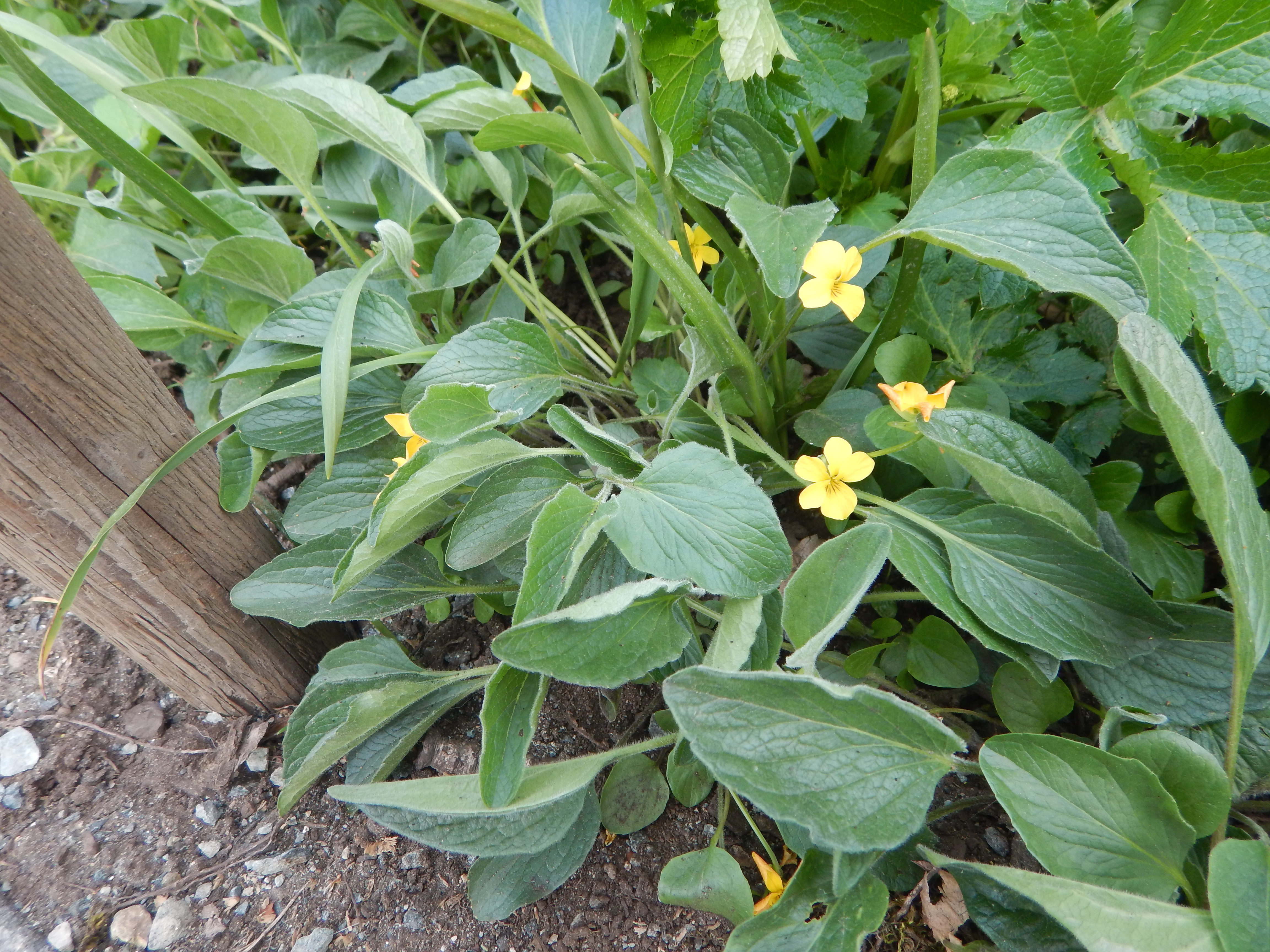
  • Yellow Montane Violet , Viola praemorsa garden Victoria, Vancouver Island, BC, Pacific Northwest
    photo by SVSeekins

    Yellow Montane Violet (Viola praemorsa)  is the darling of the meadow.  When Colleen first started the restoration, she was over the moon to find this endangered plant surviving.  It’s red-listed in BC. Now, because of her attention, others have taken up the cause & also work at restoring populations.

Yellow Montane Violet , Viola praemorsa garden Victoria, Vancouver Island, BC, Pacific Northwest
photo by SVSeekins

This piece of land has gone through many changes since colonization.  I’m glad that it was protected from more intense development.  In the 50’s the park was ear-marked for an arboretum, but that didn’t go beyond the incredible planting of rhododendron that’ve made the park famous for decades.

Great Camas, Camassia leichtlinii garden Victoria, Vancouver Island, BC, Pacific Northwest
photo by SVSeekins

I don’t think anyone really expected that those spring-blooming Rhododendrons would ever play second fiddle to this renewed native landscape.  Colonization meets nature in this lovely garden.

-30-

Other places to see Camas Meadows:

Satin Flower (Olsynium douglasii)

Woohoo!! The Satin Flower bloom opened the other day – – AND I’ve checked it 3 mornings in a row now – It’s Still There!!

Olsynium douglasii, Douglas' olsynium, Douglas' grasswidow, grasswidow, blue-eyed grass, purple-eyed-grass, satin flower, Sisyrinchium douglasii, garden Victoria, Vancouver Island, BC, Pacific Northwest
photo by SVSeekins

Ok, so that sounds just a little crazed,
but Satin Flower is one of the very earliest Pacific Northwest native wildflowers –
and it’s so pretty!

garden Victoria, Vancouver Island, BC, Pacific Northwest
photo by SVSeekins

It’s really well suited to our rocky outcrop that’s very moist in winter & very dry in summer.  So, this Olsynium douglasii (aka Douglas’ olsynium, Douglas’ grasswidow, grasswidow, blue-eyed grass, purple-eyed-grass, or satin flower) should be happy in our gary oak meadow.

But the deer are happy here, too.

Satin Flower, garden Victoria, Vancouver Island, BC, Pacific Northwest
photo by SVSeekins

When I first bought a couple of these perennial herbs from Sannich Native Plants (Thank you Kristen & James!), I planted them too near the deer’s regular route.  Fortunately, I saw the bloom the first morning.
It was gone the next.
I simply shifted the plants to a steeper section of our rocky outcropping, hoping the deer might leave them alone.  Fingers crossed.

The next year – Success.!

Now I’m hoping these sweet little flowers will happily do their thing & naturalize into more of a clump – maybe even spread around a bit!  🙂

-30-

Indian Plum – A Winter Joy

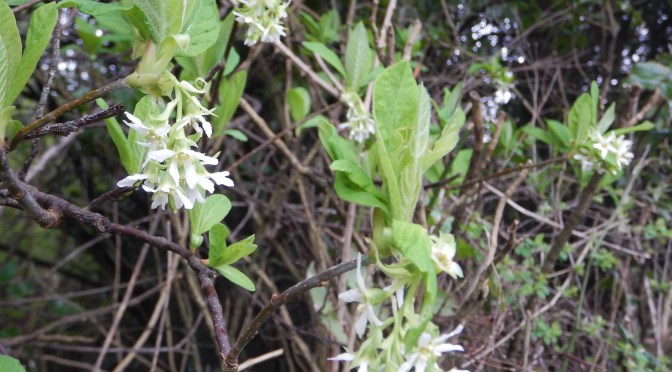
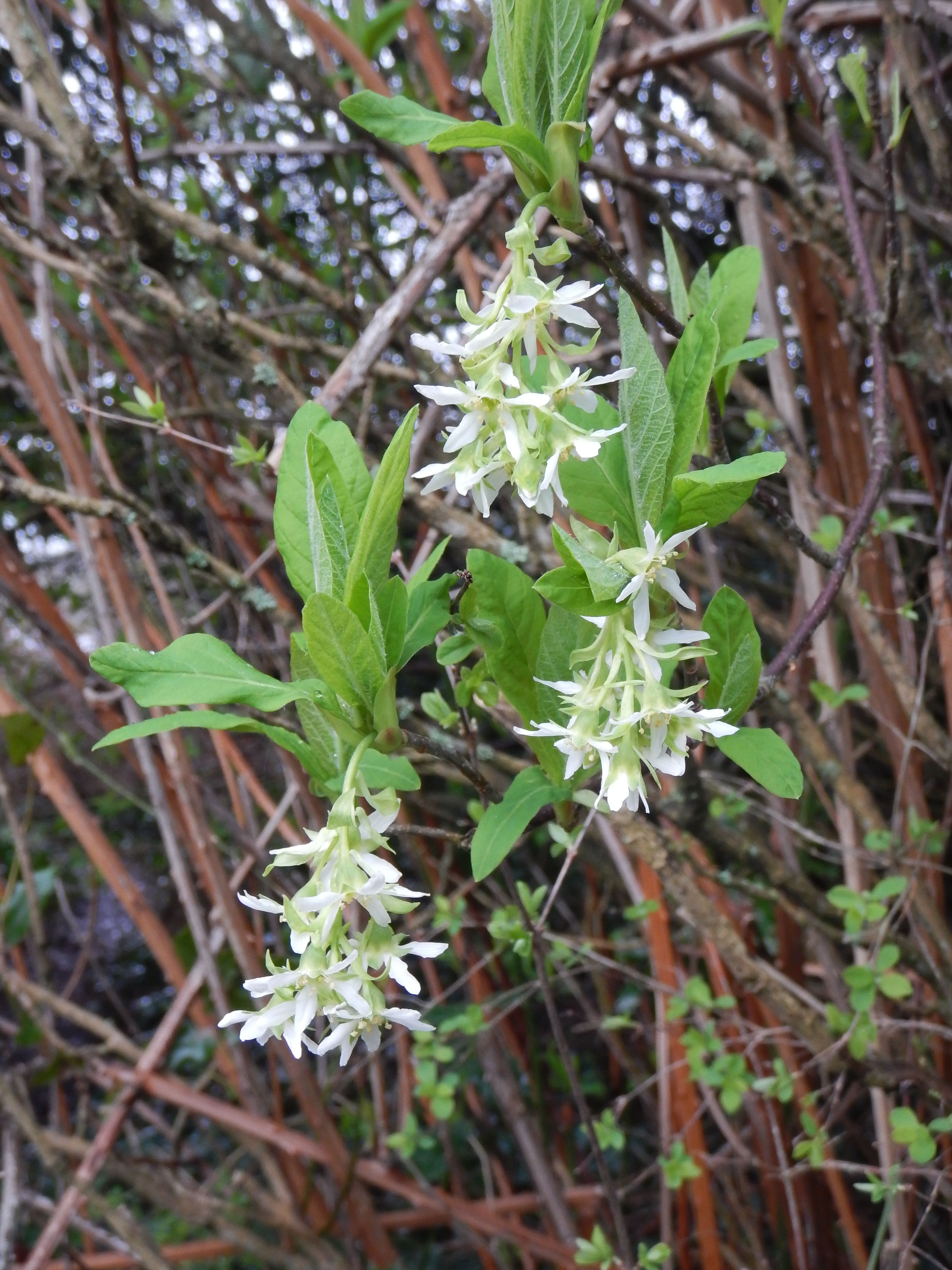
It’s not really a pretty shrub, but still, I’d like a thicket of Indian Plum in our border.

Oemleria cerasiformis, Indian Plum, June plum, Osoberry, Oregon Plum, Indian Peach, garden Victoria, Vancouver Island, BC, Pacific Northwest
photo by SVSeekins

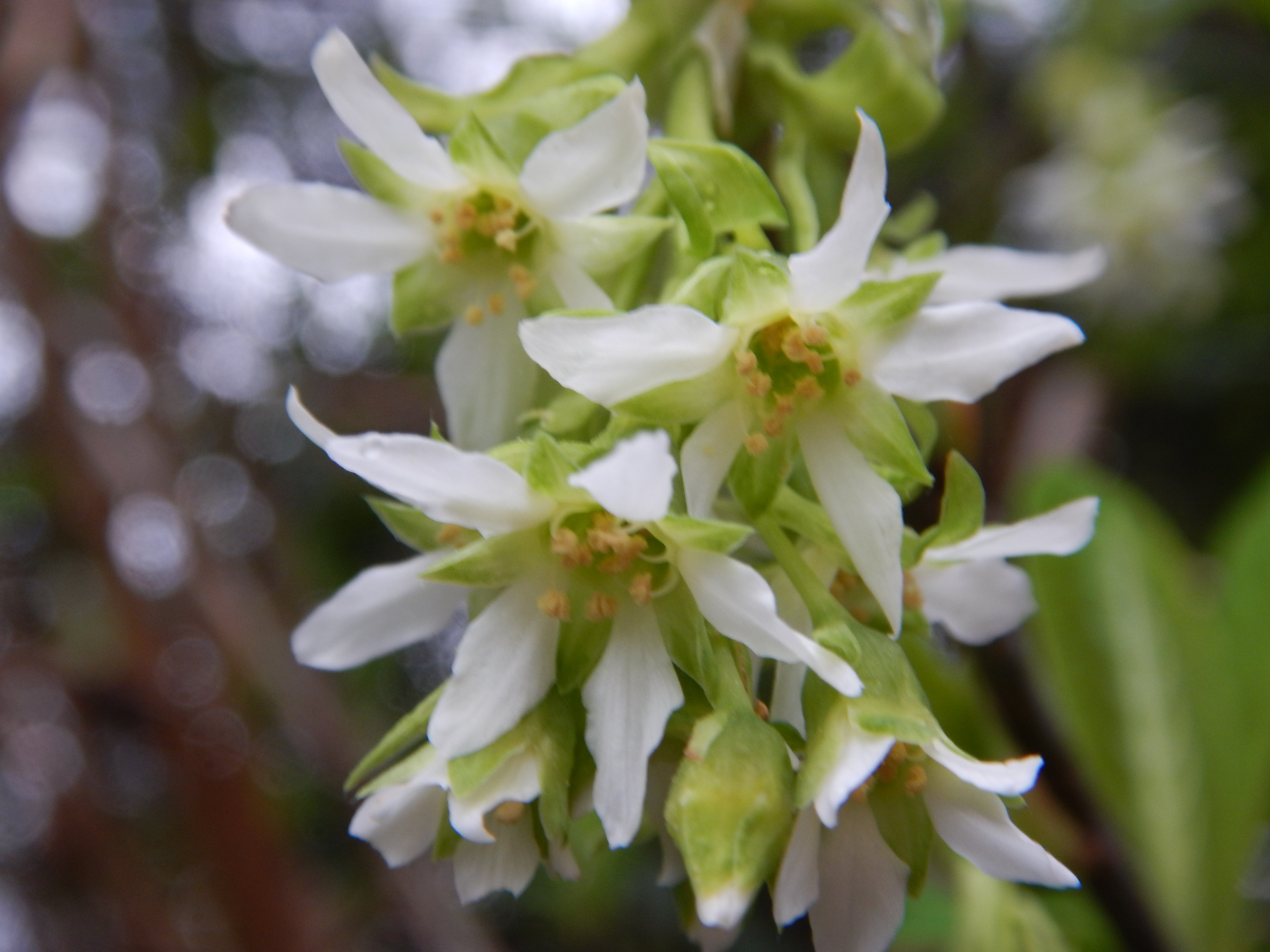
It’s specifically because of the leaf buds & blossoms in February.  They calm my cabin fever & help me through the last several weeks of winter.  Against the grey skies, the leaves look so perky & hopeful … and determined.  Even the inconsequential greenish-white flowers are exciting when little else is happening.

Indian plum grows happily in Partial Shade, not needing the prime Full Sun real estate that I protect for really showy plantings.  It’s common across the coastal Pacific Northwest below  Vancouver Island.

Oemleria cerasiformis, Indian Plum, June plum, Osoberry, Oregon Plum, Indian Peach, garden Victoria, Vancouver Island, BC, Pacific Northwest
photo by SVSeekins

When we lived on Cedar Hill, there was a large suckering thicket behind our house, at the base of the rocky slope.  The robins nested in the multiple stems of the 12-15 ft tall thicket.  The shrubs did their thing in the understory before the gary oaks hogged most of the sunshine through summer.

Perhaps best known as Indian Plum, Oemleria cerasiformis, is sometimes called June Plum, Osoberry, Oregon Plum and Bird Cherry.

Oemleria cerasiformis, Indian Plum, June plum, Osoberry, Oregon Plum, Indian Peach, garden Victoria, Vancouver Island, BC, Pacific Northwest
photo by SVSeekins

It might sound like a promising fruit source, but those inconsequential flowers turn into inconsequential fruits.  I’ve heard the berries shift through a pretty orange kaleidoscope before maturing into a dark purple-black, but I can’t say I’ve noticed.  The shrub blends into the background as other plants compete for attention in later spring.

Oemleria cerasiformis, aka Indian Plum, June plum, Osoberry, Oregon Plum, Indian Peach, or Bird Cherry, garden Victoria, Vancouver Island, BC, Pacific Northwest
photo by SVSeekins

I did check out the un-inticing tiny black plums once.
Bitter.
With pits.
Perhaps it’s best to consider it wildlife forage.

The early flowers feed hungry resident Anna’s hummingbirds e and signal that the Rufus will soon be returning from warmer climes.  The leaves & fruit provide forage for birds, deer & other mammals.  Isn’t it just good Karma to host a thicket?

-30-