But in mid-November…
When it’s cloudy & drizzling…
I’m thrilledby a soft pastel pink.
Today it’s a Hesperantha. Blooming right beside the deer route! And this patch will bloom until a hard frost kick’s its butt.
photo by SVSeekins
It amazes me that these late-flowering perennials are native to sunny, South African streamsides. Here they bloom in the light shade of our dry woodland garden. Perhaps the thick mulch helped protect them from drying out too much this summer?
The mysteries continue… some websites call them ‘crimson flag lily‘ or ‘scarlet river lily.’ But I’ve always thought those are the crimson / scarletversions that bloom in our sunny borders in spring ?? Perhaps they’re cousins?
photo by SVSeekins
What’s more, neither are actually from the lily family. They kinda remind me of miniature gladioli. BUT they grow from a rhizome rather than a corm.
Scientists say they’re iris. Go figure.
Can you imagine the hullabaloo & debate at one of those scientific Naming Conventions? I figure those folks have some serious work on their agendas,
with figuring out who first claimed a name…
checking the flower specifics…
& then all the DNA analysis…
C, SM & I are exploring Dean Park when I drop to my knees to check out (& photograph ) the pretty spring flowers,
I’m delighted.
SM is charmed.
C smiles indulgently & waits …
photo by SVSeekins
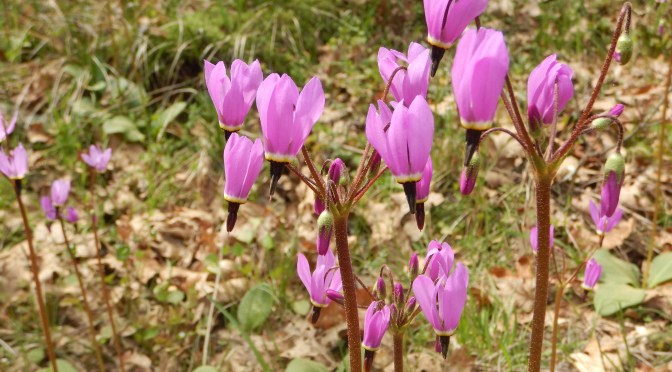
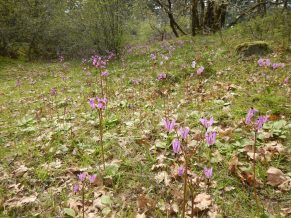
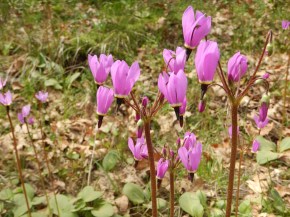
The vibrant magenta colours look so perky! How can these delicate cyclamen-style blooms be tough enough to survive our temperamental spring weather?
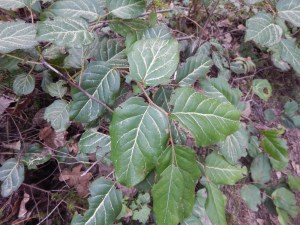
Further down the trail there’s pollen everywhere – in the air, along path edges… even settling on plants & making them look different. At first glance I thought I’d found a special variegated salal. Check out the leaf with pollen & without:
salal leaf formation highlighted by pollen -photo by SVSeekins
salal – with the pollen shaken off -photo by SVSeekins
I’m not sure exactly where the pollen is from. There’s so much of it I figure it’s got to be from the most dominant species of tree in this park. Perhaps the douglas fir?
photo by SVSeekins
Cones mottle the ground. SM confirms they’re douglas fir. She tells me a story about the little mice that hide inside the cones, with only their tails poking out between the layers. Pretty cute, eh?
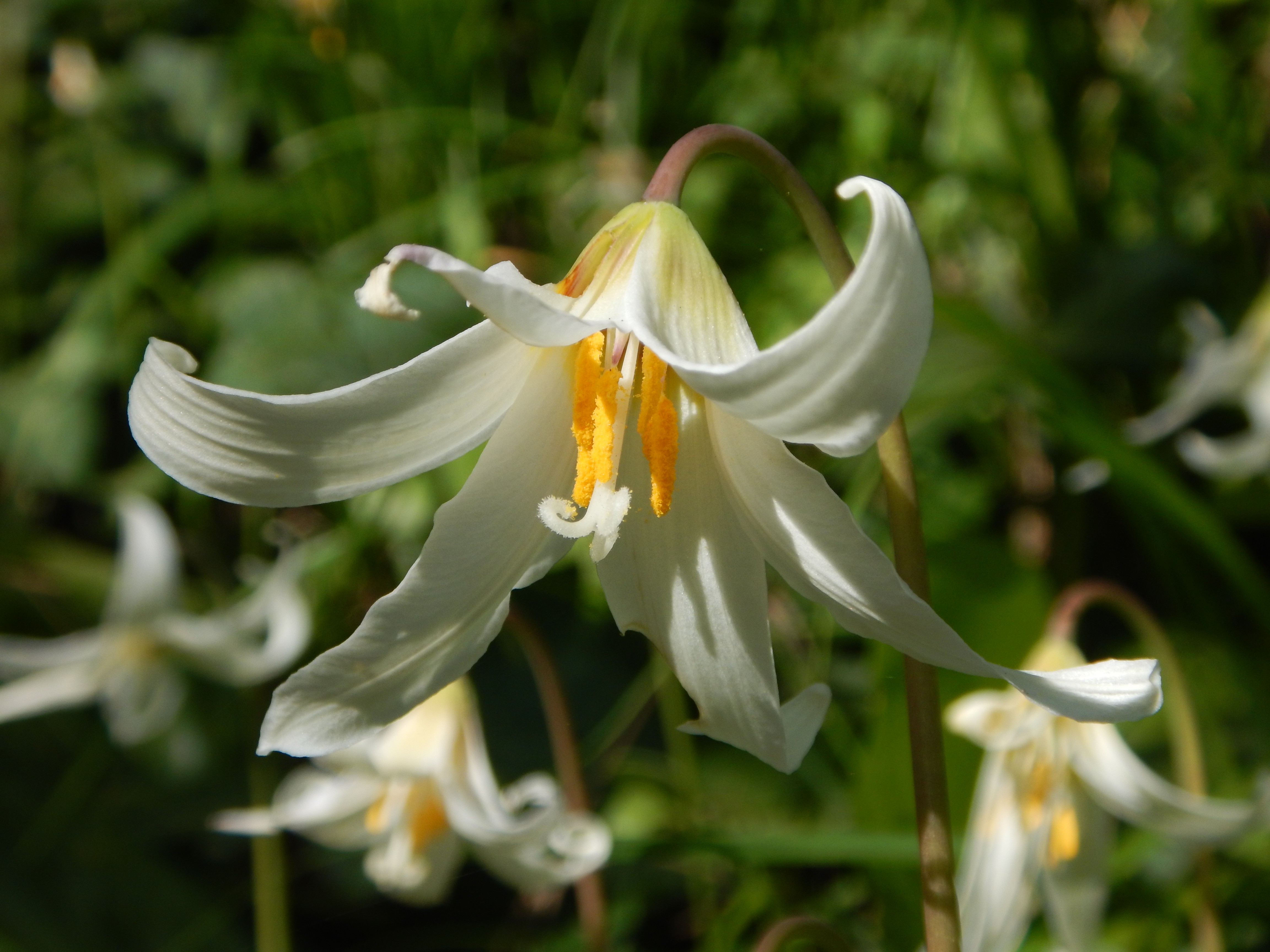
In another small clearing is a meadow of fawn lily (erythronium).
photo by SVSeekins
I’m used to seeing them in a more open meadow at Beacon Hill Park, so it’s nice to see them prosper in the dappled shade of the forest edge too. Of course, I need a closer look. This time C smiles indulgently but continues on his way. (He’s here for the fresh air & exercise).
photo by SVSeekins
It’s a bit tough to see into the face of the fawn lily because of its nodding head but I reckon that is its way to protect those private bits from the occasional downpour. Can’t you just imagine the bees taking refuge under a fawn lily umbrella? Keeping company with a fairy or two ….
photo by SVSeekins
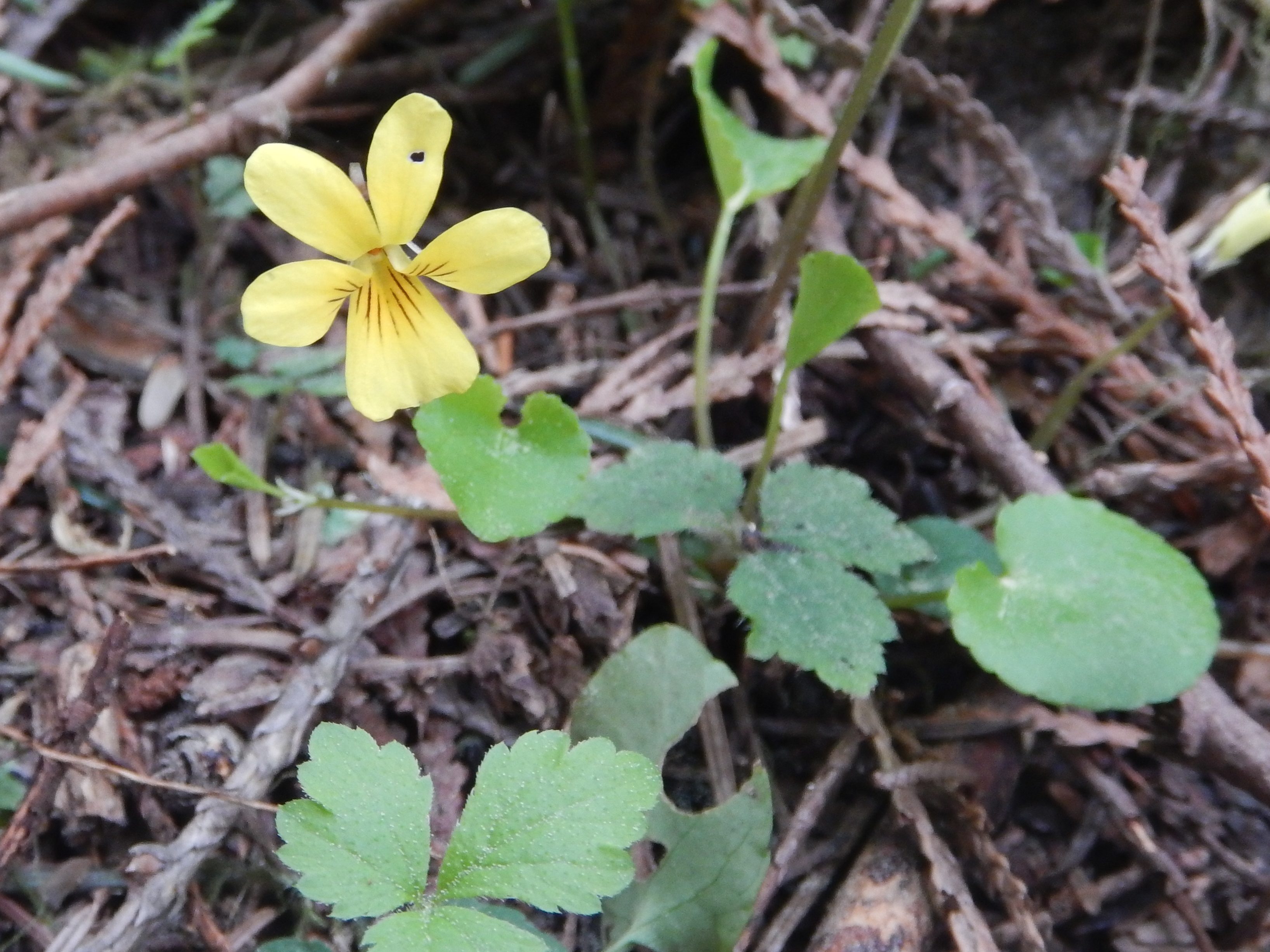
There are many wild violets growing in our garden, some pink and some blue. Years ago I heard about a wild yellow violet. I finally saw a small clump in a Washington State Park last year. But that’s pretty much it. Today SM points out one to me. It is so tiny! I’d easily have missed it completely, walking right past none the wiser. It’s so nice to see them growing locally.
photo by SVSeekins
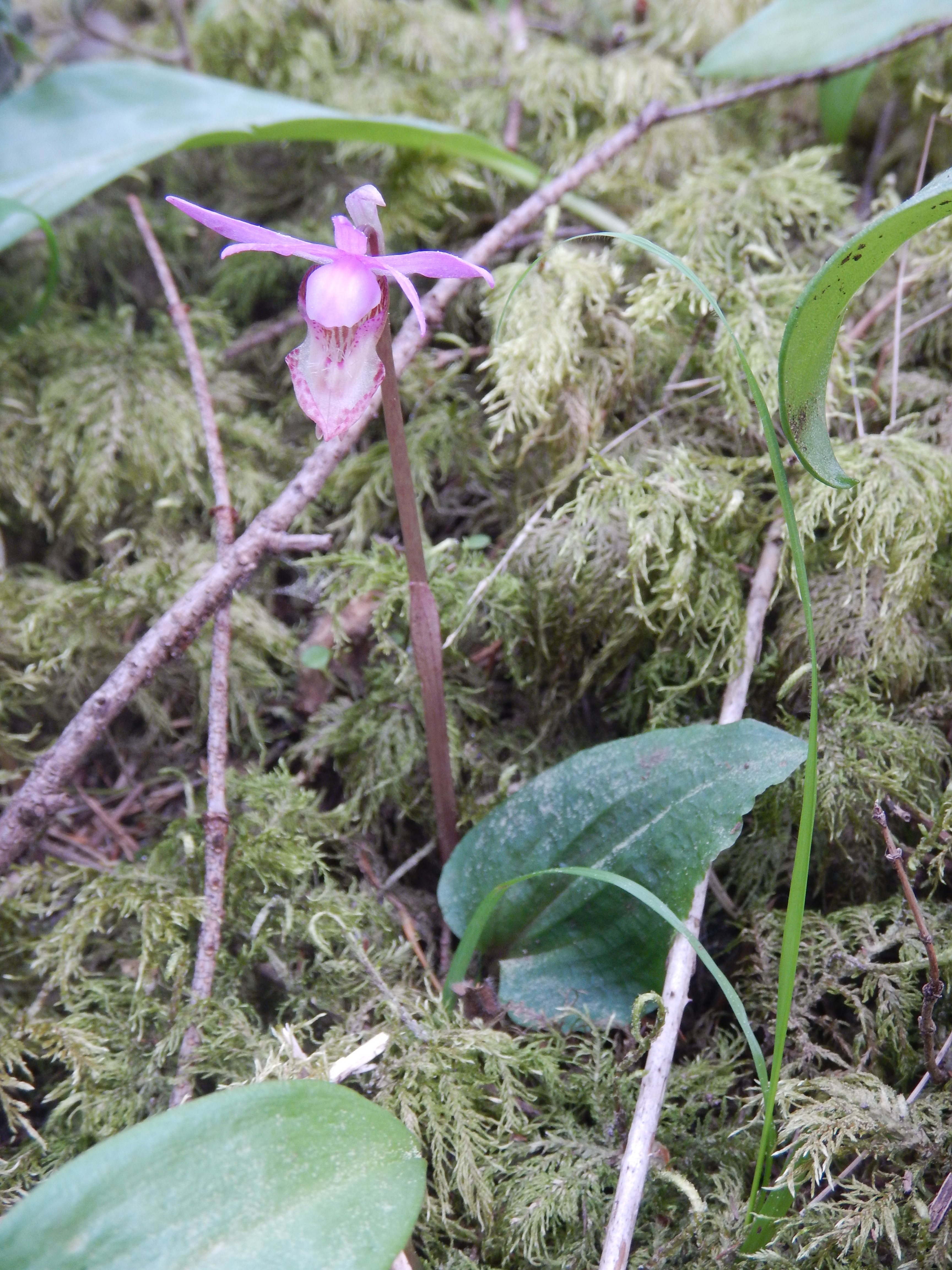
Then SM spies a wild orchid. OMG !!!
I’ve only ever heard of the fairy slipper (Calypso bulbosa).
We’ve got to invite SM along on our hikes more often. 🙂
I’m running around with the camera – up & down… this angle & that one… Bucket list moment !!
C misses the entire thing.
photo by SVSeekins
He’s down the trail. When he comes across another native plant he knows I’ll be excited about, he decides to sit until I catch up…
Trillium Is not your typical flower. When the bloom first opens, the petals are white. Over time they turn pink. It’s two plants in the space of one.
photo by SVSeekinsphoto by SVSeekins
Trillium is from the Latin ‘in 3’s’.
3 leaves circle the stem.
3 sepals frame the flower
3 petals highlight the bloom
the stamens are set in groups of 3.
there are 3 chambers to the seed pod
I reckon it looks slightly alien.
With so much interest in the groundcover, I’ve barely looked up at all.
photo by SVSeekins
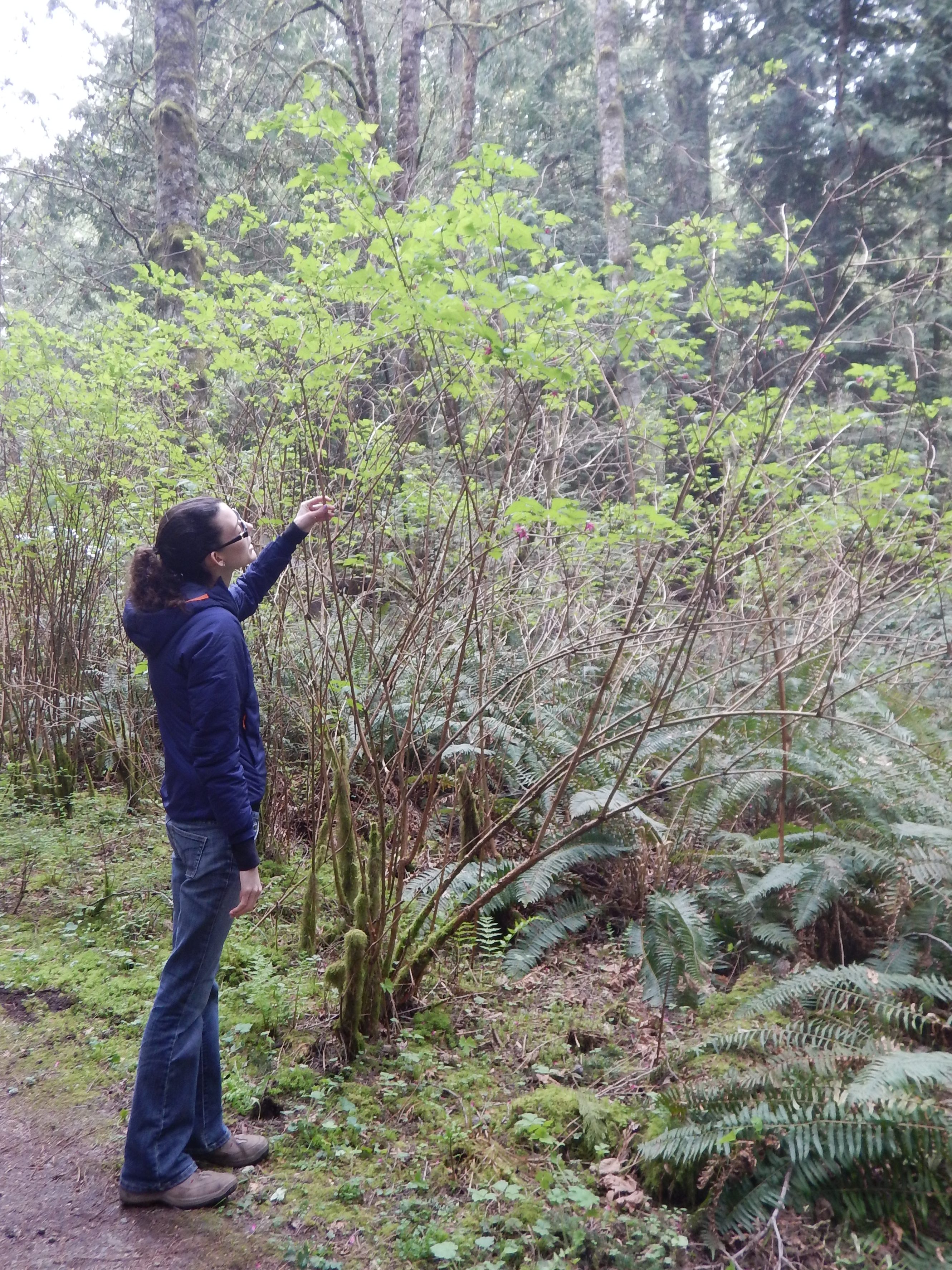
SM asks me about a tall, rangy shrub just coming into leaf. This time I’m the one to help with ID. Salmonberry is one of the early spring shrubs. I first noticed its flowers while horseback riding through the Sooke Hills.
About the time these bright fuchsia flowers bloom, the rufous hummingbirds return for the season. Kismet.
photo by SVSeekins
I once planted salmonberry (Rubus spectabilis) in our garden but later realized that a pretty flower & tasty berries didn’t balance with my aversion to growing anything with thorns. Now I just enjoy salmonberries in the wild.
March, April & May are fabulous times to view the native flowers around Victoria. Before I’m ready, many of them disappear into dormancy. It’s their way of surviving our long dry summers. Seems kinda backwards, doesn’t it? We often wait for the summer warmth before heading outdoors, and before it even gets too hot, the big show is over.
Victoria’s Natural History Society hosts a full schedule of nature hikes throughout the region, sometimes even heading off-island in search of the best blooms.
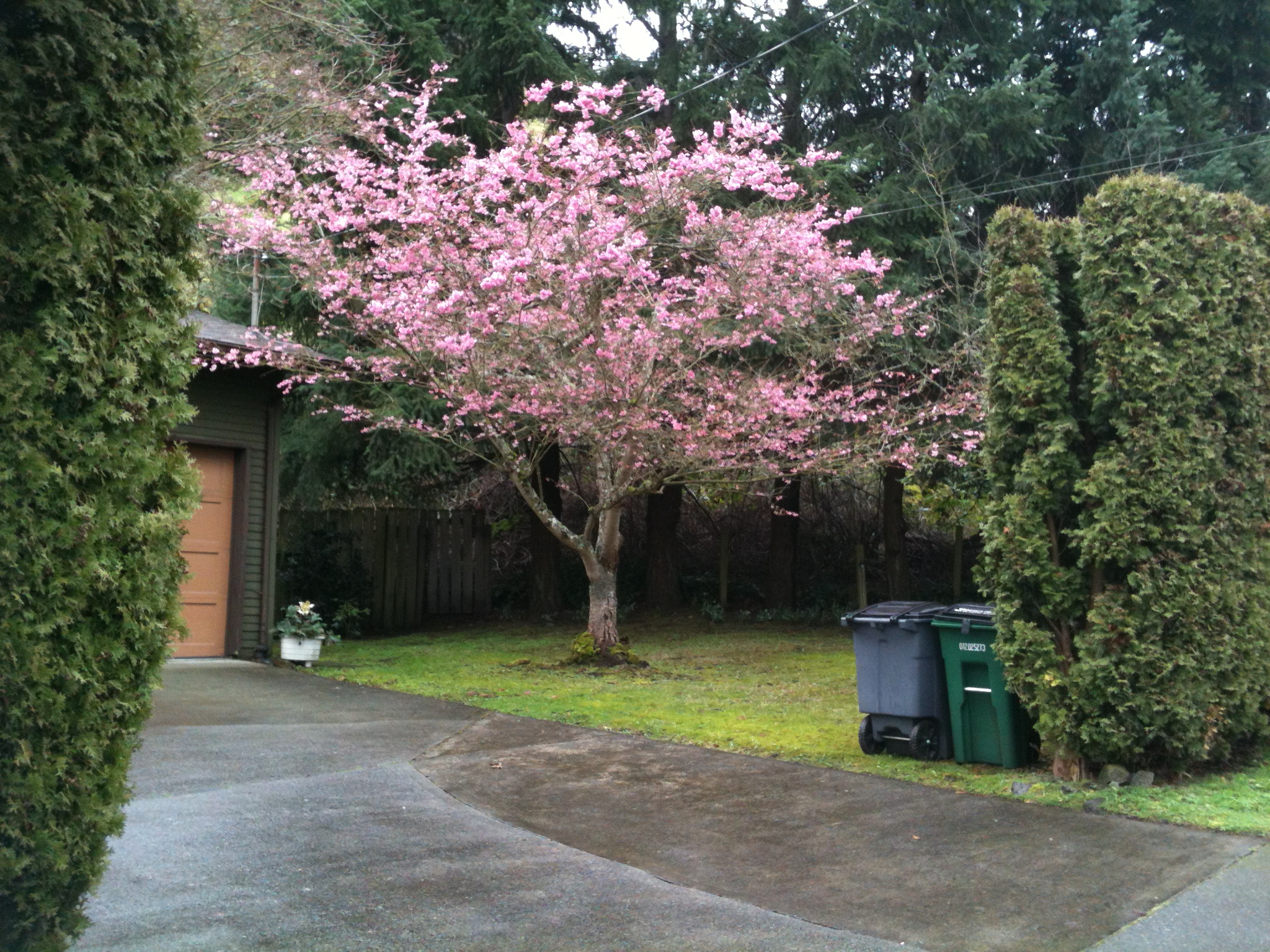
When it’s grey and drizzling in Victoria, it’s still a good day to go for a walk with my sweetheart. It’s even better when the early cherry trees (or plums?) burst into blossom for Valentines Day.
Isn’t Life Beautiful?
(You might like to check out the April blooms, too.)









 Garden Variety Life