It starts as early as January, with just a single bloom and a few buds.
photo by SVSeekins
Such promise!
The darkening days of autumn are over.
The solstice has passed.
Winter is inching toward a brighter spring. 🙂 It’s an excellent time to celebrate evergreen Clematis in the Pacific Northwest.
Clematis armandi has a tough evergreen leaf that our local deer ignore – even in winter when grazing choices are limited.
photo by SVSeekins
This clematis is poisonous to people, so maybe that extends to ungulates, too? The vine likes to be at the top of whatever it’s climbing, so there’s little left within reach of deer’s attention anyway. The show is up in the air.
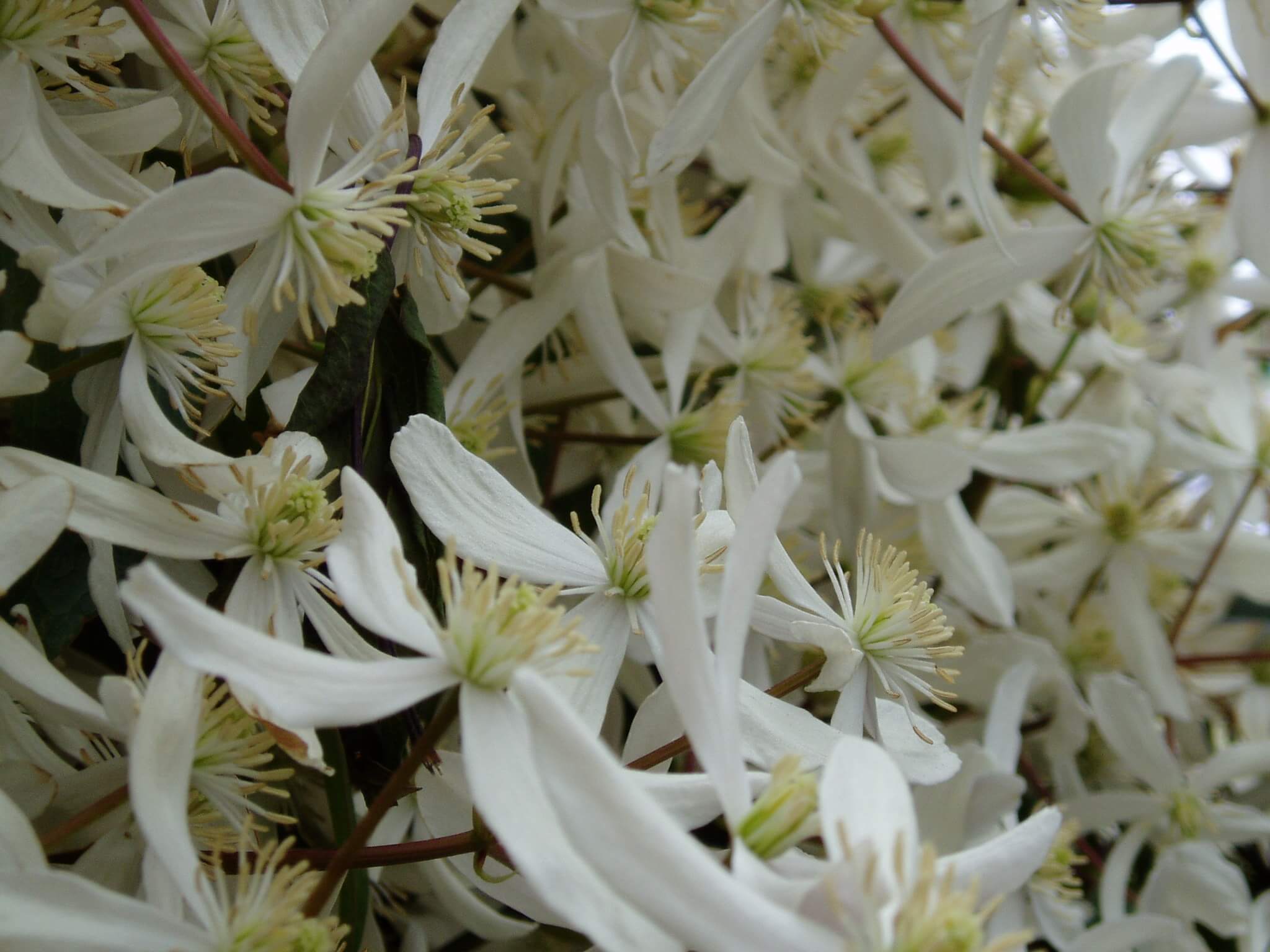
The foaming white flowers that cover the weeping vines through February & March certainly catch my attention.
photo by SVSeekins
It’s a choice vine to situate so that you see it from your winter vantage points inside the home. Wouldn’t it make a lovely focal point while sipping your morning brew? This particular behemoth hides a 6-foot tall chain-link fence dividing a block of offices from a parking lot. It’s a good thing that the fence is sturdy.
photo by SVSeekins
Evergreen Clematis’ clinging tendrils can find purchase in small cracks of walls & even shingles. That’s why it’s most often welcome climbing pergolas & fences rather than homes.
By mid-May, the winter show will be over. It’ll be time to give the heavy climber a proper pruning before it overwhelms the world. Until then, I’m just enjoying the view.
Our garden club was treated to tours of 2 members’ winter gardens. Carol & Jennifer introduced us to some of the many varieties of Galanthus… Who knew there was more than one kind of snowdrop?
photo by SVSeekins
I start looking more closely at the pure white helicopter blades with their protected cockpit. Analyzing means kneeling down in the wet grass, camera in hand.
photo by SVSeekins
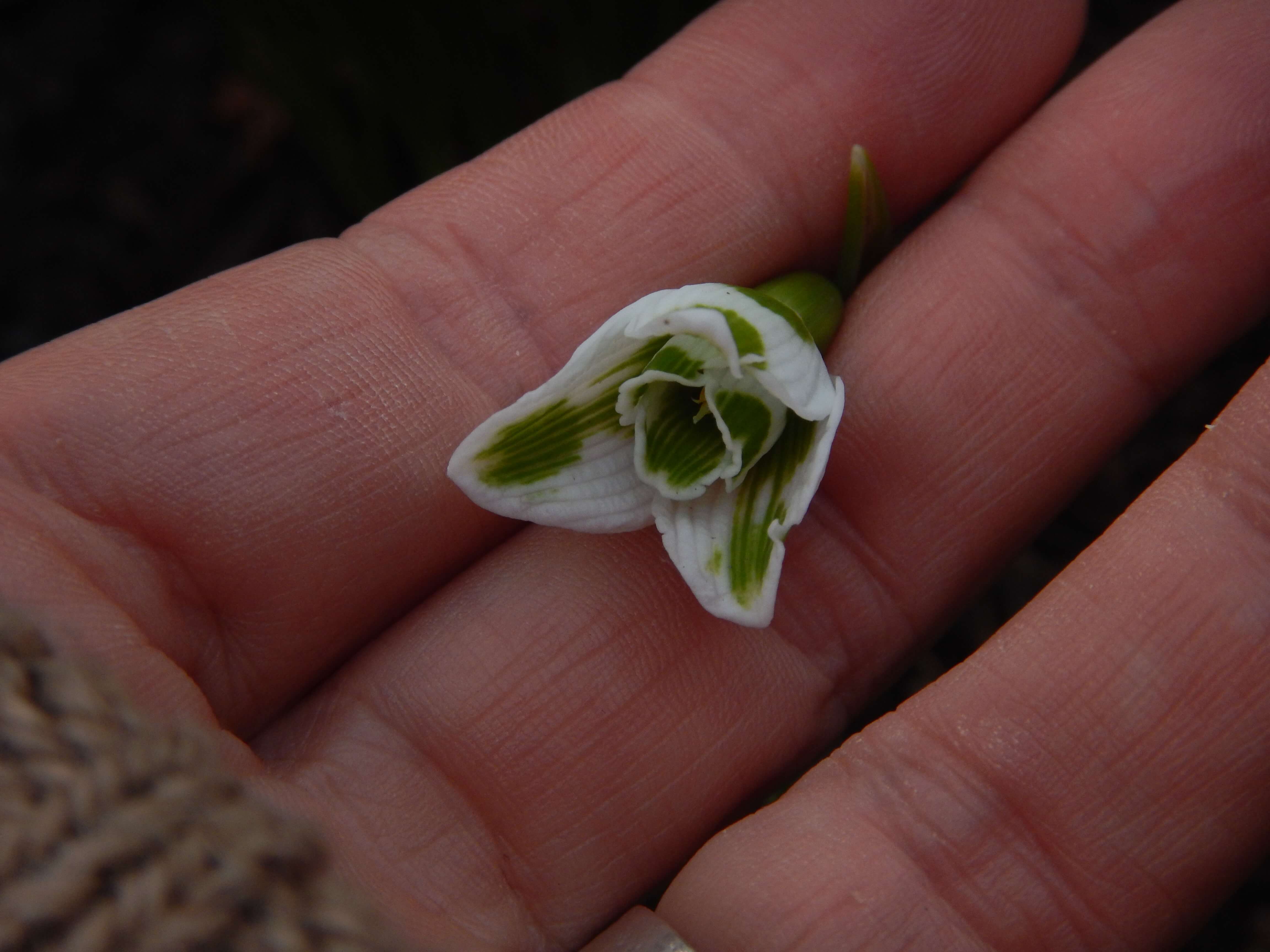
Low & behold, one clump of blooms has double green markings on each of the outer petals. (The inner trumpet is quite green, too.)
My favourite way to ID plants is via plant labels – which are great as long as they don’t go missing – – crows like to claim them as booty.
This label clearly states that this particular snowdrop is Galanthus St. Anne’s. From a distance, it appears a typical snowdrop, with white outer petals & a small upside-down heart on the inner trumpet…
photo by SVSeekins
But here’s the reason I don’t mind getting dirty from kneeling on the grass:
Check out the inner petals!
This is how botanists are born, & become addicted to looking at plants soooooo closely.
photo by SVSeekins
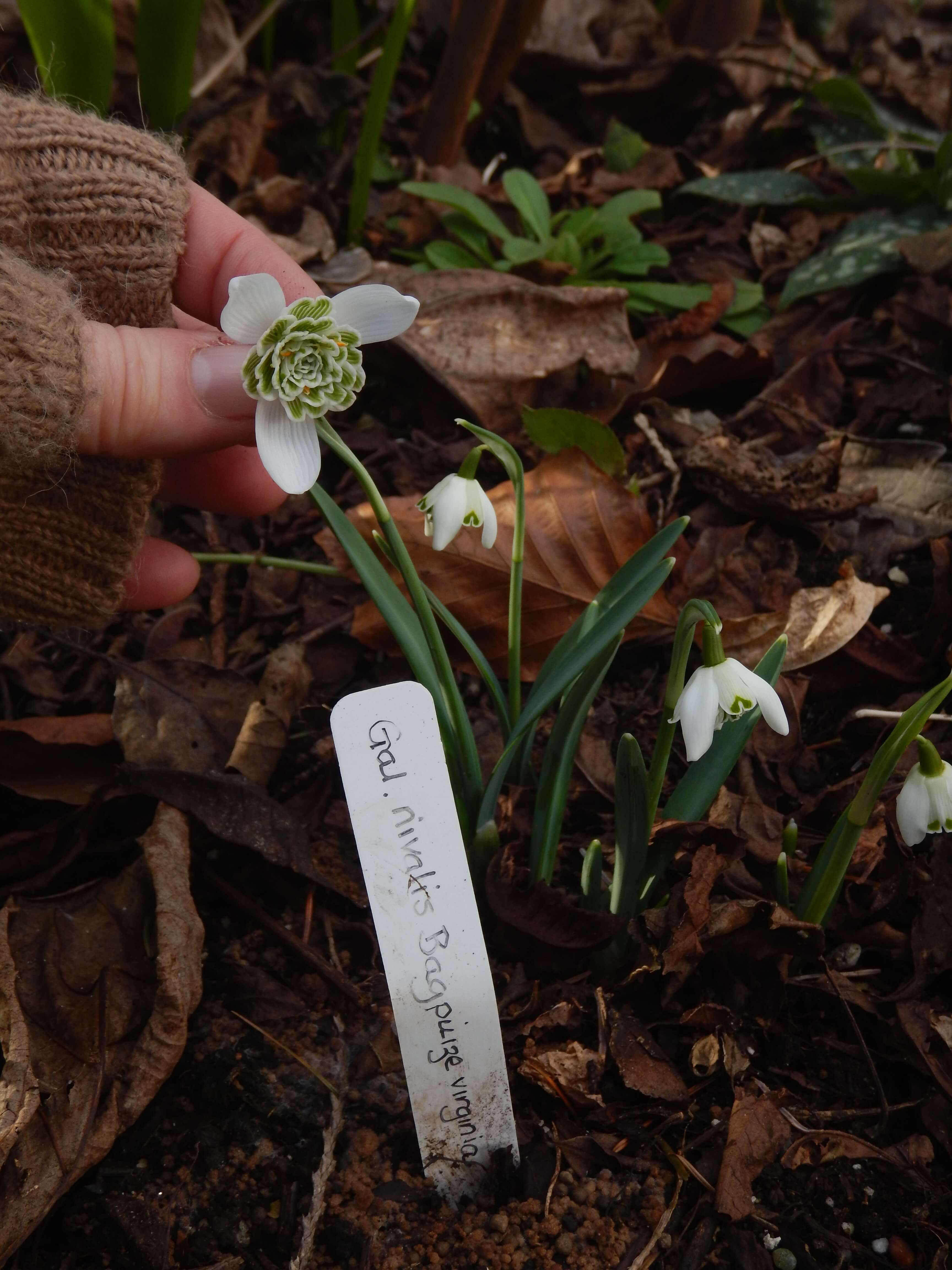
Peaking inside some more blooms, I find another delicate flower with an even more ruffled trumpet. For such a tiny flower, this snowdrop has a ridiculously large name: Galanthus nivalis bagpuize virginia.
How’s that for a mouthful?
photo by SVSeekins
Protected from the others, is a pot of snowdrops with yellow markings. This is the first one I’ve noticed with a yellow ovary above the dangling flower. It’s Galanthus plicatus ‘Wendy’s Gold’.
Quite a treasure.
photo by SVSeekins
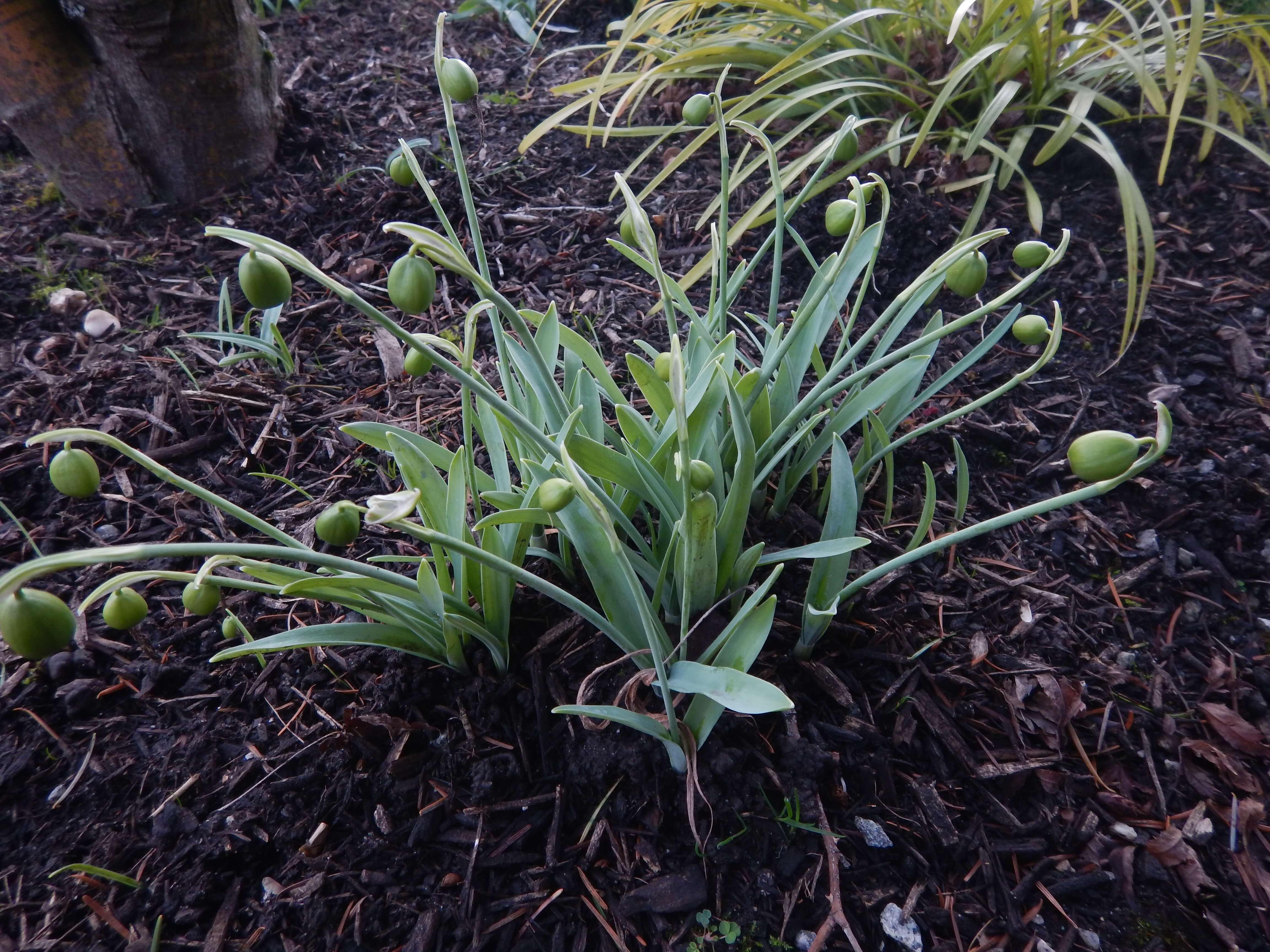
In the collection, I spied a clump of snowdrops that were already going to seed! Although most snowdrops in Victoria bloom through the winter months, some snowdrops start crazy early in the fall. Carol’s G. elwesii ‘Barnes’ begins blooming in November!
(It’s reported that G. reginae-olgae is a September bloomer & G. elwesii ‘Potter’s Prelude’ blooms through Halloween.)
photo by SVSeekins
The final mystery of my tour is a variety with green stripes on the outer petals. The label was there but washed out.
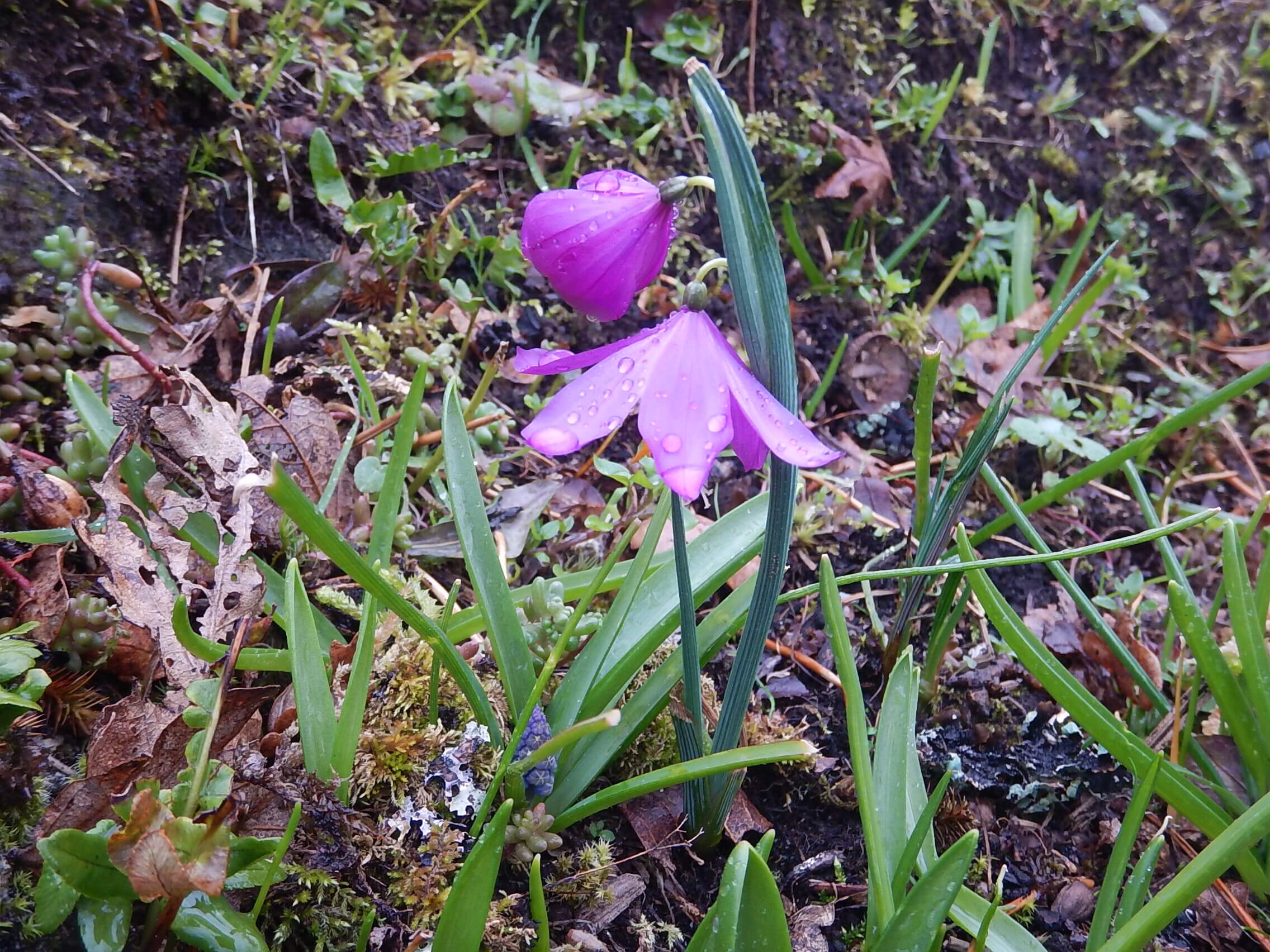
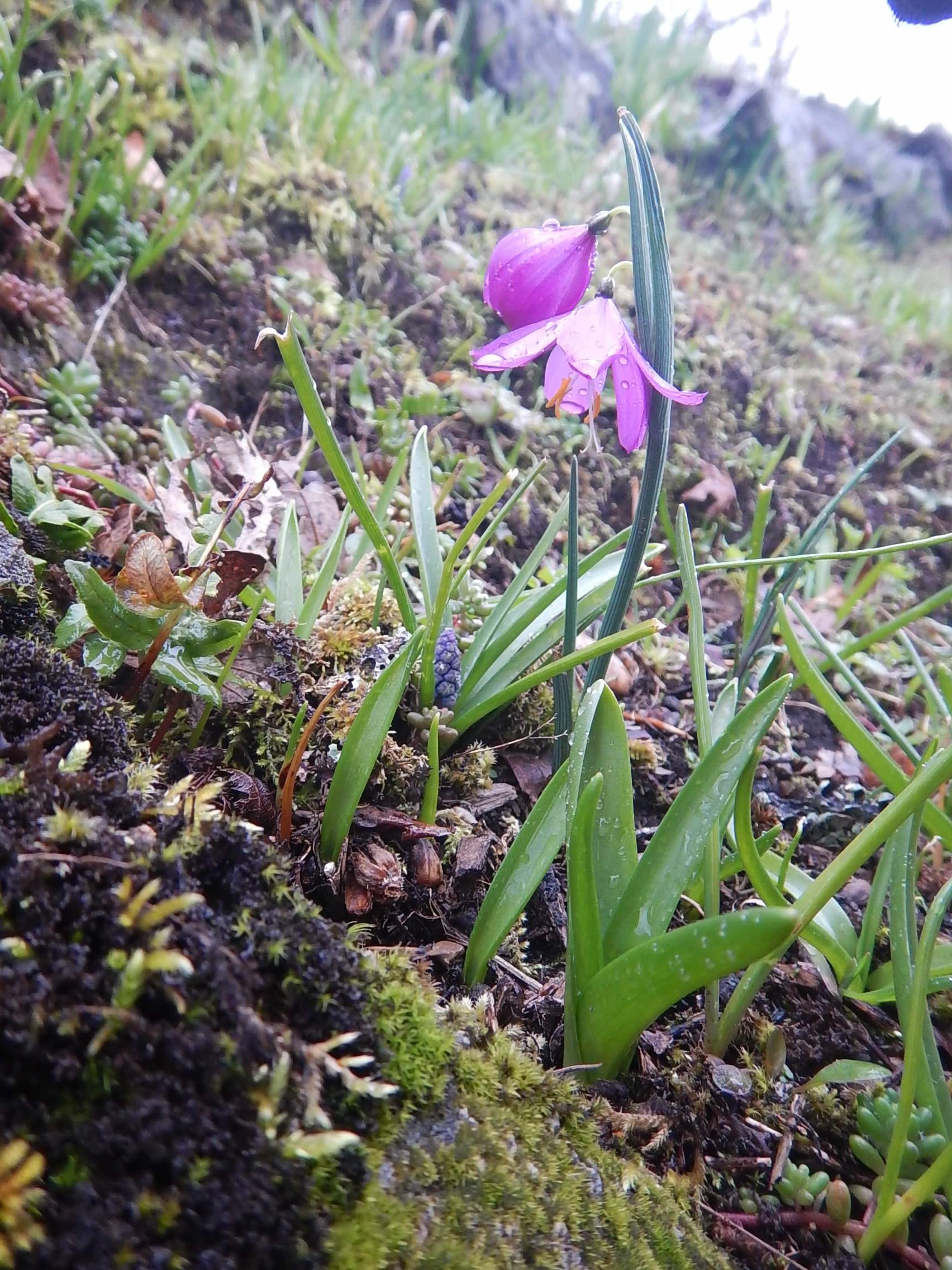
Woohoo!! The Satin Flower bloom opened the other day – – AND I’ve checked it 3 mornings in a row now – It’s Still There!!
photo by SVSeekins
Ok, so that sounds just a little crazed,
but Satin Flower is one of the very earliest Pacific Northwest native wildflowers –
and it’s so pretty!
photo by SVSeekins
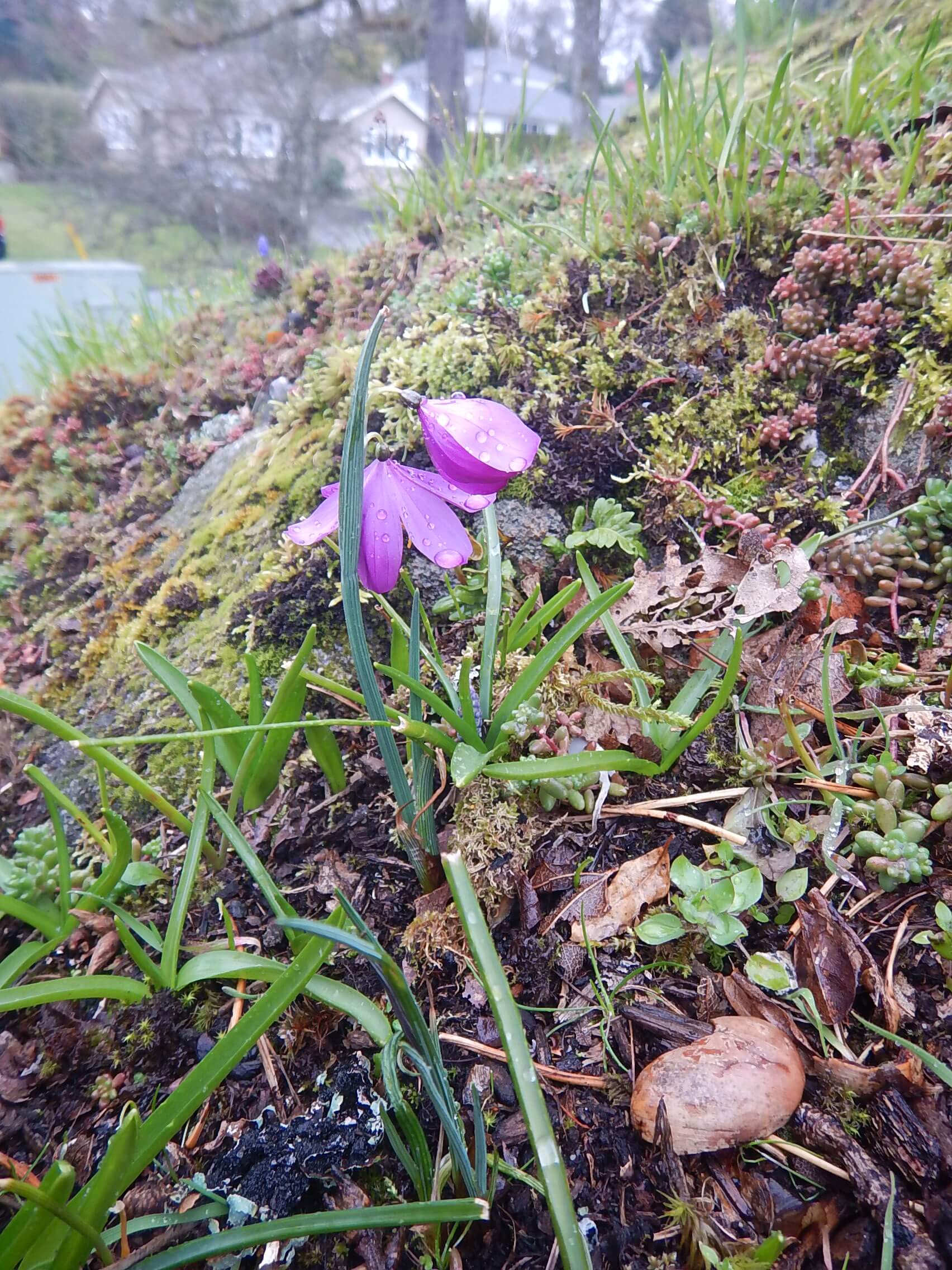
It’s really well suited to our rocky outcrop that’s very moist in winter & very dry in summer. So, this Olsynium douglasii (aka Douglas’ olsynium, Douglas’ grasswidow, grasswidow, blue-eyed grass, purple-eyed-grass, or satin flower) should be happy in our gary oak meadow.
But the deer are happy here, too.
photo by SVSeekins
When I first bought a couple of these perennial herbs from Sannich Native Plants (Thank you Kristen & James!), I planted them too near the deer’s regular route. Fortunately, I saw the bloom the first morning.
It was gone the next.
I simply shifted the plants to a steeper section of our rocky outcropping, hoping the deer might leave them alone. Fingers crossed.
The next year – Success.!
Now I’m hoping these sweet little flowers will happily do their thing & naturalize into more of a clump – maybe even spread around a bit! 🙂









 Garden Variety Life