

Typically I curse steep switchbacks. They are exhausting!
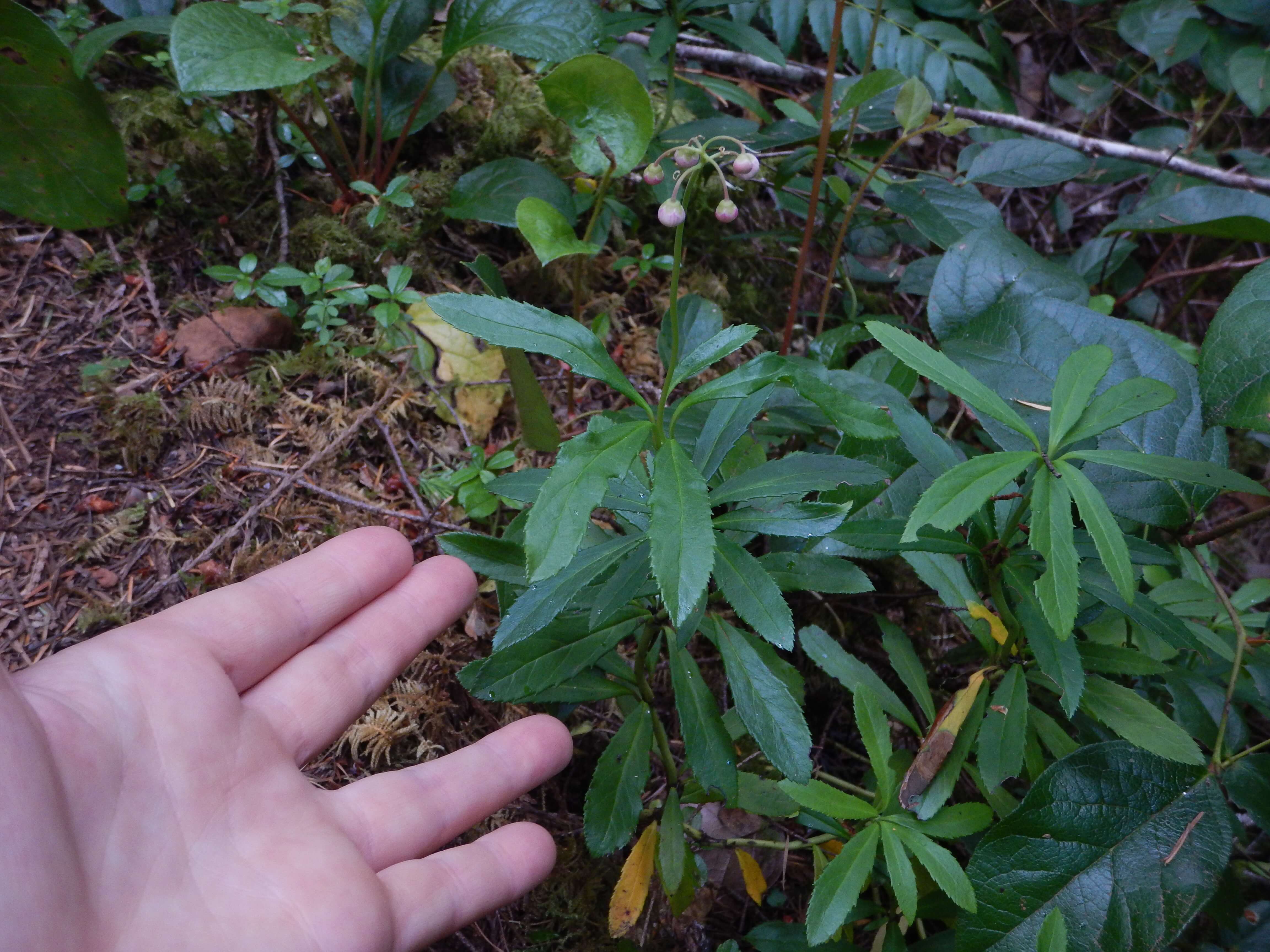
Now, I have reason to appreciate them. One trail in Strathcona Park is so steep that the inside slope is only an arm’s reach away. I have close-up views of the tiny plants that don’t usually catch my attention. I stop, puffing for a few moments, taking in the forest’s carpet of mysteries.

At first, the evergreen plant, Prince’s pine, escapes my notice.
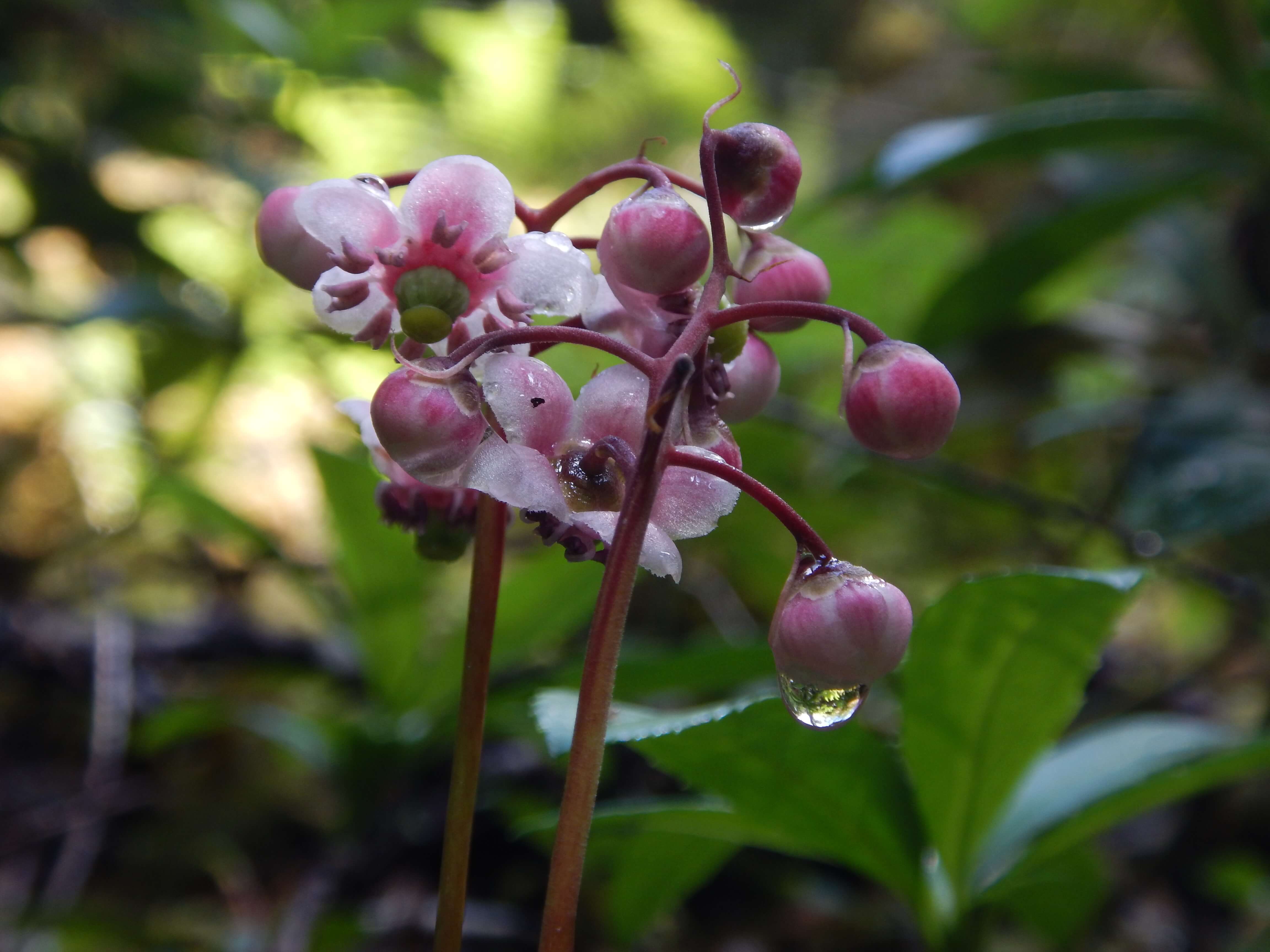
But then, my eyes spy the wildflower buds – such a delicate pink!
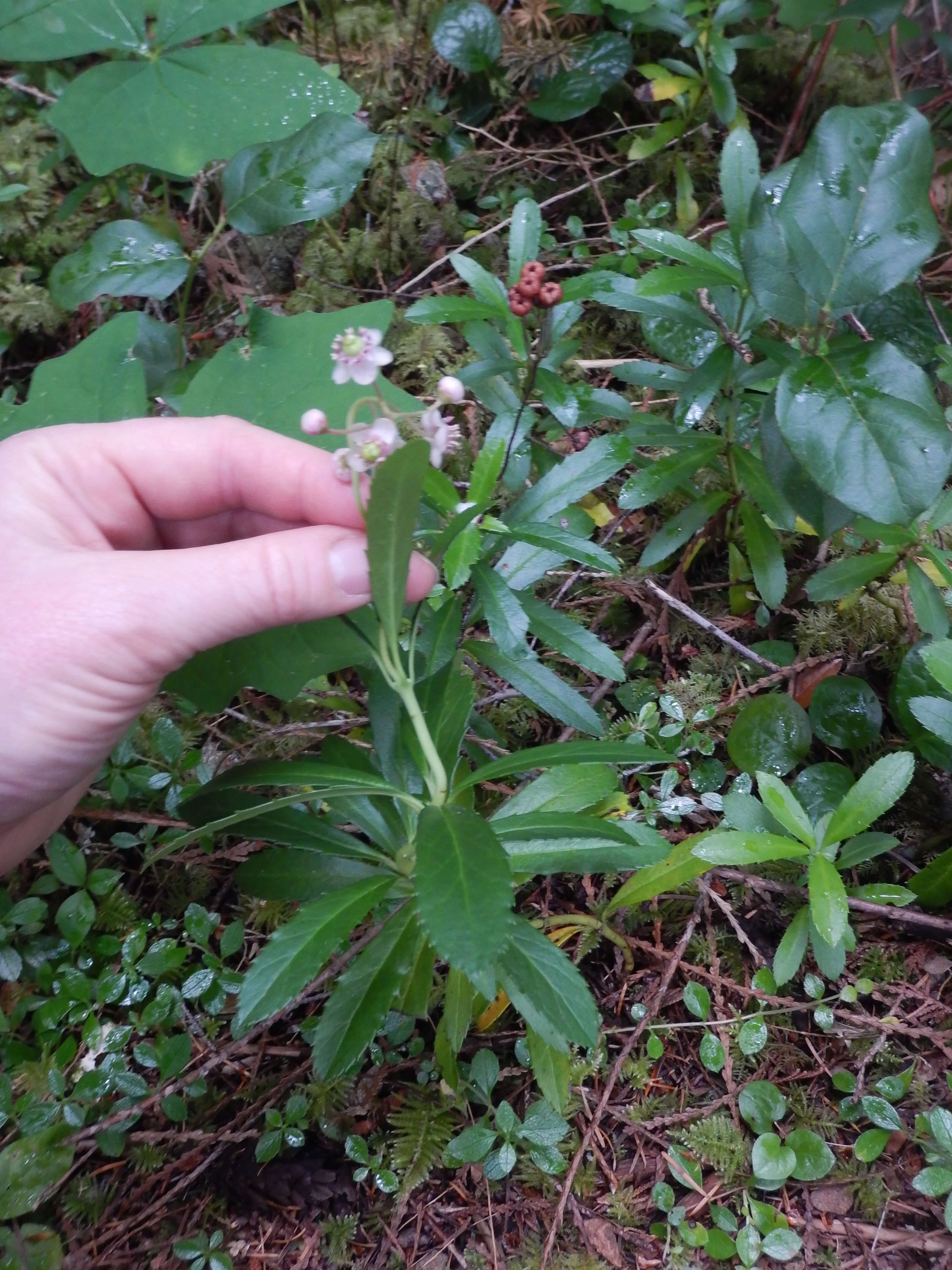
Further along the path, I find specimens in full bloom. And some already setting seed — in early June. 🙂
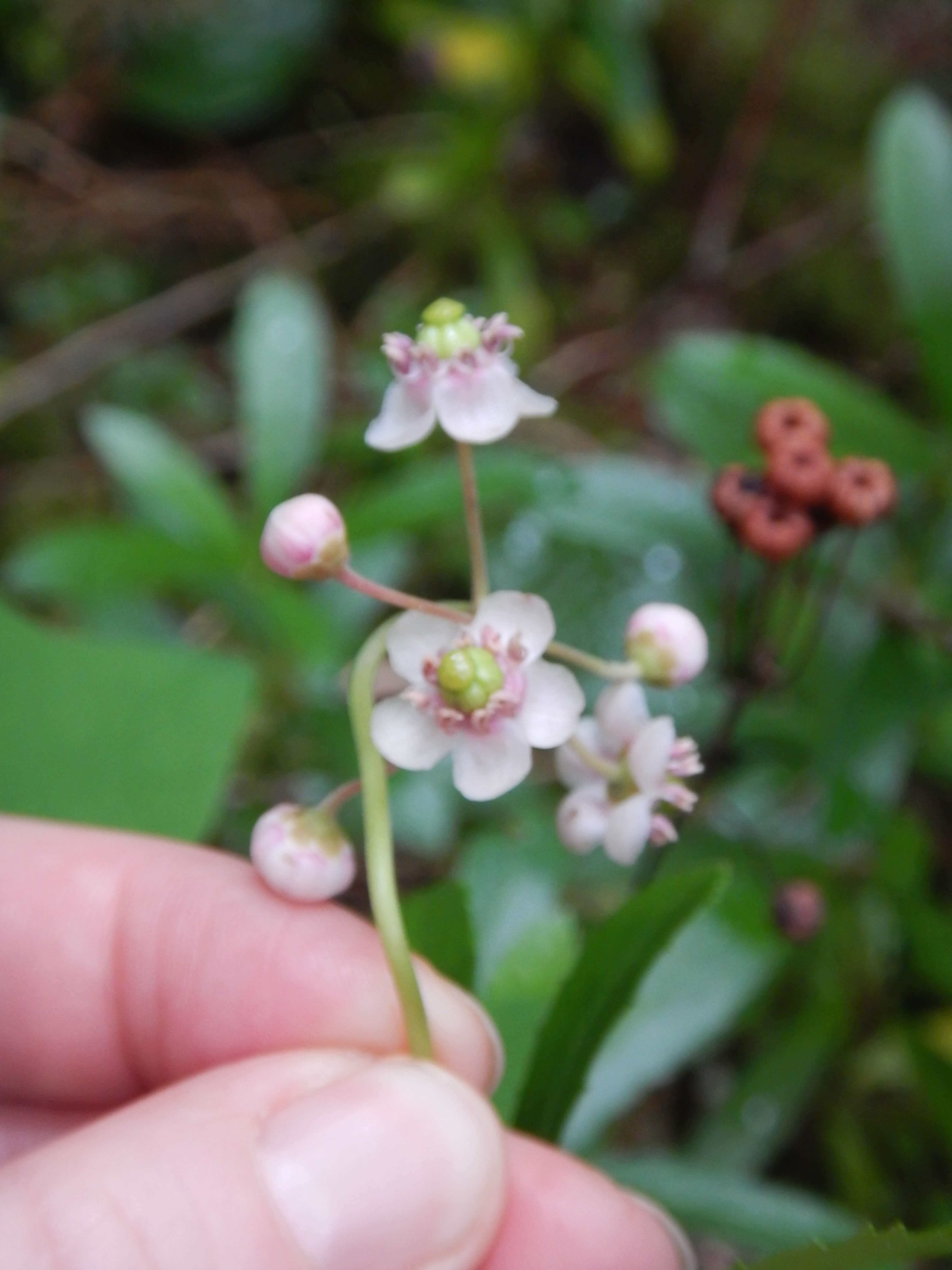
The tiny, waxy-looking blossoms are such a contrast to the deep woodland duff of the understory. Enchanting. (There must be faeries nearby.)
I delight in the flowers while mourning that Chimaphila umbellata is probably not suited to our own garden. (Yes, our garden is well-drained, but it’s shaded by Garry oak– not conifers.)
Back at the campsite, the mini-shrub is confirmed by Plants of the Pacific Northwest Coast (my wild plant Bible). Woo Hoo — one more native plant in my repertoire.

It’s not until a wintery February morning, while attending Seedy Saturday that I meet Andy McKinnon, co-author of my treasured plant ID book. He teaches me this science word for today.
Mixotrophic.
Prince’s pine is mixotrophic. It has a friendly relationship with the fungus in the ground.
Like many plants, through photosynthesis, Prince’s pine produces sugars (its food). It shares those sugars with fungi. The fungi, in return, offer up access to nutrients from the soil.
Friendly, eh?
But wait – there’s more…
Prince’s pine & this fungi take their relationship a step further.
The fungi in the soil also connect to another plant (other than the Prince’s pine). Through this threesome, the Prince’s pine can get sugars from this other plant. Neighbours helping neighbours in times of need…. all through a fungi trade route.
(That’s Mixotrophic)
Isn’t Nature amazing?
-30-
 Garden Variety Life
What is the other plant that helps out the Prince’s Pine?
Wow, that’s a good question… one I’d also like to know the answer for as well. I was able to ask Andy MacKinnon the other night at his recent talk at the Victoria Natural History Society. Admittedly, much of his answer went over my head, but the gist of it was that he doesn’t currently know. So much is unknown about the world of fungi partnerships, but research is bringing forward new information all the time. The Nature Niche blog mentions that Princes Pine can have numerous hosts – – but doesn’t name any specifically. If you ever find out, please let me know. I’ll do the same. cheers!