Category Archives: drought tolerant

Leopard’s Bane Through Four Seasons

bloom

Doronicum, Caucasian Leopard's Bane, Great Leopard's Bane, Plantain Leopard's Bane, leopard's-bane, garden Victoria, Vancouver Island, BC Pacific Northwest
photo by SVSeekins

As the last of the daffodils open  (mid-April in Victoria), Leopard’s Bane joins the spring cacophony of colour.  The sunny-faced flowers sway on tall stalks above the burst of Bluebells, Tulips and Hyacinths.

Doronicum, Caucasian Leopard's Bane, Great Leopard's Bane, Plantain Leopard's Bane, leopard's-bane, garden Victoria, Vancouver Island, BC Pacific Northwest
photo by SVSeekins

They’re happy yellow flowers -undaunted by seasonal showers.

The exuberance of Leopard’s Bane (Doronicum) lifts spring to new heights.

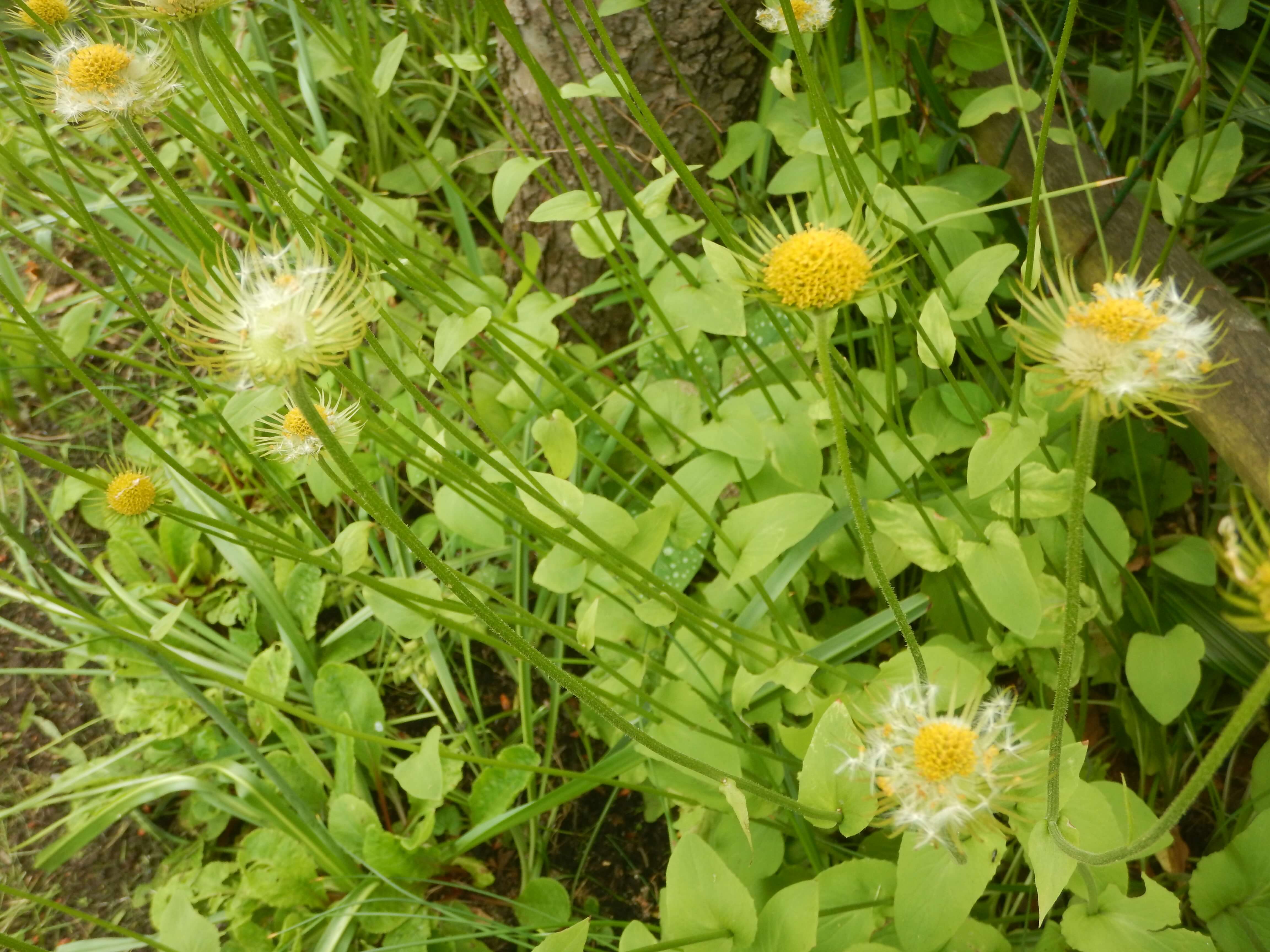
seedhead

Doronicum, Caucasian Leopard's Bane, Great Leopard's Bane, Plantain Leopard's Bane, leopard's-bane, garden Victoria, Vancouver Island, BC Pacific Northwest
photo by SVSeekins

By mid-May, their enthusiasm wanes, but the show is certainly not over.  For me,  the progression is beautiful.  The varied stages of seeding are almost as enchanting as the flowering.

Doronicum, Caucasian Leopard's Bane, Great Leopard's Bane, Plantain Leopard's Bane, leopard's-bane, garden Victoria, Vancouver Island, BC Pacific Northwest
photo by SVSeekins
  • First, the petals of  Leopard’s Bane wither a bit.
  • Then, somehow, the rays turn to fluff & float away…
Doronicum, Caucasian Leopard's Bane, Great Leopard's Bane, Plantain Leopard's Bane, leopard's-bane, garden Victoria, Vancouver Island, BC Pacific Northwest
photo by SVSeekins
  • The fluorescence of the central disk holds out for a while longer before it also turns to fluff and flies off.
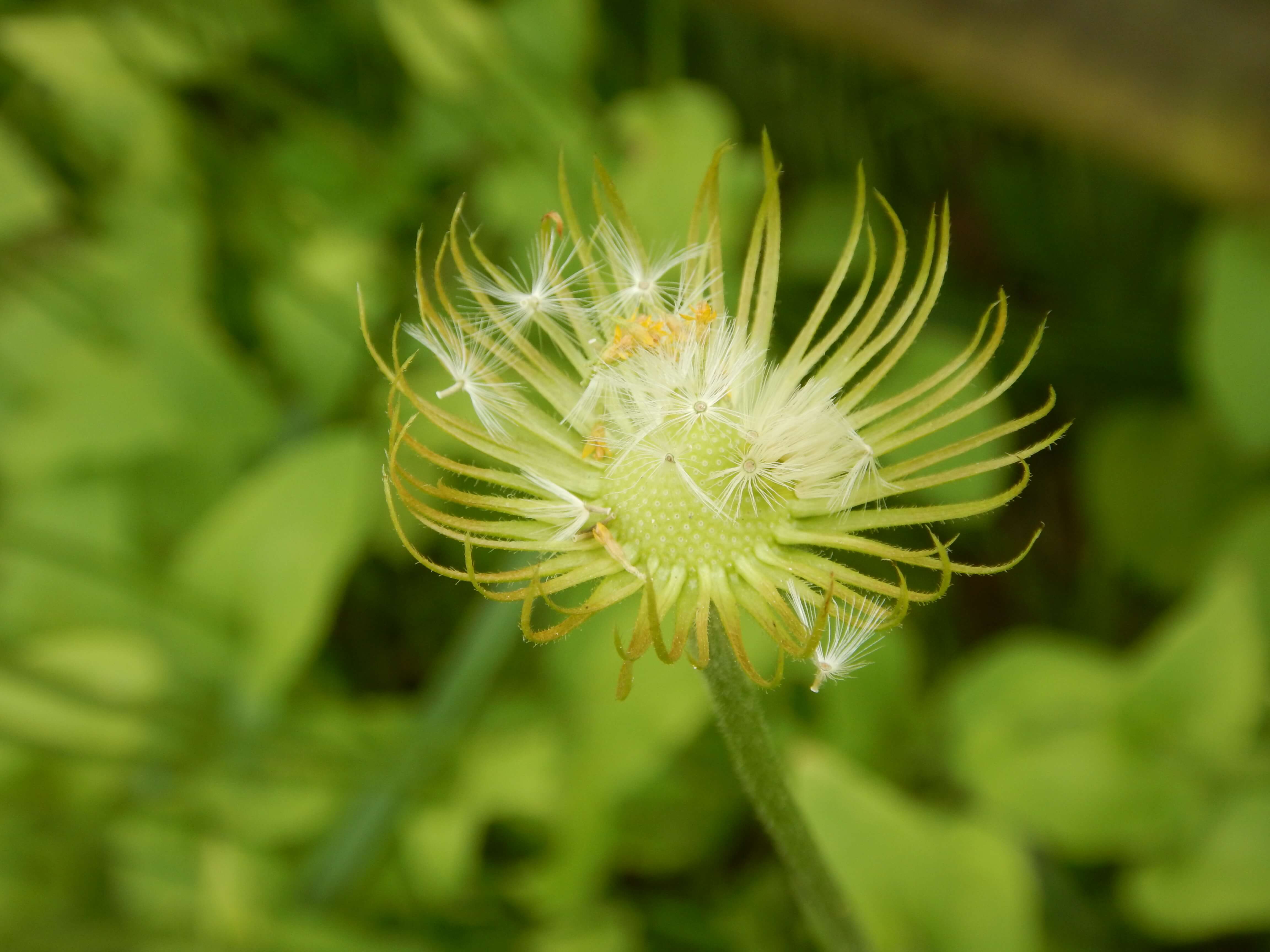
Doronicum, Caucasian Leopard's Bane, Great Leopard's Bane, Plantain Leopard's Bane, leopard's-bane, garden Victoria, Vancouver Island, BC Pacific Northwest
photo by SVSeekins
  • Even the remaining bracts are decorative – still catching enough breeze to add movement in the beds.  That’s a couple extra weeks of pleasure & value.

summer hibernation

garden Victoria, Vancouver Island, BC Pacific Northwest
photo by SVSeekins

By the time school wraps up in mid-June, Leopard’s Bane has dispersed its seed.  The heat withers its foliage.  Doronicum disappears on holiday, too.  Summer perennials elbow into its space as if it were never even there.

fall emergence

Doronicum, Caucasian Leopard's Bane, Great Leopard's Bane, Plantain Leopard's Bane, leopard's-bane, garden Victoria, Vancouver Island, BC Pacific Northwest
photo by SVSeekins

By the time we’re carving Jack-o-lanterns in October, the leaves are falling from above.  It feels like the garden is dying, too.  But autumn’s moisture tickles the rhizomes below the soil.  New leaves peek out.  Leopard’s Bane is re-awakening.  As so much else fades away, Doronicum stays fresh, green & alive right through the doldrums of our West Coast winter.

In our garden, Leopard’s Bane is indispensable because:

Doronicum, Caucasian Leopard's Bane, Great Leopard's Bane, Plantain Leopard's Bane, leopard's-bane, garden Victoria, Vancouver Island, BC Pacific Northwest
photo by SVSeekins
Doronicum, Caucasian Leopard's Bane, Great Leopard's Bane, Plantain Leopard's Bane, leopard's-bane, garden Victoria, Vancouver Island, BC Pacific Northwest
photo by SVSeekins
Doronicum, Caucasian Leopard's Bane, Great Leopard's Bane, Plantain Leopard's Bane, leopard's-bane, garden Victoria, Vancouver Island, BC Pacific Northwest
photo by SVSeekins
  • It has happy yellow flowers.
  • Our brazen urban deer ignore it. (It’s reputed to be poisonous, but also medicinal  !?!)
  • I  never have to water it – – it’s summer drought-tolerant in the Pacific Northwest… and yet, it’s not invasive.
  • It’s as happy under shade trees as it is in full sun.
  • It’s an unusual cool-season perennial:
        • It comes to life when the rest of the garden dies back in the fall.
        • It stays green through our mild coastal winters.
        • And it promises the return of vigour in the spring warmth.
  • It boasts 8+ months of interest in a garden –one of the longest-lasting spring ephemerals.
  • It’s low maintenance.
  • And, most of all: The deer ignore it.
    🙂

PS – For clarity, I must point out that Leopard’s Bane can be a bit of a thug in an irrigated garden.  It is rare to get any rain through summer on the southern tip of Vancouver Island.  Many folks choose automatic irrigation that delivers water 2-3 times a week, keeping the soil evenly moist.  That often equals an inch of water each week.    I only hand water when it is absolutely needed.  Our Doronicum is happy but doesn’t spread much.  If the clump gets too big,  it’s easy to dig out & shift elsewhere (or remove altogether).

-30-

Other indispensibles:

Fernwood Snowdrop Meadow

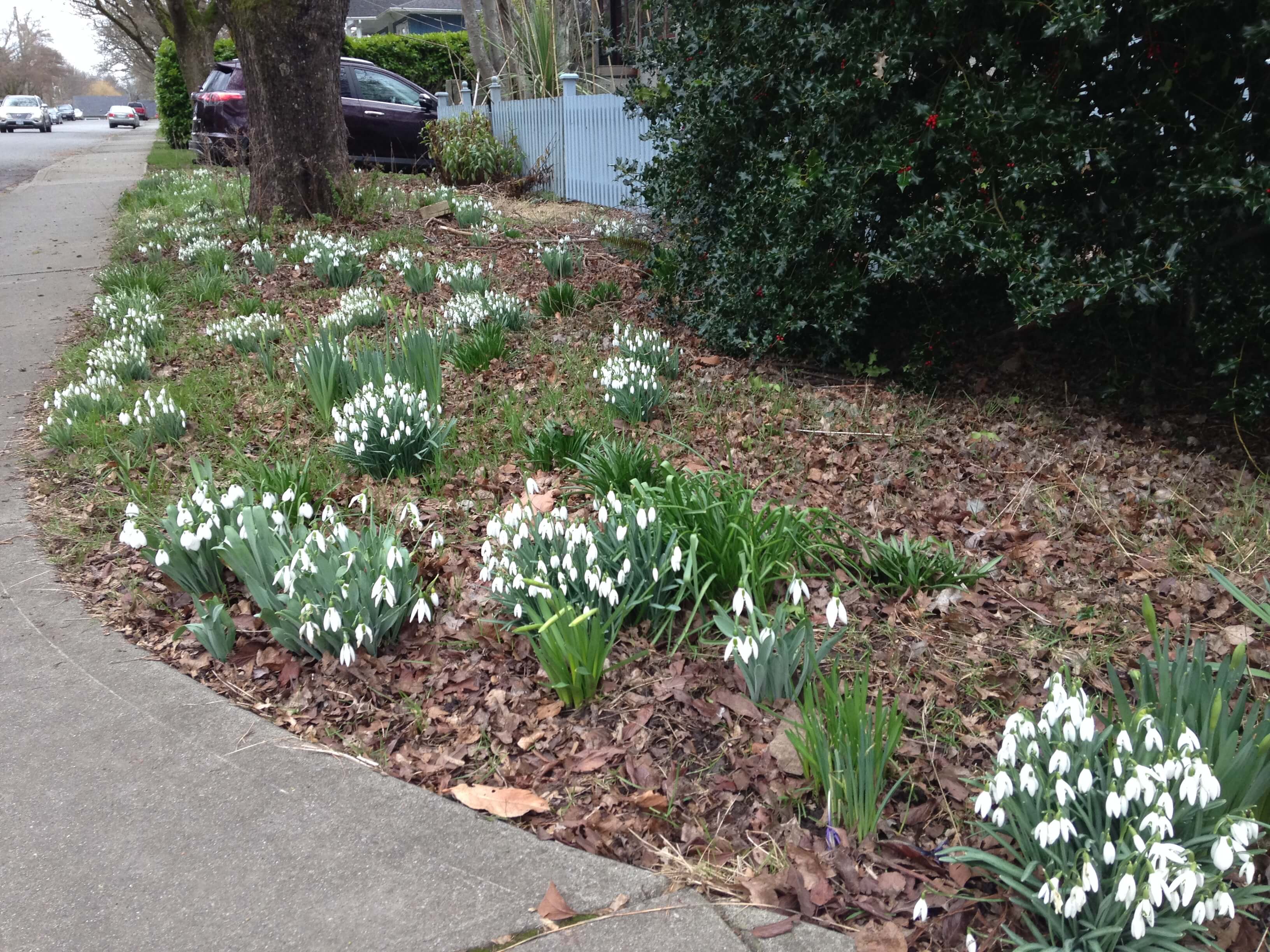
How often do you stop mid-errand to admire a roadside garden?   I did just that the other day.

galanthus, snowdrops, garden Victoria BC Pacific Northwest
photo by SVSeekins

Cycling along Haultain in Fernwood, on the way to downtown Victoria, I’m caught off guard by a snowdrop meadow.  I pull over & take a closer look.

The meadow runs the whole outside length of the fenceline.  AND as it is a corner lot, so it runs along  Forbes street, too!  There was even a mini meadow on the wee boulevard right at the crosswalk. 🙂

galanthus, snowdrops, garden Victoria BC Pacific Northwest
photo by SVSeekins

The patches of snowdrops are interspersed with patches of daffodils.  This winter meadow will morph into an early-spring meadow in another few weeks.

On closer inspection, I recognize Calendula (Pot Marigold), too.  Even with our summer droughts, they’ll flower all summer & well into the fall!

galanthus, snowdrops, garden Victoria BC Pacific Northwest
photo by SVSeekins

All three are deer resistant.

The calendula will self-seed a crop for next year as well as feed the birds.

These folks put care & attention into the city boulevard beside their property.  (Can you see him painting his fence in the distance?)

In my mind, this meadow has so much more going for it than the regular grass lawn.  I’ll bet the bees & other beneficial insects like it a whole lot more, too.

-30-

other snowdrop patches I admire:

Cyclamen Coum Naturalizing

My favourite Cyclamen is the winter-blooming Cyclamen Coum.  Its bright flowers stand out in the drizzling winter gloom of southern Vancouver Island.

hardy cyclamen coum, persian violet, eastern sowbread, round-leaf cyclamen,C. coum garden Victoria, Vancouver Island, BC, Pacific Northwest
photo by SVSeekins

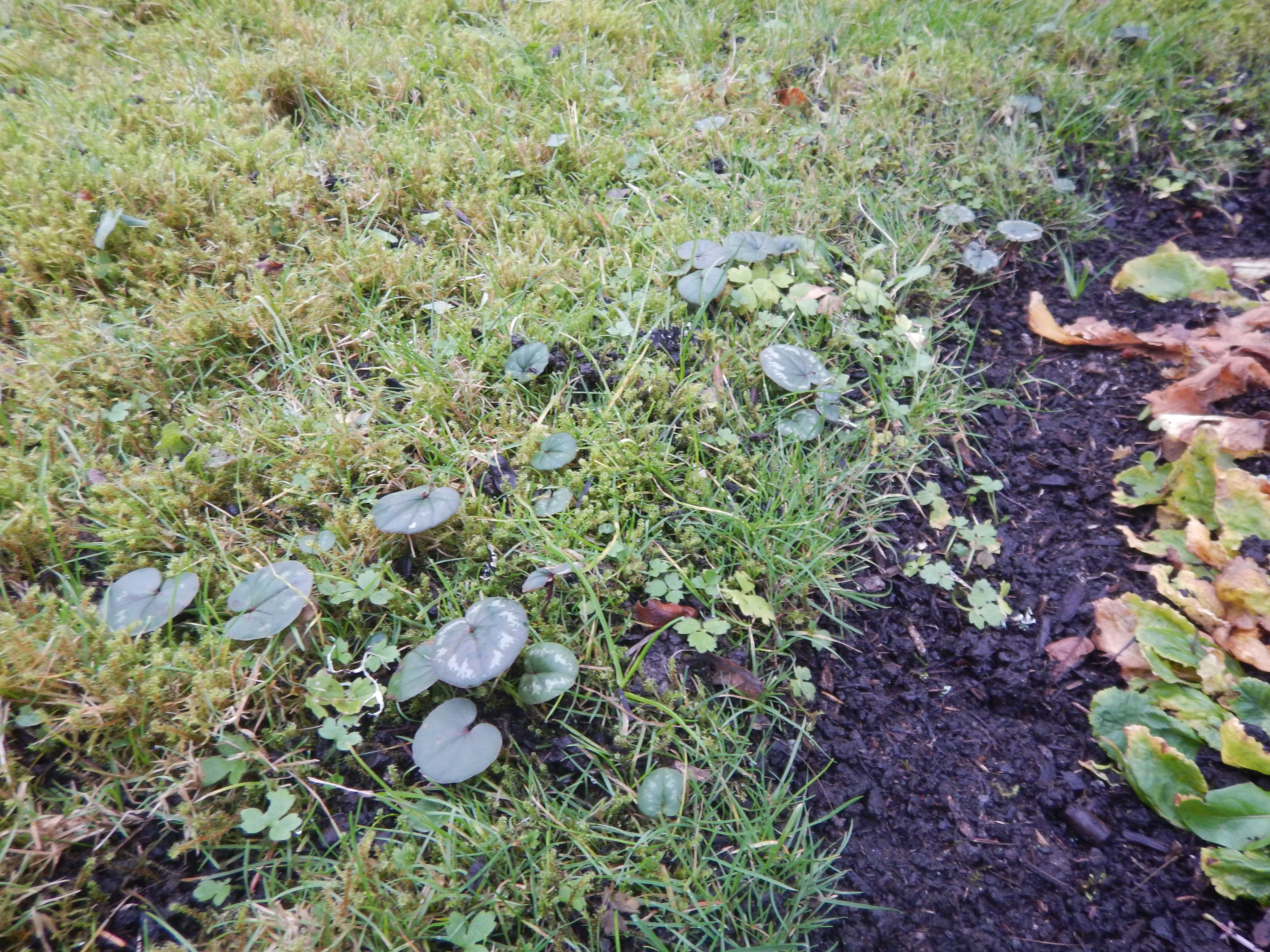
The decorative leaf appears in September once the summer temperatures begin to drop.  It’s a promise of blooms to come.  By late December, tiny buds show themselves.  When it’s even colder & I’m more desperate for flowers, c.coum begins to bloom.  By February & March its in full celebration in Victoria.

hardy cyclamen coum, persian violet, eastern sowbread, round-leaf cyclamen,C. coum garden Victoria, Vancouver Island, BC, Pacific Northwest
photo by SVSeekins

Hardy cyclamen are known to naturalize well where they’re native (Turkey).  Here, in the Pacific Northwest, they’re just as happy. The climate is similar enough.

hardy cyclamen coum, persian violet, eastern sowbread, round-leaf cyclamen,C. coum garden Victoria, Vancouver Island, BC, Pacific Northwest
photo by SVSeekins

I planted 3 C. coum around the base of our Gravenstein apple tree in 2009.  Ten years later, I’m rewarded with several naturalizing in the grass.  The furthest is about 6 feet away!

My fingers are crossed for blooms in the lawn this February!  I reckon they’ll be reasonably safe, as C is less likely to mow that early.  When he brings the lawnmower out in March, I’ll ask him to cut at its highest setting.

hardy cyclamen coum, persian violet, eastern sowbread, round-leaf cyclamen,C. coum garden Victoria, Vancouver Island, BC, Pacific Northwest
photo by SVSeekins

Cyclamen coum is a mild-mannered plant.  It can easily be out-competed by the autumn-blooming Cyclamen hederifolium.  I am careful to keep the dominating C. hederifolium far away from our treasured C. coum.

-30-