Category Archives: evergreens

Fall Fun with Friends

It rained over the past week.  What a transformation.  It’s truly fall now.

entrance to Jeneece Place
photo by SVSeekins

Woo hoo!  Wishes granted.

Because I’d already committed to helping out in the garden at Jenecce Place, I was especially grateful for the wet.   The West Coast might be damp & chilly in the fall, but weeds are a whole lot easier to dig if the ground isn’t concrete dry.

the spot for the future kitchen garden
photo by SVSeekins

There were 2 challenges presented to the volunteers from the View Royal Garden Club on Sunday afternoon.

The first was to create space for a veggie garden near the kitchen area of the house.  The chosen site was previously planted with native  kinnickinnick  for ground-cover & a blue fescue grass for architectural interest.

the weedy slope along the sidewalk at Jeneece Place
photo by SVSEekins

The second challenge was the slope running along the entrance sidewalk.  There were Yarrow, Oregon Grape, and the occasional grouping of  blue fescue tufts planted close to the walkway, but nothing further up the slope. The staff’s concern was the upcoming rainy season would bring erosion problems.

What complimentary challenges!  One site needed plantings removed – – the other needed plantings added.  Kismet!

the crew gets busy weeding & digging transplant holes
photo by SVSeekins

We set about weeding & preparing planting holes.  The effort kept us warm.

When gardening in a team a fair amount of visiting can be accomplished while still continuing the task at hand.  I like that  🙂

I also found it interesting to see the different tools each seasoned gardener chose for her/his tasks.  Perhaps I’ll try some new tricks next time I’m in my own garden.

Dark clouds gathered, but happily the rain stayed away.  We progressed to moving plants from one bed directly into the other.

after
photo by SVSeekins

I’m always amazed at how proportions & space gets mixed up in my head.  I figured the plants to be moved wouldn’t come close to filling up the space available on the slope.  I was mistaken.  Near the end of the afternoon we squeezed in extra holes between new transplants just to finish clearing out the kitchen garden bed.

muffin / tea break before heading home
photo by SVSeekins

With a sense of satisfaction we sat down to muffins & tea knowing that the job was done.  it’s so nice when a project starts & finishes in one gathering.

A bit more visiting was a lovely wrap to the afternoon before I headed home to a warm shower.

-30-
© copyright 2012 SVSeekins
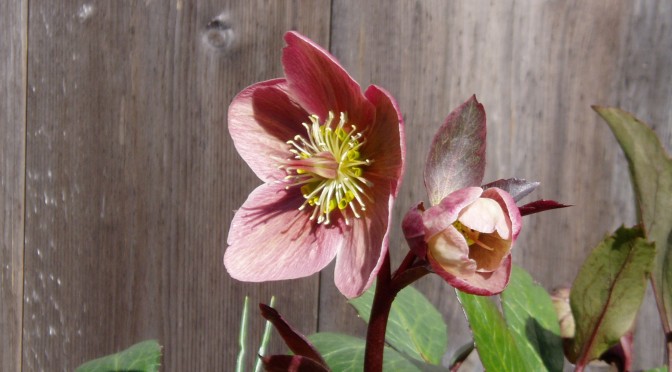
Flower Count – day 7 – hellebore

It’s sometimes called the Winter Rose, but isn’t actually a rose relation.  The flowers really do remind me of the wild rose, but mostly it gets that name because it blooms in winter, some even by Christmas!

Typically the Christmas bloomers have boring white flowers that slowly age into interesting light green flowers before setting seed.  We gifted Mum with one of those hellebore this past Christmas & it’s still looking great on her balcony.

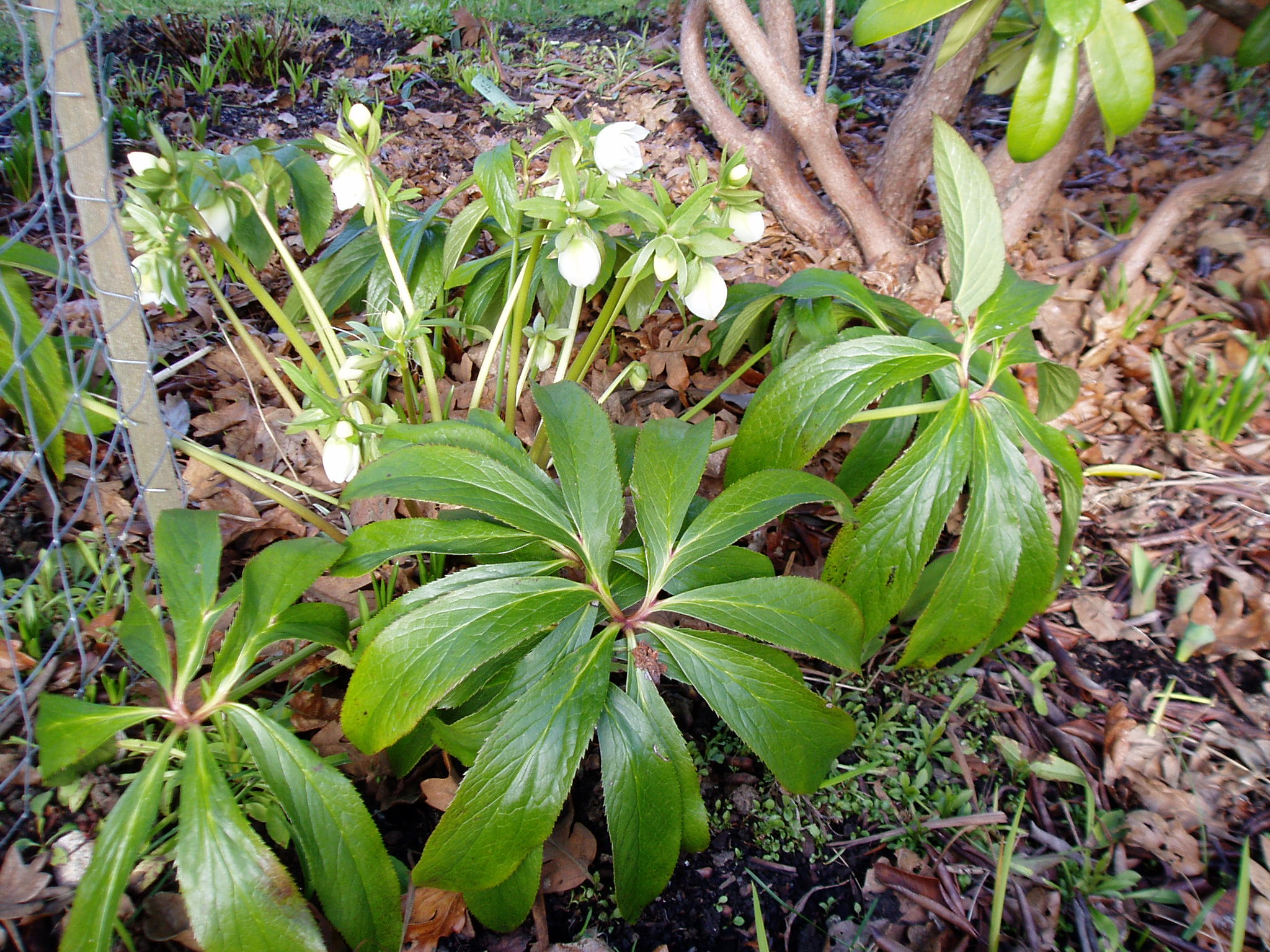
Helebore - Blackthorn strain - evergreen in February border
photo by SVSeekins

There aren’t any Christmas blooming hellebore varieties in our garden.  At that time of year our hellebore are just happy evergreen perennials that the deer leave alone.  I think they’re wonderful just filling in the borders so winter doesn’t look completely desolate.

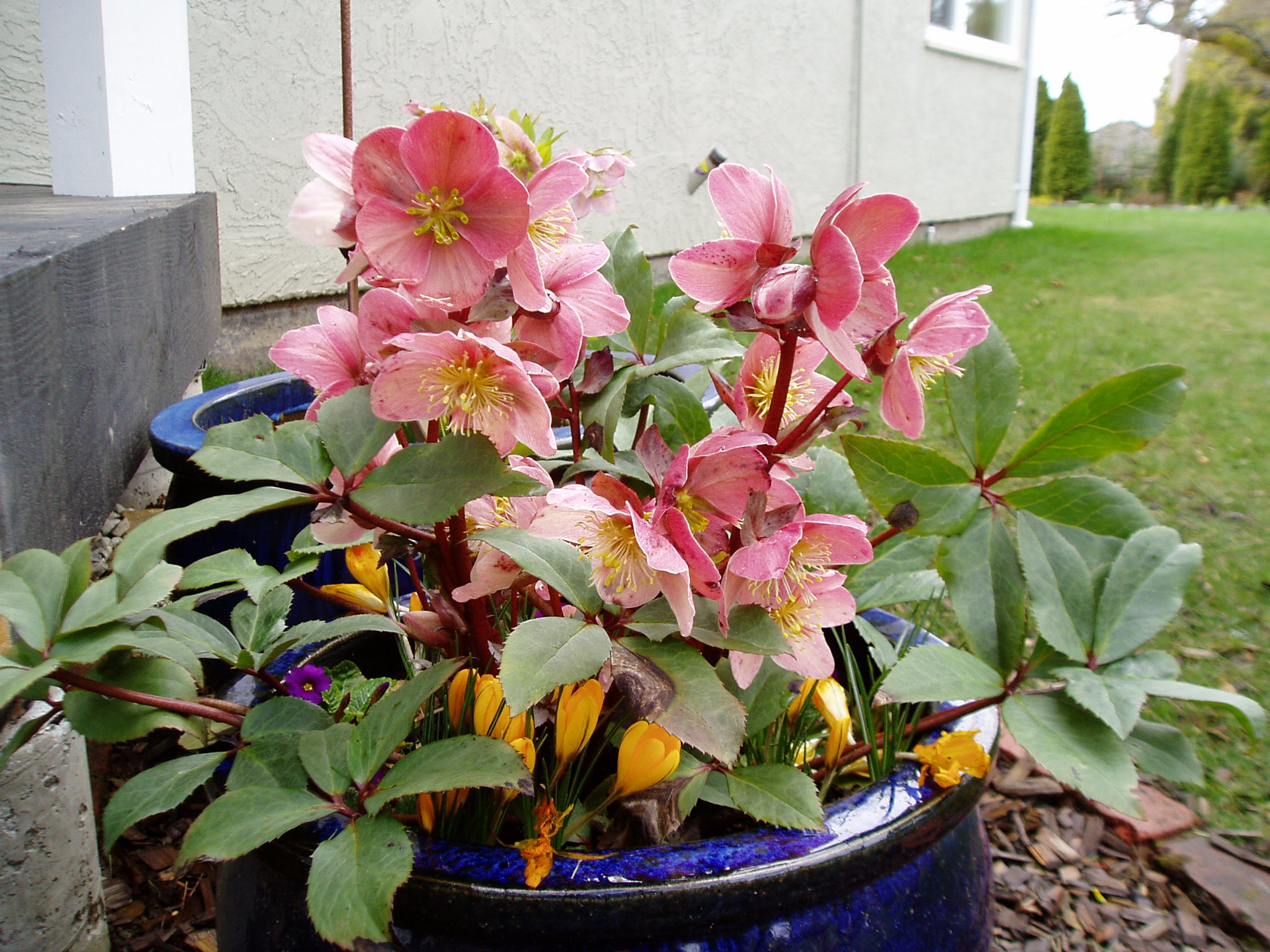
These come from the new hybrid varieties that have appeared in nurseries over the past couple years.  The hellebore suppliers have presented blooms in pinks and even dark colours that seem almost black.  Those types seem to flower later in the winter.

Hellebore - February promise
photo by SVSeekins

By February our hellebore are starting to show promise.  That’s  my cue to get out there & do a bit of pruning.

The new bud stems shoot up from the centre of the plant, pushing last year’s stems over a bit.  It’s those older stems we need to check out closely.  Some get a bit of gunk on them & that could infect the new growth.  It’s wise to remove any with those issues.  This sample below shows it even better…

Hellebore Pink Frost - early February buds & old growth
photo by SVSeekins

That poor hellebore really was looking worse for wear.  I cut away all infected old stems, knowing that the new growth would arrive in hardly any time at all.  Here’s what it looked like shortly after its trim:

Hellebore Pink Frost - late February flowers after pruning
photo by SVSeekins
Hellebore - creamy buds in February
photo by SVSeekins

Another variety was showing buds in  February at about this same time.  I checked closely but didn’t find any issues on the leafs, so it didn’t get trimmed back at all.  My intention is to let it alone unless it starts to look poorly.

In the meantime I’m really enjoying the fat double blooms it’s producing, even though they’re that boring creamy white colour.

Hellebore - Mardi Gras double & hand
photo by SVSeekins

I’ve heard that hellebore will slowly spread through the garden, & that’s fine by me!  To add some extra encouragement, my plan is to collect their seed pods & help out a bit with the distribution.

It’s just a delight to have a good show of blooms so early in the year!  That’s why I’ve kept a couple in big pots by the back door.  I seem to need that promise of the flowers & warmth that will arrive in a couple more months if only I can hold out that long.

Helebore - full bloom in march
photo by SVSeekins

-30-

© SVSeekins and Garden Variety Life, 2012. 

check out the rest of the articles on
Flower Count

Flower Count – day 3 – mahonia

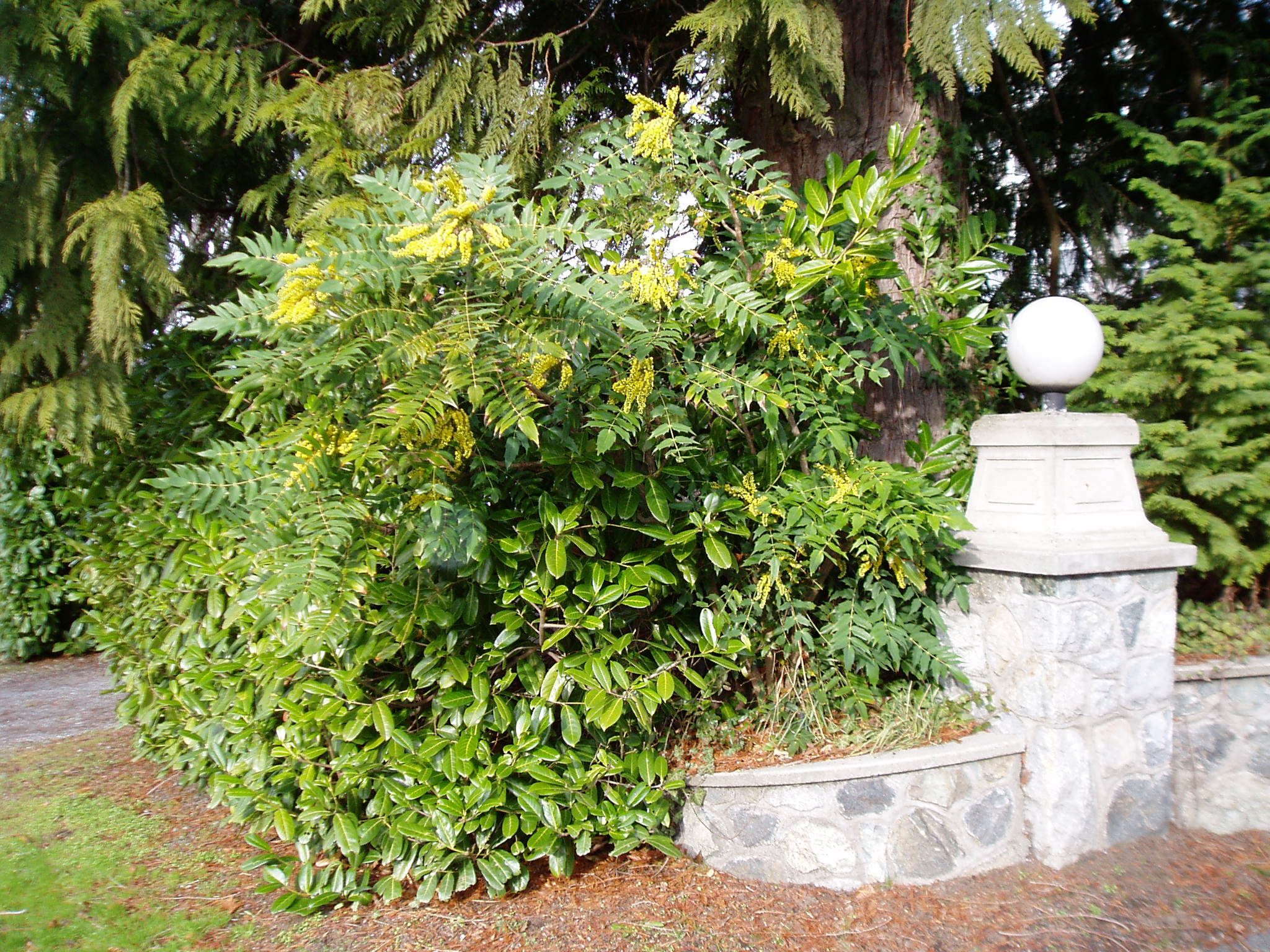
It was early February when I ran across this burst of sunshine in Victoria.

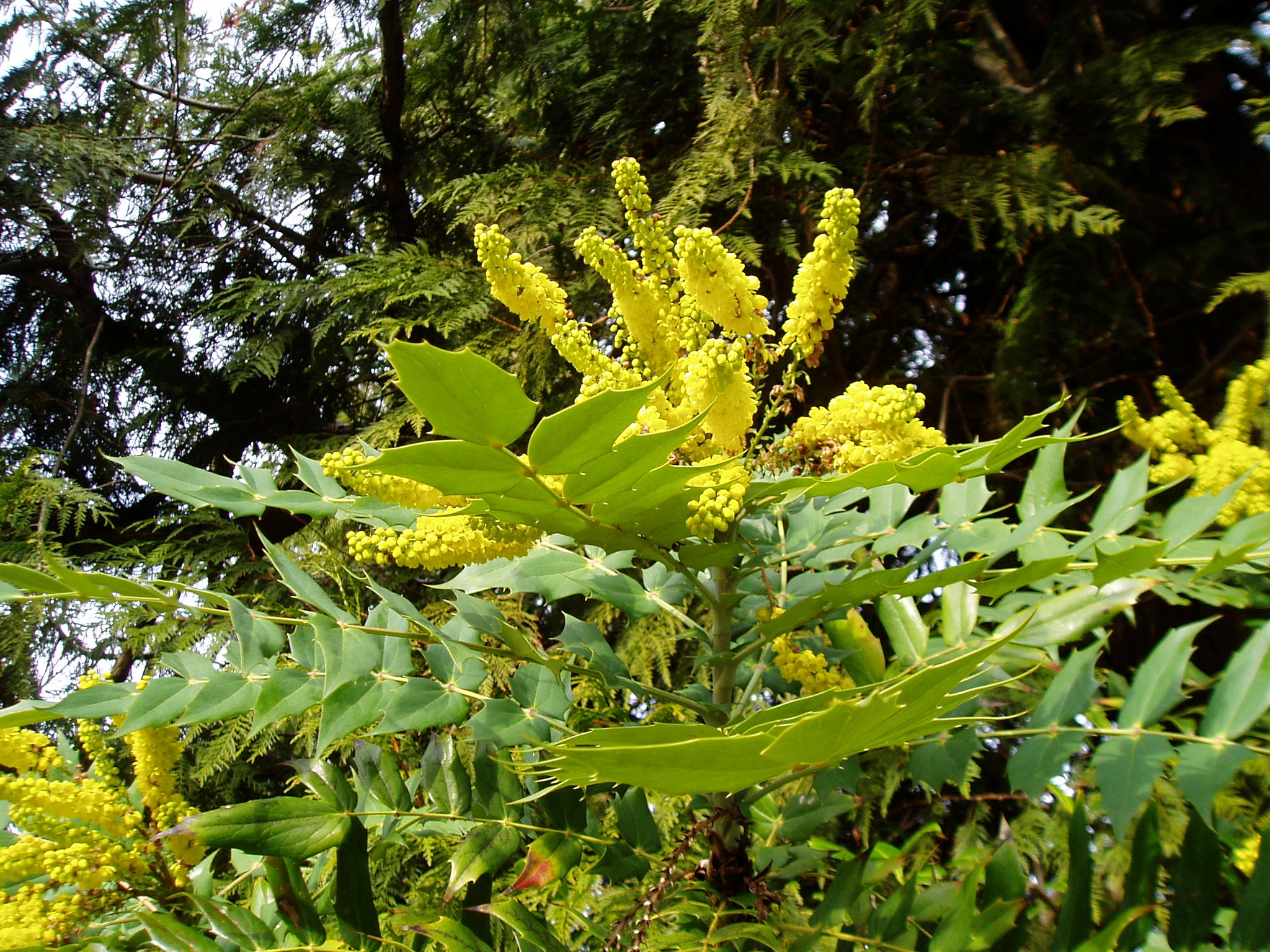
mahonia bloom
photo by SVSeekins
mahonia in February
photo by SVSeekins

Mahonia is an evergreen shrub that boasts happy yellow flower clusters through winter.

This particular specimen is certainly more showy than the local mahonia (Oregon grape) that grows in our yard.

At this time of year the tall Oregon grape in our shrub border is only just preparing to bloom.

mahonia - tall Oregon grape in February
photo by SVSeekins

By summer it’ll  be sporting dark berries.  One of my favorite resource books, Plants of the Pacific Northwest Coast, tells  that some use the berries to make jelly with real pucker power.

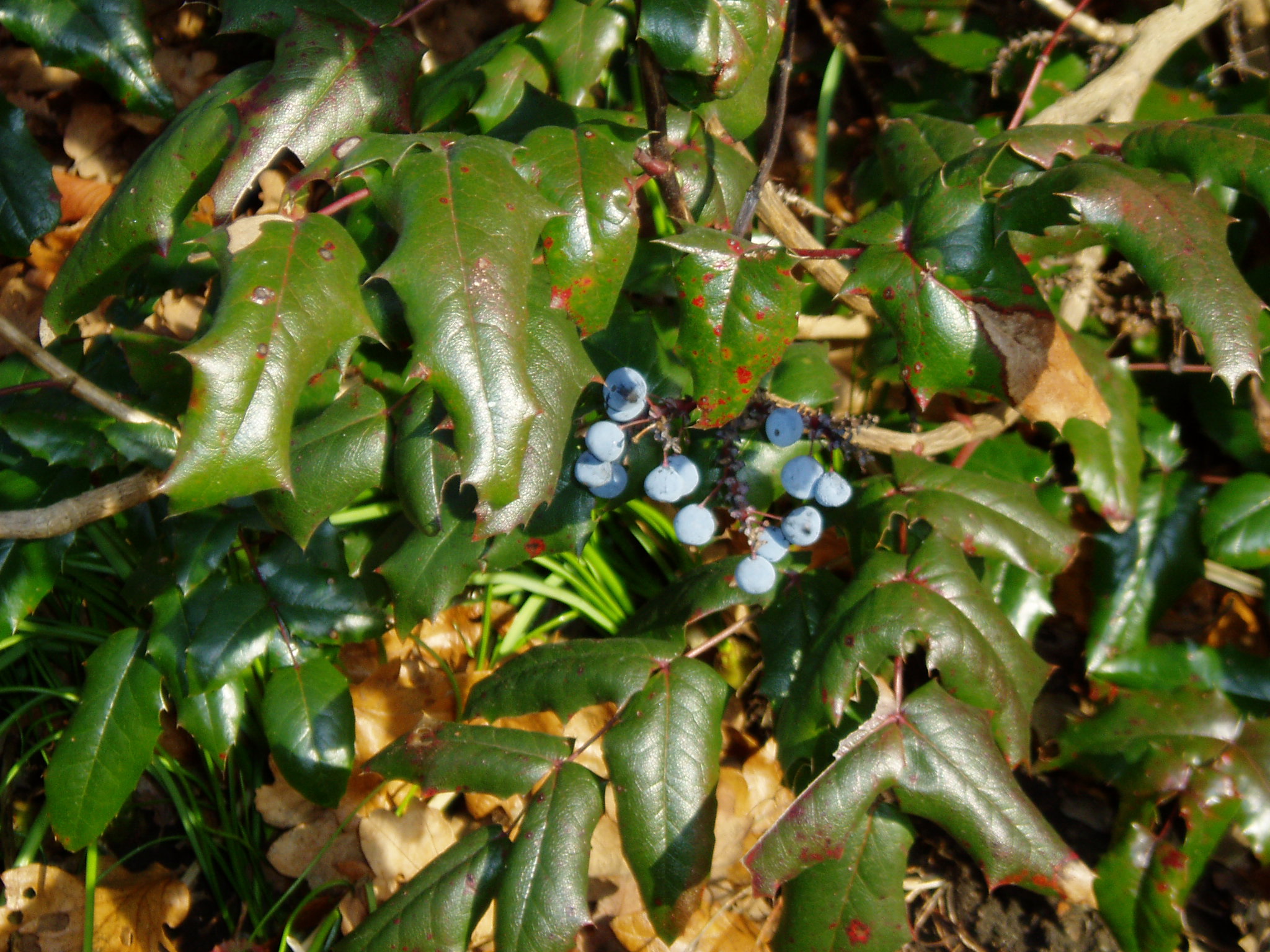
Oregon grape with berries
photo by SVSeekins

The leaves are shaped like holly, but aren’t nearly as hard and prickly.

I’ve seen full-sized holly trees, but mahonia only seem to come in shrubs or ground covers.

Holly berries are red, while mahonia’s are blue.

In some places, folks consider holly an invasive.  I’ve not heard any such complaint about the mahonia.

Aside from watering it for the first summer after transplanting, Oregon grape seems happy here with no attention at all.

This one is a hard worker.  It’s evergreen, so it’s interesting all year-long.  The winter blooms feed hummingbirds.  The summer fruit feeds other birds.  The mild prickles deter deer.   Who could ask for more?

-30-

© SVSeekins and Garden Variety Life, 2012.

check out the rest of the articles on
Flower Count