Category Archives: natives

Indian Plum – A Winter Joy

It’s not really a pretty shrub, but still, I’d like a thicket of Indian Plum in our border.
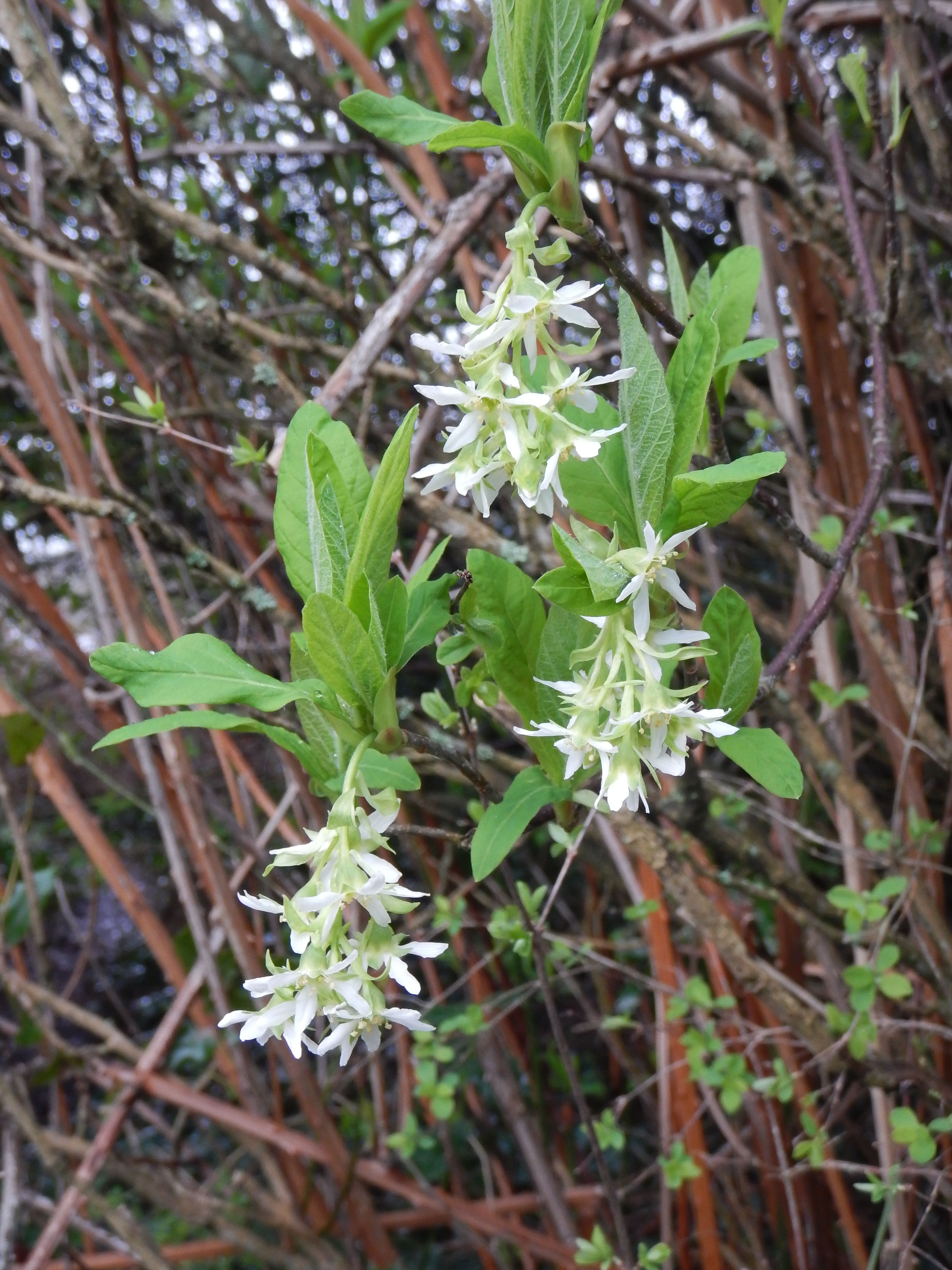
Oemleria cerasiformis, Indian Plum, June plum, Osoberry, Oregon Plum, Indian Peach, garden Victoria, Vancouver Island, BC, Pacific Northwest
photo by SVSeekins

It’s specifically because of the leaf buds & blossoms in February.  They calm my cabin fever & help me through the last several weeks of winter.  Against the grey skies, the leaves look so perky & hopeful … and determined.  Even the inconsequential greenish-white flowers are exciting when little else is happening.

Indian plum grows happily in Partial Shade, not needing the prime Full Sun real estate that I protect for really showy plantings.  It’s common across the coastal Pacific Northwest below  Vancouver Island.
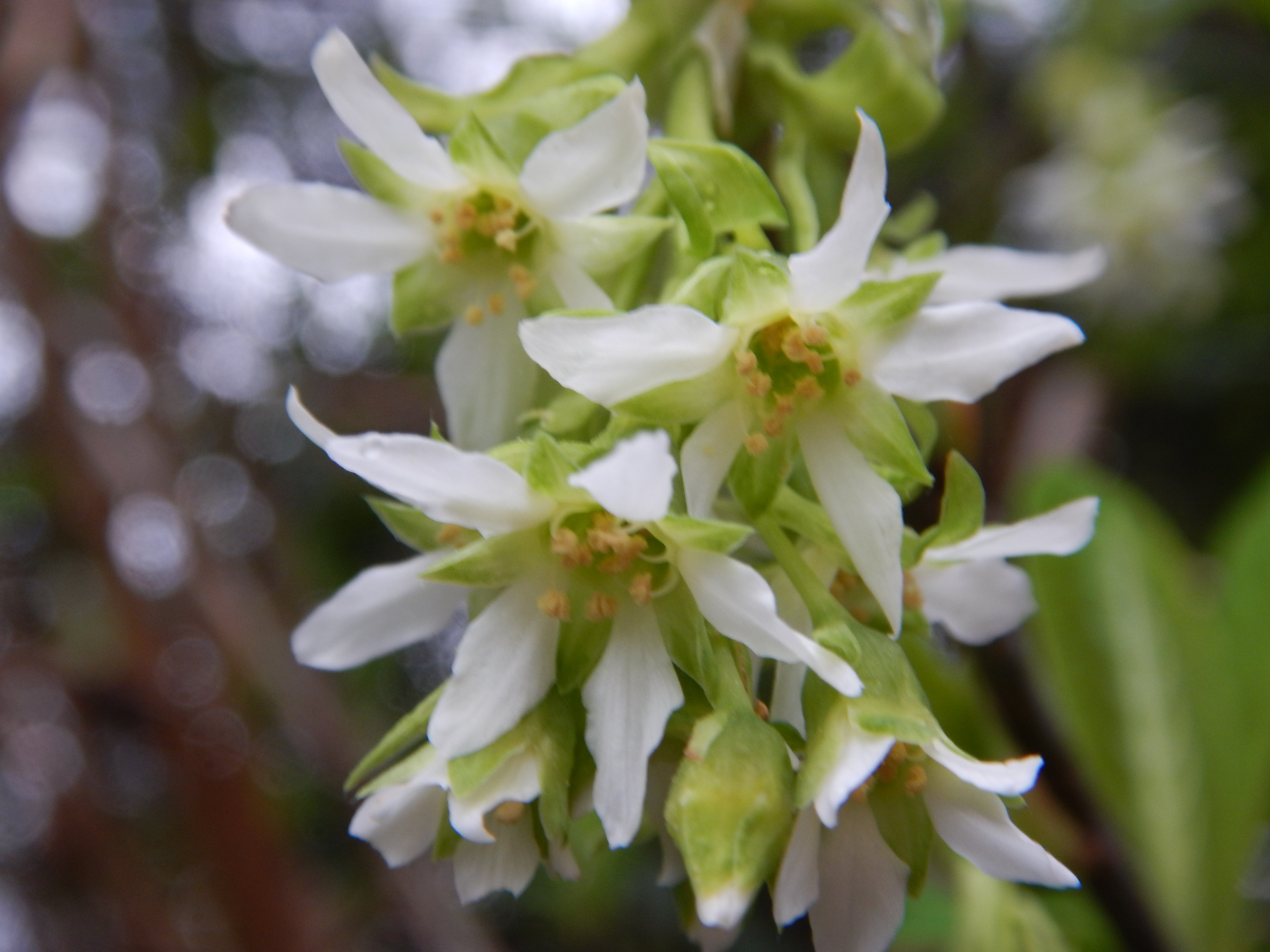
Oemleria cerasiformis, Indian Plum, June plum, Osoberry, Oregon Plum, Indian Peach, garden Victoria, Vancouver Island, BC, Pacific Northwest
photo by SVSeekins

When we lived on Cedar Hill, there was a large suckering thicket behind our house, at the base of the rocky slope.  The robins nested in the multiple stems of the 12-15 ft tall thicket.  The shrubs did their thing in the understory before the gary oaks hogged most of the sunshine through summer.

Perhaps best known as Indian Plum, Oemleria cerasiformis, is sometimes called June Plum, Osoberry, Oregon Plum and Bird Cherry.

Oemleria cerasiformis, Indian Plum, June plum, Osoberry, Oregon Plum, Indian Peach, garden Victoria, Vancouver Island, BC, Pacific Northwest
photo by SVSeekins

It might sound like a promising fruit source, but those inconsequential flowers turn into inconsequential fruits.  I’ve heard the berries shift through a pretty orange kaleidoscope before maturing into a dark purple-black, but I can’t say I’ve noticed.  The shrub blends into the background as other plants compete for attention in later spring.

Oemleria cerasiformis, aka Indian Plum, June plum, Osoberry, Oregon Plum, Indian Peach, or Bird Cherry, garden Victoria, Vancouver Island, BC, Pacific Northwest
photo by SVSeekins

I did check out the un-inticing tiny black plums once.
Bitter.
With pits.
Perhaps it’s best to consider it wildlife forage.

The early flowers feed hungry resident Anna’s hummingbirds e and signal that the Rufus will soon be returning from warmer climes.  The leaves & fruit provide forage for birds, deer & other mammals.  Isn’t it just good Karma to host a thicket?

-30-
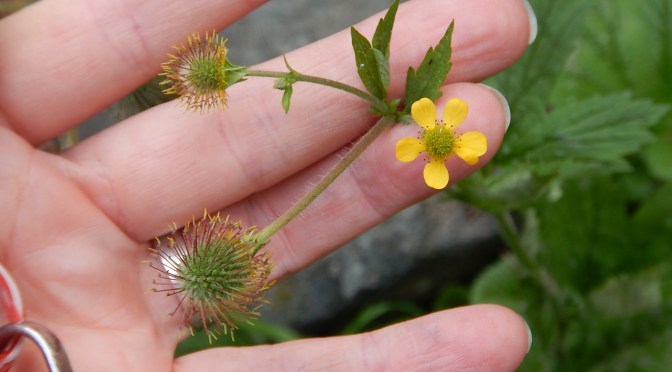
Geum macrophyllum – Large-Leaved Avens

garden Victoria, Vancouver Island, BC, Pacific Northwest
photo by SVSeekins

I first really noticed Large-Leaved Avens as a specific wildflower when I found it blooming beside the waterfall at Goldstream Park one May.  Before that, it was just one of the many yellow blooms we see in spring.

garden Victoria, Vancouver Island, BC, Pacific Northwest
photo by SVSeekins

Recently I was pleased to see it blooming in a parking lot, not far from the ocean, near Tofino.  That was at Thanksgiving!

October is really very late for a spring wildflower to be blooming – but I’m not complaining.   🙂

garden Victoria, Vancouver Island, BC, Pacific Northwest
photo by SVSeekins

The flower is a simple yellow daisy style; a smiling happy bloom that I find charming.
Unassuming.
Easy.

But Geum macrophyllum is not as plain as it first appears.

large-leaved avens, Geum macrophyllum, largeleaf avens, big leaf avens, garden Victoria, Vancouver Island, BC, Pacific Northwest
photo by SVSeekins

The seedhead is funky – certainly something that I’d let stand in my garden rather than tidy up.

The achenes (fruits) kinda remind me of googly eyes floating above the alien body.    Apparently, the pom-poms are happy to catch rides on passing pant legs or animals: free spirits looking for adventures far afield.  Groovy.

garden Victoria, Vancouver Island, BC, Pacific Northwest
photo by SVSeekins

But really, the magic is in the foliage.  What other plant has 2 kinds of leaves?  Right at the base, near the ground, the leaves are round.  Further up the stem, near the flowers, they’ve morphed into 3 lobes with deep serrations.  Crazy.

The guidebooks say Avens are common to wetlands across most of North America.  I’m hoping they’ll become common in my garden, too.  Last month I won 3 in the plant raffle at the Native Plant Study Group.  They’re now growing in one of our courtyard beds (where they’re more likely to get the extra summer moisture they need).  Cross your fingers for me.

-30-


Purple Dead Nettle & Self-heal

It’s no secret that I like wildflowers, so they’re welcome in our garden beds — but occasionally, my affections are tested.

self-heal, Prunella, garden Victoria BC Pacific Northwest
photo by SVSeekins

Purple Dead Nettle is a pretty flower that runs wild in many gardens.  It thrives in moist meadows & dry roadsides alike.  It thrives so well that it’s pretty much worn out its welcome in my garden.  I weed it out of formal beds and usually remove it from the rockery in favour of the plants I prefer.

selfheal, self-heal, Prunella, garden Victoria BC Pacific Northwest
photo by SVSeekins

Self Heal looks similar & I often get the two mixed up. They both thrive in the same conditions.  Both are pretty but a little ‘over-enthusiastic’ for my liking.

purple dead nettle, red deadnettle, dead-nettle, purple archangel, Lamium purpureum, garden Victoria BC Pacific Northwest
photo by SVSeekins

But I feel torn.

  • Bees & butterflies love the flowers.
  • Birds eat the seeds.
  • Deer nibble at the leaves without over-grazing.

Just because they self-sow willy-nilly, should I really be so judgmental?

A neighbour welcomes Dead Nettle into her garden.  I can appreciate it there, but I’m not the one working to keep them from out-competing her other plants.  Lazy me.

clover, selfheal, purple deadnettle, meadow, self-heal, Prunella, garden Victoria BC Pacific Northwest
photo by SVSeekins

Self-heal has established itself in C’s lawn.  It seems to hold its own beside the grass, clover, wild violets and English daisies. It survives the mower and the foot traffic. I’m rather pleased that C’s monoculture ‘lawn’ is becoming more of a diversified ‘meadow.’  I’m just fine with enjoying the wildflowers in this space, too.

purple dead nettle, red deadnettle, dead-nettle, purple archangel, Lamium purpureum, garden Victoria BC Pacific Northwest
photo by SVSeekins

Perhaps this acceptance balances out my barring them from the garden beds & borders?
Is it enough?
Am I redeemed?
Or should I be more open to having these wildflowers in our garden beds?

-30-

Some other plants  that might be considered ‘weeds”: