Category Archives: natives

Bunchberry Sightings

On a moist spring day in June, I spotted my first bunchberry.  It was blooming in the dappled shade, beside an old stump in Strathcona Park.
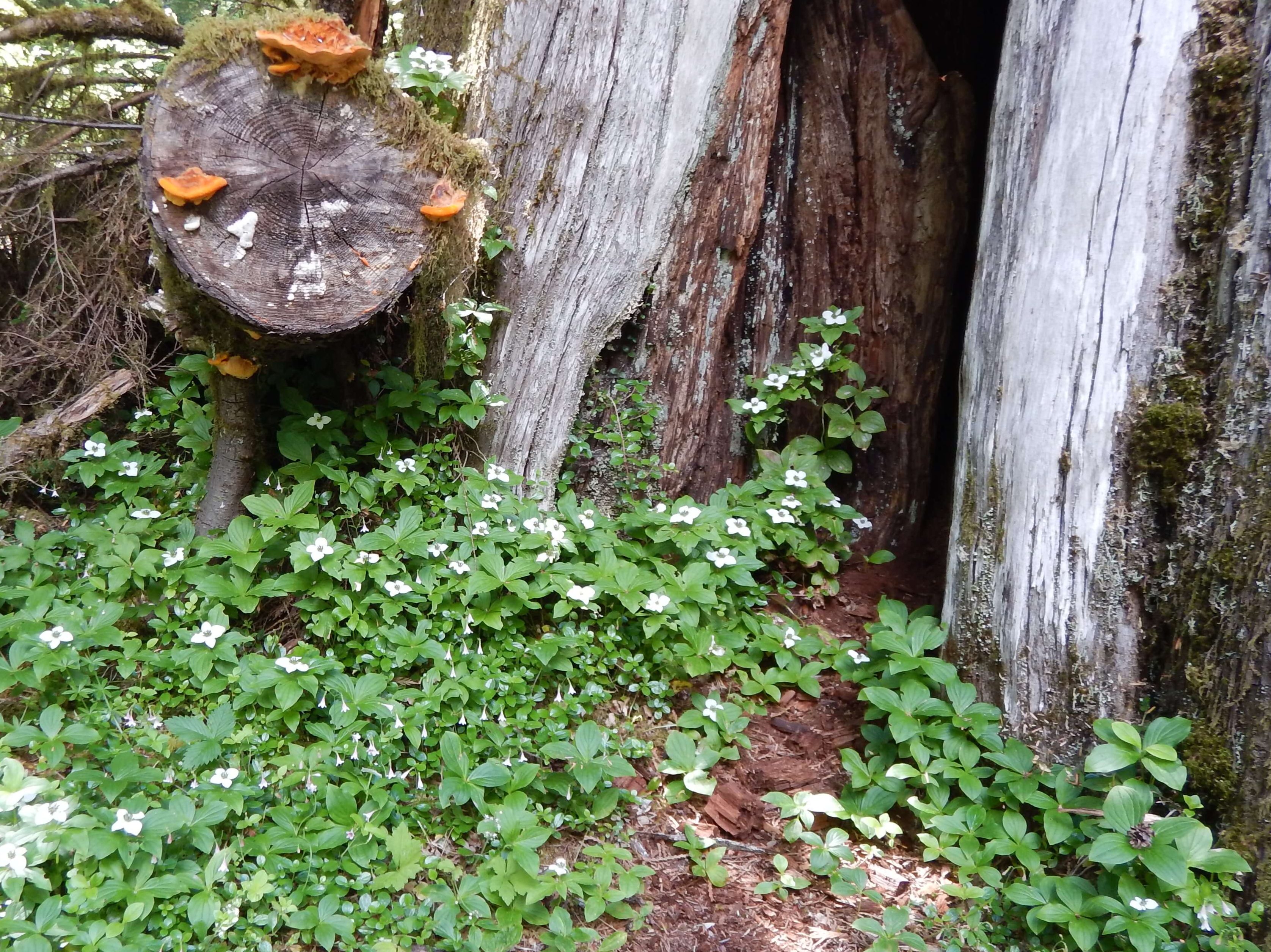
bunchberry, Cornus canadensis, dwarf dogwood,, creeping dogwood, dwarf cornel, crackerberry,, native wildflower, garden Victoria BC Pacific Northwest
photo by SVSeekins

You know how it is, once you notice something, you suddenly start seeing it everywhere?

That’s what it’s like with Cornus canadensis.

bunchberry, Cornus canadensis, dwarf dogwood,, creeping dogwood, dwarf cornel, crackerberry,, native wildflower, garden Victoria BC Pacific Northwest
photo by SVSeekins

It was in an old clear-cut near Jordan River (also Vancouver Island), I found it again.

bunchberry, Cornus canadensis, dwarf dogwood,, creeping dogwood, dwarf cornel, crackerberry,, native wildflower, garden Victoria BC Pacific Northwest
photo by SVSeekins

Even in full sun, it seems decaying wood is bunchberry’s happy place.

The underground rhizomes spread out, creating a matt of blooms – – almost a meadow   🙂    No wonder it’s also called creeping dogwood. What a beautiful transition for a logging debris field.

After getting comfortable identifying the dwarf dogwood flowers, it became my mission to find the plant in berry.  Shouldn’t be hard, right?  After all, it’s named bunchberry.

bunchberry, Cornus canadensis, dwarf dogwood,, creeping dogwood, dwarf cornel, crackerberry,, native wildflower, garden Victoria BC Pacific Northwest
photo by SVSeekins

It was 1000 km away, seeking shade from a scorching summer day at Fairmont Hot Springs in the Rocky Mountains when I found the berries.

bunchberry, Cornus canadensis, dwarf dogwood,, creeping dogwood, dwarf cornel, crackerberry,, native wildflower, garden Victoria BC Pacific Northwest
photo by SVSeekins

Now I realize why the Latin name Cornus canadensis makes sense.  They grow all across Canada.

The bright orangey-red berries stand out, even in the dappled shade of the understory.

Apparently, they’re edible, but I didn’t test them.  Alongside this well-travelled trail, and easily below a dog’s hip level…  ??  Nope. I was a teeny bit squeamish.
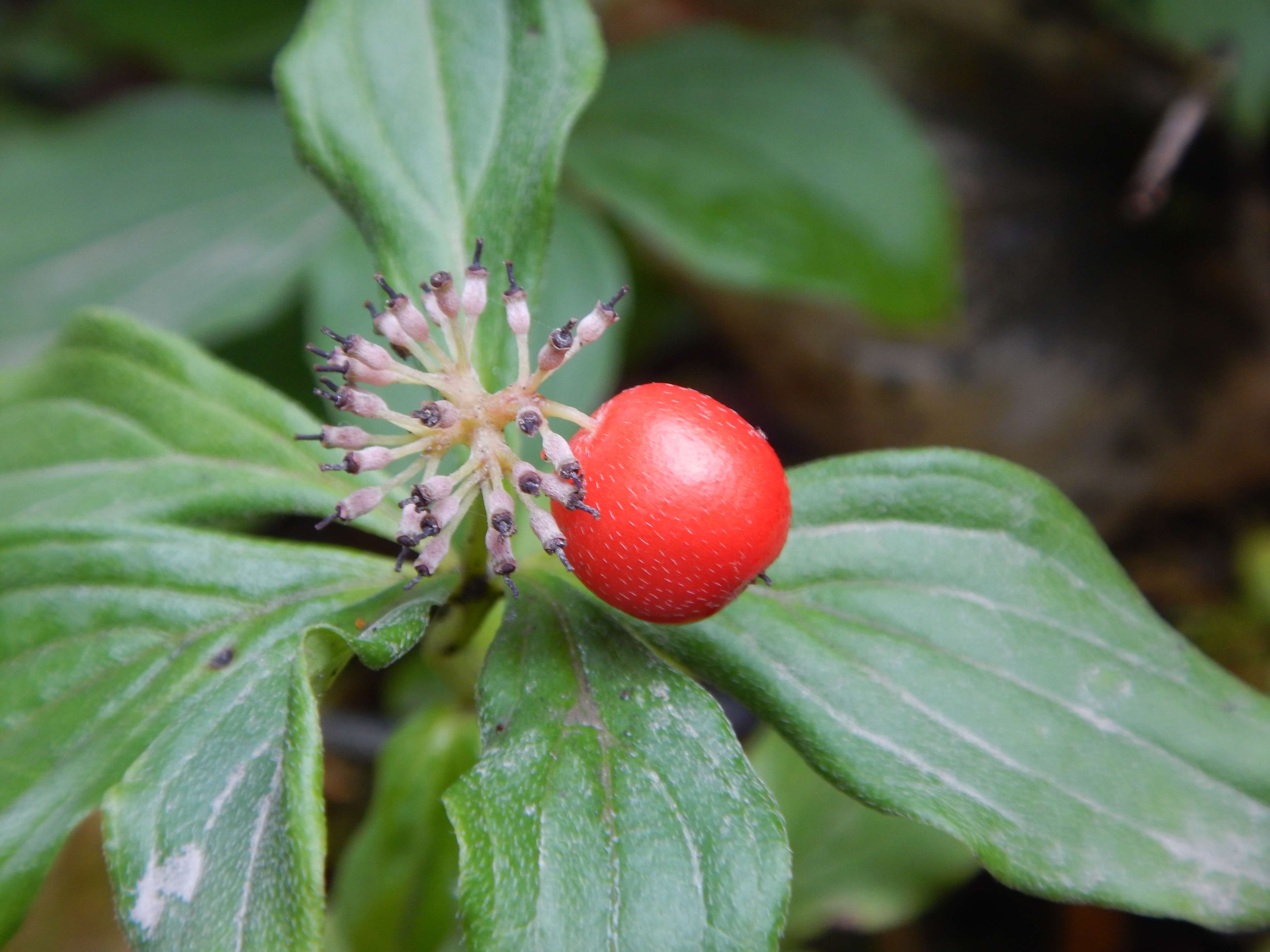
bunchberry, Cornus canadensis, dwarf dogwood,, creeping dogwood, dwarf cornel, crackerberry,, native wildflower, garden Victoria BC Pacific Northwest
photo by SVSeekins

Back on the coast, near Tofino, the bunchberries persisted.

Yup.

Berries
– – in October!

Isn’t that a good way to mark Thanksgiving?
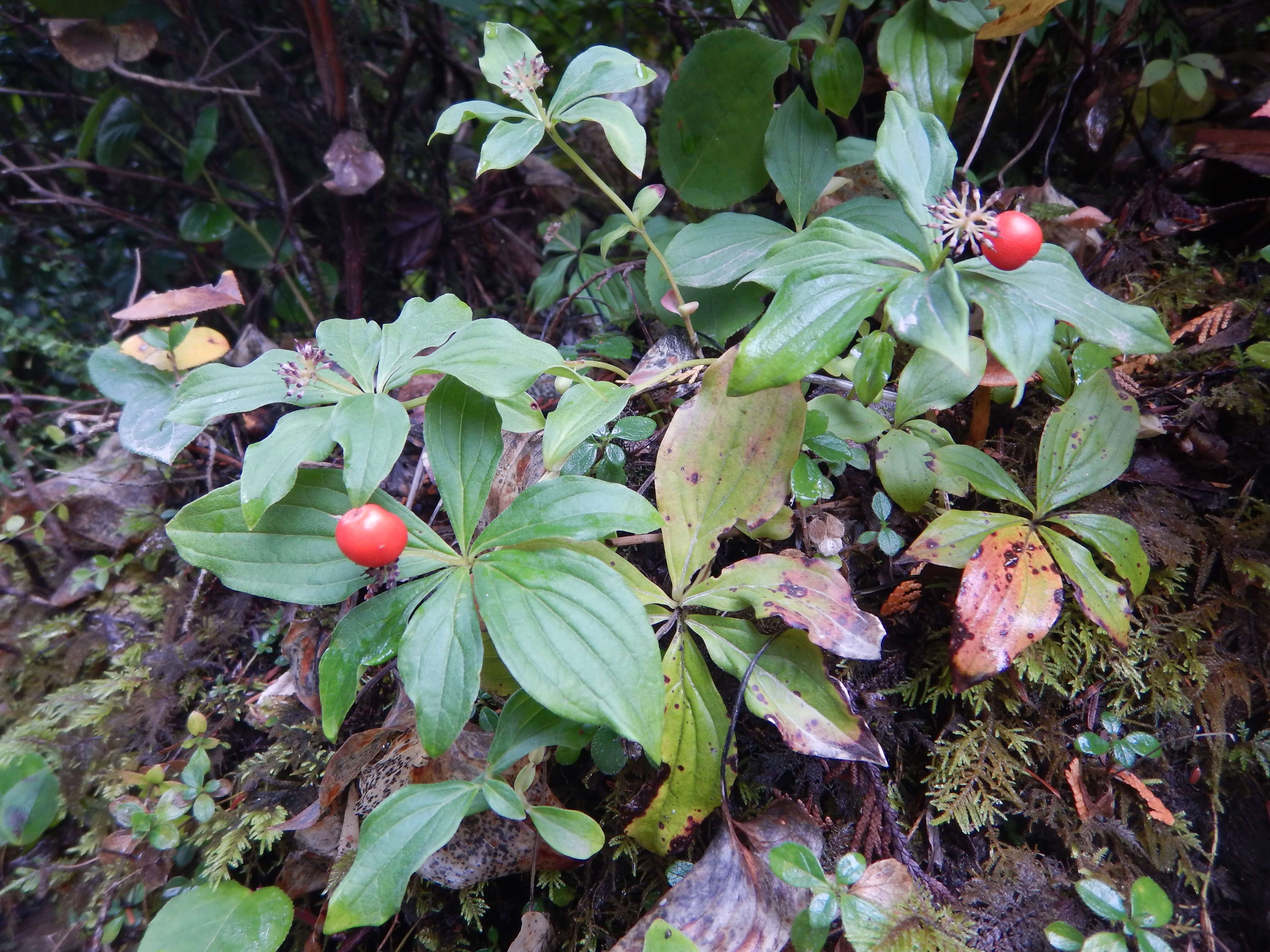
bunchberry, Cornus canadensis, dwarf dogwood,, creeping dogwood, dwarf cornel, crackerberry,, native wildflower, garden Victoria BC Pacific Northwest
photo by SVSeekins

Word has it that bunchberry leaves turn a beautiful red color in the fall.  I noted some autumn color, but perhaps there’s more to come?

It’s also reported semi-evergreen in the Pacific Northwest… so now I have a new mission.  Do you know where I might find more nearby to monitor through winter?

-30-

see also:
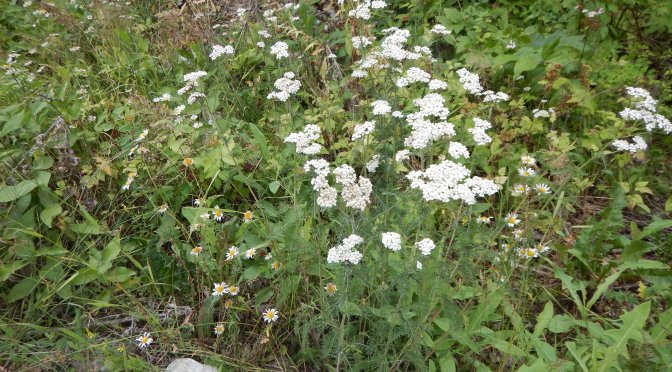
 

Changing Attitudes About Yarrow

yarrow, Achillea millefolium
photo by SVSeekins

As a kid I thought wild yarrow was a boring flower.  Its helicopter-landing-pad  flowers might be interesting to butterflies & other pollinators, but I couldn’t get past the bland white petals.

Little did I know, but there are varieties beyond our native wildflower.   Just a block or so away from our current garden, a neighbour grows a striking stand of yellow yarrow (probably Achillea ‘moonshine’ in a very sunny, & dry border.

yarrow achilea moonshine garden Victoria, Vancouver Island, BC, Pacific Northwest
photo by SVSeekins

Now that I care for my own garden, I can appreciate a plant that rarely needs water or attention.

It rocks that our local deer left it alone when I added it to our landscape.

It was an additional bonus that, after cutting back the flowering stems in autumn, a ferny mound of foliage remained evergreen.

yarrow achillea millefolium pomegranate garden Victoria, Vancouver Island, BC, Pacific Northwest
photo by SVSeekins

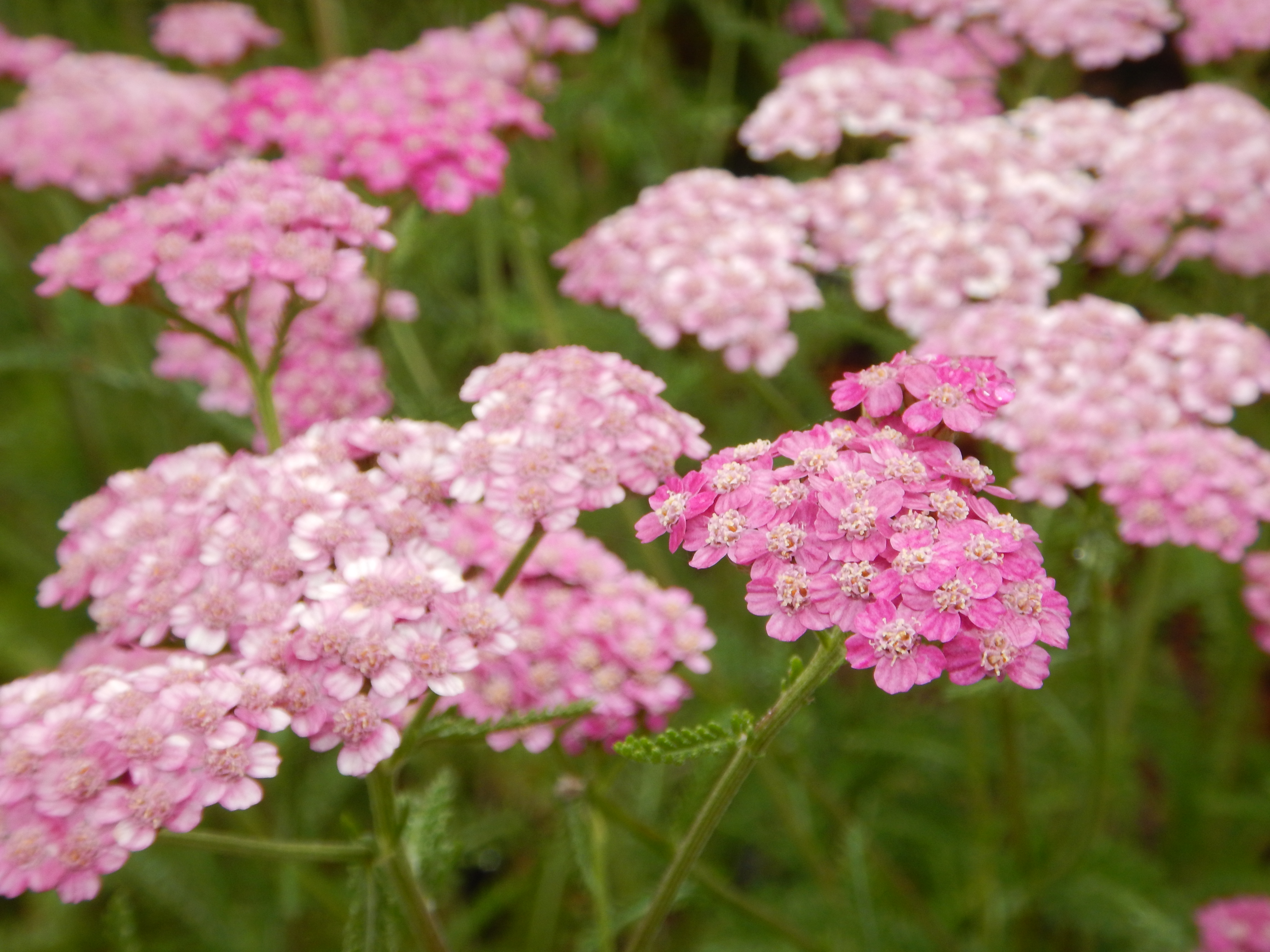
More recently I saw a red-flowering yarrow (likely Achillea pomegranate).  I’m not sure why I’d assumed our native yarrow was the only variety, but I’m delighted it isn’t.

yarrow achillea millefolium pomegranate garden Victoria, Vancouver Island, BC, Pacific Northwest
photo by SVSeekins

There’s a place for this one in our garden, too. Even though the West Coast is a rain forest, very little of that rain falls in July or August.  Tough ornamentals are treasures.

It’s good to note that if regularly irrigated, yarrow is a vigorous spreader.  The easiest way to keep it in a manageable clump is to reduce irrigation.  Easy-peasy.  I can do that  🙂

-30-

Roadside Veggies: Cow Parsnip, Indian Celery

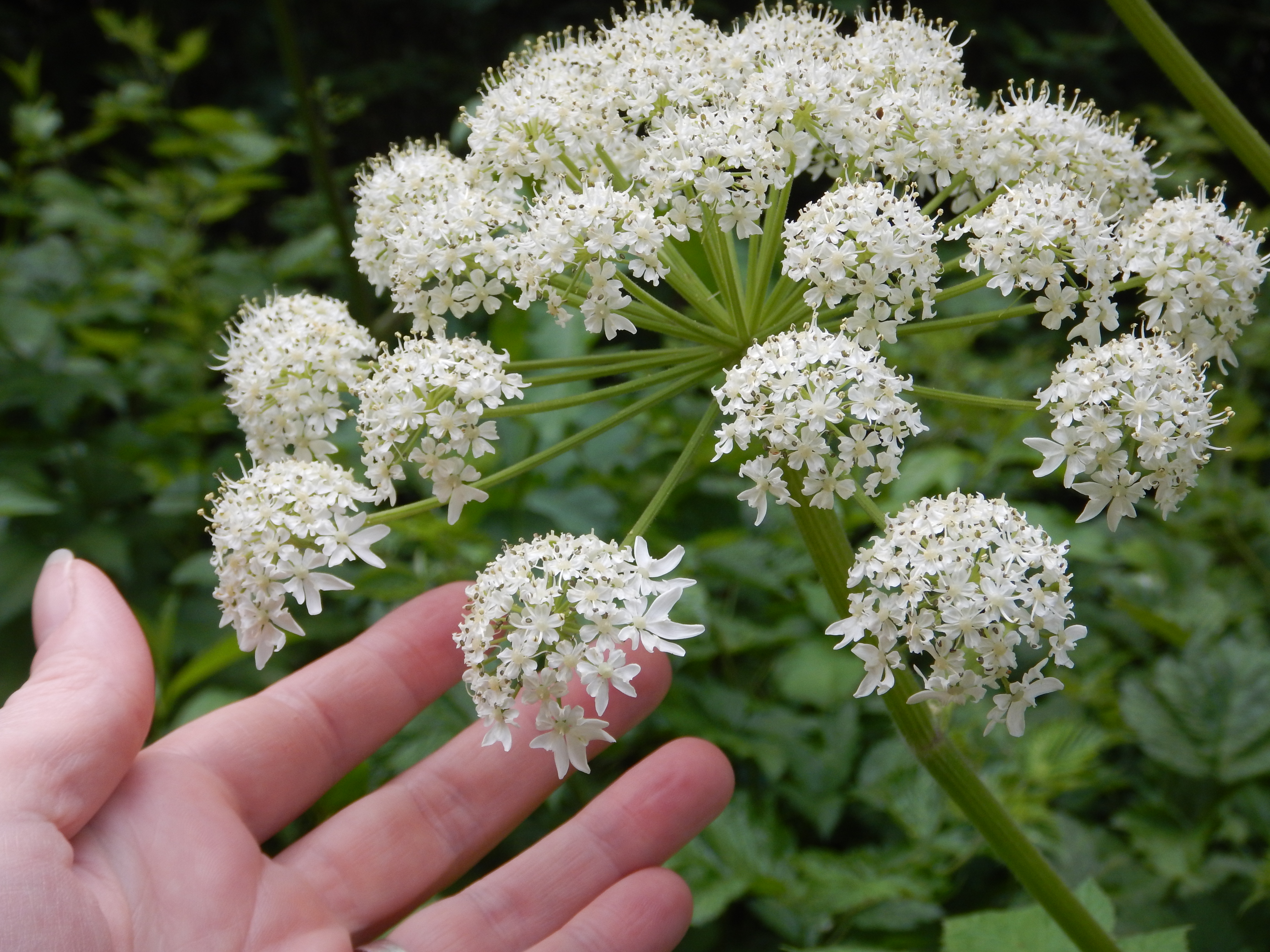
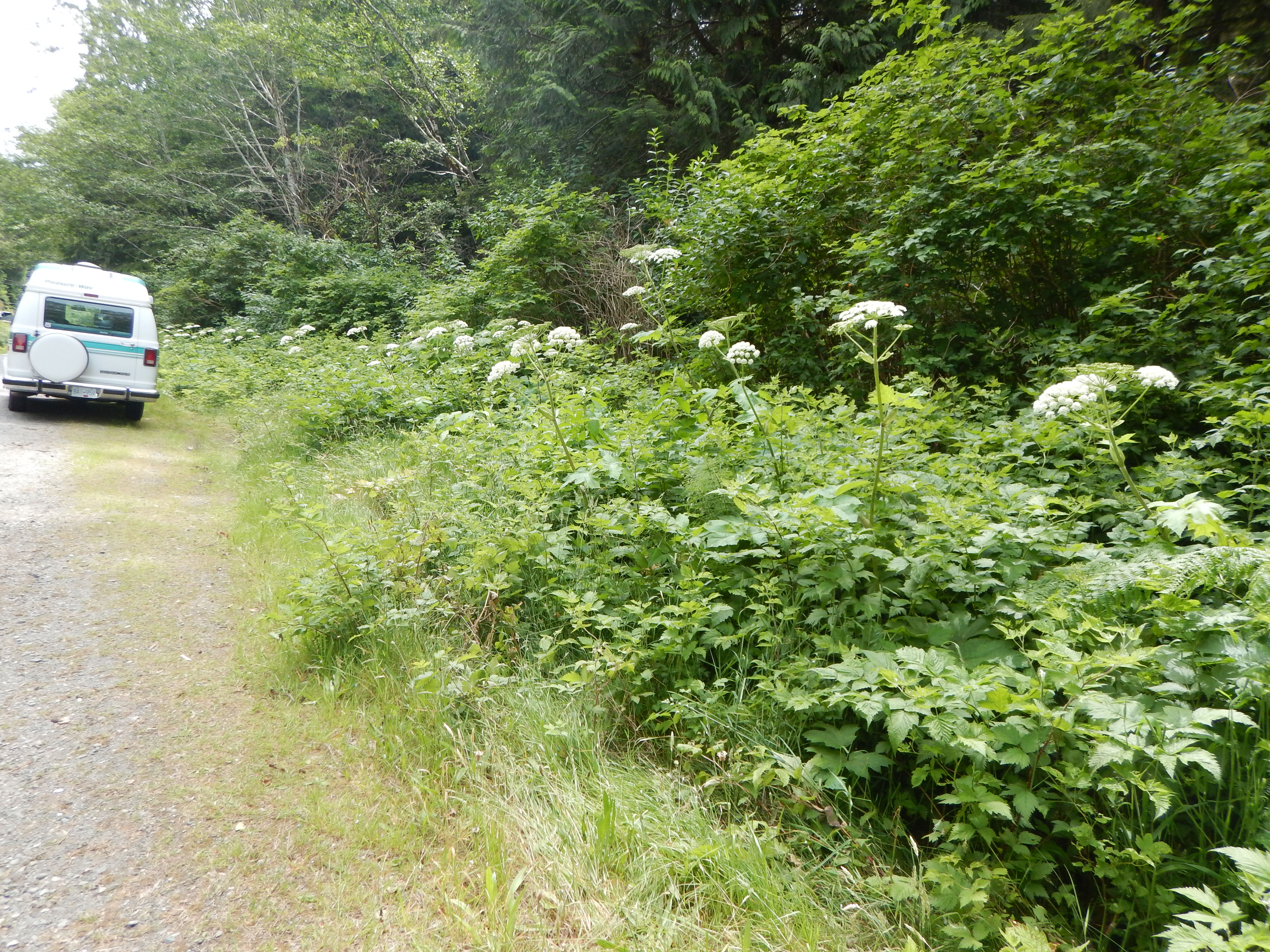
Between Sooke & Port Renfrew are moist roadside drainage ditches brimming with Heracleum lanatum.

Cow Parsnip bloom, Indian Celery, Heracleum lanatum garden Victoria, Vancouver Island, BC, Pacific Northwest
photo by SVSeekins

Commonly named Cow Parsnip or Indian Parsley, you’d expect a gourmet treat, but it’s not something I’d eat.

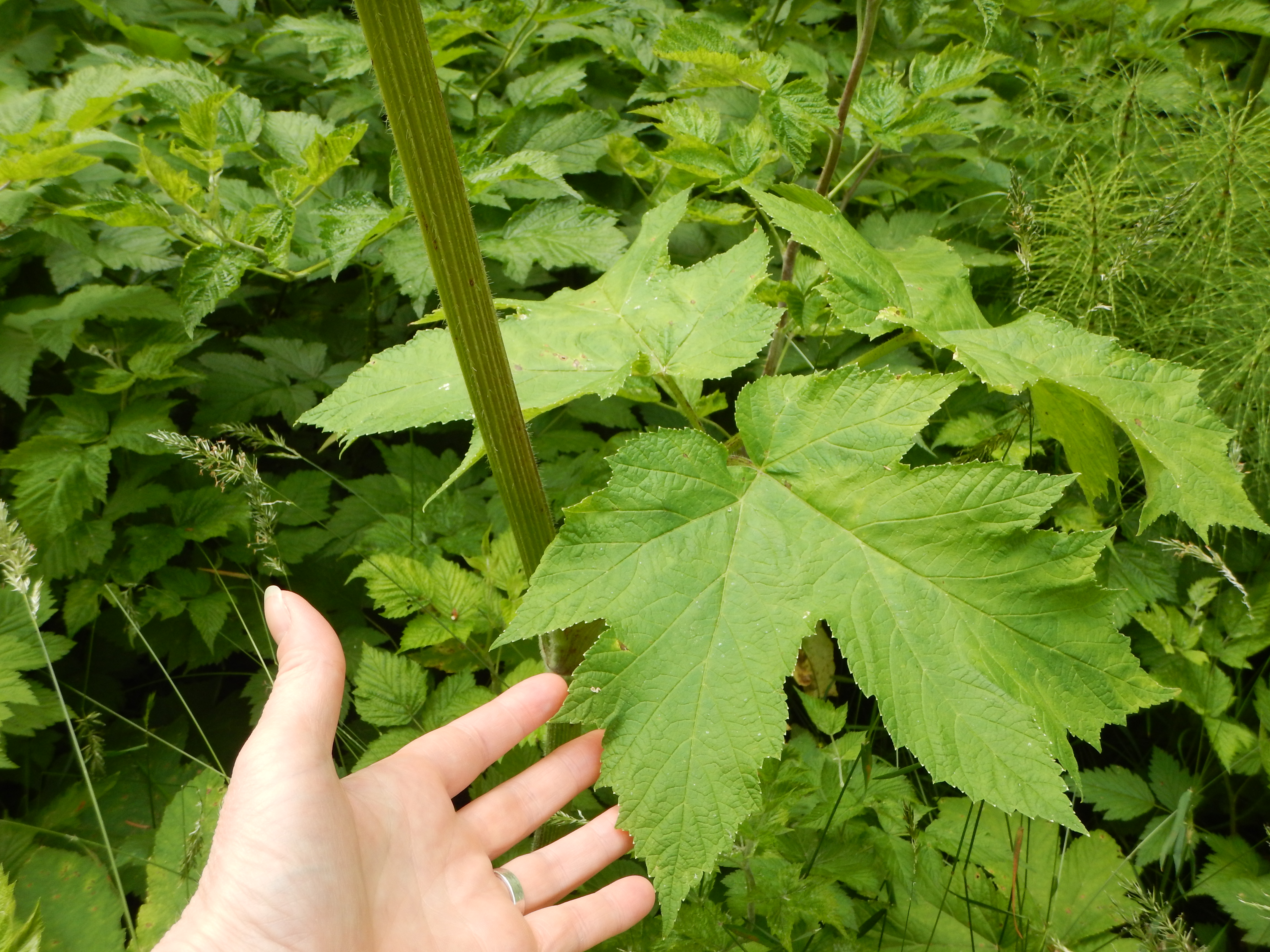
Cow Parsnip leaf, Indian Celery, Heracleum lanatum garden Victoria, Vancouver Island, BC, Pacific Northwest
photo by SVSeekins

The massive maple leaf distinguishes it from the more toxic Giant Hogweed (Heracleum mantegazzianum)  & poisonous Water  Hemlock (Cicuta).

Even still, this beauty contains a milky sap that is photo-toxic, kinda like euphorbia & poinsettia.  Once exposed to sunshine, any skin that contacted the sap burns & blisters. Nasty.

Cow Parsnip, Indian Celery, Heracleum lanatum garden Victoria, Vancouver Island, BC, Pacific Northwest
photo by SVSeekins

But wait – there are some positive notes:

  • The giant flowers are landing pads for butterflies. It’s important to many native pollinators.
  • In its happy place, Cow parsnip can reach 3 metres  – – that’s 10 feet tall!  That’s architecturally impressive.
  • It’s hairy – and deer seem to avoid fuzzy plants.  Perhaps they’re finicky that way.
  • Cow Parsnip is said to be kinda stinky.  I didn’t notice, but now that I think about it, I wandered into this patch of Cow Parsnip after 5 days of camping – – so my own stink may have been masking all other smells…
    Deer seem to avoid fragrant plants, so there’s a fair chance that Cow Parsnip is safe from them.
Cow Parsnip, Indian Celery, Heracleum lanatum garden Victoria, Vancouver Island, BC, Pacific Northwest
photo by SVSeekins

Hmmm, I might not be desperate enough for its food value, but I just might find a spot for Cow Parsnip in our landscape.  Imagine this self-seeding biennial as a garden ornamental at the back of a moist bed or border.

-30-

Enter your email address to subscribe to this blog and receive notifications of new posts by email.