Category Archives: natives

Fawn Lily at Easter

Erythronium Oregonum Fawn Lily garden Victoria, Vancouver Island, BC, Pacific Northwest
photo by SVSeekins

After a hearty meal of ham & scalloped potatoes, I’m in need of some exercise & fresh air. We head off to one of our favorite walks: the forested loop  around Mount Doug Park.

It’s a delight, but not a surprise,  to come across the speckled leaves of a fawn lily at the edge of the path.  (I’ve seen these native wildflowers along the forest edge of walking trails at Cedar Hill Golf Course too, )  But then  I spy another leaf further off the trail… and a few more!
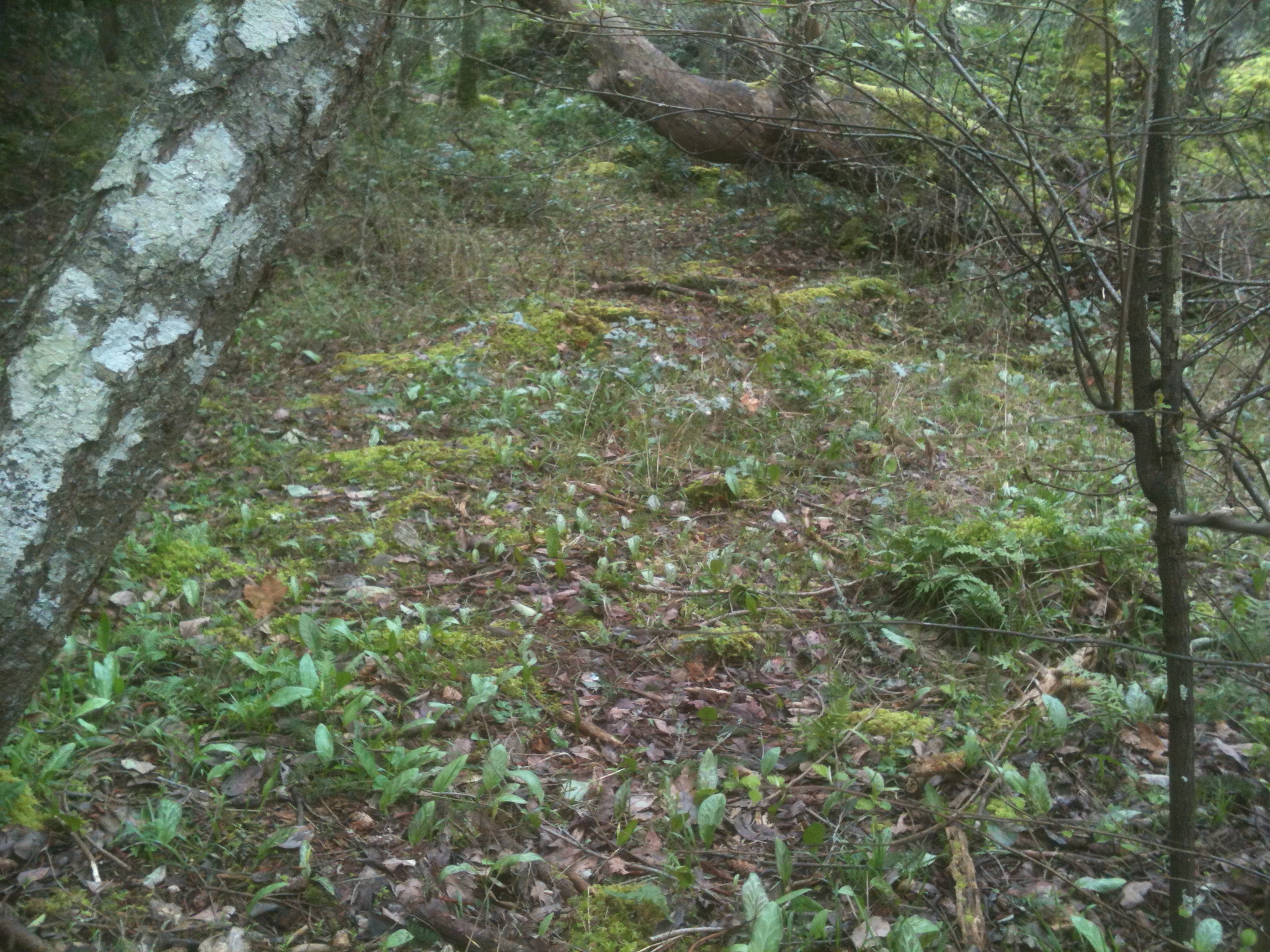
Erythronium Oregonum Fawn Lily garden Victoria, Vancouver Island, BC, Pacific Northwest
photo by SVSeekins

Just beyond those is a meadow of them!  I wouldn’t have guessed that the deciduous under-story would give enough light for a whole meadow of fawn lily.

The  White Fawn Lily meadow at the north end of Beacon Hill Park is much more open than this.

Erythronium Oregonum Fawn Lily bloom & leaf CU, garden Victoria, Vancouver Island, BC, Pacific Northwest
photo by SVSeekins

Today there’s just a few flowers in bloom, but give it another week….

Last year Easter was well over a week later.  By then the Fawn Lilies at Swan Lake Nature Sanctuary were in their glory.
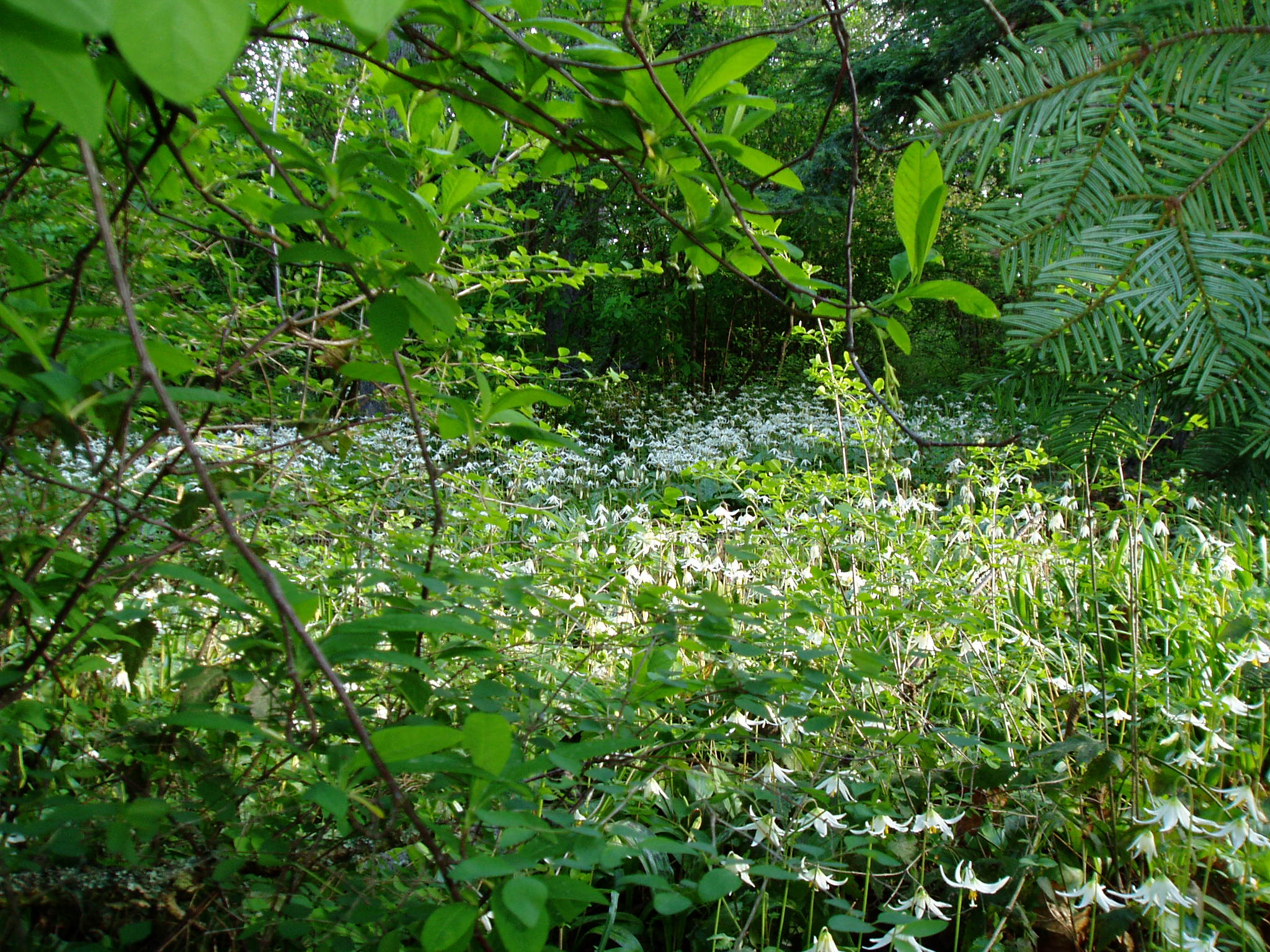
Erythronium Oregonum Fawn Lily garden Victoria, Vancouver Island, BC, Pacific Northwest
photo by SVSeekins

Now it makes sense why some folk call these Easter Lily.

In Ontario the speckled leaves remind folk of brook trout, so they call them Trout Lily.   Perhaps Eastern Canadians don’t see deer as often as we do in Victoria?  A rose by any other name….

If we want to get scientific about names, the west coast native is Erythronium Oregonum, and its east coast cousin is E. Americanum.

No matter the moniker used, it’s lovely to see the early spring wildflowers.  Happy Easter!

-30-

Don’t Pick The Flowers

How many treasures disappear over winter & re-appear in spring?

unusually early crocus in January, garden Victoria, Vancouver Island, BC Pacific Northwest
photo by SVSeekins

It’s magic.

How many are then weeded out by mistake?

Tragic!!

Some treasures, like crocus, send out blooms straight away, so they’re safe.

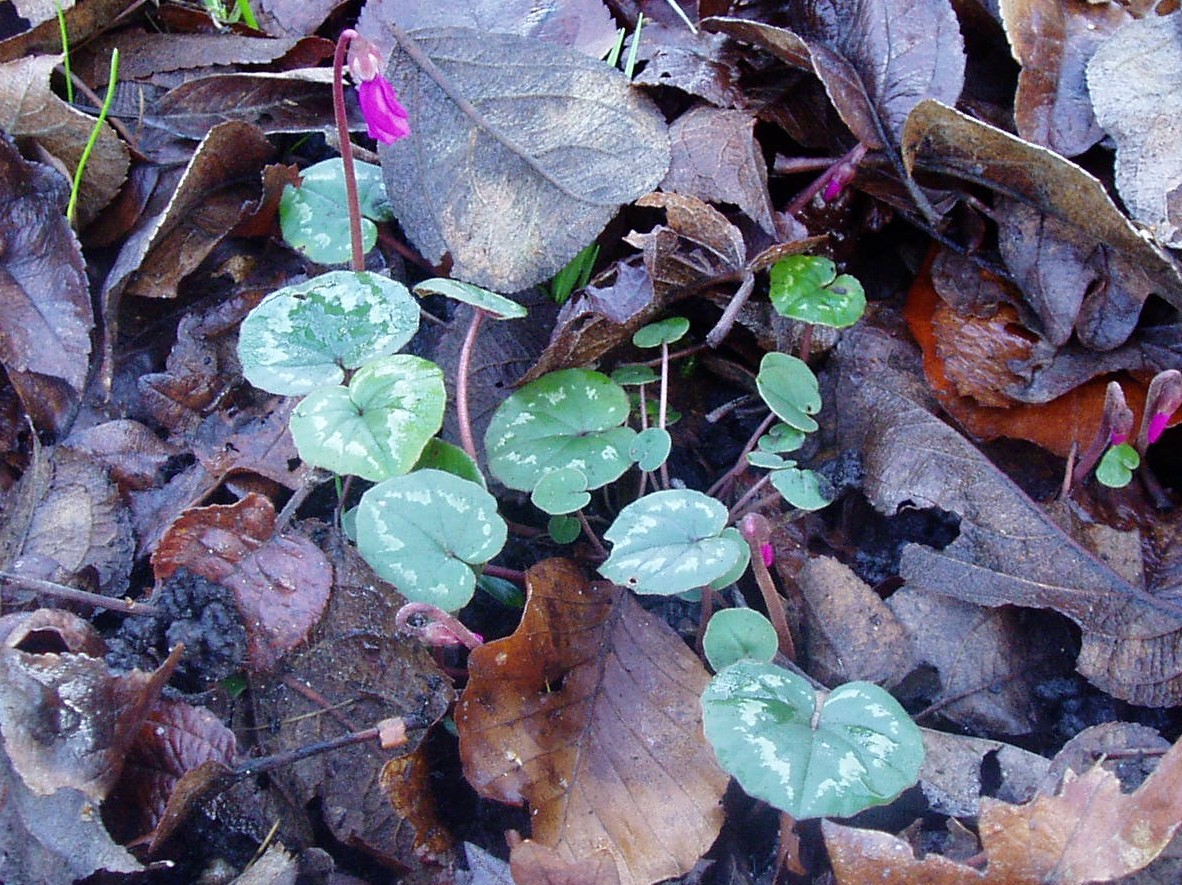
Others, like cyclamen,  have really distinctive leaves, so they’re safe too.

cyclamen leaf bud in January, garden Victoria BC Pacific Northwest
photo by SVSeekins

But there are so many others…

The wee Blue Eyed Iris is one treasure I’ve weeded out.  (I mistook it for grass…. turns out its also called Blue Eyed GRASS!  Go figure. )

Shooting Star is another victim.  (I mistake the young leaves for dandelion.)

From these tragedies, I’ve become a little more cautious.

young sea blush Plectritis congesta in leaf garden Victoria BC Pacific Northwest
photo by SVSeekins

The other day I was crawling around on our mountain (rocky outcropping), looking closely at plants growing in the moss.

So what is this – – Treasure ?  Weed??

My twitchy fingers  pluck out those blades of grass, but cautiously hold off on the other little plants.

young sea blush in flower, native plant, garden Victoria BC Pacific Northwest
photo by SVSeekins

Today I rejoice! They’ve proven themselves  to be the native annual: Sea Blush.  (I can recognize the flower.)

Yippee!
Caution pays off.

Thank goodness they’ve thrown a couple early blooms.  I don’t know how long I’d have held off from weeding them.  Now I’ll carefully tidy any competition around these gems & look forward to the moss blushing a lovely pink this April.

-30-

Hardhack

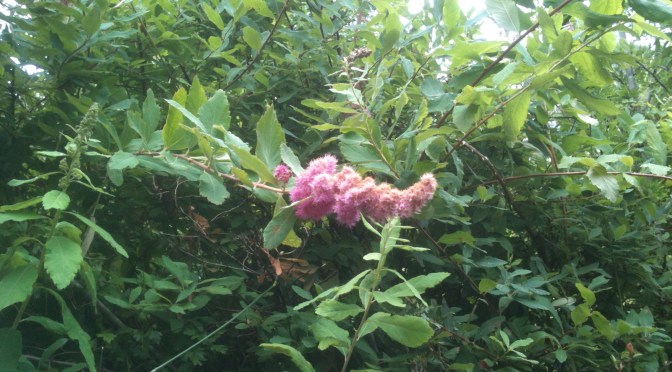
It first caught my eye on a walk in the sunny, rolling hills of Panama Flats.  What a pretty shrub!  AND It’s happily growing in the wild with no gardener to fuss over it!!!

hardhack, steeplebush garden Victoria BC Pacific Northwest
hardhack
photo by SVSeekins

My mind flashes to fantasies of a low maintenance garden. Isn’t this shrub  a good candidate for membership?

My go-to native plant guide, Plants of the Pacific Northwest, helps identify it:
Common names: hardhack & steeplebush.
BUT it’s the Latin name that rings bells with me:   Spirea Douglasii
Spirea !!
Cousin to the decorative spirea that I see in so many urban landscapes.
Very encouraging.

non-native spirea garden Victoria BC Pacific Northwest
non-native spirea
photo by SVSeekins

The Douglas Spirea ‘s deciduous leafs are grayish with woolly texture which leads me to guess that they’re deer tolerant. Word has it that black tail deer graze it.  Then another source says it is deer resistant  Who knows?

It tops out at 6ft./ 2m, which is handy for hedging.

The typical home is in moist areas.  That explains why it’s found at Panama Flats as well as Swan Lake Nature Sanctuary.  It’s suckering habit produces dense thickets along stream banks.

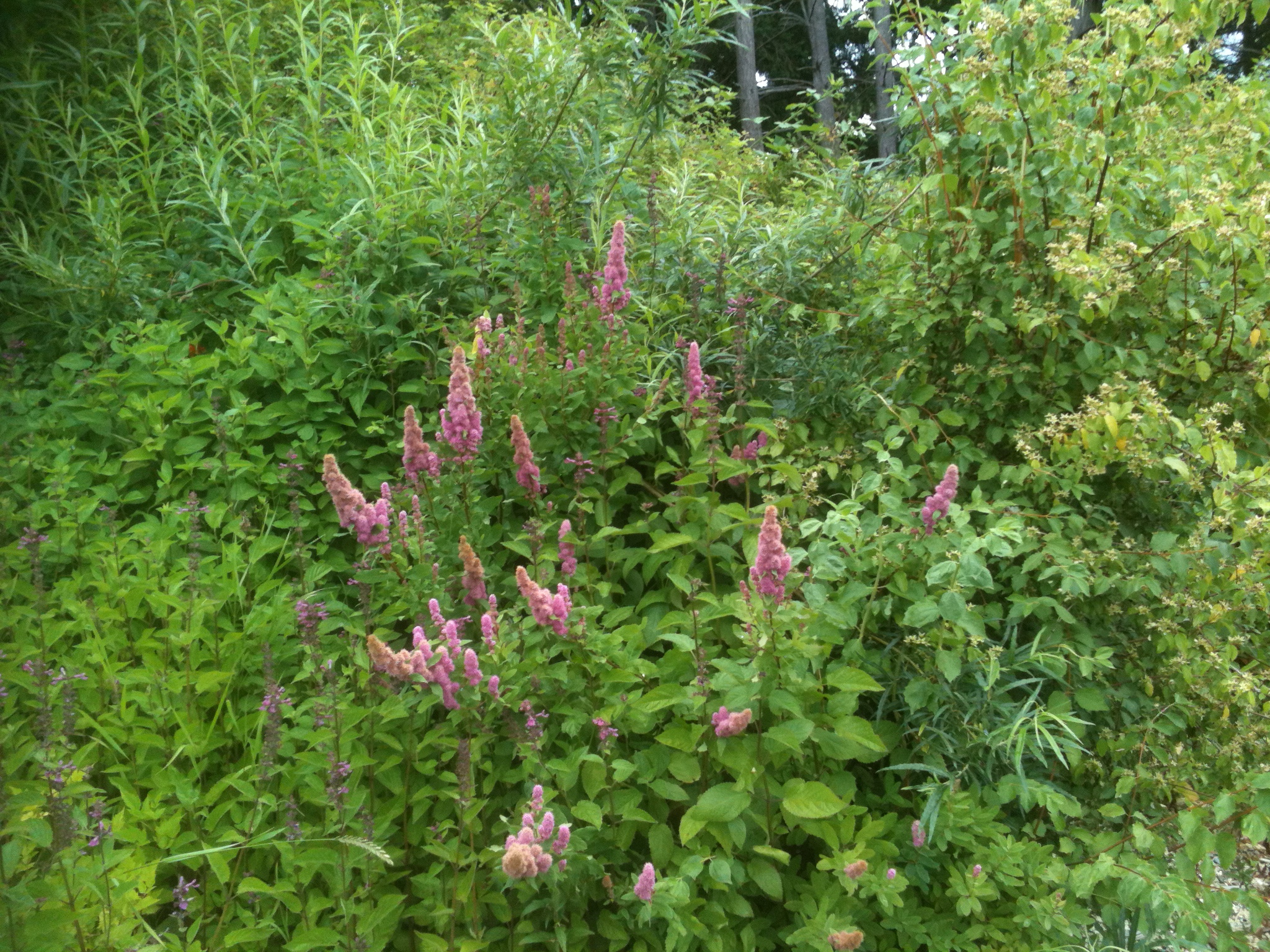
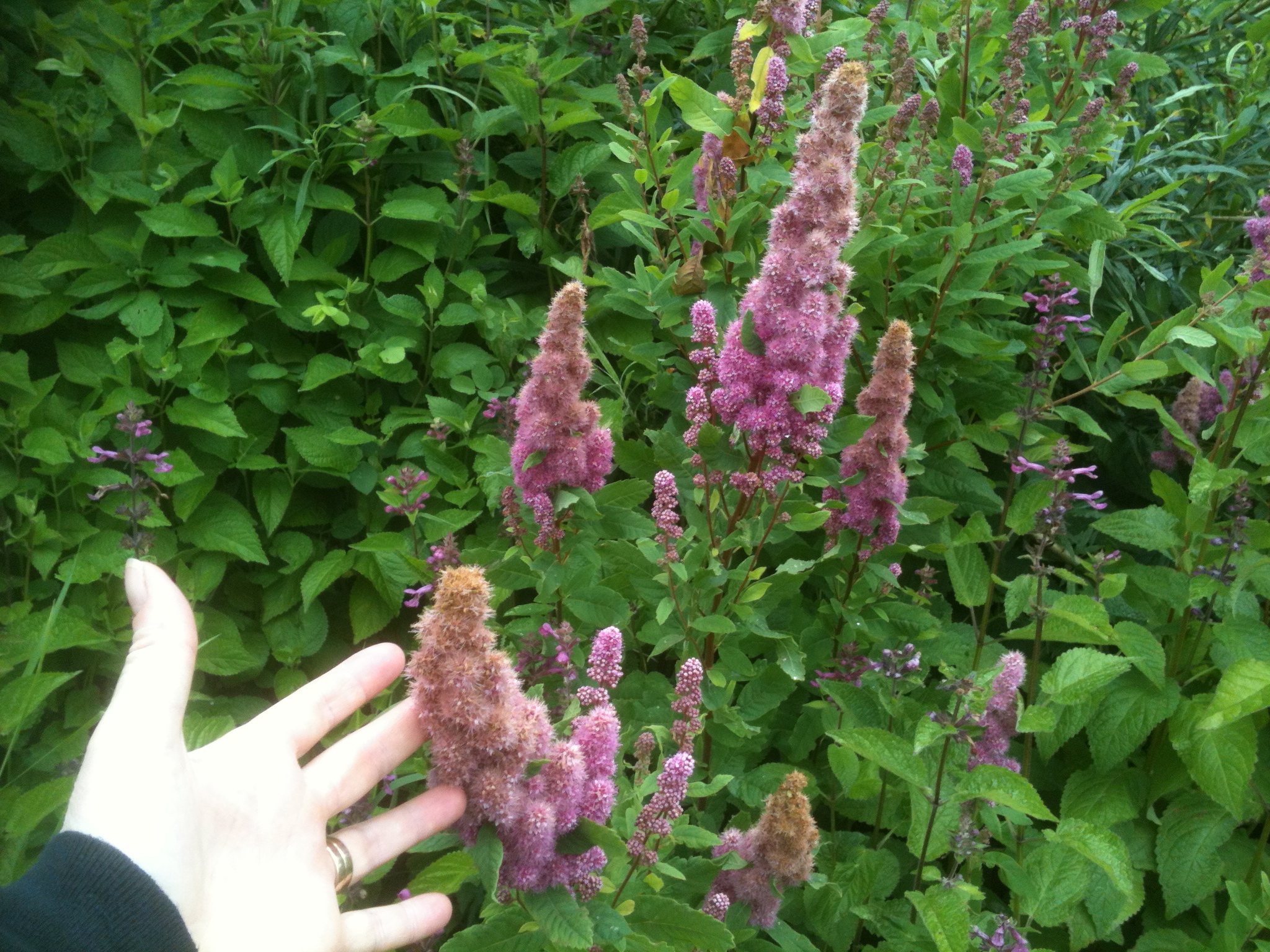
The pink steeples of Hardhack first appear in June.  The flowers last through the heat of summer eventually turning to brown seed clusters that hold on long after the leaves fall.  That’s a luxuriously long season for feeding bees, then birds!

hardhack, steeplebush garden Victoria BC Pacific Northwest
hardhack / steeplebush
photo by SVSeekins

This plant is just as pretty as the classic lilac (syringa)  & butterfly bush (buddleja).  Both of those shrubs can be dominating in a garden landscape, seeding or suckering willy-nilly.  I reckon hardhack is a choice replacement option, especially because it is much more of a food source to local birds,  pollinators, & wild life.   It can be dominating like the other two, but only in very moist situations.

I’d like to grow hardhack in my yard, but the moisture requirements are too high.  We do have a ditch that would supply the moisture needed…  maybe C would give up a patch of grass along there ??

-30-