Category Archives: garden plant lists

featured plants

Leopard’s Bane Through Four Seasons

bloom

Doronicum, Caucasian Leopard's Bane, Great Leopard's Bane, Plantain Leopard's Bane, leopard's-bane, garden Victoria, Vancouver Island, BC Pacific Northwest
photo by SVSeekins

As the last of the daffodils open  (mid-April in Victoria), Leopard’s Bane joins the spring cacophony of colour.  The sunny-faced flowers sway on tall stalks above the burst of Bluebells, Tulips and Hyacinths.

Doronicum, Caucasian Leopard's Bane, Great Leopard's Bane, Plantain Leopard's Bane, leopard's-bane, garden Victoria, Vancouver Island, BC Pacific Northwest
photo by SVSeekins

They’re happy yellow flowers -undaunted by seasonal showers.

The exuberance of Leopard’s Bane (Doronicum) lifts spring to new heights.

seedhead

Doronicum, Caucasian Leopard's Bane, Great Leopard's Bane, Plantain Leopard's Bane, leopard's-bane, garden Victoria, Vancouver Island, BC Pacific Northwest
photo by SVSeekins

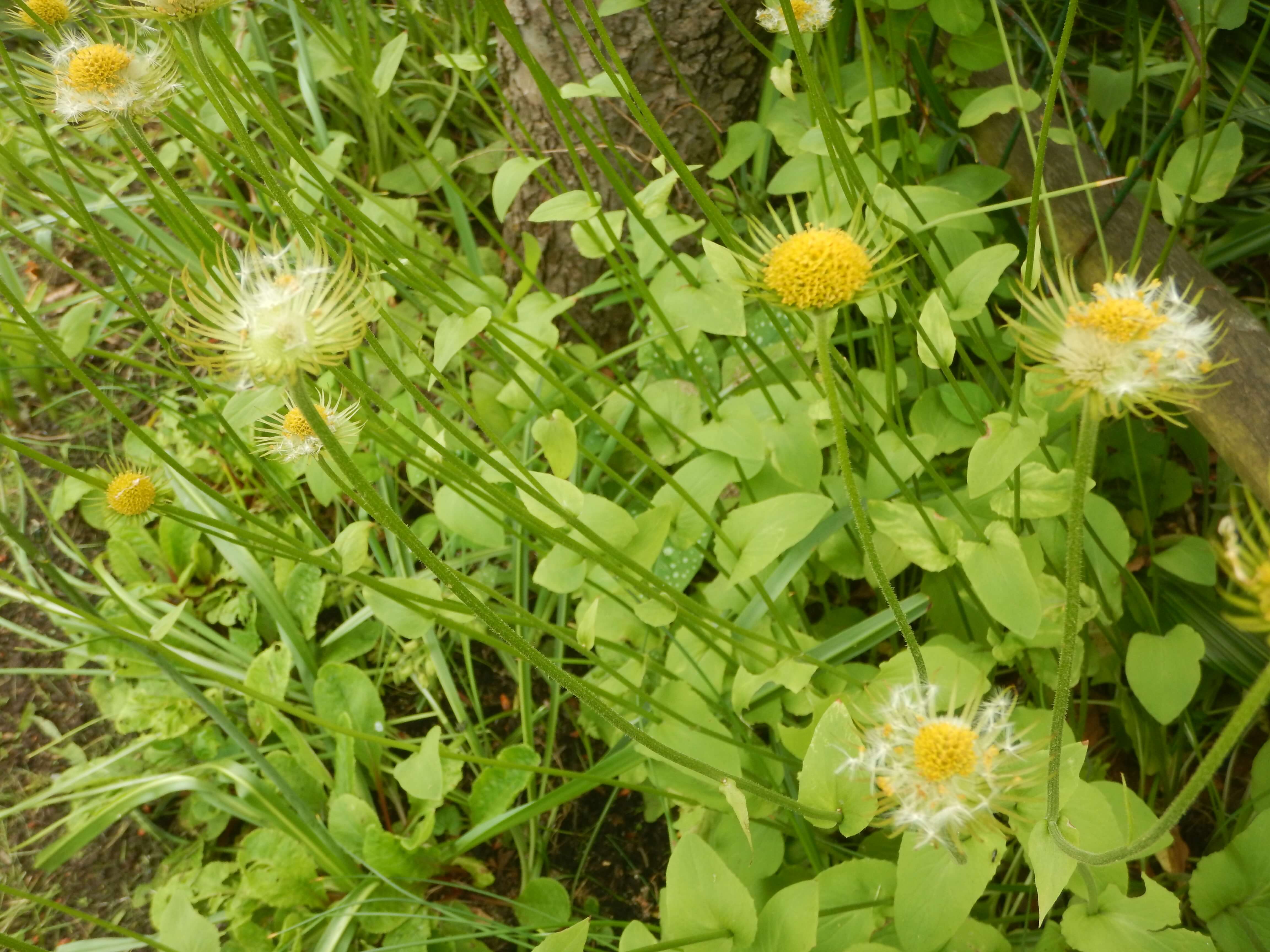
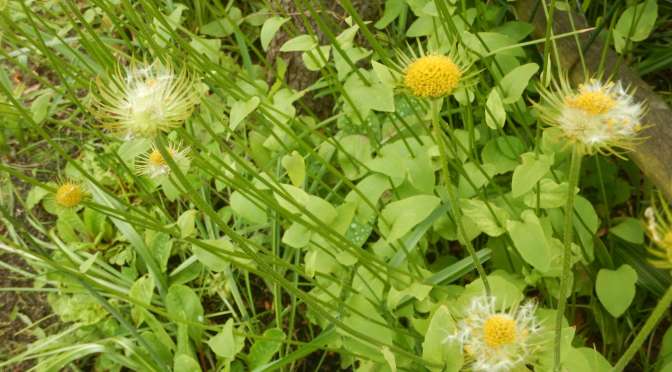
By mid-May, their enthusiasm wanes, but the show is certainly not over.  For me,  the progression is beautiful.  The varied stages of seeding are almost as enchanting as the flowering.

Doronicum, Caucasian Leopard's Bane, Great Leopard's Bane, Plantain Leopard's Bane, leopard's-bane, garden Victoria, Vancouver Island, BC Pacific Northwest
photo by SVSeekins
  • First, the petals of  Leopard’s Bane wither a bit.
  • Then, somehow, the rays turn to fluff & float away…
Doronicum, Caucasian Leopard's Bane, Great Leopard's Bane, Plantain Leopard's Bane, leopard's-bane, garden Victoria, Vancouver Island, BC Pacific Northwest
photo by SVSeekins
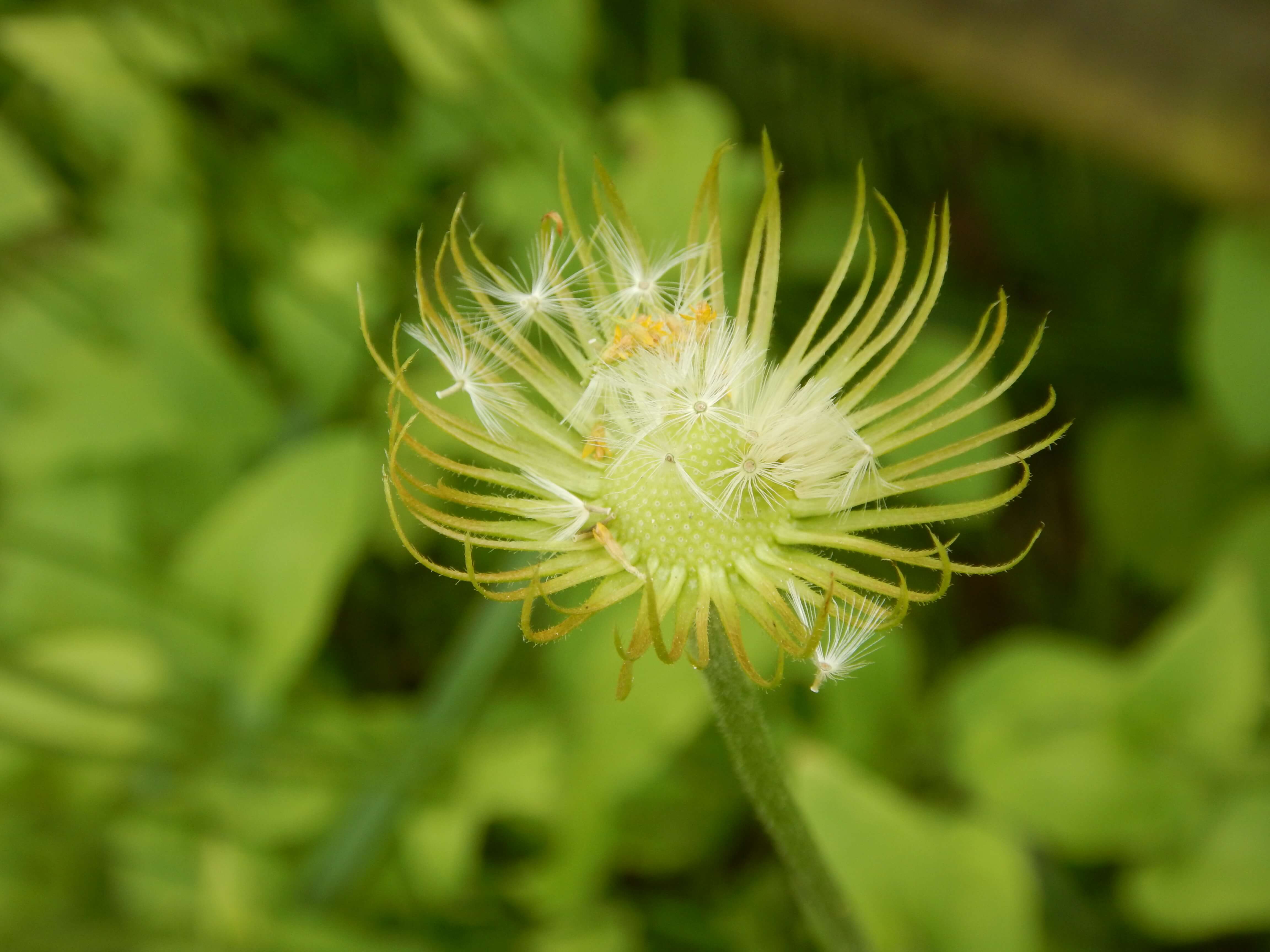
  • The fluorescence of the central disk holds out for a while longer before it also turns to fluff and flies off.
Doronicum, Caucasian Leopard's Bane, Great Leopard's Bane, Plantain Leopard's Bane, leopard's-bane, garden Victoria, Vancouver Island, BC Pacific Northwest
photo by SVSeekins
  • Even the remaining bracts are decorative – still catching enough breeze to add movement in the beds.  That’s a couple extra weeks of pleasure & value.

summer hibernation

garden Victoria, Vancouver Island, BC Pacific Northwest
photo by SVSeekins

By the time school wraps up in mid-June, Leopard’s Bane has dispersed its seed.  The heat withers its foliage.  Doronicum disappears on holiday, too.  Summer perennials elbow into its space as if it were never even there.

fall emergence

Doronicum, Caucasian Leopard's Bane, Great Leopard's Bane, Plantain Leopard's Bane, leopard's-bane, garden Victoria, Vancouver Island, BC Pacific Northwest
photo by SVSeekins

By the time we’re carving Jack-o-lanterns in October, the leaves are falling from above.  It feels like the garden is dying, too.  But autumn’s moisture tickles the rhizomes below the soil.  New leaves peek out.  Leopard’s Bane is re-awakening.  As so much else fades away, Doronicum stays fresh, green & alive right through the doldrums of our West Coast winter.

In our garden, Leopard’s Bane is indispensable because:

Doronicum, Caucasian Leopard's Bane, Great Leopard's Bane, Plantain Leopard's Bane, leopard's-bane, garden Victoria, Vancouver Island, BC Pacific Northwest
photo by SVSeekins
Doronicum, Caucasian Leopard's Bane, Great Leopard's Bane, Plantain Leopard's Bane, leopard's-bane, garden Victoria, Vancouver Island, BC Pacific Northwest
photo by SVSeekins
Doronicum, Caucasian Leopard's Bane, Great Leopard's Bane, Plantain Leopard's Bane, leopard's-bane, garden Victoria, Vancouver Island, BC Pacific Northwest
photo by SVSeekins
  • It has happy yellow flowers.
  • Our brazen urban deer ignore it. (It’s reputed to be poisonous, but also medicinal  !?!)
  • I  never have to water it – – it’s summer drought-tolerant in the Pacific Northwest… and yet, it’s not invasive.
  • It’s as happy under shade trees as it is in full sun.
  • It’s an unusual cool-season perennial:
        • It comes to life when the rest of the garden dies back in the fall.
        • It stays green through our mild coastal winters.
        • And it promises the return of vigour in the spring warmth.
  • It boasts 8+ months of interest in a garden –one of the longest-lasting spring ephemerals.
  • It’s low maintenance.
  • And, most of all: The deer ignore it.
    🙂

PS – For clarity, I must point out that Leopard’s Bane can be a bit of a thug in an irrigated garden.  It is rare to get any rain through summer on the southern tip of Vancouver Island.  Many folks choose automatic irrigation that delivers water 2-3 times a week, keeping the soil evenly moist.  That often equals an inch of water each week.    I only hand water when it is absolutely needed.  Our Doronicum is happy but doesn’t spread much.  If the clump gets too big,  it’s easy to dig out & shift elsewhere (or remove altogether).

-30-

Other indispensibles:

Wild Violet Root System

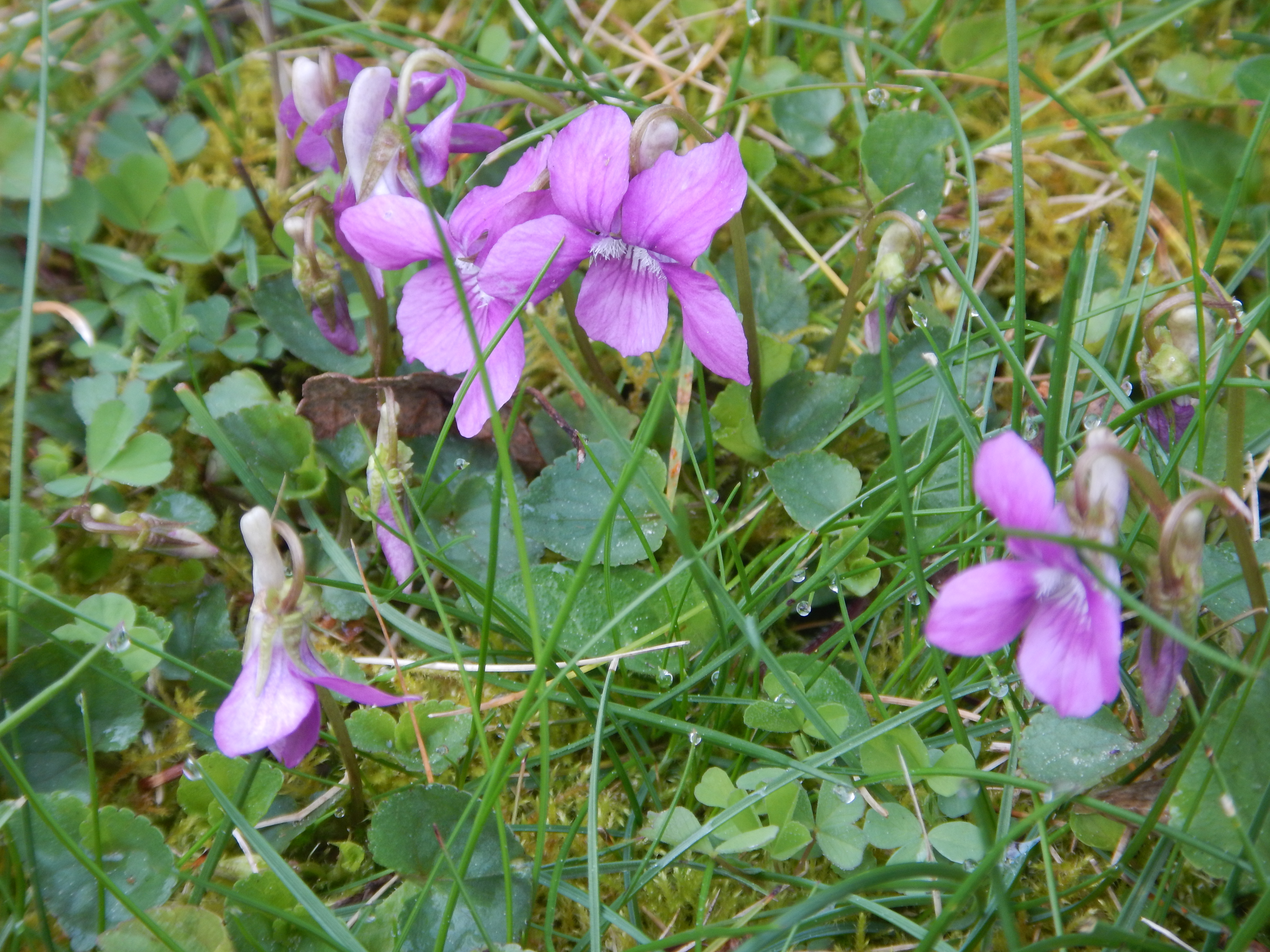
In digging a planting hole for a new treasure, I found a splendid example of the wild violet root system. How deep do you think they grow?

root system of wild violets in lawn, early blue violet, s sand violet, western dog violet, hooked spur violet, viola audunca, alaska violet, aleutian violet, viola lnagsdorfii, garden Victoria, Vancouver Island, BC, Pacific Northwest
photo by SVSeekins

Deep.
And Strong.

The primary root went at least 6 inches into the clay before sending out its feeder roots.

Who knows how much further those fine roots reach down to get moisture in a dry summer!

wild violets in lawn, early blue violet, sand violet, western dog violet, hooked spur violet, viola audunca, alaska violet, aleutian violet, viola lnagsdorfii, garden Victoria, Vancouver Island, BC, Pacific Northwest
photo by SVSeekins

Can you imagine the mess I’d make trying to dig the wild violets out of our lawn?  (I don’t bother coz I enjoy seeing them there … but…) Undoubtedly, some root would be left in the ground & in no time, the bees would be feeding on the violet’s sweet nectar again.

Some plants are so resilient.
🙂
Let’s hope my new treasure does half as well as the wild violets.

-30-

Other Plants That Might Be Considered Weeds:

Canada’s Dogwood Tree

It’s a tale of 2 trees…

Dogwood Eddie's White Wonder tree in bloom, garden Victoria, Vancouver Island, BC Pacific Northwest
photo by SVSeekins

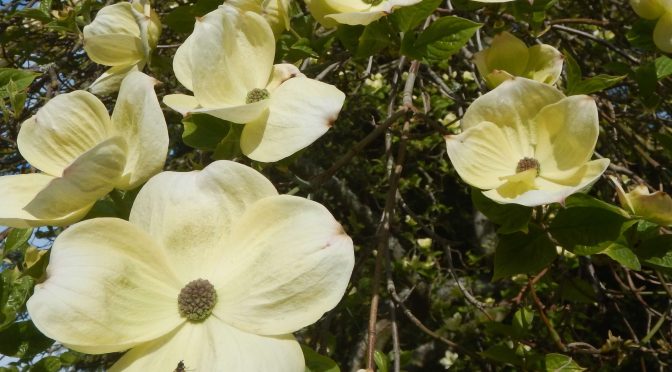
On the very southern coastal region of BC is our native Pacific Dogwood (Cornus nuttallii).  So admired that it’s honoured as our provincial flower.

Across the continent, Eastern Flowering Dogwood (Cornus florida) is native to the southernmost tip of Ontario.

Dogwood Eddie's White Wonder tree in bloom, Cornus controversa 'Eddie's White Wonder' Cornus nuttallii 'Eddies White Wonder', garden Victoria, Vancouver Island, BC Pacific Northwest
photo by SVSeekins

Both species often suffer from anthracnose fungus that disfigures leaves & causes twig & branch dieback.  Ontario’s native dogwood is considered ‘at risk.’

The answer? A genuinely Canadian fix: combine them.

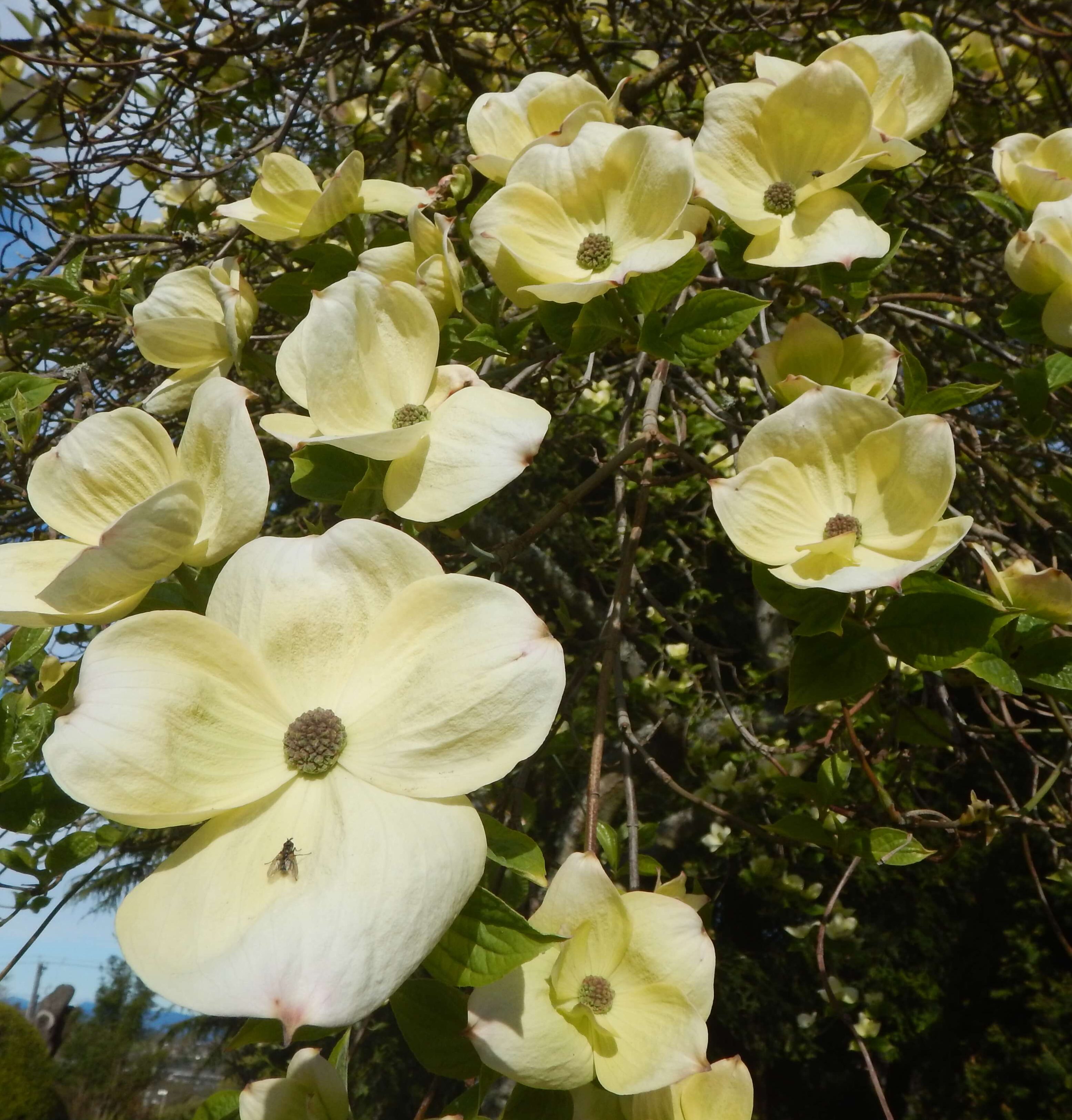
Enter H.M. Eddie (Henry Matheson Eddie).  A nurseryman in BC’s Fraser Valley who got a kick out of creating new varieties of any number of plants.  His 1945 success, ‘Eddie’s White Wonder,’ is the combo of the Pacific & the Eastern dogwoods.

Dogwood Eddie's White Wonder tree in bloom, garden Victoria, Vancouver Island, BC Pacific Northwest
photo by SVSeekins

Eddie’s dogwood is pretty much disease-free!  Beyond that,

  • pollinators love the spring flowers.
  • Birds gorge on the berry clusters.
  • Deer leave the tree alone (except the occasional buck needing to scratch his antlers – so trunk protection is needed.)
  • And fall leaf colour is another spectacle.
    Dogwood Eddie's White Wonder tree in bloom, Cornus controversa 'Eddie's White Wonder' Cornus nuttallii 'Eddies White Wonder', garden Victoria, Vancouver Island, BC Pacific Northwest
    photo by SVSeekins

It’s been such a triumphant landscape success that Eddie’s White Wonder was honoured as Vancouver’s Centennial tree...
and as one of my favourite trees to find blooming during our morning walks each April 🙂

-30-

Enter your email address to subscribe to this blog and receive notifications of new posts by email.