Camellia is one of my favourite broadleaf evergreens. It blooms early, then works hard as background support the other 3 seasons. Several birds make themselves at home in the camellia in our courtyard – – AND the shrub is deer resistant! That’s my kind of plant. 🙂
photo by SVSeekins
A few years ago, I spotted a hedge of camellia in downtown Victoria, beside London Drugs. They were almost finished blooming in mid-December! I have no idea how early they’d started… November? October??
Who’d have expected blooms in autumn?
photo by SVSeekins
Not long after that, KC gifted me with a fall-blooming camellia. It starts blooming before Christmas and has even more flowers through January!
Yeah, Baby!
Once I knew it was possible to have blooms so early in the year, I kept an eye out for even more samples around town:
photo by SVSeekins
photo by SVSeekins
It was delightful to find another variety of camellia starting to bloom in mid-February sunshine near the BC Legislature.
photo by SVSeekins
photo by SVSeekins
Just a month later, in March, I notice these camellia blooming in a yard not far from the YM-YWCA downtown.
photo by SVSeekins
photo by SVSeekins
A block or so away from our place is a camellia that flowers through April.
photo by SVSeekins
photo by SVSeekins
Then there is the camellia in our courtyard typically begins blooming in April & is in full blossom in May.
Autumn… winter… spring…
Who knew there are so many cultivars with differing blooming schedules?
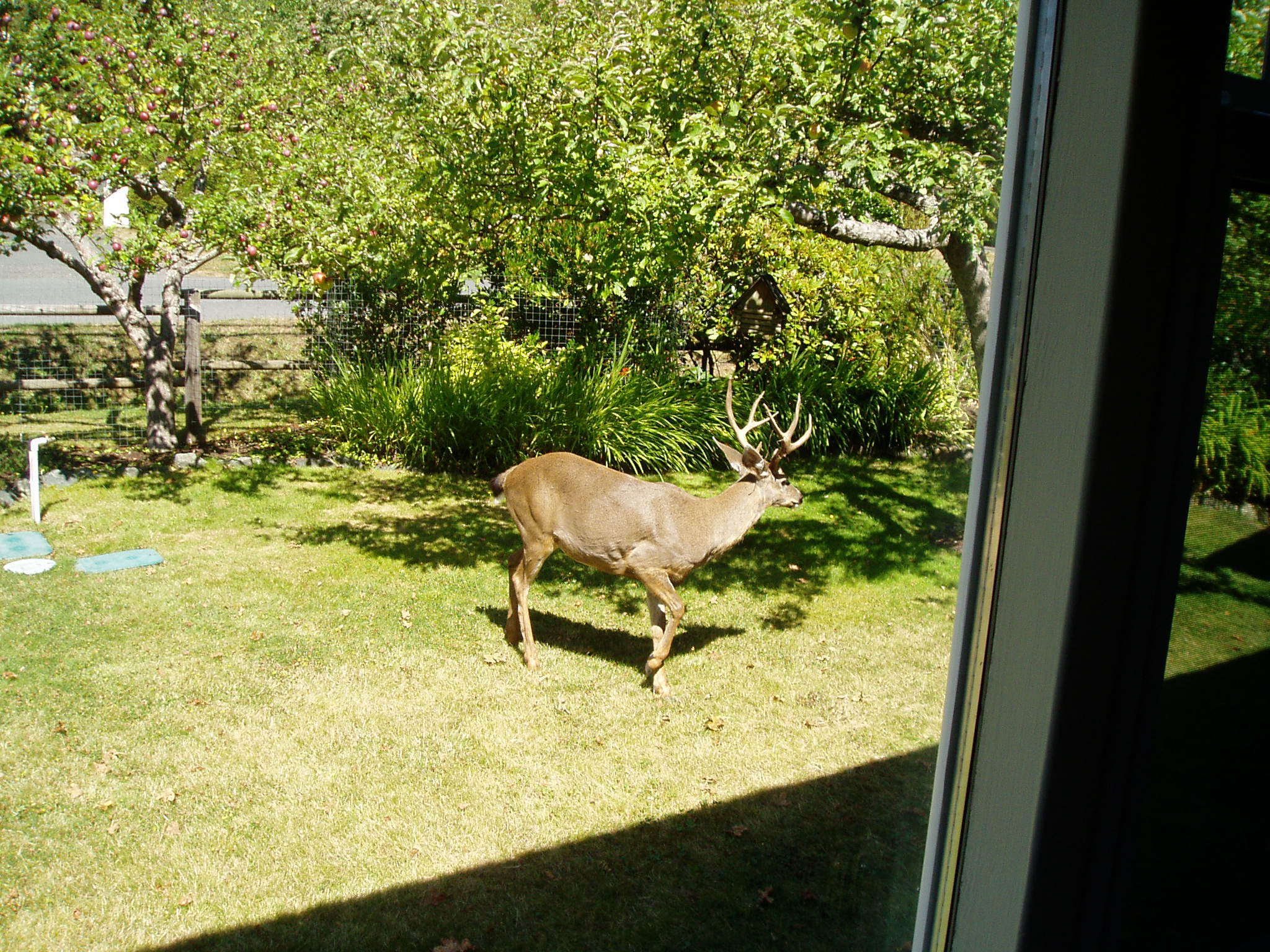
Now there’s Proof the deer really do hang out in our garden.
Photographic proof!!
AND it turns out he’s a 3 Point Buck! Isn’t he a beauty?
This moment holds me still.. until I gather my wits & move carefully away from the window to get my camera. I’ve been trying to get a decent shot of this fellow for over a month now but all the photos have turned out blurry….
photo by SVSeekins
Slowly moving back to the dining room window, I pretend to be calm & oblivious of the animal just a few yards away. I don’t want to spook him.
He’s so close!
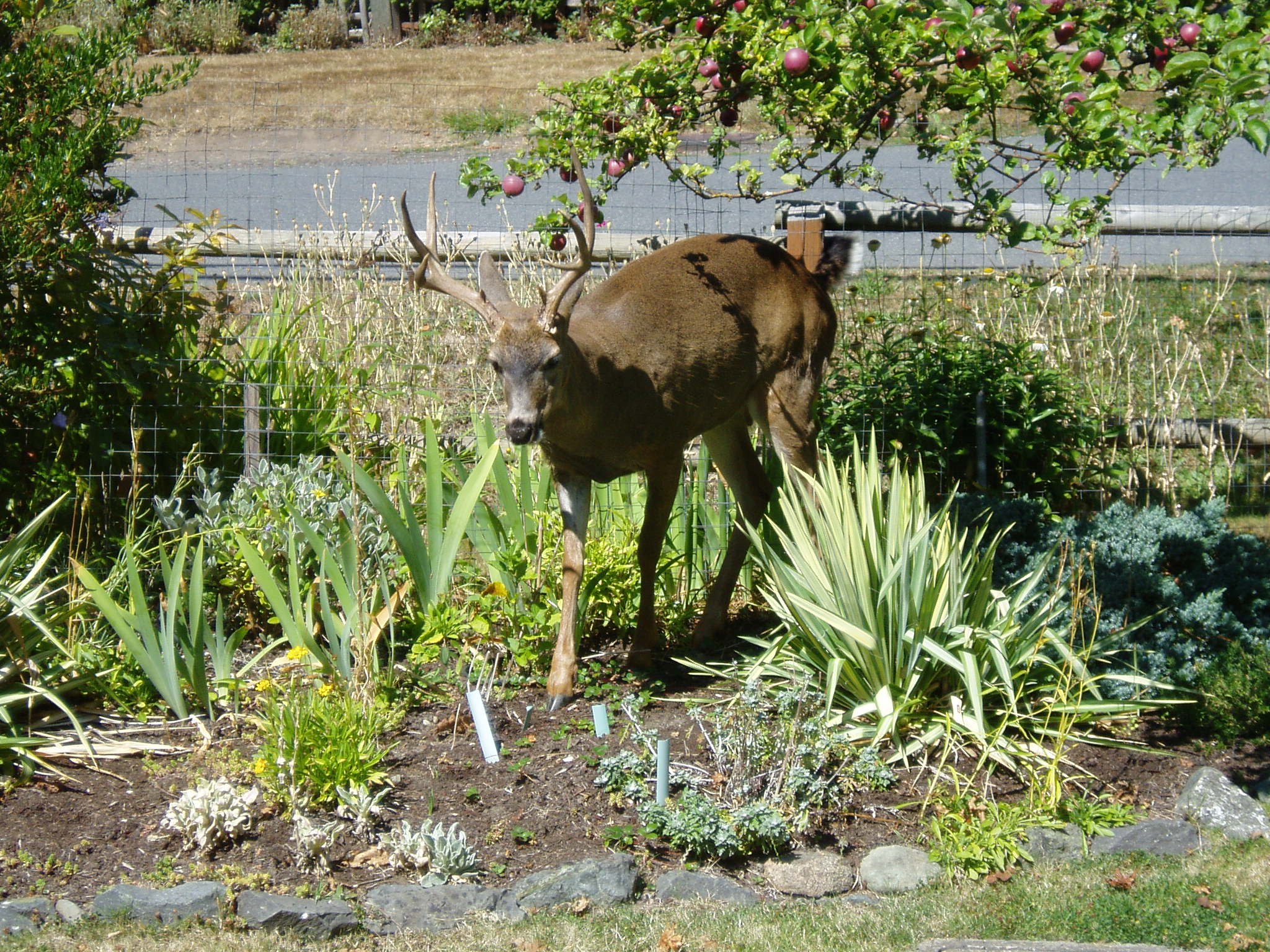
Surprisingly, growing up in the-back-of-beyond certainly never presented an experience of a deer so near – – unless it was already dead & being prepared for the oven. But that’s just not the same.
photo by SVSeekins
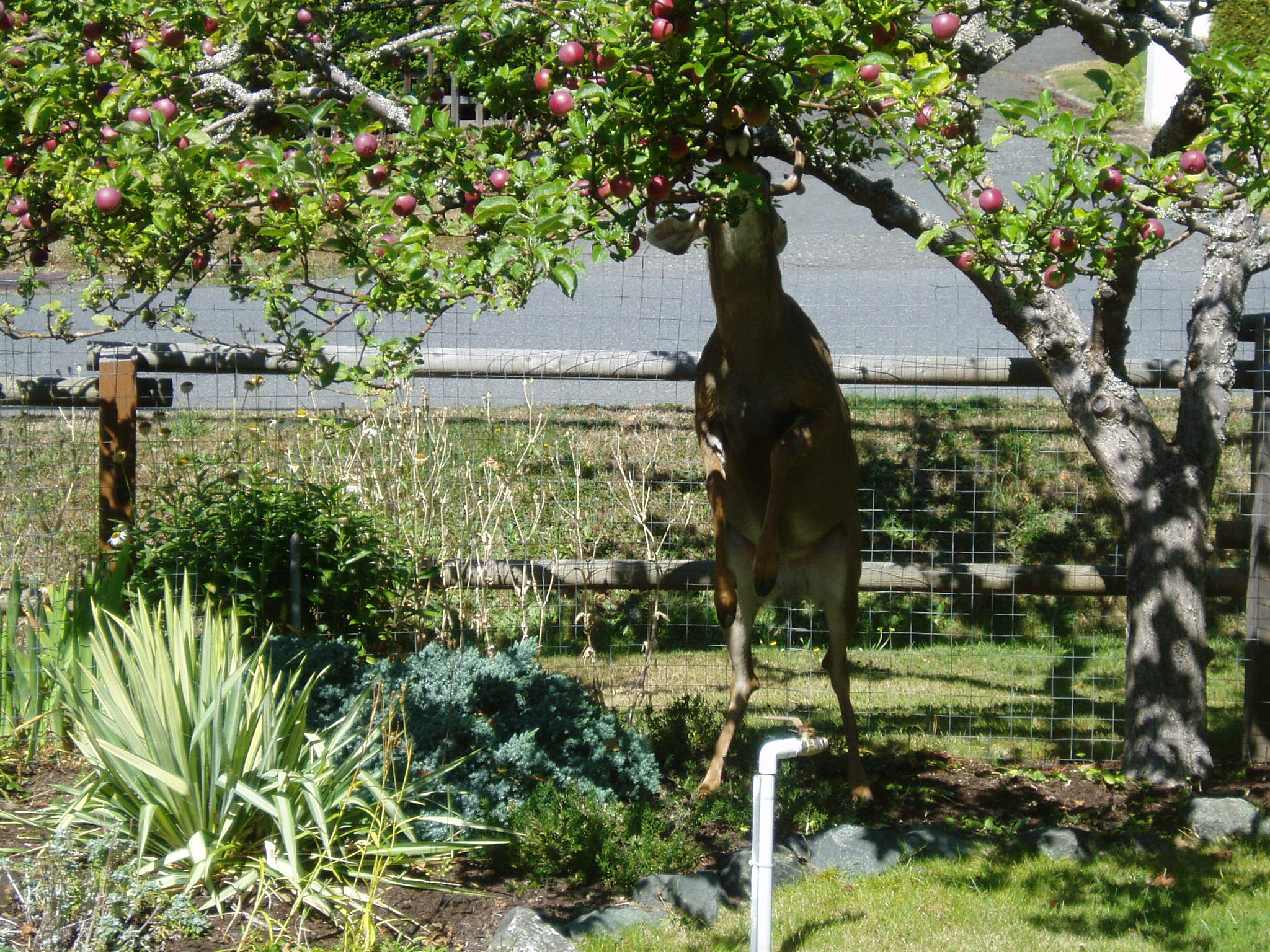
I’m a little in awe. And quite glad to have the window between me & those antlers. (There’s no fear when it comes to the doe & fawn. I ‘shoo’ them out of the yard quite regularly.)
As I watch, it becomes clear he’s not just looking for a little shade. He has a taste for apples.
Is nothing safe?
photo by SVSeekins
Well, there are plenty of apples this year, so sharing those is not really an issue. I guess that if there is anything in the garden that I really want to be left alone, it’ll need to be caged in or sprayed with some of that stinky stuff.
But then, I dislike the smell of that stinky stuff and don’t like the idea of fencing the whole yard. (& I do enjoy seeing the deer)… So, that leaves the challenge of finding lovely plants that are deer proof… or at least some the deer don’t tend to munch on… that often.
I’m feeling kind of discouraged right now, in the heat of summer, because this year the buck seems to have a taste for the Rudbeckia, the Coreopsis, & Chinese lantern. (Those were left alone last year) But I have to keep in mind we’ve had better success with other plants.
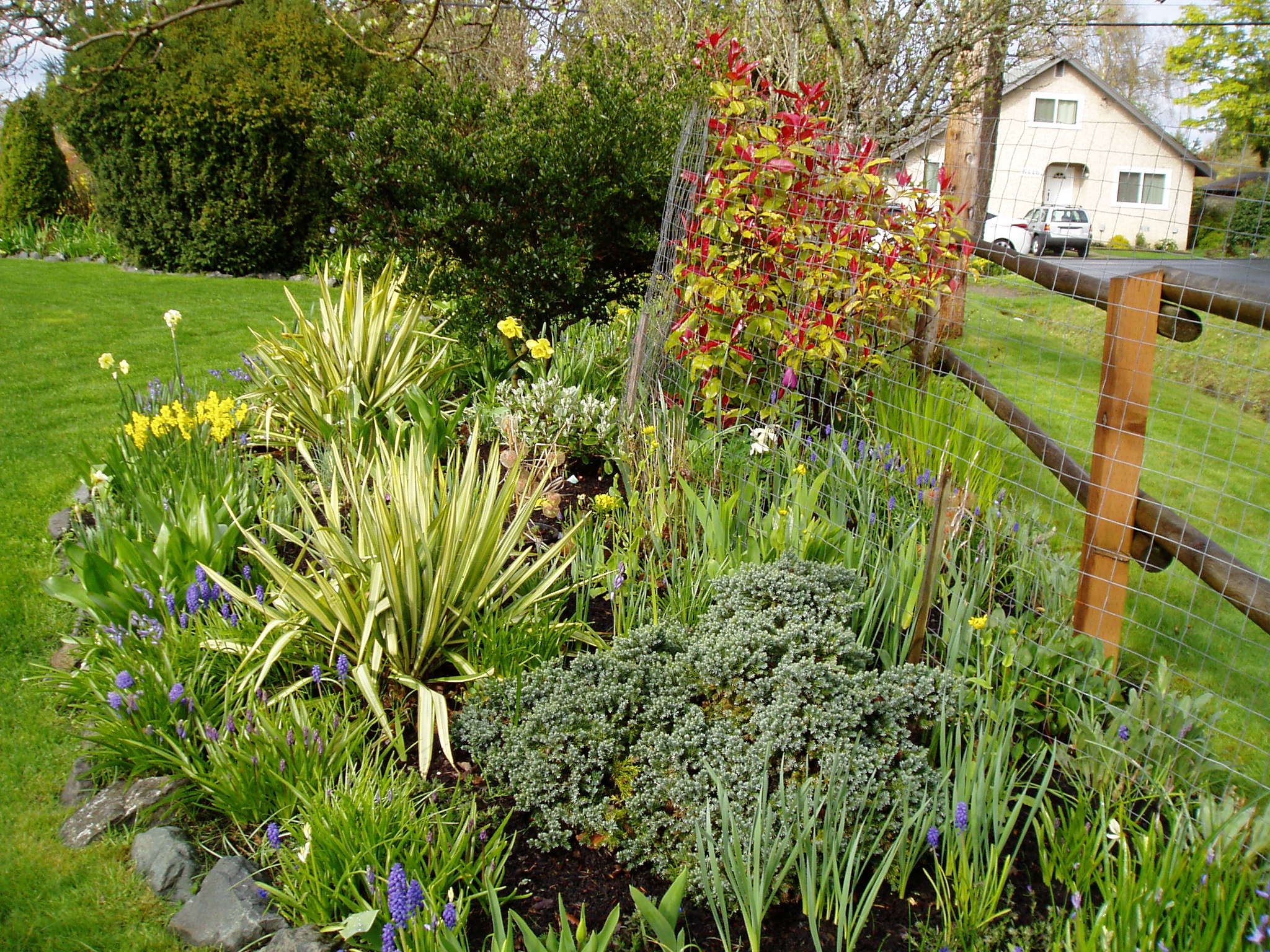
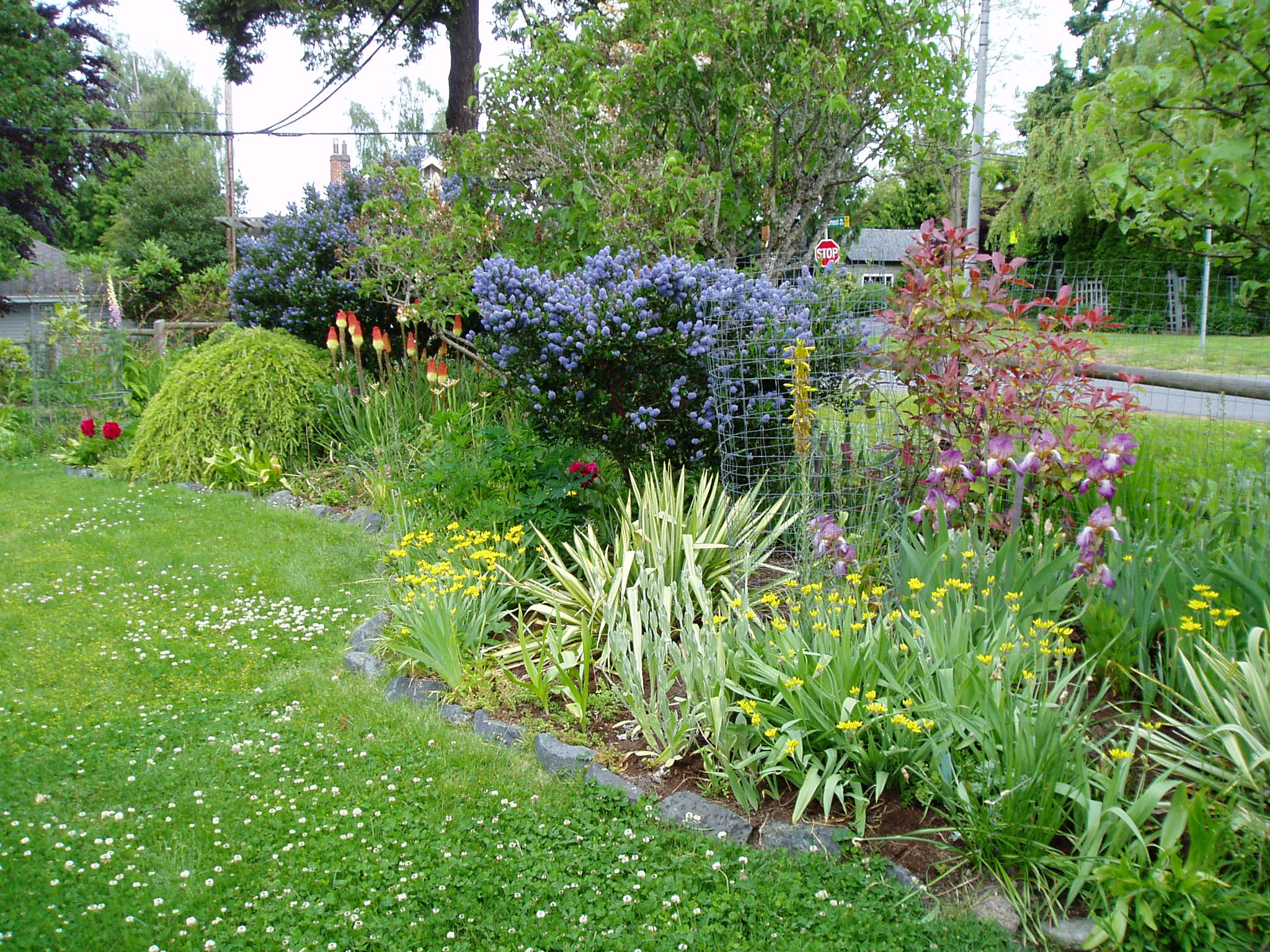
At different times of the year, this patch of the garden can look pretty good. Many early spring bulbs survive just fine:
photo by SVSeekins
daffodil & Narcissus (blooming yellow & cream in center & left side of photo)
grape hyacinth – Muscari (blooming blue all along the border edge on left)
No doubt there are other ‘deer resistant’ plants in our garden that haven’t been mentioned in this list. The more important thing to realize is that ‘resistant’ is as good as it gets. Those critters are unpredictable when hungry. Fawns are curious & just don’t know any better. ‘Deer Proof’ does not exist.
This year C wants a good crop of apples, so we’re trying to do everything right.
photo by SVSeekins
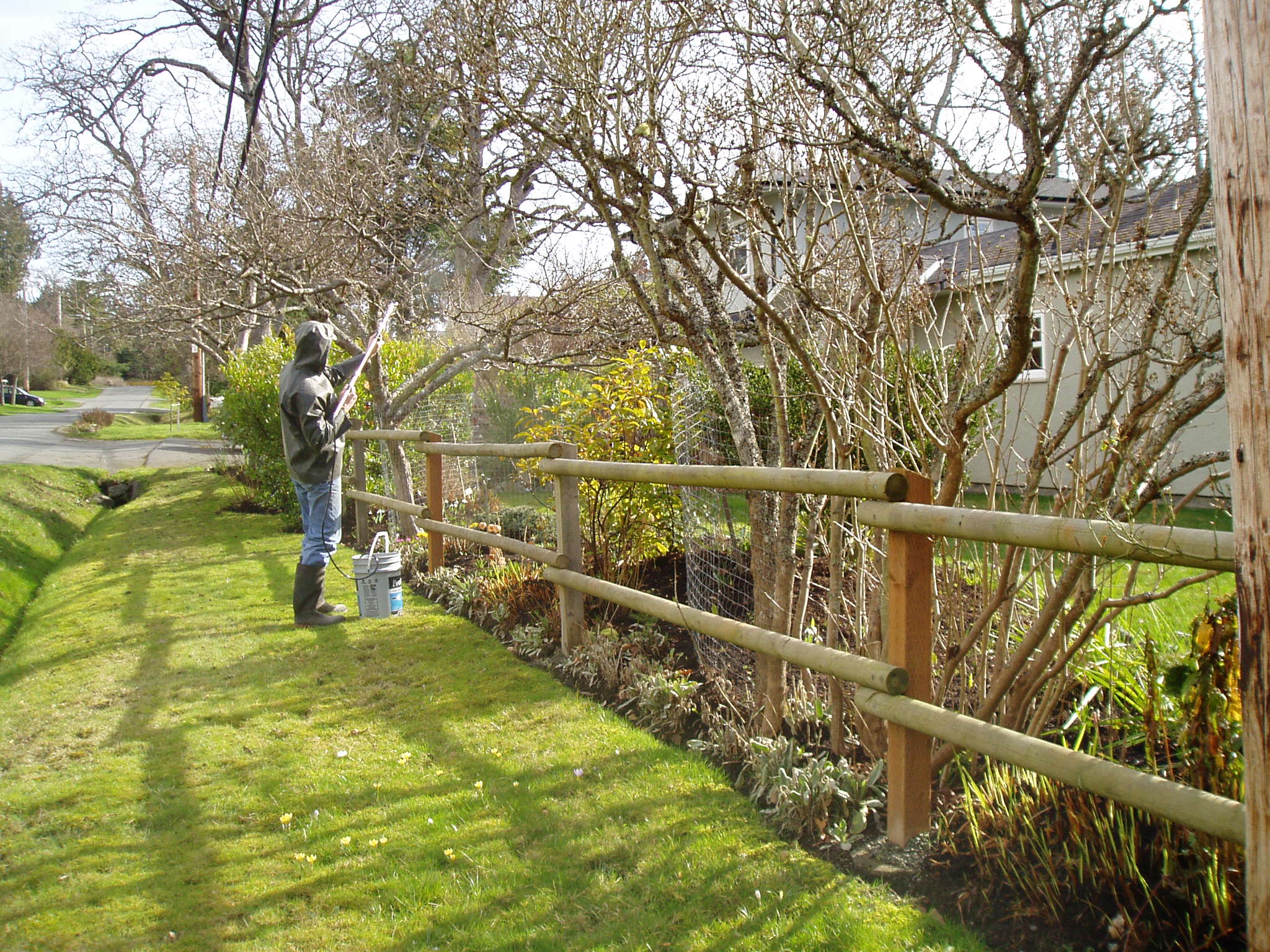
STEP 1. – SPRAY
In February C mists the 2 apple trees with dormant spray in hopes of warding off the regular infestation of those tiny green worms. You know the ones: they float down from the Garry Oak & go crazy on the tasty apple leaves, before they burrow into the little apples.
It’s not easy to find a dry day in our West Coast winter for getting that job done. It’s even tougher to follow with a few dry days that allow the sulphur/oil to do its magic before the rains rinse it off .
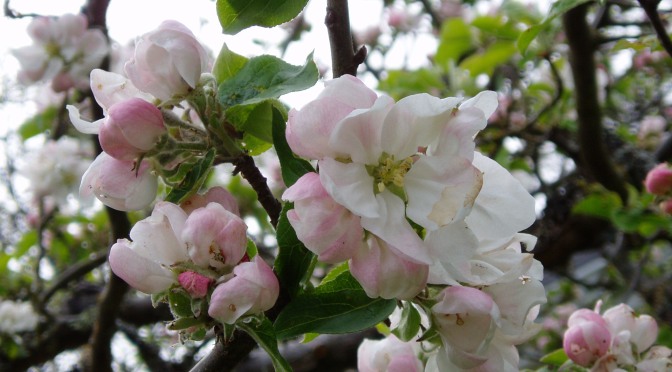
STEP 2 – PARTNERS The next challenge is pollination in spring. If it’s too windy, the blooms blow away. If it’s too rainy, the bees can’t get to the flowers to pollinate them… There’s not much we can do except cross our fingers for sunshine again.
photo by SVSeekins
And there’s also that concern over different apple varieties blooming at different times.
A Gravenstein blossom won’t turn into an apple unless it receives pollen from some other tree. Strange, eh? And Gravensteins are early bloomers – – hardly anything else is blooming then, so we rarely get much of a crop.
This year the weather was odd enough that the Gravenstein bloom was later & actually overlapped with the McIntosh bloom for a couple of days. Woo Hoo!
photo by SVSeekins
STEP 3 – PROTECT
By June the leaves fill in. I was disappointed to see signs they’d been feasted upon.
photo by SVSeekins
Sometimes we find tent caterpillars up in the branches. As a kid I thought fuzzy caterpillars were cute. Once I saw a whole mass of them coming out of their tent I was grossed out.
By this stage the fruit is starting to form, so we’re not willing to do any additional spraying. I prune the tent out of the tree, and seal the escape artists into a ziploc bag. How much energy can a tree put into apple production when its main energy collection system is under such attack? Bummer.
photo by SVSeekins
STEP 4 – THIN
When I first heard of thinning apples in spring, it sounded crazy! I’m always so excited to see all the new apples. Doesn’t it make sense to just let them ALL grow? But, especially after a successful pollination, even nature will cull a heavy load. Now I think about how many apples the tree can support…
and do we want many little apples?…
or a few really big apples?
This year I can already spot a few Gravenstein apples hiding in the foliage. The McIntosh are easier to spot. Before the summer solstice arrived, C cut out about 1/3 of the crop from the McIntosh. There’s so many up there, he figures he might just take 1/2 the crop to give the rest a chance to mature.
photo by SVSeekins
A couple of years ago I had culled 10 gallons of golf-ball-sized apples from the McIntosh. It wasn’t enough. By August we worried the limbs might break from the increasing weight. We used stakes to help support the branches!
STEP 5 – ENJOY
Now that summer is here, the chores get simpler:
Wait… and water.
If the summer continues with the lovely heat & sunshine of last weekend, I’m planning to put a lounge chair under the tree & enjoy the mist while the sprinklers do the work. 🙂







 Garden Variety Life