Category Archives: months 07-09: summer

July thru September

The Art of Arrangement

For me it’s near impossible to clip a healthy bloom from the garden.  A bouquet is a lovely display, but I’ve never had the knack for arranging one nicely.  My lack of confidence means sacrificing the beauty in the garden just doesn’t happen.
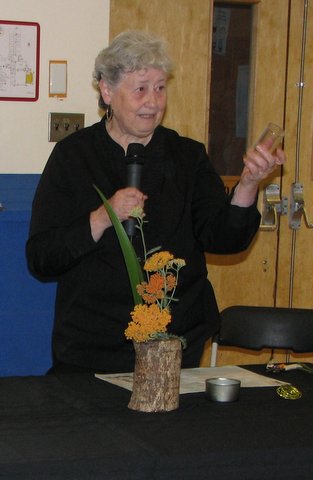
hollowed log with glass vase inside
photo by Joyce Sturney

Friends KC & JJ have the knack & the know how.  I’ve admired their prowess for years, so when I was organizing a speaker presentation for the View Royal Garden Club, it’s not a surprise who got the call.

Their challenge was creating ‘a few’ real life arrangements with little more than what’s available in our own homes & gardens.

My garden in early summer looks lush, but pretty much all the colourful spring show is done….  meaning dead.  By this time of year I’m more interested in camping than watering the yard.  I’m sure there’re more hardy perennials that would stand up to my non-nurturing… I’m sure I could source them out… if I made the effort.  But I don’t, so there.

mossy branch curls around triangle
photo by Joyce Sturney
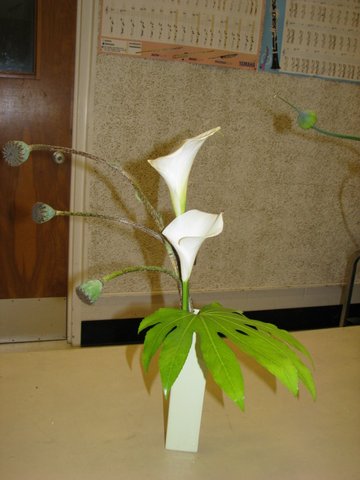
Calla Lilies with Funky Poppy
photo by Joyce Sturney

Even still, I feel kinda guilty having diddly to offer for the project.

The dynamic duo took to their tasks with gusto none the less.  Both master gardeners have long since downsized from their family sized gardens (acerages), but they gleaned what they could around their current modest yards.  Then they went further afield.

We sweet talked neighbours, pilfered boulevards, and waded rural ditches in search of art & inspiration.

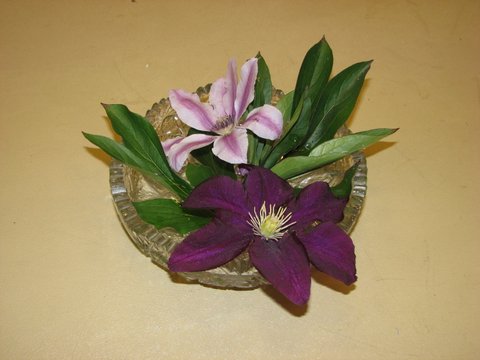
candy dish display
photo by Joyce Sturney
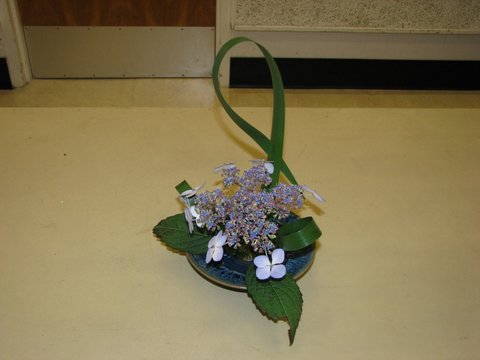
tall / narrow triangle
photo by Joyce Sturney
a leaf twits back & thru itself
photo by Joyce Sturney
classic triangle design
photo by Joyce Sturney

The adventure was for a good cause: my education & entertainment.  (AND for the simple sake of the adventure itself!)

I’m happy to report a few of the tips I picked up:

  • Hiding a little vase inside a hollowed out piece of firewood provides an added element to a rustic arrangement.
  • Seed pods, mossy twigs, & other non-blossoms add something extra to a bouquet.
  • A candy dish works perfectly as a base for a low centrepiece of fragrant clematis and a peony leaf.  How easy is that !?!
  • Pulling inspiration from the colour palette of the container helps in grouping otherwise dissimilar blooms.
  • It is fun to play with different textures in flowers and foliage.
  • Oasis is really only good once as a medium for holding a fresh display.  After that it gets too crumbly to support stems firmly – and it loses its moisture holding capacity.
  • Those heavy little metal bases-with-spikes-sticking-up have a funky name.  They’re called “frogs”.  🙂   They’re far better for holding flowers over multiple occasions; PLUS they help weigh down a top-heavy arrangement; PLUS they can be sourced for cheap at thrift stores.  Win Win Win !!!
  • The safest shape to start with is a triangle & it doesn’t matter if it’s equilateral or obtuse.
  • Arrangers are notorious for manipulating nature.  Securing a gladioli stem to a stick overnight will convince the specimen to straighten for the big show.  Carefully stuffing cotton balls behind the blooms for that same time period will bend them just enough they face one direction.  Pretty tricky, eh?
  • Stick to odd numbers in groupings:  3’s, 5’s, 7’s – – for some reason even groups can be boring.
  • Even when the iris bloom is done, the smooth, flat spike of the leaf works as a background for other blossoms in an arrangement.

Many of the handy tips sound very similar to those for arranging a garden bed.  One thing I’ve learned from that experience is if it doesn’t work the first time, switch it up a bit.  It’s just a learning thing.

Do you have the nerve for giving it a go?

-30-
© SVSeekins and Garden Variety Life, 2013
The Promise of Apples in 5 Steps

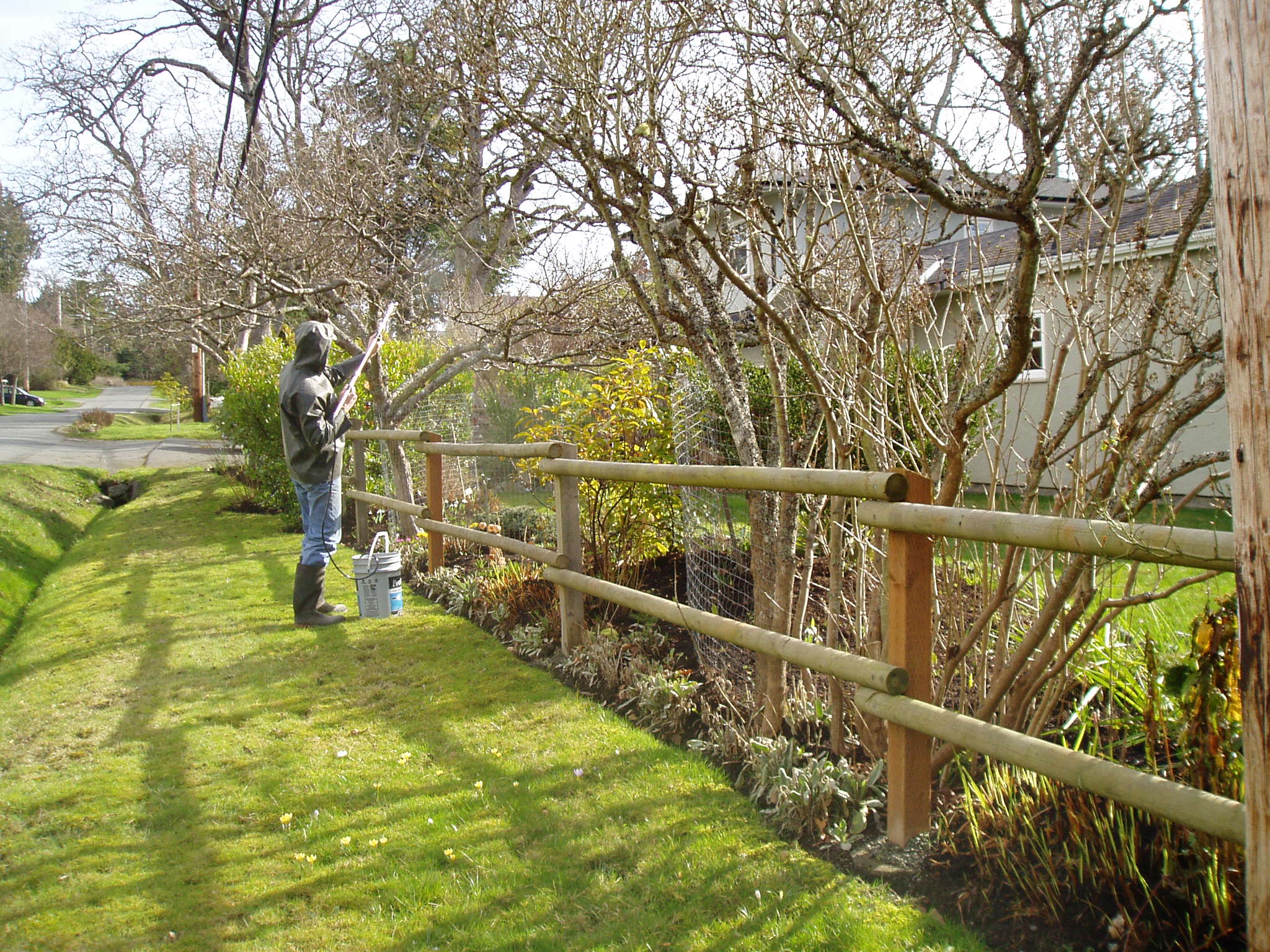
This year C wants a good crop of apples, so we’re trying to do everything right.

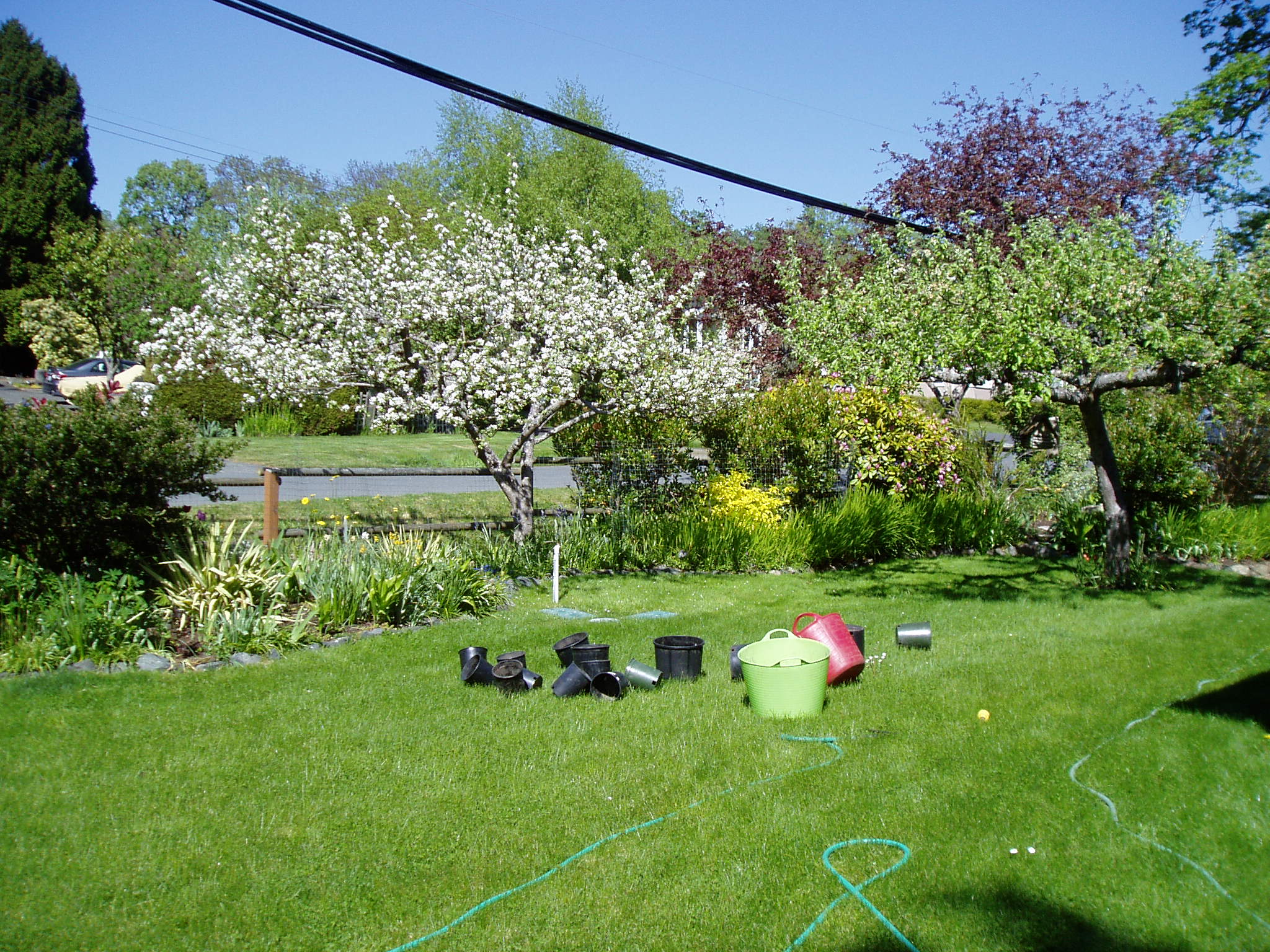
spraying the Sparten apple tree in February
photo by SVSeekins

STEP 1.  – SPRAY
In February C mists the 2 apple trees with dormant spray in hopes of warding off the regular infestation of those tiny green worms.  You know the ones: they float down from the Garry Oak & go crazy on the tasty apple leaves, before they burrow into the little apples.

It’s not easy to find a dry day in our West Coast winter for getting that job done.  It’s even tougher to follow with a few dry days that allow the sulphur/oil to do its magic before the rains rinse it off .

STEP 2  – PARTNERS
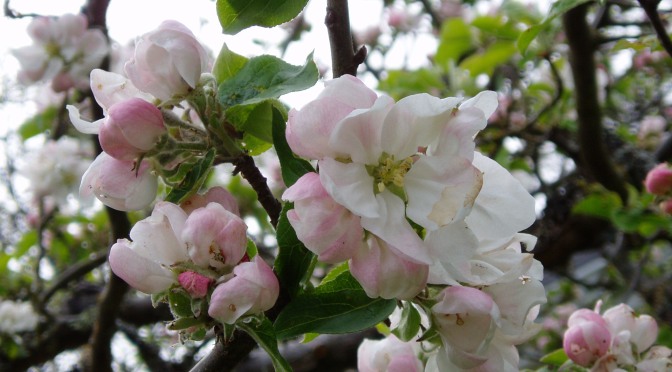
The next challenge is pollination in spring.   If it’s too windy, the blooms blow away.  If it’s too rainy, the bees can’t get to the flowers to pollinate them…  There’s not much we can do except cross our fingers for sunshine again.

Sparten & Gravenstein bloom overlapping is rare
photo by SVSeekins

And there’s also that concern over different apple varieties blooming at different times.

A Gravenstein blossom won’t turn into an apple unless it receives pollen from some other tree.  Strange, eh?  And Gravensteins are early bloomers – – hardly anything else is blooming then, so we rarely get much of a crop.

This year the weather was odd enough that the Gravenstein bloom was later & actually overlapped with the McIntosh bloom for a couple of days.  Woo Hoo!

after the Gravenstein leaf feast
photo by SVSeekins

STEP 3  – PROTECT
By June the leaves fill in.  I was disappointed to see signs they’d been feasted upon.

tent caterpillars in a Russian Laurel
photo by SVSeekins

Sometimes we find tent caterpillars up in the branches.  As a kid I thought fuzzy caterpillars were cute.  Once I saw a whole mass of them coming out of their tent I was grossed out.

By this stage the fruit is starting to form, so we’re not willing to do any additional spraying.  I prune the tent out of the tree, and seal the escape artists into a ziploc bag.  How much energy can a tree put into apple production when its main energy collection system is under such attack?  Bummer.

gravenstein apple in spring - mcu
photo by SVSeekins

STEP 4 – THIN
When I first heard of thinning apples in spring, it sounded crazy! I’m always so excited to see all the new apples. Doesn’t it make sense to just let them ALL grow?  But, especially after a  successful pollination, even nature will cull a heavy load.  Now I think about how many apples the tree can support…
and do we want many little apples?…
or a few really big apples?

This year I can already spot a few Gravenstein apples hiding in the foliage.  The McIntosh are easier to spot.  Before the summer solstice arrived, C cut out about 1/3 of the crop from the McIntosh.  There’s so many up there, he figures he might just take 1/2 the crop to give the rest a chance to mature.

A full crop
photo by SVSeekins

A couple of years ago I had culled 10 gallons of golf-ball-sized apples from the McIntosh.  It wasn’t enough.  By August we worried the limbs might break from the increasing weight.  We used stakes to help support the branches!

STEP 5 – ENJOY
Now that summer is here, the chores get simpler:
Wait… and water.

If the summer continues with the lovely heat & sunshine of last weekend, I’m planning to put a lounge chair under the tree & enjoy the mist while the sprinklers do the work.  🙂

-30-
© SVSeekins and Garden Variety Life, 2013
Let there be Day Lilies

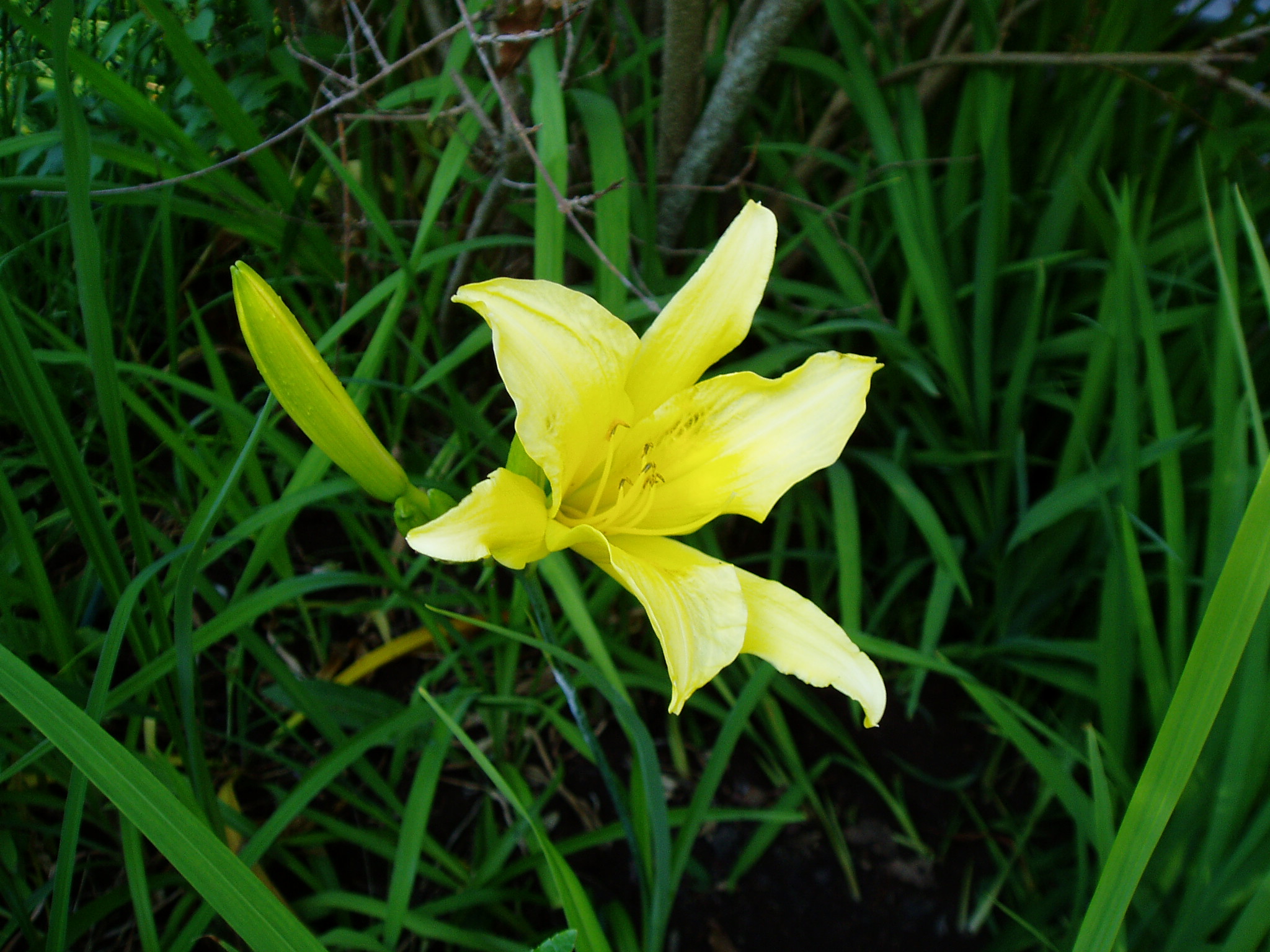
spring blooming Daylily
photo by SVSeekins

Day Lilies are easy to grow & are dependable spring & summer bloomers.  They’re also edible.  I’ve heard that the chefs at Sooke Harbour House like to stuff the blossoms & serve them at dinner.

Well, that might be interesting & all, but I still have a hard time even picking the flowers in our garden.  They’re just so decorative as they are!

Most often the choice is not mine.

sharing our garden with deer
photo by SVSeekins

For several years I’ve watched the lilies develop promise.  The bud just starts to turn colour, & I think, “Tomorrow it will open into a beautiful flower.”

It turns out that the deer think, “‘Today it’s at its peak tastiness.”

the Daylily bud has been harvested
photo by SVSeekins

Midnight snack.

This year it’s different.  This might not look spectacular as a botanical garden display bed of day lily, but in a yard that’s shared  with deer, I’m pretty excited to see so many blossoms at one time.

spring blooming Daylilies ws
photo by SVSeekins
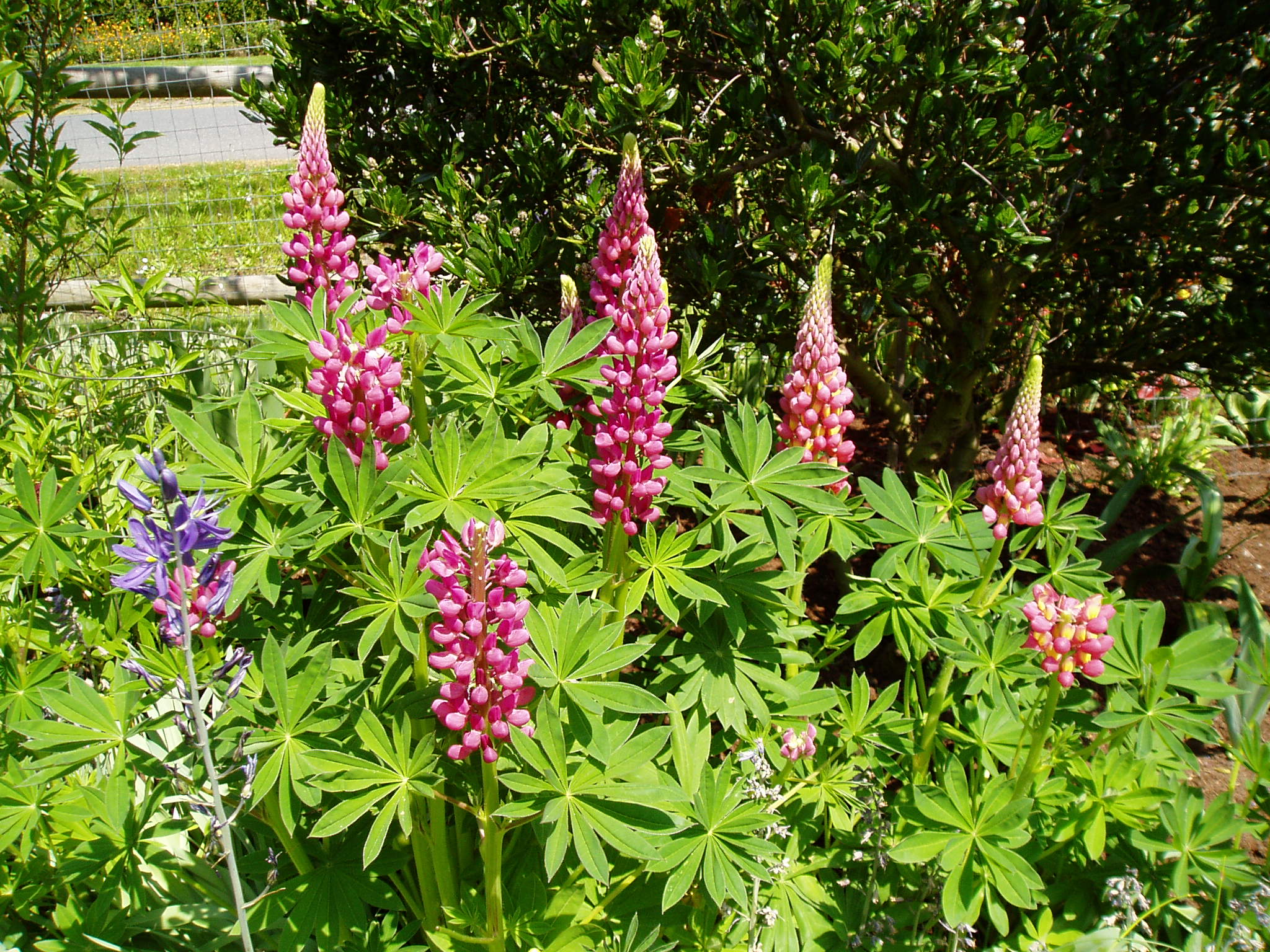
lupin blooms
photo by SVSeekins

So what’s the deal?  I’m not really sure.  I haven’t sprayed any stinky deterrent around the place.  Perhaps the lowly day lily is just out of fashion for deer this year?

Yeah baby  🙂

One thing I have noticed that’s also unusual, is that the lupins have been nibbled instead…    OK… 

the fresh tasty top of the lupin is harvested
photo by SVSeekins

Lupins are easy to grow & are dependable spring bloomers.  Fair enough.  This year I’ll enjoy day lily blooms & consider it a fair trade-off.

-30-
© SVSeekins and Garden Variety Life, 2013