We were cycling along, minding our own business, when I just had to laugh out loud.
It’s a Hedge Monster consuming a street sign. Caught in the act! 🙂
It’s a funky neighbourhood place marker. Do little kids use it to help them find their way home from school? How big was it when it was first planted? How long has it been this big? So many questions…
photo by SVSeekins
The foliage density impresses me… as does the tidiness of clipping inside the shrub itself — around the street sign.
The stains on the sidewalk & driveway tell me the hedge sometimes overwhelms its allowed space.
It could easily impede
driveway access.
mower access on the neighbour’s lawn.
pedestrian access along the sidewalk.
How often does the gardener sheer this shrub to keep it tidy?
I giggle to myself & cycle away, on the lookout for more fun.
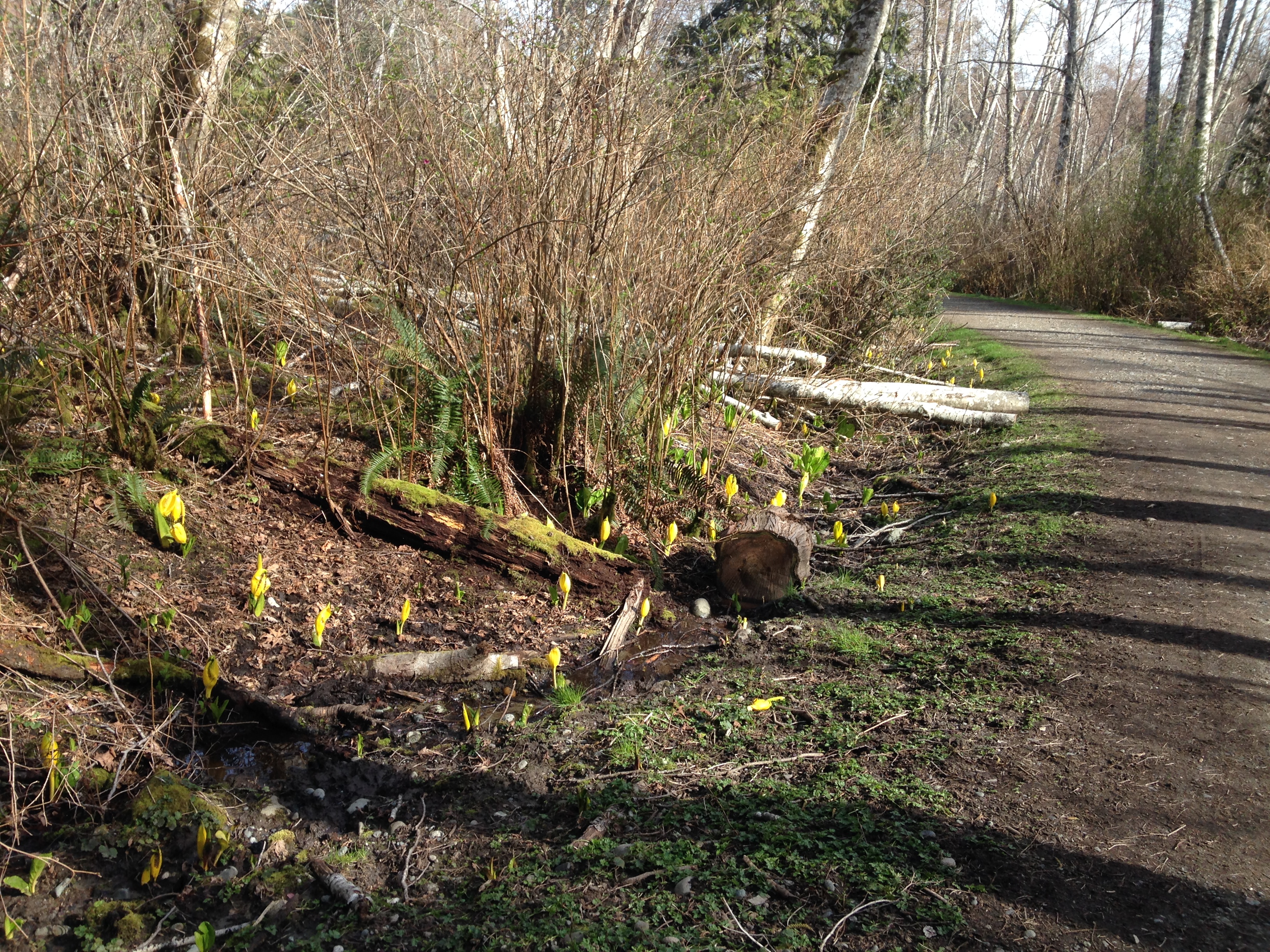
The first glimpse was a flash of yellow along the trail’s edge. Mid-March can be so grey — but this was bright & happy. 🙂
photo by SVSeekins
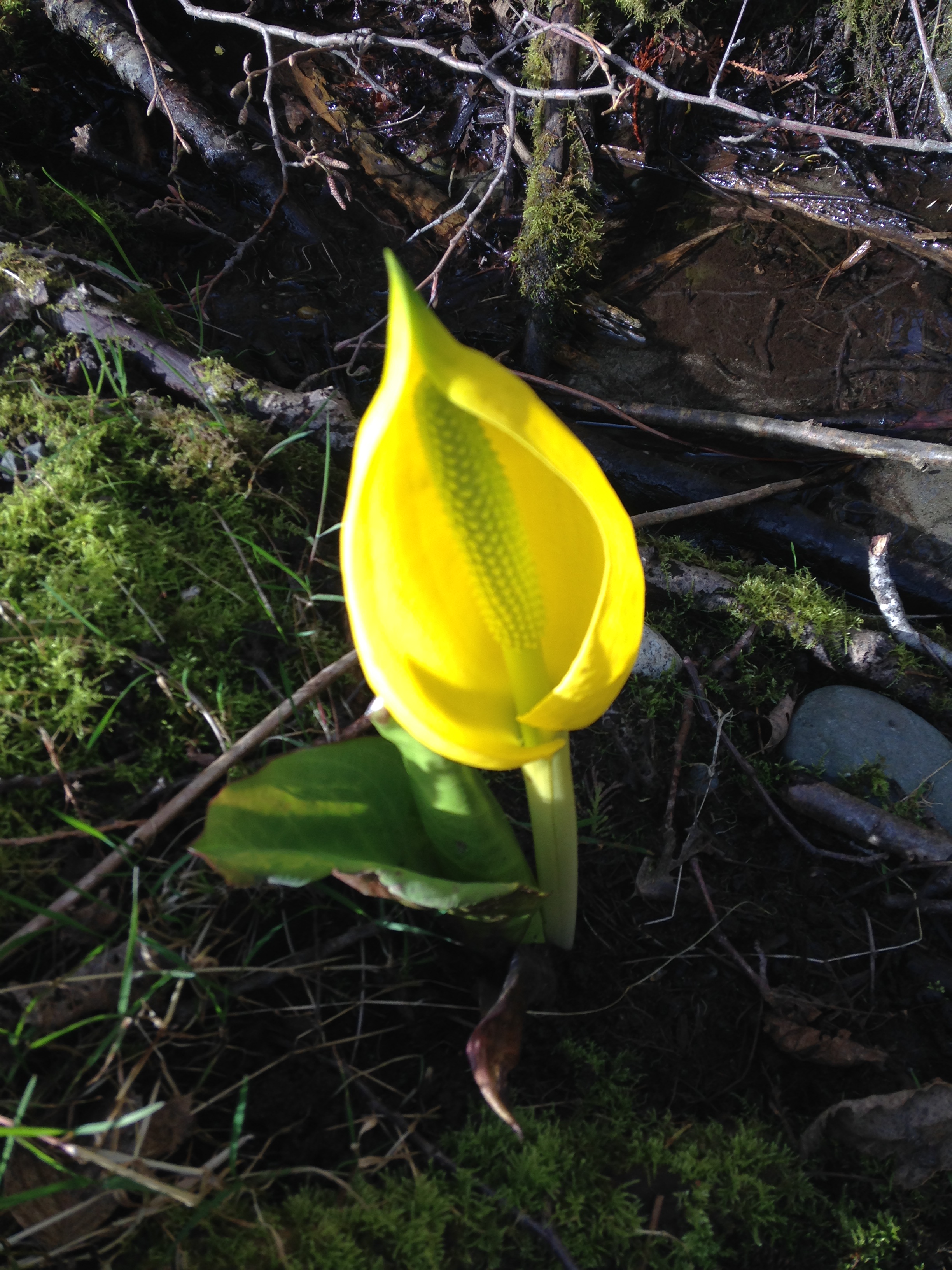
Anything blooming at this time of year makes me smile. Western Skunk Cabbage is no exception. With a name like that, perhaps you’ll think yourself fortunate to see it in a photo rather than in person… but I’ve never noticed a foul odour around this plant. Some say the smell comes when leaves are bruised. Others contend it’s the flowers trying to attract pollinating flies & beetles.
photo by SVSeekins
Lysichiton americanus is also called the Swamp Lantern. To my mind, this name is more suited. The flower spike is like the candle flame & it’s cupped by a protective spathe that glows & reflects the light– just like a lantern. A more fitting name, right? Even still, I often revert to the first name I learned & struggle to remember this one. Perhaps I just need to concentrate more.
In early spring, the flowers emerge in wet areas all along the Pacific Northwest. This spring is no exception. The low laying wetlands bordering Esquimalt Lagoon are prime habitat for this west coast native.
photo by SVSeekins
I’ve seen lots of Swamp Lantern before, but just around the corner the patch swells into the largest. The southern trails at Royal Roads University are a prime pick-me up for my March blues.
The leaves follow the bloom, unfurling in a rosette around the flower. At first they’re small, but they grow quickly in the rich, moist soil.
photo by SVSeekins
By May, the plants are large & lush. Here’s a patch just off McKenzie Beach near Tofino.
Through the summer they grow even bigger. At peak, a single leaf can be 2 feet wide & twice as long! Dramatic, eh?
It’s no wonder folks in the UK were impressed when it was introduced as an ornamental in the early 1900’s. It became very popular. It received an Award of Garden Merit from the Royal Horticultural Society.
photo by SVSeekins
The conditions in England are so similar to Vancouver Island it thrived. Within 50 years Lysichiton americanus escaped the British garden & was gradually naturalizing along streams & wetlands. That’s a little too much drama. Now, the RHS advises against its cultivation.
I’m glad to see Swamp Lantern here, where it grows naturally. It warms my heart. I’m relieved it hasn’t been threatened by more competitive introduced species like many of our wildflowers have been. Its a reminder of how delicate an ecosystem can be.
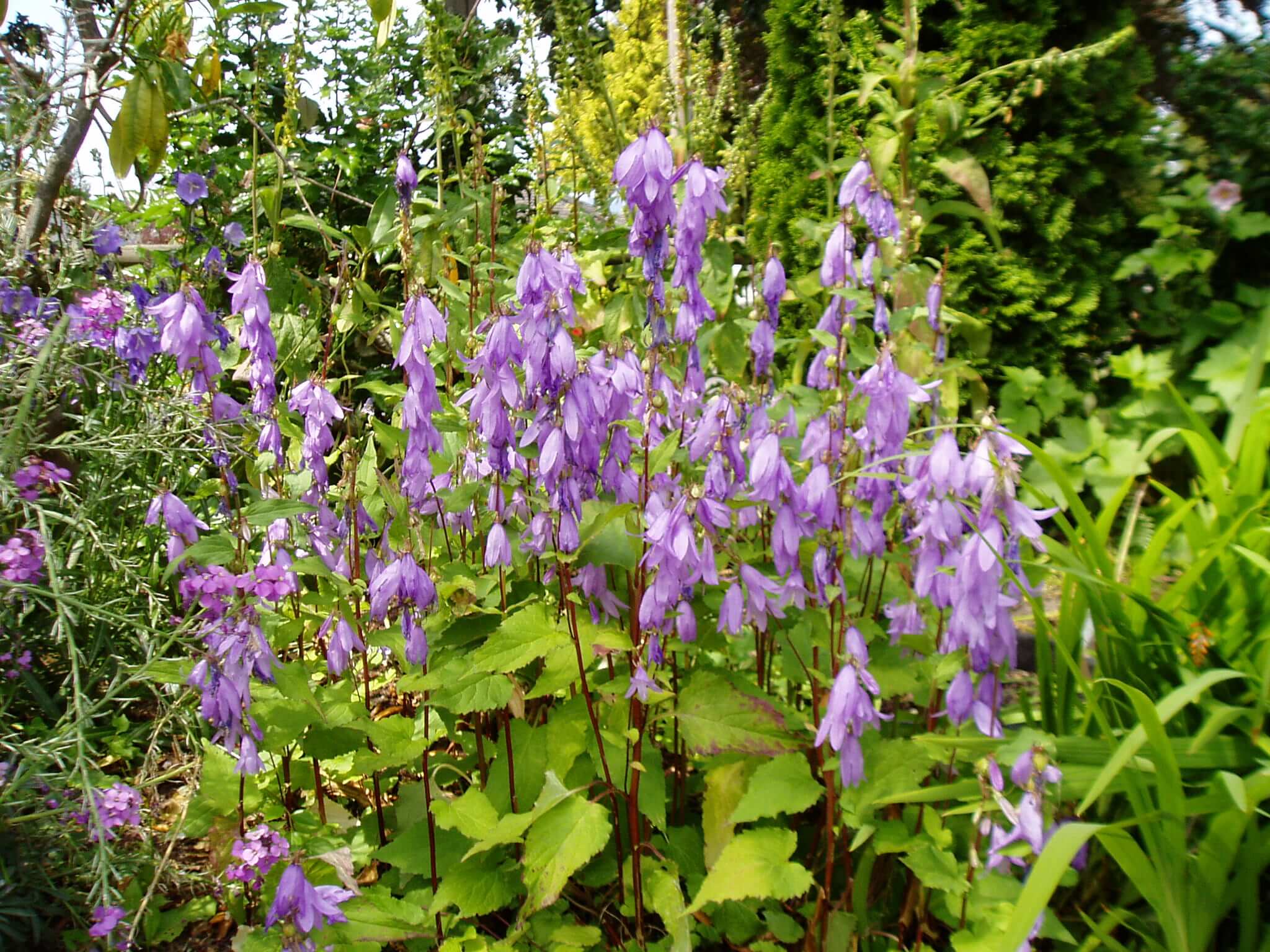
It came into our garden with some ‘free’ soil. I didn’t know its name, for sure. It looked an awful lot like ladybells, Adenophora liliifolia? It was a decorative, bonus plant – score!
Little did I know the work that pretty bellflower would create.
photo by SVSeekins
Deer ignored it for one season… at the most. After that, they ate the buds before flowering. The deers’ pruning might’ve spurred the plant into a frenzy of suckering. When digging out the extras, I realized how this bellflower got its common name– Creeping Bellflower spreads from the mother plant by lateral roots running below the soil surface.
One soggy autumn weekend, I dug out the entire bed. Other keeper perennials were set aside to thoroughly wash their root systems before replanting at the end of the project. I discovered creeping bellflower was even more invasive than I first realized. It also has deeper storage roots, enabling survival through brutal winters & long droughts. Those roots can easily sprout a multitude of new plants, even if the original is removed from the base.
Tenacious.
Sifting through the soil & removing the invading white roots of the C.rapunculoides, was a tough job but worth it. Many years later, I regularly weed out young plants surfacing from roots that I’d missed, but I’m winning the war.
photo by SVSeekins
This summer, I noticed a new patch at the College campus. Can you imagine the tenacity of a plant volunteering in a crack in the pavement? These plants must’ve arrived via seed distribution. Behind some fencing, creeping bellflower is protected from the deer. Fortunately, the grounds staff cut them to the ground in record time.
photo by SVSeekins
So, I guess it’s not even safe to keep this bully restrained in a pot because it’ll spread like mad if it ever goes to seed, too.
I’m pretty lenient when it comes to vigorous plants in our garden.. Wild violets grow in our lawn. Cyclamen hederifolium is still welcome in certain beds. I’ve left some patches of bluebell in well-contained spots (but they’re sheered as soon as the blooms begin to fade). Some other tough-as-nails plants are held in check by simply not watering them through our long, summer drought.
But I’m putting my foot down when it comes to Campanula rapunculoides.
Not in my backyard.
My goal is to grow the native harebell, C. rotundifolia, instead. It’s much better behaved.









 Garden Variety Life