Category Archives: garden seasons

joy in every season

Rake Wrangling

standard rake
photo by SVSeekins

On our farm there wasn’t much call for leaf raking, so I grew up thinking a rake was just a rake. Then I got together with C & his wonderful world of tools.  Who knew that all rakes are not created equal?

gravel screenings add traction on our south mountain path
photo by SVSeekins

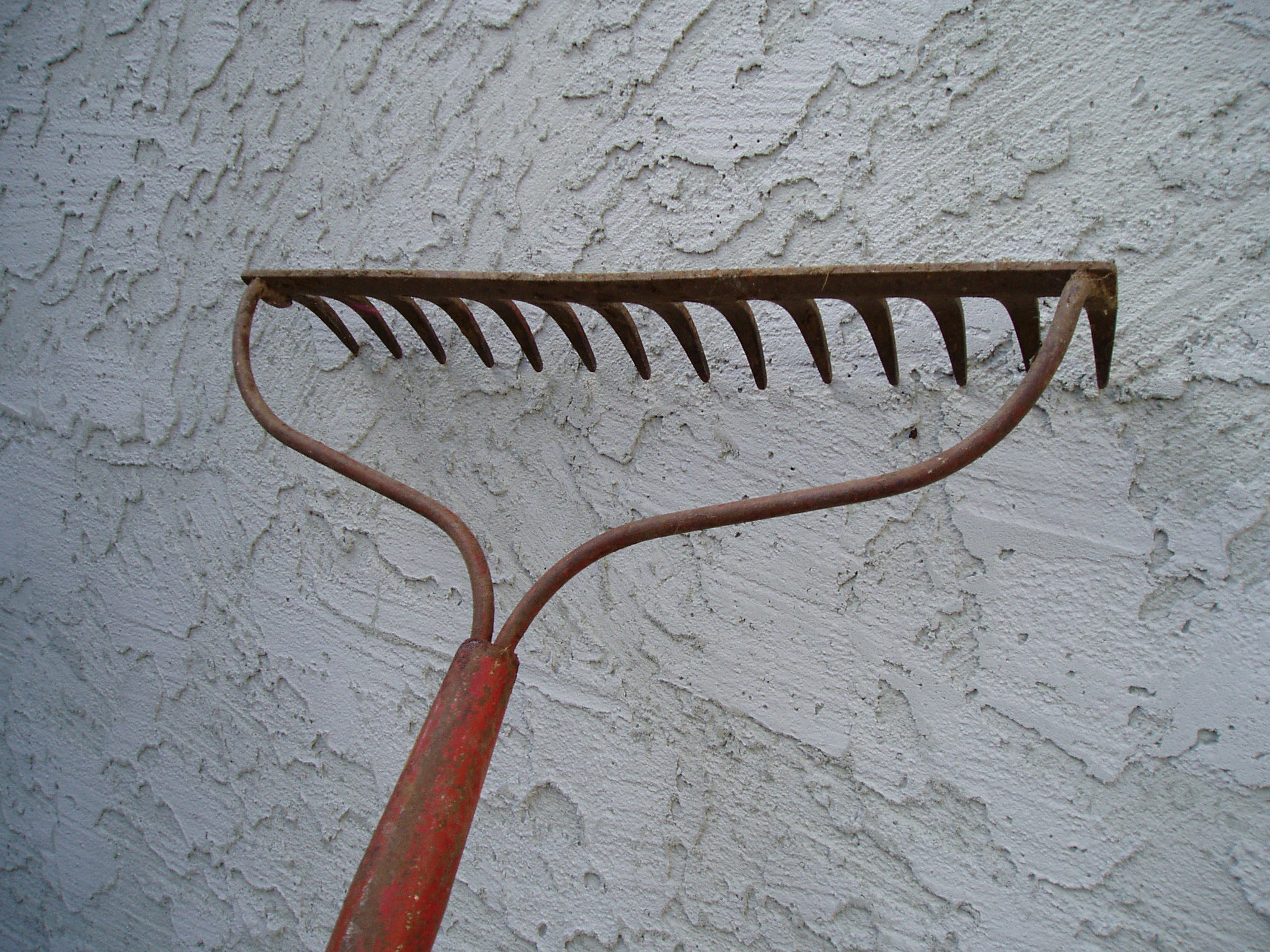
I recognized the classic rake.  That’s the one a comic character steps on & is thwacked in the head by its handle.  We had one of those back home (and yes, I’d stepped on it by mistake).

It turns out this kind of rake is designed for shifting sand & gravel.  I now use it on the pathways that lead up our ‘mountain’.

landscapers rake
photo by SVSeekins

The oddest rake in C’s repertoire is also used for leveling ground but in a different way.  It specializes in more delicately shifting wider swaths of soil.  He used it on the freshly tilled front yard, making sure that the ground sloped away from the house, before he seeded the lawn.

Inevitably the season turns to autumn & as tidy urbanites we turn our attention to removing the leaves that clutter our tidy lawn.

The apple leaf is flat and small.  Once off the tree, the leaves take up very little space.  They fit nicely in the bed of the surrounding shrub border (as mulch).
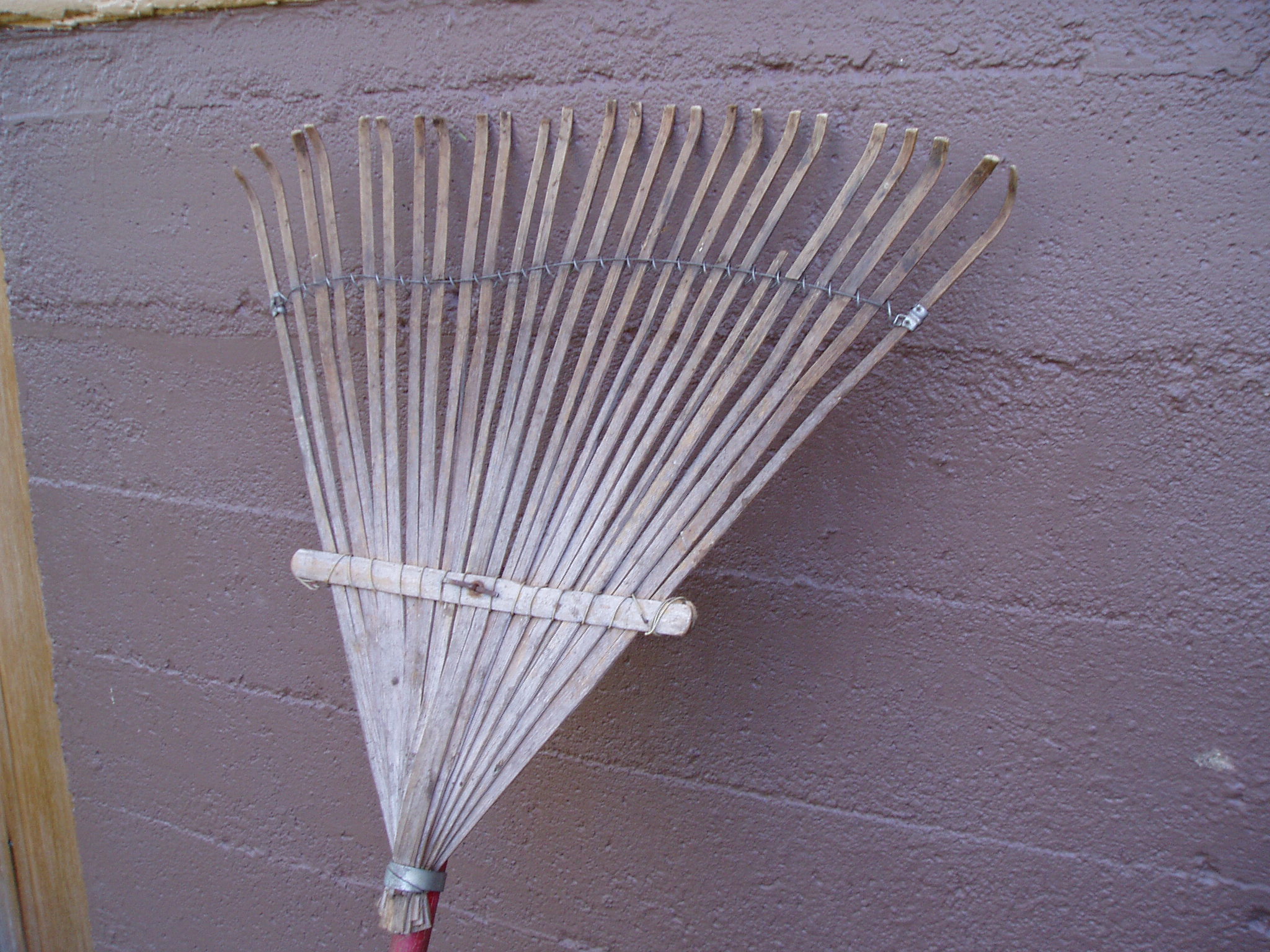
bamboo rake
photo by SVSeekins

The bamboo rake can handle this task, but not much more.  It’s nice that this rake is mostly biodegradable. but it just doesn’t stand up to heavy use.  It’s not so nice heading back to the store to purchase yet another replacement.

metal rake
photo by SVSeekins

If there’s a good rain before I get out to rake things up, the delicate apple leaves mush deeply into the grass.  That’s when I prefer a metal rake.  It’s stronger & moves the wet clumps of leaves nicely.  The tines are narrow & the dry small leaves sometimes slip through, so it’s not a total replacement for the bamboo rake.

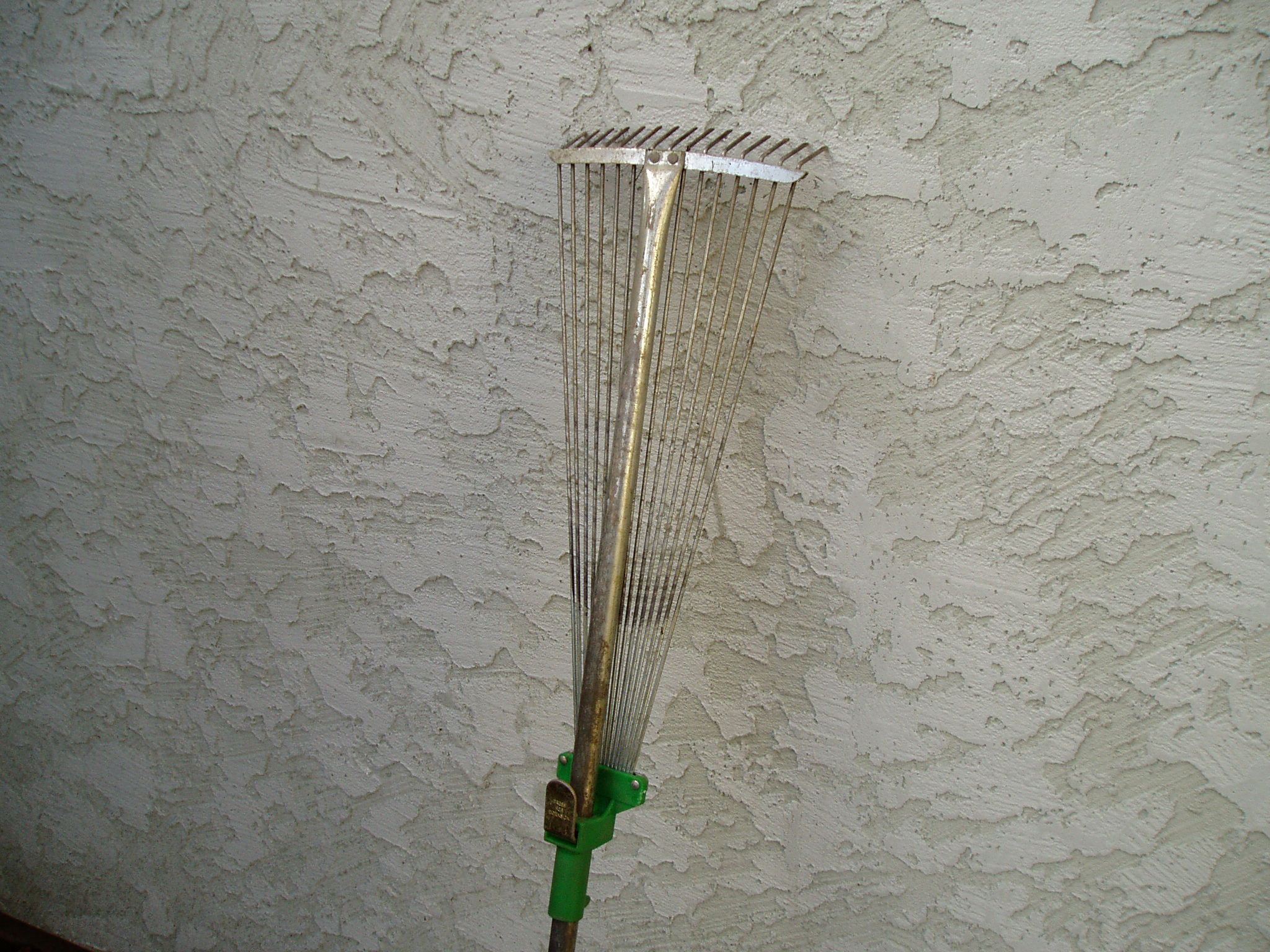
adjustable metal rake - at wide setting
photo by SVSeekins
adjustable metal rake - at narrow setting
photo by SVSeekins

There’s a similar rake that has an adjustable head. (+ telescoping handle).  In the wide position, this rake is good for moving the wet clumps caught in the grass.  In the narrow position, it’s good for getting into tighter spots, or moving those small dry apple leaves.   What’s not as handy is the extra weight.  That said, I’m glad to have it around.

gary oak acorns
photo by SVSeekins

The garry oak tree supplies a much tougher job. First to come off the oaks are the acorns.  They’re small but have a bit of weight to them.  When they fall from the full height of the tree, they pick up some good velocity & strike the ground hard – – practically planting themselves in the lawn.
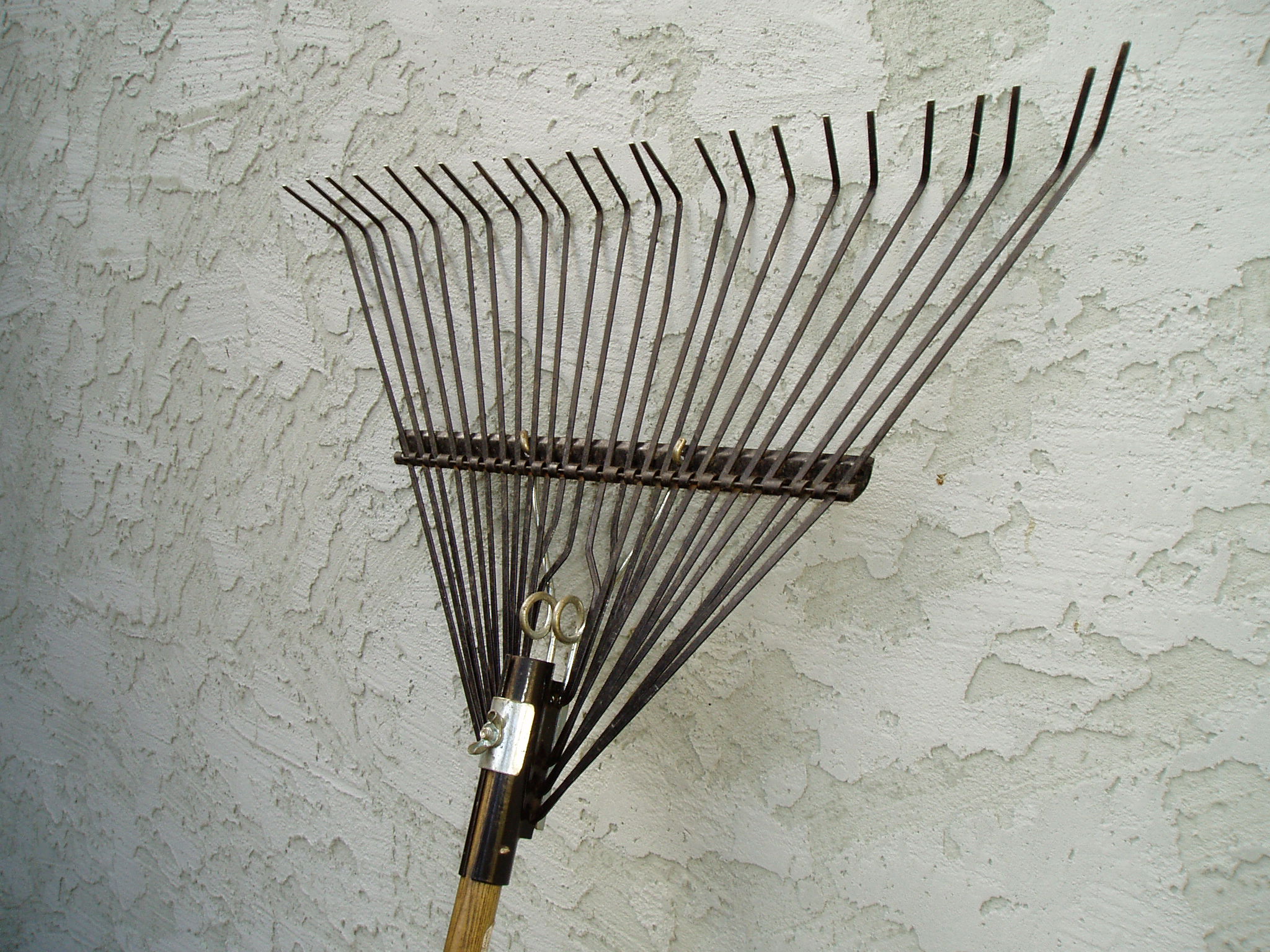
metal rake with flattened tines
photo by SVSeekins

Like the mushy apple leaf issue, these little nuts are a bit of a challenge to remove.  The rake that works well for this is also a metal rake, but one with tines that have some width to them.  They’re strong enough to reach down into the grass, and are close enough together to catch the acorns & pull them along.

The second challenge with the garry oak is the leaf durability.  Compared to apple leaves, which break down over 1 winter – – garry oak leaves take 3 to break down!  For that reason, I prefer to compost them before they end up in the garden beds.

gary oak leaves
photo by SVSeekins

We rake the leaves into piles… shift each pile onto a big tarp… and haul them over to our composting area.

The third challenge is the shear volumes.  The much larger, curled, garry oak leaves that come off our trees could fill up a pickup truck – – each week. (Leaves typically fall for 8 weeks)
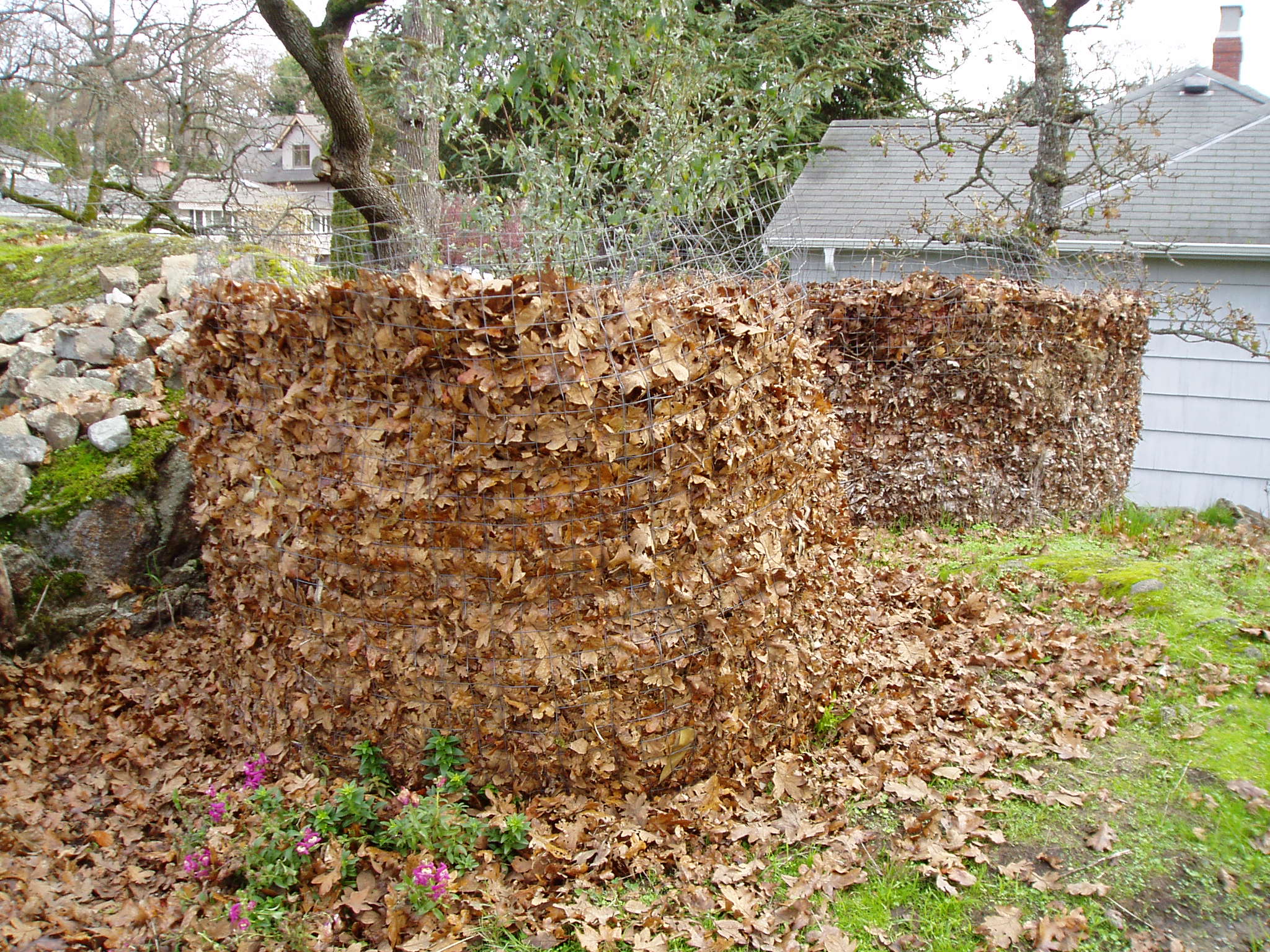
composting leaves in stucco-wire enclosures
photo by SVSeekins

There are 6 garry oak trees around our yard – – and many more in the adjacent yards.   That’s a lot of leaves.  And a whole lot of raking.

The rake we use for clearing up acorns is also my pick for raking oak leaves.  The issue turns out to be the hardiness of the rake.  In the past we used the $10 version sold everywhere.  We’d easily went through 4-5 rakes in one season.  Aghhh!  I was pissed about repeatedly spending $50 a year on a crappy product.

sturdy rake details
photo by SVSeekins

Then we found a version with sturdier components & design.  Even the handy butterfly nut & bolt that attaches the handle to the rake allowed for replacing a broken handle.   It cost $30, and is heavier than the cheaper rake. but I figured it was worth the extra effort to try a sturdier rake.   We bought one for each of us.

It definitely paid off.  It’s been 5 years, & the rakes are still up to the task.  We haven’t even needed to swap out a broken handle!

Just reducing the frustrations of replacing busted rakes is worth the heavier weight and higher price tag.

Paying $60 up front (for 2 sturdy rakes) was cost effective too.  If we’d continued using the cheaper rakes:
$50  x 5 years = $250 on the crappy rakes!

I’ve learned three lessons.

  1. I’m convinced quality tools are worth spending a little extra money on.
  2. I get a kick out of the variety in C’s wonderful world of tools.
  3. And I’m slowly learning how much nicer it is to use a tool specialized for the task at hand.  🙂

-30-
© copyright 2012 SVSeekins

Forsythia Through Four Seasons

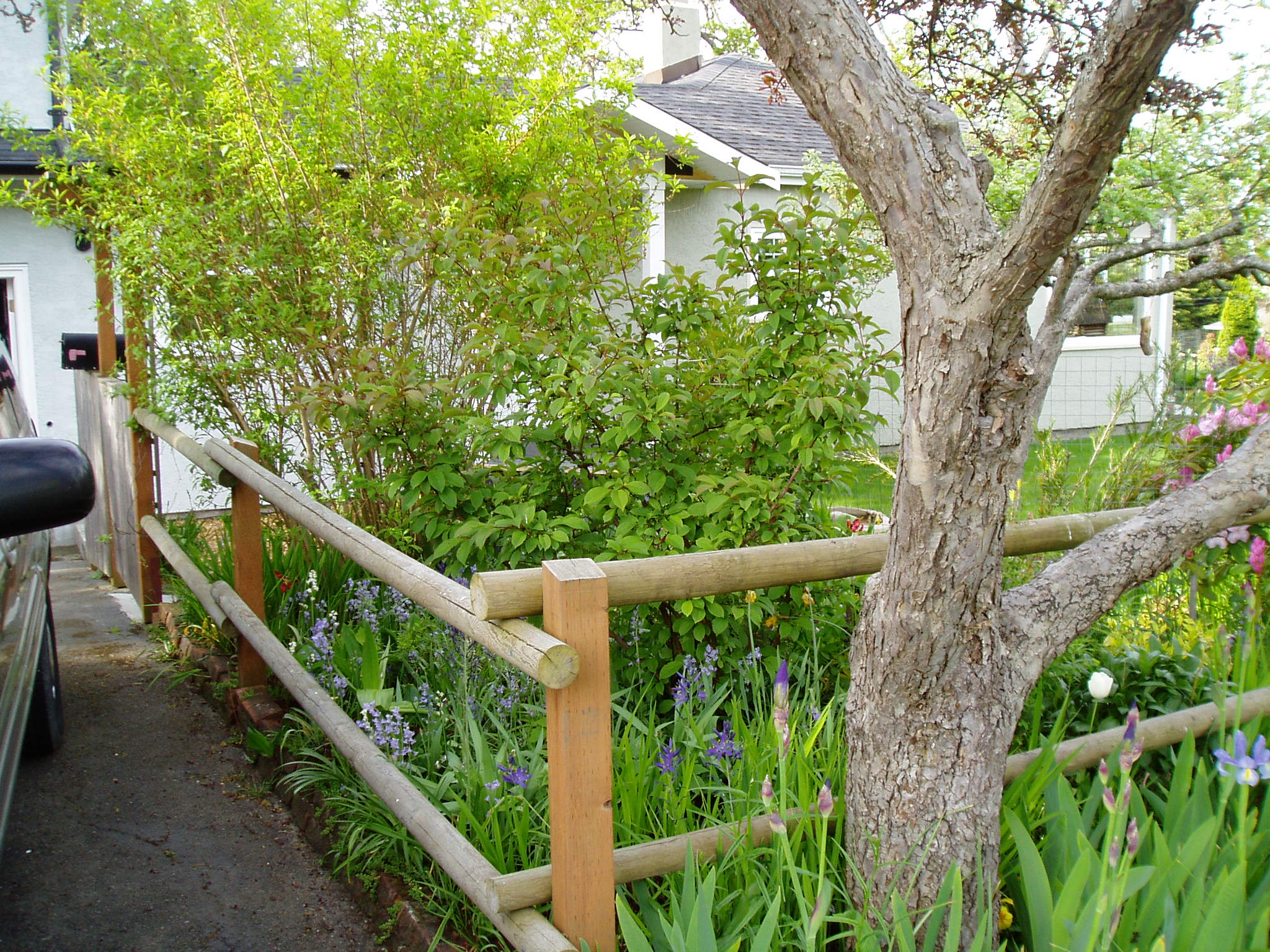
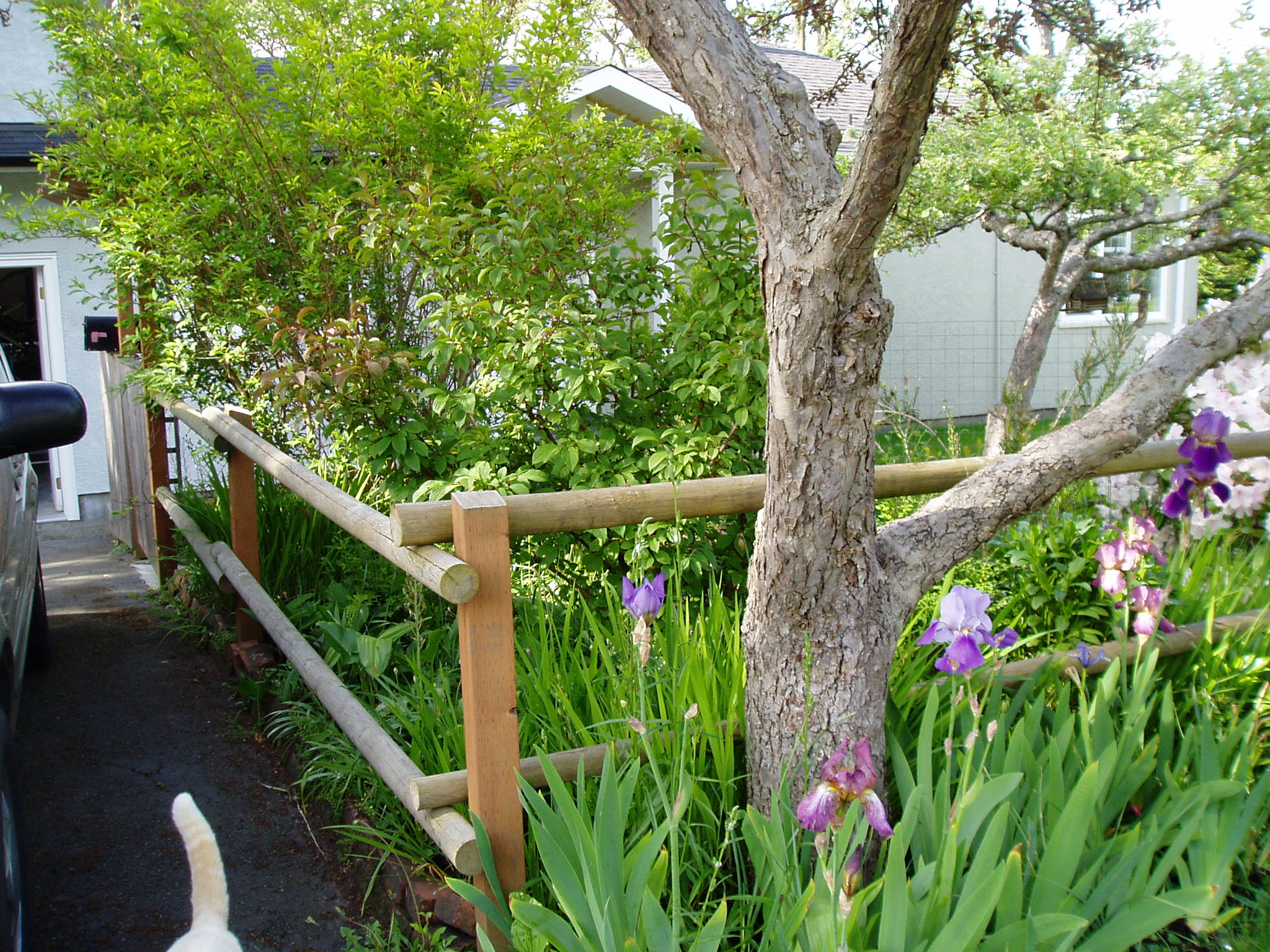
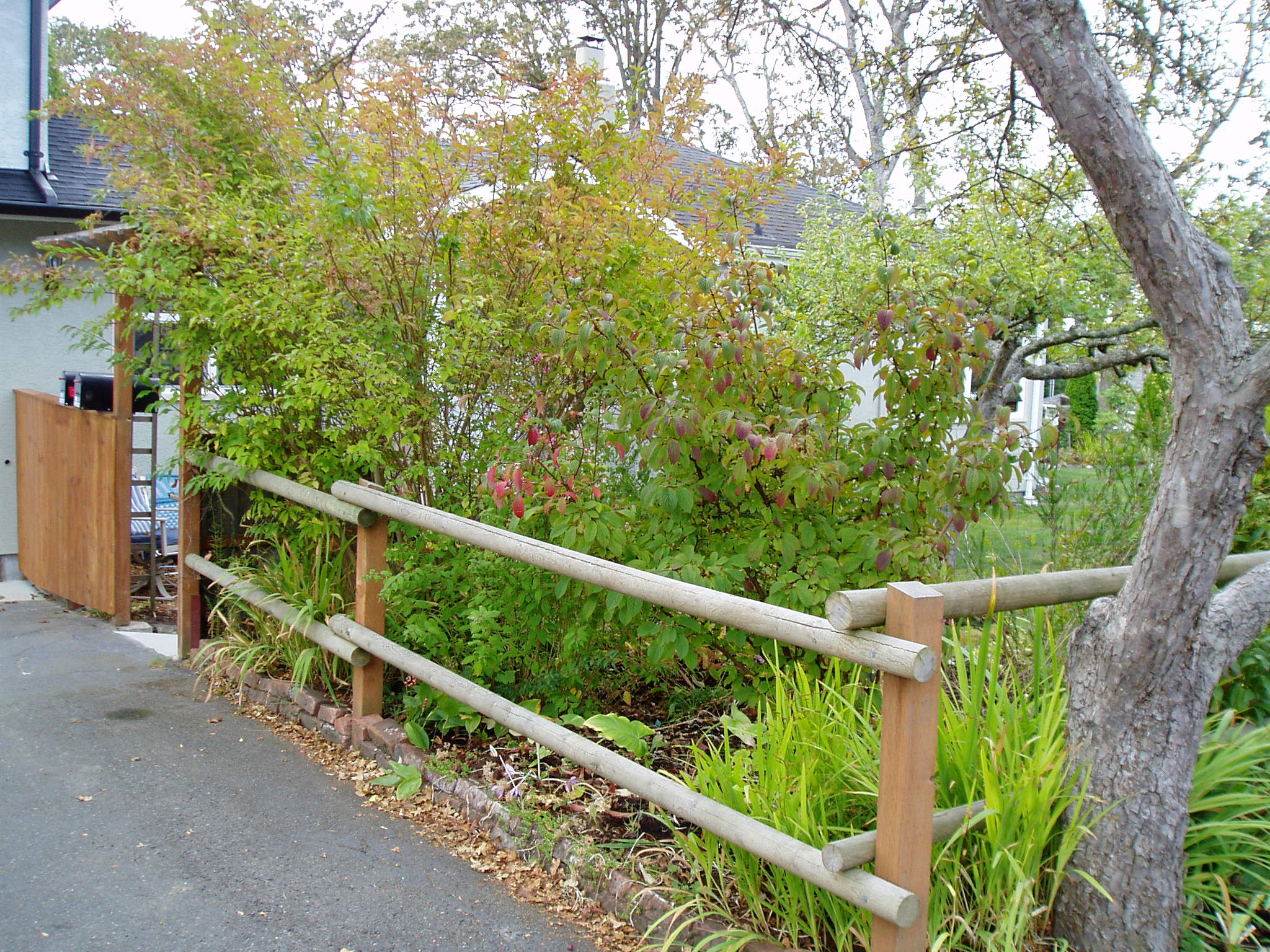
It’s taken a couple of years for me to really appreciate Forsythia in all seasons.

ws - Forsythia in April
photo by SVSeekins

Yes, Forsythia is at its best in spring.  Every morning through March, I sit with my coffee & ponder the coming growing season.  As I’m peering out the kitchen window, my anticipation builds as the buds on the Forsythia show more & even more promise.

I’m energized by the sunny yellow blossoms in March & April.

Each year I feel so desperate to see any spring colour.   Forsythia will never be challenged over its prominent real estate between our driveway & the kitchen entrance.

For all that hoopla, it’s easy to forget about Forsythia for the rest of the year. But that would be ignoring the assets.

ws - Forsythia in May
photo by SVSeekins

In April & May, the yellow blooms give way to yellow-green leaves.  Like the rest of the garden, the shrub begins to fill out, supplying much-appreciated privacy.

ws - Forsythia in June
photo by SVSeekins

By June, Forsythia is a steadfast background green and working hard to compliment the new flowers in the garden parade throughout the entire length of the summer and into the fall.

ws - Forsythia in early October
photo by SVSeekins

When the brisk winds of October arrive, Forsythia again steps up for a more significant share of the garden interest.  The yellow, apricot and red leaves add lovely colour to the fall palette.

For Halloween, they’re even more vibrant.  No wonder Forsythia has become one of our garden mainstays!

ws - Forsythia in late October
photo by SVSeekins
ws - Forsythia in late December
photo by SVSeekins

By December, Forsythia is naked again.  That’s not my favourite look for a shrub… but I understand that without the barrenness of winter, the spring probably wouldn’t be as exciting.

-30-

Enter your email address to subscribe to this blog and receive notifications of new posts by email.

Other indispensables:

Fall Fun with Friends

It rained over the past week.  What a transformation.  It’s truly fall now.

entrance to Jeneece Place
photo by SVSeekins

Woo hoo!  Wishes granted.

Because I’d already committed to helping out in the garden at Jenecce Place, I was especially grateful for the wet.   The West Coast might be damp & chilly in the fall, but weeds are a whole lot easier to dig if the ground isn’t concrete dry.

the spot for the future kitchen garden
photo by SVSeekins

There were 2 challenges presented to the volunteers from the View Royal Garden Club on Sunday afternoon.

The first was to create space for a veggie garden near the kitchen area of the house.  The chosen site was previously planted with native  kinnickinnick  for ground-cover & a blue fescue grass for architectural interest.

the weedy slope along the sidewalk at Jeneece Place
photo by SVSEekins

The second challenge was the slope running along the entrance sidewalk.  There were Yarrow, Oregon Grape, and the occasional grouping of  blue fescue tufts planted close to the walkway, but nothing further up the slope. The staff’s concern was the upcoming rainy season would bring erosion problems.

What complimentary challenges!  One site needed plantings removed – – the other needed plantings added.  Kismet!

the crew gets busy weeding & digging transplant holes
photo by SVSeekins

We set about weeding & preparing planting holes.  The effort kept us warm.

When gardening in a team a fair amount of visiting can be accomplished while still continuing the task at hand.  I like that  🙂

I also found it interesting to see the different tools each seasoned gardener chose for her/his tasks.  Perhaps I’ll try some new tricks next time I’m in my own garden.

Dark clouds gathered, but happily the rain stayed away.  We progressed to moving plants from one bed directly into the other.

after
photo by SVSeekins

I’m always amazed at how proportions & space gets mixed up in my head.  I figured the plants to be moved wouldn’t come close to filling up the space available on the slope.  I was mistaken.  Near the end of the afternoon we squeezed in extra holes between new transplants just to finish clearing out the kitchen garden bed.

muffin / tea break before heading home
photo by SVSeekins

With a sense of satisfaction we sat down to muffins & tea knowing that the job was done.  it’s so nice when a project starts & finishes in one gathering.

A bit more visiting was a lovely wrap to the afternoon before I headed home to a warm shower.

-30-
© copyright 2012 SVSeekins