Category Archives: garden seasons

joy in every season

Iris Foetidissima Through Four Seasons

It’s an uncommon garden plant for 2 good reasons.
Iris foetidissima, Stinking iris, Fetid Iris, Scarlet berry iris, roast beef plant, Scarlet-Seeded Iris, Coral Iris, Orange Seeded Iris, blue seggin, Gladden, Gladdon, Gladwin, Gladwyn, Stinking Gladwin, garden Victoria, Vancouver Island, BC, Pacific Northwest
photo by SVSeekins
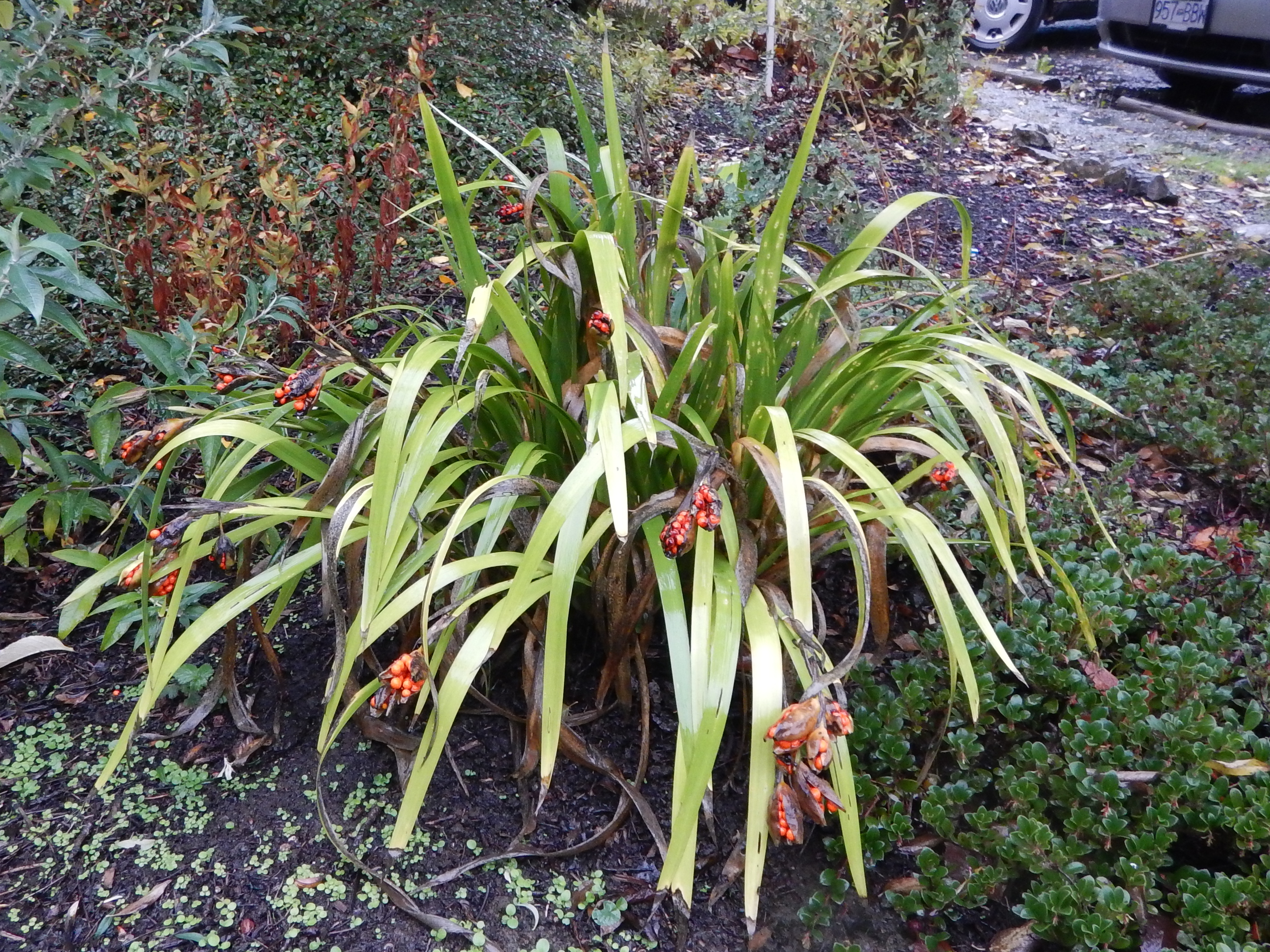
  1. Most gardeners aren’t plant shopping in winter when this iris looks its best.
  2. Fetid in a name just puts folks off.

It’s sad, really. Stinking Iris is a harsh moniker – – uncalled for, in my humble opinion. Apparently, if you stomp on a clump, the crushed leaves reek of spoiled roast beef. I’ve gardened around it for several years now & have yet to detect any offending odour. Iris foetidissima is very welcome in our garden.

I mean, it’s not the first plant I’d buy for a new garden, but it’s a great supporting actor.
Iris foetidissima, Stinking iris, Fetid Iris, Scarlet berry iris, roast beef plant, Scarlet-Seeded Iris, Coral Iris, Orange Seeded Iris, blue seggin, Gladden, Gladdon, Gladwin, Gladwyn, Stinking Gladwin, garden Victoria, Vancouver Island, BC, Pacific Northwest
photo by SVSeekins
  • It’s evergreen.
    & year-round structure is coveted in December when pretty much everything else has collapsed to the ground.
  • It happily handles the dry conditions under a shady tree where few plants survive.
  • Our hungry neighbourhood deer leave it strictly alone. 🙂
    & it’s getting harder to find something they won’t eat around here!
Iris foetidissima, Stinking iris, Fetid Iris, Scarlet berry iris, roast beef plant, Scarlet-Seeded Iris, Coral Iris, Orange Seeded Iris, blue seggin, Gladden, Gladdon, Gladwin, Gladwyn, Stinking Gladwin, garden Victoria, Vancouver Island, BC, Pacific Northwest
photo by SVSeekins

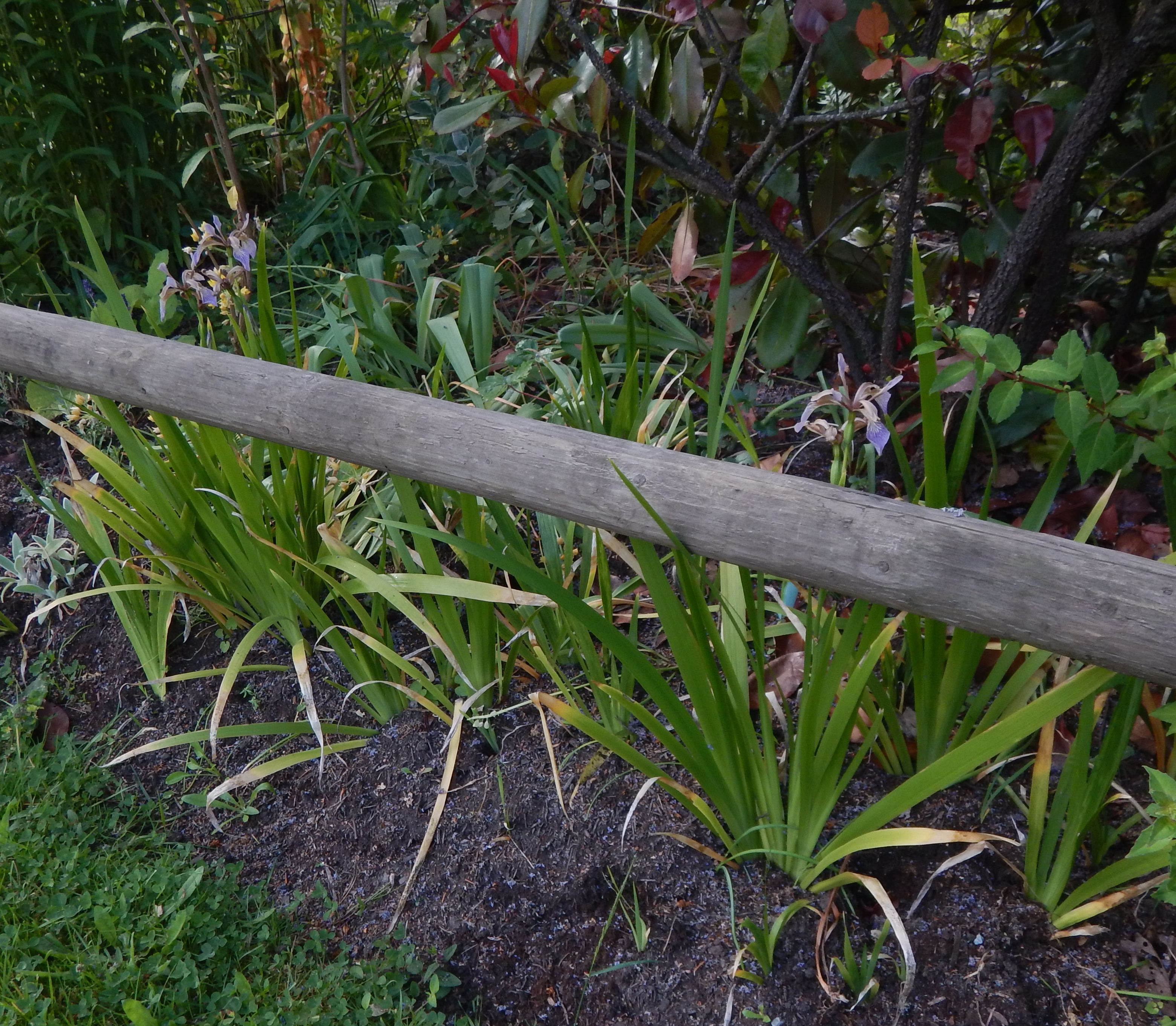
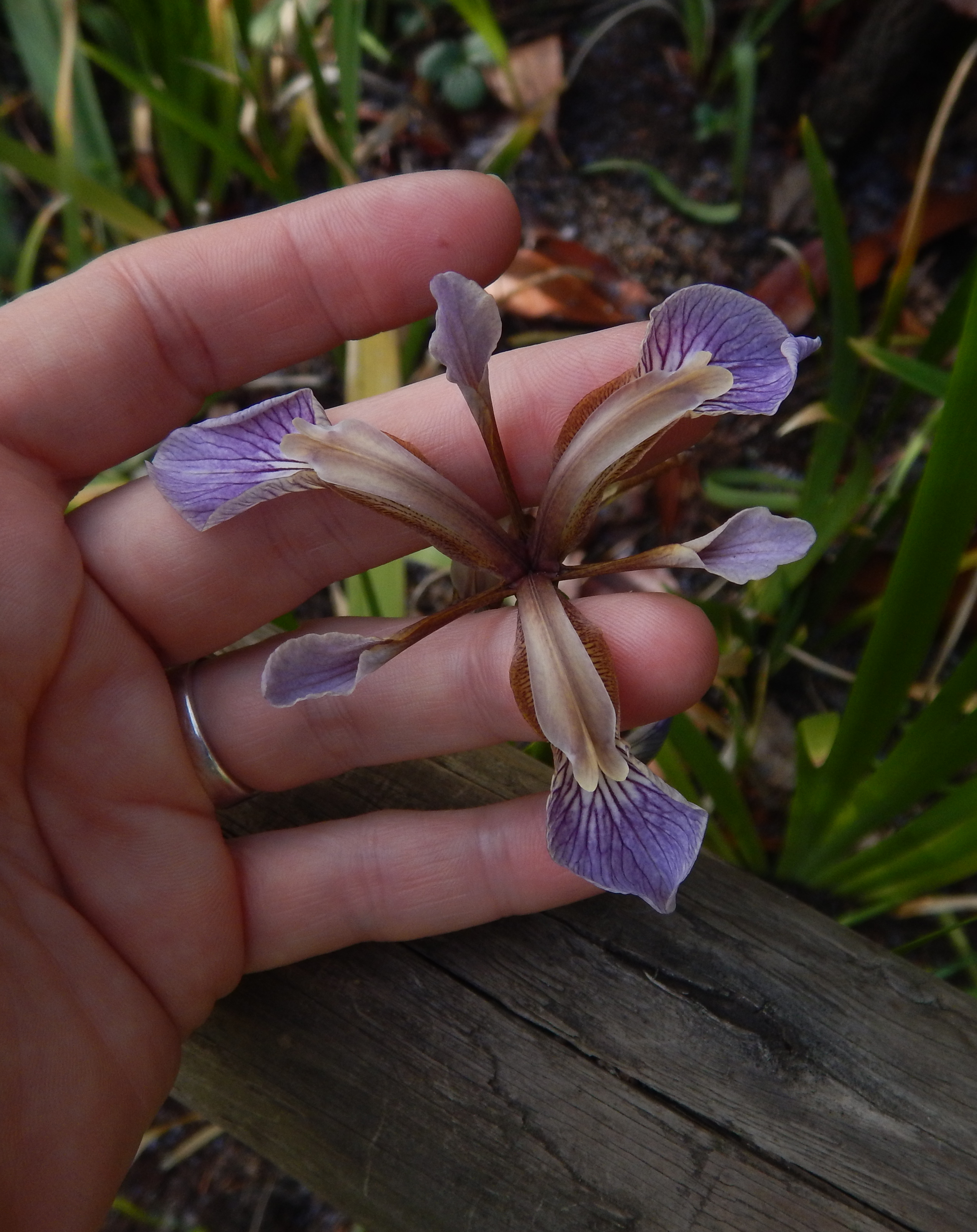
The flower is easy to miss. Pale lavender petals open in June & are overshadowed by other, more boisterous blooms. It’s pretty but not spectacular, like so many other iris. I reckon it’d be perfect potted up on a north-facing balcony where little else gives four seasons of interest. Right?

But don’t be too quick to tidy those flower stems!
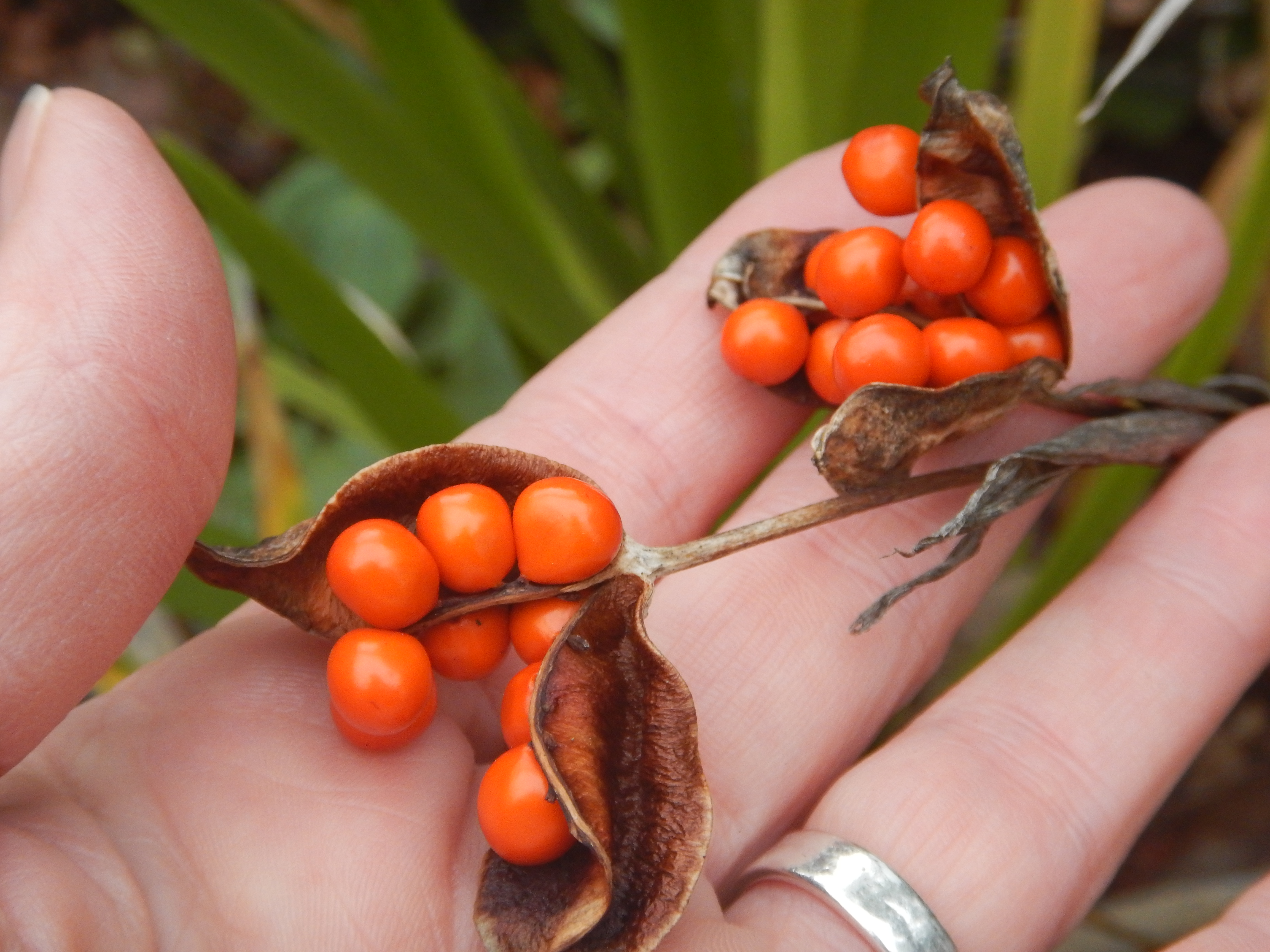
They morph into heavy seedheads that curl open in autumn with the actual show. 🙂
Iris foetidissima, Stinking iris, Fetid Iris, Scarlet berry iris, roast beef plant, Scarlet-Seeded Iris, Coral Iris, Orange Seeded Iris, blue seggin, Gladden, Gladdon, Gladwin, Gladwyn, Stinking Gladwin, garden Victoria, Vancouver Island, BC, Pacific Northwest
photo by SVSeekins
  • Those bright orange berries are just so funky looking!
    & it’s so gratifying to have interest through fall & winter.

The seed doesn’t seem to appeal to the birds – – and it turns out to be toxic to cats, dogs & humans… even cattle will sicken if they chew on the roots. So, Scarlet Berry Iris might be an issue if I plant it on the woodland edge of pastureland. I’m surprised cows would take a nibble when the deer clearly don’t.

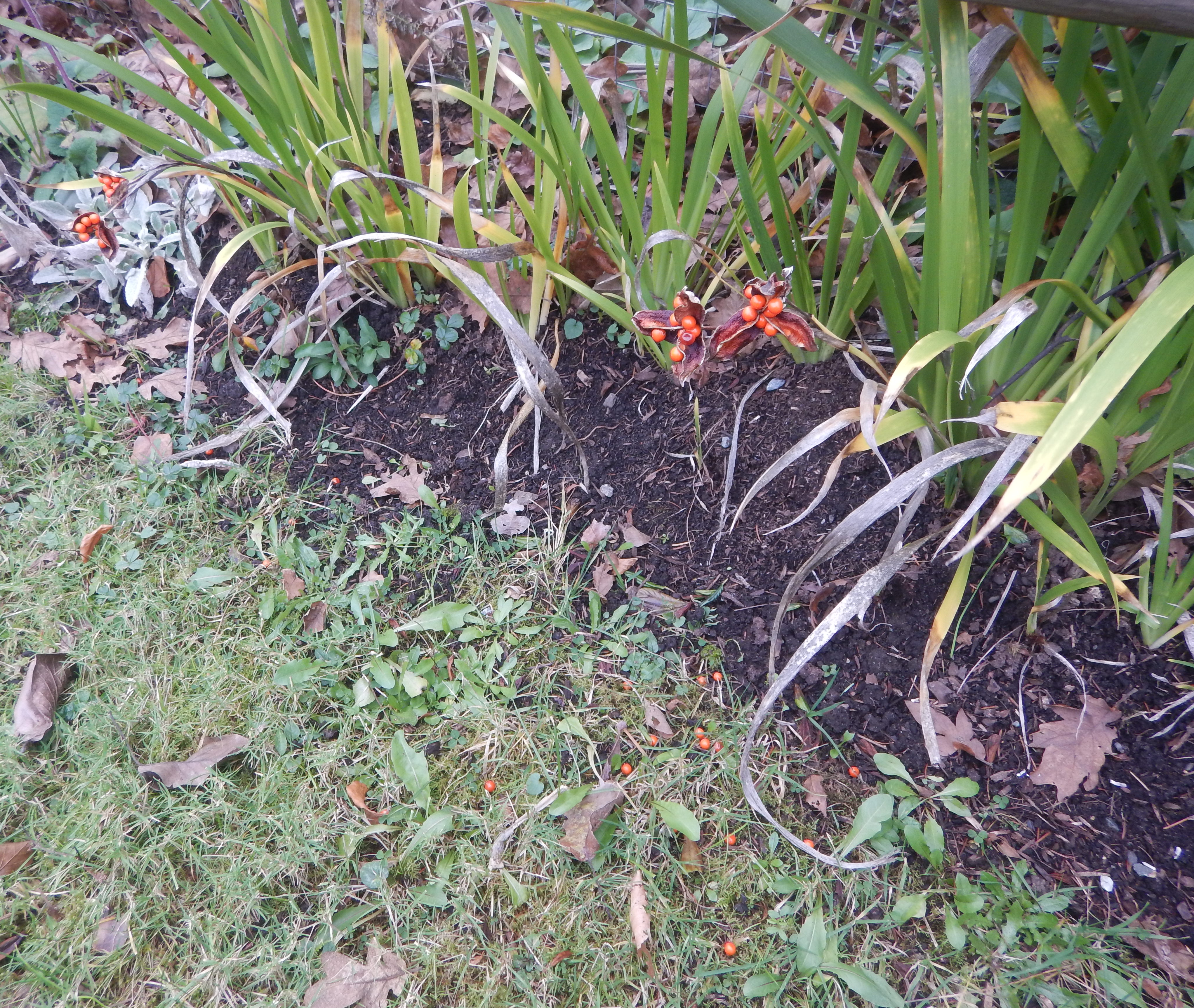
Iris foetidissima‘s native range is southern Europe & northern Africa. I’ve never heard of it going astray in North America. Still, it’s considered invasive in parts of New Zealand & Australia. I found some berries dropped onto the lawn edge so I tucked them in the soil around the plants. I’d be happy a bigger show next year.
Iris foetidissima, Stinking iris, Fetid Iris, Scarlet berry iris, roast beef plant, Scarlet-Seeded Iris, Coral Iris, Orange Seeded Iris, blue seggin, Gladden, Gladdon, Gladwin, Gladwyn, Stinking Gladwin, garden Victoria, Vancouver Island, BC, Pacific Northwest
photo by SVSeekins

-30-

Other indispensables:

White Stonecrop Challenge

Sedum album hanging basket, white stonecrop, Oreosedum album , small house leek, garden Victoria, Vancouver Island, BC, Pacific Northwest
photo by SVSeekins

Ok – I thought it was a gorgeous, drought-tolerant addition to a hanging basket. I was so pleased with the look of the white stonecrop when it started to flower in July. The blooms looked great for a month or so.
I was stoked.

Sedum album hanging basket, white stonecrop, Oreosedum album , small house leek, garden Victoria, Vancouver Island, BC, Pacific Northwest
photo by SVSeekins

AND then, as nature progresses, the flowers turned to seed heads.
hmmm. Brown.
Kinda messy looking. .. My inner tidy freak cringes. 😦
An over-tidy garden isn’t all that great for wildlife.

And THEN we went camping for a couple weeks in early September & I didn’t have to control my urge to deadhead the perfectly good birdseed.

Now, autumn is arriving & with it cooler temperatures + some moisture. The licorice ferns are coming alive.

Licorice fern, Polypodium glycyrrhiza, many-footed fern, sweet rootSedum album hanging basket, white stonecrop, Oreosedum album , small house leek, garden Victoria, Vancouver Island, BC, Pacific Northwest
photo by SVSeekins

The messy seed heads of the sedum album are overshadowed.
Crisis averted.

Last year the ferns on our rocky outcrop were not surviving the appetite of our local deer. Shifting sheets of moss that the licorice ferns were growing in & creating a basket hanging above the reach of Bambi has proved successful. 🙂
The baskets promise to hold my interest through the humidity of fall & winter,

So now the question:
Is there anything I could plant to distract from the brown look through August & early September until the licorice fern becomes The Show? It needs to be drought tolerant & happy in a bit of shade ….
Any suggestions?

-30-

Wild Ginger

Wild Ginger looks lovely carpeting the understory of a Pacific Northwest forest. I’ve often admired it in its native landscape & longed to grow it in our garden.

wild ginger, asarum caudatum, British Columbia Wild Ginger, Western Wild Ginger, Long-Tailed Wild Ginger, garden Victoria BC Pacific Northwest
photo by SVSeekins

Years ago, I bought a small pot at the Swan Lake Native Plant Sale & dug it into a nice spot in our woodland.
It didn’t survive.
Apparently, Asarum caudatum is only summer drought-tolerant “once established.” Mine died before its roots grew deep enough to survive between waterings.
My bad 😦

wild ginger, asarum caudatum, British Columbia Wild Ginger, Western Wild Ginger, Long-Tailed Wild Ginger, garden Victoria BC Pacific Northwest
photo by SVSeekins

Later, I sourced another one from the Native Plant Study Group. I carefully planted it in a pot in our courtyard, where I knew it would get enough water. It thrived & eventually filled the pot.
Redeemed!!!!! 🙂

By this spring, the Wild Ginger was established enough to divide.

wild ginger, asarum caudatum, British Columbia Wild Ginger, Western Wild Ginger, Long-Tailed Wild Ginger, garden Victoria BC Pacific Northwest
photo by SVSeekins

Carefully, I slid the plant into a tub of water to tease the roots out of the soil. There’s so much to learn when I get a really good look at the roots of a plant. Asarum caudatum spreads through rhizomes, slowly travelling outward, just under the soil & starting new plants. This way, the established mother ginger can support the young ginger until its new root system develops & reaches deep enough into the ground to find moisture itself.

wild ginger, asarum caudatum, British Columbia Wild Ginger, Western Wild Ginger, Long-Tailed Wild Ginger, garden Victoria BC Pacific Northwest
photo by SVSeekins

The original plant had crept around the pot several times. It created at least a dozen decent-sized root balls.
Score! 🙂 🙂

We’ll get several pots to tend through the summer diligently. With regular water & attention, these larger root balls will develop some of those delicate feeder roots & be ready to go into the garden in a few months.

wild ginger, asarum caudatum, British Columbia Wild Ginger, Western Wild Ginger, Long-Tailed Wild Ginger, garden Victoria BC Pacific Northwest
photo by SVSeekins

Asarum caudatum is also known for shy spring flowers that hide under its evergreen leaves. Last month I found seed heads leftover from the blossoms. (Flies & beetles pollinate them – so those beasties had paid better attention than I had when the plant was flowering). I searched for some sign it self-seeded into the pot. (Ants typically carry the seed away.)

There were at least 6 Wild Ginger babies. Most were pretty tiny & I worry they might not survive the transplanting. Here are 3 with roots that are large enough to show up in a photo.

It took 4 new pots the same size the ginger had just come out of to give homes to all the divisions. That’s 5 in total.

wild ginger, asarum caudatum, British Columbia Wild Ginger, Western Wild Ginger, Long-Tailed Wild Ginger, garden Victoria BC Pacific Northwest
photo by SVSeekins

By late September or October, the weather should still be warm & the rains will make the ground workable again. It’ll be an excellent time to transplant our treasures. They’ll settle in over winter & be ready to begin fresh in the spring. I reckon that with this many pots, we’ll be able to test them in a few different spots — to see which locations they like best.

-30-