Category Archives: urban deer

Creeping Bellflower – Campanula rapunculoides

It came into our garden with some ‘free’ soil.  I didn’t know its name, for sure.  It looked an awful lot like ladybells, Adenophora liliifolia?  It was a decorative, bonus plant – score!
Little did I know the work that pretty bellflower would create.

Campanula rapunculoides, creeping bellflower, Bluebell weed, rampion bellflower, rover bellflower, European bellflower, garden Victoria BC Pacific Northwest
photo by SVSeekins

Deer ignored it for one season… at the most. After that, they ate the buds before flowering. The deers’ pruning might’ve spurred the plant into a frenzy of suckering.  When digging out the extras, I realized how this bellflower got its common name– Creeping Bellflower spreads from the mother plant by lateral roots running below the soil surface.

It quickly became quite a thug.  I had to be realistic. A monocultural garden isn’t my thing.  Campanula rapunculoides had to go.
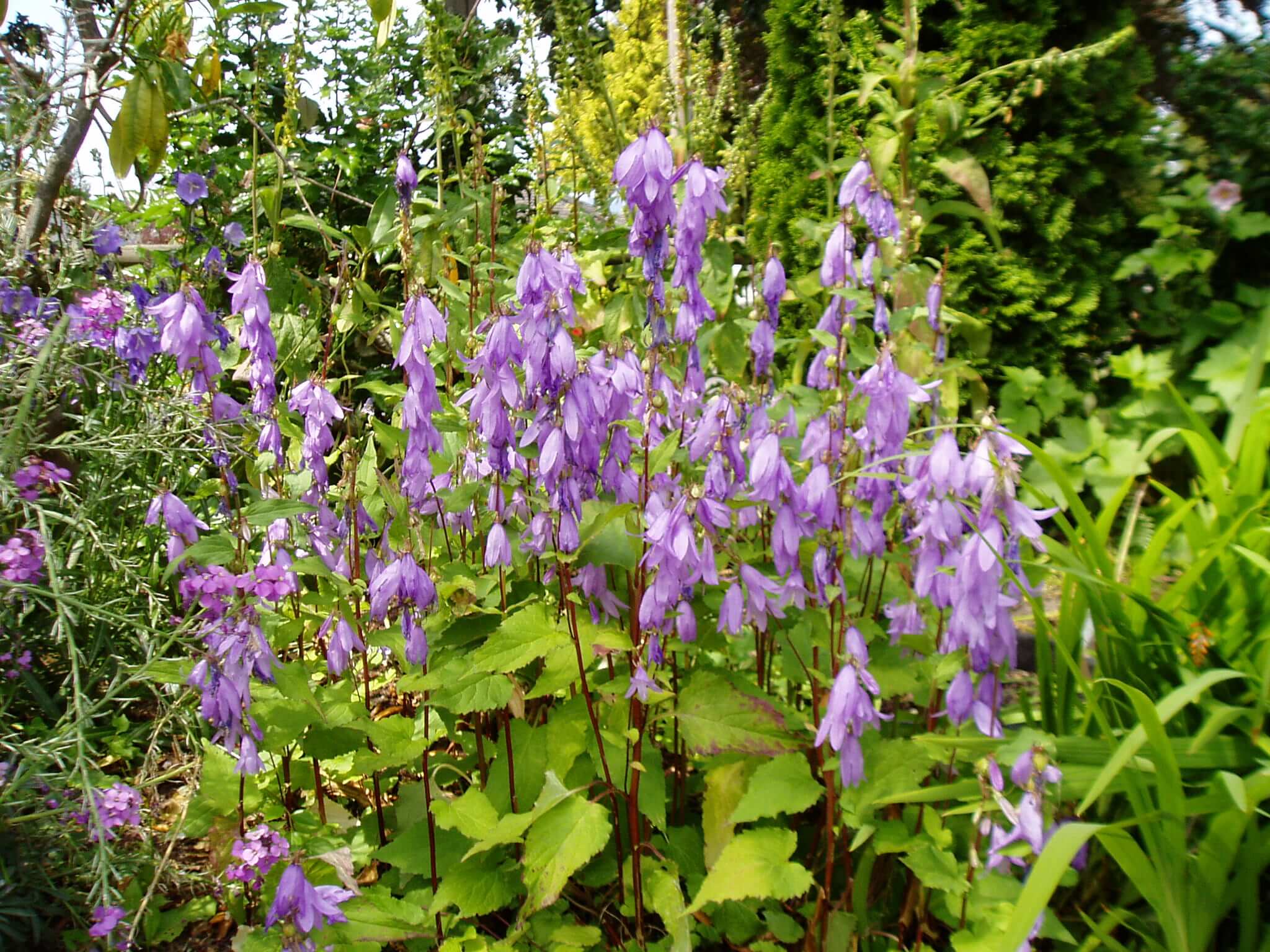
Campanula rapunculoides, creeping bellflower, Bluebell weed, rampion bellflower, rover bellflower, European bellflower, garden Victoria BC Pacific Northwest
photo by SVSeekins

One soggy autumn weekend, I dug out the entire bed.  Other keeper perennials were set aside to thoroughly wash their root systems before replanting at the end of the project.  I discovered creeping bellflower was even more invasive than I first realized.  It also has deeper storage roots, enabling survival through brutal winters & long droughts. Those roots can easily sprout a multitude of new plants, even if the original is removed from the base.
Tenacious.

Sifting through the soil & removing the invading white roots of the C.rapunculoides, was a tough job but worth it.  Many years later, I regularly weed out young plants surfacing from roots that I’d missed, but I’m winning the war.

Campanula rapunculoides, creeping bellflower, Bluebell weed, rampion bellflower, rover bellflower, European bellflower, garden Victoria BC Pacific Northwest
photo by SVSeekins

This summer, I noticed a new patch at the College campus. Can you imagine the tenacity of a plant volunteering in a crack in the pavement?  These plants must’ve arrived via seed distribution. Behind some fencing, creeping bellflower is protected from the deer. Fortunately, the grounds staff cut them to the ground in record time.

Campanula rapunculoides, creeping bellflower, Bluebell weed, rampion bellflower, rover bellflower, European bellflower, garden Victoria BC Pacific Northwest
photo by SVSeekins

So, I guess it’s not even safe to keep this bully restrained in a pot because it’ll spread like mad if it ever goes to seed, too.

I’m pretty lenient when it comes to vigorous plants in our garden..  Wild violets grow in our lawn. Cyclamen hederifolium is still welcome in certain beds. I’ve left some patches of bluebell in well-contained spots (but they’re sheered as soon as the blooms begin to fade).  Some other tough-as-nails plants are held in check by simply not watering them through our long, summer drought.

But I’m putting my foot down when it comes to Campanula rapunculoides.
Not in my backyard.
My goal is to grow the native harebell, C. rotundifolia, instead. It’s much better behaved.

-30-
Leopard’s Bane Through Four Seasons

bloom

Doronicum, Caucasian Leopard's Bane, Great Leopard's Bane, Plantain Leopard's Bane, leopard's-bane, garden Victoria, Vancouver Island, BC Pacific Northwest
photo by SVSeekins

As the last of the daffodils open  (mid-April in Victoria), Leopard’s Bane joins the spring cacophony of colour.  The sunny-faced flowers sway on tall stalks above the burst of Bluebells, Tulips and Hyacinths.

Doronicum, Caucasian Leopard's Bane, Great Leopard's Bane, Plantain Leopard's Bane, leopard's-bane, garden Victoria, Vancouver Island, BC Pacific Northwest
photo by SVSeekins

They’re happy yellow flowers -undaunted by seasonal showers.

The exuberance of Leopard’s Bane (Doronicum) lifts spring to new heights.

seedhead

Doronicum, Caucasian Leopard's Bane, Great Leopard's Bane, Plantain Leopard's Bane, leopard's-bane, garden Victoria, Vancouver Island, BC Pacific Northwest
photo by SVSeekins

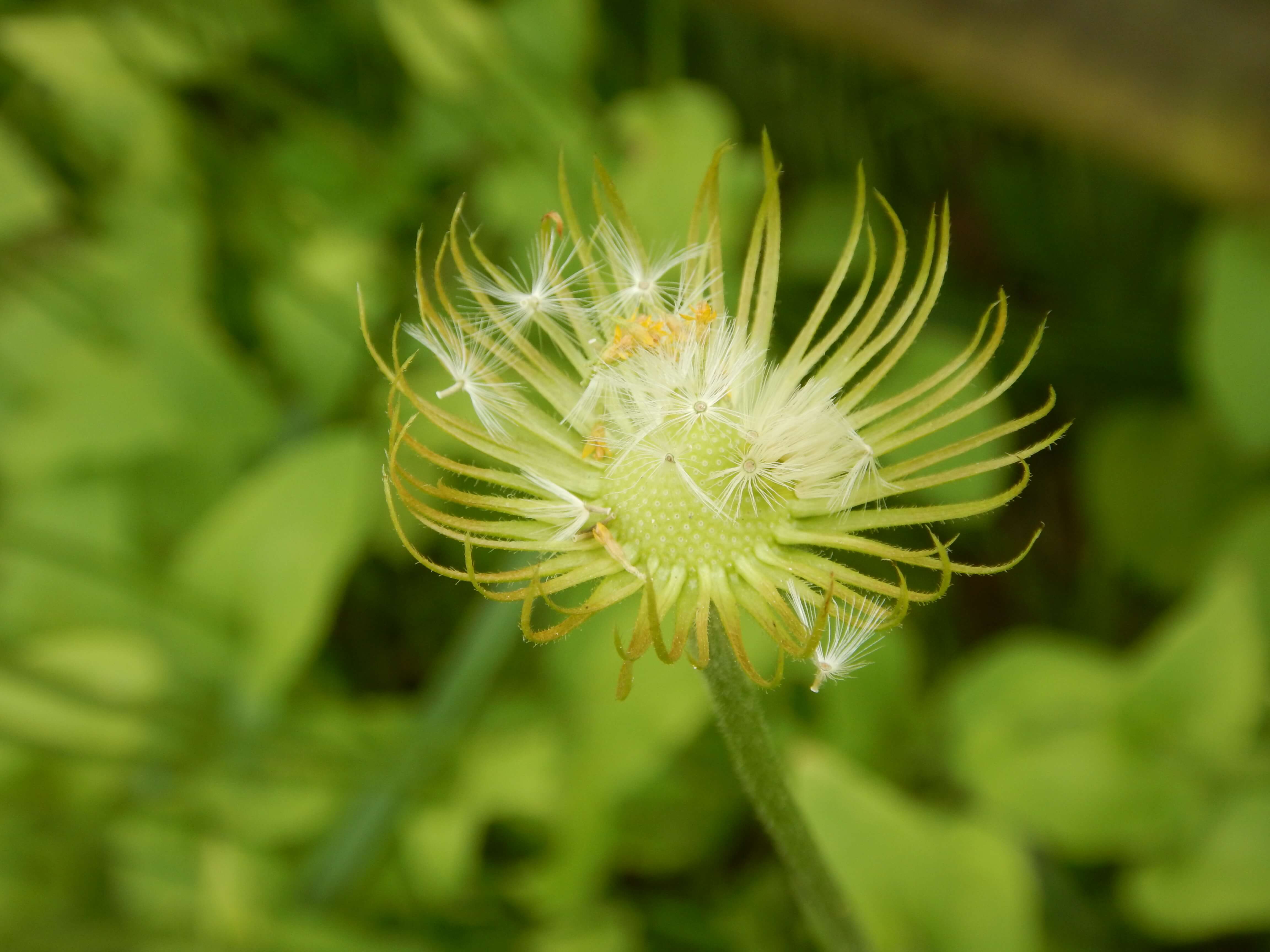
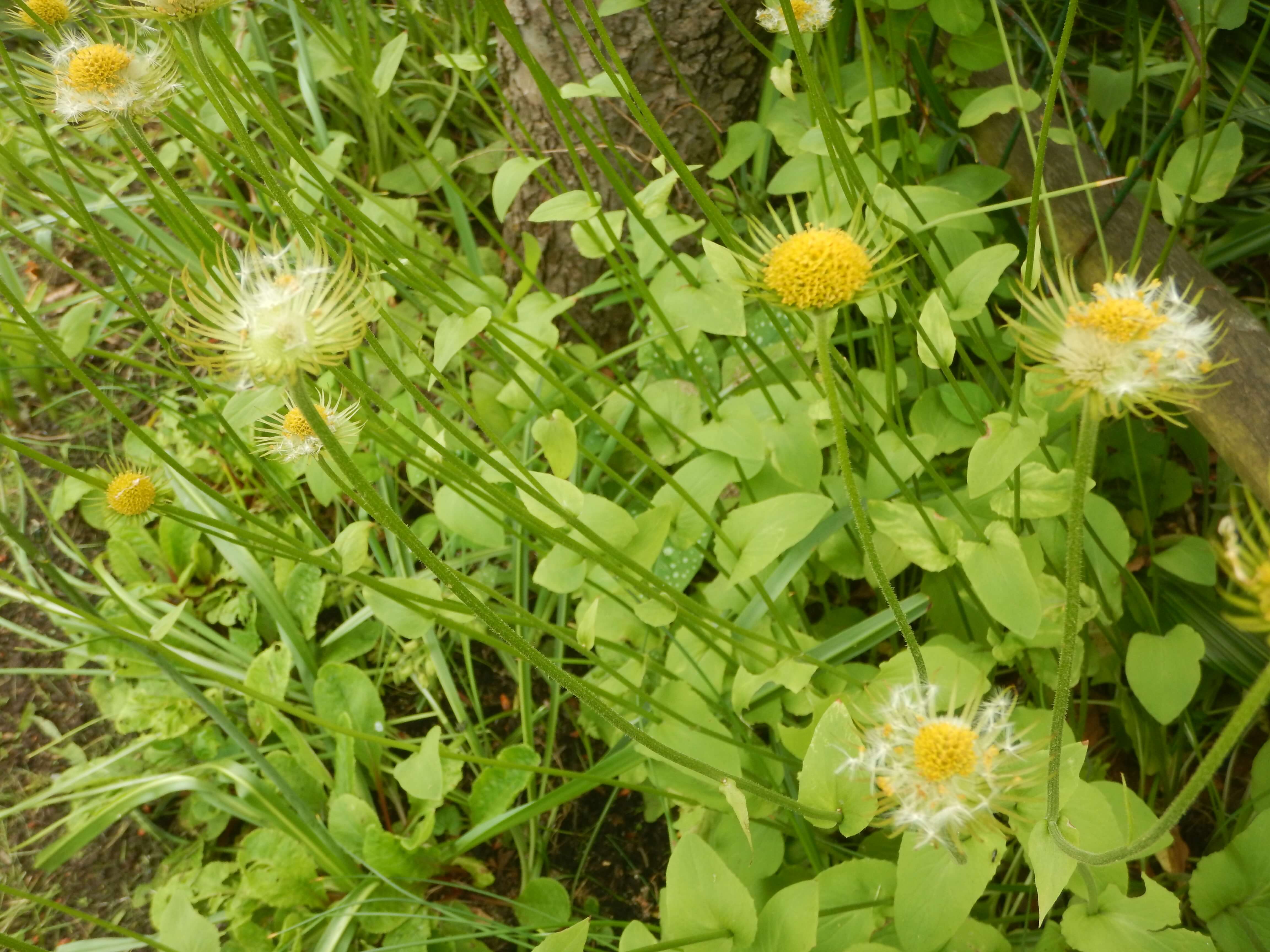
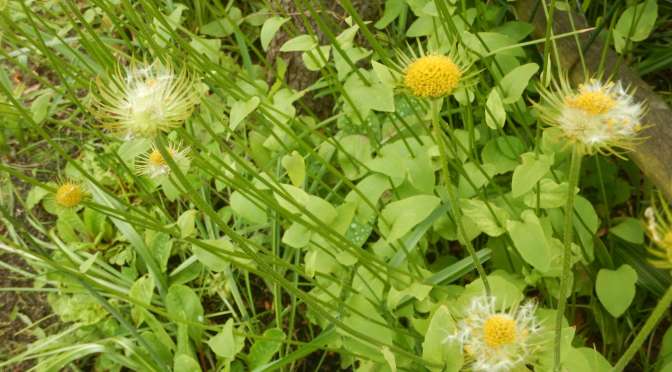
By mid-May, their enthusiasm wanes, but the show is certainly not over.  For me,  the progression is beautiful.  The varied stages of seeding are almost as enchanting as the flowering.

Doronicum, Caucasian Leopard's Bane, Great Leopard's Bane, Plantain Leopard's Bane, leopard's-bane, garden Victoria, Vancouver Island, BC Pacific Northwest
photo by SVSeekins
  • First, the petals of  Leopard’s Bane wither a bit.
  • Then, somehow, the rays turn to fluff & float away…
Doronicum, Caucasian Leopard's Bane, Great Leopard's Bane, Plantain Leopard's Bane, leopard's-bane, garden Victoria, Vancouver Island, BC Pacific Northwest
photo by SVSeekins
  • The fluorescence of the central disk holds out for a while longer before it also turns to fluff and flies off.
Doronicum, Caucasian Leopard's Bane, Great Leopard's Bane, Plantain Leopard's Bane, leopard's-bane, garden Victoria, Vancouver Island, BC Pacific Northwest
photo by SVSeekins
  • Even the remaining bracts are decorative – still catching enough breeze to add movement in the beds.  That’s a couple extra weeks of pleasure & value.

summer hibernation

garden Victoria, Vancouver Island, BC Pacific Northwest
photo by SVSeekins

By the time school wraps up in mid-June, Leopard’s Bane has dispersed its seed.  The heat withers its foliage.  Doronicum disappears on holiday, too.  Summer perennials elbow into its space as if it were never even there.

fall emergence

Doronicum, Caucasian Leopard's Bane, Great Leopard's Bane, Plantain Leopard's Bane, leopard's-bane, garden Victoria, Vancouver Island, BC Pacific Northwest
photo by SVSeekins

By the time we’re carving Jack-o-lanterns in October, the leaves are falling from above.  It feels like the garden is dying, too.  But autumn’s moisture tickles the rhizomes below the soil.  New leaves peek out.  Leopard’s Bane is re-awakening.  As so much else fades away, Doronicum stays fresh, green & alive right through the doldrums of our West Coast winter.

In our garden, Leopard’s Bane is indispensable because:

Doronicum, Caucasian Leopard's Bane, Great Leopard's Bane, Plantain Leopard's Bane, leopard's-bane, garden Victoria, Vancouver Island, BC Pacific Northwest
photo by SVSeekins
Doronicum, Caucasian Leopard's Bane, Great Leopard's Bane, Plantain Leopard's Bane, leopard's-bane, garden Victoria, Vancouver Island, BC Pacific Northwest
photo by SVSeekins
Doronicum, Caucasian Leopard's Bane, Great Leopard's Bane, Plantain Leopard's Bane, leopard's-bane, garden Victoria, Vancouver Island, BC Pacific Northwest
photo by SVSeekins
  • It has happy yellow flowers.
  • Our brazen urban deer ignore it. (It’s reputed to be poisonous, but also medicinal  !?!)
  • I  never have to water it – – it’s summer drought-tolerant in the Pacific Northwest… and yet, it’s not invasive.
  • It’s as happy under shade trees as it is in full sun.
  • It’s an unusual cool-season perennial:
        • It comes to life when the rest of the garden dies back in the fall.
        • It stays green through our mild coastal winters.
        • And it promises the return of vigour in the spring warmth.
  • It boasts 8+ months of interest in a garden –one of the longest-lasting spring ephemerals.
  • It’s low maintenance.
  • And, most of all: The deer ignore it.
    🙂

PS – For clarity, I must point out that Leopard’s Bane can be a bit of a thug in an irrigated garden.  It is rare to get any rain through summer on the southern tip of Vancouver Island.  Many folks choose automatic irrigation that delivers water 2-3 times a week, keeping the soil evenly moist.  That often equals an inch of water each week.    I only hand water when it is absolutely needed.  Our Doronicum is happy but doesn’t spread much.  If the clump gets too big,  it’s easy to dig out & shift elsewhere (or remove altogether).

-30-

Other indispensibles:

Hungry Deer

It wasn’t unusually cold but this must’ve been a looooong winter for our local deer. They’re feeding on things they don’t even like.

species tulips - browsed by deer,
photo by SVSeekins

Gardeners know that deer like tulips.  But the smaller species tulips have always been safe.  Not this year.  Check this out: in a plot of a dozen botanical tulips- only 4 blooms survive.  It looks like a deer snacked on leaves, then came back a few days later to taste-test the flowers. The flavour must be pretty bad because someone didn’t clean his plate.

laurel browsed by deer
photo by SVSeekins

Each winter the deer get hungry enough to nibble on some of the broad-leaved evergreens. This laurel has never been chewed down like this before.  There’s a toxin in laurels, so deer avoid it most of the time.  I’ll bet this browsing session caused indigestion!

variegated yucca browsed by deer
photo by SVSeekins

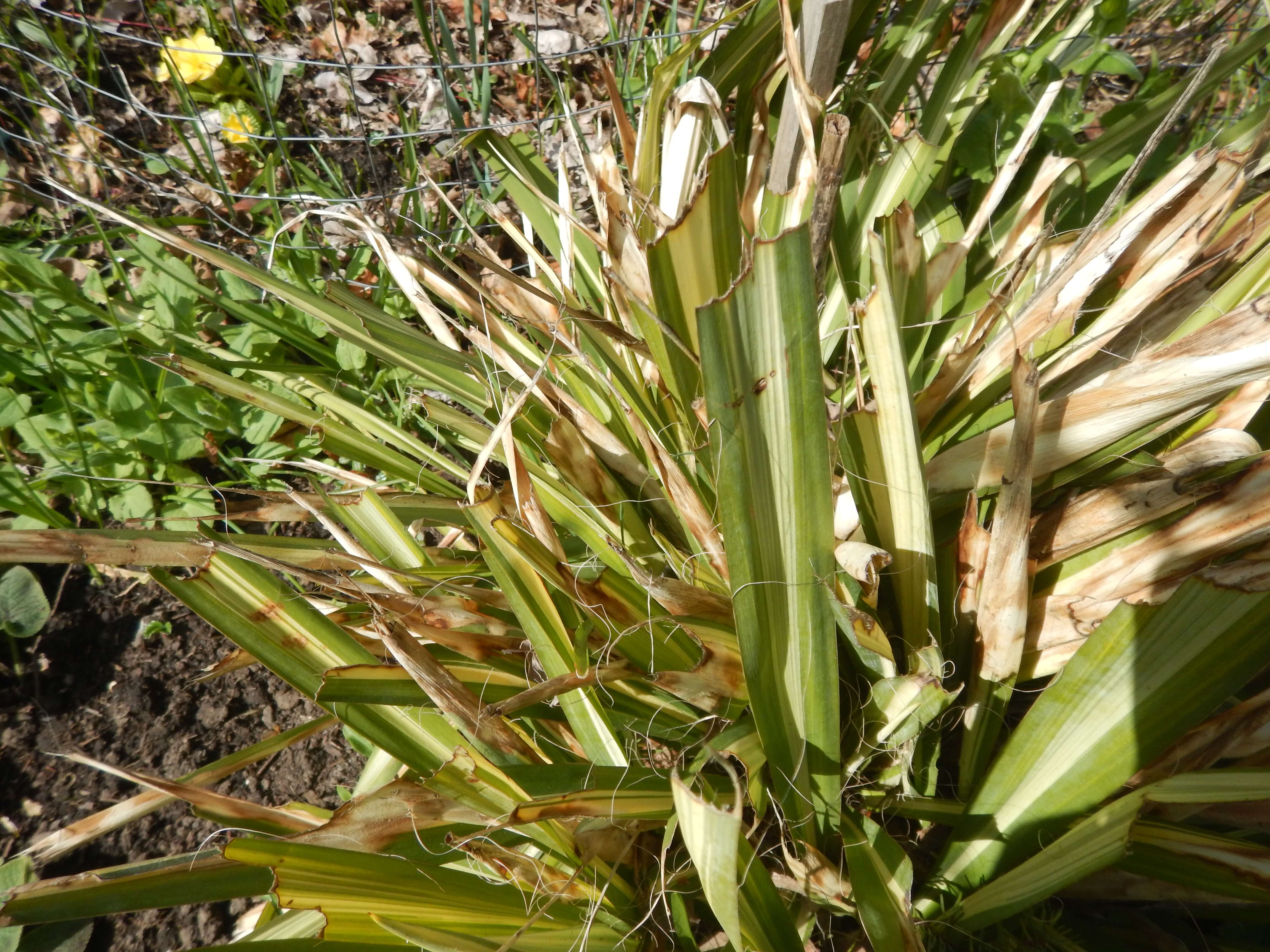
Even variegated yucca is looking tattered & much worse for wear.  In our garden, the deer always take the bloom before it opens, but the leaves – – they’re so sharp  & tough & stringy!!  Good grief.  Aside from the toxicity factor, how is it even palatable?

I’ll bet the herd is glad the spring growth is on its way.

But then again…
Even in the growing season, the deer on Mt. Tolmie have taken to eating Lily of the Valley.  They never used to do that.

Licorice fern, Polypodium glycyrrhiza,Polypodium occidentale, Polypodium vulgare subsp. occidentale, many footed fern, sweet root, , garden Victoria, Vancouver Island, BC, Pacific Northwest
photo by SVSeekins

We used to have lush licorice fern in the yard.  Now it’s barely holding on.

There must be some other reason than the scarcity of winter.  I reckon it’s because our urban herd is growing, as is human density.  This dynamic presents some challenges:

  • Housing is taking up a higher percentage of space in a city lot.
  • In turn, that increased housing is reducing the size & number of gardens.
  • There are more & more urban deer – – grazing on fewer & smaller gardens.
  • The deer are getting hungry.

I’ve improved some of the caging around our garden beds.  I’m not much of a fan of that look, but it’s better than naked shrubs & dead perennials.  It’s getting more difficult to decide which plantings to leave exposed.
I still enjoy seeing wildlife in our neighbourhood.
We’re both caught between a rock & a hard place.

-30-