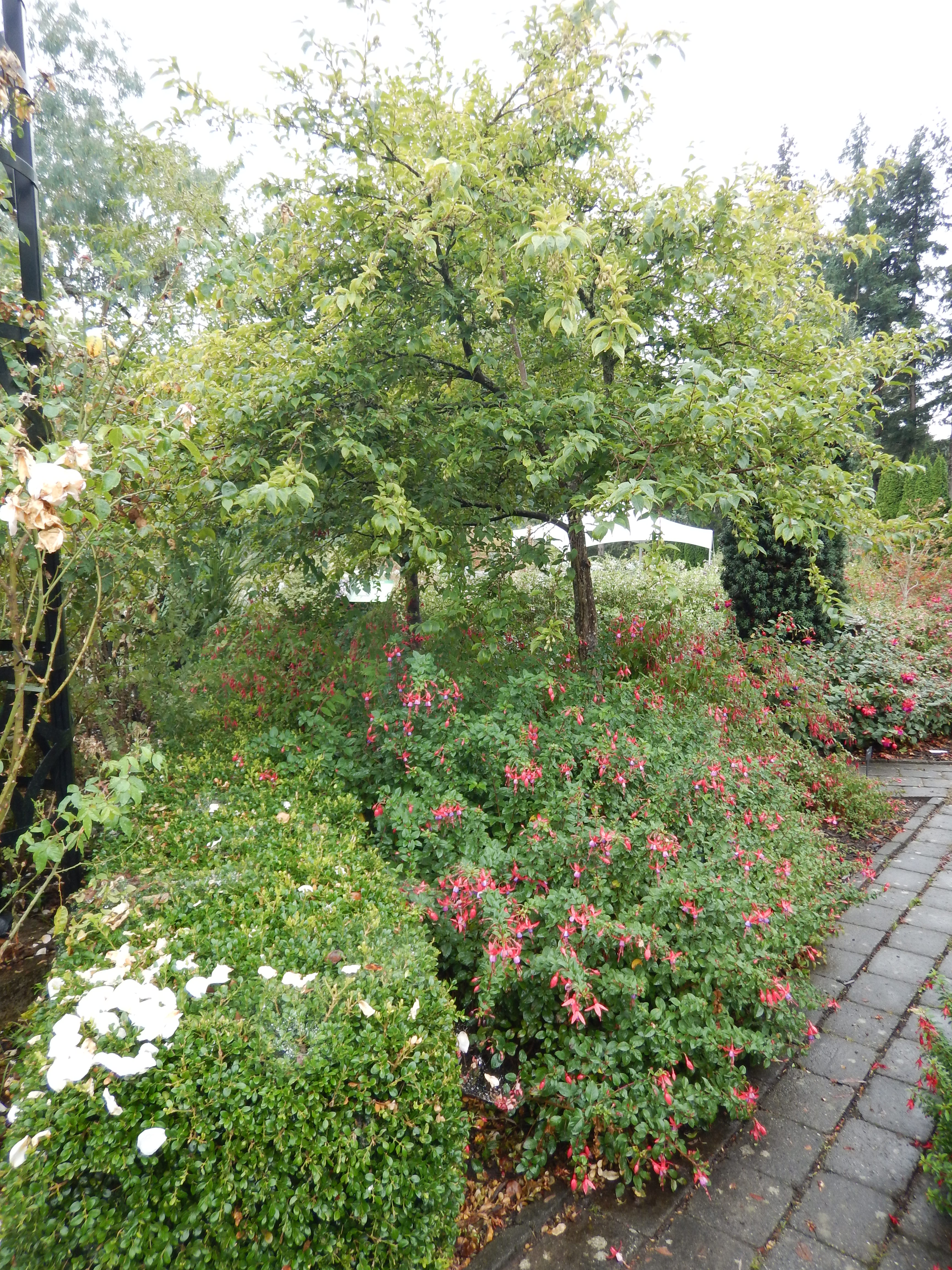
There are tall hedging shrubs and shorter mid-border shrubs…
Others that are so small they’re classified as perennials instead of shrubs…
photo by SVSeekins
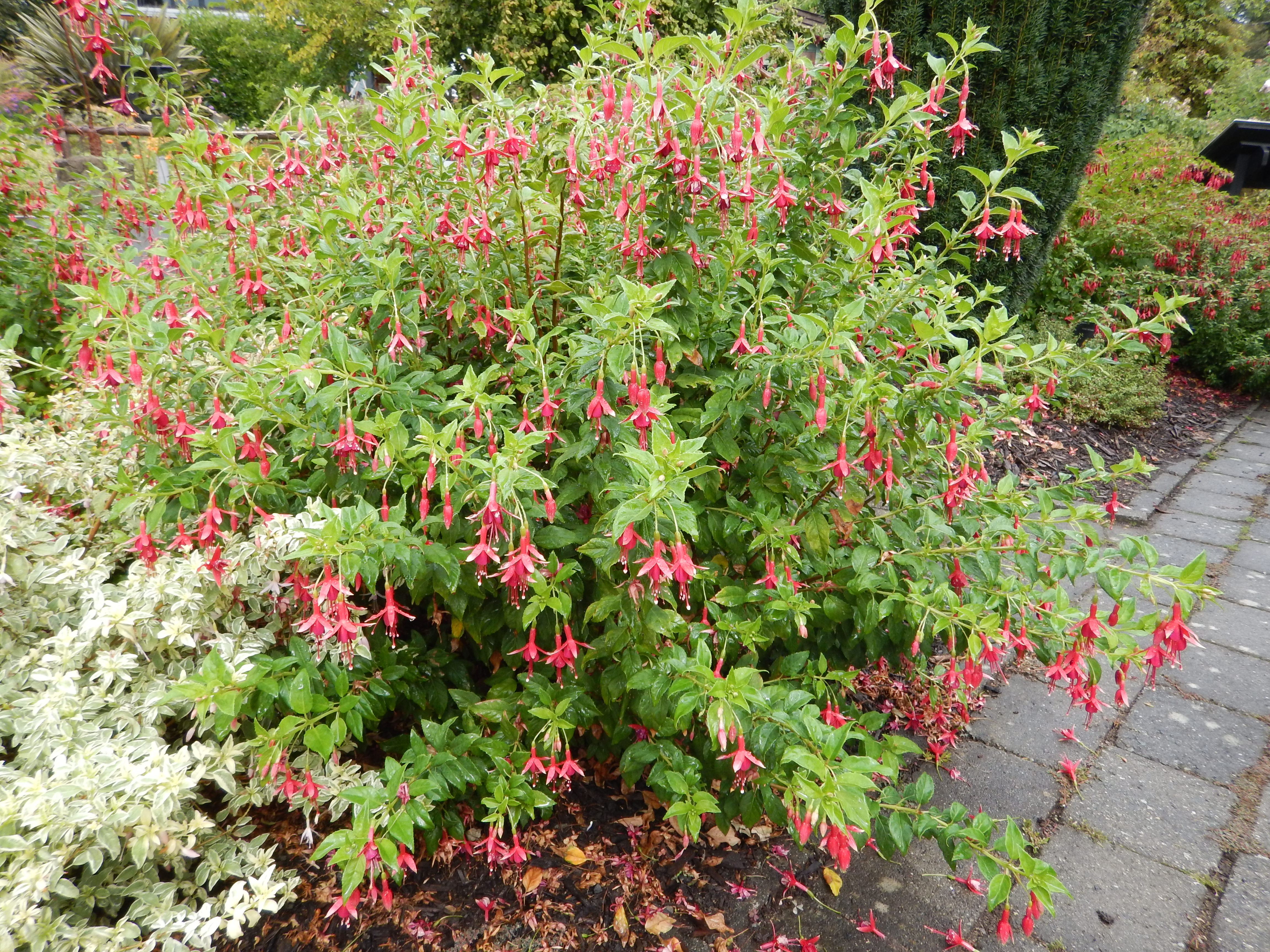
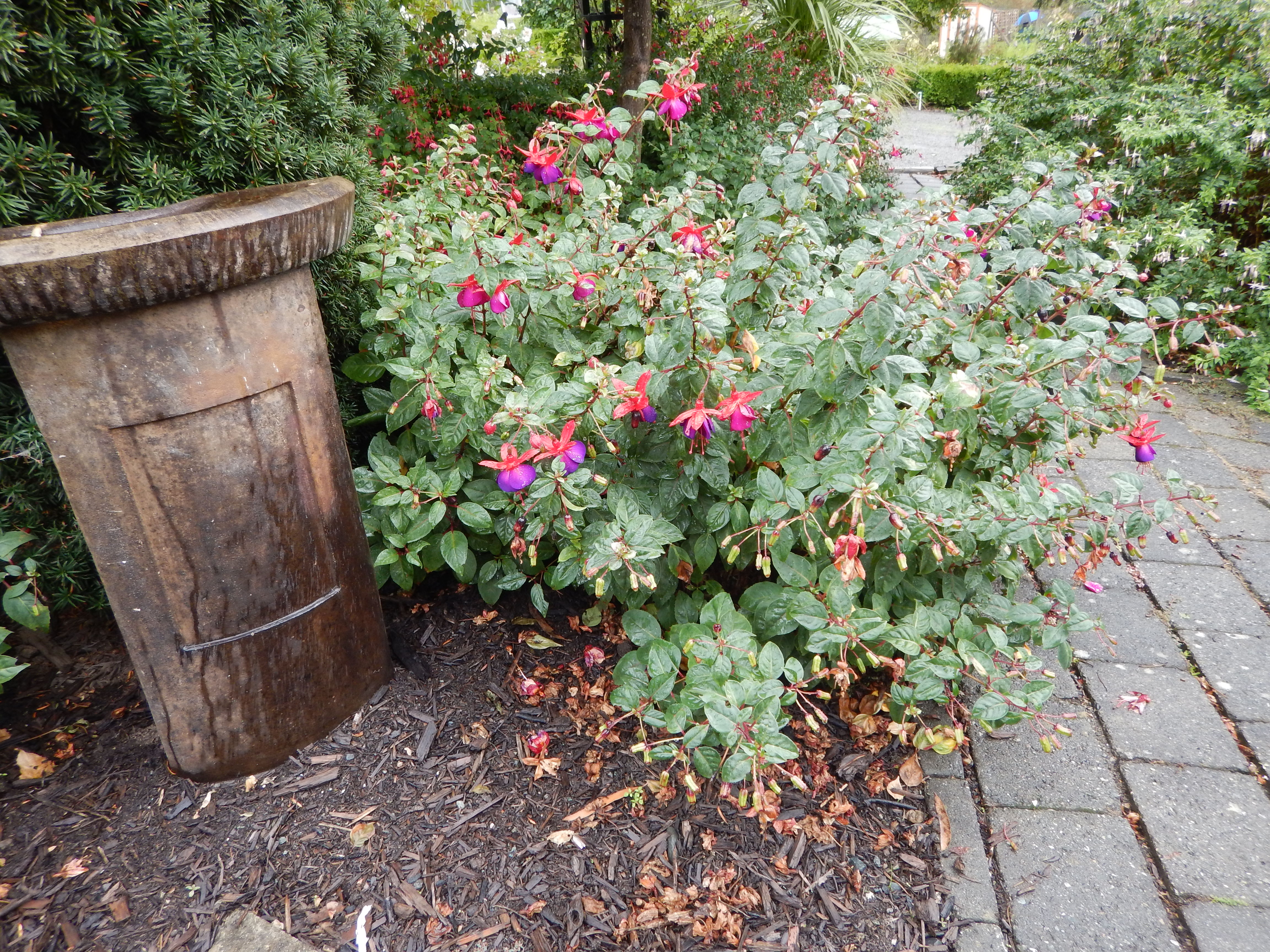
Most have flowers with red sepals and purple petals in the centers…
photo by SVSeekins
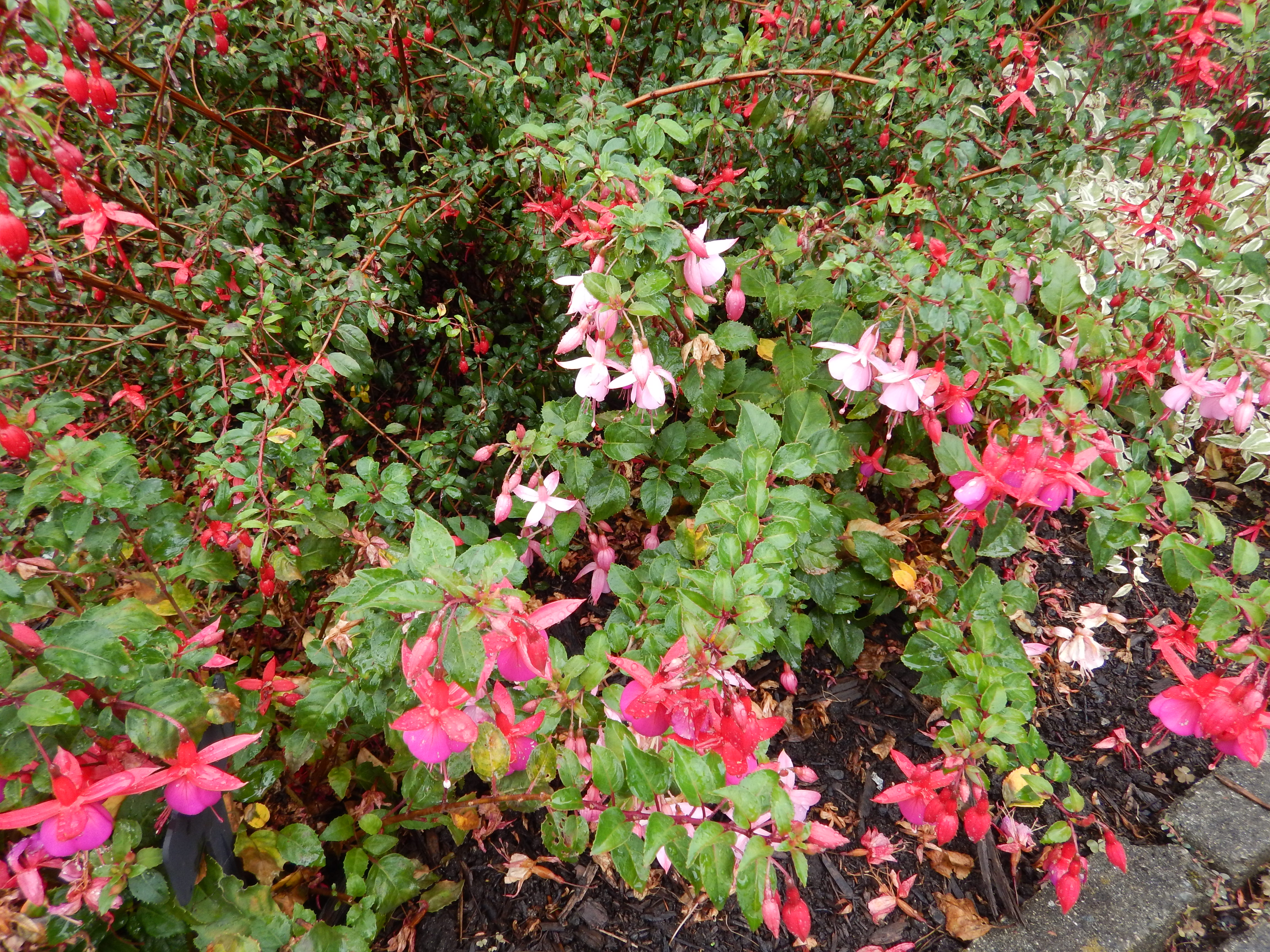
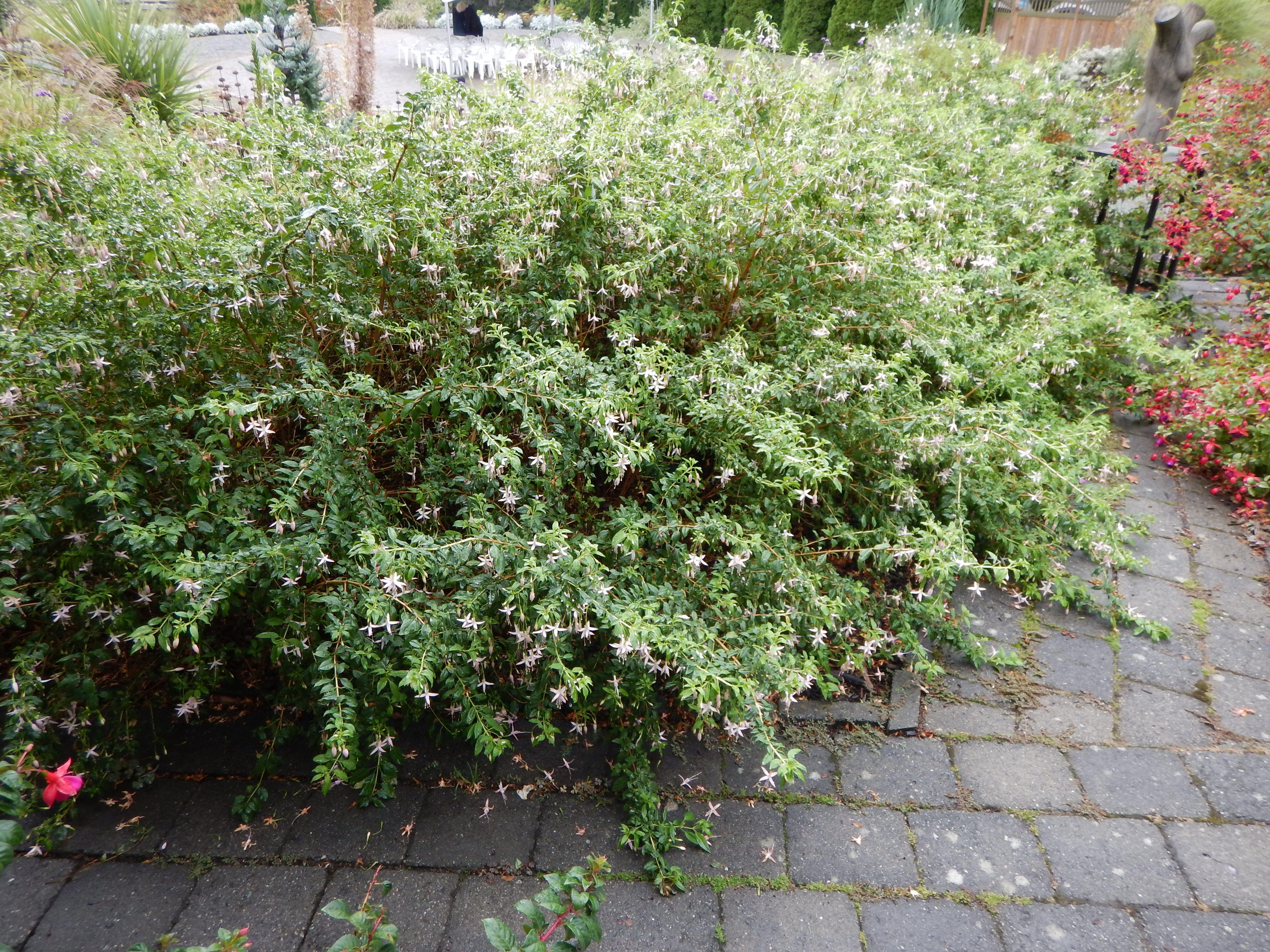
But others are pink… or white… or even orangey…
Most leaves are forest-green,
but others are lime-green,
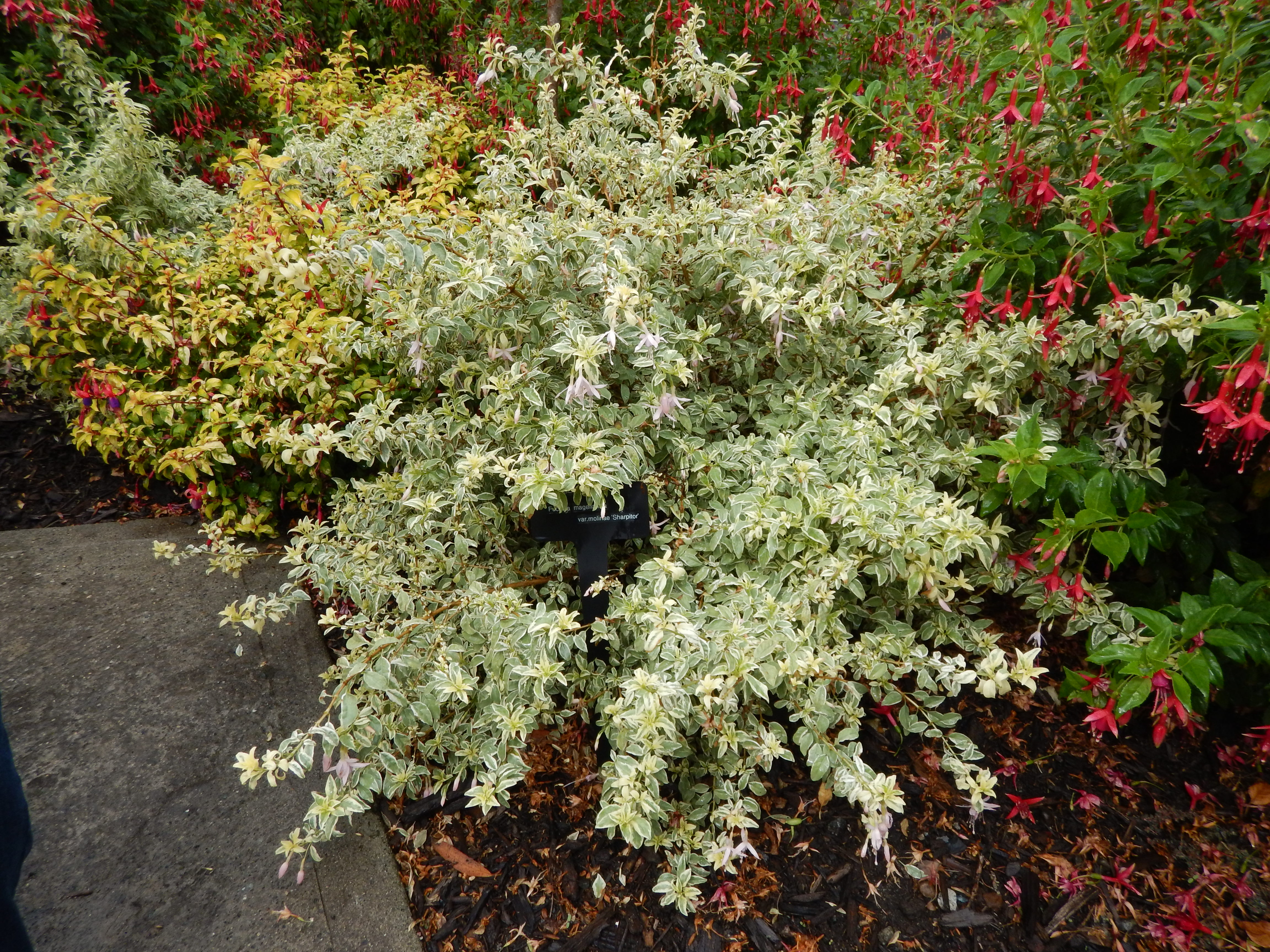
or variegated-green. These really show up against a bit of shade.
photo by SVSeekins
There are so many species, sub species & hybrids!
photo by SVSeekins
Now that I look more closely, I’m thinking my garden’s hardy fuchsia might be a F. coccinea instead…
maybe?
Either way, I’m stoked to grow a plant that looks so exotic. Check out the variety of Fuchsia that are winter hardy for gardens in the Pacific Northwest (Canada & USA) :
The North West Fuchsia Society
Perhaps there’ll be a few varieties at HCP’s annual Fall Sale coming up on October 1.
FYI – these photos show only some of the hardy fuchsia varieties growing in the gardens at HCP
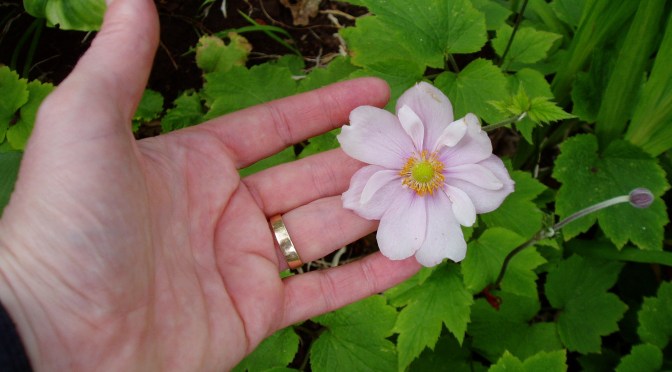
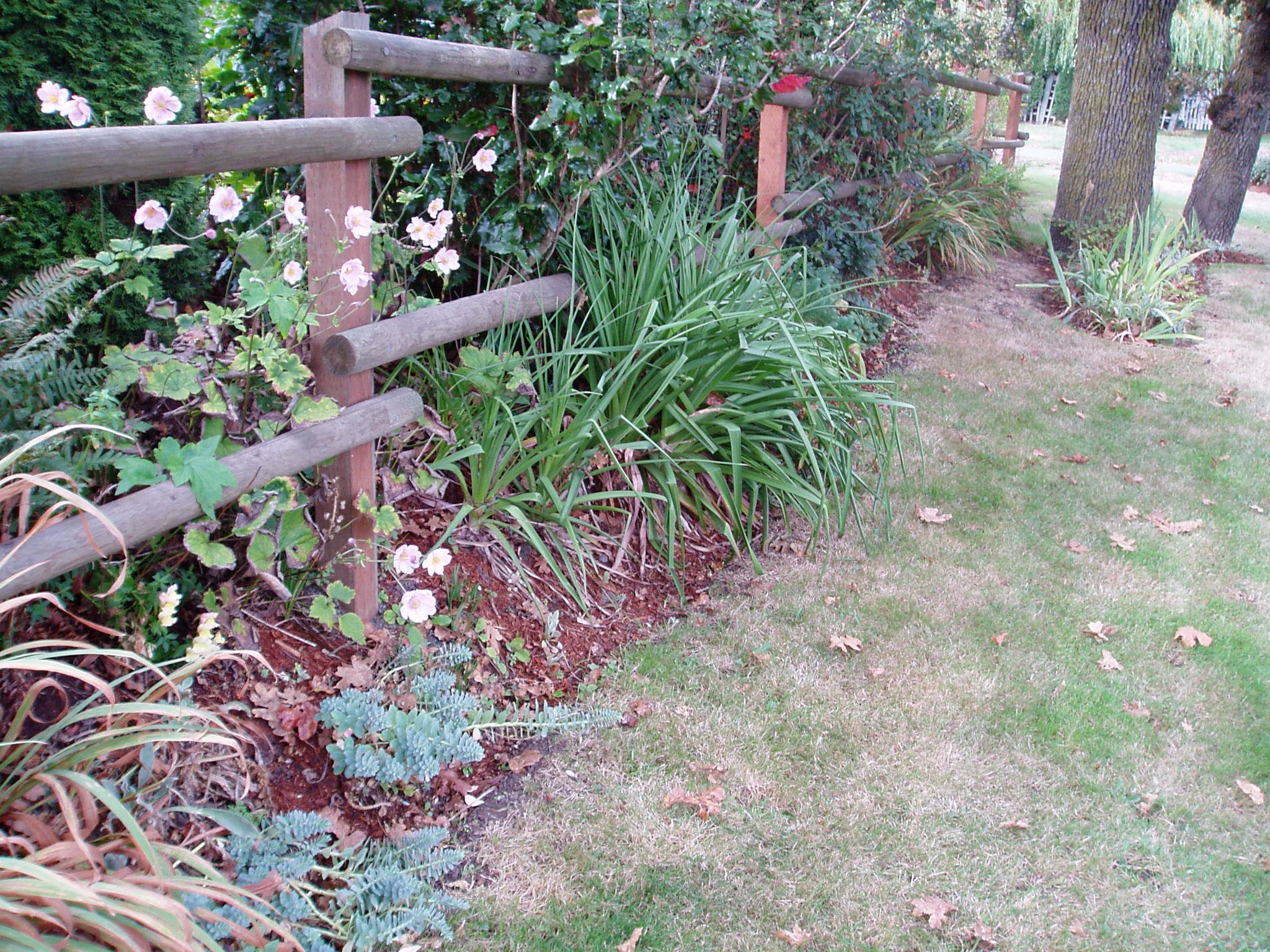
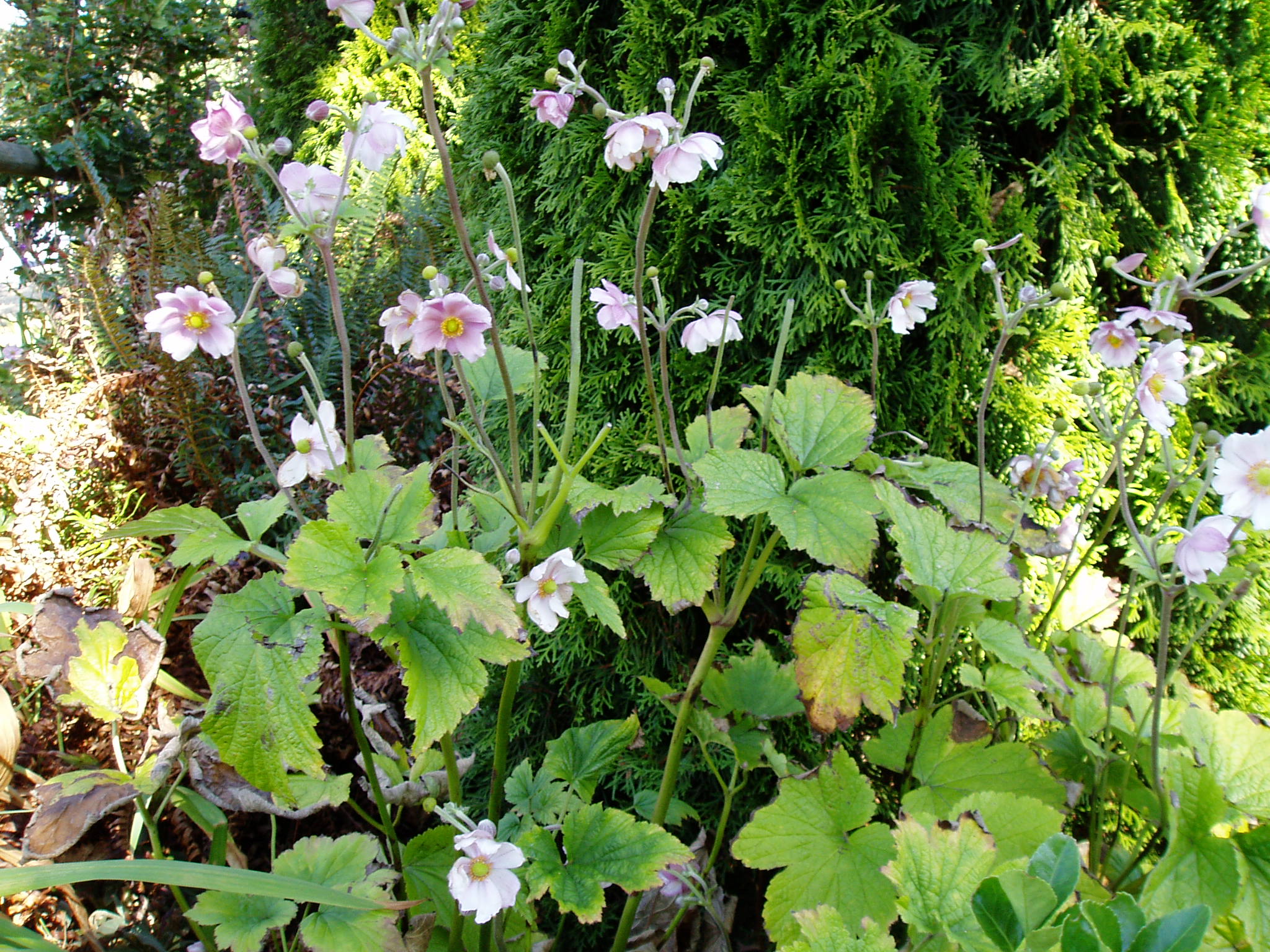
With waist height blooms twirling in the breeze, Japanese anemone caught my eye shortly after moving into Richmond House.
photo by SVSeekins
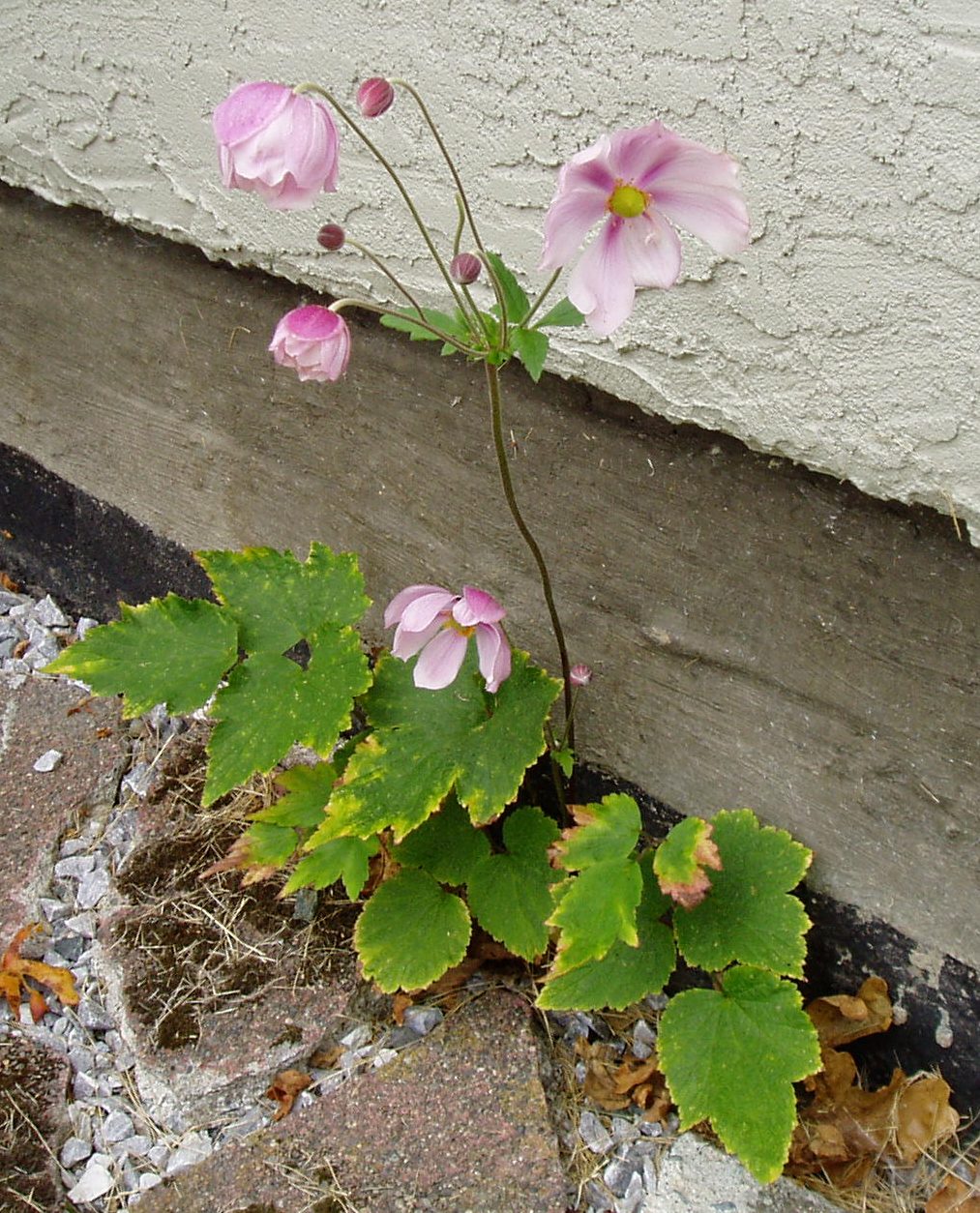
A good patch grew close to the house foundations, but it had to go because of the drain tile project. Happily, Japanese anemone transplant like a dream. Their roots run along just under the soil and don’t seem bothered about being split up a bit.
photo by SVSeekins
Initially, the deer seemed to leave the Japanese anemone alone, so I’ve transplanted it into several locations around the property. Deer grazed each plant to 8 inches along their regular routes, so it rarely bloomed.
Beside the busy bus stop or along the crowded driveway, the deer leave Japanese anemone alone. I’d say it’s a salad of opportunity.
photo by SVSeekins
In their favour, Japanese anemone is hyper-resilient.
After the deer eat it, it comes right back.
After I shift it to a new location, it comes right back.
A very determined specimen survived the soil removal 8 feet deep during drain tile renovations.
Considering that plant is happy so close to the foundation wall, under the eaves where there’s no rainfall nor irrigation – – I’d say it qualifies as drought tolerant as well.
photo by SVSeekins
It’s nice to have a plant that is happy in dry shade. Dappled shade works well, but it struggles in deep shade.
Its lengthy blooming period is a big plus in my books. The pink blooms decorate the garden starting in July and wrapping up in December. That’s 6 months of colour! After that, I still enjoy the seed head through winter.
photo by SVSeekins
With all of these qualities, some might consider Japanese anemone invasive. I don’t really look at it that way. Certainly, it is determined, but I haven’t found it popping up in areas where I haven’t put it. My advice would be to think twice before transplanting specimens or when choosing a new planting site.
I may live to regret this. Have you?
-30-
UPDATE – SEPT. 2024 Name: Alicia Subject: Japanese Anemone COMMENT: I hope this finds you well! Thank you for your post many years ago on your rescued Japanese anemone. I just rescued one in a remote part of property border – almost overtaken by blackberry bushes. I had never seen one and finally found it is Pamina (not Curtain Call Deep Rose). I was so careful removing with spade shovel, like surgery… put in big pot ensuring to keep some of its native surrounding soil near barely-there roots. I know they tend to pout fir awhile if moved… but 2 weeks later, it is showing zero new growth (lost flowers 1st 24 hrs of course, but left on little leaves by flowers), but what green leaves remain have not deteriorated further. Fingers crossed with only 6? weeks to first frost that it forgives me saving it (3 clumps). Would you be willing to sell an off-shoot? I just fell in love with it! REPLY: Hi Alicia, It’s lovely to hear from you. It’s exciting that you’ve found a few anemones you love. My fingers are crossed for their long-term survival… My anemones are not really flourishing. In spots where they are repeatedly grazed by deer, they’ve given up the ghost completely. In the super-dry spots on our rocky outcrop, they’ve been gone for years. I really miss them beside the driveway where they were somewhat protected from the deer, but this year, NADA. 😦 There are a couple left in our courtyard & that’s about it. (Sorry, but that’s too few to share.) It’s so strange, especially after they’ve flourished on this property for decades. First, I thought maybe the -15C last winter killed them off — but they’re listed as zone 4-8, so that doesn’t make sense! Hmmmmmmm …. I”l’m asking around for thoughts from other gardeners. Any ideas? Take Care, SV
RESPONSE – Dear SV, thank you for your thoughtful reply. Yes indeed, my friend – garden growing changes last two years that are not even remotely semi-predicatable or logical. Here where we are (3 driveways from Pt Roberts border), exactly as you experience – areas/patches of total loss on one parcel (hardy bushes or perenniels – both young & old), but very next parcel loses nothing. Not just the harsh deep freeze, it seems (and winter here in this warm sunny microclimate is becoming more pronounced every year – the new normal?). These are seasoned veteran gardeners/neighbors that have lived here for decades. I have poured a lot of love and hope into my rescue transplant of the 3 anemones, and broke down and bought 2 online (at least I know the one from Proven Winners will be stunningly healthy- always a fan of theirs). Fighting that Blackberry bush… Seeing that flower on its 4′ tall stalk took my breath away – will never forget that moment! (and I enjoy witnessing my orchids throwing up baby Keikis – but this was a “Whoa! What IS THAT!?”) Do you recall how long it took your transplanted japanese anemones to respond (1- 3 years is average I read of), or immediate for you? Very best, Alicia
REPLY – Hi Alicia, Gosh, How did my transplants respond? That’s a bit of a toughie as it was some years ago now. I was shifting a good number of them & distributing them into several different places. It was an experiment to see what spots they’d like the most (hoping they’d like them all.) If memory serves, the specimens that I was able to dig up in big clumps of soil & replant immediately barely skipped a beat. Others ended up being bare-root transplants. Those certainly drooped but mostly bounced back inside the year. There were so many that a decent percentage could’ve kicked the bucket & I wouldn’t have taken much notice. At the time I was dealing with so many new plantings that my attention was split in many directions. I’m not certain what time of year I was doing this shifting… It was a rescue effort in advance of the drain-tile renovation, so most likely early spring. At that time, the garden was very young, so I was watering at a minimum a couple of times a week, which would have been very helpful for the transplants. These days I do most of my divisions & shifting in the fall to avoid the stress of surviving Victoria’s dry summers. (Now that our garden is mature, I only water every couple of weeks through the summer. I’m confident that the J.anemones prefer more moisture than that). A neighbour has lots of Japanese anemones (a darker pink than mine). In her moist beds, they’re so happy that they’ve become a bit of a nuisance. So, my expectation is that if you keep your treasures moist, they’ll respond well. Cheers, SV
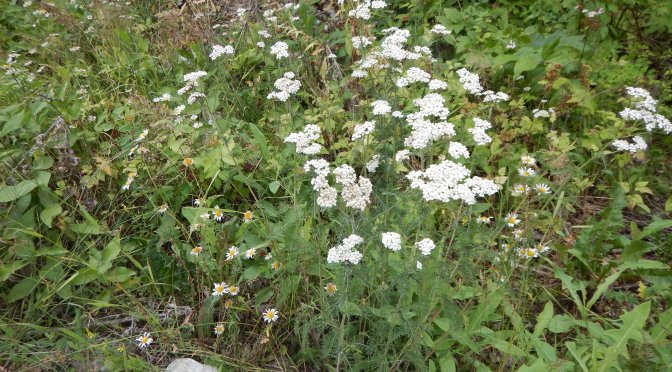
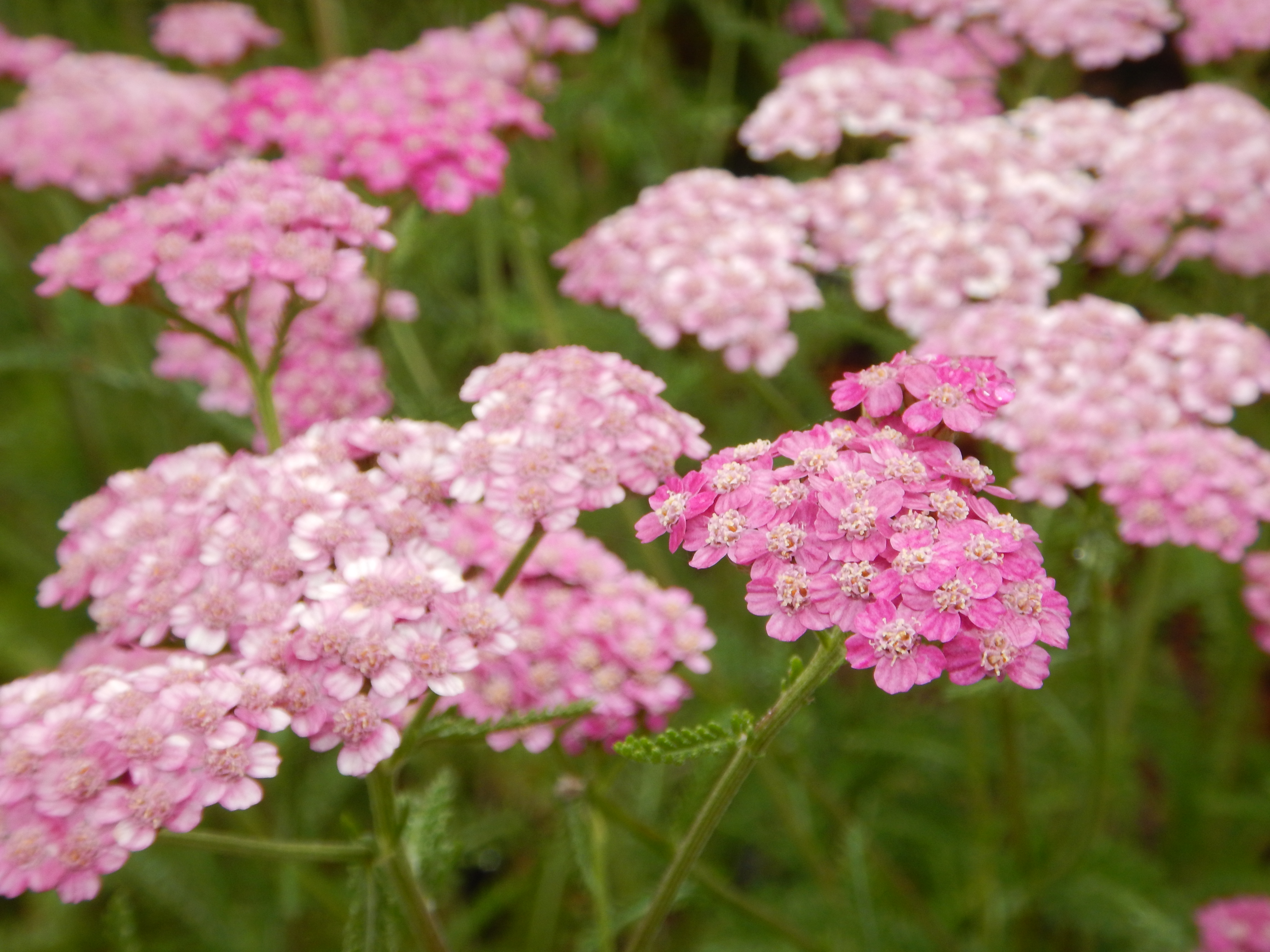
As a kid I thought wild yarrow was a boring flower. Its helicopter-landing-pad flowers might be interesting to butterflies & other pollinators, but I couldn’t get past the bland white petals.
Little did I know, but there are varieties beyond our native wildflower. Just a block or so away from our current garden, a neighbour grows a striking stand of yellow yarrow (probably Achillea ‘moonshine’ in a very sunny, & dry border.
photo by SVSeekins
Now that I care for my own garden, I can appreciate a plant that rarely needs water or attention.
It rocks that our local deer left it alone when I added it to our landscape.
It was an additional bonus that, after cutting back the flowering stems in autumn, a ferny mound of foliage remained evergreen.
photo by SVSeekins
More recently I saw a red-flowering yarrow (likely Achillea pomegranate). I’m not sure why I’d assumed our native yarrow was the only variety, but I’m delighted it isn’t.
photo by SVSeekins
There’s a place for this one in our garden, too. Even though the West Coast is a rain forest, very little of that rain falls in July or August. Tough ornamentals are treasures.
It’s good to note that if regularly irrigated, yarrow is a vigorous spreader. The easiest way to keep it in a manageable clump is to reduce irrigation. Easy-peasy. I can do that 🙂










 Garden Variety Life