The Promise of Apples in 5 Steps

This year C wants a good crop of apples, so we’re trying to do everything right.
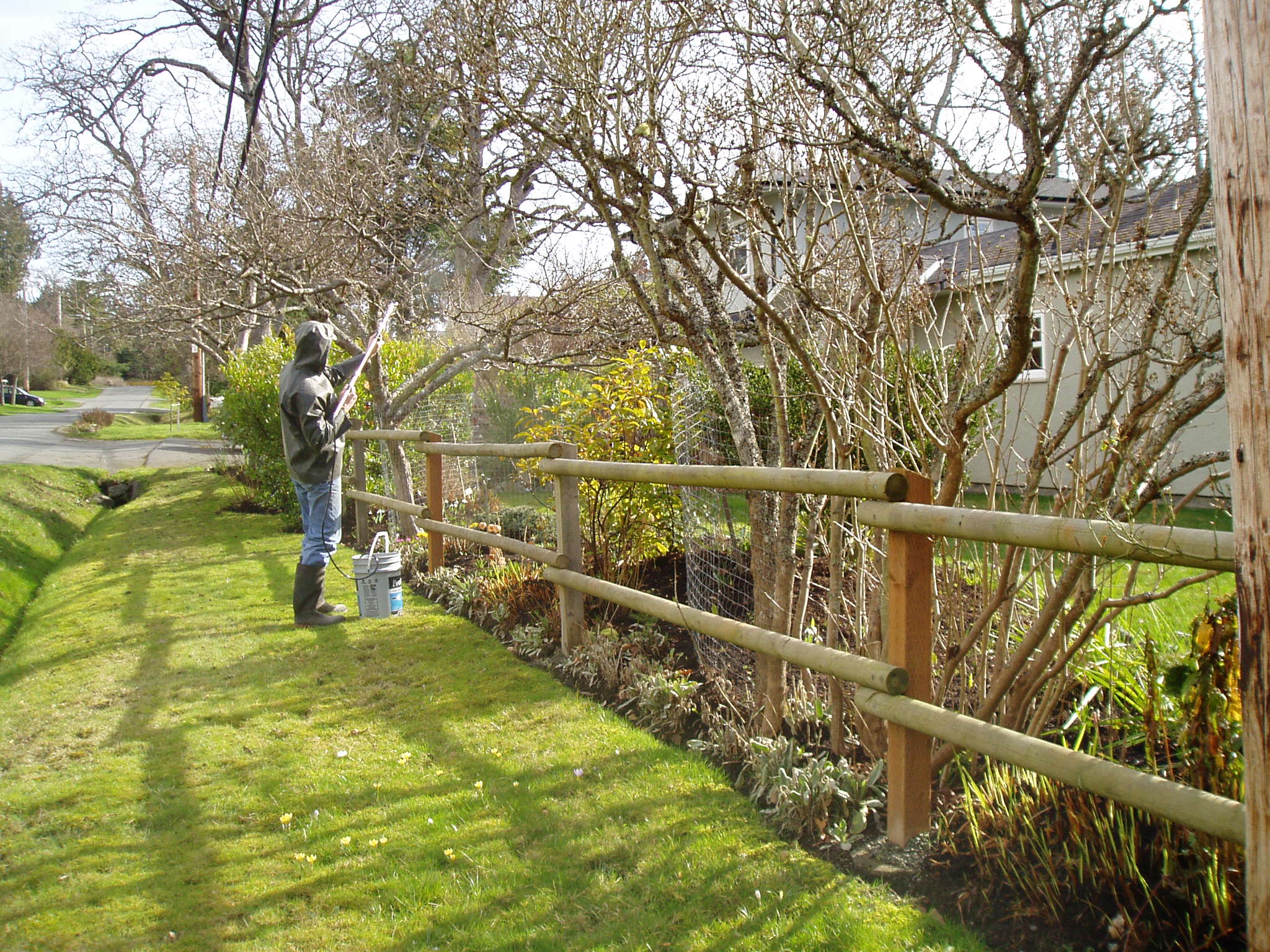
spraying the Sparten apple tree in February
photo by SVSeekins

STEP 1.  – SPRAY
In February C mists the 2 apple trees with dormant spray in hopes of warding off the regular infestation of those tiny green worms.  You know the ones: they float down from the Garry Oak & go crazy on the tasty apple leaves, before they burrow into the little apples.

It’s not easy to find a dry day in our West Coast winter for getting that job done.  It’s even tougher to follow with a few dry days that allow the sulphur/oil to do its magic before the rains rinse it off .

STEP 2  – PARTNERS
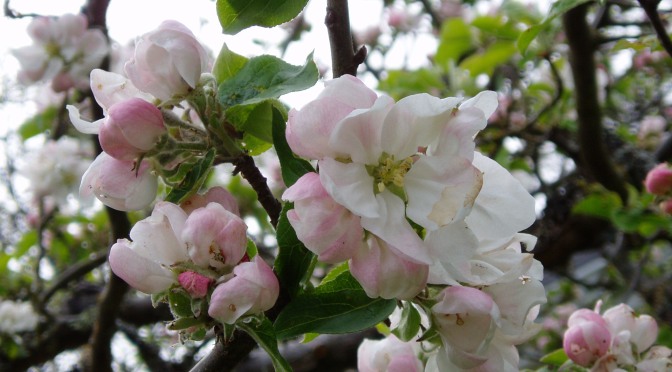
The next challenge is pollination in spring.   If it’s too windy, the blooms blow away.  If it’s too rainy, the bees can’t get to the flowers to pollinate them…  There’s not much we can do except cross our fingers for sunshine again.
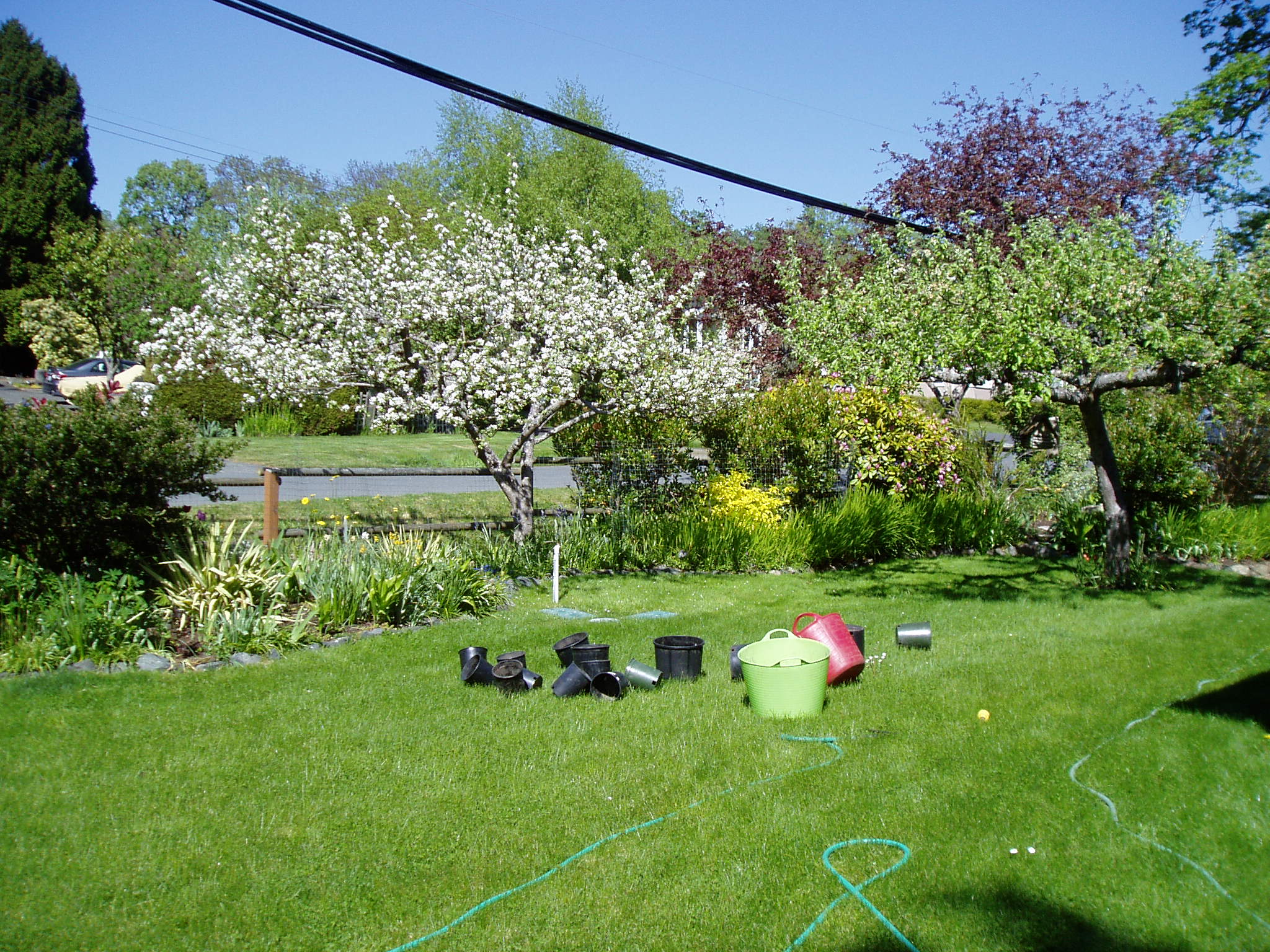
Sparten & Gravenstein bloom overlapping is rare
photo by SVSeekins

And there’s also that concern over different apple varieties blooming at different times.

A Gravenstein blossom won’t turn into an apple unless it receives pollen from some other tree.  Strange, eh?  And Gravensteins are early bloomers – – hardly anything else is blooming then, so we rarely get much of a crop.

This year the weather was odd enough that the Gravenstein bloom was later & actually overlapped with the McIntosh bloom for a couple of days.  Woo Hoo!

after the Gravenstein leaf feast
photo by SVSeekins

STEP 3  – PROTECT
By June the leaves fill in.  I was disappointed to see signs they’d been feasted upon.

tent caterpillars in a Russian Laurel
photo by SVSeekins

Sometimes we find tent caterpillars up in the branches.  As a kid I thought fuzzy caterpillars were cute.  Once I saw a whole mass of them coming out of their tent I was grossed out.

By this stage the fruit is starting to form, so we’re not willing to do any additional spraying.  I prune the tent out of the tree, and seal the escape artists into a ziploc bag.  How much energy can a tree put into apple production when its main energy collection system is under such attack?  Bummer.

gravenstein apple in spring - mcu
photo by SVSeekins

STEP 4 – THIN
When I first heard of thinning apples in spring, it sounded crazy! I’m always so excited to see all the new apples. Doesn’t it make sense to just let them ALL grow?  But, especially after a  successful pollination, even nature will cull a heavy load.  Now I think about how many apples the tree can support…
and do we want many little apples?…
or a few really big apples?

This year I can already spot a few Gravenstein apples hiding in the foliage.  The McIntosh are easier to spot.  Before the summer solstice arrived, C cut out about 1/3 of the crop from the McIntosh.  There’s so many up there, he figures he might just take 1/2 the crop to give the rest a chance to mature.

A full crop
photo by SVSeekins

A couple of years ago I had culled 10 gallons of golf-ball-sized apples from the McIntosh.  It wasn’t enough.  By August we worried the limbs might break from the increasing weight.  We used stakes to help support the branches!

STEP 5 – ENJOY
Now that summer is here, the chores get simpler:
Wait… and water.

If the summer continues with the lovely heat & sunshine of last weekend, I’m planning to put a lounge chair under the tree & enjoy the mist while the sprinklers do the work.  🙂

-30-
© SVSeekins and Garden Variety Life, 2013

Let there be Day Lilies

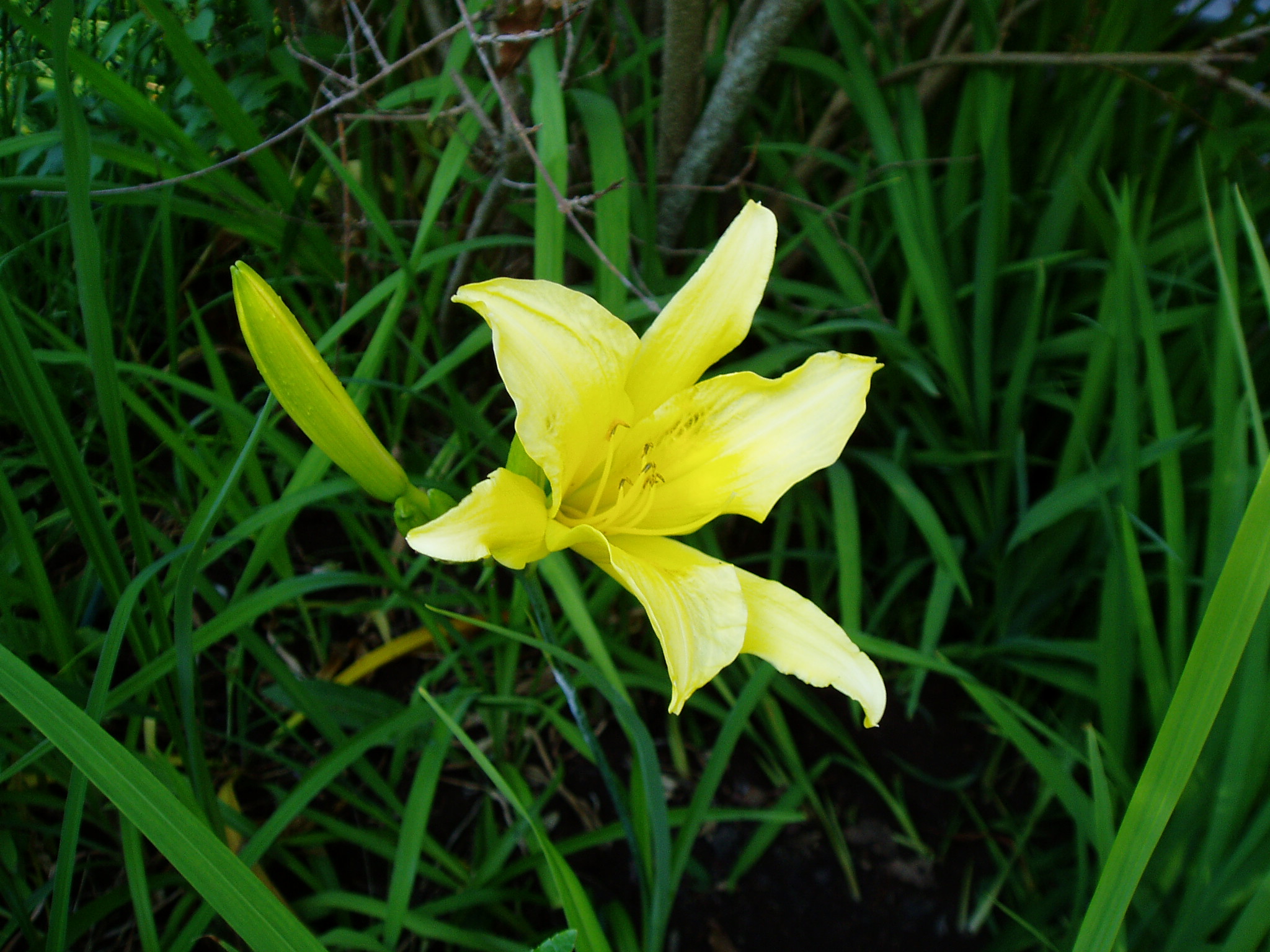
spring blooming Daylily
photo by SVSeekins

Day Lilies are easy to grow & are dependable spring & summer bloomers.  They’re also edible.  I’ve heard that the chefs at Sooke Harbour House like to stuff the blossoms & serve them at dinner.

Well, that might be interesting & all, but I still have a hard time even picking the flowers in our garden.  They’re just so decorative as they are!

Most often the choice is not mine.

sharing our garden with deer
photo by SVSeekins

For several years I’ve watched the lilies develop promise.  The bud just starts to turn colour, & I think, “Tomorrow it will open into a beautiful flower.”

It turns out that the deer think, “‘Today it’s at its peak tastiness.”

the Daylily bud has been harvested
photo by SVSeekins

Midnight snack.

This year it’s different.  This might not look spectacular as a botanical garden display bed of day lily, but in a yard that’s shared  with deer, I’m pretty excited to see so many blossoms at one time.

spring blooming Daylilies ws
photo by SVSeekins
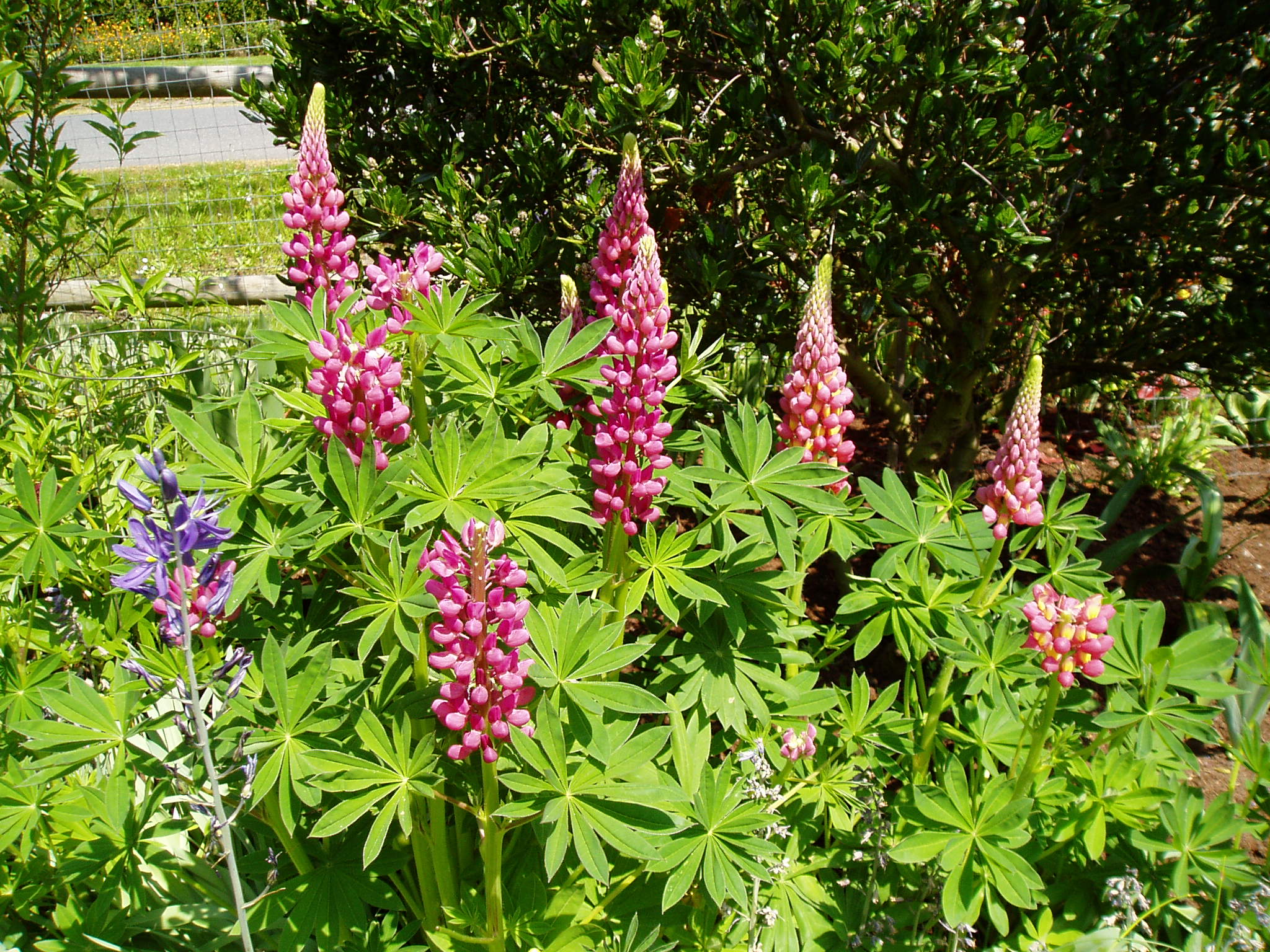
lupin blooms
photo by SVSeekins

So what’s the deal?  I’m not really sure.  I haven’t sprayed any stinky deterrent around the place.  Perhaps the lowly day lily is just out of fashion for deer this year?

Yeah baby  🙂

One thing I have noticed that’s also unusual, is that the lupins have been nibbled instead…    OK… 

the fresh tasty top of the lupin is harvested
photo by SVSeekins

Lupins are easy to grow & are dependable spring bloomers.  Fair enough.  This year I’ll enjoy day lily blooms & consider it a fair trade-off.

-30-
© SVSeekins and Garden Variety Life, 2013
Living Wall Garden

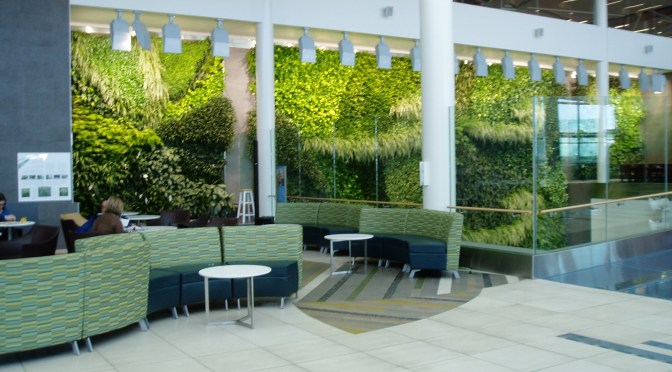
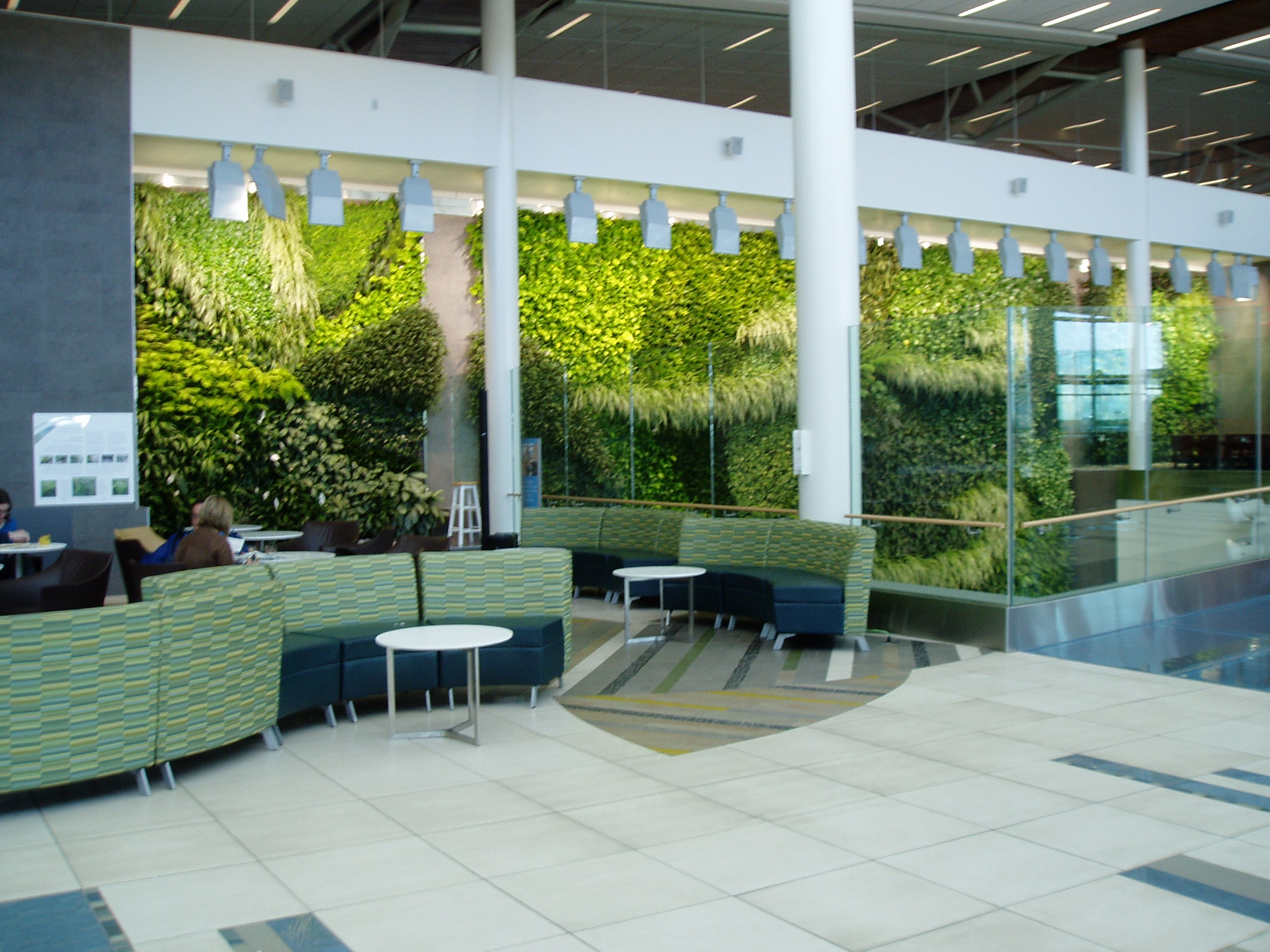
Last week I flew into Alberta expecting their usual June entertainment.  Hot sunshine, rampant mosquitoes and evening lightning storms.  The big sky & open prairies create that kind of excitement.  I wasn’t expecting a touch of the tropics, but that’s what appeared before me at the Edmonton International Airport.

green living wall garden- Edmonton International Airport 1
photo by SVSeekins

Even though family was waiting for me at arrivals, I just had to stop & check it out.   Through the glass, I could see the wall descended a 2nd full story down into another part of the airport.  It was a massive living wall garden!

green living wall garden- Edmonton International Airport 2
photo by SVSeekins

The lounge to the left of the glass was a lovely spot for passengers to relax while waiting to board their planes.  It also allowed me the opportunity to walk up close to see if the plants were real.  They were.   🙂

This particular wall was created by Mike Weinmaster of Green Over Grey, a company that builds green walls across North America.  Apparently, Mike has a Masters of Science in Environmental Engineering & Sustainable Infrastructure.  It figures it would take some know-how for adding moist tropicals to a building’s wall without having it rot out & fall down in short order.  🙂

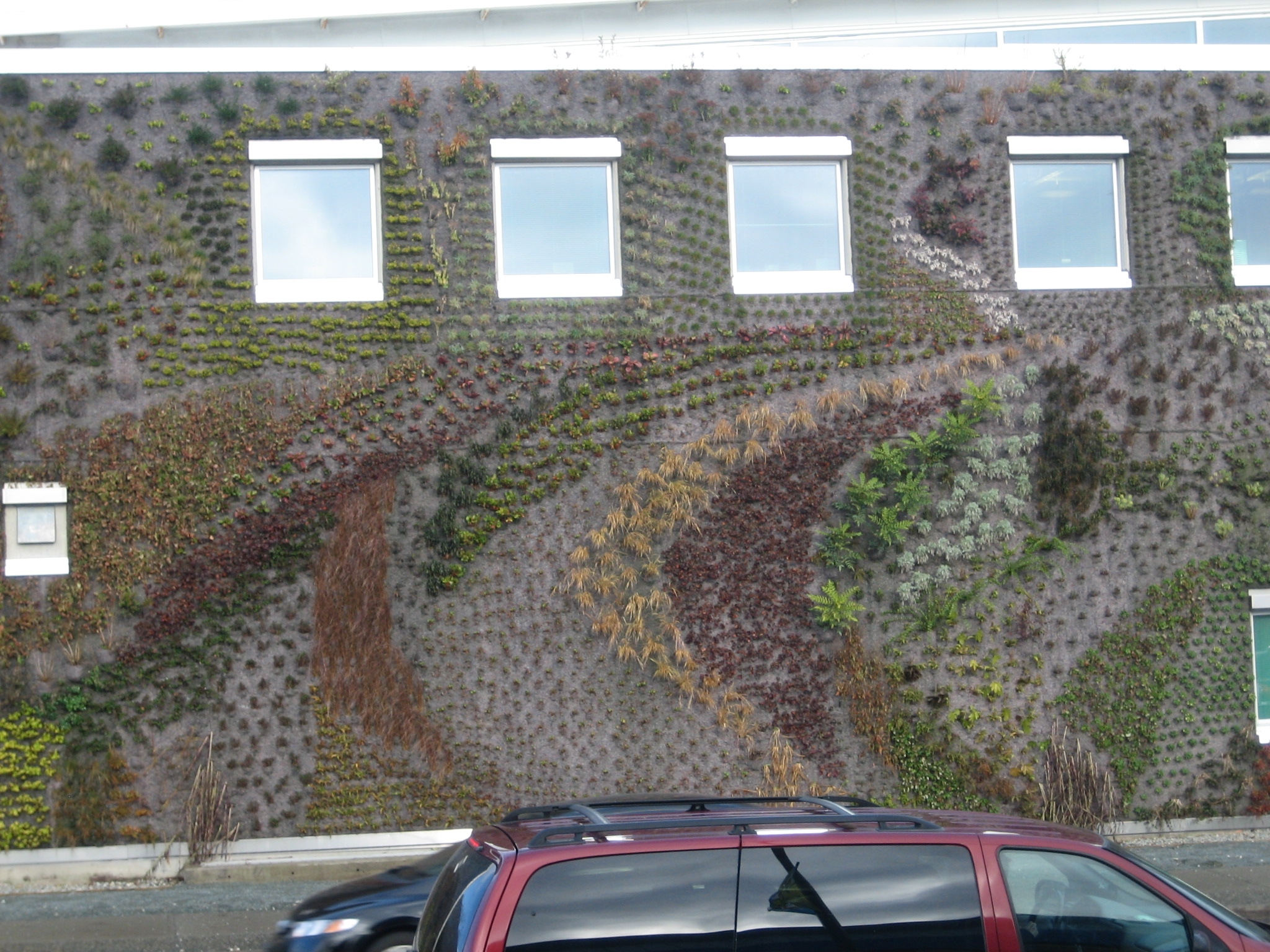
outdoor plant wall at the Surrey Library 2
photo by Barbara Hansen

As it turns out, these are the same folk who created the world’s largest outdoor living wall on the library in Surrey (Vancouver).  Some friends & I ran across that piece of public art shortly after it was planted in the fall of 2010.

It has all sorts of drought-tolerant native plants that typically thrive on rocky cliff sides with minimal soil.  I figured it was smart to add the new plantings in autumn after the stress of summer heat had passed.  The new little guys were probably much happier getting acclimatized during the fall wet.

I’ve wanted to make a pilgrimage back there, to see how the vertical garden is surviving. Imagine the 3D effect of a short mat of wild strawberries, interspersed with Oregon grape shrubs  & grasses growing out from the wall itself.  That’s depth & texture, eh?

Vertical Wall Garden inside the Atrium building in Victoria
Photo by Barbara Hansen

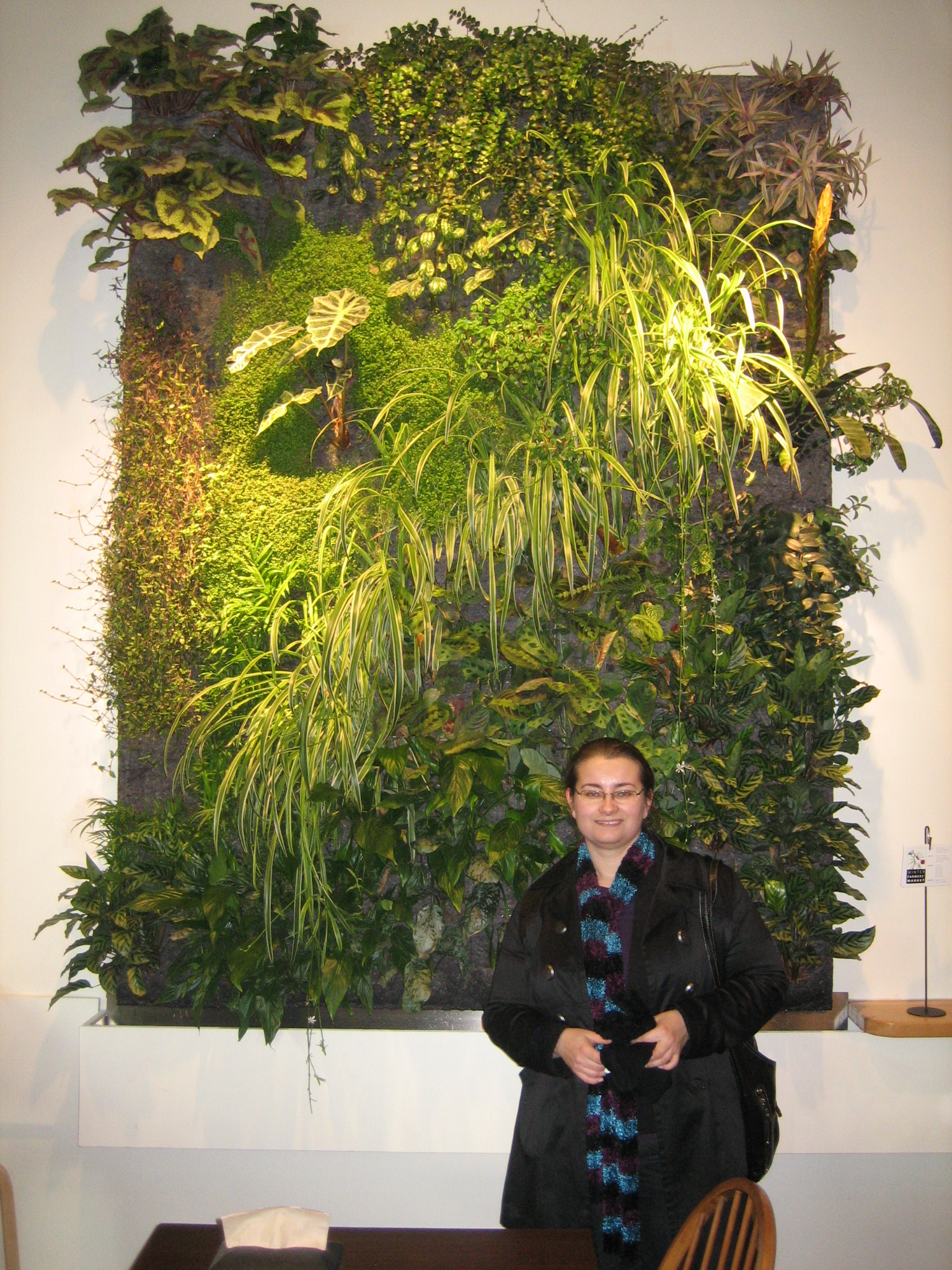
A couple of months later, those same friends from the Vancouver trip discovered a small version of a bio wall inside a little café in Victoria’s Atrium building.  When I inquired, it turned out Green Over Grey created it as well.  What wonderful botanical art!

Since then, I’ve been looking for a guest for our garden club to speak about creating a vertical garden.  More projects are showing up around town, but so far, folks are so busy building these plant walls, that I haven’t been able to get anyone to spare an evening for us.  I can understand.  These projects look pretty fun to me.  I wouldn’t want a distraction from my goal of completing one.  🙂

-30-
© SVSeekins and Garden Variety Life, 2013

Enter your email address to subscribe to this blog and receive notifications of new posts by email.

SVSeekins