Yes, I said it. “Hens & Chicks get along fine with Deer. ” I said. “They co-exists.” I said. Well that was a cocky thing to say. I’m sorry. I spoke too soon.
photo by SVSeekins
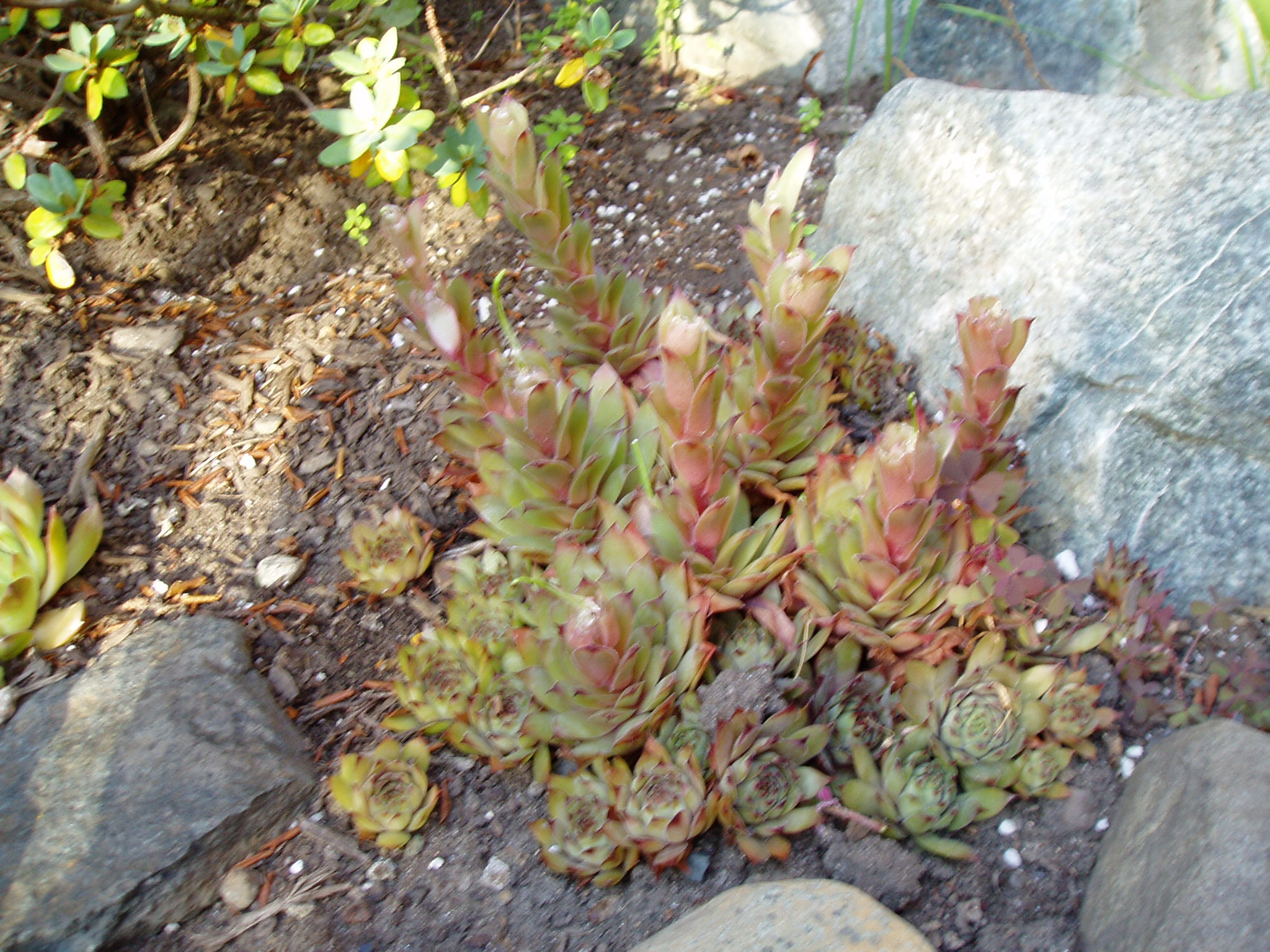
CF called me up this evening to invite me to see her flock after today’s visit from a deer…. Doesn’t that just make you FLINCH ?
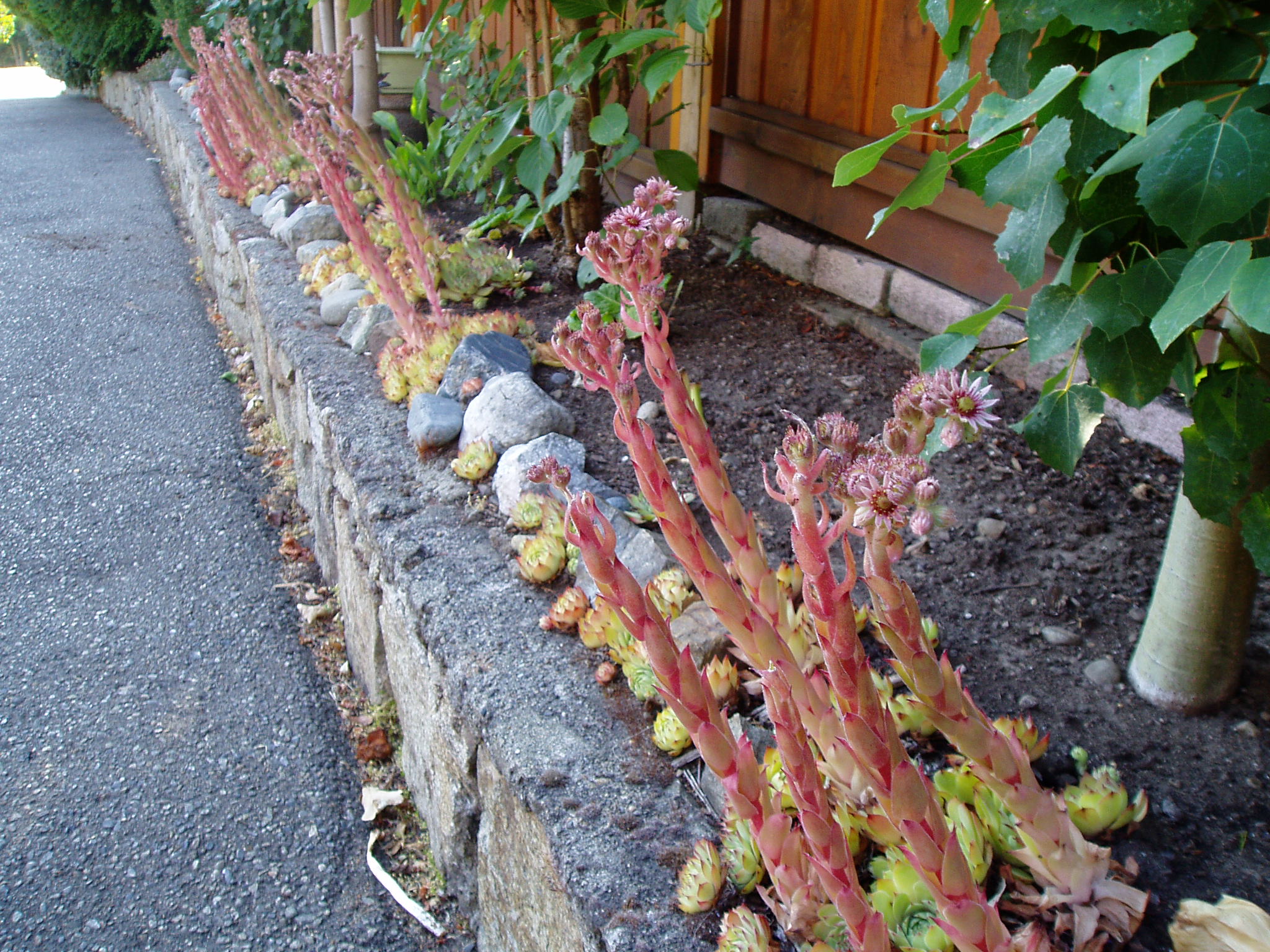
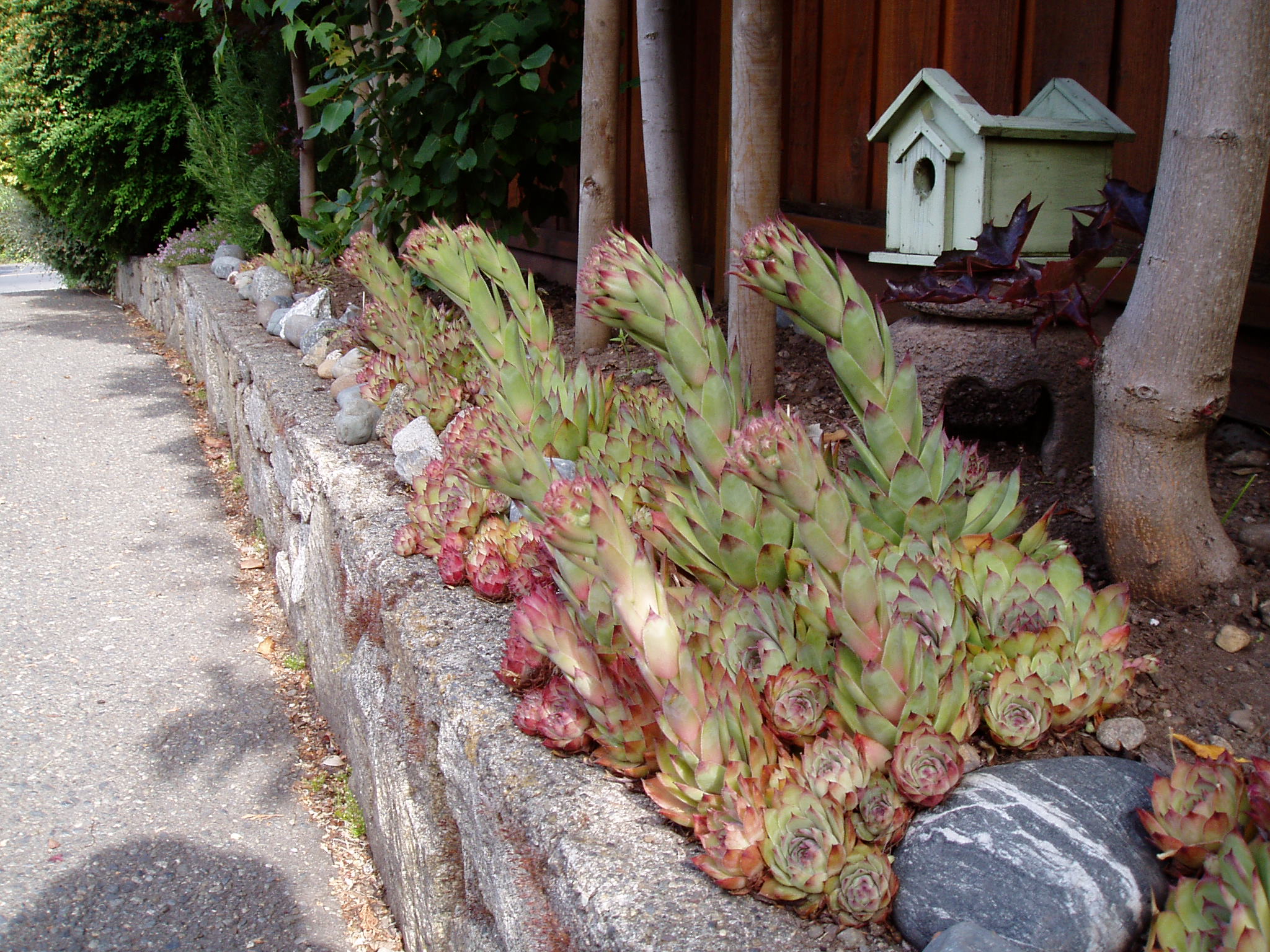
As it turns out, when the Roosters fully develop they flower on top. Who knew? Those on our mountain never seem to get that far.
photo by SVSeekins
It’s nice to see a few blooms left on CF’s plants. Isn’t it amazing how carefully the deer can select a bloom, but leave the adjacent buds for another day? How do they do that?
It’s a good thing that hens & chicks can propagate (via off-sets) without the roosters going to seed. Even so, these poor roosters… isn’t it a kick in the balls?
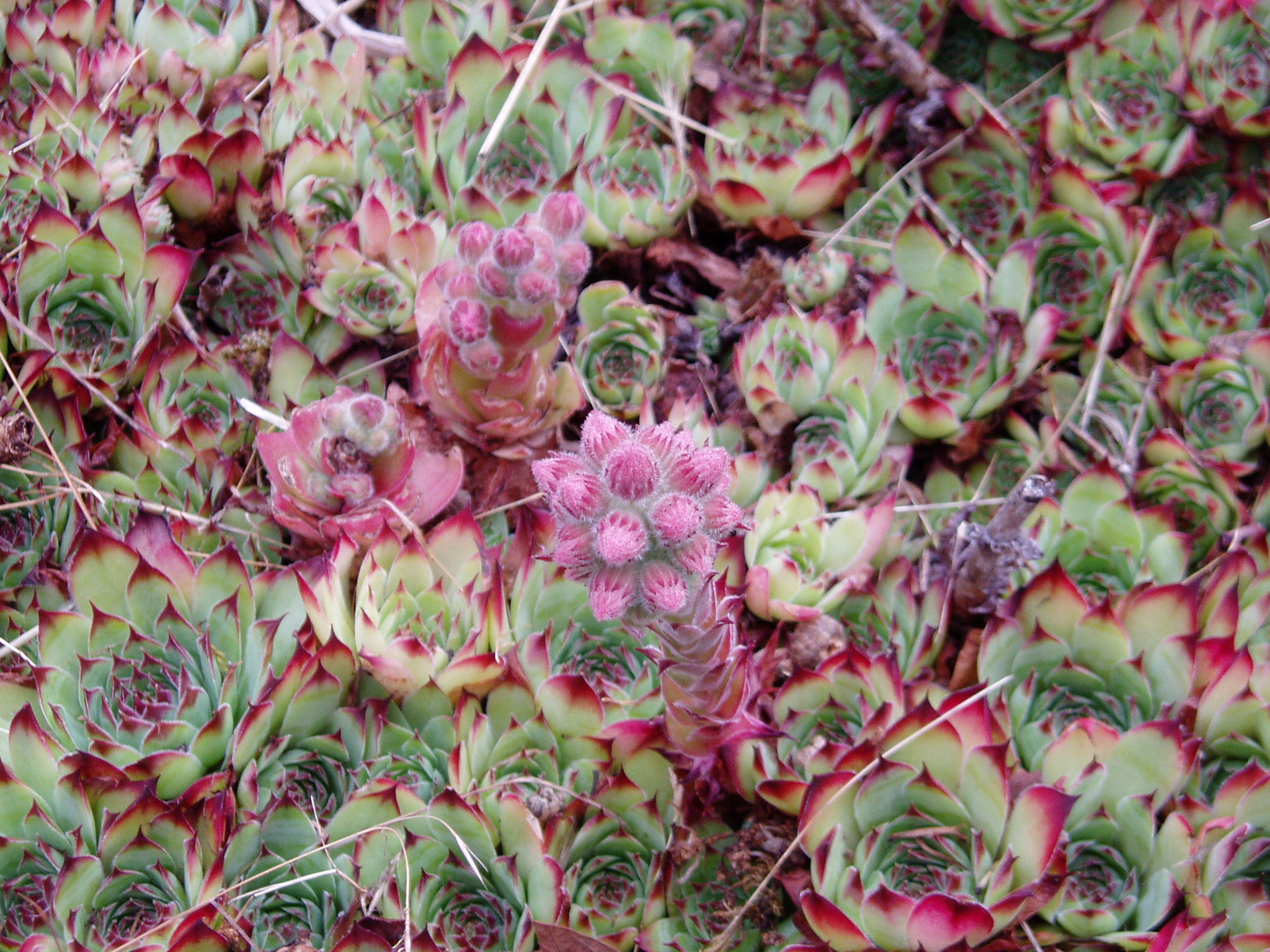
There’s something very alien yet oddly appealing about hens & chicks.
Is it because they cluster together in such a tight & tidy clump?
Is it because their turgid leaves are so different from the regular ones?
Or maybe because they choose the most inhospitable places to bring up their broods? Check out them partying it up in these rocky crevices !! Isn’t that the true meaning of ‘drought-tolerant’? & ‘well-drained” !?!
photo by SVSeekins
I’ve admired sempervivum for ages. To start, I tried to grow some myself but over-cared for them to death. (some succulents are tricky that way – – although I have a pretty good history with jade plants).
Several flocks were already established on the rocky mountainside when we moved to the Richmond house. I can just let them completely alone & they happily do their thing. They prefer being ignored. So I ignore them.
photo by SVSeekins
The deer seem to ignore them too – – or at least they must ignore them enough that the hens & the deer coexist comfortably.
Occasionally I’ll stumble over a mat of the little guys, which gives them a good squish, but they seem to recover & carry on. If any of the chicks are knocked loose, they just seem to roll down the hill & set up another colony wherever they land. Cool.
They even carry on after being covered by snow, which we occasionally get here on the west coast. I like a plant that just keeps on surviving. 🙂
Can it get any better:
– evergreen
– funky looking
– deer resistant
– drought tolerant
Oh yeah – – check out the hens & chicks when the roosters come to visit !!
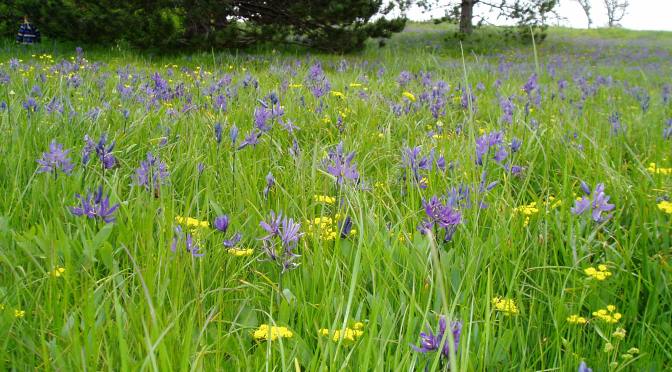
The camas meadow swaying in the spring breeze is like no other. Suddenly I’m walking in a fairytale instead of strolling in a Victoria park. Has my mind gone wild? Could I ever have come up with a dream so lovely? No. It must be real.
Camas meadows have flourished on South Vancouver Island longer than memory reaches into the past. The southern slope of Beacon Hill has been a camas meadow for centuries. It’s probably one of the key reasons it’s preserved as a park today. The same goes for the Garry oak meadows of Mt. Tolmie Park. At this time of year, they’re magical places.
Early peoples saw more than beauty in the camas; they saw food. I wonder who it was to first realize the bulbs are delicious?
photo by SVSeekins
Perhaps she had gardening tendencies like mine; seeing a lovely flower automatically triggers an urge to have that flower in my own garden. (I’m known to dig up plants from roadsides.)
Before we moved from the Cedar Hill property to the Richmond house, I dug up as many camas as possible. The Garry oak meadow in the backyard was a great natural source for them, but the digging wasn’t so easy.
When I was able to dig deep enough, I often found the bulb tucked securely in a tight rocky crevice. Un-obtainable! I did manage to get a good number of bulbs (perhaps 2 dozen), but there was no risk of over-harvesting that hillside.
photo by SVSeekins
There was certainly more risk of starvation if camas had been my only sustenance. A good deal of effort for a very small reward. That gardener from long ago must’ve had more ingenuity than I have.
Apparently, she figured out a method that includes burning the meadow first. (?!?!…) Perhaps that was a way of cooking the camas in the process? By the time she got one out of the ground, it was already transformed into a sweet treat? I just can’t figure it….
Happily, after all my sweat equity, I now enjoy blooming borders.
It times out nicely. When the foliage of the spring bulb dies back, the daylily takes over for the summer. And from all that bounty, it’s only the latter that the deer like to feast on. 🙂






 Garden Variety Life