Tag Archives: drought tolerant

Summer’s Shasta Daisy

shasta daisy - flower grouping
photos by SVSeekins

The Daisy is such a likable flower.  She’s happy, pretty & uncomplicated.

She reminds me of the character Betty, of the duo Betty & Veronica, in the Archie comic books.  I’ve always preferred Betty.

My first Shasta Daisy came from my good friend & mentor, KC.  She gardened on an acreage in Sooke, where deer were common all year & black bear came around in the autumn to feast in the apple trees.

KC assured me the Shasta Daisy could stand up to anything.  Even drought.  Now, that’s my kind of plant!  Something that blooms without any attention from me.

Shasta Daisy - row along south wall
photo by SVSeekins

Along the hot, windy, south side of our home, we now grow a row of tenacious Shasta Daisies.  They add colour with minimal effort.  I haven’t watered the bed at all this year – not even once.  Scout’s honour!

In the shrub border, that gets a good weekly drink, the Shasta clumps bloom well above 4 feet.  Happily, KC gave me a head’s up about that, too.  Because the Shasta Daisy is tough as nails, she can be a bit of a bully when given any encouragement at all.

I’ve followed KC’s advice & kept the Shasta clumps in big pots, then sunk the pots into the flower beds.  The Shasta easily gets enough water, and the pots keep them contained.

Shasta Daisy - happy blooms
photo by SVSeekins

Some folk say the Shasta blooms are kind of stinky.  After 5 years of growing this long row of Shasta Daisies, last July was the first time I ever noticed any smell – –  and I have to say, the scent really doesn’t offend me.  The clouds of white & yellow flowers through July & August easily make up for an unusual fragrance.

KC recommended deadheading at the end of the bloom cycle. That’s not too big a chore, so each September, I shear the tops.

I figure it’s not a good idea to put all those seed pods into our compost heap. Instead, they go into the garbage can I use for weeds.  Whenever that can is full, it goes to the municipal yard where their compost reaches heats strong enough to neutralize the seed.

The best part is that Shasta Daisy is perennial.  She rests quietly over the winter, wakes up in the spring, and parties again all summer.  🙂

-30-
© copyright 2012 SVSeekins
Enter your email address to subscribe to this blog and receive notifications of new posts by email.

California Poppy

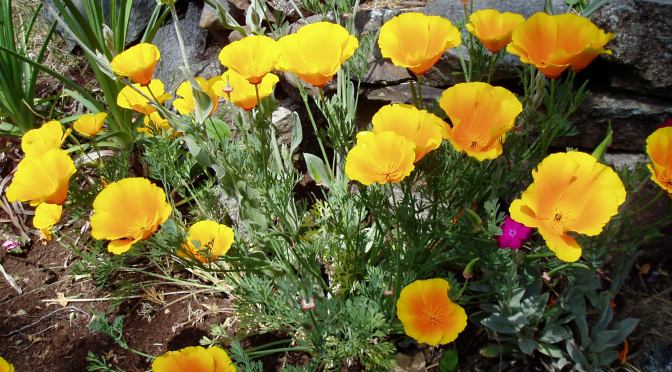
California Poppy - many blooms, garden Victoria BC
photo by SVSeekins

I like the saturated orange of the California Poppy bloom.  It’s bright and happy.

Even more, I like that the plant survives well on roadsides & rocky areas.  A plant that doesn’t need nurturing – bonus!

California Poppy at Snake Rock, garden Victoria BC
photo by SVSeekins

This little patch of poppies lives just down the street at Snake Rock.  It blooms in mid-spring & continues well into the dry summer.

Of course, the thought occurred to me, “We NEED that in our garden!” Can’t you imagine how lovely a wave of bright orange would be in the shrub border?

California poppy - seed pod, garden Victoria BC
photo by SVSeekins

Even C is encouraging.  He really likes the bright orange blooms, too. So, for the past 5 years, I’ve gathered seed from the roadside, then spread it through our gardens.

There’s been the occasional reward, but mostly I’ve had little success.

The California Poppy has a long tap-root, so where ever it pops up, that’s where it has to stay.  It does not like being moved.  And it doesn’t seem to like being watered either.   Nor fed.  Nor coddled in any way.

The shrub border had a fair amount of fertilizer, mulch & water over the past few years, as the plants were all so new & getting established.  Maybe that’s been too much attention for the poppy.

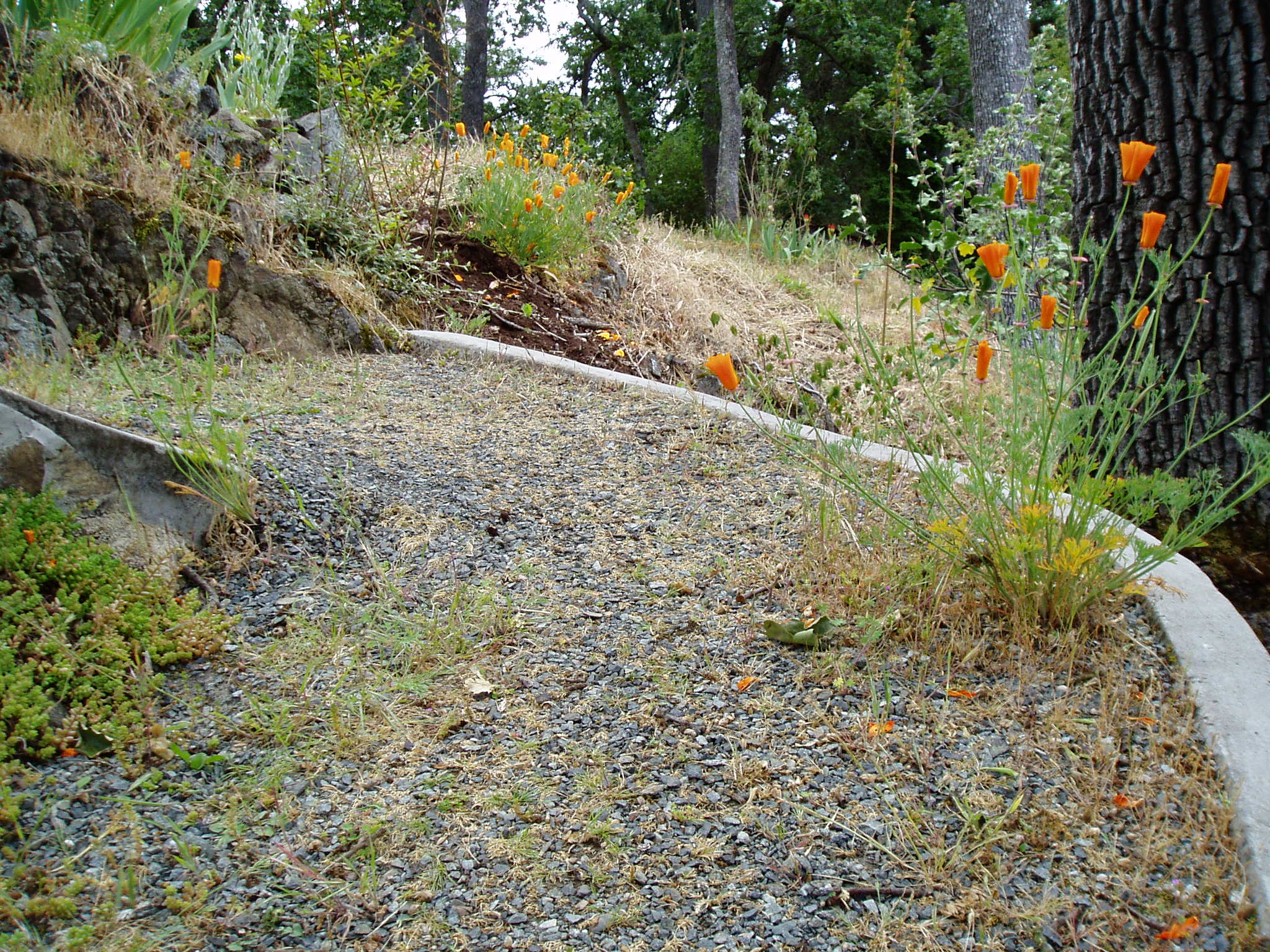
The most successful patch is on our rocky hillside.  It’s a well-drained site and bakes in the sun.  The California Poppy will grow in the soil, but seems even happier in the gravel of the pathway!  Go figure.

California Poppy in gravel path, garden Victoria BC
photo by SVSeekins

So far, I’m resisting the urge to weed it out of the path.  I’ve decided that it’s ‘whimsical’ growing there.

I’m happy about growing a local wildflower.  I’m also delighted that the deer, who spend their afternoons on our little mountain, leave the California Poppy alone.

My plan is to keep spreading seed in the rest of the garden & be happy with whatever we get.  That’s the true definition of ‘low maintenance,’ isn’t it?

-30-

© copyright 2012 SVSeekins

Enter your email address to subscribe to this blog and receive notifications of new posts by email.

Snowdrops – January Gems

The first year at Richmond House I was ecstatic to see snowdrops blooming on January 11.  Months earlier I’d planted some & the early pay off was thrilling.  Happily more were proving that they’d previously been naturalizing around the yard.

The following year, having a better idea of where to seek out the delightful little blossoms:  January 1 – discovery!

Another winter it was December 27.

But this year, even searching vigilantly through the Christmas & New Year holidays, it took until January 11 for my first snowdrop encounter.

January snowdrops
photo by SVSeekins

With West Coast’s winter being dull and drizzly, a promise of the spring to come is like a ray of sunshine.  So even though white flowers are not usually near the top of my list, I celebrate January snowdrops.

These plants are treasures.  When hit with snow for a few days in the middle of the month they barely twitched.  If anything, by the time I went back outside, more were blooming!  In the cool days of our winter snowdrop blooms last for weeks & weeks – well through February.

I like to get down close to the earth & take a close look at them.   It’s fun to discover the little green tatoo on each petal.  And who knew there were so many varieties?

Clusters in my garden haven’t yet become abundant enough to divide, but now is the time to do it.  Usually the recommendation is to wait until a plant is in dormancy before moving it.  With snowdrops that rule doesn’t hold true apparently.  That’s pretty handy, because once they die back I can never really remember where they are.

I’ve used this time of year to shift snowdrops into different locations, as it was a mistake for me to attempt growing them in a spring-flowering meadow.  Although they bloom before the grasses start to grow, their leaves are still busy storing up for next year’s flowers when C has the uncontrollable urge to dust off lawn mower in late February.  Zip, there goes the meadow.

Shorter bulbs, like crocus, might stand half a chance in our lawn, but not snowdrops – – nor daffodils. Those are best left to naturalize in our beds & borders.

-30-
© copyright 2012 SVSeekins